

climate inequality
 |
Description
Book Introduction
How does geographic inequality connect to the inequalities of the climate crisis?
The climate crisis, a global disaster brought about by inequality!
The climate crisis is deepening inequality!
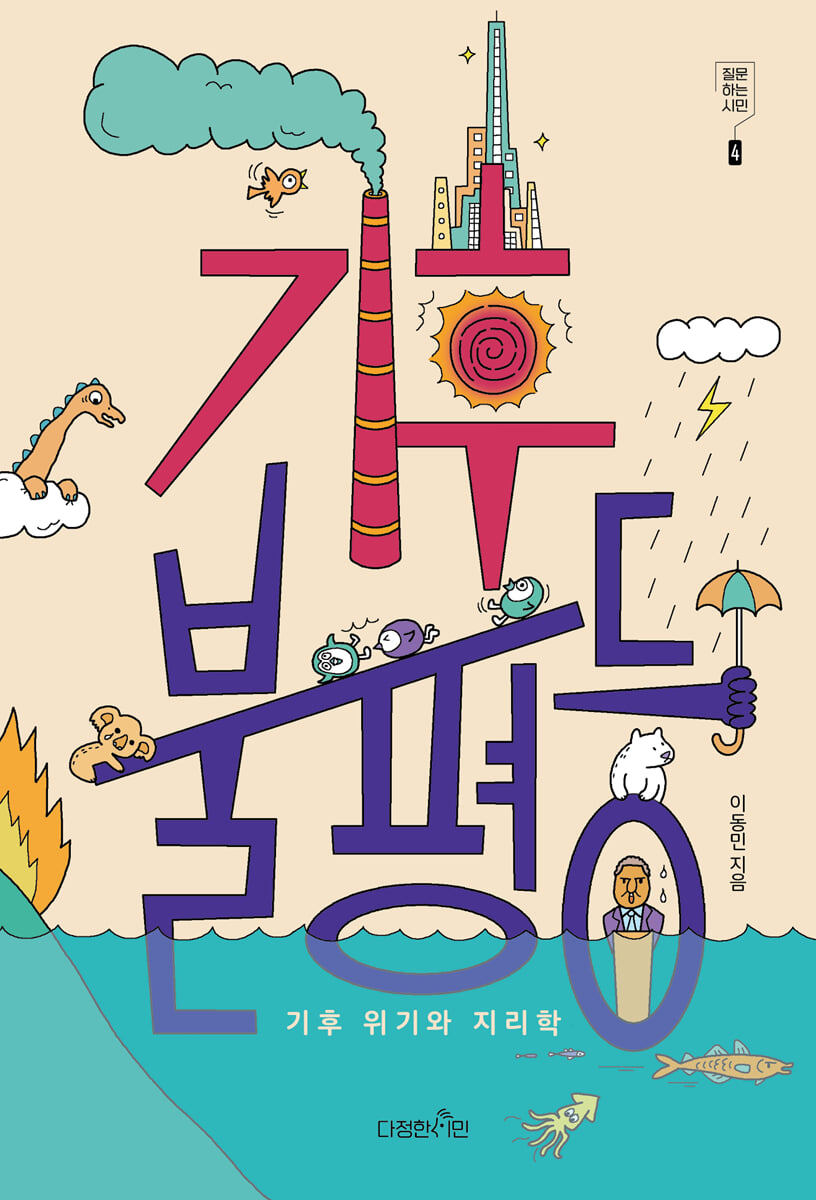
Climate Inequality is a book that helps us understand the climate crisis and broaden our geographical perspective on climate and the world.
We examine the significance and severity of the climate crisis from a geographic perspective and explore the damage it is causing in various countries around the world.
We also reflect on how geographical inequality is linked to the inequality of the climate crisis and consider what efforts we must make to address the climate crisis.
- [Questioning Citizen] Series Volume 4
The climate crisis, a global disaster brought about by inequality!
The climate crisis is deepening inequality!
Climate Inequality is a book that helps us understand the climate crisis and broaden our geographical perspective on climate and the world.
We examine the significance and severity of the climate crisis from a geographic perspective and explore the damage it is causing in various countries around the world.
We also reflect on how geographical inequality is linked to the inequality of the climate crisis and consider what efforts we must make to address the climate crisis.
- [Questioning Citizen] Series Volume 4
- You can preview some of the book's contents.
Preview
index
prolog
Chapter 1: The Power of Climate Change
When did climate change begin?
The fall of the Roman Empire was related to the weather?
This is not an era of global warming, but an era of boiling earth.
Chapter 2: The Relationship Between Climate and Geography
Mongolian yurts and Japanese tatami mats adapted to the climate
How are different climates created?
What if the atmospheric and water cycles suddenly changed?
Cold waves and heavy snowfall are also due to global warming.
Chapter 3: The Earth Sinks, Collapses, and Falls
An island nation whose land is submerged by rising sea water
The lives of people encroached by the desert
Food crisis caused by natural disasters
Chapter 4: The Climate Crisis: Not a Story from a Faraway Land!
Is the idea of a country with four distinct seasons just an old story?
A pollack festival without pollack, and squid that has become "golden squid"
Incheon Airport is also flooded?
Chapter 5: Inequality in the Climate Crisis
The colonial damage that has not yet ended
The Amazon rainforest is rapidly being destroyed
Fossil fuel war, stop it now!
Nation-centrism fueling the climate crisis
Greenhouse gas emissions proportional to population growth
Chapter 6 Where should the world go?
A world of advancements in science and technology and striving for excellence
The problem of speed, direction, and geographical inequality
Chapter 1: The Power of Climate Change
When did climate change begin?
The fall of the Roman Empire was related to the weather?
This is not an era of global warming, but an era of boiling earth.
Chapter 2: The Relationship Between Climate and Geography
Mongolian yurts and Japanese tatami mats adapted to the climate
How are different climates created?
What if the atmospheric and water cycles suddenly changed?
Cold waves and heavy snowfall are also due to global warming.
Chapter 3: The Earth Sinks, Collapses, and Falls
An island nation whose land is submerged by rising sea water
The lives of people encroached by the desert
Food crisis caused by natural disasters
Chapter 4: The Climate Crisis: Not a Story from a Faraway Land!
Is the idea of a country with four distinct seasons just an old story?
A pollack festival without pollack, and squid that has become "golden squid"
Incheon Airport is also flooded?
Chapter 5: Inequality in the Climate Crisis
The colonial damage that has not yet ended
The Amazon rainforest is rapidly being destroyed
Fossil fuel war, stop it now!
Nation-centrism fueling the climate crisis
Greenhouse gas emissions proportional to population growth
Chapter 6 Where should the world go?
A world of advancements in science and technology and striving for excellence
The problem of speed, direction, and geographical inequality
Detailed image

Publisher's Review
The close relationship between the climate crisis and inequality
Although the world's most powerful countries, the United States and China, emit more than half of the world's greenhouse gases, the resulting damage often falls on developing countries that bear less responsibility for greenhouse gas emissions.
Children and youth, who will be the future leaders, are being forced into a situation where even sustainability is threatened due to the mistakes of the older generation.
People living in areas geographically vulnerable to climate change become climate refugees, forced to leave their homes due to rising sea levels, desertification, droughts, or floods.
Even within the same country, socially vulnerable groups such as the elderly, the disabled, and the homeless, who have limited freedom of movement and have difficulty receiving disaster warnings or evacuation guidance quickly, are the first to fall victim to climate disasters.
Innocent animals suffer far more than humans from disasters such as heavy rains, droughts, wildfires, and heat waves caused by the climate crisis, and are even driven to the brink of extinction.
There is so much inequality in the world caused by climate change.
The world of geography that will satisfy your curiosity
To properly understand the climate crisis, we must have an understanding of physical and human geography.
This book explains, step by step, the basic concept that climate is a product of the interaction of solar energy with the atmosphere and water, especially seawater.
It also answers questions that we have in our daily lives or while watching the news, such as why do we have heavy snowfalls and cold waves when global warming is happening? Why is desertification occurring as deserts expand? Why are European countries at higher latitudes than ours warmer in winter? Is the submergence of land due to rising sea levels only a problem for some island countries? Why is coastal erosion occurring all over our coast? Where have all the pollack that used to live in the East Sea disappeared to?
As a geographer, the author explains the subject in an easy and fun way, allowing readers to immerse themselves in the world of geography through this book and discover that geography is a fascinating discipline.
The story of human civilization closely related to climate
In pre-modern times, civilizations generally reached their peak when temperatures rose, and even great empires fell when temperatures dropped.
If the average temperature rises by about 1 degree, the farming season will be longer, agricultural productivity will increase, and national power will be strengthened as wealth is accumulated.
On the other hand, if the temperature drops by about 1 degree, the number of days with frost will increase significantly, shortening the farming season and forcing the people to starve, ultimately leading to ruin.
The fact that a difference of just one degree in average temperature can have a tremendous impact on humans and civilization is interestingly illustrated through the examples of the ancient Roman Empire and the Han Dynasty of China.
There is also an example of the Gyeongsin Famine (1670-1671) in Joseon, where the average temperature dropped by about 1 degree for two years, completely destroying crops and causing epidemics, causing countless people to die from hunger and disease.
It is said that there were more tragic deaths than during the Imjin War or the Byeongja War, so you can see how important a difference of one degree in temperature is.
Now we see forces opposing overcoming the climate crisis!
There are many forces opposing overcoming the climate crisis, from President Trump who says climate change is a hoax, to politicians who acknowledge the climate crisis but say we need to slow down while talking about “national interests” and “economic development,” to newspaper editorials that ask why we should take the lead in reducing carbon emissions while even the US and China are turning a blind eye, claiming that our country’s greenhouse gas emissions are low.
If you used to just ignore such news without giving it much thought, after reading this book, you'll see exactly what they're really thinking.
One can read a strong will to never give up the vested interests they currently hold, regardless of whether the sustainability of humanity is at stake.
We must monitor such groups to prevent them from gaining power, withhold our votes from them in elections, and join forces to form sound public opinion.
It is much more important than the small actions of each individual.
We must address the climate crisis and inequality together.
Anthropogenic climate change is closely linked to imperialism, which is directly responsible for global inequality.
Climate change began in earnest with the unequal exploitation of colonial powers, and even after independence from colonial rule, dictatorial regimes exploited their people, further deepening inequality.
Moreover, fossil fuel wars, nationalism, and population issues make solving the climate crisis even more difficult.
A look at the global inequality and discrimination that are major causes of population problems confirms that the climate crisis and inequality are inextricably linked.
The climate crisis and inequality must be addressed together.
Although the world's most powerful countries, the United States and China, emit more than half of the world's greenhouse gases, the resulting damage often falls on developing countries that bear less responsibility for greenhouse gas emissions.
Children and youth, who will be the future leaders, are being forced into a situation where even sustainability is threatened due to the mistakes of the older generation.
People living in areas geographically vulnerable to climate change become climate refugees, forced to leave their homes due to rising sea levels, desertification, droughts, or floods.
Even within the same country, socially vulnerable groups such as the elderly, the disabled, and the homeless, who have limited freedom of movement and have difficulty receiving disaster warnings or evacuation guidance quickly, are the first to fall victim to climate disasters.
Innocent animals suffer far more than humans from disasters such as heavy rains, droughts, wildfires, and heat waves caused by the climate crisis, and are even driven to the brink of extinction.
There is so much inequality in the world caused by climate change.
The world of geography that will satisfy your curiosity
To properly understand the climate crisis, we must have an understanding of physical and human geography.
This book explains, step by step, the basic concept that climate is a product of the interaction of solar energy with the atmosphere and water, especially seawater.
It also answers questions that we have in our daily lives or while watching the news, such as why do we have heavy snowfalls and cold waves when global warming is happening? Why is desertification occurring as deserts expand? Why are European countries at higher latitudes than ours warmer in winter? Is the submergence of land due to rising sea levels only a problem for some island countries? Why is coastal erosion occurring all over our coast? Where have all the pollack that used to live in the East Sea disappeared to?
As a geographer, the author explains the subject in an easy and fun way, allowing readers to immerse themselves in the world of geography through this book and discover that geography is a fascinating discipline.
The story of human civilization closely related to climate
In pre-modern times, civilizations generally reached their peak when temperatures rose, and even great empires fell when temperatures dropped.
If the average temperature rises by about 1 degree, the farming season will be longer, agricultural productivity will increase, and national power will be strengthened as wealth is accumulated.
On the other hand, if the temperature drops by about 1 degree, the number of days with frost will increase significantly, shortening the farming season and forcing the people to starve, ultimately leading to ruin.
The fact that a difference of just one degree in average temperature can have a tremendous impact on humans and civilization is interestingly illustrated through the examples of the ancient Roman Empire and the Han Dynasty of China.
There is also an example of the Gyeongsin Famine (1670-1671) in Joseon, where the average temperature dropped by about 1 degree for two years, completely destroying crops and causing epidemics, causing countless people to die from hunger and disease.
It is said that there were more tragic deaths than during the Imjin War or the Byeongja War, so you can see how important a difference of one degree in temperature is.
Now we see forces opposing overcoming the climate crisis!
There are many forces opposing overcoming the climate crisis, from President Trump who says climate change is a hoax, to politicians who acknowledge the climate crisis but say we need to slow down while talking about “national interests” and “economic development,” to newspaper editorials that ask why we should take the lead in reducing carbon emissions while even the US and China are turning a blind eye, claiming that our country’s greenhouse gas emissions are low.
If you used to just ignore such news without giving it much thought, after reading this book, you'll see exactly what they're really thinking.
One can read a strong will to never give up the vested interests they currently hold, regardless of whether the sustainability of humanity is at stake.
We must monitor such groups to prevent them from gaining power, withhold our votes from them in elections, and join forces to form sound public opinion.
It is much more important than the small actions of each individual.
We must address the climate crisis and inequality together.
Anthropogenic climate change is closely linked to imperialism, which is directly responsible for global inequality.
Climate change began in earnest with the unequal exploitation of colonial powers, and even after independence from colonial rule, dictatorial regimes exploited their people, further deepening inequality.
Moreover, fossil fuel wars, nationalism, and population issues make solving the climate crisis even more difficult.
A look at the global inequality and discrimination that are major causes of population problems confirms that the climate crisis and inequality are inextricably linked.
The climate crisis and inequality must be addressed together.
[Series Introduction]
[Questioning Citizen Series] is a series of youth books designed to help us think about what we can do to make the world a better place.
It consists of Volume 1: Mass Extinction, Volume 2: Energy Technology, Volume 3: Ecological Transition Design, and Volume 4: Climate Inequality.
Climate crisis, biodiversity loss, global economic inequality, refugees, war, viruses, and other global issues weigh heavily on our daily lives, but pessimism cannot change the world.
This series is written by experts, including professors and doctors, and presents objective data, accurate information, and hopeful examples rather than propaganda or strong arguments.
We aim to help readers explore these issues step by step and explore what choices and actions they can take to create a sustainable future.
[Series Introduction]
[Questioning Citizen Series] is a series of youth books designed to help us think about what we can do to make the world a better place.
It consists of Volume 1: Mass Extinction, Volume 2: Energy Technology, Volume 3: Ecological Transition Design, and Volume 4: Climate Inequality.
Climate crisis, biodiversity loss, global economic inequality, refugees, war, viruses, and other global issues weigh heavily on our daily lives, but pessimism cannot change the world.
This series is written by experts, including professors and doctors, and presents objective data, accurate information, and hopeful examples rather than propaganda or strong arguments.
We aim to help readers explore these issues step by step and explore what choices and actions they can take to create a sustainable future.
[Questioning Citizen Series] is a series of youth books designed to help us think about what we can do to make the world a better place.
It consists of Volume 1: Mass Extinction, Volume 2: Energy Technology, Volume 3: Ecological Transition Design, and Volume 4: Climate Inequality.
Climate crisis, biodiversity loss, global economic inequality, refugees, war, viruses, and other global issues weigh heavily on our daily lives, but pessimism cannot change the world.
This series is written by experts, including professors and doctors, and presents objective data, accurate information, and hopeful examples rather than propaganda or strong arguments.
We aim to help readers explore these issues step by step and explore what choices and actions they can take to create a sustainable future.
[Series Introduction]
[Questioning Citizen Series] is a series of youth books designed to help us think about what we can do to make the world a better place.
It consists of Volume 1: Mass Extinction, Volume 2: Energy Technology, Volume 3: Ecological Transition Design, and Volume 4: Climate Inequality.
Climate crisis, biodiversity loss, global economic inequality, refugees, war, viruses, and other global issues weigh heavily on our daily lives, but pessimism cannot change the world.
This series is written by experts, including professors and doctors, and presents objective data, accurate information, and hopeful examples rather than propaganda or strong arguments.
We aim to help readers explore these issues step by step and explore what choices and actions they can take to create a sustainable future.
GOODS SPECIFICS
- Date of issue: November 17, 2025
- Page count, weight, size: 152 pages | 128*188*10mm
- ISBN13: 9791194724100
- ISBN10: 1194724108
You may also like
카테고리
korean


korean

![GQ KOREA Mark (Monthly): December [2025]](http://librairie.coreenne.fr/cdn/shop/files/8ef265dbbfbf186523ed75ba7319009d.jpg?v=1765340328&width=3840)


