

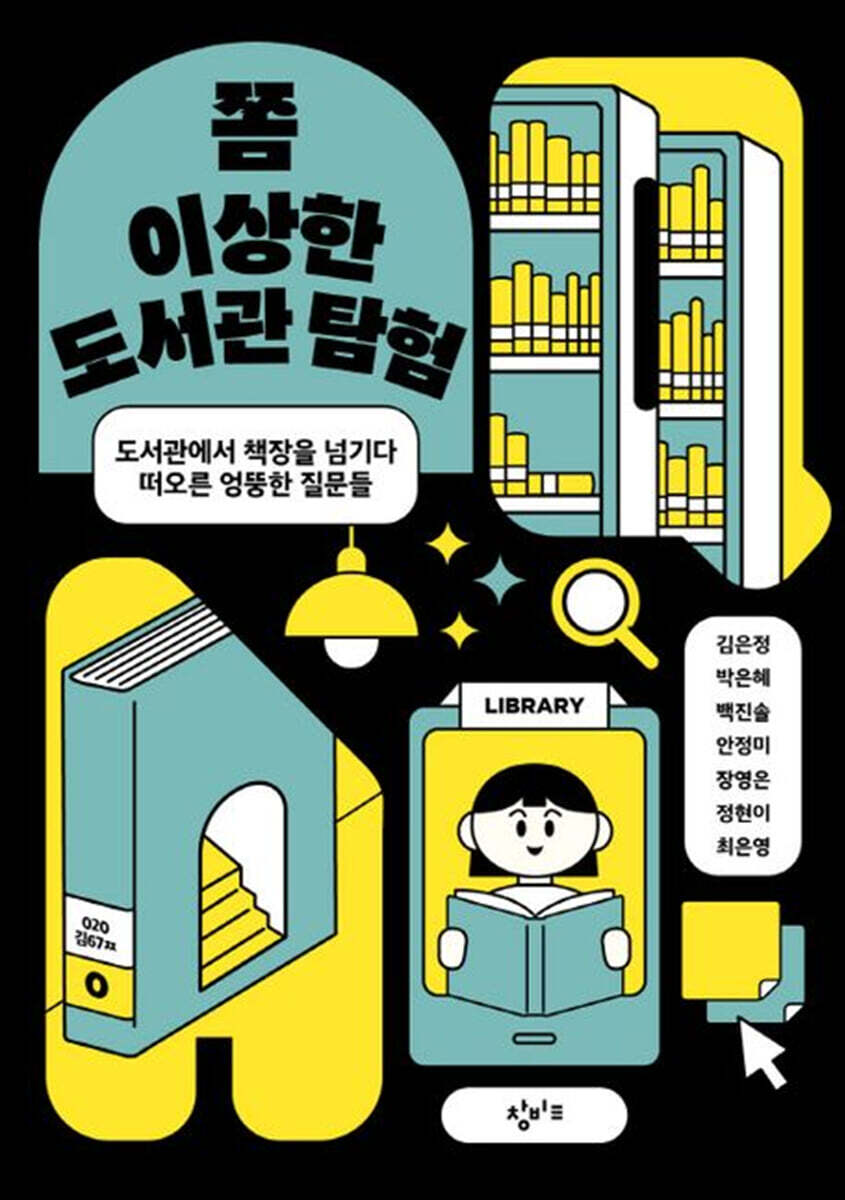
A slightly strange library exploration
 |
Description
Book Introduction
As I read the book, I became curious about the book, the library, and even the librarian.
A slightly bizarre library exploration filled with quirky questions and imagination!
"A Slightly Strange Library Exploration" is a youth cultural book that breaks the stereotype of a "library" as simply a place to borrow and return books, and interestingly explores the people and books that make up a library, as well as the environment and structure that connect them.
This book is divided into four parts: 'The Secret of the Library I Didn't Know', 'The Power of Books, the World Opened by Reading', 'The Hidden Hero of the Library: Librarians', and 'The Present and Future of Books and Libraries', and contains colorful behind-the-scenes stories about the various elements that make up a library.
This book, written by a librarian and a teacher librarian, explores the fascinating world of libraries by answering students' odd but important questions, such as, "I heard there are a lot of library and information science graduates at Google. Why?", "I heard the world's first library was in Egypt. Is it still available for loan?", and "If I borrow books for free from the library, doesn't it hurt the author?", based on the authors' field experience.
At the end of each chapter, questions are added to expand thinking from a humanities, social, and cultural perspective, making it suitable for discussion in classrooms and libraries.
As you seek answers to questions that cross boundaries, you will naturally broaden your thinking.
This book will serve as a solid guide for teachers who dream of library classes brimming with creative questions and imagination, and for young people who want to explore the world through libraries.
A slightly bizarre library exploration filled with quirky questions and imagination!
"A Slightly Strange Library Exploration" is a youth cultural book that breaks the stereotype of a "library" as simply a place to borrow and return books, and interestingly explores the people and books that make up a library, as well as the environment and structure that connect them.
This book is divided into four parts: 'The Secret of the Library I Didn't Know', 'The Power of Books, the World Opened by Reading', 'The Hidden Hero of the Library: Librarians', and 'The Present and Future of Books and Libraries', and contains colorful behind-the-scenes stories about the various elements that make up a library.
This book, written by a librarian and a teacher librarian, explores the fascinating world of libraries by answering students' odd but important questions, such as, "I heard there are a lot of library and information science graduates at Google. Why?", "I heard the world's first library was in Egypt. Is it still available for loan?", and "If I borrow books for free from the library, doesn't it hurt the author?", based on the authors' field experience.
At the end of each chapter, questions are added to expand thinking from a humanities, social, and cultural perspective, making it suitable for discussion in classrooms and libraries.
As you seek answers to questions that cross boundaries, you will naturally broaden your thinking.
This book will serve as a solid guide for teachers who dream of library classes brimming with creative questions and imagination, and for young people who want to explore the world through libraries.
- You can preview some of the book's contents.
Preview
index
Preface: Explore the new relationship emerging between libraries, books, and people.
Part 1: The Library's Secret I Never Knew
Q1: Why are there things other than books in the library? Everything's online.
Q2 Why does the library have an experiential classroom in addition to a reference room and reading room?
Q3 There are many different types of libraries, what are the differences?
Q4 Can I borrow books from Jeju Island? Can I not borrow books from other countries?
Q5 What does the barcode EM265330 on the book cover mean?
Q6 Is there a secret that only librarians know about, that helps you quickly find the book you want?
Q7 Why are library books so complicatedly categorized? Why not just number them?
Q8: Do book classification systems vary by country? What classification systems do international libraries use?
Q9 They say the world's first library is in Egypt. Is it still available for loan?
Q10 Which library do you think is the prettiest?
Q11 How can our school library become the best?
Q12 Why do we have library classes? Is it because the principal asked us to?
Q13. If I refer to books or materials while doing my homework, will there be any copyright issues?
Q14 Is there a way to get friends who hate books to come to the library?
Part 2: The Power of Books: The World Opened by Reading
Q15: Should I really read this book? How will it help me?
Q16 I read books for fun, so isn't it okay to just read the books I want?
Q17 Read a lot and in a variety of ways vs.
Reading a book in depth, which is more important?
Q18 I'm curious about how to choose the 'book of life' that's just right for me!
Q19 Favorite book vs.
Recommended books, what books do you read?
Q20: How can I improve boring non-fiction?
Q21 Comics are also books, so why do adults only recommend reading books with words?
Q22 When you come across something you don't know while reading a book, do you look it up right away or just skip it?
Q23 Do you have any special methods to help you understand the book more deeply?
Q24 I'm busy. Is there a secret to finding just the information I need in a book?
Q25 I keep failing at reading difficult books. What is my reading comprehension level?
Q26: E-books and paper books, which do you recommend?
Part 3: The Hidden Hero of the Library: The Librarian
Q27: What's the difference between a librarian and a teacher-librarian? Can anyone who loves books become a librarian?
Q28 What other jobs related to books are there besides librarians?
Q29 Are all the books in the library personally selected by the librarian?
Q30 What action does the librarian take if a student scribbles or tears a book?
Q31 If you have 10 years of experience as a librarian, can you find your place just by looking at the spine of a book?
Q32 Why is the discipline you study to become a librarian 'library science' and not 'library science'?
Q33 I heard that there are many employees at Google who graduated from library and information science departments. Why is that?
Q34: Can someone who's shy become a librarian? What skills are necessary for a librarian?
Q35 Librarians are likely to primarily handle borrowing and returning books. Why are communication skills important?
Q36 What preparations should I make to become a librarian?
Q37 Is the future of the librarian profession bright?
Part 4: Books and Libraries Today and Tomorrow
Q38 What process is involved before a book is published?
Q39 From paper books to e-books and audiobooks, why do books continue to evolve?
Q40 In the age of online bookstores, is there really a need for offline bookstores?
Q41 What is an independent bookstore, and how does it differ from a regular bookstore?
Q42 I heard there are many unique and interesting bookstores around the world. Could you introduce some of them?
Q43 If I borrow books for free from the library, isn't it a loss for the author?
Q44 If I donate a book to the library, will it go straight to the bookshelf?
Q45 There are many different types of libraries. Is a 'Library Act' really necessary?
Q46 What future technologies will make libraries more convenient?
Q47 What needs to change for libraries to survive in the new era?
Part 1: The Library's Secret I Never Knew
Q1: Why are there things other than books in the library? Everything's online.
Q2 Why does the library have an experiential classroom in addition to a reference room and reading room?
Q3 There are many different types of libraries, what are the differences?
Q4 Can I borrow books from Jeju Island? Can I not borrow books from other countries?
Q5 What does the barcode EM265330 on the book cover mean?
Q6 Is there a secret that only librarians know about, that helps you quickly find the book you want?
Q7 Why are library books so complicatedly categorized? Why not just number them?
Q8: Do book classification systems vary by country? What classification systems do international libraries use?
Q9 They say the world's first library is in Egypt. Is it still available for loan?
Q10 Which library do you think is the prettiest?
Q11 How can our school library become the best?
Q12 Why do we have library classes? Is it because the principal asked us to?
Q13. If I refer to books or materials while doing my homework, will there be any copyright issues?
Q14 Is there a way to get friends who hate books to come to the library?
Part 2: The Power of Books: The World Opened by Reading
Q15: Should I really read this book? How will it help me?
Q16 I read books for fun, so isn't it okay to just read the books I want?
Q17 Read a lot and in a variety of ways vs.
Reading a book in depth, which is more important?
Q18 I'm curious about how to choose the 'book of life' that's just right for me!
Q19 Favorite book vs.
Recommended books, what books do you read?
Q20: How can I improve boring non-fiction?
Q21 Comics are also books, so why do adults only recommend reading books with words?
Q22 When you come across something you don't know while reading a book, do you look it up right away or just skip it?
Q23 Do you have any special methods to help you understand the book more deeply?
Q24 I'm busy. Is there a secret to finding just the information I need in a book?
Q25 I keep failing at reading difficult books. What is my reading comprehension level?
Q26: E-books and paper books, which do you recommend?
Part 3: The Hidden Hero of the Library: The Librarian
Q27: What's the difference between a librarian and a teacher-librarian? Can anyone who loves books become a librarian?
Q28 What other jobs related to books are there besides librarians?
Q29 Are all the books in the library personally selected by the librarian?
Q30 What action does the librarian take if a student scribbles or tears a book?
Q31 If you have 10 years of experience as a librarian, can you find your place just by looking at the spine of a book?
Q32 Why is the discipline you study to become a librarian 'library science' and not 'library science'?
Q33 I heard that there are many employees at Google who graduated from library and information science departments. Why is that?
Q34: Can someone who's shy become a librarian? What skills are necessary for a librarian?
Q35 Librarians are likely to primarily handle borrowing and returning books. Why are communication skills important?
Q36 What preparations should I make to become a librarian?
Q37 Is the future of the librarian profession bright?
Part 4: Books and Libraries Today and Tomorrow
Q38 What process is involved before a book is published?
Q39 From paper books to e-books and audiobooks, why do books continue to evolve?
Q40 In the age of online bookstores, is there really a need for offline bookstores?
Q41 What is an independent bookstore, and how does it differ from a regular bookstore?
Q42 I heard there are many unique and interesting bookstores around the world. Could you introduce some of them?
Q43 If I borrow books for free from the library, isn't it a loss for the author?
Q44 If I donate a book to the library, will it go straight to the bookshelf?
Q45 There are many different types of libraries. Is a 'Library Act' really necessary?
Q46 What future technologies will make libraries more convenient?
Q47 What needs to change for libraries to survive in the new era?
Detailed image

Into the book
In the disaster film "The Day After Tomorrow" (2004), an ice age comes to the Earth due to abnormal weather.
People migrate south to survive, but most of them freeze to death due to the sudden drop in temperature.
However, the protagonist who took refuge in the library survives until the end.
I haven't heard the director's story about this, but I think it's symbolic that the main character takes refuge in the New York Public Library.
One article described the library as “a seed vault, an ark that holds the seeds of humanity.”
--- From the text "Q1 Why are there things other than books in the library? Everything is on the internet."
What was the third element a library must have? That's right.
It's 'you all'.
No matter how good the space, facilities, and materials are, what good are they if people don't come to use them?
The most important thing in any library is ultimately its users, its people.
--- From the text “Q11 What should we do to make our school library the best?”
If you love books and read a lot, you'll discover treasures, introduce them to others, and in doing so, experience a shared world of interest and build a bond. The reward and thrill you feel at that moment is indescribable.
I want to discover better books and connect with more people.
I think this kind of mindset is not just an institutional qualification for librarians and teacher librarians, but a practical qualification.
--- From the text "Q27 What is the difference between a librarian and a teacher librarian? Can I become a librarian just by liking books?"
Many people working in the library field, including teachers, think this way.
Libraries exist for their users, and should be places where all citizens can experience the cultural resources represented by books, and where efforts should be made to eliminate the information gap that easily arises in a knowledge-based society.
… Many libraries in our country and around the world are already changing based on this kind of thinking.
People migrate south to survive, but most of them freeze to death due to the sudden drop in temperature.
However, the protagonist who took refuge in the library survives until the end.
I haven't heard the director's story about this, but I think it's symbolic that the main character takes refuge in the New York Public Library.
One article described the library as “a seed vault, an ark that holds the seeds of humanity.”
--- From the text "Q1 Why are there things other than books in the library? Everything is on the internet."
What was the third element a library must have? That's right.
It's 'you all'.
No matter how good the space, facilities, and materials are, what good are they if people don't come to use them?
The most important thing in any library is ultimately its users, its people.
--- From the text “Q11 What should we do to make our school library the best?”
If you love books and read a lot, you'll discover treasures, introduce them to others, and in doing so, experience a shared world of interest and build a bond. The reward and thrill you feel at that moment is indescribable.
I want to discover better books and connect with more people.
I think this kind of mindset is not just an institutional qualification for librarians and teacher librarians, but a practical qualification.
--- From the text "Q27 What is the difference between a librarian and a teacher librarian? Can I become a librarian just by liking books?"
Many people working in the library field, including teachers, think this way.
Libraries exist for their users, and should be places where all citizens can experience the cultural resources represented by books, and where efforts should be made to eliminate the information gap that easily arises in a knowledge-based society.
… Many libraries in our country and around the world are already changing based on this kind of thinking.
--- From the text “Q47 What must change for libraries to survive in the new era?”
Publisher's Review
From hidden secrets in the library to honest stories from librarians.
A new world unfolds as question marks pop out of the quiet library.
"A Slightly Strange Library Exploration" is a youth education book that explains in Q&A format the contents of books, libraries, and the people, environments, and structures that fill them.
“I heard that many employees at Google have backgrounds in library and information science. Why is that?”, “I heard that the world’s first library is in Egypt. Is it still available for loan?”, “If you borrow books for free from the library, doesn’t it hurt the author’s reputation?”, and other such questions were collected from students who were both curious and interesting.
Each chapter unfolds with fascinating real-life cases and behind-the-scenes stories surrounding libraries, books, and librarians, expanding the narrative to the future of books and libraries.
Readers who frequently visit the library and enjoy books will find it fun to learn about stories they were curious about but were hesitant to ask about.
The authors lead a “slightly strange library exploration,” saying that it will be “a journey that explores questions that are difficult to encounter in an ordinary classroom, unfamiliar but interesting perspectives, and new relationships that arise between books and people.”
A "Slightly Strange Library Exploration" of reading, writing, and discussion, suggested by a librarian (teacher).
Today, libraries are functioning as complex cultural spaces within communities, evolving beyond mere book lending spaces into creative spaces for reading, writing, discussion, experimentation, and expansion of ideas.
However, in reality, library classes often remain limited to functional aspects such as reading, borrowing and returning materials, and information retrieval.
However, various attempts are being made to make libraries into "creative spaces for learning and growth" by gradually expanding the scope to include creative expression activities using books, project classes integrated with various subjects, discussion and collaborative learning, and community tours.
This book aims to assist in these endeavors by presenting various library-related stories and additional questions worth considering in connection with other fields such as humanities, society, culture, and the arts.
At the end of the story, questions are presented to foster integrated thinking skills, such as, “What do you want to keep in the library and pass on to your descendants?”, “Make a registration number according to the rules I set?”, “Plan a program to increase reading rates?”, and “How to convince adults that comic books are not good?”
This book will serve as a solid guide for teachers who dream of an integrated library class filled with creative questions and imagination.
A career exploration guide for young people dreaming of a career related to books, libraries, and librarianship.
"A Slightly Strange Library Exploration" is a great book for young people considering a career related to books and libraries.
It provides a friendly introduction to what librarians do, what qualities librarians need, and how to become one. It also covers the practical work of various book-related occupations (editor, designer, producer, marketer, etc.).
It also contains the honest concerns of librarians in the field about the value and role of books, bookstores, and libraries in the digital age.
For those who still believe in the value of books and libraries in an age when the future seems uncertain, "Exploring a Slightly Strange Library" will be a warm and encouraging book.
A new world unfolds as question marks pop out of the quiet library.
"A Slightly Strange Library Exploration" is a youth education book that explains in Q&A format the contents of books, libraries, and the people, environments, and structures that fill them.
“I heard that many employees at Google have backgrounds in library and information science. Why is that?”, “I heard that the world’s first library is in Egypt. Is it still available for loan?”, “If you borrow books for free from the library, doesn’t it hurt the author’s reputation?”, and other such questions were collected from students who were both curious and interesting.
Each chapter unfolds with fascinating real-life cases and behind-the-scenes stories surrounding libraries, books, and librarians, expanding the narrative to the future of books and libraries.
Readers who frequently visit the library and enjoy books will find it fun to learn about stories they were curious about but were hesitant to ask about.
The authors lead a “slightly strange library exploration,” saying that it will be “a journey that explores questions that are difficult to encounter in an ordinary classroom, unfamiliar but interesting perspectives, and new relationships that arise between books and people.”
A "Slightly Strange Library Exploration" of reading, writing, and discussion, suggested by a librarian (teacher).
Today, libraries are functioning as complex cultural spaces within communities, evolving beyond mere book lending spaces into creative spaces for reading, writing, discussion, experimentation, and expansion of ideas.
However, in reality, library classes often remain limited to functional aspects such as reading, borrowing and returning materials, and information retrieval.
However, various attempts are being made to make libraries into "creative spaces for learning and growth" by gradually expanding the scope to include creative expression activities using books, project classes integrated with various subjects, discussion and collaborative learning, and community tours.
This book aims to assist in these endeavors by presenting various library-related stories and additional questions worth considering in connection with other fields such as humanities, society, culture, and the arts.
At the end of the story, questions are presented to foster integrated thinking skills, such as, “What do you want to keep in the library and pass on to your descendants?”, “Make a registration number according to the rules I set?”, “Plan a program to increase reading rates?”, and “How to convince adults that comic books are not good?”
This book will serve as a solid guide for teachers who dream of an integrated library class filled with creative questions and imagination.
A career exploration guide for young people dreaming of a career related to books, libraries, and librarianship.
"A Slightly Strange Library Exploration" is a great book for young people considering a career related to books and libraries.
It provides a friendly introduction to what librarians do, what qualities librarians need, and how to become one. It also covers the practical work of various book-related occupations (editor, designer, producer, marketer, etc.).
It also contains the honest concerns of librarians in the field about the value and role of books, bookstores, and libraries in the digital age.
For those who still believe in the value of books and libraries in an age when the future seems uncertain, "Exploring a Slightly Strange Library" will be a warm and encouraging book.
GOODS SPECIFICS
- Date of issue: October 31, 2025
- Page count, weight, size: 280 pages | 389g | 145*210*16mm
- ISBN13: 9791165703653
- ISBN10: 1165703653
You may also like
카테고리
korean


korean

![GQ KOREA Mark (Monthly): December [2025]](http://librairie.coreenne.fr/cdn/shop/files/8ef265dbbfbf186523ed75ba7319009d.jpg?v=1765340328&width=3840)


