

Charlotte Perriand
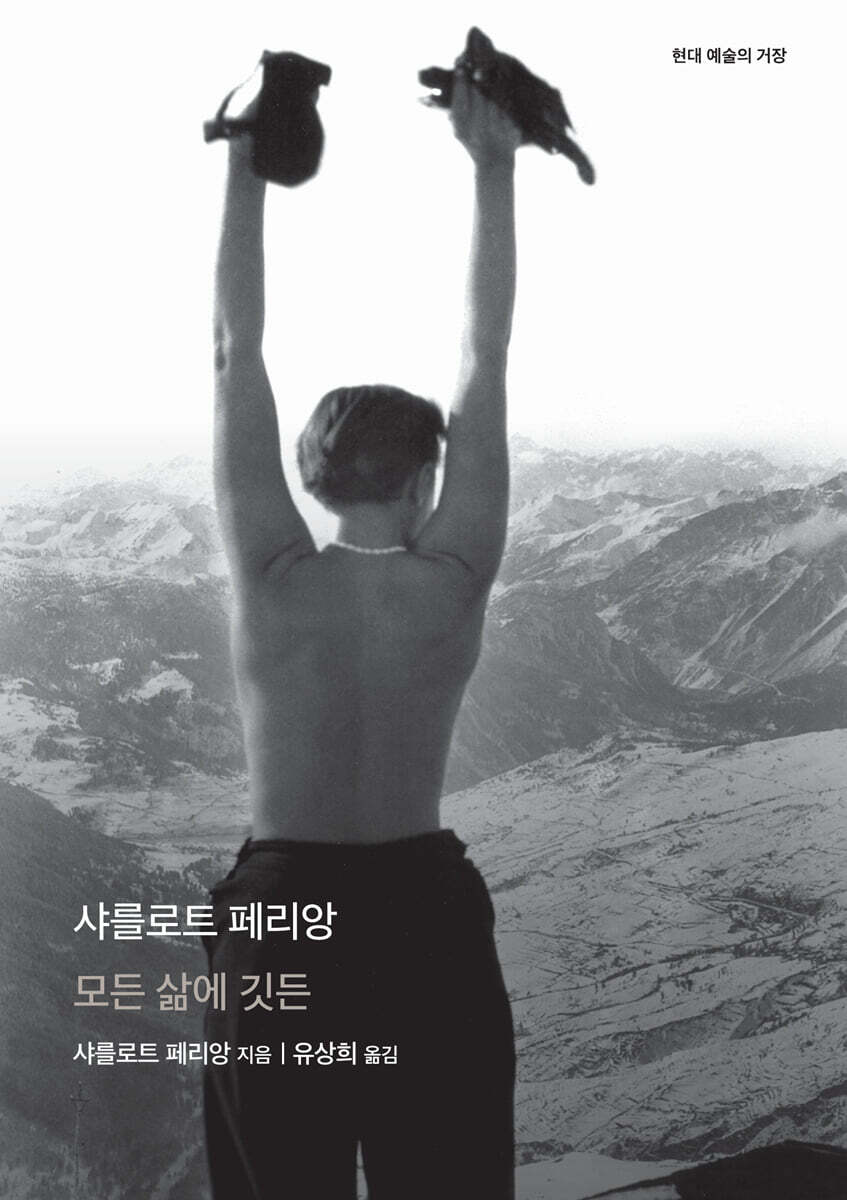 |
Description
Book Introduction
“Art is in everything.”
A first-generation French female architect who dreamed of creating "residential art."
Charlotte Perriand's first memoir in Korea
The Masters of Modern Art series consists of biographies and autobiographies of domestic and international master artists who had a significant influence on the cultural and artistic world around the 20th century.
The twenty-third protagonist of this series, which will be republished from 2018, is Charlotte Perriand, a first-generation French female architect and pioneer of interior design.
In the male-dominated architectural world of the early 20th century, Perriand created the 'Art d'habiter' (Art of the Home) that stands out for its openness, playfulness, and flexibility, and pursued a harmonious work between humans and their surroundings. Deeply sympathetic to women's rights and the plight of the underprivileged, she strived to provide many people with access to beautiful, useful, and functional spaces.
As an artist with a deep love for life, nature and freedom, she has established her own unique domain through various architectural projects, including private residences, student dormitories, military quarters, an Air France branch, embassies and, over the past 20 years, the Les Arcs ski resort.
He also created some of the most iconic designs of modernism together with Le Corbusier and Pierre Jeanneret, and his sculptural works, such as the Grand Confort, Chez Longue, and Pouteuil Doshiet Basquillain, have become great classics that still excite collectors today.
This book is a candid autobiography, rich in visual material, of Charlotte Perriand's adventurous life written a year before her death, and is a complete account of the journey of an artist who lived a free, independent, and creative life.
A first-generation French female architect who dreamed of creating "residential art."
Charlotte Perriand's first memoir in Korea
The Masters of Modern Art series consists of biographies and autobiographies of domestic and international master artists who had a significant influence on the cultural and artistic world around the 20th century.
The twenty-third protagonist of this series, which will be republished from 2018, is Charlotte Perriand, a first-generation French female architect and pioneer of interior design.
In the male-dominated architectural world of the early 20th century, Perriand created the 'Art d'habiter' (Art of the Home) that stands out for its openness, playfulness, and flexibility, and pursued a harmonious work between humans and their surroundings. Deeply sympathetic to women's rights and the plight of the underprivileged, she strived to provide many people with access to beautiful, useful, and functional spaces.
As an artist with a deep love for life, nature and freedom, she has established her own unique domain through various architectural projects, including private residences, student dormitories, military quarters, an Air France branch, embassies and, over the past 20 years, the Les Arcs ski resort.
He also created some of the most iconic designs of modernism together with Le Corbusier and Pierre Jeanneret, and his sculptural works, such as the Grand Confort, Chez Longue, and Pouteuil Doshiet Basquillain, have become great classics that still excite collectors today.
This book is a candid autobiography, rich in visual material, of Charlotte Perriand's adventurous life written a year before her death, and is a complete account of the journey of an artist who lived a free, independent, and creative life.
- You can preview some of the book's contents.
Preview
index
Recommendation
1.
The story began in 1903
2.
Le Corbusier, the pioneering era
3.
Japan and Indochina during the war
4.
Reality era
5.
Leisure buildings, facilities, and environments
6.
Between nothingness and emptiness
Acknowledgements
Source of the illustration
Search
1.
The story began in 1903
2.
Le Corbusier, the pioneering era
3.
Japan and Indochina during the war
4.
Reality era
5.
Leisure buildings, facilities, and environments
6.
Between nothingness and emptiness
Acknowledgements
Source of the illustration
Search
Detailed image
.jpg)
Into the book
I was admitted to a children's hospital when I was ten years old.
It was to undergo an appendectomy, which all children at the time had to undergo.
It was a great opportunity to skip school.
I really liked the new white hospital.
The ward was simple, and the window looked out onto a garden with trees.
Mom brought me some orange champagne to cheer me up.
But when I actually got home and saw all the furniture and all the clutter, I burst into tears.
The hospital's simplicity was just right.
It was then that I realized for the first time in my subconscious that blank space is powerful because it can contain everything.
---「1.
From the story that began in 1903
One afternoon, somewhat intimidated by the solemn atmosphere of the studio, I stood before Le Corbusier, his eyes unreadable behind his large glasses, hugging my drawing book.
His first greeting was somewhat cold.
“What’s your business?” “I’d like to work with you.” He quickly glanced through his drawing book and replied,
“We don’t embroider on cushions,” he said, and then led me to the door.
Finally, I mustered up the courage to leave my home address and inform him that I had submitted my work to Salon Doton.
There was no expectation of meeting again.
Rather, I left with a light heart.
No one can say that my charm worked.
The next afternoon, I met Jean Fouquet at the Salon.
He said with a bright face.
“I saw Le Corbusier and Pierre Jeanneret at your booth this morning.
I think I'll ask you to work together.
“I wonder if the letter will arrive.”
---「2.
Le Corbusier, from "The Age of Pioneers"
Our chair research was influenced by body posture.
However, Villa Laroche and Villa Church, with their architecture, atmosphere and reputation, have influenced this approach to research.
It uses a lightweight frame made of steel tubes coated with chrome or lacquer, independent of various accessory materials.
'Fauteuil dossier basculant' and 'Chaise Longue' feature detachable fabric or calfskin stretched taut by springs, with cushions made of leather, satin or calfskin placed on steel springs.
The lacquered steel tube frame of the 'Grand Confort' sofa was called a 'cushion basket'.
It was actually a part made for the purpose of placing a cushion on it.
The cushions could be upholstered in leather, thick linen, or a combination of the two.
Imagination was a powerful force.
I studied life-size drawings in the studio with Pierre Jeanneret during the day and with Le Corbusier at night.
---「2.
Le Corbusier, from "The Age of Pioneers"
One day, while we were spending happy mornings in Montparnasse, a letter arrived for Pierre and me.
With one letter, a book filled with beautiful stories turned into the next chapter.
During the ten years I spent in Pierre and Le Corbusier's studio, I was deeply immersed in their knowledge, their way of thinking, their way of life, and I was surrounded by their friendship, their environment, their friends, and their plans for the future.
It was obvious that I had to leave the studio to avoid being a distraction.
However, I could not accept the contents of the letter.
Everything was so beautiful.
Le Corbusier criticized Pierre and me for working on 'Régine 37' without saying a word.
That was a misunderstanding.
I could have tried to clear up the misunderstanding.
Should I start over? I didn't want to think about it.
So I decided to leave.
---「2.
Le Corbusier, from "The Age of Pioneers"
He questioned the idea of making everyday items for export.
There was a contradiction in the term 'for export'.
How can you make something without knowing how to use it? I've noticed that craftsmen look through European magazines for inspiration on forms.
I once saw a lacquered egg cup that was too big to hold a regular egg, but too small to hold an ostrich egg.
Since people in Japan do not eat soft-boiled eggs, the person who made it did not know how to use egg cups.
The same problem was found in toasters.
What should I do? Should I watch a movie about Western lifestyles? Should I explain how they sleep in bed, what table manners are, how to eat with a knife and fork, and why the knife looks like a "surgical" blade? In Japan, meat is cut in the kitchen, out of sight, so as not to remind guests of the animal's original form and to avoid shocking their sensibilities.
---「3.
From “Japan and Indochina during the War”
Many Frenchmen were arrested, including Jacques.
The Japanese commander came to the house and told her that her husband would not return.
“Prepare a small travel bag for him.”
I shouldn't have left there.
He searched my house with an officer who said he had heard stories about me in Japan.
And he acted like a Tokyo police officer and ordered me to bring out the whiskey.
“What about the suitcase?” I had prepared it in advance.
He handed me a bag containing pajamas, toiletries, etc.
He said, opening his bag.
“Put a bottle of whiskey in there too.” I said nothing, plucking a rose and putting it in my bag.
---「3.
From “Japan and Indochina during the War”
Le Corbusier replaced the term 'art decoratif' with 'equipment de l'habitation', and I replaced it with 'art d'habiter'.
Later, 'Art of Living' was changed to 'Art de vivre', which was also the title of my solo exhibition held at the Musée des Arts Décoratifs in Paris in 1985.
In a 1950 headline in the magazine Technique and Architecture, I defined 'dwelling art' as follows:
“The harmony of a residential area cannot be unrelated to architecture and urban planning.
Even if we try to achieve harmony through equipment alone, it would be a futile effort.
Because it is also affected by external factors such as site, direction, and amount of sunlight.
A dwelling must not only embody material goods, but also create an environment where people can achieve balance and liberate their spirit.
In this process, you must make your attitude clear.
To fill or to empty? This seemingly absurd question contains an important point.
“For some people, space means nothingness or poverty, but for others, it represents the possibility of thinking and moving.”
---「4.
From "The Real Age"
The first reason I accepted to participate was because I love mountains.
The second one looks similar to the one in Meribel, but the method was different.
Roger Godino envisioned an 'integrated' resort linking sports and various cultural activities.
It was a revolutionary plan.
To achieve this, it was necessary to be familiar with all the information regarding the issues raised, such as construction, installation, operation, commercialization, and maintenance.
Roger Godino asked us to supplement the design and implementation team to provide direction.
---「5.
Among “leisure buildings, facilities, and environments”
While writing this book, I realized many things.
I looked into my inner self, reaching back to the limits of my memory, and old memories stored in my brain came back to life under my pen.
My brain recorded everything and proved that it could resurrect everything with just what nature gave it.
So, I wondered what other wonders the brain might still be hiding.
If you put it into practice, you will find the answer.
To live is to let what is within us breathe alive.
It was to undergo an appendectomy, which all children at the time had to undergo.
It was a great opportunity to skip school.
I really liked the new white hospital.
The ward was simple, and the window looked out onto a garden with trees.
Mom brought me some orange champagne to cheer me up.
But when I actually got home and saw all the furniture and all the clutter, I burst into tears.
The hospital's simplicity was just right.
It was then that I realized for the first time in my subconscious that blank space is powerful because it can contain everything.
---「1.
From the story that began in 1903
One afternoon, somewhat intimidated by the solemn atmosphere of the studio, I stood before Le Corbusier, his eyes unreadable behind his large glasses, hugging my drawing book.
His first greeting was somewhat cold.
“What’s your business?” “I’d like to work with you.” He quickly glanced through his drawing book and replied,
“We don’t embroider on cushions,” he said, and then led me to the door.
Finally, I mustered up the courage to leave my home address and inform him that I had submitted my work to Salon Doton.
There was no expectation of meeting again.
Rather, I left with a light heart.
No one can say that my charm worked.
The next afternoon, I met Jean Fouquet at the Salon.
He said with a bright face.
“I saw Le Corbusier and Pierre Jeanneret at your booth this morning.
I think I'll ask you to work together.
“I wonder if the letter will arrive.”
---「2.
Le Corbusier, from "The Age of Pioneers"
Our chair research was influenced by body posture.
However, Villa Laroche and Villa Church, with their architecture, atmosphere and reputation, have influenced this approach to research.
It uses a lightweight frame made of steel tubes coated with chrome or lacquer, independent of various accessory materials.
'Fauteuil dossier basculant' and 'Chaise Longue' feature detachable fabric or calfskin stretched taut by springs, with cushions made of leather, satin or calfskin placed on steel springs.
The lacquered steel tube frame of the 'Grand Confort' sofa was called a 'cushion basket'.
It was actually a part made for the purpose of placing a cushion on it.
The cushions could be upholstered in leather, thick linen, or a combination of the two.
Imagination was a powerful force.
I studied life-size drawings in the studio with Pierre Jeanneret during the day and with Le Corbusier at night.
---「2.
Le Corbusier, from "The Age of Pioneers"
One day, while we were spending happy mornings in Montparnasse, a letter arrived for Pierre and me.
With one letter, a book filled with beautiful stories turned into the next chapter.
During the ten years I spent in Pierre and Le Corbusier's studio, I was deeply immersed in their knowledge, their way of thinking, their way of life, and I was surrounded by their friendship, their environment, their friends, and their plans for the future.
It was obvious that I had to leave the studio to avoid being a distraction.
However, I could not accept the contents of the letter.
Everything was so beautiful.
Le Corbusier criticized Pierre and me for working on 'Régine 37' without saying a word.
That was a misunderstanding.
I could have tried to clear up the misunderstanding.
Should I start over? I didn't want to think about it.
So I decided to leave.
---「2.
Le Corbusier, from "The Age of Pioneers"
He questioned the idea of making everyday items for export.
There was a contradiction in the term 'for export'.
How can you make something without knowing how to use it? I've noticed that craftsmen look through European magazines for inspiration on forms.
I once saw a lacquered egg cup that was too big to hold a regular egg, but too small to hold an ostrich egg.
Since people in Japan do not eat soft-boiled eggs, the person who made it did not know how to use egg cups.
The same problem was found in toasters.
What should I do? Should I watch a movie about Western lifestyles? Should I explain how they sleep in bed, what table manners are, how to eat with a knife and fork, and why the knife looks like a "surgical" blade? In Japan, meat is cut in the kitchen, out of sight, so as not to remind guests of the animal's original form and to avoid shocking their sensibilities.
---「3.
From “Japan and Indochina during the War”
Many Frenchmen were arrested, including Jacques.
The Japanese commander came to the house and told her that her husband would not return.
“Prepare a small travel bag for him.”
I shouldn't have left there.
He searched my house with an officer who said he had heard stories about me in Japan.
And he acted like a Tokyo police officer and ordered me to bring out the whiskey.
“What about the suitcase?” I had prepared it in advance.
He handed me a bag containing pajamas, toiletries, etc.
He said, opening his bag.
“Put a bottle of whiskey in there too.” I said nothing, plucking a rose and putting it in my bag.
---「3.
From “Japan and Indochina during the War”
Le Corbusier replaced the term 'art decoratif' with 'equipment de l'habitation', and I replaced it with 'art d'habiter'.
Later, 'Art of Living' was changed to 'Art de vivre', which was also the title of my solo exhibition held at the Musée des Arts Décoratifs in Paris in 1985.
In a 1950 headline in the magazine Technique and Architecture, I defined 'dwelling art' as follows:
“The harmony of a residential area cannot be unrelated to architecture and urban planning.
Even if we try to achieve harmony through equipment alone, it would be a futile effort.
Because it is also affected by external factors such as site, direction, and amount of sunlight.
A dwelling must not only embody material goods, but also create an environment where people can achieve balance and liberate their spirit.
In this process, you must make your attitude clear.
To fill or to empty? This seemingly absurd question contains an important point.
“For some people, space means nothingness or poverty, but for others, it represents the possibility of thinking and moving.”
---「4.
From "The Real Age"
The first reason I accepted to participate was because I love mountains.
The second one looks similar to the one in Meribel, but the method was different.
Roger Godino envisioned an 'integrated' resort linking sports and various cultural activities.
It was a revolutionary plan.
To achieve this, it was necessary to be familiar with all the information regarding the issues raised, such as construction, installation, operation, commercialization, and maintenance.
Roger Godino asked us to supplement the design and implementation team to provide direction.
---「5.
Among “leisure buildings, facilities, and environments”
While writing this book, I realized many things.
I looked into my inner self, reaching back to the limits of my memory, and old memories stored in my brain came back to life under my pen.
My brain recorded everything and proved that it could resurrect everything with just what nature gave it.
So, I wondered what other wonders the brain might still be hiding.
If you put it into practice, you will find the answer.
To live is to let what is within us breathe alive.
---「6.
From “Between Nothingness and Emptiness”
From “Between Nothingness and Emptiness”
Publisher's Review
French first-generation female architect and pioneer of interior design
A memoir that explores the life and art of Charlotte Perriand.
Even in France, in the early 20th century, it was not easy for women to excel and be active in any field.
The same was true in the architectural world.
There is a famous anecdote that Charlotte Perriand, who graduated from the School of Decorative Arts in 1926, visited the studio of Le Corbusier, a master of modern architecture, and was harshly told, “We don’t embroider on cushions!”
It was a time when stereotypes about women were strong.
Fortunately, Le Corbusier, who recognized her talent too late, visited the Salon d'Automne exhibition in which she participated with her cousin Pierre Jeanneret, and from this point on, Perriand began working with Le Corbusier for 10 years.
But stereotypes are as tenacious as their names.
Even in the 21st century, the fame of this female architect, designer, and urban planner has received less attention than that of Le Corbusier, with whom she worked.
If Le Corbusier presented the ideology and philosophy of modernist architecture, Perriand played a greater role than anyone else as a practical designer and pioneer who put it into practice in real life.
Even today, there is active work being done to re-evaluate Perriand's place, such as the large-scale retrospective exhibitions held in Europe, including France and the UK, just a few years ago to commemorate the 20th anniversary of her death.
In Korea, her name is actively mentioned along with the popularity of designer furniture, but there is not enough information to examine her life and artistic world.
This book is Perriand's memoir, published for the first time in Korea, and provides a comprehensive look into her career as a professional as well as a woman ahead of her time.
Adding a warm gaze to cold modernism
The real protagonist of the great classic 'LC series'
The most iconic pieces of modernist furniture, such as 'Grand Confort', 'Chèse Longue', and 'Pôteuil Dosciet Basquillain', which are loved by collectors today, were created by Charlotte Perriand, Pierre Jeanneret, and Le Corbusier, but have long been called the 'LC Series' after Le Corbusier's initials.
Although the name 'Fauteuil Grand Confort (large armchair)' was restored in 2022, more than 20 years after Perriand's death, many people still remember it as the 'LC series'.
These three people are indispensable figures when discussing the history of 20th-century modernist architecture and design.
Le Corbusier led the way in the grand scheme of architecture, Jeanneret focused on the structural and practical aspects, and Perriand, based on her deep understanding of furniture design and materials, created an organic combination of space and furniture.
Considering these relationships comprehensively, the opinion that the person who contributed most to the production of the 'LC series' is most likely Perriand has recently become dominant.
This book also describes the process of showing the chairs Perriand created after many failures to two people.
The 20th century, in which Charlotte Perriand was active, was a historically turbulent time, marked by two world wars, ideological conflicts, and the birth of new independent nations.
Post-war Europe, in particular, desperately needed the will and vision for a new world amidst the ruins.
Modernism responded to these demands of the times and sought to present a better future through rational and functional design.
However, spatial designer Jiyoon Moon, who wrote the recommendation for this book, said, “Unlike modernism, which was sometimes criticized for being cold and uniform, Charlotte’s designs contain deep consideration for humanity and a tender gaze.”
Perriand believed that design and architecture should improve the lives of all people, not just a select few.
For example, Perriand, who was in charge of the kitchen in Le Corbusier's Unité d'Habitation project, created a 'kitchen-bar' fully integrated with the living room, allowing housewives to engage in conversations with family and friends.
Thanks to this, housewives were not pushed out like “maids doing chores” at the end of the hallway, and they could fully enjoy the harmony of the space.
A name still valid in the 21st century
In this memoir, Charlotte Perriand describes with candid detail almost every detail of her life spanning nearly a century, from her birth in 1903 to her death in 1997, two years before her death.
The activities of the masters who adorned the 20th century, including Le Corbusier, Pierre Jeanneret, Jean Prouvé, Lucio Costa, Fernand Léger, Pablo Picasso, Yanagi Muneyoshi, and Yanagi Sori, are vividly revived by the author's pen, making the existence of artists who once existed only in the imagination feel closer.
It is said that before she died, she told her daughter the following:
“It’s not just about making something pretty; we need to express and act on what kind of world we live in, what’s important, and what values we hold.” This belief and philosophy has breathed life into the buildings and furniture she has touched.
That is why her name is being re-evaluated and recalled in the new century.
This book allows readers to follow in the footsteps of Charlotte Perriand, whose legacy remains relevant even in the 21st century.
A memoir that explores the life and art of Charlotte Perriand.
Even in France, in the early 20th century, it was not easy for women to excel and be active in any field.
The same was true in the architectural world.
There is a famous anecdote that Charlotte Perriand, who graduated from the School of Decorative Arts in 1926, visited the studio of Le Corbusier, a master of modern architecture, and was harshly told, “We don’t embroider on cushions!”
It was a time when stereotypes about women were strong.
Fortunately, Le Corbusier, who recognized her talent too late, visited the Salon d'Automne exhibition in which she participated with her cousin Pierre Jeanneret, and from this point on, Perriand began working with Le Corbusier for 10 years.
But stereotypes are as tenacious as their names.
Even in the 21st century, the fame of this female architect, designer, and urban planner has received less attention than that of Le Corbusier, with whom she worked.
If Le Corbusier presented the ideology and philosophy of modernist architecture, Perriand played a greater role than anyone else as a practical designer and pioneer who put it into practice in real life.
Even today, there is active work being done to re-evaluate Perriand's place, such as the large-scale retrospective exhibitions held in Europe, including France and the UK, just a few years ago to commemorate the 20th anniversary of her death.
In Korea, her name is actively mentioned along with the popularity of designer furniture, but there is not enough information to examine her life and artistic world.
This book is Perriand's memoir, published for the first time in Korea, and provides a comprehensive look into her career as a professional as well as a woman ahead of her time.
Adding a warm gaze to cold modernism
The real protagonist of the great classic 'LC series'
The most iconic pieces of modernist furniture, such as 'Grand Confort', 'Chèse Longue', and 'Pôteuil Dosciet Basquillain', which are loved by collectors today, were created by Charlotte Perriand, Pierre Jeanneret, and Le Corbusier, but have long been called the 'LC Series' after Le Corbusier's initials.
Although the name 'Fauteuil Grand Confort (large armchair)' was restored in 2022, more than 20 years after Perriand's death, many people still remember it as the 'LC series'.
These three people are indispensable figures when discussing the history of 20th-century modernist architecture and design.
Le Corbusier led the way in the grand scheme of architecture, Jeanneret focused on the structural and practical aspects, and Perriand, based on her deep understanding of furniture design and materials, created an organic combination of space and furniture.
Considering these relationships comprehensively, the opinion that the person who contributed most to the production of the 'LC series' is most likely Perriand has recently become dominant.
This book also describes the process of showing the chairs Perriand created after many failures to two people.
The 20th century, in which Charlotte Perriand was active, was a historically turbulent time, marked by two world wars, ideological conflicts, and the birth of new independent nations.
Post-war Europe, in particular, desperately needed the will and vision for a new world amidst the ruins.
Modernism responded to these demands of the times and sought to present a better future through rational and functional design.
However, spatial designer Jiyoon Moon, who wrote the recommendation for this book, said, “Unlike modernism, which was sometimes criticized for being cold and uniform, Charlotte’s designs contain deep consideration for humanity and a tender gaze.”
Perriand believed that design and architecture should improve the lives of all people, not just a select few.
For example, Perriand, who was in charge of the kitchen in Le Corbusier's Unité d'Habitation project, created a 'kitchen-bar' fully integrated with the living room, allowing housewives to engage in conversations with family and friends.
Thanks to this, housewives were not pushed out like “maids doing chores” at the end of the hallway, and they could fully enjoy the harmony of the space.
A name still valid in the 21st century
In this memoir, Charlotte Perriand describes with candid detail almost every detail of her life spanning nearly a century, from her birth in 1903 to her death in 1997, two years before her death.
The activities of the masters who adorned the 20th century, including Le Corbusier, Pierre Jeanneret, Jean Prouvé, Lucio Costa, Fernand Léger, Pablo Picasso, Yanagi Muneyoshi, and Yanagi Sori, are vividly revived by the author's pen, making the existence of artists who once existed only in the imagination feel closer.
It is said that before she died, she told her daughter the following:
“It’s not just about making something pretty; we need to express and act on what kind of world we live in, what’s important, and what values we hold.” This belief and philosophy has breathed life into the buildings and furniture she has touched.
That is why her name is being re-evaluated and recalled in the new century.
This book allows readers to follow in the footsteps of Charlotte Perriand, whose legacy remains relevant even in the 21st century.
GOODS SPECIFICS
- Date of issue: August 25, 2025
- Page count, weight, size: 776 pages | 738g | 135*195*37mm
- ISBN13: 9788932431581
- ISBN10: 8932431582
You may also like
카테고리
korean


korean

![GQ KOREA Mark (Monthly): December [2025]](http://librairie.coreenne.fr/cdn/shop/files/8ef265dbbfbf186523ed75ba7319009d.jpg?v=1765340328&width=3840)


