

Cinematography, everything about filming
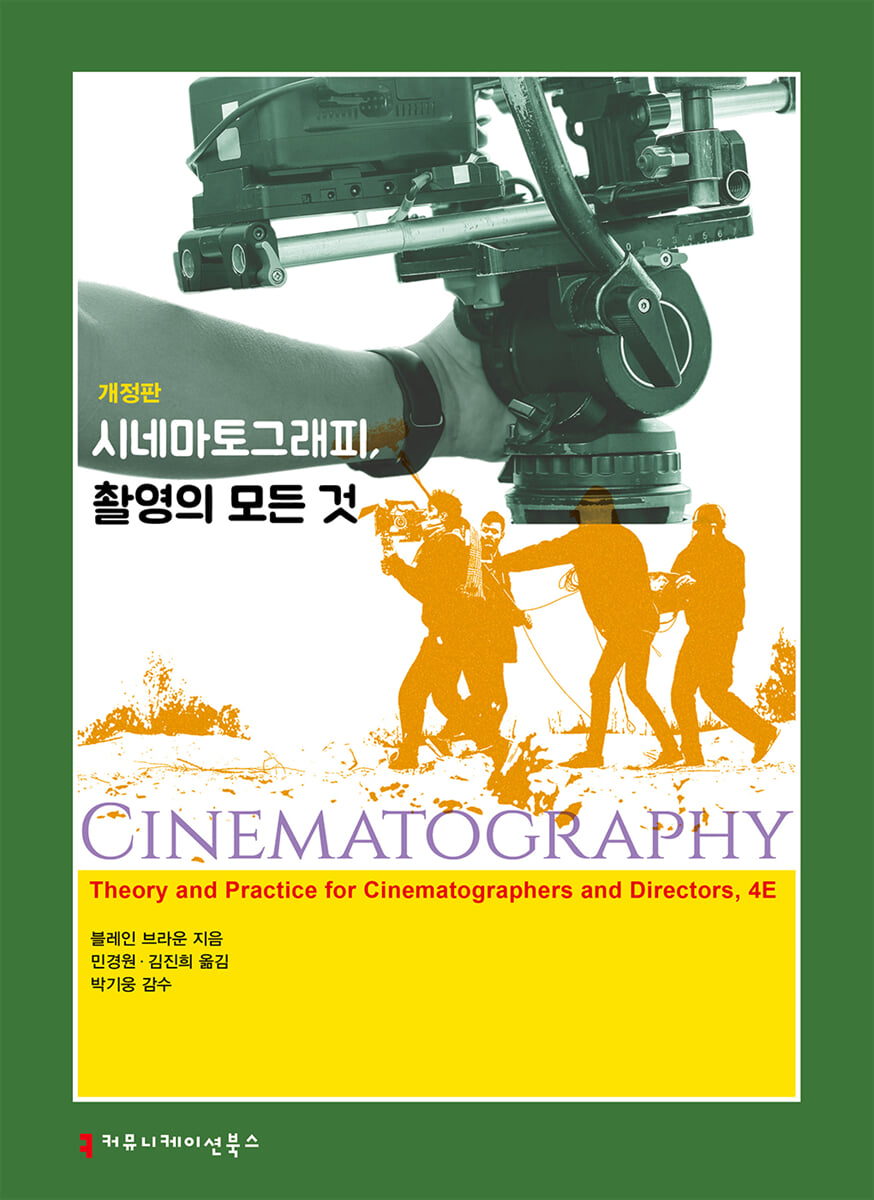 |
Description
Book Introduction
The latest edition of the best textbook on photography has been translated.
In addition to the artistic background of visual language, it provides in-depth knowledge of shooting techniques for continuity, lighting methods and equipment, and the technical aspects of digital and film shooting.
You will gain a clear understanding of the technical process of digital cinematography, from basic to advanced levels.
This book is designed for students studying film production, newcomers just entering the field, staff seeking to improve their skills on-site, and experienced producers seeking knowledge of the latest equipment and techniques. It goes beyond theory and covers a variety of real-world examples from actual production sites.
In addition to the artistic background of visual language, it provides in-depth knowledge of shooting techniques for continuity, lighting methods and equipment, and the technical aspects of digital and film shooting.
You will gain a clear understanding of the technical process of digital cinematography, from basic to advanced levels.
This book is designed for students studying film production, newcomers just entering the field, staff seeking to improve their skills on-site, and experienced producers seeking knowledge of the latest equipment and techniques. It goes beyond theory and covers a variety of real-world examples from actual production sites.
index
Translator's Preface
introduction
01 Record of movement
Record of movement
The world of characters
The visual language of cinematography
Storytelling through lighting
Frame decision
Lens and space
Perspective
Lighting and color
movement
camera angle
information
Point of view shot
visual texture
visual metaphor
Naturalism vs. Expressionism
The role of the cinematographer
02 Frame
One photo, more than that
Principles of frame composition
Unity
balance
rhythm
ratio
Contrast
texture
Directionality
3D space
Depth
relative size
linear perspective
atmospheric perspective
The power of the visual system
line
time
Triangular composition
horizontal, vertical, and diagonal lines
frame border
Frame within a frame
Positive space, negative space
Movement of the audience's gaze
Rule of Thirds
Rules of Portrait Photography
headroom
Nose room
Other guidelines
Lens height
Dutch tilt
Aspect ratio
03 Lens Language
Storytelling through lenses
foreground/middle ground/background
Lens perspective
Lens and space
Compression of space
Selective focus
flare
04 Continuity
continuity
Shooting for editing
Consider continuity
Types of continuity
continuity of content
continuity of movement
continuity of location
continuity of time
Directionality
virtual line
Screen orientation
The importance of virtual lines
Screen orientation
Criteria for setting virtual lines
The purpose of maintaining screen orientation
A basic example of maintaining screen orientation
exception
turnabout
Pushing
Coverage Plan
The Importance of Editing
The 20% Rule and the 30-Degree Rule
moving shot
chase scene
Scene passing through the door
Entry and exit frames
Exit frame using a neutral axis
Continuity of props within coverage
Movement of gaze
Group shot
Cutaway view
Over-the-shoulder shot perspective
The gaze of a seated character
05 Filming Techniques
cinematic techniques
Audience perception
frame
Fixed frame
camera angle
Shot: Building a Scene
Wide shot
Setting shot
Character shots
Full shot
Two shots
Medium Short
Close-up
Over-the-shoulder shorts
cutaway
Reaction shot
Insert
Connection Short
Reveal
supplementary short
Conversion short
Invisible technique
Audience Participation: POV
The Fourth Wall and POV
Filming techniques
Master Shin method
Integral/Extended Master Shot
Free way
Duplicate shooting method
A scene of walking and talking
montage
Place setting
introduction
hour
Characters
Other editing concepts
jump cut
Types of editing
Action cut
POV connection
match cut
Invisible connection
06 Camera
digital signal path
digital signal processing device
HD recording
UHD
Difference between RAW and Baked Files
Signal path of RAW camera
Video signal for monitor
Definition of RAW
digital negative
Chroma subsampling
Pixel
Resolution
Photo site
The difference between pixels and photosites
Digitalization
OLPF
digital sensor
CCD
CMOS
3CCD method
Color distinction
Bayer filter
Demosaic/Debayer
Digital sensors and color
Number of pixels
Shooting resolution
shutter
rotary shutter
Rolling shutter and global shutter
Sensor size and depth of field
ISO of digital cameras
noise
IR filter/hot mirror filter
Bit rate
Bit depth
Frame rate
Film look and video look
07 Digital Measurement
Waveform Monitor
External synchronization signal
Waveform View
Composition of color bars
Monitor adjustment using the plug
Monitor Navigation
Broadcast signal standards
Vectorscope
Color/Phase
Using a vectorscope on set
Color bars as seen in a vectorscope
White balance/black balance
Color gamut
Video Test Card
Limitations of neutral gray cards
medium gray
Calibration Test Chart
DSC Labs' test chart
One-short chart
X-Rite's Color Checker
Chroma Match and Screen Align
skin tone
Image resolution measurement
08 Exposure
Exposure theory
Appropriate exposure
Exposure control
ISO
Elements of exposure
light
F-stop
Shutter speed/frame rate/shutter angle
characteristic curve
underexposure
overexposure
Appropriate exposure
Brightness out of luminance range
Two aspects of exposure
The difference between film and video
Limitations of post-production
core
Exposure in RAW video shooting
digital exposure
exposure meter
Incident exposure meter
Reflective exposure meter
Another world of exposure
Setting exposure with a waveform monitor
F-stop of the waveform
Reflectivity 18%
Camera exposure indicator
Zebra
Histogram
Traffic lights and goal posts
False color
Ari Alexa's Fall Color
Exposure strategy
Avoid clipping and noise
Texture and detail
dilemma
Using an exposure meter
Key light measurement
Using the Waveform Monitor
Matching mid-gray
Exposure reference point
ETTR
Zebra
monitor
personal tendencies
Exposure of Blackmagic Design Camera
09 Linear, Gamma, Log
dynamic range
linear response
Ideal and Reality
Linear as scene reference
A typical S-curve
Film gamma and video gamma
Video gamma
coincidence
REC.709 and REC.2020
Transfer function of Rec.709
Rec.2020
Studio Swing, Full Range, Legal Video
Code 100 problem
HyperGamma/CineGamma/Film Rec
Sony's HyperGamma Terminology
Gamma of RAW video
Linear inefficiency
Log encoding
History of logs
Super White
Differences between what is seen and what is not
Log and RAW
Logarithmic curve by company
Sony S-Log
Ari Log C
Canon-log
Panarogue
Red Code
Red Log
Log and 18% gray
Differences between logarithmic curves
10 colors
Color terms
Color temperature
warm and cool colors
White balance, black balance, black shading
Magenta and green
CIE chromaticity diagram
Color gamut
Color space of video
Rec. 709 and Rec. 2020
DCI-P3
AMPAS's ACES color space
procession
Color balancing using gels and filters
Conversion gel
Correction gel
Correction gel
Correcting poor lighting
HMI
industrial lighting
Color, a storytelling tool
Color Palette Examples
11 Image Adjustment
How to adjust the image
DIT Cart
DIT Cart Features
Color Correction and Color Compensation
Lift/Shadow
Gamma/Midtone
Gain/Highlight
curve
Log mode
Offset adjustment
Output and reuse of daily corrections
LUTs and Looks
1D LUT
3D LUT
The difference between LUT and Look
Adjusting the image in front of the lens
camera filters
Diffusion filter and effect filter
Camera lens filters for color correction
Warm color filter and cool color filter
Adjusting the contrast of black and white images
polarizing filter
IR filter
12 light sources
Lighting tools
color balance
Color rendering index
Daylight/tungsten lighting
LED lighting
Remote phosphor LED
HMI lighting
Xenon
tungsten lighting
Fresnel illuminator
open face
green onion
soft light
Barger Backlight
fluorescent lights for photography
Other types of lighting fixtures
Soft line
Psyche, strip, nook, broad
Lantern lights and space lights
Crane-mounted lighting equipment
Ellipsoidal Reflector Spot Light
Balloon lights
portable lighting device
Outdoor daytime gear
temporary lighting
Box light fixture
Christmas tree lights
projector bulb
More information about lighting
13 lights
Lighting Basics
(Conceptual) lighting tool
properties of light
Strength and softness
What is the goal of good lighting?
Full range of tones
Color Control and Color Balance
shape
separation
depth
texture
Mood and tone
shadow
Reveal and hide
Exposure and Lighting
Lighting Terms
Working with hard and soft light
hard light
soft light
Direction of lighting
Avoid flat frontal lighting
Upstage lighting
Backlight and kicker
intensity of lighting
Texture of lighting
color
Lighting technology
Ambient lighting
Classic lighting
Light coming through the window
Practical and setup lighting
Basic principles of lighting
Upstage Lighting: Reverse Key
Back cross key
Ambient accent lighting
Practical lighting
Light through the window
Available light
Available light: windows
Setting lighting
Lamp light reinforcement
Outdoor shooting during the day
Fill Light
Silk and Diffusion
Open shades and garage door lighting
Using sunlight as backlight
Magic Hour
Seven different lighting in the same scene
14 Lighting Settings
Hard light and soft light
Using Fill Light in Daytime Outdoor Shoots
Scream and Barn Door
Flag, solid, net
Chimera and Snoot
softbox
Egg Crate
Window problem
Cookies, Cellos, Gobo
dimmer
LED dimmer
hand squeezer
15 grips
Definition of terms
reflector
Flags and Cutters
Net
Cuculolis (cookies)
Grid and Egg Crate
open frame
Diffusion
Butterfly and Overhead
Installation equipment
Grip head and C-stand
Highboy Stand
clam
Wall plate, baby plate, pigeon
2K receiver and turtle
Sidearm and offset arm
Other grip gear
sandbags
Apple Box
wedge
candlestick
Stud Chain Vice Grip
16 Camera Movement
camera movement
Camera operating
Motivation for camera movement
Basics of Camera Movement
Types of movement
Pan
Tilt
Dolly in/dolly out
zoom
Punch-in
moving shot
Tracking
movement in the opposite direction
Revealing using camera movement
circular movement
Crane movement
Rolling shot
Camera equipment for movement
drone
handheld
Stabilizer League
camera head
tripod
High hat
rocker plate
tilt plate
Crab Dolly
Dolly term
Filming car scenes
Vehicle-to-vehicle shooting
Aerial photography
Other camera mount equipment
Steadicam
Cable cam
splash box
Underwater photography housing
motion control camera
17 Optics and Focus
Physical Foundations of Optics
refraction
Focal length and angle of view
F-stop
focus
mental focus
Circle of confusion
Depth of field
shallow depth of field
shortest distance
Nodal Point
Rear node point and special effects shooting
Zoom lens and depth of field
Close-up photography
Exposure compensation in close-up photography
Depth of field in close-up
Depth of field calculation in extreme close-ups
Special lenses for close-ups
diopter
Extension tube and corrugated box
macro lens
Snorkel lenses and Innovision lenses
Fraser Lenses and Revolution System
Lens extender and filter coefficient
Lens Care
Back focus
18 Filming location
Putting it into action
Director of Photography
The Cinematographer's Tools
Gaffer Glass
laser pointer
Director Viewfinder
digital still camera
Short list
Order together
Reading the script
Consult with the director
Location scouting and on-site inspection
Coordination with other departments
Team and Order
production meeting
test
filming crew
Cameraman
First Camera Assistant
Second camera assistant
loader
DIT
Shooting script, equipment and tools
shooting script
Camera Assistant's Tools and Supplies
Advance preparation of the camera assistant
Camera Checklist
teamwork
Lighting Team
Grip Team
Other production teams
Filming procedures and rules
The order of scene shooting: blocking, lighting, rehearsal, shooting
Filming progress order
Room tone recording
Filming set etiquette
Safety on set
Lighting, electrical, and grip equipment
Crane Safety
How to use slate
How to read slate
End slate
MOS Slate
Multi-camera slate
Timecode Slate
Slate Sync
What to write on the slate
When changing character information on the slate
European slate system
supplementary shots, series shots, reshoots
Visual effects filming
Insert slate
Find the sun
19 DIT and Workflow
Data Management
Basic principles
Protection from mistakes
Standard Procedure
Log record management
Best Practices for Procedures
Save and format safely
clear communication
Always scrub
Get 3 copies
Drag and drop prohibited
log
File Management
File name
Download/Collection Software
Shortfoot Pro
Silver Stack
Data management software from camera manufacturers
external hard drive
ASC color resolution list
Image adjustment in post-production
Color correction of primary colors
Slope, Offset, Power, and Saturation
Academy Color Encoding System
AMPAS and ACES
Work steps
ACES Terminology
20 Power and Distribution
Electrical Measurement
electric potential
Ampere Calculation for Safety
electricity supply system
short story
3 phases
everyone
Studio power
generator
Large Generator Operation Guidelines
Small Generator Operating Instructions
Parallel small generator
Thai
Thai Safety Rules
Determining KVA through voltage and current
wall power
Load Calculation and Paper Ampere
Current capacity
Wire color code
Neutral wire
distribution equipment
Tie-in clamp
Busbar rug
connector
Bull switch
feeder cable
distribution box
Lunch Box, Snake Bite, Gang Box
Extension line (stinger)
house extension line
Distribution System Planning
load balancing
Voltage drop calculation
Electrical safety
Working in wet places
HMI Safety
safety ground
Ground fault circuit breaker
21 Visual Effects and Other Technical Details
Green screen/blue screen shooting
Lighting for green screens and blue screens
dimmer
LED dimming
dimmer board
strobe lights
high-speed shooting
Lighting for extreme close-ups
special effects
performance
fire
TV/projector effects
Day for Night Shooting
moonlight effect
water reflection effect
rain
lightning
Shooting scenes and explosions
Time-lapse shooting
Time-slice shooting technique
Converting film to video
Flickr
Virtual reality filming
Audio work
Double System Sound vs. Single System Sound
Noise blocking
mike
Do not connect the microphone directly to the camera.
directional microphone
Shotgun Mike
Microphone mount
wireless microphone
Phantom Power
Mic vs. Line Input
Sound Basics
Rule #1
Rule #2
Scratch Track
Wild Track
Polly
Roomtone
ADR is expensive
Play music for filming
Timecode Slate
References
List of reference films and video works
List of works in the picture
Search
introduction
01 Record of movement
Record of movement
The world of characters
The visual language of cinematography
Storytelling through lighting
Frame decision
Lens and space
Perspective
Lighting and color
movement
camera angle
information
Point of view shot
visual texture
visual metaphor
Naturalism vs. Expressionism
The role of the cinematographer
02 Frame
One photo, more than that
Principles of frame composition
Unity
balance
rhythm
ratio
Contrast
texture
Directionality
3D space
Depth
relative size
linear perspective
atmospheric perspective
The power of the visual system
line
time
Triangular composition
horizontal, vertical, and diagonal lines
frame border
Frame within a frame
Positive space, negative space
Movement of the audience's gaze
Rule of Thirds
Rules of Portrait Photography
headroom
Nose room
Other guidelines
Lens height
Dutch tilt
Aspect ratio
03 Lens Language
Storytelling through lenses
foreground/middle ground/background
Lens perspective
Lens and space
Compression of space
Selective focus
flare
04 Continuity
continuity
Shooting for editing
Consider continuity
Types of continuity
continuity of content
continuity of movement
continuity of location
continuity of time
Directionality
virtual line
Screen orientation
The importance of virtual lines
Screen orientation
Criteria for setting virtual lines
The purpose of maintaining screen orientation
A basic example of maintaining screen orientation
exception
turnabout
Pushing
Coverage Plan
The Importance of Editing
The 20% Rule and the 30-Degree Rule
moving shot
chase scene
Scene passing through the door
Entry and exit frames
Exit frame using a neutral axis
Continuity of props within coverage
Movement of gaze
Group shot
Cutaway view
Over-the-shoulder shot perspective
The gaze of a seated character
05 Filming Techniques
cinematic techniques
Audience perception
frame
Fixed frame
camera angle
Shot: Building a Scene
Wide shot
Setting shot
Character shots
Full shot
Two shots
Medium Short
Close-up
Over-the-shoulder shorts
cutaway
Reaction shot
Insert
Connection Short
Reveal
supplementary short
Conversion short
Invisible technique
Audience Participation: POV
The Fourth Wall and POV
Filming techniques
Master Shin method
Integral/Extended Master Shot
Free way
Duplicate shooting method
A scene of walking and talking
montage
Place setting
introduction
hour
Characters
Other editing concepts
jump cut
Types of editing
Action cut
POV connection
match cut
Invisible connection
06 Camera
digital signal path
digital signal processing device
HD recording
UHD
Difference between RAW and Baked Files
Signal path of RAW camera
Video signal for monitor
Definition of RAW
digital negative
Chroma subsampling
Pixel
Resolution
Photo site
The difference between pixels and photosites
Digitalization
OLPF
digital sensor
CCD
CMOS
3CCD method
Color distinction
Bayer filter
Demosaic/Debayer
Digital sensors and color
Number of pixels
Shooting resolution
shutter
rotary shutter
Rolling shutter and global shutter
Sensor size and depth of field
ISO of digital cameras
noise
IR filter/hot mirror filter
Bit rate
Bit depth
Frame rate
Film look and video look
07 Digital Measurement
Waveform Monitor
External synchronization signal
Waveform View
Composition of color bars
Monitor adjustment using the plug
Monitor Navigation
Broadcast signal standards
Vectorscope
Color/Phase
Using a vectorscope on set
Color bars as seen in a vectorscope
White balance/black balance
Color gamut
Video Test Card
Limitations of neutral gray cards
medium gray
Calibration Test Chart
DSC Labs' test chart
One-short chart
X-Rite's Color Checker
Chroma Match and Screen Align
skin tone
Image resolution measurement
08 Exposure
Exposure theory
Appropriate exposure
Exposure control
ISO
Elements of exposure
light
F-stop
Shutter speed/frame rate/shutter angle
characteristic curve
underexposure
overexposure
Appropriate exposure
Brightness out of luminance range
Two aspects of exposure
The difference between film and video
Limitations of post-production
core
Exposure in RAW video shooting
digital exposure
exposure meter
Incident exposure meter
Reflective exposure meter
Another world of exposure
Setting exposure with a waveform monitor
F-stop of the waveform
Reflectivity 18%
Camera exposure indicator
Zebra
Histogram
Traffic lights and goal posts
False color
Ari Alexa's Fall Color
Exposure strategy
Avoid clipping and noise
Texture and detail
dilemma
Using an exposure meter
Key light measurement
Using the Waveform Monitor
Matching mid-gray
Exposure reference point
ETTR
Zebra
monitor
personal tendencies
Exposure of Blackmagic Design Camera
09 Linear, Gamma, Log
dynamic range
linear response
Ideal and Reality
Linear as scene reference
A typical S-curve
Film gamma and video gamma
Video gamma
coincidence
REC.709 and REC.2020
Transfer function of Rec.709
Rec.2020
Studio Swing, Full Range, Legal Video
Code 100 problem
HyperGamma/CineGamma/Film Rec
Sony's HyperGamma Terminology
Gamma of RAW video
Linear inefficiency
Log encoding
History of logs
Super White
Differences between what is seen and what is not
Log and RAW
Logarithmic curve by company
Sony S-Log
Ari Log C
Canon-log
Panarogue
Red Code
Red Log
Log and 18% gray
Differences between logarithmic curves
10 colors
Color terms
Color temperature
warm and cool colors
White balance, black balance, black shading
Magenta and green
CIE chromaticity diagram
Color gamut
Color space of video
Rec. 709 and Rec. 2020
DCI-P3
AMPAS's ACES color space
procession
Color balancing using gels and filters
Conversion gel
Correction gel
Correction gel
Correcting poor lighting
HMI
industrial lighting
Color, a storytelling tool
Color Palette Examples
11 Image Adjustment
How to adjust the image
DIT Cart
DIT Cart Features
Color Correction and Color Compensation
Lift/Shadow
Gamma/Midtone
Gain/Highlight
curve
Log mode
Offset adjustment
Output and reuse of daily corrections
LUTs and Looks
1D LUT
3D LUT
The difference between LUT and Look
Adjusting the image in front of the lens
camera filters
Diffusion filter and effect filter
Camera lens filters for color correction
Warm color filter and cool color filter
Adjusting the contrast of black and white images
polarizing filter
IR filter
12 light sources
Lighting tools
color balance
Color rendering index
Daylight/tungsten lighting
LED lighting
Remote phosphor LED
HMI lighting
Xenon
tungsten lighting
Fresnel illuminator
open face
green onion
soft light
Barger Backlight
fluorescent lights for photography
Other types of lighting fixtures
Soft line
Psyche, strip, nook, broad
Lantern lights and space lights
Crane-mounted lighting equipment
Ellipsoidal Reflector Spot Light
Balloon lights
portable lighting device
Outdoor daytime gear
temporary lighting
Box light fixture
Christmas tree lights
projector bulb
More information about lighting
13 lights
Lighting Basics
(Conceptual) lighting tool
properties of light
Strength and softness
What is the goal of good lighting?
Full range of tones
Color Control and Color Balance
shape
separation
depth
texture
Mood and tone
shadow
Reveal and hide
Exposure and Lighting
Lighting Terms
Working with hard and soft light
hard light
soft light
Direction of lighting
Avoid flat frontal lighting
Upstage lighting
Backlight and kicker
intensity of lighting
Texture of lighting
color
Lighting technology
Ambient lighting
Classic lighting
Light coming through the window
Practical and setup lighting
Basic principles of lighting
Upstage Lighting: Reverse Key
Back cross key
Ambient accent lighting
Practical lighting
Light through the window
Available light
Available light: windows
Setting lighting
Lamp light reinforcement
Outdoor shooting during the day
Fill Light
Silk and Diffusion
Open shades and garage door lighting
Using sunlight as backlight
Magic Hour
Seven different lighting in the same scene
14 Lighting Settings
Hard light and soft light
Using Fill Light in Daytime Outdoor Shoots
Scream and Barn Door
Flag, solid, net
Chimera and Snoot
softbox
Egg Crate
Window problem
Cookies, Cellos, Gobo
dimmer
LED dimmer
hand squeezer
15 grips
Definition of terms
reflector
Flags and Cutters
Net
Cuculolis (cookies)
Grid and Egg Crate
open frame
Diffusion
Butterfly and Overhead
Installation equipment
Grip head and C-stand
Highboy Stand
clam
Wall plate, baby plate, pigeon
2K receiver and turtle
Sidearm and offset arm
Other grip gear
sandbags
Apple Box
wedge
candlestick
Stud Chain Vice Grip
16 Camera Movement
camera movement
Camera operating
Motivation for camera movement
Basics of Camera Movement
Types of movement
Pan
Tilt
Dolly in/dolly out
zoom
Punch-in
moving shot
Tracking
movement in the opposite direction
Revealing using camera movement
circular movement
Crane movement
Rolling shot
Camera equipment for movement
drone
handheld
Stabilizer League
camera head
tripod
High hat
rocker plate
tilt plate
Crab Dolly
Dolly term
Filming car scenes
Vehicle-to-vehicle shooting
Aerial photography
Other camera mount equipment
Steadicam
Cable cam
splash box
Underwater photography housing
motion control camera
17 Optics and Focus
Physical Foundations of Optics
refraction
Focal length and angle of view
F-stop
focus
mental focus
Circle of confusion
Depth of field
shallow depth of field
shortest distance
Nodal Point
Rear node point and special effects shooting
Zoom lens and depth of field
Close-up photography
Exposure compensation in close-up photography
Depth of field in close-up
Depth of field calculation in extreme close-ups
Special lenses for close-ups
diopter
Extension tube and corrugated box
macro lens
Snorkel lenses and Innovision lenses
Fraser Lenses and Revolution System
Lens extender and filter coefficient
Lens Care
Back focus
18 Filming location
Putting it into action
Director of Photography
The Cinematographer's Tools
Gaffer Glass
laser pointer
Director Viewfinder
digital still camera
Short list
Order together
Reading the script
Consult with the director
Location scouting and on-site inspection
Coordination with other departments
Team and Order
production meeting
test
filming crew
Cameraman
First Camera Assistant
Second camera assistant
loader
DIT
Shooting script, equipment and tools
shooting script
Camera Assistant's Tools and Supplies
Advance preparation of the camera assistant
Camera Checklist
teamwork
Lighting Team
Grip Team
Other production teams
Filming procedures and rules
The order of scene shooting: blocking, lighting, rehearsal, shooting
Filming progress order
Room tone recording
Filming set etiquette
Safety on set
Lighting, electrical, and grip equipment
Crane Safety
How to use slate
How to read slate
End slate
MOS Slate
Multi-camera slate
Timecode Slate
Slate Sync
What to write on the slate
When changing character information on the slate
European slate system
supplementary shots, series shots, reshoots
Visual effects filming
Insert slate
Find the sun
19 DIT and Workflow
Data Management
Basic principles
Protection from mistakes
Standard Procedure
Log record management
Best Practices for Procedures
Save and format safely
clear communication
Always scrub
Get 3 copies
Drag and drop prohibited
log
File Management
File name
Download/Collection Software
Shortfoot Pro
Silver Stack
Data management software from camera manufacturers
external hard drive
ASC color resolution list
Image adjustment in post-production
Color correction of primary colors
Slope, Offset, Power, and Saturation
Academy Color Encoding System
AMPAS and ACES
Work steps
ACES Terminology
20 Power and Distribution
Electrical Measurement
electric potential
Ampere Calculation for Safety
electricity supply system
short story
3 phases
everyone
Studio power
generator
Large Generator Operation Guidelines
Small Generator Operating Instructions
Parallel small generator
Thai
Thai Safety Rules
Determining KVA through voltage and current
wall power
Load Calculation and Paper Ampere
Current capacity
Wire color code
Neutral wire
distribution equipment
Tie-in clamp
Busbar rug
connector
Bull switch
feeder cable
distribution box
Lunch Box, Snake Bite, Gang Box
Extension line (stinger)
house extension line
Distribution System Planning
load balancing
Voltage drop calculation
Electrical safety
Working in wet places
HMI Safety
safety ground
Ground fault circuit breaker
21 Visual Effects and Other Technical Details
Green screen/blue screen shooting
Lighting for green screens and blue screens
dimmer
LED dimming
dimmer board
strobe lights
high-speed shooting
Lighting for extreme close-ups
special effects
performance
fire
TV/projector effects
Day for Night Shooting
moonlight effect
water reflection effect
rain
lightning
Shooting scenes and explosions
Time-lapse shooting
Time-slice shooting technique
Converting film to video
Flickr
Virtual reality filming
Audio work
Double System Sound vs. Single System Sound
Noise blocking
mike
Do not connect the microphone directly to the camera.
directional microphone
Shotgun Mike
Microphone mount
wireless microphone
Phantom Power
Mic vs. Line Input
Sound Basics
Rule #1
Rule #2
Scratch Track
Wild Track
Polly
Roomtone
ADR is expensive
Play music for filming
Timecode Slate
References
List of reference films and video works
List of works in the picture
Search
Into the book
How you combine and arrange the basic elements described above determines what you perceive first in the frame.
This visual system helps the eyes and brain synthesize information by logically organizing the frames.
It is important to remember that the audience does not 'see' the entire frame at once.
The audience's gaze must be guided well as they constantly move to 'read' the shot.
Let's look at the visual elements that help our eyes and brain interpret scenes.
---From "02_ Frame"
A movie is made scene by scene, and a scene is made shot by shot.
No matter how large or complex the production is, we always shoot one shot at a time.
The ultimate goal of a shot is to blend well with other shots to form a complete final scene.
You have to keep this in mind every time you take a shot.
Continuity is an important concept to always keep in mind when making a film.
If you accidentally lose continuity, hours of work can be wasted or cause major problems when editing.
So what is continuity? Fundamentally, it refers to the logical consistency of story, dialogue, and imagery necessary for a film to appear realistic.
---From "04_ Continuity"
A cutaway is a shot that shows objects or people related to the scene but not the main character being filmed (Figure 5.13).
A cutaway is something the audience has not seen in the scene until then, even in the master shot or wide shot.
Examples include the scenery outside the window or a cat sleeping on the floor.
A cutaway can emphasize an action, add information to a scene, or be something a character is looking at or pointing at.
If it contains content unrelated to a completely different space or scene, it is not a cutaway, but a different scene.
Cutaways serve as a safeguard for the editorial director.
If you run into any difficulties during the editing process, you can solve the problem by connecting with a cutaway.
From experience, it's a good idea to shoot a cutaway from every scene.
It's okay even if it's not in the script and isn't important to the scene.
Cutaways can be a solution during the editing process.
---From "05_ Filming Techniques"
You may have heard of films that were released by restoring the original negative.
Many classic films, including Gone with the Wind (1939) and Lawrence of Arabia, have been beautifully restored.
But here a question arises.
When a new generation of colorists creates new prints, do they truly honor the artistic intent of the cinematographer who shot the film? Aren't cinematographers, in collaboration with the director and art director, hired to create the images? While it's impossible to verify this, those who carry out these restorations do their utmost to preserve the original filmmakers' artistic intent.
---From "06_ Camera"
ARIB/SMPTE HD/UHD color bars have a similar appearance, but add pure black just above and below zero. In HD/UHD color bars, the numbers represent percentages.
Flushing is essential for properly setting the black level of your monitor.
Let's say that we adjusted the monitor to match only the 'black' part and reproduced black.
How can you tell if you've hit black exactly or if it's too dark and darker than pure black? Even on a monitor, black is just black.
The plug shows a very slightly brighter black, preventing the user from setting 'too black'.
If you set the black too high, it will affect not only the dark areas, but also the rest of the image, the midtones and highlights.
---From "07_ Digital Measurement"
All LED lighting devices used in film production are made of multiple light-emitting diodes.
However, variations in the manufacturing process can lead to variations in LED color and output. To address this, LED manufacturers have employed binning. LEDs are tested and classified into several groups, or bins, based on the light characteristics they produce. One reason for the high unit price of LED lighting is the high number of defective products rejected during this process.
To eliminate the need for binning, some manufacturers have designed remote phosphor technology.
Conventional white LEDs have the advantage of providing an integrated device with white light output, but because they operate as multiple bright point sources, they suffer from the aforementioned light uniformity problem in situations where a large emitting surface is required.
---From "12_ Light Source"
One of the absolute rules of lighting is that all practical lighting must use a dimmer.
Most will be hand squeezers, which are small, portable dimmers made from regular wall dimmers.
Most lights allow you to control their intensity through scrims, grip nets, ND gels, or self-adjusting lighting.
Since there is no such control method in practical lamps, the fastest and most accurate way to adjust brightness is to use a dimmer.
A hand squeezer that can be precisely controlled is essential as these lamps are visible in the frame.
---From "13_ Lighting"
Windows (and glass doors) present a dilemma: the outside is almost always much more intense than the inside.
There is a problem to be solved when the actor is posing against the window.
You can try to increase indoor lighting to match the outdoors, but this is never practical.
Figures 14.14 and 14.15 suggest a solution to this problem: simply persuade the director to change the direction of the actors and have the window light illuminate them.
---From "14_ Lighting Settings"
Sandbags are essential to filmmaking.
They are primarily used to secure lighting stands, C-stands, and highboy stands, and have a variety of uses, from holding open doors to allowing actors to sit higher in their chairs.
Typically, sandbags are filled with cat litter, not just sand.
Sandbags come in a variety of sizes, the most common being 25 lb (11.3 kg), although 15 lb (6.8 kg) and 5 lb (2.3 kg) sandbags are also used.
The shotbag is smaller, but is filled with lead and weighs 25 pounds.
Short bags are useful where 25-pound sandbags are not available.
---From "15_ Grip"
Focus is a much-misunderstood concept in filmmaking.
What is "focus"? In theory, being in focus means that real objects in a film image "appear as they would in real life."
The human eye tends to perceive everything in focus, but this is a result of the interaction between the eyes and the brain.
The human eye has a fairly wide field of view, but optically, the eye corresponds to f/2.
Because our eyes are considered 'wide-angle' lenses, much of the world is actually in focus.
But the focus is not fixed, it is constantly changing.
They just don't recognize it.
The muscles that control the lens of the eye change the shape of the lens, thereby changing focus.
---From "17_ Optics and Focus"
Typically, cinematographers carry two exposure meters: an incident light meter and a spot light meter.
The Sekonic exposure meter (Figure 18.2) combines these two functions, but many different types of exposure meters are used on set.
A color thermometer is also useful, but is not usually carried around with you at all times.
Cine Meter II, an app developed by Adam Wilt (Figures 8.37 and 8.38 in Chapter 8, “Exposure”), actually performs all three functions, and includes an additional Luxi dome for incident exposure metering.
---From "18_ Filming Site"
There are several software programs that specialize in downloading and backing up video/audio files, making them suitable for data management on set.
Sometimes you may need to convert files.
This software provides safety features such as cyclic redundancy checks (CRCs), which are error-detection codes that identify accidental modifications to raw data.
It also provides a variety of options for these tests.
You can usually enter a roll name, and it will automatically generate an ascending number after each download.
This visual system helps the eyes and brain synthesize information by logically organizing the frames.
It is important to remember that the audience does not 'see' the entire frame at once.
The audience's gaze must be guided well as they constantly move to 'read' the shot.
Let's look at the visual elements that help our eyes and brain interpret scenes.
---From "02_ Frame"
A movie is made scene by scene, and a scene is made shot by shot.
No matter how large or complex the production is, we always shoot one shot at a time.
The ultimate goal of a shot is to blend well with other shots to form a complete final scene.
You have to keep this in mind every time you take a shot.
Continuity is an important concept to always keep in mind when making a film.
If you accidentally lose continuity, hours of work can be wasted or cause major problems when editing.
So what is continuity? Fundamentally, it refers to the logical consistency of story, dialogue, and imagery necessary for a film to appear realistic.
---From "04_ Continuity"
A cutaway is a shot that shows objects or people related to the scene but not the main character being filmed (Figure 5.13).
A cutaway is something the audience has not seen in the scene until then, even in the master shot or wide shot.
Examples include the scenery outside the window or a cat sleeping on the floor.
A cutaway can emphasize an action, add information to a scene, or be something a character is looking at or pointing at.
If it contains content unrelated to a completely different space or scene, it is not a cutaway, but a different scene.
Cutaways serve as a safeguard for the editorial director.
If you run into any difficulties during the editing process, you can solve the problem by connecting with a cutaway.
From experience, it's a good idea to shoot a cutaway from every scene.
It's okay even if it's not in the script and isn't important to the scene.
Cutaways can be a solution during the editing process.
---From "05_ Filming Techniques"
You may have heard of films that were released by restoring the original negative.
Many classic films, including Gone with the Wind (1939) and Lawrence of Arabia, have been beautifully restored.
But here a question arises.
When a new generation of colorists creates new prints, do they truly honor the artistic intent of the cinematographer who shot the film? Aren't cinematographers, in collaboration with the director and art director, hired to create the images? While it's impossible to verify this, those who carry out these restorations do their utmost to preserve the original filmmakers' artistic intent.
---From "06_ Camera"
ARIB/SMPTE HD/UHD color bars have a similar appearance, but add pure black just above and below zero. In HD/UHD color bars, the numbers represent percentages.
Flushing is essential for properly setting the black level of your monitor.
Let's say that we adjusted the monitor to match only the 'black' part and reproduced black.
How can you tell if you've hit black exactly or if it's too dark and darker than pure black? Even on a monitor, black is just black.
The plug shows a very slightly brighter black, preventing the user from setting 'too black'.
If you set the black too high, it will affect not only the dark areas, but also the rest of the image, the midtones and highlights.
---From "07_ Digital Measurement"
All LED lighting devices used in film production are made of multiple light-emitting diodes.
However, variations in the manufacturing process can lead to variations in LED color and output. To address this, LED manufacturers have employed binning. LEDs are tested and classified into several groups, or bins, based on the light characteristics they produce. One reason for the high unit price of LED lighting is the high number of defective products rejected during this process.
To eliminate the need for binning, some manufacturers have designed remote phosphor technology.
Conventional white LEDs have the advantage of providing an integrated device with white light output, but because they operate as multiple bright point sources, they suffer from the aforementioned light uniformity problem in situations where a large emitting surface is required.
---From "12_ Light Source"
One of the absolute rules of lighting is that all practical lighting must use a dimmer.
Most will be hand squeezers, which are small, portable dimmers made from regular wall dimmers.
Most lights allow you to control their intensity through scrims, grip nets, ND gels, or self-adjusting lighting.
Since there is no such control method in practical lamps, the fastest and most accurate way to adjust brightness is to use a dimmer.
A hand squeezer that can be precisely controlled is essential as these lamps are visible in the frame.
---From "13_ Lighting"
Windows (and glass doors) present a dilemma: the outside is almost always much more intense than the inside.
There is a problem to be solved when the actor is posing against the window.
You can try to increase indoor lighting to match the outdoors, but this is never practical.
Figures 14.14 and 14.15 suggest a solution to this problem: simply persuade the director to change the direction of the actors and have the window light illuminate them.
---From "14_ Lighting Settings"
Sandbags are essential to filmmaking.
They are primarily used to secure lighting stands, C-stands, and highboy stands, and have a variety of uses, from holding open doors to allowing actors to sit higher in their chairs.
Typically, sandbags are filled with cat litter, not just sand.
Sandbags come in a variety of sizes, the most common being 25 lb (11.3 kg), although 15 lb (6.8 kg) and 5 lb (2.3 kg) sandbags are also used.
The shotbag is smaller, but is filled with lead and weighs 25 pounds.
Short bags are useful where 25-pound sandbags are not available.
---From "15_ Grip"
Focus is a much-misunderstood concept in filmmaking.
What is "focus"? In theory, being in focus means that real objects in a film image "appear as they would in real life."
The human eye tends to perceive everything in focus, but this is a result of the interaction between the eyes and the brain.
The human eye has a fairly wide field of view, but optically, the eye corresponds to f/2.
Because our eyes are considered 'wide-angle' lenses, much of the world is actually in focus.
But the focus is not fixed, it is constantly changing.
They just don't recognize it.
The muscles that control the lens of the eye change the shape of the lens, thereby changing focus.
---From "17_ Optics and Focus"
Typically, cinematographers carry two exposure meters: an incident light meter and a spot light meter.
The Sekonic exposure meter (Figure 18.2) combines these two functions, but many different types of exposure meters are used on set.
A color thermometer is also useful, but is not usually carried around with you at all times.
Cine Meter II, an app developed by Adam Wilt (Figures 8.37 and 8.38 in Chapter 8, “Exposure”), actually performs all three functions, and includes an additional Luxi dome for incident exposure metering.
---From "18_ Filming Site"
There are several software programs that specialize in downloading and backing up video/audio files, making them suitable for data management on set.
Sometimes you may need to convert files.
This software provides safety features such as cyclic redundancy checks (CRCs), which are error-detection codes that identify accidental modifications to raw data.
It also provides a variety of options for these tests.
You can usually enter a roll name, and it will automatically generate an ascending number after each download.
---From "19_ DIT and Workflow"
Publisher's Review
The Best Photography Textbook Revised 2025 Edition
A must-read for filmmakers, writers, lighting professionals, and other professionals in other fields.
Clearly explains the technical process of digital cinematography, from basic to advanced.
Includes theory and practical techniques to explore a variety of styles and aesthetics.
Cinematography is more than just a recording of movement; it is an art that visually expresses all nonverbal information, including thoughts, words, actions, and emotional subtext and mood.
Therefore, we need to delve deeper into how to convey diverse meanings and subtexts through video grammar.
In other words, photography must go beyond simply capturing a subject using visual language and implement rich visual storytelling.
When producing a film, the deeper your understanding of cinematography, the more effectively you can utilize the grammar of cinematography. To do this, it is important to make the most of the expertise of a great cinematographer.
This book systematically integrates extensive technical knowledge of cinematography on the aesthetic foundation of the language of images.
What is particularly noteworthy is that it goes beyond theoretical discourse and presents in-depth analyses of various cases from actual production sites.
The author's extensive field experience and in-depth academic research are organically combined to provide readers with comprehensive insights.
And it comprehensively covers all areas of video production, including lighting, directing, and editing, not limited to filming techniques.
In particular, it adopts a flexible approach that encompasses various media formats, including not only films but also broadcasting, advertising, and documentaries, providing insights that can be applied to the modern, diverse video production environment.
Detailed descriptions and illustrations of actual films provide a concrete glimpse into the cinematographer's ideas and methodology.
This book comprehensively covers the camera operation knowledge required for film production and the professional elements that a cinematographer should know.
This understanding enables smooth communication between production staff and allows the entire creative process to be encompassed by a common language.
Covering the latest lighting and camera equipment, the 2025 revised edition helps you understand the professional photography and production process, from film to the latest digital technologies.
The information in this book can be applied to a wide range of video fields, including not only movies but also broadcasting, advertising, music videos, corporate promotional materials, documentaries, animation, and games.
This book is essential for professionals in the field who want to learn both the art and technique of photography, as well as for professors and students who want to learn the rapidly changing cutting-edge photography technology.
The first edition, published in 2012, is a translation of the first edition of the original book published in 2002, and this revised edition is a translation of the fourth edition of the original book published in 2022.
Highlights from the 2025 edition, featuring the latest lighting and camera equipment.
- Visual storytelling
- Continuity and coverage
- Cameras and digital sensors
- Film Lighting Fundamentals and Equipment
- How to film a scene
- Exposure technique
- Color Science
- Understanding digital images
- How to use linear, gamma, and log video
- Image control and on-site grading
- Data Management and DIT
- Optics and Focus
- Camera movement
- Filming site
- Green screen, high-speed shooting, etc.
A must-read for filmmakers, writers, lighting professionals, and other professionals in other fields.
Clearly explains the technical process of digital cinematography, from basic to advanced.
Includes theory and practical techniques to explore a variety of styles and aesthetics.
Cinematography is more than just a recording of movement; it is an art that visually expresses all nonverbal information, including thoughts, words, actions, and emotional subtext and mood.
Therefore, we need to delve deeper into how to convey diverse meanings and subtexts through video grammar.
In other words, photography must go beyond simply capturing a subject using visual language and implement rich visual storytelling.
When producing a film, the deeper your understanding of cinematography, the more effectively you can utilize the grammar of cinematography. To do this, it is important to make the most of the expertise of a great cinematographer.
This book systematically integrates extensive technical knowledge of cinematography on the aesthetic foundation of the language of images.
What is particularly noteworthy is that it goes beyond theoretical discourse and presents in-depth analyses of various cases from actual production sites.
The author's extensive field experience and in-depth academic research are organically combined to provide readers with comprehensive insights.
And it comprehensively covers all areas of video production, including lighting, directing, and editing, not limited to filming techniques.
In particular, it adopts a flexible approach that encompasses various media formats, including not only films but also broadcasting, advertising, and documentaries, providing insights that can be applied to the modern, diverse video production environment.
Detailed descriptions and illustrations of actual films provide a concrete glimpse into the cinematographer's ideas and methodology.
This book comprehensively covers the camera operation knowledge required for film production and the professional elements that a cinematographer should know.
This understanding enables smooth communication between production staff and allows the entire creative process to be encompassed by a common language.
Covering the latest lighting and camera equipment, the 2025 revised edition helps you understand the professional photography and production process, from film to the latest digital technologies.
The information in this book can be applied to a wide range of video fields, including not only movies but also broadcasting, advertising, music videos, corporate promotional materials, documentaries, animation, and games.
This book is essential for professionals in the field who want to learn both the art and technique of photography, as well as for professors and students who want to learn the rapidly changing cutting-edge photography technology.
The first edition, published in 2012, is a translation of the first edition of the original book published in 2002, and this revised edition is a translation of the fourth edition of the original book published in 2022.
Highlights from the 2025 edition, featuring the latest lighting and camera equipment.
- Visual storytelling
- Continuity and coverage
- Cameras and digital sensors
- Film Lighting Fundamentals and Equipment
- How to film a scene
- Exposure technique
- Color Science
- Understanding digital images
- How to use linear, gamma, and log video
- Image control and on-site grading
- Data Management and DIT
- Optics and Focus
- Camera movement
- Filming site
- Green screen, high-speed shooting, etc.
GOODS SPECIFICS
- Date of issue: February 28, 2025
- Page count, weight, size: 758 pages | 188*258*35mm
- ISBN13: 9791173076039
You may also like
카테고리
korean


korean

![GQ KOREA Mark (Monthly): December [2025]](http://librairie.coreenne.fr/cdn/shop/files/8ef265dbbfbf186523ed75ba7319009d.jpg?v=1765340328&width=3840)


