

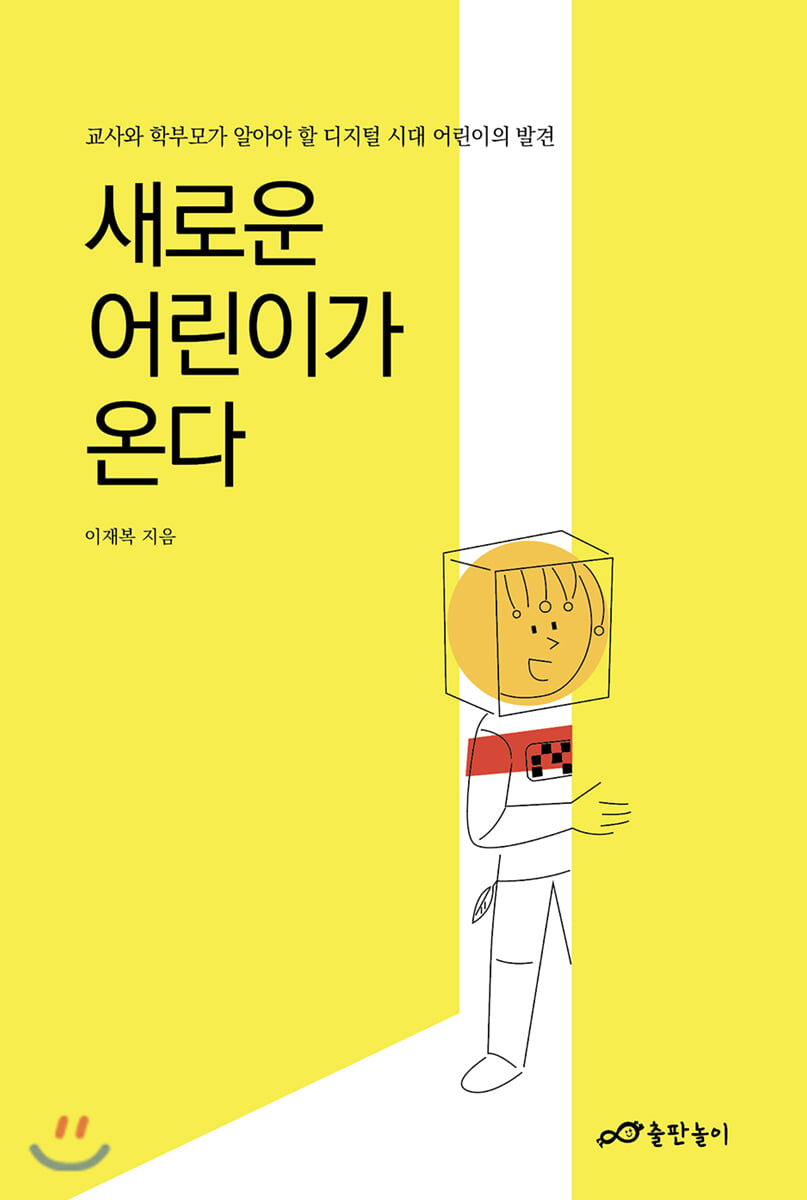
A new child is coming
 |
Description
Book Introduction
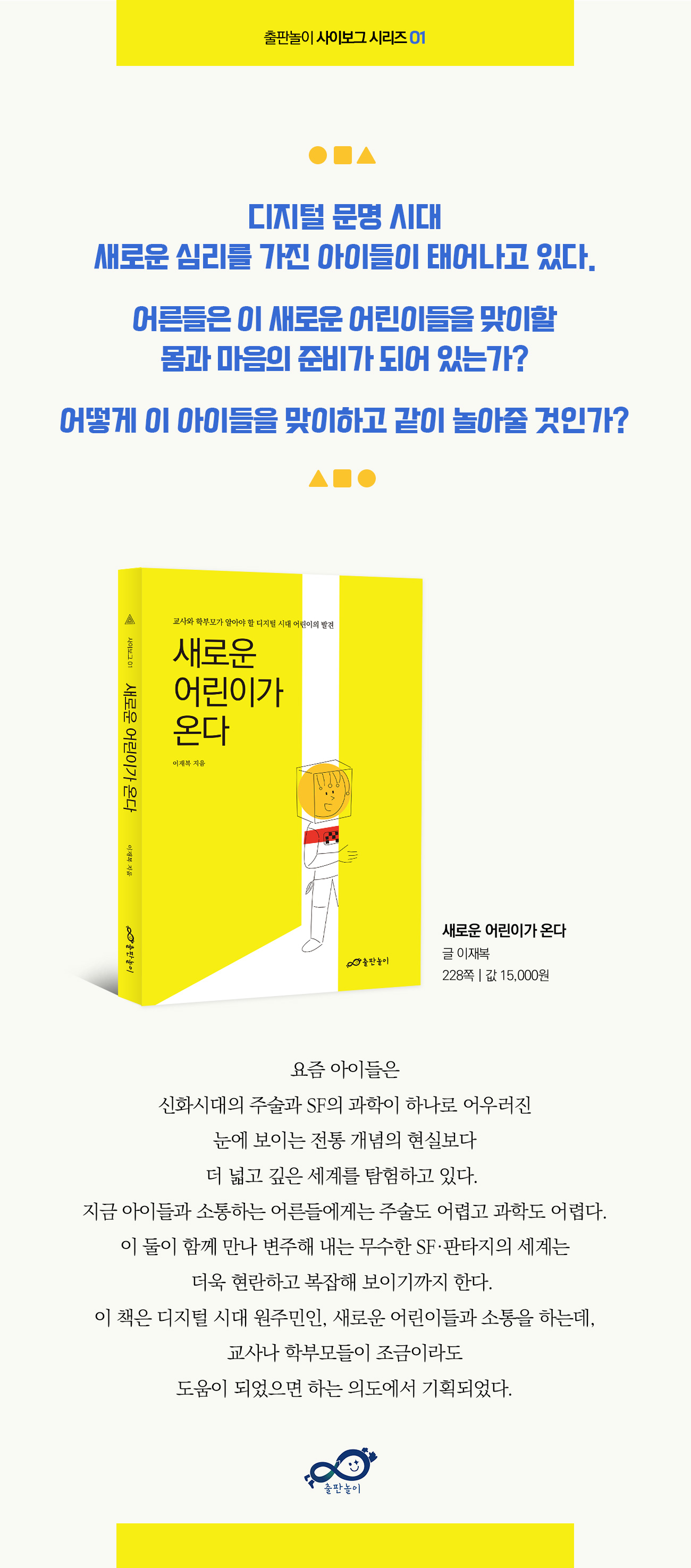
To communicate with children who are natives of the digital age,
First, adults' perspective on the world must change.
"A New Child Comes" contains several very important questions to explore.
These days, children are increasingly distancing themselves from books.
Trapped in the world of digital images, we avoid writing.
How can we bring children into the world of reading?
In this digital age where images reign supreme, we are exploring various perspectives on how children can enjoy the joy of reading.
In order to communicate with children, who are natives of the digital age, adults must first change their perspective on the world.
We take an in-depth look at the limitations of the stereotypes that adults have when communicating with children these days.
After going through this process, I analyzed the language used by children's characters that adults previously could not accept, and explored various aspects of how adults should accept this language and how they should let go of authority and communicate with children, crossing over movies, philosophy books, and children's literature.
Lee Jae-bok, the children's literature critic who wrote this book, runs a fantasy creative writing school and spends a lot of time critiquing the works of authors.
There's always a lot of discussion in creative settings about how we can tell stories that enter into the world of children, who are natives of the digital age, while using language that connects them to their inner selves.
Because the authors reflect on the field records of their efforts to enter children's lives and become soulmates, the examples and points of controversy are richly imbued with the current reality of the here and now.
First, adults' perspective on the world must change.
"A New Child Comes" contains several very important questions to explore.
These days, children are increasingly distancing themselves from books.
Trapped in the world of digital images, we avoid writing.
How can we bring children into the world of reading?
In this digital age where images reign supreme, we are exploring various perspectives on how children can enjoy the joy of reading.
In order to communicate with children, who are natives of the digital age, adults must first change their perspective on the world.
We take an in-depth look at the limitations of the stereotypes that adults have when communicating with children these days.
After going through this process, I analyzed the language used by children's characters that adults previously could not accept, and explored various aspects of how adults should accept this language and how they should let go of authority and communicate with children, crossing over movies, philosophy books, and children's literature.
Lee Jae-bok, the children's literature critic who wrote this book, runs a fantasy creative writing school and spends a lot of time critiquing the works of authors.
There's always a lot of discussion in creative settings about how we can tell stories that enter into the world of children, who are natives of the digital age, while using language that connects them to their inner selves.
Because the authors reflect on the field records of their efforts to enter children's lives and become soulmates, the examples and points of controversy are richly imbued with the current reality of the here and now.
- You can preview some of the book's contents.
Preview
index
Starting with 6
Chapter 1: Children in the Digital Age Communicate Through Image Language 11
Chapter 2: Reversing the Negative Image of Mothers Who Force Anxiety on Children 35
Chapter 3: A Child Poet Who Doesn't Get Trapped in a Double Bind: The Emergence of a New Character
-Question 71 posed by the cruel poem
Chapter 4: Child Characters Who Break the Patriarch's One-Way Authority 103
Chapter 5: The Power of Affirmation in Modern Fairy Tale Characters Who Acknowledge Differences in Desire 125
Chapter 6: Young Cyborg Alices Ushering in the Era of Science Fiction and Fantasy 149
Chapter 7: The world is covered with a forest of symbols and codes.
-The Practice of Reading Folk Tales 183
Chapter 8: Kwon Jeong-saeng and North Korean Children's Literature 203
Coming out 220
Chapter 1: Children in the Digital Age Communicate Through Image Language 11
Chapter 2: Reversing the Negative Image of Mothers Who Force Anxiety on Children 35
Chapter 3: A Child Poet Who Doesn't Get Trapped in a Double Bind: The Emergence of a New Character
-Question 71 posed by the cruel poem
Chapter 4: Child Characters Who Break the Patriarch's One-Way Authority 103
Chapter 5: The Power of Affirmation in Modern Fairy Tale Characters Who Acknowledge Differences in Desire 125
Chapter 6: Young Cyborg Alices Ushering in the Era of Science Fiction and Fantasy 149
Chapter 7: The world is covered with a forest of symbols and codes.
-The Practice of Reading Folk Tales 183
Chapter 8: Kwon Jeong-saeng and North Korean Children's Literature 203
Coming out 220
Detailed image
Into the book
The images pouring out of digital devices are so powerful.
To put it metaphorically, it would be a good idea to say that it captivates children's five senses.
Once you get into this, it's not easy to get out.
The younger the child, the more likely it is that the large number of image symbol elements from digital devices will completely dominate their cognitive structure, making them indifferent or insensitive to images of ordinary objects in everyday life.
A child accustomed to strong stimuli will find it difficult to understand, sense, and resonate with the sounds and tremors of color produced by countless delicate and minute beings.
--- p.17
The most unfortunate thing is that parents force their newborn children to watch digital videos without any reason.
The cognitive problems that arise when children are exposed to digital images too early should be seriously considered.
--- p.20
A mother's one-sided devotion prevents the child from becoming the subject.
Parents who are usually trapped in family-centered culture forget this.
For a child, the mother is a dual object that evokes feelings of both attachment and separation.
It is the object of love and affection, but it is also the object of fear and anxiety, fearing that one will be forever captivated by that mother and never be able to escape.
--- p.54
The child is in a dilemma at this point.
He already felt through meta-messages that his mother did not love him, but she kept coming at him as if forcing herself to say that she loved him, so he couldn't reject her and after much thought, he decided to accept her fake feelings because he still wanted to maintain a good relationship with her.
As this forced relationship repeats itself, the child falls into one very serious situation.
If a child touches on the realm of hidden emotions by saying, "Mom, you don't love me right now," the mother will quickly punish the child or give him some other reason, saying, "You're mistaken.
You will try to persuade the child by saying, 'You are making a wrong decision now.'
--- p.78
It is not yet possible to completely separate from the imaginary space that existed before the ego was formed and when the baby was completely one with the mother.
So the child wants to sleep with his mother a little longer.
But at a cultural level, the child is absolutely rebelling against the mother.
The concept of family (home), which is the basis of maternal ideology, is a product of modern times.
In the 1990s, the concept of the middle class was put into operation in our children's literature, and the concept of family was further strengthened.
In the era of neoliberalism, the concept of family has become more closed, secretive, and private, as it has merged with modern education that emphasizes academic background.
In the closed space called home (family), the mother must be an example of absolute self-management, never giving up, and must also be a watchdog who must constantly manage her child.
In order to incorporate a child into the system of academic elitism, the mother must first hide her own desires or show herself to be castrated.
Mothers must fulfill a double and triple role, controlling their children in the name of protection and love for their children's happiness, and even using patriarchal language that enforces logic that castrates the children's desires.
Of course, there are exceptions, but I think this is a common situation for Korean mothers.
--- p.106
In "My Friend Winn-Dixie," the mother abandons her child (Opal).
In a way, the mother prioritized her own desires and took away Opal's right to love her.
In some way, the mother is abusing the child.
Because of this, Opal became a child destined to live with a longing for her mother.
Many writers and mother readers will ponder the moral issues surrounding a mother abandoning her child.
This primary emotion drives writers to write sentences dominated by language of sympathy and compassion when depicting the lives of isolated children without parents. Their perspective on existence is prioritized over moral judgment.
Because we look at a child whose parents have left with a feeling of pity, it is natural that the sentence is depressing, but it is difficult for it to go beyond the level of being instructive and enlightening.
Isn't it, in a way, arrogant to view a being with pity or compassion? The perspective that views the language of pity and compassion only in a positive light needs to be reconsidered.
Politicians cosplay as sympathizers.
Cosplay should not be confused with authenticity and sympathy.
Cosplaying as sympathy is nothing more than a highly abstract, conceptual, and intentional act of wanting to drastically reduce the gap with some other person.
--- p.128
He was a useless being.
So, these oncomouses and female humans are the actual living cyborg species that cannot help but exist in an unsaved state because they do not know the history of salvation.
Women who seek to overthrow the male-centered ruling order cannot help but break away from the existing history of salvation.
Oncomous and female humans are also called “mediums of infection that contaminate the natural subject” (Humble Witness, p. 249).
In the world created by God, there was a sacredness of nature.
There was a sacredness to life.
“The purity of the race, the purity of all kinds, the great white hope of a heliocentric enlightenment for a truly indigenous Europe, the dream of man’s own creation, the ultimate control of natural others for the sake of a single good—all these things” (ibid.).
(Page 250) It was broken by the Oncomouse, a ‘hybrid mouse’, and the female human, a ‘fictional human who is not human’.
They mixed everything together to create a hybrid.
The boundaries between species that had been separated by purely natural subjects have been completely overcome.
It has transcended all taxonomic boundaries and has also contaminated male-dominated family lines.
The work of creating a new world is science fiction, and the discourse that deals with who can be a citizen and who can be an intermediary in this world is the theme of the world that science fiction pursues.
Oncomouse and female humans may be the most symbolic protagonists of a new world on the path to a cyborg world since the modern era.
Here, let's read together Kwon Jeong-saeng's last work, the science fiction work "Langrangbyeol Ttaettaerong."
The story I will tell from now on has a very important meaning in relation to the question of how we should view Kwon Jeong-saeng's literature.
When an author leaves this world, his work remains as a legacy of human culture.
We must cherish this cultural heritage, enjoy it in every way we can, and continually use it as material and fuel for today's storytelling.
So, one writer must be willing to be eaten by the next generation of writers.
In some way, we must summon Kwon Jeong-saeng, link his works, words, and traces of life with various other things, and create a new storytelling from them.
The storytelling that emerges at this time should not be accepted as valuable only in the language that idolizes the writer Kwon Jeong-saeng.
As Haraway said earlier, we must be able to have diverse discussions while enduring the tense tension that comes from acknowledging both sides of the same unchangeable perspective on existence, which is to say, seeing all incompatible beings as true beings.
At such times, both entities will be able to reveal their inherent, deep meaning and resonance.
To put it metaphorically, it would be a good idea to say that it captivates children's five senses.
Once you get into this, it's not easy to get out.
The younger the child, the more likely it is that the large number of image symbol elements from digital devices will completely dominate their cognitive structure, making them indifferent or insensitive to images of ordinary objects in everyday life.
A child accustomed to strong stimuli will find it difficult to understand, sense, and resonate with the sounds and tremors of color produced by countless delicate and minute beings.
--- p.17
The most unfortunate thing is that parents force their newborn children to watch digital videos without any reason.
The cognitive problems that arise when children are exposed to digital images too early should be seriously considered.
--- p.20
A mother's one-sided devotion prevents the child from becoming the subject.
Parents who are usually trapped in family-centered culture forget this.
For a child, the mother is a dual object that evokes feelings of both attachment and separation.
It is the object of love and affection, but it is also the object of fear and anxiety, fearing that one will be forever captivated by that mother and never be able to escape.
--- p.54
The child is in a dilemma at this point.
He already felt through meta-messages that his mother did not love him, but she kept coming at him as if forcing herself to say that she loved him, so he couldn't reject her and after much thought, he decided to accept her fake feelings because he still wanted to maintain a good relationship with her.
As this forced relationship repeats itself, the child falls into one very serious situation.
If a child touches on the realm of hidden emotions by saying, "Mom, you don't love me right now," the mother will quickly punish the child or give him some other reason, saying, "You're mistaken.
You will try to persuade the child by saying, 'You are making a wrong decision now.'
--- p.78
It is not yet possible to completely separate from the imaginary space that existed before the ego was formed and when the baby was completely one with the mother.
So the child wants to sleep with his mother a little longer.
But at a cultural level, the child is absolutely rebelling against the mother.
The concept of family (home), which is the basis of maternal ideology, is a product of modern times.
In the 1990s, the concept of the middle class was put into operation in our children's literature, and the concept of family was further strengthened.
In the era of neoliberalism, the concept of family has become more closed, secretive, and private, as it has merged with modern education that emphasizes academic background.
In the closed space called home (family), the mother must be an example of absolute self-management, never giving up, and must also be a watchdog who must constantly manage her child.
In order to incorporate a child into the system of academic elitism, the mother must first hide her own desires or show herself to be castrated.
Mothers must fulfill a double and triple role, controlling their children in the name of protection and love for their children's happiness, and even using patriarchal language that enforces logic that castrates the children's desires.
Of course, there are exceptions, but I think this is a common situation for Korean mothers.
--- p.106
In "My Friend Winn-Dixie," the mother abandons her child (Opal).
In a way, the mother prioritized her own desires and took away Opal's right to love her.
In some way, the mother is abusing the child.
Because of this, Opal became a child destined to live with a longing for her mother.
Many writers and mother readers will ponder the moral issues surrounding a mother abandoning her child.
This primary emotion drives writers to write sentences dominated by language of sympathy and compassion when depicting the lives of isolated children without parents. Their perspective on existence is prioritized over moral judgment.
Because we look at a child whose parents have left with a feeling of pity, it is natural that the sentence is depressing, but it is difficult for it to go beyond the level of being instructive and enlightening.
Isn't it, in a way, arrogant to view a being with pity or compassion? The perspective that views the language of pity and compassion only in a positive light needs to be reconsidered.
Politicians cosplay as sympathizers.
Cosplay should not be confused with authenticity and sympathy.
Cosplaying as sympathy is nothing more than a highly abstract, conceptual, and intentional act of wanting to drastically reduce the gap with some other person.
--- p.128
He was a useless being.
So, these oncomouses and female humans are the actual living cyborg species that cannot help but exist in an unsaved state because they do not know the history of salvation.
Women who seek to overthrow the male-centered ruling order cannot help but break away from the existing history of salvation.
Oncomous and female humans are also called “mediums of infection that contaminate the natural subject” (Humble Witness, p. 249).
In the world created by God, there was a sacredness of nature.
There was a sacredness to life.
“The purity of the race, the purity of all kinds, the great white hope of a heliocentric enlightenment for a truly indigenous Europe, the dream of man’s own creation, the ultimate control of natural others for the sake of a single good—all these things” (ibid.).
(Page 250) It was broken by the Oncomouse, a ‘hybrid mouse’, and the female human, a ‘fictional human who is not human’.
They mixed everything together to create a hybrid.
The boundaries between species that had been separated by purely natural subjects have been completely overcome.
It has transcended all taxonomic boundaries and has also contaminated male-dominated family lines.
The work of creating a new world is science fiction, and the discourse that deals with who can be a citizen and who can be an intermediary in this world is the theme of the world that science fiction pursues.
Oncomouse and female humans may be the most symbolic protagonists of a new world on the path to a cyborg world since the modern era.
Here, let's read together Kwon Jeong-saeng's last work, the science fiction work "Langrangbyeol Ttaettaerong."
The story I will tell from now on has a very important meaning in relation to the question of how we should view Kwon Jeong-saeng's literature.
When an author leaves this world, his work remains as a legacy of human culture.
We must cherish this cultural heritage, enjoy it in every way we can, and continually use it as material and fuel for today's storytelling.
So, one writer must be willing to be eaten by the next generation of writers.
In some way, we must summon Kwon Jeong-saeng, link his works, words, and traces of life with various other things, and create a new storytelling from them.
The storytelling that emerges at this time should not be accepted as valuable only in the language that idolizes the writer Kwon Jeong-saeng.
As Haraway said earlier, we must be able to have diverse discussions while enduring the tense tension that comes from acknowledging both sides of the same unchangeable perspective on existence, which is to say, seeing all incompatible beings as true beings.
At such times, both entities will be able to reveal their inherent, deep meaning and resonance.
--- pp.162~163
Publisher's Review
The structure of the world children live in today is very different from the past.
Today's children are literally natives of the world of science fiction and fantasy, born into the digital age's dominant world of science fiction and fantasy, and accept this world as another reality.
The language and thought processes used by these indigenous people are clearly different from those of adults who have been taught to be diligent and diligent and to find the right answer.
Children, natives of the digital age, are the “new children” that adults have never experienced before.
Many parents and those at school say that it is very difficult to communicate with these children.
In reality, there are many teachers who leave the school field. There are many reasons, but ultimately, it is because they find it difficult to communicate with children.
There will be differences in how children, who are natives of the digital age, view the world and adults of the previous generation who received a modern education.
Today's children are exploring a world that is broader and deeper than the traditional, visible concept of reality, where the magic of mythical times and the science of science fiction merge.
For adults who communicate with children today, magic is difficult and science is also difficult.
The countless worlds of science fiction and fantasy that these two create together seem even more dazzling and complex.
This book was designed with the intention of providing teachers and parents with some help in communicating with the new generation of children who are natives of the digital age.
Today's children are literally natives of the world of science fiction and fantasy, born into the digital age's dominant world of science fiction and fantasy, and accept this world as another reality.
The language and thought processes used by these indigenous people are clearly different from those of adults who have been taught to be diligent and diligent and to find the right answer.
Children, natives of the digital age, are the “new children” that adults have never experienced before.
Many parents and those at school say that it is very difficult to communicate with these children.
In reality, there are many teachers who leave the school field. There are many reasons, but ultimately, it is because they find it difficult to communicate with children.
There will be differences in how children, who are natives of the digital age, view the world and adults of the previous generation who received a modern education.
Today's children are exploring a world that is broader and deeper than the traditional, visible concept of reality, where the magic of mythical times and the science of science fiction merge.
For adults who communicate with children today, magic is difficult and science is also difficult.
The countless worlds of science fiction and fantasy that these two create together seem even more dazzling and complex.
This book was designed with the intention of providing teachers and parents with some help in communicating with the new generation of children who are natives of the digital age.
GOODS SPECIFICS
- Publication date: November 13, 2020
- Page count, weight, size: 228 pages | 362g | 148*210*15mm
- ISBN13: 9791197207907
- ISBN10: 1197207902
You may also like
카테고리
korean


korean

![GQ KOREA Mark (Monthly): December [2025]](http://librairie.coreenne.fr/cdn/shop/files/8ef265dbbfbf186523ed75ba7319009d.jpg?v=1765340328&width=3840)


