

Vegetable Botanical Art
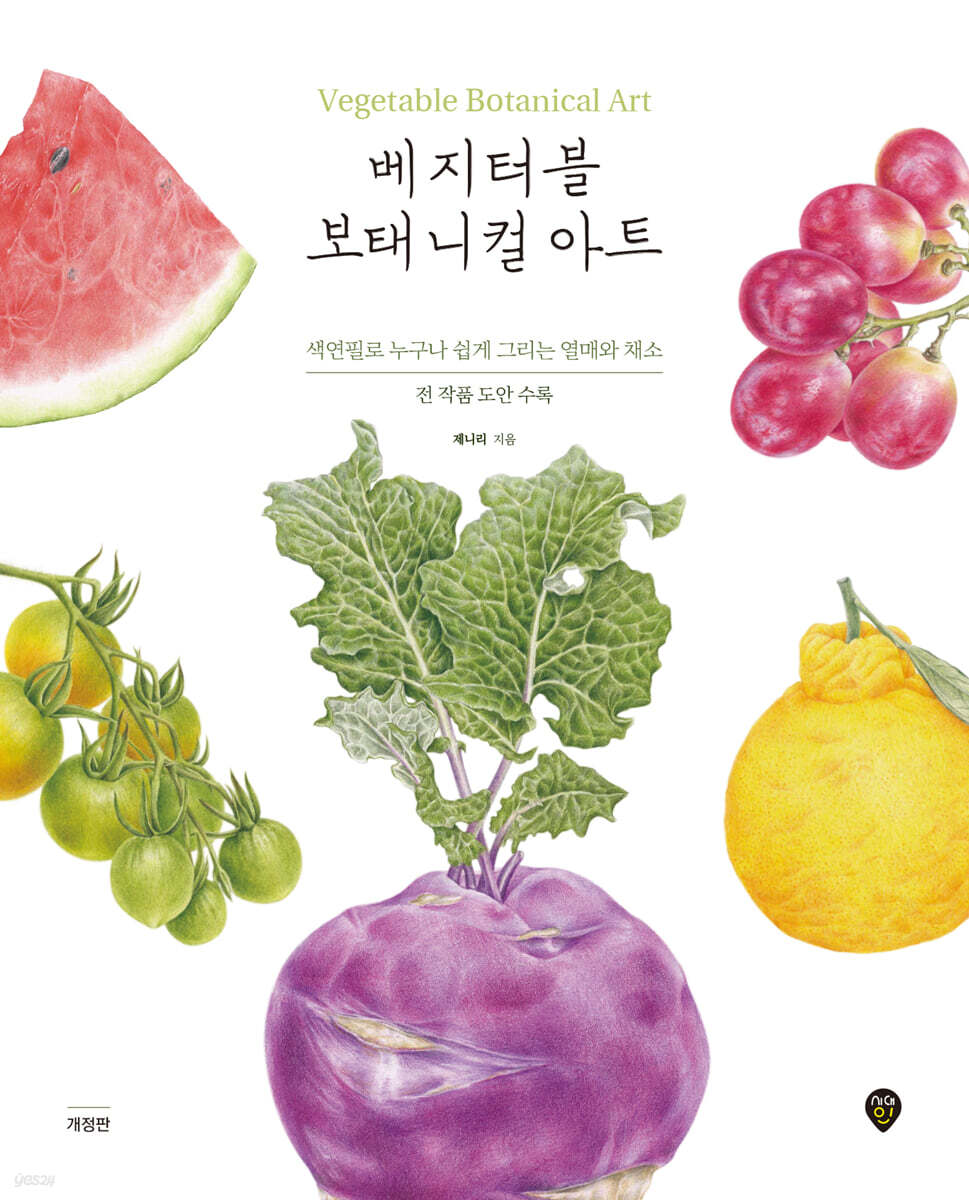 |
Description
Book Introduction
The process of observing plants and depicting their beautiful moments with my own art.
Express fruits and vegetables that you can easily see around you as botanical art.
Let's use colored pencils to draw the various fruits and vegetables that frequently grace our tables. "Vegetable Botanical Art" is now back in a revised edition, brimming with the expertise of Jenny Lee, president of the IKBA Botanical Art Education Association and owner of a botanical art studio who has shared the beauty of botanical art with many people.
We've improved upon the shortcomings of the existing book and added a new intermediate level section so you can draw a wider variety of fruits and vegetables.
『Vegetable Botanical Art』 is composed of four parts.
Part 1.
In this section, we cover everything you need to know before starting to draw, from how to choose tools and use colored pencils for beginners who are just starting out with botanical art, to how to express reflected light to give plants a three-dimensional feel, the structure of plants, and the classification of horticultural crops.
Part 2.
Drawing Botanical Art: Beginner's Guide covers 15 different fruits and vegetables, along with the author's unique know-how. Part 3.
Time to Draw Botanical Art: Intermediate Edition introduces a variety of coloring techniques not used in the beginner edition, as well as more advanced detail depiction methods, and includes a total of 10 fruits and vegetables.
Part 4.
In the Botanical Art Experience section, we have included designs for all the works introduced in the book so that you can draw them yourself.
At the very back of the book, we've also included small postcards that you can use as interior decorations or to write letters to your loved ones.
Botanical art may seem difficult because it involves depicting even the smallest details of plants.
But if you calm your mind and build up the colors one by one, you can create a botanical piece that looks more real than the real thing.
I hope you all can experience the beautiful moments and happiness of drawing plants.
Express fruits and vegetables that you can easily see around you as botanical art.
Let's use colored pencils to draw the various fruits and vegetables that frequently grace our tables. "Vegetable Botanical Art" is now back in a revised edition, brimming with the expertise of Jenny Lee, president of the IKBA Botanical Art Education Association and owner of a botanical art studio who has shared the beauty of botanical art with many people.
We've improved upon the shortcomings of the existing book and added a new intermediate level section so you can draw a wider variety of fruits and vegetables.
『Vegetable Botanical Art』 is composed of four parts.
Part 1.
In this section, we cover everything you need to know before starting to draw, from how to choose tools and use colored pencils for beginners who are just starting out with botanical art, to how to express reflected light to give plants a three-dimensional feel, the structure of plants, and the classification of horticultural crops.
Part 2.
Drawing Botanical Art: Beginner's Guide covers 15 different fruits and vegetables, along with the author's unique know-how. Part 3.
Time to Draw Botanical Art: Intermediate Edition introduces a variety of coloring techniques not used in the beginner edition, as well as more advanced detail depiction methods, and includes a total of 10 fruits and vegetables.
Part 4.
In the Botanical Art Experience section, we have included designs for all the works introduced in the book so that you can draw them yourself.
At the very back of the book, we've also included small postcards that you can use as interior decorations or to write letters to your loved ones.
Botanical art may seem difficult because it involves depicting even the smallest details of plants.
But if you calm your mind and build up the colors one by one, you can create a botanical piece that looks more real than the real thing.
I hope you all can experience the beautiful moments and happiness of drawing plants.
- You can preview some of the book's contents.
Preview
index
Prologue
What is botanical art?
PART 1.
Time to get acquainted with botanical art
Chapter 1 Botanical Art
+ Tool Introduction
+ Color chart
Chapter 2 How to Use Colored Pencils
+ How to use colored pencils
+ Colored pencil coloring technique
+ Learn various coloring techniques
+ Detailing using dot pens and colored pencils
+ How to transcribe
Chapter 3 Reflected Light
+ Reflected light
+ Draw a sphere
+ Draw a cylinder
Chapter 4 Plant Structure
+ Plant structure
+ Flower structure
+ Leaf structure
Chapter 5 Classification of Horticultural Crops
+ Classification of crops
+ vegetables
+ True fruit and false fruit
PART 2.
Time to Draw Botanical Art: Beginner Edition
Chapter 1 True Fruit
+ Olive
+ Tomato
+ Apricot
Chapter 2: False Fruit
+ Mini Apple (Alps Otome)
+ Banana
+ Blueberries
Chapter 3 Fruits and Vegetables
+ Vine Sweet (mini paprika)
+ Spotted kidney beans
+ eggplant
Chapter 4 Stem Vegetables & Scaly Stem Vegetables
+ Asparagus
+ Leaf onion
Chapter 5 Leafy Vegetables
+ Arugula
+ Brussels sprouts
Chapter 6 Root Vegetables
+ Carrot
+ Radish
PART 3.
Time to Draw Botanical Art: Intermediate
Chapter 1 Sun and
+ Cherry
Chapter 2 and
+ Blueberries & Blackberries
Chapter 3 True Fruit
+ bunch of grapes
+ Hallabong
+ Cherry tomatoes
+ watermelon
Chapter 4: False Fruit
+ Strawberry
+ Pineapple
Chapter 5 Leafy Vegetables
+ Ssamchu
Chapter 6 Root Vegetables
+ Colabi
PART 4.
Time to experience botanical art
design
What is botanical art?
PART 1.
Time to get acquainted with botanical art
Chapter 1 Botanical Art
+ Tool Introduction
+ Color chart
Chapter 2 How to Use Colored Pencils
+ How to use colored pencils
+ Colored pencil coloring technique
+ Learn various coloring techniques
+ Detailing using dot pens and colored pencils
+ How to transcribe
Chapter 3 Reflected Light
+ Reflected light
+ Draw a sphere
+ Draw a cylinder
Chapter 4 Plant Structure
+ Plant structure
+ Flower structure
+ Leaf structure
Chapter 5 Classification of Horticultural Crops
+ Classification of crops
+ vegetables
+ True fruit and false fruit
PART 2.
Time to Draw Botanical Art: Beginner Edition
Chapter 1 True Fruit
+ Olive
+ Tomato
+ Apricot
Chapter 2: False Fruit
+ Mini Apple (Alps Otome)
+ Banana
+ Blueberries
Chapter 3 Fruits and Vegetables
+ Vine Sweet (mini paprika)
+ Spotted kidney beans
+ eggplant
Chapter 4 Stem Vegetables & Scaly Stem Vegetables
+ Asparagus
+ Leaf onion
Chapter 5 Leafy Vegetables
+ Arugula
+ Brussels sprouts
Chapter 6 Root Vegetables
+ Carrot
+ Radish
PART 3.
Time to Draw Botanical Art: Intermediate
Chapter 1 Sun and
+ Cherry
Chapter 2 and
+ Blueberries & Blackberries
Chapter 3 True Fruit
+ bunch of grapes
+ Hallabong
+ Cherry tomatoes
+ watermelon
Chapter 4: False Fruit
+ Strawberry
+ Pineapple
Chapter 5 Leafy Vegetables
+ Ssamchu
Chapter 6 Root Vegetables
+ Colabi
PART 4.
Time to experience botanical art
design
Detailed image

Publisher's Review
■ Anyone can do vegetable botanical art.
'difficult.
complicated.
'You have to have talent.' This is what people who are new to botanical art often think.
The detail and precision of drawing each line and completing it as if it were a real thing makes you think, "I don't think I can do it," before even starting to draw the lines.
However, with 『Vegetable Botanical Art』, anyone can easily start botanical art.
『Vegetable Botanical Art』 starts from a beginner's perspective.
The book carefully explains with detailed photos and explanations which tools to choose, how to draw lines and build up colors with colored pencils, how to depict plant details, and how to create a sense of three-dimensionality.
Additionally, since you need to have a sufficient understanding of the subject you want to draw to be able to draw more precisely, you can build a solid foundation in botanical art by learning about the structure of plants, the structure of flowers and leaves, and the classification of crops through various examples.
■ Vegetable botanical art can be used to draw any fruit or vegetable.
『Vegetable Botanical Art』 contains a total of 25 methods for drawing fruits and vegetables.
According to the classification of crops, it is divided into fresh fruits, berries, true fruits, false fruits, fruit vegetables, stem vegetables & bulb vegetables, leaf vegetables, and root vegetables. The beginner level includes tomatoes, bananas, carrots, etc., and the intermediate level includes cherry tomatoes, pineapples, kohlrabi, etc., fruits and vegetables that we can easily find around us.
All the designs for the works in the book are included, so you can start creating botanical art right away by just going through the transcription process without having to sketch separately.
Large process photos help you see which parts to paint and how, and color chips are displayed for each text so you can see the color changes at a glance.
Additionally, the pages containing coloring techniques are displayed so you can quickly find them, and the author's tips are generously included to help you create even more complete works.
■ Vegetable botanical art goes beyond a hobby and provides a time of healing.
If you focus solely on drawing fruits and vegetables, you will find yourself absorbed in the drawing, with distracting thoughts disappearing before you know it.
If you spend just a few hours with 『Vegetable Botanical Art』 during a complex and thought-provoking day, that time will become your own personal healing time.
In our busy lives, we definitely need some time to refresh.
A little bit of free time allows you to break free from one task, gain new perspectives and thoughts, and gain the strength to move on to the next.
Not only can you relieve stress from school, work, household chores, and other various reasons, you can also forget about frustration and depression through botanical art.
You can also use your own completed works as interior decorations to change the atmosphere of your home, so 『Vegetable Botanical Art』 is not just a book for hobbyists, but a healing book that soothes the weary mind.
'difficult.
complicated.
'You have to have talent.' This is what people who are new to botanical art often think.
The detail and precision of drawing each line and completing it as if it were a real thing makes you think, "I don't think I can do it," before even starting to draw the lines.
However, with 『Vegetable Botanical Art』, anyone can easily start botanical art.
『Vegetable Botanical Art』 starts from a beginner's perspective.
The book carefully explains with detailed photos and explanations which tools to choose, how to draw lines and build up colors with colored pencils, how to depict plant details, and how to create a sense of three-dimensionality.
Additionally, since you need to have a sufficient understanding of the subject you want to draw to be able to draw more precisely, you can build a solid foundation in botanical art by learning about the structure of plants, the structure of flowers and leaves, and the classification of crops through various examples.
■ Vegetable botanical art can be used to draw any fruit or vegetable.
『Vegetable Botanical Art』 contains a total of 25 methods for drawing fruits and vegetables.
According to the classification of crops, it is divided into fresh fruits, berries, true fruits, false fruits, fruit vegetables, stem vegetables & bulb vegetables, leaf vegetables, and root vegetables. The beginner level includes tomatoes, bananas, carrots, etc., and the intermediate level includes cherry tomatoes, pineapples, kohlrabi, etc., fruits and vegetables that we can easily find around us.
All the designs for the works in the book are included, so you can start creating botanical art right away by just going through the transcription process without having to sketch separately.
Large process photos help you see which parts to paint and how, and color chips are displayed for each text so you can see the color changes at a glance.
Additionally, the pages containing coloring techniques are displayed so you can quickly find them, and the author's tips are generously included to help you create even more complete works.
■ Vegetable botanical art goes beyond a hobby and provides a time of healing.
If you focus solely on drawing fruits and vegetables, you will find yourself absorbed in the drawing, with distracting thoughts disappearing before you know it.
If you spend just a few hours with 『Vegetable Botanical Art』 during a complex and thought-provoking day, that time will become your own personal healing time.
In our busy lives, we definitely need some time to refresh.
A little bit of free time allows you to break free from one task, gain new perspectives and thoughts, and gain the strength to move on to the next.
Not only can you relieve stress from school, work, household chores, and other various reasons, you can also forget about frustration and depression through botanical art.
You can also use your own completed works as interior decorations to change the atmosphere of your home, so 『Vegetable Botanical Art』 is not just a book for hobbyists, but a healing book that soothes the weary mind.
GOODS SPECIFICS
- Date of issue: June 10, 2024
- Page count, weight, size: 284 pages | 210*260*20mm
- ISBN13: 9791138370912
- ISBN10: 1138370916
You may also like
카테고리
korean


korean

![GQ KOREA Mark (Monthly): December [2025]](http://librairie.coreenne.fr/cdn/shop/files/8ef265dbbfbf186523ed75ba7319009d.jpg?v=1765340328&width=3840)


