

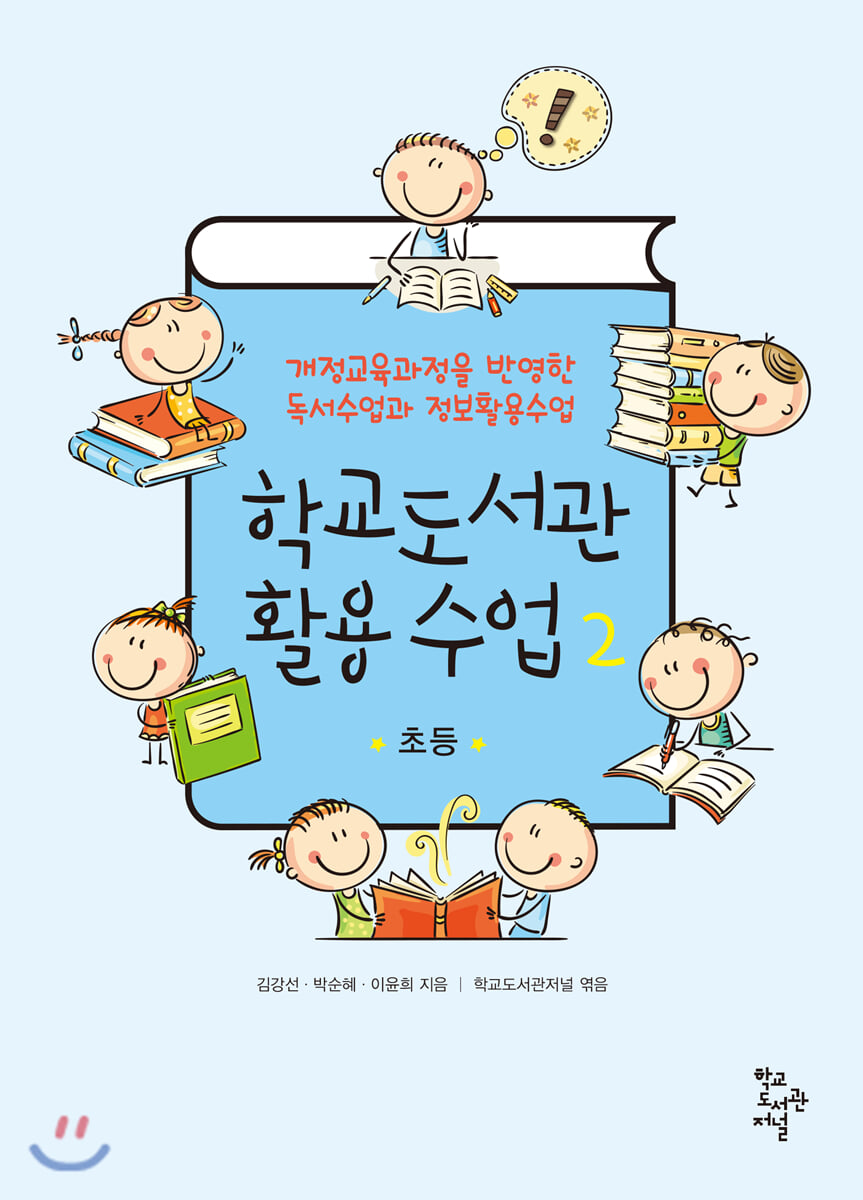
School Library Utilization Lesson 2: Elementary
 |
Description
Book Introduction
A collection of case studies of school library use, written by elementary school librarians based on their vivid field experiences.
This book, which reflects the changed curriculum and contains 21 case studies, introduces library use classes, reading classes, and information utilization classes by grade level.
It will serve as a helpful guide for teachers who are having difficulty trying to teach school libraries, offering a variety of teaching methods, including the most basic reading classes, curriculum linkages, current affairs discussions, career paths, and research.
This book, which reflects the changed curriculum and contains 21 case studies, introduces library use classes, reading classes, and information utilization classes by grade level.
It will serve as a helpful guide for teachers who are having difficulty trying to teach school libraries, offering a variety of teaching methods, including the most basic reading classes, curriculum linkages, current affairs discussions, career paths, and research.
index
Opening Remarks: The Key to Future Education Lies in School Libraries! by Lee Yoon-hee
Part 1: The Present and Future of School Library Utilization Classes
Changed educational environment and school library utilization classes
How to plan lessons using the school library?
Part 2 Library Use Class
Beginning Library Utilization: Library Utilization Classes for Lower Grades
Becoming familiar with the library through play │ Lower grades │
Library Etiquette Guide for Pets │ Lower Grades │
Learning the benefits and importance of books and introducing them │ Lower grades │
Understanding Decimal Classification through Topic-Based Reading │Middle Grades│
Part 3 Library Reading Class
Reading Education Using Reading Strategies 1 │Upper Grades│
Reading Education Using Reading Strategies 2 │Upper Grades│
Solving problems in a book by connecting them with reading │Middle grades│
Reading storybooks in depth and meeting authors │Middle grades│
Career Reading Class Using Picture Books │Upper Grades│
Reading slowly and deeply to develop the mind │Upper grades│
Understanding Copyright Correctly │Upper Grades│
Part 4 Library Information Utilization Class
Library Information Utilization Classes for Students to Explore on Their Own │Upper Grades│
Writing Articles Using Encyclopedias │Upper Grades│
Creating a Timeline of Characters Using the 5-Step Information Utilization Process │Upper Grades│
Integrated Science and Art Lessons Using Famous Paintings │ Middle Grades │
Learn the elements of a book, become an author, and create your own book │Middle School│
Free-exploration activities using newspapers │Middle grades│
Integrated Curriculum Research Activity on Hanbok and Holidays │ Lower Grades │
Experience Suwon Hwaseong Fortress, Our Proud Cultural Heritage │Upper Grades│
Creating a Pop-Up Book Guide to Learn How to Use Indexes and Tables │Upper Grades│
Part 1: The Present and Future of School Library Utilization Classes
Changed educational environment and school library utilization classes
How to plan lessons using the school library?
Part 2 Library Use Class
Beginning Library Utilization: Library Utilization Classes for Lower Grades
Becoming familiar with the library through play │ Lower grades │
Library Etiquette Guide for Pets │ Lower Grades │
Learning the benefits and importance of books and introducing them │ Lower grades │
Understanding Decimal Classification through Topic-Based Reading │Middle Grades│
Part 3 Library Reading Class
Reading Education Using Reading Strategies 1 │Upper Grades│
Reading Education Using Reading Strategies 2 │Upper Grades│
Solving problems in a book by connecting them with reading │Middle grades│
Reading storybooks in depth and meeting authors │Middle grades│
Career Reading Class Using Picture Books │Upper Grades│
Reading slowly and deeply to develop the mind │Upper grades│
Understanding Copyright Correctly │Upper Grades│
Part 4 Library Information Utilization Class
Library Information Utilization Classes for Students to Explore on Their Own │Upper Grades│
Writing Articles Using Encyclopedias │Upper Grades│
Creating a Timeline of Characters Using the 5-Step Information Utilization Process │Upper Grades│
Integrated Science and Art Lessons Using Famous Paintings │ Middle Grades │
Learn the elements of a book, become an author, and create your own book │Middle School│
Free-exploration activities using newspapers │Middle grades│
Integrated Curriculum Research Activity on Hanbok and Holidays │ Lower Grades │
Experience Suwon Hwaseong Fortress, Our Proud Cultural Heritage │Upper Grades│
Creating a Pop-Up Book Guide to Learn How to Use Indexes and Tables │Upper Grades│
Detailed image

Into the book
Library education is a treasure trove that can be integrated into any subject.
In the case of elementary schools, the curriculum is revised and supplemented every year after research and consideration on how to integrate each subject with a sense of connection and depth from the first to sixth grades.
Currently, school libraries are developing library curricula in line with the 2015 revised curriculum's goal of fostering "creative and convergent talents."
---From “Changed Educational Environment and Classes Utilizing School Libraries”
However, when people think of a "library," they often think of a reading room for reading, borrowing, returning, or studying for exams.
The same goes for children.
Many children are unaware that they can solve research assignments using various materials from the school library, or that there are various programs offered at the library.
So, to show the various things you can do at the library, I tried to make the class fun and enjoyable, like a game.
---From "Getting to Know the Library While Having Fun"
Before showing the back of the book to the children, I asked them to imagine what would happen to the wolf and draw a picture of it.
Some children drew wolves traveling on airplanes, others drew wolves telling stories to people, and others drew wolves becoming writers.
After showing each other our drawings and presenting them, we looked at the back of the paper together.
Some children were delighted to see the wolf become a storyteller and exclaimed, “Wow, I got it right!” Others were amazed and said, “He really became a storyteller!”
The activity of imagining the backstory using cotton was a good activity to stimulate interest and motivate reading.
---From "Learning the good points and importance of books and introducing books"
I tried drawing a bus design for Mr. Giraffe.
Before drawing the blueprint, I used an animal guide to find out the general body size of a giraffe.
Since some animal guides do not include the size of the giraffe, you should search for guides or books about animals that include the size in advance and prepare accordingly.
If there are not enough books to research, you can provide them so that students can research together in pairs or groups.
We compared the size of Mr. Giraffe and the size of other animals and had them draw a bus design on their activity sheets, thinking that not only Mr. Giraffe but also other animals can ride on the bus.
---From "Solving Problems in a Book by Linking It to Reading a Book"
Students presented a PowerPoint presentation on how they would structure a game based on the data they had researched.
The Goguryeo history game, created by three fifth-grade students, required eight missions across four stages.
Some of the missions include finding Goguryeo murals in the cultural heritage mission, designing Goguryeo clothing based on gender and social status in the clothing mission, and learning Chinese characters and Confucianism in the Taehak mission.
Although it was not a well-organized report, the way it synthesized and presented the information was better than any other report.
In the case of elementary schools, the curriculum is revised and supplemented every year after research and consideration on how to integrate each subject with a sense of connection and depth from the first to sixth grades.
Currently, school libraries are developing library curricula in line with the 2015 revised curriculum's goal of fostering "creative and convergent talents."
---From “Changed Educational Environment and Classes Utilizing School Libraries”
However, when people think of a "library," they often think of a reading room for reading, borrowing, returning, or studying for exams.
The same goes for children.
Many children are unaware that they can solve research assignments using various materials from the school library, or that there are various programs offered at the library.
So, to show the various things you can do at the library, I tried to make the class fun and enjoyable, like a game.
---From "Getting to Know the Library While Having Fun"
Before showing the back of the book to the children, I asked them to imagine what would happen to the wolf and draw a picture of it.
Some children drew wolves traveling on airplanes, others drew wolves telling stories to people, and others drew wolves becoming writers.
After showing each other our drawings and presenting them, we looked at the back of the paper together.
Some children were delighted to see the wolf become a storyteller and exclaimed, “Wow, I got it right!” Others were amazed and said, “He really became a storyteller!”
The activity of imagining the backstory using cotton was a good activity to stimulate interest and motivate reading.
---From "Learning the good points and importance of books and introducing books"
I tried drawing a bus design for Mr. Giraffe.
Before drawing the blueprint, I used an animal guide to find out the general body size of a giraffe.
Since some animal guides do not include the size of the giraffe, you should search for guides or books about animals that include the size in advance and prepare accordingly.
If there are not enough books to research, you can provide them so that students can research together in pairs or groups.
We compared the size of Mr. Giraffe and the size of other animals and had them draw a bus design on their activity sheets, thinking that not only Mr. Giraffe but also other animals can ride on the bus.
---From "Solving Problems in a Book by Linking It to Reading a Book"
Students presented a PowerPoint presentation on how they would structure a game based on the data they had researched.
The Goguryeo history game, created by three fifth-grade students, required eight missions across four stages.
Some of the missions include finding Goguryeo murals in the cultural heritage mission, designing Goguryeo clothing based on gender and social status in the clothing mission, and learning Chinese characters and Confucianism in the Taehak mission.
Although it was not a well-organized report, the way it synthesized and presented the information was better than any other report.
---From "Library Information Utilization Classes in which Students Explore on Their Own"
Publisher's Review
School libraries are the perfect place to experiment with new educational approaches.
The second installment of the book, "School Library Utilization Classes: Elementary" (2014), which explores the struggles of teachers who chose school libraries as a new approach to education, has been published.
Following the first volume published six years ago, the second volume tells the story of teachers discovering possibilities for educational innovation in school libraries.
In a future society where everyone has easy access to information and knowledge, it is said that the ability to utilize and handle information and knowledge will become more important than simply acquiring a lot of information.
Education experts say that changes in education are necessary to nurture children who will live in the future society as "creative and convergent talents" who are able to find, utilize, and integrate the knowledge and information they need.
The authors propose school libraries as educational venues suited to the future society.
They say that future talents can be developed through reading classes and information utilization classes based on various media in the school library.
"School Library 2: Elementary" vividly demonstrates how school library classes can serve as an alternative for future education in a changing educational environment.
21 case studies organized by type and grade level for easy understanding.
These 21 case studies, written by three elementary school librarians, serve as a helpful guide for teachers who want to teach school libraries but haven't tried because they don't know how, and for teachers who want to try more diverse classes.
Chapter 1 of this book, "The Present and Future of School Library Utilization Classes," examines how school library classes have evolved toward the goal of fostering "creative and convergent talents" pursued by the 2015 revised curriculum, and provides guidance on how to plan and implement school library-based classes in practice.
Chapters 2-4 are divided into 21 class examples, including library use classes, reading classes, and information utilization classes, and are organized by grade level to make it easy to find the necessary content.
Part 2 includes examples of library use classes that serve as the foundation for library use.
In addition to basic borrowing and return education, it includes educational methods that help readers become familiar with the library and books through fun play.
Part 3 introduces systematic and in-depth reading classes conducted in school libraries.
Beginning with basic classes using reading strategies, examples of classes are provided, including book reading, reading by genre, career reading using picture books, meeting authors, and understanding copyright.
Part 4 contains various examples of information utilization classes that can be linked to subject matter such as science, social studies, history, and integrated subjects.
The diverse aspects of school library classes can be seen through examples of curriculum-related research and inquiry classes utilizing various materials in school libraries, such as plant guides, encyclopedias, newspapers, and collections of famous paintings.
Class design and activities organized by period for easy viewing
Each class case included in the book presents a simple lesson flow so that you can see the materials needed for the class, related curriculum units, and class content for each class at a glance.
In addition, it includes a wealth of visual materials and activity sheets that contain games, singing, and multimedia usage methods to enhance the fun of classes, as well as a list of recommended books by topic, so that students can apply and apply them in real-world settings.
I hope this book will serve as a guide in planning and conducting school library classes, leading to a greater variety and richer range of classroom examples.
The second installment of the book, "School Library Utilization Classes: Elementary" (2014), which explores the struggles of teachers who chose school libraries as a new approach to education, has been published.
Following the first volume published six years ago, the second volume tells the story of teachers discovering possibilities for educational innovation in school libraries.
In a future society where everyone has easy access to information and knowledge, it is said that the ability to utilize and handle information and knowledge will become more important than simply acquiring a lot of information.
Education experts say that changes in education are necessary to nurture children who will live in the future society as "creative and convergent talents" who are able to find, utilize, and integrate the knowledge and information they need.
The authors propose school libraries as educational venues suited to the future society.
They say that future talents can be developed through reading classes and information utilization classes based on various media in the school library.
"School Library 2: Elementary" vividly demonstrates how school library classes can serve as an alternative for future education in a changing educational environment.
21 case studies organized by type and grade level for easy understanding.
These 21 case studies, written by three elementary school librarians, serve as a helpful guide for teachers who want to teach school libraries but haven't tried because they don't know how, and for teachers who want to try more diverse classes.
Chapter 1 of this book, "The Present and Future of School Library Utilization Classes," examines how school library classes have evolved toward the goal of fostering "creative and convergent talents" pursued by the 2015 revised curriculum, and provides guidance on how to plan and implement school library-based classes in practice.
Chapters 2-4 are divided into 21 class examples, including library use classes, reading classes, and information utilization classes, and are organized by grade level to make it easy to find the necessary content.
Part 2 includes examples of library use classes that serve as the foundation for library use.
In addition to basic borrowing and return education, it includes educational methods that help readers become familiar with the library and books through fun play.
Part 3 introduces systematic and in-depth reading classes conducted in school libraries.
Beginning with basic classes using reading strategies, examples of classes are provided, including book reading, reading by genre, career reading using picture books, meeting authors, and understanding copyright.
Part 4 contains various examples of information utilization classes that can be linked to subject matter such as science, social studies, history, and integrated subjects.
The diverse aspects of school library classes can be seen through examples of curriculum-related research and inquiry classes utilizing various materials in school libraries, such as plant guides, encyclopedias, newspapers, and collections of famous paintings.
Class design and activities organized by period for easy viewing
Each class case included in the book presents a simple lesson flow so that you can see the materials needed for the class, related curriculum units, and class content for each class at a glance.
In addition, it includes a wealth of visual materials and activity sheets that contain games, singing, and multimedia usage methods to enhance the fun of classes, as well as a list of recommended books by topic, so that students can apply and apply them in real-world settings.
I hope this book will serve as a guide in planning and conducting school library classes, leading to a greater variety and richer range of classroom examples.
GOODS SPECIFICS
- Date of issue: June 10, 2020
- Page count, weight, size: 232 pages | 336g | 152*210*20mm
- ISBN13: 9788969150738
- ISBN10: 8969150730
You may also like
카테고리
korean


korean

![GQ KOREA Mark (Monthly): December [2025]](http://librairie.coreenne.fr/cdn/shop/files/8ef265dbbfbf186523ed75ba7319009d.jpg?v=1765340328&width=3840)


