

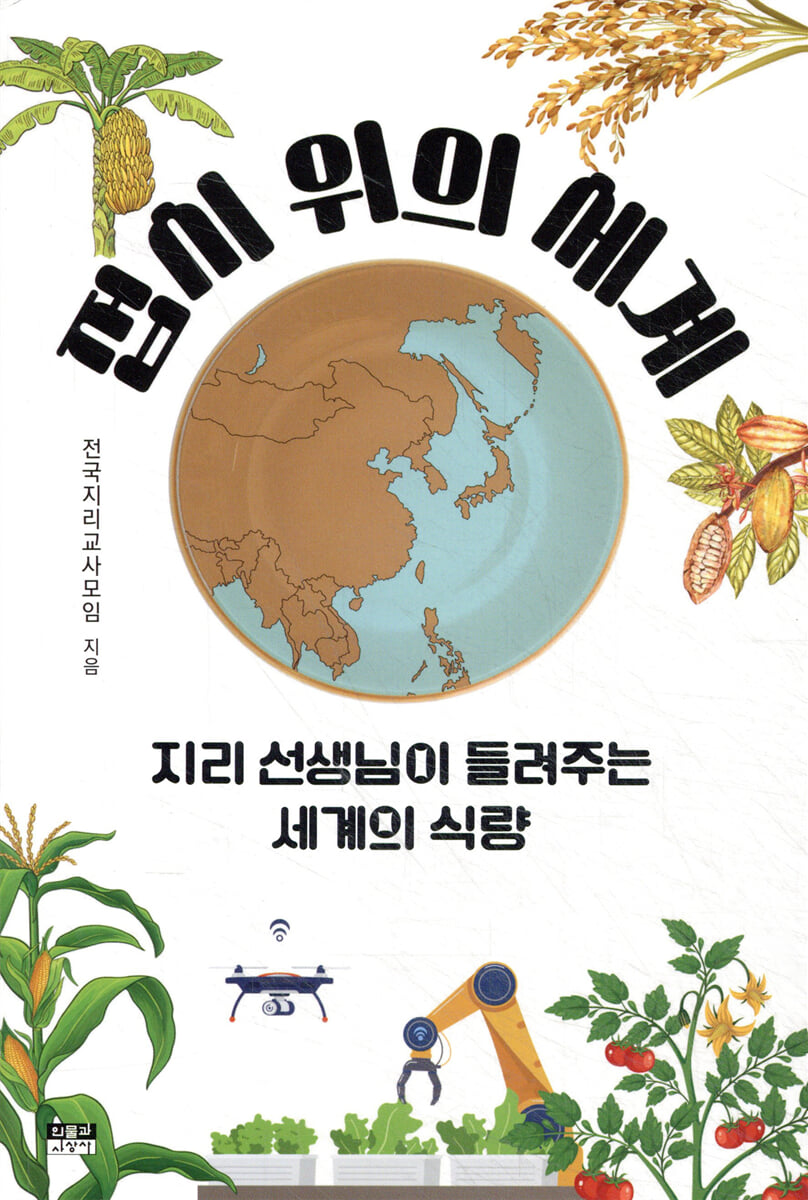
The World on a Plate
 |
Description
Book Introduction
The Earth's Story Our Tables Tell
There are more stories than we think contained in a bowl of rice, a cup of fragrant coffee, or a piece of sweet chocolate that we eat every day.
『The World on a Plate』 is a guidebook that travels the world following that story.
From staple crops like rice, wheat, and corn to luxury foods like coffee, cacao, and avocados, and even to food inequality, the climate crisis, crop-related crises and wars, sustainable food, and the future of food—following the journey of food on our tables naturally leads us into the history and environment of the Earth, as well as the flow of economy and politics.
This book, consisting of six chapters, carefully exposes the inequality, exploitation, and logic of capital hidden in the production and consumption of food.
It vividly tells us that the very familiar act of 'eating' can actually lead to deep contemplation about 'how to live' and 'where to live'.
It also persuasively conveys the fact that today's table creates tomorrow's Earth.
This book does more than just impart knowledge.
As we read, we are made to think seriously about what we eat, why we eat, and how we should live.
If you're looking for a reason to study the world, this book will answer that question with sincerity.
There are more stories than we think contained in a bowl of rice, a cup of fragrant coffee, or a piece of sweet chocolate that we eat every day.
『The World on a Plate』 is a guidebook that travels the world following that story.
From staple crops like rice, wheat, and corn to luxury foods like coffee, cacao, and avocados, and even to food inequality, the climate crisis, crop-related crises and wars, sustainable food, and the future of food—following the journey of food on our tables naturally leads us into the history and environment of the Earth, as well as the flow of economy and politics.
This book, consisting of six chapters, carefully exposes the inequality, exploitation, and logic of capital hidden in the production and consumption of food.
It vividly tells us that the very familiar act of 'eating' can actually lead to deep contemplation about 'how to live' and 'where to live'.
It also persuasively conveys the fact that today's table creates tomorrow's Earth.
This book does more than just impart knowledge.
As we read, we are made to think seriously about what we eat, why we eat, and how we should live.
If you're looking for a reason to study the world, this book will answer that question with sincerity.
- You can preview some of the book's contents.
Preview
index
Preface | The World on a Plate, Our Story
Chapter 1: Food Crops of the World
1.
Rice, an Asian staple food
2.
From revolution to democracy, wheat
3.
America's Gift, Corn
Chapter 2: The World of Symbolic Crops
1.
Coffee, a drink that captures time
2.
From Myth to Fruit of Science: Cacao
3.
Avocado, the face of a thousand
Chapter 3: Food Inequality and Agricultural Issues
1.
The irony of abundance on the table
2.
Food chains connecting the world
3.
The blood, sweat, and tears of children hidden behind the sweet taste
4.
Is there no fair trade?
Chapter 4: Crisis and War Related to Crops
1.
Historical examples of food crises
2.
South America's Banana Wars
3.
Broken Breadbasket: The Aftermath of the Ukraine War
4.
A rapidly growing population and the war to secure food
Chapter 5: Sustainable Food
1.
Fuel or Food: The Dilemma of the Bioenergy Era
2.
A hungry planet brought about by climate change
3.
The health of the planet and our food security
4.
One Meal for the Earth
Chapter 6: Food Crops of the Future
1.
Agricultural robots replace labor
2.
Alternative foods can help combat climate change.
3.
Changes in agricultural space
4. GMO and Seed Wars
References
Chapter 1: Food Crops of the World
1.
Rice, an Asian staple food
2.
From revolution to democracy, wheat
3.
America's Gift, Corn
Chapter 2: The World of Symbolic Crops
1.
Coffee, a drink that captures time
2.
From Myth to Fruit of Science: Cacao
3.
Avocado, the face of a thousand
Chapter 3: Food Inequality and Agricultural Issues
1.
The irony of abundance on the table
2.
Food chains connecting the world
3.
The blood, sweat, and tears of children hidden behind the sweet taste
4.
Is there no fair trade?
Chapter 4: Crisis and War Related to Crops
1.
Historical examples of food crises
2.
South America's Banana Wars
3.
Broken Breadbasket: The Aftermath of the Ukraine War
4.
A rapidly growing population and the war to secure food
Chapter 5: Sustainable Food
1.
Fuel or Food: The Dilemma of the Bioenergy Era
2.
A hungry planet brought about by climate change
3.
The health of the planet and our food security
4.
One Meal for the Earth
Chapter 6: Food Crops of the Future
1.
Agricultural robots replace labor
2.
Alternative foods can help combat climate change.
3.
Changes in agricultural space
4. GMO and Seed Wars
References
Publisher's Review
A living geography lesson that starts at the dinner table
A global citizenship textbook to read with students
Who knew studying geography could be this delicious and fun!
A bowl of rice, a cup of coffee we eat every day.
Within it lies the secret of an amazing world.
Food is not just something that fills the stomach; it is also a small universe that encompasses history, economics, politics, the environment, and people's lives.
"The World on a Plate" goes beyond simple food to show how the food on our tables connects us to the world.
A very special journey begins as you look into the world through the window of food.
1.
The story of a civilization created by grain
Rice, wheat, corn.
These three grains are not just simple food ingredients.
It is a huge entity that creates people's lives and culture, and even changes the face of the country.
You could say that he is the main character who created human civilization.
In Asia, where water was abundant and rice fields were developed, rice gave rise to a community-centered culture, and wheat grown in the vast plains became the soil of Western society, fostering individual freedom and democracy.
Corn in America has not only transformed agriculture and food culture, but has also had a profound impact on the economy and environment of modern society.
This small grain has a variety of uses and has become an important resource worldwide.
As we trace how each grain is deeply intertwined with human life, we come to realize that food is culture and history.
2.
A sweet yet bitter story about a favorite food
Fragrant coffee, sweet chocolate, and healthy avocado.
Even these familiar snacks have unexpected stories hidden within them.
Coffee originated from the legend of the shepherd Kaldi and the dancing goats, was used as a meditation aid by 15th-century Yemeni monks, and has become a symbol of global capitalism today.
Cacao has transformed from a sacred food for ancient Central American indigenous peoples to a key crop for global industry.
But behind it all, there are dark shadows such as child labor and exploitation of low-wage workers.
Avocados are called 'green gold' or 'health food', but their production is plagued by problems such as water shortages, deforestation, and carbon dioxide emissions.
Did you know that the food we enjoy without thinking is linked to environmental destruction, labor exploitation, and fair trade controversies?
3.
Inequality at the Table
The dining table we face every day is actually a mirror reflecting the world's inequality.
The world is overflowing with food, so why do so many people still go hungry? A cup of coffee, a piece of chocolate, conceals the sweat and tears of children.
Food is grown in poor countries and sold to rich countries.
The people who actually produced it remain in poor conditions.
The book explores topics like fair trade, ethical consumption, and the global food chain, encouraging us to consider how we can create a more equitable world.
4.
Conflicts and wars over food
Did you know that wars have been fought over bananas? Food is often power and authority.
Conflicts in Ukraine's wheat-producing regions, the banana wars, riots over food, and colonial exploitation.
It all has to do with 'eating'.
The book vividly demonstrates that food is not just food, but a powerful force that changes the course of history and the world order.
It's surprising how history is sometimes written from a rice bowl.
5.
One Meal for the Earth
The climate crisis is reaching our dinner tables.
Extreme weather has led to reduced crop yields, rising food prices, and the emergence of the unfamiliar term "climateflation."
The book explores the dilemma of bioenergy—fuel or food—the planet's health and food security, and the practical solutions we can implement.
Small actions like consuming locally produced food, fair trade products, and pursuing a zero-plastic lifestyle can all contribute to saving the planet.
Smart consumption by global citizens can create sustainable change for the planet.
What meal would you choose for the Earth?
6.
What will the dining table of the future look like?
What will the future of agriculture look like? Drones are already circling fields, artificial intelligence is cultivating crops, and vegetables are growing in vertical farms.
Alternative proteins and genetically modified crops could be the answer to the food crisis, or they could be another source of controversy.
The book examines how technological advancements are transforming the dining table, and asks whether these changes can save humanity or create new crises.
The future is a story that has not yet been written.
It is up to us how to fill in those empty sentences.
A global citizenship textbook to read with students
Who knew studying geography could be this delicious and fun!
A bowl of rice, a cup of coffee we eat every day.
Within it lies the secret of an amazing world.
Food is not just something that fills the stomach; it is also a small universe that encompasses history, economics, politics, the environment, and people's lives.
"The World on a Plate" goes beyond simple food to show how the food on our tables connects us to the world.
A very special journey begins as you look into the world through the window of food.
1.
The story of a civilization created by grain
Rice, wheat, corn.
These three grains are not just simple food ingredients.
It is a huge entity that creates people's lives and culture, and even changes the face of the country.
You could say that he is the main character who created human civilization.
In Asia, where water was abundant and rice fields were developed, rice gave rise to a community-centered culture, and wheat grown in the vast plains became the soil of Western society, fostering individual freedom and democracy.
Corn in America has not only transformed agriculture and food culture, but has also had a profound impact on the economy and environment of modern society.
This small grain has a variety of uses and has become an important resource worldwide.
As we trace how each grain is deeply intertwined with human life, we come to realize that food is culture and history.
2.
A sweet yet bitter story about a favorite food
Fragrant coffee, sweet chocolate, and healthy avocado.
Even these familiar snacks have unexpected stories hidden within them.
Coffee originated from the legend of the shepherd Kaldi and the dancing goats, was used as a meditation aid by 15th-century Yemeni monks, and has become a symbol of global capitalism today.
Cacao has transformed from a sacred food for ancient Central American indigenous peoples to a key crop for global industry.
But behind it all, there are dark shadows such as child labor and exploitation of low-wage workers.
Avocados are called 'green gold' or 'health food', but their production is plagued by problems such as water shortages, deforestation, and carbon dioxide emissions.
Did you know that the food we enjoy without thinking is linked to environmental destruction, labor exploitation, and fair trade controversies?
3.
Inequality at the Table
The dining table we face every day is actually a mirror reflecting the world's inequality.
The world is overflowing with food, so why do so many people still go hungry? A cup of coffee, a piece of chocolate, conceals the sweat and tears of children.
Food is grown in poor countries and sold to rich countries.
The people who actually produced it remain in poor conditions.
The book explores topics like fair trade, ethical consumption, and the global food chain, encouraging us to consider how we can create a more equitable world.
4.
Conflicts and wars over food
Did you know that wars have been fought over bananas? Food is often power and authority.
Conflicts in Ukraine's wheat-producing regions, the banana wars, riots over food, and colonial exploitation.
It all has to do with 'eating'.
The book vividly demonstrates that food is not just food, but a powerful force that changes the course of history and the world order.
It's surprising how history is sometimes written from a rice bowl.
5.
One Meal for the Earth
The climate crisis is reaching our dinner tables.
Extreme weather has led to reduced crop yields, rising food prices, and the emergence of the unfamiliar term "climateflation."
The book explores the dilemma of bioenergy—fuel or food—the planet's health and food security, and the practical solutions we can implement.
Small actions like consuming locally produced food, fair trade products, and pursuing a zero-plastic lifestyle can all contribute to saving the planet.
Smart consumption by global citizens can create sustainable change for the planet.
What meal would you choose for the Earth?
6.
What will the dining table of the future look like?
What will the future of agriculture look like? Drones are already circling fields, artificial intelligence is cultivating crops, and vegetables are growing in vertical farms.
Alternative proteins and genetically modified crops could be the answer to the food crisis, or they could be another source of controversy.
The book examines how technological advancements are transforming the dining table, and asks whether these changes can save humanity or create new crises.
The future is a story that has not yet been written.
It is up to us how to fill in those empty sentences.
GOODS SPECIFICS
- Date of issue: July 17, 2025
- Page count, weight, size: 292 pages | 525g | 153*225*18mm
- ISBN13: 9788959068036
- ISBN10: 8959068039
You may also like
카테고리
korean


korean

![GQ KOREA Mark (Monthly): December [2025]](http://librairie.coreenne.fr/cdn/shop/files/8ef265dbbfbf186523ed75ba7319009d.jpg?v=1765340328&width=3840)


