

A Villain Writing Guide for Story Creators
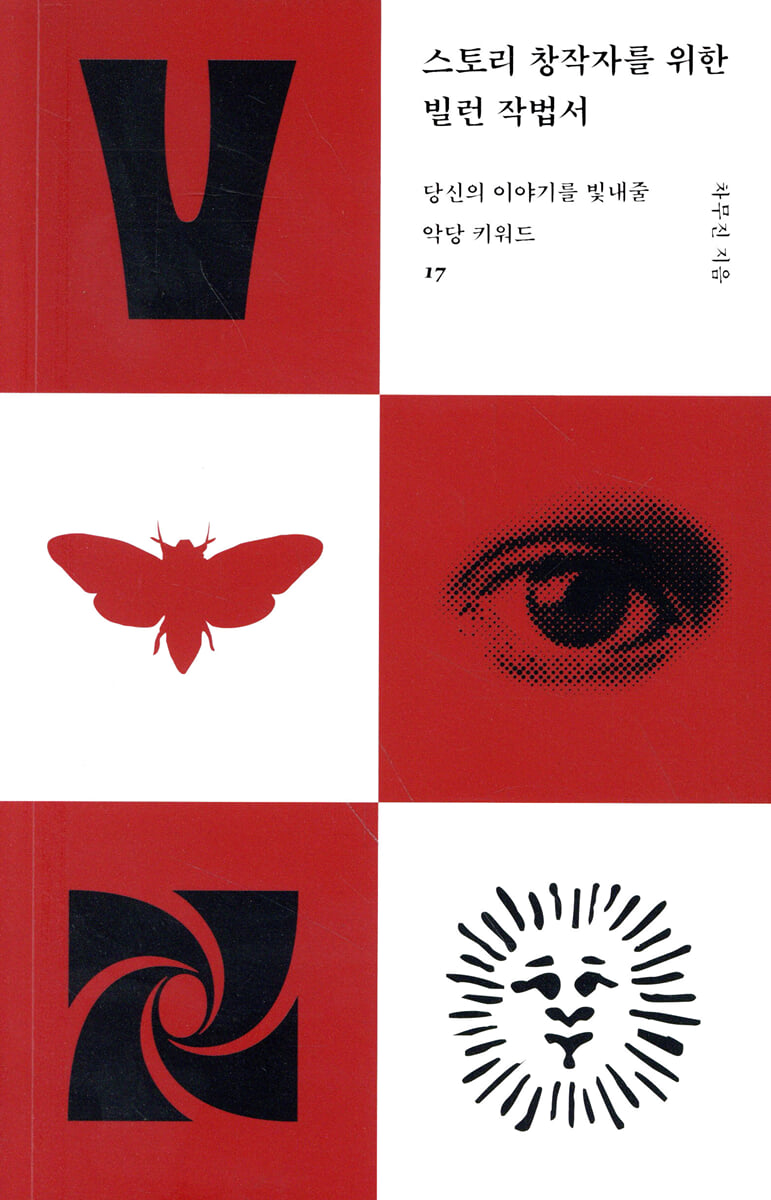 |
Description
Book Introduction
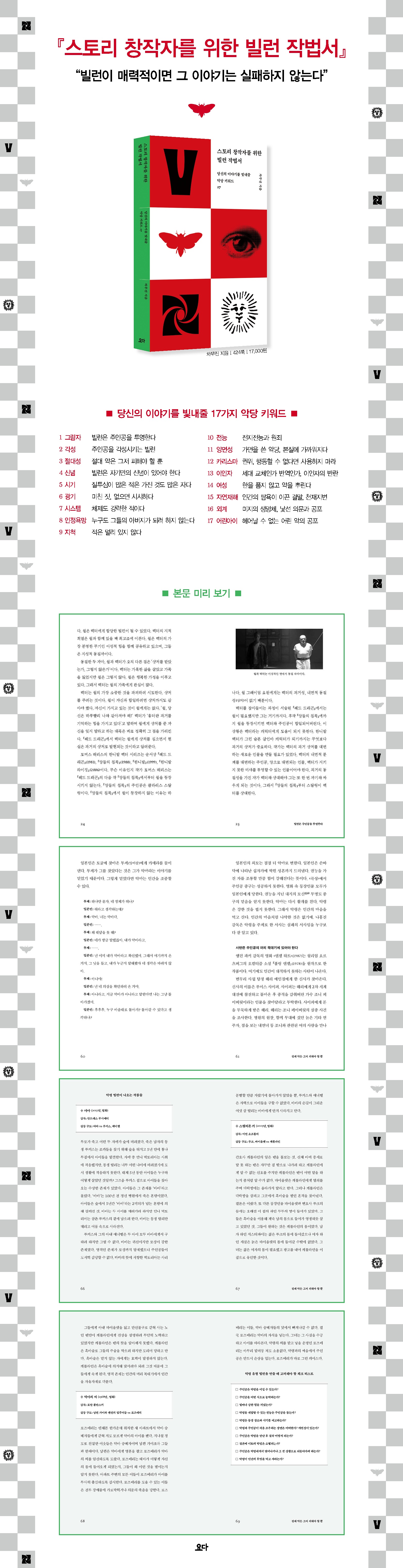
“If the villain is compelling, the story will not fail.” Cha Mu-jin, a novelist and screenwriter who has lectured on storytelling at universities and other institutions for over 10 years, has published a book on writing villains by organizing his lecture notes. This book analyzes the difficulties faced by creators of novels, plays, and various scenarios when creating villains in their stories by organizing them into 17 keywords and suggesting solutions. The keywords are (1) shadow (2) awakening (3) absoluteness (4) belief (5) envy (6) madness (7) system (8) desire for recognition (9) proximity (10) omnipotence (11) duality (12) charisma (13) second-in-command (14) woman (15) natural disaster (16) alien (17) child. For each keyword, we present examples of optimal content, analyzing the narrative and characters from psychological, social, and historical perspectives, and show foolproof strategies for establishing that type of villain. It is also noteworthy that the examples are explained in a way that readers feel as if they have seen and read them themselves without having to look them up individually. At the end of each keyword, an appendix is included to introduce additional example works and even provide a checklist to enhance the reader's understanding. |
- You can preview some of the book's contents.
Preview
index
prolog
1.
Shadow: The villain projects the protagonist.
2.
Awakening: The villain who awakens the protagonist
3.
Absolute: Absolute evil is simply to be avoided.
4.
Beliefs: Villains must have their own beliefs.
5.
Envy: He who is jealous has many enemies and many possessions.
6.
Madness: a crazy act, without which it would be trivial
7.
System: The system is also a powerful enemy.
8.
Desire for recognition: no one wants to be their father
9.
Ji-chi-neun: The enemy is not far away
10.
Omnipotence: Omniscience and Original Sin
11.
Two-facedness: The Masked Villain, Getting Closer to His Essence
12.
Charisma: Authority, if you can't act, don't use it.
13.
Lee In-ja: Generational Change or Rebellion? Lee In-ja's Rebellion
14.
Women: Sow evil without harboring resentment
15.
Natural Disasters: The End of Human Greed, Natural Disasters
16.
Alien: Unknown Life, Strange Questions, and Fear
17.
The Child: The Inescapable Fear of Childish Evil
Epilogue
1.
Shadow: The villain projects the protagonist.
2.
Awakening: The villain who awakens the protagonist
3.
Absolute: Absolute evil is simply to be avoided.
4.
Beliefs: Villains must have their own beliefs.
5.
Envy: He who is jealous has many enemies and many possessions.
6.
Madness: a crazy act, without which it would be trivial
7.
System: The system is also a powerful enemy.
8.
Desire for recognition: no one wants to be their father
9.
Ji-chi-neun: The enemy is not far away
10.
Omnipotence: Omniscience and Original Sin
11.
Two-facedness: The Masked Villain, Getting Closer to His Essence
12.
Charisma: Authority, if you can't act, don't use it.
13.
Lee In-ja: Generational Change or Rebellion? Lee In-ja's Rebellion
14.
Women: Sow evil without harboring resentment
15.
Natural Disasters: The End of Human Greed, Natural Disasters
16.
Alien: Unknown Life, Strange Questions, and Fear
17.
The Child: The Inescapable Fear of Childish Evil
Epilogue
Detailed image
Into the book
The protagonist and the villain are the poles of a magnet.
They push each other away and pull each other.
They exist at the farthest and closest, and are indispensable to each other.
The protagonist is weakened and trained by the presence of the villain.
The villain is the protagonist's teacher, mother, and father.
Villains are people, objects, morals, social structures, and nature.
At the top of the villainy sits the main enemy.
Also called antagonist.
The main enemy is the antagonist, that is, the element that opposes the protagonist's actions, thoughts, and movements.
---From the "Prologue"
Times have changed.
Nowadays, story viewers don't just empathize with the main character.
The viewers want to become sportscasters.
I try to look at both sides with a neutral perspective.
They are smarter than writers, more analytical than critics, and more error-finding than scholars.
They know very well that a story where the protagonist wins easily is not a good story.
I understand more about a villain who is consumed by the pain of losing the woman he loves, and is trying to destroy the Earth, rather than a villain who came simply to destroy the Earth.
The story creators felt the need to strengthen the villain.
---From the "Prologue"
Until now, content creators have not been able to think deeply about why the villain had to do such a thing, why the villain is jealous of the protagonist, or why the villain commits such evil acts.
Evil is necessary for good to be perceived as good.
You have to experience evil to understand good.
Evil makes good known.
The protagonist encounters a villain, realizes he has the same evil energy as the villain, and pursues good.
It's like eating poison and growing toxic.
As an admiral, evil purifies the protagonist.
---From "Epilogue"
A story creator must love the villain more than the protagonist.
Creators have neglected villains too much.
So our villains are sad and miserable.
After all the hardships and the story is over, I sit backstage, take off my hot leather clothes, and wipe the sweat off by myself, but no one comes up to me and offers me a glass of cold water.
It is natural for story viewers to give a bouquet of flowers to the victorious protagonist.
But story creators need to reach out to the villains sitting exhausted behind the scenes and say thank you.
They push each other away and pull each other.
They exist at the farthest and closest, and are indispensable to each other.
The protagonist is weakened and trained by the presence of the villain.
The villain is the protagonist's teacher, mother, and father.
Villains are people, objects, morals, social structures, and nature.
At the top of the villainy sits the main enemy.
Also called antagonist.
The main enemy is the antagonist, that is, the element that opposes the protagonist's actions, thoughts, and movements.
---From the "Prologue"
Times have changed.
Nowadays, story viewers don't just empathize with the main character.
The viewers want to become sportscasters.
I try to look at both sides with a neutral perspective.
They are smarter than writers, more analytical than critics, and more error-finding than scholars.
They know very well that a story where the protagonist wins easily is not a good story.
I understand more about a villain who is consumed by the pain of losing the woman he loves, and is trying to destroy the Earth, rather than a villain who came simply to destroy the Earth.
The story creators felt the need to strengthen the villain.
---From the "Prologue"
Until now, content creators have not been able to think deeply about why the villain had to do such a thing, why the villain is jealous of the protagonist, or why the villain commits such evil acts.
Evil is necessary for good to be perceived as good.
You have to experience evil to understand good.
Evil makes good known.
The protagonist encounters a villain, realizes he has the same evil energy as the villain, and pursues good.
It's like eating poison and growing toxic.
As an admiral, evil purifies the protagonist.
---From "Epilogue"
A story creator must love the villain more than the protagonist.
Creators have neglected villains too much.
So our villains are sad and miserable.
After all the hardships and the story is over, I sit backstage, take off my hot leather clothes, and wipe the sweat off by myself, but no one comes up to me and offers me a glass of cold water.
It is natural for story viewers to give a bouquet of flowers to the victorious protagonist.
But story creators need to reach out to the villains sitting exhausted behind the scenes and say thank you.
---From "Epilogue"
Publisher's Review
Novels, plays, games, movies, dramas, classics, etc.
Everything you need to know about attractive villains, analyzed through representative content across all genres.
“If the villain is compelling, the story will at least not fail.”
Story creators are focusing on villains who have been favored over others.
The protagonist always wins, but the viewer of the story watches the protagonist with anxiety.
This is because there is always a troublesome element for the protagonist, namely the ‘totality of conflict.’
A mother who won't let you go to a party, a car accident, a bully, a legendary monster that lived in a cave, or a space monster of unknown origin are all sources of conflict, and in stories, these are often called "villains."
This book started from the awareness that story creators have been too biased towards the protagonist, and that they should now put as much effort into the villain as they do into the protagonist.
There are many factors that determine the success or failure of a story, but this book focuses on the protagonist's antagonist.
If the villain is compelling, the story won't fail even if the protagonist is somewhat bland.
The author emphasizes that a strong protagonist makes a stronger story, and says that creators should strengthen their villains for the sake of the protagonist.
It was also noted that recent creators have felt the need to strengthen villains in line with changing times and are attempting to study villain patterns.
This book analyzes narratives and characters from multiple perspectives, citing examples of optimal content for each of the 17 keywords, and presents foolproof strategies for creating that type of villain.
The novelist's characteristically rich descriptions of scenes and focused explanations have made it easier for readers to understand the arguments presented, as if they were watching, reading, or feeling the content of a movie, play, or novel themselves.
17 Villain Keywords to Brighten Your Story
1.
Shadow: The villain projects the protagonist.
The relationship between a protagonist and a villain with the same ego is explained using the 'Hannabal Lecter series' as an example.
He explains how two agents, Graham and Starling, share a similar self-aspect to Lecter, and concludes that the protagonist and villain must interact to create a shadow-type villain.
At the end, [Jangwa, Hongryeon], [Bates Motel], and [Mobile Suit Gundam THE ORIGIN] are additionally introduced along with a checklist.
2.
Awakening: The villain who awakens the protagonist
The villain is the type that awakens the protagonist's true nature.
[The Dark Knight] Analyzes the relationship between Batman and the Joker as depicted in 『Batman: The Killing Joke』, explains how the villain awakens the protagonist, and outlines what to keep in mind when creating this type of villain.
The appendix includes examples of [Whiplash] and [Assassination Classroom] along with a checklist.
3.
Absolute: Absolute evil is simply to be avoided.
It refers to an evil spirit that appears as absolute evil in the occult genre.
Using the evil spirits in the movies [The Wailing], [The Omen], and [Angel Heart] as examples, the core of using an absolute evil spirit as a villain is clearly and concisely summarized.
The appendix provides examples of [Mama], [Skeleton Key], and [Devil's Seed], and provides a checklist to review the points to note.
4.
Beliefs: Villains must have their own beliefs.
A type of villain with unique beliefs that do not conform to the world's standards.
We take a deep dive into Kratos from the game [God of War] and Anton Chigurh from [No Country for Old Men] to show what a villain with his own philosophy should be like.
The appendix adds depth to the explanation by adding 『The Brothers Karamazov』 and [Stoker] along with a checklist.
5.
Envy: He who is jealous has many enemies and many possessions.
Here's an example of a jealous villain, using the novel "Ask Rikyu," which depicts the relationship between the real-life Toyotomi Hideyoshi and his tea master, Sen Rikyu.
By analyzing the villains John Doe from the movie [Seven] and Salieri from [Amadeus], it is shown that the villains who are explained by 'jealousy' are actually villains who have more than their targets.
The appendix includes examples of [Berserk], [Othello], and [La Dolce Vita].
6.
Madness: a crazy act, without which it would be trivial
Analyzes the type of villain who commits crazy acts persistently and consistently.
We analyze Vas from the game Far Cry 3, Stansfield from Leon, Calvin from Django Unchained, and Captain Ahab from Moby Dick to explain the different types of madness.
In the appendix, [Apocalypse Now] and [Antarctic Diary] are cited as examples.
7.
System: The system is also a powerful enemy.
This is when a system that has a great influence on human life, such as a national system or customs, is assumed to be the villain.
Using the novel "1984" and the films [Children of Men], [Child 44], and [The Bridges of Madison County] as examples, we analyze how systems affect human life.
The appendix cites [The Matrix] 『Brave New World』 as an example.
8.
Desire for recognition: no one wants to be their father
We analyze the type of person who has the best skills but becomes a villain because he is not recognized by the person who approves him.
Darth Vader in [Star Wars Episode IV: A New Hope], Prince Suyang in [The Face Reader], and Queen Insoo in [Queen Insoo] are analyzed as villains who, despite having abilities commensurate with those of a leader, were not approved by their fathers and resented them, ultimately demanding positions from their fathers with their own power.
In the appendix, 『East of Eden』『Juvenile』 [A.I.] are given as examples.
9.
Ji-chi-neun: The enemy is not far away
Analyze the types of villains close to you, such as your spouse or friends.
When someone close to you is a villain, the blow to the protagonist is greater than ever.
The story of a woman whose psychopathic husband is her enemy [Sleeping with the Enemy] and the story of a father who covets his son's woman [Damage] are analyzed as examples.
In the appendix, [The Usual Suspects] and [My Man's Woman] are presented as nearby villain types.
10.
Omnipotence: Omniscience and Original Sin
Refers to a type of villain who has been abandoned by God.
Since parents are absolute beings to a child, this also applies to cases where a child is abandoned by his or her parents.
These works include [Good Will Hunting], the story of a young man who lives without knowing why he was abandoned by his parents; [Joker], who became a villain after being abused as a child; [Cain], the story of Cain whose sacrifice to God was rejected; and the story of Camille Claudel, a real-life person who was abandoned by her mother and spent her entire life in a mental hospital.
The appendix explains "Odyssey" [Nobody Knows], etc.
11.
Two-facedness: The Masked Villain, Getting Closer to His Essence
A villain who loves evil but hides his true colors by standing on neutral ground.
In other words, they are those who turn towards evil, in the middle of good and evil. 『Dr. Jekyll and Mr. Hyde』, 『The Island of Doctor Moreau』, and [Plein Sun] are works that feature two-faced villain types.
The appendix covers [Pie Story] and [Black Swan].
12.
Charisma: Authority, if you can't act, don't use it.
It refers to a charismatic villain with superhuman extraordinary abilities.
Using examples like [Kingdom of Heaven], a story about real-life figures Saladin and Baldwin IV from the Crusades, and [Inglourious Basterds], a story about a German SS officer, he explains what makes a charismatic villain attractive.
The appendix includes examples of [The Devil Wears Prada], [The Hunter's Night], and 『Blood Meridian』.
13.
Lee In-ja: Generational Change or Rebellion? Lee In-ja's Rebellion
It refers to a villain who loses to the leader and becomes the second-best.
Scar, who killed Mufasa in [The Lion King], Richard III in [Hamlet] who killed his brother and nephew to become king, and the story of King Taejong of Joseon who killed all his enemies to become king in [Deep-Rooted Tree] are narratives that correspond to this.
The appendix includes examples of [Monsters, Inc.] and [Friends].
14.
Women: Sow evil without harboring resentment
Analyzing an attractive female villain.
In many stories, the author examines the sexist perspectives prevalent in our society to explain why women have failed to emerge as compelling villains, and cites examples of content featuring overwhelmingly attractive female villains.
[Basic Instinct], [Total Recall], and [Misery] are examples.
The appendix includes examples of [Thor: Ragnarok] and [Killing Eve].
15.
Natural Disasters: The End of Human Greed, Natural Disasters
Tornadoes, tsunamis, snowstorms, crevasses, volcanic eruptions, and asteroid collisions with Earth are all examples of natural disaster villains.
[Dante's Peak] 『The Peak of the Gods』『In the Bag』[Contagion] [Biohazard] [World War Z] [Terminator] are examples.
The appendix mentions [Poseidon Adventure], [Core], [Tomorrow], and [Titanic].
16.
Alien: Unknown Life, Strange Questions, and Fear
Analyze the villain as an unknown alien life form.
[Mars Invasion] "Colors from Space" [Prometheus] [Blood Child] [Alien] are described as content featuring alien villains, and the reasons for their invasion of Earth are analyzed from various angles.
The appendix covers [The Mist], [Contact], and [War of the Worlds].
17.
The Child: The Inescapable Fear of Childish Evil
Analyzes a case where a child becomes a villain.
Examples range from child psychopaths to children committing crimes due to lack of affection.
It highlights the point that a child who seems to be pure and in need of protection becomes a villain.
[Bad Seed], [Dangerous Child], and [Orphan: The Secret of the Angel] are all covered as stories about young villains, and [About Kevin], [Communion], and [Let Me In] are mentioned in the appendix.
Everything you need to know about attractive villains, analyzed through representative content across all genres.
“If the villain is compelling, the story will at least not fail.”
Story creators are focusing on villains who have been favored over others.
The protagonist always wins, but the viewer of the story watches the protagonist with anxiety.
This is because there is always a troublesome element for the protagonist, namely the ‘totality of conflict.’
A mother who won't let you go to a party, a car accident, a bully, a legendary monster that lived in a cave, or a space monster of unknown origin are all sources of conflict, and in stories, these are often called "villains."
This book started from the awareness that story creators have been too biased towards the protagonist, and that they should now put as much effort into the villain as they do into the protagonist.
There are many factors that determine the success or failure of a story, but this book focuses on the protagonist's antagonist.
If the villain is compelling, the story won't fail even if the protagonist is somewhat bland.
The author emphasizes that a strong protagonist makes a stronger story, and says that creators should strengthen their villains for the sake of the protagonist.
It was also noted that recent creators have felt the need to strengthen villains in line with changing times and are attempting to study villain patterns.
This book analyzes narratives and characters from multiple perspectives, citing examples of optimal content for each of the 17 keywords, and presents foolproof strategies for creating that type of villain.
The novelist's characteristically rich descriptions of scenes and focused explanations have made it easier for readers to understand the arguments presented, as if they were watching, reading, or feeling the content of a movie, play, or novel themselves.
17 Villain Keywords to Brighten Your Story
1.
Shadow: The villain projects the protagonist.
The relationship between a protagonist and a villain with the same ego is explained using the 'Hannabal Lecter series' as an example.
He explains how two agents, Graham and Starling, share a similar self-aspect to Lecter, and concludes that the protagonist and villain must interact to create a shadow-type villain.
At the end, [Jangwa, Hongryeon], [Bates Motel], and [Mobile Suit Gundam THE ORIGIN] are additionally introduced along with a checklist.
2.
Awakening: The villain who awakens the protagonist
The villain is the type that awakens the protagonist's true nature.
[The Dark Knight] Analyzes the relationship between Batman and the Joker as depicted in 『Batman: The Killing Joke』, explains how the villain awakens the protagonist, and outlines what to keep in mind when creating this type of villain.
The appendix includes examples of [Whiplash] and [Assassination Classroom] along with a checklist.
3.
Absolute: Absolute evil is simply to be avoided.
It refers to an evil spirit that appears as absolute evil in the occult genre.
Using the evil spirits in the movies [The Wailing], [The Omen], and [Angel Heart] as examples, the core of using an absolute evil spirit as a villain is clearly and concisely summarized.
The appendix provides examples of [Mama], [Skeleton Key], and [Devil's Seed], and provides a checklist to review the points to note.
4.
Beliefs: Villains must have their own beliefs.
A type of villain with unique beliefs that do not conform to the world's standards.
We take a deep dive into Kratos from the game [God of War] and Anton Chigurh from [No Country for Old Men] to show what a villain with his own philosophy should be like.
The appendix adds depth to the explanation by adding 『The Brothers Karamazov』 and [Stoker] along with a checklist.
5.
Envy: He who is jealous has many enemies and many possessions.
Here's an example of a jealous villain, using the novel "Ask Rikyu," which depicts the relationship between the real-life Toyotomi Hideyoshi and his tea master, Sen Rikyu.
By analyzing the villains John Doe from the movie [Seven] and Salieri from [Amadeus], it is shown that the villains who are explained by 'jealousy' are actually villains who have more than their targets.
The appendix includes examples of [Berserk], [Othello], and [La Dolce Vita].
6.
Madness: a crazy act, without which it would be trivial
Analyzes the type of villain who commits crazy acts persistently and consistently.
We analyze Vas from the game Far Cry 3, Stansfield from Leon, Calvin from Django Unchained, and Captain Ahab from Moby Dick to explain the different types of madness.
In the appendix, [Apocalypse Now] and [Antarctic Diary] are cited as examples.
7.
System: The system is also a powerful enemy.
This is when a system that has a great influence on human life, such as a national system or customs, is assumed to be the villain.
Using the novel "1984" and the films [Children of Men], [Child 44], and [The Bridges of Madison County] as examples, we analyze how systems affect human life.
The appendix cites [The Matrix] 『Brave New World』 as an example.
8.
Desire for recognition: no one wants to be their father
We analyze the type of person who has the best skills but becomes a villain because he is not recognized by the person who approves him.
Darth Vader in [Star Wars Episode IV: A New Hope], Prince Suyang in [The Face Reader], and Queen Insoo in [Queen Insoo] are analyzed as villains who, despite having abilities commensurate with those of a leader, were not approved by their fathers and resented them, ultimately demanding positions from their fathers with their own power.
In the appendix, 『East of Eden』『Juvenile』 [A.I.] are given as examples.
9.
Ji-chi-neun: The enemy is not far away
Analyze the types of villains close to you, such as your spouse or friends.
When someone close to you is a villain, the blow to the protagonist is greater than ever.
The story of a woman whose psychopathic husband is her enemy [Sleeping with the Enemy] and the story of a father who covets his son's woman [Damage] are analyzed as examples.
In the appendix, [The Usual Suspects] and [My Man's Woman] are presented as nearby villain types.
10.
Omnipotence: Omniscience and Original Sin
Refers to a type of villain who has been abandoned by God.
Since parents are absolute beings to a child, this also applies to cases where a child is abandoned by his or her parents.
These works include [Good Will Hunting], the story of a young man who lives without knowing why he was abandoned by his parents; [Joker], who became a villain after being abused as a child; [Cain], the story of Cain whose sacrifice to God was rejected; and the story of Camille Claudel, a real-life person who was abandoned by her mother and spent her entire life in a mental hospital.
The appendix explains "Odyssey" [Nobody Knows], etc.
11.
Two-facedness: The Masked Villain, Getting Closer to His Essence
A villain who loves evil but hides his true colors by standing on neutral ground.
In other words, they are those who turn towards evil, in the middle of good and evil. 『Dr. Jekyll and Mr. Hyde』, 『The Island of Doctor Moreau』, and [Plein Sun] are works that feature two-faced villain types.
The appendix covers [Pie Story] and [Black Swan].
12.
Charisma: Authority, if you can't act, don't use it.
It refers to a charismatic villain with superhuman extraordinary abilities.
Using examples like [Kingdom of Heaven], a story about real-life figures Saladin and Baldwin IV from the Crusades, and [Inglourious Basterds], a story about a German SS officer, he explains what makes a charismatic villain attractive.
The appendix includes examples of [The Devil Wears Prada], [The Hunter's Night], and 『Blood Meridian』.
13.
Lee In-ja: Generational Change or Rebellion? Lee In-ja's Rebellion
It refers to a villain who loses to the leader and becomes the second-best.
Scar, who killed Mufasa in [The Lion King], Richard III in [Hamlet] who killed his brother and nephew to become king, and the story of King Taejong of Joseon who killed all his enemies to become king in [Deep-Rooted Tree] are narratives that correspond to this.
The appendix includes examples of [Monsters, Inc.] and [Friends].
14.
Women: Sow evil without harboring resentment
Analyzing an attractive female villain.
In many stories, the author examines the sexist perspectives prevalent in our society to explain why women have failed to emerge as compelling villains, and cites examples of content featuring overwhelmingly attractive female villains.
[Basic Instinct], [Total Recall], and [Misery] are examples.
The appendix includes examples of [Thor: Ragnarok] and [Killing Eve].
15.
Natural Disasters: The End of Human Greed, Natural Disasters
Tornadoes, tsunamis, snowstorms, crevasses, volcanic eruptions, and asteroid collisions with Earth are all examples of natural disaster villains.
[Dante's Peak] 『The Peak of the Gods』『In the Bag』[Contagion] [Biohazard] [World War Z] [Terminator] are examples.
The appendix mentions [Poseidon Adventure], [Core], [Tomorrow], and [Titanic].
16.
Alien: Unknown Life, Strange Questions, and Fear
Analyze the villain as an unknown alien life form.
[Mars Invasion] "Colors from Space" [Prometheus] [Blood Child] [Alien] are described as content featuring alien villains, and the reasons for their invasion of Earth are analyzed from various angles.
The appendix covers [The Mist], [Contact], and [War of the Worlds].
17.
The Child: The Inescapable Fear of Childish Evil
Analyzes a case where a child becomes a villain.
Examples range from child psychopaths to children committing crimes due to lack of affection.
It highlights the point that a child who seems to be pure and in need of protection becomes a villain.
[Bad Seed], [Dangerous Child], and [Orphan: The Secret of the Angel] are all covered as stories about young villains, and [About Kevin], [Communion], and [Let Me In] are mentioned in the appendix.
GOODS SPECIFICS
- Publication date: November 27, 2020
- Page count, weight, size: 424 pages | 510g | 135*212*20mm
- ISBN13: 9791190749107
- ISBN10: 1190749106
You may also like
카테고리
korean


korean

![GQ KOREA Mark (Monthly): December [2025]](http://librairie.coreenne.fr/cdn/shop/files/8ef265dbbfbf186523ed75ba7319009d.jpg?v=1765340328&width=3840)


