

The more you know about it, the more interesting the Christian story becomes.
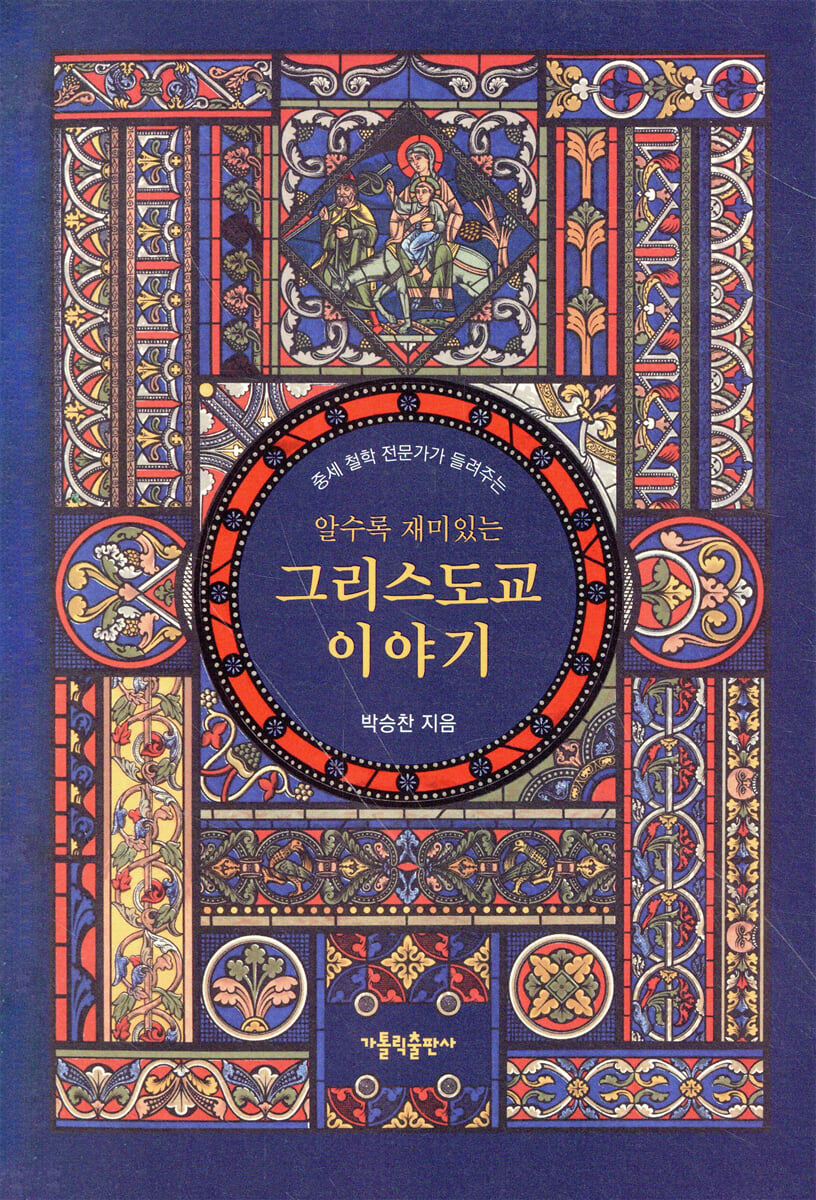 |
Description
Book Introduction
To understand Western culture
Christianity You Must Know
Western culture evolved from Greco-Roman culture to Christian culture.
However, this process was not easy.
The early Romans were polytheistic and did not pay much attention to Christianity because they believed that Rome's prosperity was maintained with the help of these gods.
So how did Christianity come to influence Western culture for thousands of years? And just how much of an impact has it had on Western culture? "The More You Know, the More Interesting It Becomes" is a book for those with an intellectual curiosity about Christianity, the foundation of Western culture. It provides an accessible and accessible account of the Catholic Church's journey over approximately 1,500 years, from the early church to just before the Reformation in the 16th century.
As readers read this book, they will vividly experience the human sorrow, agony, and warm moments of comfort embedded in the journey of Christianity.
Christianity You Must Know
Western culture evolved from Greco-Roman culture to Christian culture.
However, this process was not easy.
The early Romans were polytheistic and did not pay much attention to Christianity because they believed that Rome's prosperity was maintained with the help of these gods.
So how did Christianity come to influence Western culture for thousands of years? And just how much of an impact has it had on Western culture? "The More You Know, the More Interesting It Becomes" is a book for those with an intellectual curiosity about Christianity, the foundation of Western culture. It provides an accessible and accessible account of the Catholic Church's journey over approximately 1,500 years, from the early church to just before the Reformation in the 16th century.
As readers read this book, they will vividly experience the human sorrow, agony, and warm moments of comfort embedded in the journey of Christianity.
- You can preview some of the book's contents.
Preview
index
Introduction
A Honest Dialogue Between Christianity and the World · 5
Lecture 1: The Birth of Christianity and the Initial Process of Indigenization
Persecution of Early Christianity · 28
Catacombs, where they hid from persecution · 31
Roman Misunderstandings of Christians · 33
The Apostle Paul, the First to Attempt Localization · 36
Justin the Apologist · 38
Lecture 2: The Rise of Heresy and Resistance to Preserve the Purity of Faith
Gnosticism, which emphasized spiritual principles · 45
Marcion's Heresy: Accepting Only the God of the New Testament · 50
Manichaeism, a collection of theories from various religions · 54
Tertullian, Emphasizing Pure Faith · 57
Lecture 3: Indigenization through the Acceptance of Greco-Roman Culture
Alexandria, the new center of Greco-Roman culture · 67
Ancient Bookmaking Methods · 69
The Birth of the Alexandrian School · 73
Clement of Alexandria, who advocated the acceptance of Greek philosophy · 74
Origen, the passionate Greek theologian · 77
Lecture 4: Freedom of Religion through Constantine the Great
The Expansion of the Roman Empire and the Four Provinces · 86
The Rise of Constantine the Great · 87
Constantine's Victory at the Battle of Milvian · 90
The Edict of Milan, which granted freedom to Christianity · 95
Constantinople, the new capital of the Roman Empire · 97
Lesson 5: Confessing Faith Together
The Formation of the Christian Confession of Faith · 106
The Council of Nicaea and the Rise of the Arian Heresy · 108
The Chaos After the Council of Nicaea · 113
Three Cappadocian Fathers Who Contributed to the Development of Pneumatology · 114
Basil, raised in a deeply religious family · 116
Basil, founder of the monastic community · 118
Basil's Vigorous Activities · 120
The Character and Activities of Gregory of Nazianzus · 122
Gregory of Nyssa, the outstanding philosopher and spiritual writer · 125
Lecture 6: The Completion of the Christian Confession of Faith
The four major ecumenical councils and the major churches of early Christianity · 128
The Council of Constantinople, which established the doctrine of the Holy Spirit · 132
Nicene-Constantinopolitan Creed and the Apostles' Creed · 135
The Controversy Surrounding the Deity and Humanity of Christ · 136
The Nestorian Controversy Surrounding the Name of the Virgin Mary · 140
The Councils of Ephesus and Chalcedon · 143
Lesson 7: The Word Incarnate in Latin
The Formation of the Bible · 156
The Order of the Bible and the Establishment of the Canon · 160
The First Latin Bible, Vetus Latina · 165
The Greatest Bible Translator, Jerome and the Vulgate · 167
How to Understand the Bible 175
Lecture 8: The Shaking Roman Empire and a Faith Built on Tears
The Birth and Rise of Augustine · 180
Augustine's Wandering Childhood · 184
Augustine's Search for Wisdom and Disappointment with the Bible · 189
Augustine's fascination with Manichaeism · 193
Augustine's Skepticism · 199
Lesson 9: Growing in Faith Through Meeting a Mentor
Encounter with Neoplatonism in Milan · 206
The best mentor I met in Milan, Ambrosius · 215
Augustine, Unhappy Despite Worldly Success · 221
Augustine's Dramatic Conversion · 223
Monica's Tears and the Spiritual Joy She Found · 226
Lecture 10: Augustine, the Greatest Teacher of Christianity
The Monastic Community of Tagaste · 234
Augustine, Bishop of Hippo · 239
Augustine's Major Works · 245
Neoplatonism and Christianity · 249
Finding True Happiness · 251
The Ethics of Love · 253
Lesson 11: The Kingdom of God, the Kingdom of Earth
Enjoyment and Use · 260
The Donatist Controversy Concerning the Church and the Sacraments · 263
Controversy with Pelagius on Grace and Freedom · 266
Background to the Writing of "The New State" · 268
Distinction between Old and New People · 272
The Distinction Between the Kingdom of God and the Kingdom of Earth · 274
Lecture 12: The Fall of the Western Roman Empire and the Schism of the Eastern Church
Characteristics of Germanic Culture · 286
Boethius, the last Roman philosopher, 296
Boethius's Definition of "Personality" · 302
The Golden Age of the Eastern Roman Empire, Justinian the Great · 305
Germanic tribes who adopted Christianity · 307
Lesson 13: Pray and Work
The Forms and Origins of Monastic Life · 311
The Emergence of the Princess Convent · 315
The Life and Work of Benedict · 317
The True Role of Monastic Orders · 337
Lecture 14: Charlemagne's Renaissance and the Reform of Monastic Orders
Expansion and Development of the Frankish Kingdom · 341
Monastic Schools Contribute to the Cultural Development of the Germanic Peoples · 344
Charlemagne, the supreme ruler of the Western world · 346
Charlemagne's Renaissance · 350
The Changing Monastery · 360
Lecture 15: Faith in the Pursuit of Understanding: The Birth of Scholastic Philosophy
Scholastic Philosophy and the Seven Liberal Arts · 366
The Eucharistic Controversy Between Berengar and Lanfrancus · 372
The Life of Anselm · 377
Fighters for Church Freedom · 384
Lesson 16: From Earthly Love to Heavenly Love
The Development of Private Schools · 390
Abelard, the greatest lecturer of the 12th century · 391
The Beginning of the Universal Debate · 395
Abelard, who changed the framework of traditional theology · 400
The Greatest Love Affair of the Middle Ages - Forbidden Love with Eloise · 402
The Condemnation and Death of Abelard · 407
Lecture 17: Wars Between Religions and the Peace of Christ
Why Did the Crusades Happen? · 414
The Course of the First Crusade · 417
The Aftermath of the Second Crusade · 423
The Consequences of the Crusades · 428
Apostles of Peace Against War · 430
The Birth of the Mendicant Order · 432
Francis and the Song of the Sun · 435
Lecture 18: Islamic Culture and Aristotle
The Two Pillars of Western Philosophy: Plato and Aristotle · 443
Aristotle's Books That Contributed to the Development of Arab Culture · 447
Islam and Aristotle's Philosophy · 455
The Rediscovery of Aristotle in the Western World · 459
Lecture 19: The Rediscovery of Aristotle: A Crisis or Opportunity for the Church?
The Conflict Between Aristotle's Teachings and Christian Doctrine · 469
The Ban on Aristotle's Lectures · 475
Various Tendencies in the Process of Accepting Aristotle · 478
Lecture 20: The Medieval University and the Church
Various Schools in the Middle Ages · 488
The Birth of the Medieval University · 490
The Structure and Teaching Methods of the Medieval University · 496
What You Should Learn at a Medieval University · 507
Lecture 21: The Angelic Doctor Thomas Aquinas
The Birth and Rise of Thomas Aquinas · 513
The Encounter between Thomas Aquinas and Albert the Great · 522
Thomas Aquinas and the Summa Theologica · 527
Lecture 22: The Golden Pillar of Western Intellectual History: Summa Theologica
The Content and Structure of the Summa Theologica · 537
The Ethics of Thomas Aquinas · 544
A Pioneer on the Path to a New Philosophy and Universal Culture · 558
Lesson 23: The Heavenly Jerusalem Made of Stone
The Rise of the Romanesque Style · 564
The Development of the Gothic Style · 570
The Medieval Era Expressed Through Architectural Style · 580
Lesson 24: What belongs to Caesar to Caesar?
The Relationship Between Religion and Politics in the History of the Church · 585
The Forged "Dedication of Constantine" · 587
The Strengthening of Papal Power Revealed by the Humiliation of Canossa · 590
The power struggle between the Pope and the Emperor · 594
The Avignon Papacy and the Fall of the Papacy · 597
Lessons from the Confusion of the Late Medieval Church · 602
Lecture 25: A Church Lost in Light and a Wavering Faith
Social Disturbance Caused by the Black Death · 606
The Ongoing War · 613
The Hedonistic Culture that Captivated the Late Middle Ages · 617
The Intellectual Crisis of the Late Middle Ages · 619
New Piety Movement · 625
Epilogue: Harmony of Faith and Reason
The Relationship Between Faith and Reason in Early Christianity · 631
Augustine's Fusion of Christianity and Neoplatonism · 635
Augustine's "Ethics of Love and Hope" · 639
The Harmony of Faith and Reason, Also Emphasized in Scholastic Philosophy · 642
Thomas Aquinas, “Grace does not destroy nature, but perfects it.” · 647
For a society filled with the fragrance of Christ · 653
America · 655
Index · 676
A Honest Dialogue Between Christianity and the World · 5
Lecture 1: The Birth of Christianity and the Initial Process of Indigenization
Persecution of Early Christianity · 28
Catacombs, where they hid from persecution · 31
Roman Misunderstandings of Christians · 33
The Apostle Paul, the First to Attempt Localization · 36
Justin the Apologist · 38
Lecture 2: The Rise of Heresy and Resistance to Preserve the Purity of Faith
Gnosticism, which emphasized spiritual principles · 45
Marcion's Heresy: Accepting Only the God of the New Testament · 50
Manichaeism, a collection of theories from various religions · 54
Tertullian, Emphasizing Pure Faith · 57
Lecture 3: Indigenization through the Acceptance of Greco-Roman Culture
Alexandria, the new center of Greco-Roman culture · 67
Ancient Bookmaking Methods · 69
The Birth of the Alexandrian School · 73
Clement of Alexandria, who advocated the acceptance of Greek philosophy · 74
Origen, the passionate Greek theologian · 77
Lecture 4: Freedom of Religion through Constantine the Great
The Expansion of the Roman Empire and the Four Provinces · 86
The Rise of Constantine the Great · 87
Constantine's Victory at the Battle of Milvian · 90
The Edict of Milan, which granted freedom to Christianity · 95
Constantinople, the new capital of the Roman Empire · 97
Lesson 5: Confessing Faith Together
The Formation of the Christian Confession of Faith · 106
The Council of Nicaea and the Rise of the Arian Heresy · 108
The Chaos After the Council of Nicaea · 113
Three Cappadocian Fathers Who Contributed to the Development of Pneumatology · 114
Basil, raised in a deeply religious family · 116
Basil, founder of the monastic community · 118
Basil's Vigorous Activities · 120
The Character and Activities of Gregory of Nazianzus · 122
Gregory of Nyssa, the outstanding philosopher and spiritual writer · 125
Lecture 6: The Completion of the Christian Confession of Faith
The four major ecumenical councils and the major churches of early Christianity · 128
The Council of Constantinople, which established the doctrine of the Holy Spirit · 132
Nicene-Constantinopolitan Creed and the Apostles' Creed · 135
The Controversy Surrounding the Deity and Humanity of Christ · 136
The Nestorian Controversy Surrounding the Name of the Virgin Mary · 140
The Councils of Ephesus and Chalcedon · 143
Lesson 7: The Word Incarnate in Latin
The Formation of the Bible · 156
The Order of the Bible and the Establishment of the Canon · 160
The First Latin Bible, Vetus Latina · 165
The Greatest Bible Translator, Jerome and the Vulgate · 167
How to Understand the Bible 175
Lecture 8: The Shaking Roman Empire and a Faith Built on Tears
The Birth and Rise of Augustine · 180
Augustine's Wandering Childhood · 184
Augustine's Search for Wisdom and Disappointment with the Bible · 189
Augustine's fascination with Manichaeism · 193
Augustine's Skepticism · 199
Lesson 9: Growing in Faith Through Meeting a Mentor
Encounter with Neoplatonism in Milan · 206
The best mentor I met in Milan, Ambrosius · 215
Augustine, Unhappy Despite Worldly Success · 221
Augustine's Dramatic Conversion · 223
Monica's Tears and the Spiritual Joy She Found · 226
Lecture 10: Augustine, the Greatest Teacher of Christianity
The Monastic Community of Tagaste · 234
Augustine, Bishop of Hippo · 239
Augustine's Major Works · 245
Neoplatonism and Christianity · 249
Finding True Happiness · 251
The Ethics of Love · 253
Lesson 11: The Kingdom of God, the Kingdom of Earth
Enjoyment and Use · 260
The Donatist Controversy Concerning the Church and the Sacraments · 263
Controversy with Pelagius on Grace and Freedom · 266
Background to the Writing of "The New State" · 268
Distinction between Old and New People · 272
The Distinction Between the Kingdom of God and the Kingdom of Earth · 274
Lecture 12: The Fall of the Western Roman Empire and the Schism of the Eastern Church
Characteristics of Germanic Culture · 286
Boethius, the last Roman philosopher, 296
Boethius's Definition of "Personality" · 302
The Golden Age of the Eastern Roman Empire, Justinian the Great · 305
Germanic tribes who adopted Christianity · 307
Lesson 13: Pray and Work
The Forms and Origins of Monastic Life · 311
The Emergence of the Princess Convent · 315
The Life and Work of Benedict · 317
The True Role of Monastic Orders · 337
Lecture 14: Charlemagne's Renaissance and the Reform of Monastic Orders
Expansion and Development of the Frankish Kingdom · 341
Monastic Schools Contribute to the Cultural Development of the Germanic Peoples · 344
Charlemagne, the supreme ruler of the Western world · 346
Charlemagne's Renaissance · 350
The Changing Monastery · 360
Lecture 15: Faith in the Pursuit of Understanding: The Birth of Scholastic Philosophy
Scholastic Philosophy and the Seven Liberal Arts · 366
The Eucharistic Controversy Between Berengar and Lanfrancus · 372
The Life of Anselm · 377
Fighters for Church Freedom · 384
Lesson 16: From Earthly Love to Heavenly Love
The Development of Private Schools · 390
Abelard, the greatest lecturer of the 12th century · 391
The Beginning of the Universal Debate · 395
Abelard, who changed the framework of traditional theology · 400
The Greatest Love Affair of the Middle Ages - Forbidden Love with Eloise · 402
The Condemnation and Death of Abelard · 407
Lecture 17: Wars Between Religions and the Peace of Christ
Why Did the Crusades Happen? · 414
The Course of the First Crusade · 417
The Aftermath of the Second Crusade · 423
The Consequences of the Crusades · 428
Apostles of Peace Against War · 430
The Birth of the Mendicant Order · 432
Francis and the Song of the Sun · 435
Lecture 18: Islamic Culture and Aristotle
The Two Pillars of Western Philosophy: Plato and Aristotle · 443
Aristotle's Books That Contributed to the Development of Arab Culture · 447
Islam and Aristotle's Philosophy · 455
The Rediscovery of Aristotle in the Western World · 459
Lecture 19: The Rediscovery of Aristotle: A Crisis or Opportunity for the Church?
The Conflict Between Aristotle's Teachings and Christian Doctrine · 469
The Ban on Aristotle's Lectures · 475
Various Tendencies in the Process of Accepting Aristotle · 478
Lecture 20: The Medieval University and the Church
Various Schools in the Middle Ages · 488
The Birth of the Medieval University · 490
The Structure and Teaching Methods of the Medieval University · 496
What You Should Learn at a Medieval University · 507
Lecture 21: The Angelic Doctor Thomas Aquinas
The Birth and Rise of Thomas Aquinas · 513
The Encounter between Thomas Aquinas and Albert the Great · 522
Thomas Aquinas and the Summa Theologica · 527
Lecture 22: The Golden Pillar of Western Intellectual History: Summa Theologica
The Content and Structure of the Summa Theologica · 537
The Ethics of Thomas Aquinas · 544
A Pioneer on the Path to a New Philosophy and Universal Culture · 558
Lesson 23: The Heavenly Jerusalem Made of Stone
The Rise of the Romanesque Style · 564
The Development of the Gothic Style · 570
The Medieval Era Expressed Through Architectural Style · 580
Lesson 24: What belongs to Caesar to Caesar?
The Relationship Between Religion and Politics in the History of the Church · 585
The Forged "Dedication of Constantine" · 587
The Strengthening of Papal Power Revealed by the Humiliation of Canossa · 590
The power struggle between the Pope and the Emperor · 594
The Avignon Papacy and the Fall of the Papacy · 597
Lessons from the Confusion of the Late Medieval Church · 602
Lecture 25: A Church Lost in Light and a Wavering Faith
Social Disturbance Caused by the Black Death · 606
The Ongoing War · 613
The Hedonistic Culture that Captivated the Late Middle Ages · 617
The Intellectual Crisis of the Late Middle Ages · 619
New Piety Movement · 625
Epilogue: Harmony of Faith and Reason
The Relationship Between Faith and Reason in Early Christianity · 631
Augustine's Fusion of Christianity and Neoplatonism · 635
Augustine's "Ethics of Love and Hope" · 639
The Harmony of Faith and Reason, Also Emphasized in Scholastic Philosophy · 642
Thomas Aquinas, “Grace does not destroy nature, but perfects it.” · 647
For a society filled with the fragrance of Christ · 653
America · 655
Index · 676
Detailed image
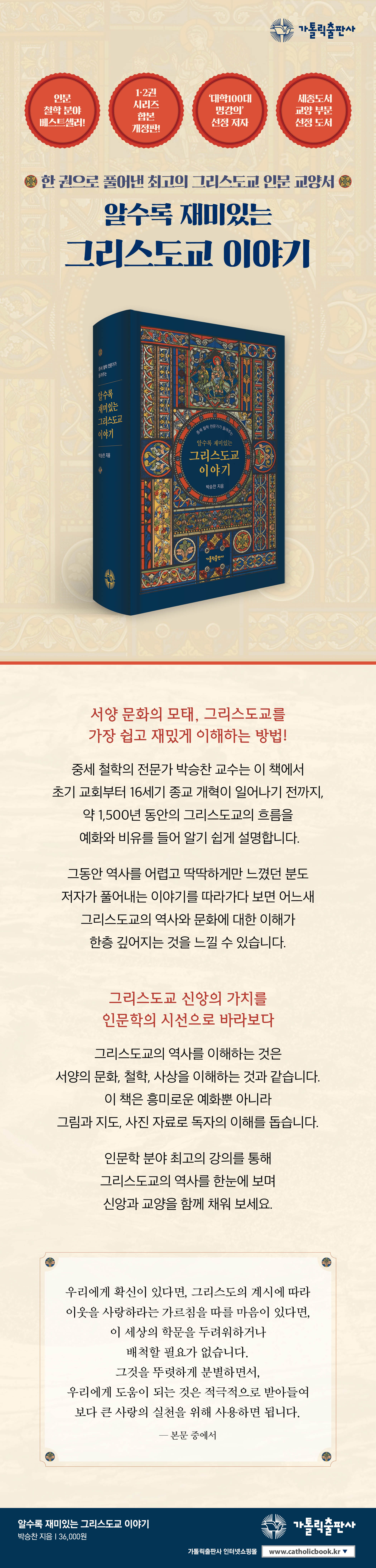
Into the book
The passion and energy that Tertullian possessed throughout his life seem to have something to do with his birthplace.
Because he was born in Carthage, a representative port in North Africa, full of hot sunlight.
When we think of Africa, we might be mistaken for a region of Africa with a primitive lifestyle, but places like Algeria, Tunisia, and Libya in present-day northern Africa were Africa during the Roman Empire.
These areas are dazzlingly hot and sunny, as depicted in Albert Camus' novel The Stranger.
This sunlight also affects a person's personality.
People in North Africa, where the sun is strong, often exhibited choleric personalities.
Perhaps for this reason, African Christians have shown a unique aspect in terms of purity of faith, and the greatest number of martyrs have come from here.
---From "The Rise of Heresy in the Second Chapter and Resistance to Protect the Purity of Faith"
Constantine the Great was born the son of Flavius Valerius Constantius, the vice-emperor of the four emperors.
His father, Constantius, was a handsome and very brave man who had been in all kinds of battles.
One day, he was traveling through a region called Bithynia and stopped at an inn.
While the other generals were sleeping in the barracks, he was sleeping in the inn, and there was a beautiful and spirited woman there.
As the daughter of an innkeeper, her name was Helena, and she was a country girl who did not shy away from hard work, such as tending the stables.
But Constantius fell in love with her.
Constantius approached her with all kinds of sweet talk, but Helena was not so swayed.
Constantius seemed to be more attracted to the appearance of such a country girl.
Constantius, who was deeply in love with Helena, the so-called 'master of seduction', pursued her, courted her earnestly, and eventually made her his wife.
---From "Freedom of Religion Obtained through the Four Powers of Constantine the Great"
However, the Alexandrian school was agitated when the Patriarch of Constantinople proposed to abandon the name 'Mother of God' and use a new name, 'Mother of Christ'.
So, what happened was that the hermits I mentioned earlier came rushing in and shouting, “Nestorius, come out!”
Even though Nestorius explained theology to them, they did not understand.
Because they lived a monastic life based solely on belief and faith.
In fact, there was a mastermind behind these things.
This is Cyril of Alexandria (c. 376–444), the Patriarch of Alexandria.
He incited the hermits by saying, “Has our Alexandria become so weak? Can we stand by while a new, unheard-of patriarch of Constantinople continues to challenge us and humiliate us?”
Cyril launched a full-scale attack on Nestorius, leading to the First Council of Ephesus in 431.
---From "The Perfection of the Christian Confession of Faith, Lecture 6"
Carthage was a port city of enormous size.
Carthage, a city so developed that traces of it still remain today, was the largest grain exporting port of the Roman Empire.
At that time, the Mediterranean coast of Africa was a granary no less than the Nile River basin.
So Carthage accumulated enormous wealth.
But in such a wealthy city, red-light districts are bound to develop.
Augustine, a hot-blooded adolescent boy who was sent to study abroad in Carthage to get his mind together and study hard, ended up showing even greater interest in such places.
Augustine spent all the money his parents gave him to study abroad on having fun.
---From "The Shaking Roman Empire and the Faith Grown Through Tears"
When Christians were cowering and questioning whether it was really their fault, there was someone who angrily said, “No!”
It was none other than Augustine.
When we get angry, we tend to yell or throw a punch, but Augustine took up his pen instead.
Isn't that quite unique? Augustine spent 14 years writing a book to prove that this rumor was false.
So the completed book was De Civitate Dei, sometimes translated as 'On the City of God'.
---From "Lecture 11: The Kingdom of God, the Kingdom of Earth"
When I was young, I was a model student who was full of energy and strictly followed the rules. So when I was a Sunday school teacher, I scolded my students and strictly controlled them.
But it seems that Benedict was just as strict.
Benedict strictly commanded that the monks follow the rules, and the monks regretted bringing him in, saying, "How did we bring in such a person? We made the wrong choice."
The monks could no longer bear it as they emphasized obedience.
So they did the unthinkable.
It would have been nice if Benedict had died naturally, but he was too young for that.
So they planned to assassinate Benedict.
---From "Lecture 13: Pray and Work"
One autumn day, when leaves were falling, Eloise was bowing her head, seemingly listening to Abelard's words.
When Abelard pressed her, "Eloise! What on earth are you thinking?" she looked up, and tears welled up in her eyes. Abelard asked, puzzled, "Eloise, what's wrong?" She replied, "I don't know, sir!" and turned her head away, as if in despair.
For a moment, Abelard felt that in her gaze, she saw him not as a teacher, but as a man she loved.
---From "From Worldly Love to Heavenly Love"
Sometimes, before going to war, they take actions to intimidate others first.
Saladin and King Richard faced each other, and King Richard drew his sword first, cut the chains next to him, and threatened, “Surrender or you will suffer the same fate as these chains!”
Perhaps he expected Saladin to be terrified at the sight of this.
But Saladin's expression was calm.
Instead, he asked, “Is it possible for Your Majesty to do something like this?” and untied the silk he was wearing and threw it into the sky.
Then he pulled out his crescent sword and cut the silk that was floating in the air and then coming down.
The mouths of those who saw this dropped open.
The Third Crusade ended with a compromise, with both sides suffering heavy casualties as the armies led by these two brave and powerful leaders clashed against each other, but Saladin finally promised to allow the pilgrimage to the Holy Land in peace.
---From "Lecture 17: War Between Religions and the Peace of Christ"
Even when the ban on Aristotle's lectures was issued, Albertus sought out Aristotle's books and read them diligently, including Averroes' commentary.
He would read Aristotle's books and compare them directly with Averroes' commentary, and would correct any parts he deemed inaccurate.
And he wrote a new commentary.
When the content matched his thoughts, he would exclaim in wonder, “Oh, what a wonder! The grace of God!”
However, if I judged it to be incorrect, I criticized and revised it by writing, “I should say this.”
---From "Lecture 19: The Rediscovery of Aristotle: A Crisis or Opportunity for the Church?"
Although the students studied hard, the quality of the professor's lectures was different from today's lectures that utilize various modern civilization's advantages.
But there was one teaching method that was very outstanding.
It is 'Disputatio', that is, discussion.
Sometimes, you can see politicians on TV debating and just going on and on about what they want to say without even trying to listen to the other side. That's not a debate.
Medieval debate was not like that.
There were strict rules.
The person who created that rule was Abelard.
Abelard had a method he devised to use his talents: 'Yes and No.'
It was a method of systematically organizing one by one the opposing positions of asking a question and saying 'yes' or 'no'.
The discussion took place with this structure.
---From "The Medieval University That Grew Together with the 20 Churches"
Thomas Aquinas drove out the woman with a torch.
A hagiography on Thomas Aquinas describes him as “never before or since had a Thomas Aquinas moved so quickly.”
There is always some exaggeration in the biographies of saints, and there is even a story that Thomas Aquinas fainted from exertion.
There is also a legend that at that time two angels appeared and tied a rope around Thomas Aquinas' waist, and from then on Thomas Aquinas never fell into lust.
Although this legend may be questionable, it does give us a sense of Thomas Aquinas's firm resolve and will to not give in to temptation despite all the obstacles.
---From "Lecture 21: The Angelic Doctor Thomas Aquinas"
The Romanesque style is characterized by a solemn and majestic appearance due to its circular arches and natural light, and its horizontal features are emphasized.
It also showed the image of a church that is on pilgrimage and struggling.
On the other hand, the Gothic style emphasized religious belief through rose windows and very tall spires, showed high-altitude lighting, and emphasized verticality.
“Let us raise human faith! Let us make it soar high into the sky!” That was the motto.
The reason these two styles differ so much is because of the cultural background and the times at the time.
While the Romanesque style expresses the monasteries and their closed economy, and the cold interests of the aristocracy, the Gothic style depicts the hopeful human figure of the city's development, and the future of humanity newly unfolding through economic activity.
If we apply what we have learned so far, we can say that universal realism is expressed in the Romanesque style, and moderate realism is expressed in the Gothic style.
Because he was born in Carthage, a representative port in North Africa, full of hot sunlight.
When we think of Africa, we might be mistaken for a region of Africa with a primitive lifestyle, but places like Algeria, Tunisia, and Libya in present-day northern Africa were Africa during the Roman Empire.
These areas are dazzlingly hot and sunny, as depicted in Albert Camus' novel The Stranger.
This sunlight also affects a person's personality.
People in North Africa, where the sun is strong, often exhibited choleric personalities.
Perhaps for this reason, African Christians have shown a unique aspect in terms of purity of faith, and the greatest number of martyrs have come from here.
---From "The Rise of Heresy in the Second Chapter and Resistance to Protect the Purity of Faith"
Constantine the Great was born the son of Flavius Valerius Constantius, the vice-emperor of the four emperors.
His father, Constantius, was a handsome and very brave man who had been in all kinds of battles.
One day, he was traveling through a region called Bithynia and stopped at an inn.
While the other generals were sleeping in the barracks, he was sleeping in the inn, and there was a beautiful and spirited woman there.
As the daughter of an innkeeper, her name was Helena, and she was a country girl who did not shy away from hard work, such as tending the stables.
But Constantius fell in love with her.
Constantius approached her with all kinds of sweet talk, but Helena was not so swayed.
Constantius seemed to be more attracted to the appearance of such a country girl.
Constantius, who was deeply in love with Helena, the so-called 'master of seduction', pursued her, courted her earnestly, and eventually made her his wife.
---From "Freedom of Religion Obtained through the Four Powers of Constantine the Great"
However, the Alexandrian school was agitated when the Patriarch of Constantinople proposed to abandon the name 'Mother of God' and use a new name, 'Mother of Christ'.
So, what happened was that the hermits I mentioned earlier came rushing in and shouting, “Nestorius, come out!”
Even though Nestorius explained theology to them, they did not understand.
Because they lived a monastic life based solely on belief and faith.
In fact, there was a mastermind behind these things.
This is Cyril of Alexandria (c. 376–444), the Patriarch of Alexandria.
He incited the hermits by saying, “Has our Alexandria become so weak? Can we stand by while a new, unheard-of patriarch of Constantinople continues to challenge us and humiliate us?”
Cyril launched a full-scale attack on Nestorius, leading to the First Council of Ephesus in 431.
---From "The Perfection of the Christian Confession of Faith, Lecture 6"
Carthage was a port city of enormous size.
Carthage, a city so developed that traces of it still remain today, was the largest grain exporting port of the Roman Empire.
At that time, the Mediterranean coast of Africa was a granary no less than the Nile River basin.
So Carthage accumulated enormous wealth.
But in such a wealthy city, red-light districts are bound to develop.
Augustine, a hot-blooded adolescent boy who was sent to study abroad in Carthage to get his mind together and study hard, ended up showing even greater interest in such places.
Augustine spent all the money his parents gave him to study abroad on having fun.
---From "The Shaking Roman Empire and the Faith Grown Through Tears"
When Christians were cowering and questioning whether it was really their fault, there was someone who angrily said, “No!”
It was none other than Augustine.
When we get angry, we tend to yell or throw a punch, but Augustine took up his pen instead.
Isn't that quite unique? Augustine spent 14 years writing a book to prove that this rumor was false.
So the completed book was De Civitate Dei, sometimes translated as 'On the City of God'.
---From "Lecture 11: The Kingdom of God, the Kingdom of Earth"
When I was young, I was a model student who was full of energy and strictly followed the rules. So when I was a Sunday school teacher, I scolded my students and strictly controlled them.
But it seems that Benedict was just as strict.
Benedict strictly commanded that the monks follow the rules, and the monks regretted bringing him in, saying, "How did we bring in such a person? We made the wrong choice."
The monks could no longer bear it as they emphasized obedience.
So they did the unthinkable.
It would have been nice if Benedict had died naturally, but he was too young for that.
So they planned to assassinate Benedict.
---From "Lecture 13: Pray and Work"
One autumn day, when leaves were falling, Eloise was bowing her head, seemingly listening to Abelard's words.
When Abelard pressed her, "Eloise! What on earth are you thinking?" she looked up, and tears welled up in her eyes. Abelard asked, puzzled, "Eloise, what's wrong?" She replied, "I don't know, sir!" and turned her head away, as if in despair.
For a moment, Abelard felt that in her gaze, she saw him not as a teacher, but as a man she loved.
---From "From Worldly Love to Heavenly Love"
Sometimes, before going to war, they take actions to intimidate others first.
Saladin and King Richard faced each other, and King Richard drew his sword first, cut the chains next to him, and threatened, “Surrender or you will suffer the same fate as these chains!”
Perhaps he expected Saladin to be terrified at the sight of this.
But Saladin's expression was calm.
Instead, he asked, “Is it possible for Your Majesty to do something like this?” and untied the silk he was wearing and threw it into the sky.
Then he pulled out his crescent sword and cut the silk that was floating in the air and then coming down.
The mouths of those who saw this dropped open.
The Third Crusade ended with a compromise, with both sides suffering heavy casualties as the armies led by these two brave and powerful leaders clashed against each other, but Saladin finally promised to allow the pilgrimage to the Holy Land in peace.
---From "Lecture 17: War Between Religions and the Peace of Christ"
Even when the ban on Aristotle's lectures was issued, Albertus sought out Aristotle's books and read them diligently, including Averroes' commentary.
He would read Aristotle's books and compare them directly with Averroes' commentary, and would correct any parts he deemed inaccurate.
And he wrote a new commentary.
When the content matched his thoughts, he would exclaim in wonder, “Oh, what a wonder! The grace of God!”
However, if I judged it to be incorrect, I criticized and revised it by writing, “I should say this.”
---From "Lecture 19: The Rediscovery of Aristotle: A Crisis or Opportunity for the Church?"
Although the students studied hard, the quality of the professor's lectures was different from today's lectures that utilize various modern civilization's advantages.
But there was one teaching method that was very outstanding.
It is 'Disputatio', that is, discussion.
Sometimes, you can see politicians on TV debating and just going on and on about what they want to say without even trying to listen to the other side. That's not a debate.
Medieval debate was not like that.
There were strict rules.
The person who created that rule was Abelard.
Abelard had a method he devised to use his talents: 'Yes and No.'
It was a method of systematically organizing one by one the opposing positions of asking a question and saying 'yes' or 'no'.
The discussion took place with this structure.
---From "The Medieval University That Grew Together with the 20 Churches"
Thomas Aquinas drove out the woman with a torch.
A hagiography on Thomas Aquinas describes him as “never before or since had a Thomas Aquinas moved so quickly.”
There is always some exaggeration in the biographies of saints, and there is even a story that Thomas Aquinas fainted from exertion.
There is also a legend that at that time two angels appeared and tied a rope around Thomas Aquinas' waist, and from then on Thomas Aquinas never fell into lust.
Although this legend may be questionable, it does give us a sense of Thomas Aquinas's firm resolve and will to not give in to temptation despite all the obstacles.
---From "Lecture 21: The Angelic Doctor Thomas Aquinas"
The Romanesque style is characterized by a solemn and majestic appearance due to its circular arches and natural light, and its horizontal features are emphasized.
It also showed the image of a church that is on pilgrimage and struggling.
On the other hand, the Gothic style emphasized religious belief through rose windows and very tall spires, showed high-altitude lighting, and emphasized verticality.
“Let us raise human faith! Let us make it soar high into the sky!” That was the motto.
The reason these two styles differ so much is because of the cultural background and the times at the time.
While the Romanesque style expresses the monasteries and their closed economy, and the cold interests of the aristocracy, the Gothic style depicts the hopeful human figure of the city's development, and the future of humanity newly unfolding through economic activity.
If we apply what we have learned so far, we can say that universal realism is expressed in the Romanesque style, and moderate realism is expressed in the Gothic style.
---From "Celestial Jerusalem Made of Stone, Lesson 23"
Publisher's Review
Contains lectures that were popularly broadcast on TV and radio
A clear and honest Christian humanities textbook.
This book is a compilation of Professor Seungchan Park's lecture, "Christianity, the Mother of Western Culture," which was broadcast to great acclaim on Peace Broadcasting TV and radio in 2014.
This course covers the course of Christianity over approximately 1,500 years, from the early church to the Reformation of the 16th century, in 26 lectures, using Western culture, history, and philosophy as a foundation.
Although it covers a wide period of time, 1,500 years, and the subject matter could easily be difficult to understand, many people said that it was easy and fun to watch when it was aired.
This book is based on this clear and informative lecture, so it is somewhat thick, but it is easy to read as if someone is explaining it to you right next to you.
Catholic Publishing House has revised and published the existing best-selling “Christian Stories That Get More Interesting the More You Know” volume 1 and 2 in one volume.
The photos and text have been arranged to make them easier on the eyes, and the cover has been redesigned into a lightweight yet sturdy hardcover.
Also, two books were combined into one volume so that one can cover the entire history of Christianity.
Professor Seungchan Park, an expert in medieval philosophy,
A clear and honest lecture
Professor Seungchan Park, the author of this book, is renowned as an expert in medieval philosophy and a renowned lecturer.
His lecture, 'History of Medieval Philosophy', was selected as one of the '100 Best University Lectures' jointly hosted by SBS and the University Education Council in 2012, and his lectures, 'History of Medieval Philosophy' and 'Traditions of Western Philosophy' were also ranked as the most popular lectures in the humanities field on KOCW (Korea Open Courseware, a joint use system for higher education teaching and learning materials), which introduces major lectures at each university.
In addition, he has appeared and lectured on various broadcasts such as the SBS CNBC humanities lecture 'Who am I' season 2 "How to Live" which received great response, JTBC's China Class "Light and Shadow of the Middle Ages Millennium", EBS Special Project Insight, EBS Class e "Great Similarities of the Middle Ages", and he also serialized "Park Seung-chan's Revisiting the Middle Ages" in six parts in the Hankyoreh newspaper.
He also supervised a book on the Middle Ages written by world-renowned scholar and novelist Umberto Eco.
In this way, "Christian Stories That Get More Interesting the More You Know" is a book written by Professor Seungchan Park, Korea's leading expert on the humanities, especially the Middle Ages, so even readers who are unfamiliar with Western history can read it with confidence.
1,500 years of Christian flow
A book that easily explains Western culture, history, and philosophy.
Although it is a story about the history of Christianity, which can be dry and boring, the author tells it in an interesting way using anecdotes and parables that ordinary people can relate to.
The first half of this book comprehensively covers how Christianity has changed from its origins to the establishment of monastic orders around the fourth century.
For example, it covers how early Christianity and the Greco-Roman culture that was the mainstream of the time were harmonized, what difficulties there were in the process of forming the Christian confession of faith, and how the Bible came to be what it is today.
From the mid-19th century onwards, it focuses on the Middle Ages, from the Renaissance of Charlemagne in the 8th century to the turbulent 15th century, with the Black Death and wars.
This book explores the development of scholarship through transcription and translation, the vibrant education offered through various schools, including monastic and court schools, the intense debates that took place in medieval universities, and the splendid Gothic architecture. It explores the previously unexplored developments in medieval thought, education, and architecture.
In particular, we will be able to vividly portray the Middle Ages, which sought harmony between faith and reason, by explaining the scholastic philosophy that represented the Middle Ages in a way that is easy for us to understand today.
The Middle Ages are often thought of as a dark age or a time devoted solely to theology.
Some people also believe that the Middle Ages was a conservative and stagnant period.
However, this book, "Christian Stories That Get More Interesting the More You Know," overturns our perception of the Middle Ages.
Reading this book, you will realize just how vibrant and progressive the Middle Ages really were.
You will discover that the Middle Ages was not a dark period between ancient and modern times, but rather a time when ideas and culture flourished more abundantly than at any other time.
As this book is based on lectures, interesting anecdotes pop up every now and then, adding to the enjoyment of reading the book.
When we talk about the history of Christianity, we might think it would be solemn, but that is not the case at all.
The sad love story of Abelard and Heloise, the confrontation between Saladin and King Richard during the Third Crusade, and the story of Thomas Aquinas resisting the temptation of a woman, all unfold in a very human way, revealing the alluring aspects of historical figures that once seemed distant.
Reading the rich lectures of a medieval philosophy expert in book form will allow you to discover a new side of the Middle Ages and naturally open your eyes to the history of Christianity.
With basic knowledge of Christianity
Strengthen my faith
Humanities is not a discipline that discusses things of the past, but rather a discipline that discusses us humans.
So, humanities are deeply connected to the lives of people living in this world.
This book, "Christian Stories That Get More Interesting the More You Know," also tells stories that are deeply connected to the lives of Christians living in this era.
In particular, the lives of several saints who were active in the early church are interpreted and explained in an easy-to-understand way to fit the modern perspective.
By introducing their human side through interesting anecdotes that cannot be found in typical biographies of saints, such as Saint Helena, who had an affair with General Constantius who wooed her, Saint Jerome who frequented the red-light district in his youth, and Saint Augustine who worried his parents by freezing fruit as a child, we can meet their true colors.
When we listen to the anecdotes of adults, we realize that they are not simply holy people, but rather people who, like us, have shortcomings and have experienced the bitterness of life many times.
And their lives are not just stories, they also teach us Christian teachings.
As I read it carefully with a smile on my face, I feel the teachings I must live by today, gathered from the 1,500 years of history of the Catholic Church, are gradually accumulating in my heart.
Just as the world becomes more visible the more you know, faith also deepens the more you know.
As I build my foundational knowledge of Christianity through this book, won't my faith, built on that foundation, become more firmly rooted? This faith, deeply rooted in my life, will reach out toward God's light and become an inexhaustible driving force in my life.
A clear and honest Christian humanities textbook.
This book is a compilation of Professor Seungchan Park's lecture, "Christianity, the Mother of Western Culture," which was broadcast to great acclaim on Peace Broadcasting TV and radio in 2014.
This course covers the course of Christianity over approximately 1,500 years, from the early church to the Reformation of the 16th century, in 26 lectures, using Western culture, history, and philosophy as a foundation.
Although it covers a wide period of time, 1,500 years, and the subject matter could easily be difficult to understand, many people said that it was easy and fun to watch when it was aired.
This book is based on this clear and informative lecture, so it is somewhat thick, but it is easy to read as if someone is explaining it to you right next to you.
Catholic Publishing House has revised and published the existing best-selling “Christian Stories That Get More Interesting the More You Know” volume 1 and 2 in one volume.
The photos and text have been arranged to make them easier on the eyes, and the cover has been redesigned into a lightweight yet sturdy hardcover.
Also, two books were combined into one volume so that one can cover the entire history of Christianity.
Professor Seungchan Park, an expert in medieval philosophy,
A clear and honest lecture
Professor Seungchan Park, the author of this book, is renowned as an expert in medieval philosophy and a renowned lecturer.
His lecture, 'History of Medieval Philosophy', was selected as one of the '100 Best University Lectures' jointly hosted by SBS and the University Education Council in 2012, and his lectures, 'History of Medieval Philosophy' and 'Traditions of Western Philosophy' were also ranked as the most popular lectures in the humanities field on KOCW (Korea Open Courseware, a joint use system for higher education teaching and learning materials), which introduces major lectures at each university.
In addition, he has appeared and lectured on various broadcasts such as the SBS CNBC humanities lecture 'Who am I' season 2 "How to Live" which received great response, JTBC's China Class "Light and Shadow of the Middle Ages Millennium", EBS Special Project Insight, EBS Class e "Great Similarities of the Middle Ages", and he also serialized "Park Seung-chan's Revisiting the Middle Ages" in six parts in the Hankyoreh newspaper.
He also supervised a book on the Middle Ages written by world-renowned scholar and novelist Umberto Eco.
In this way, "Christian Stories That Get More Interesting the More You Know" is a book written by Professor Seungchan Park, Korea's leading expert on the humanities, especially the Middle Ages, so even readers who are unfamiliar with Western history can read it with confidence.
1,500 years of Christian flow
A book that easily explains Western culture, history, and philosophy.
Although it is a story about the history of Christianity, which can be dry and boring, the author tells it in an interesting way using anecdotes and parables that ordinary people can relate to.
The first half of this book comprehensively covers how Christianity has changed from its origins to the establishment of monastic orders around the fourth century.
For example, it covers how early Christianity and the Greco-Roman culture that was the mainstream of the time were harmonized, what difficulties there were in the process of forming the Christian confession of faith, and how the Bible came to be what it is today.
From the mid-19th century onwards, it focuses on the Middle Ages, from the Renaissance of Charlemagne in the 8th century to the turbulent 15th century, with the Black Death and wars.
This book explores the development of scholarship through transcription and translation, the vibrant education offered through various schools, including monastic and court schools, the intense debates that took place in medieval universities, and the splendid Gothic architecture. It explores the previously unexplored developments in medieval thought, education, and architecture.
In particular, we will be able to vividly portray the Middle Ages, which sought harmony between faith and reason, by explaining the scholastic philosophy that represented the Middle Ages in a way that is easy for us to understand today.
The Middle Ages are often thought of as a dark age or a time devoted solely to theology.
Some people also believe that the Middle Ages was a conservative and stagnant period.
However, this book, "Christian Stories That Get More Interesting the More You Know," overturns our perception of the Middle Ages.
Reading this book, you will realize just how vibrant and progressive the Middle Ages really were.
You will discover that the Middle Ages was not a dark period between ancient and modern times, but rather a time when ideas and culture flourished more abundantly than at any other time.
As this book is based on lectures, interesting anecdotes pop up every now and then, adding to the enjoyment of reading the book.
When we talk about the history of Christianity, we might think it would be solemn, but that is not the case at all.
The sad love story of Abelard and Heloise, the confrontation between Saladin and King Richard during the Third Crusade, and the story of Thomas Aquinas resisting the temptation of a woman, all unfold in a very human way, revealing the alluring aspects of historical figures that once seemed distant.
Reading the rich lectures of a medieval philosophy expert in book form will allow you to discover a new side of the Middle Ages and naturally open your eyes to the history of Christianity.
With basic knowledge of Christianity
Strengthen my faith
Humanities is not a discipline that discusses things of the past, but rather a discipline that discusses us humans.
So, humanities are deeply connected to the lives of people living in this world.
This book, "Christian Stories That Get More Interesting the More You Know," also tells stories that are deeply connected to the lives of Christians living in this era.
In particular, the lives of several saints who were active in the early church are interpreted and explained in an easy-to-understand way to fit the modern perspective.
By introducing their human side through interesting anecdotes that cannot be found in typical biographies of saints, such as Saint Helena, who had an affair with General Constantius who wooed her, Saint Jerome who frequented the red-light district in his youth, and Saint Augustine who worried his parents by freezing fruit as a child, we can meet their true colors.
When we listen to the anecdotes of adults, we realize that they are not simply holy people, but rather people who, like us, have shortcomings and have experienced the bitterness of life many times.
And their lives are not just stories, they also teach us Christian teachings.
As I read it carefully with a smile on my face, I feel the teachings I must live by today, gathered from the 1,500 years of history of the Catholic Church, are gradually accumulating in my heart.
Just as the world becomes more visible the more you know, faith also deepens the more you know.
As I build my foundational knowledge of Christianity through this book, won't my faith, built on that foundation, become more firmly rooted? This faith, deeply rooted in my life, will reach out toward God's light and become an inexhaustible driving force in my life.
GOODS SPECIFICS
- Date of issue: June 6, 2021
- Format: Hardcover book binding method guide
- Page count, weight, size: 484 pages | 1,030g | 148*217*30mm
- ISBN13: 9788932117751
- ISBN10: 8932117756
You may also like
카테고리
korean


korean

![ELLE 엘르 스페셜 에디션 A형 : 12월 [2025]](http://librairie.coreenne.fr/cdn/shop/files/b8e27a3de6c9538896439686c6b0e8fb.jpg?v=1766436872&width=3840)


