

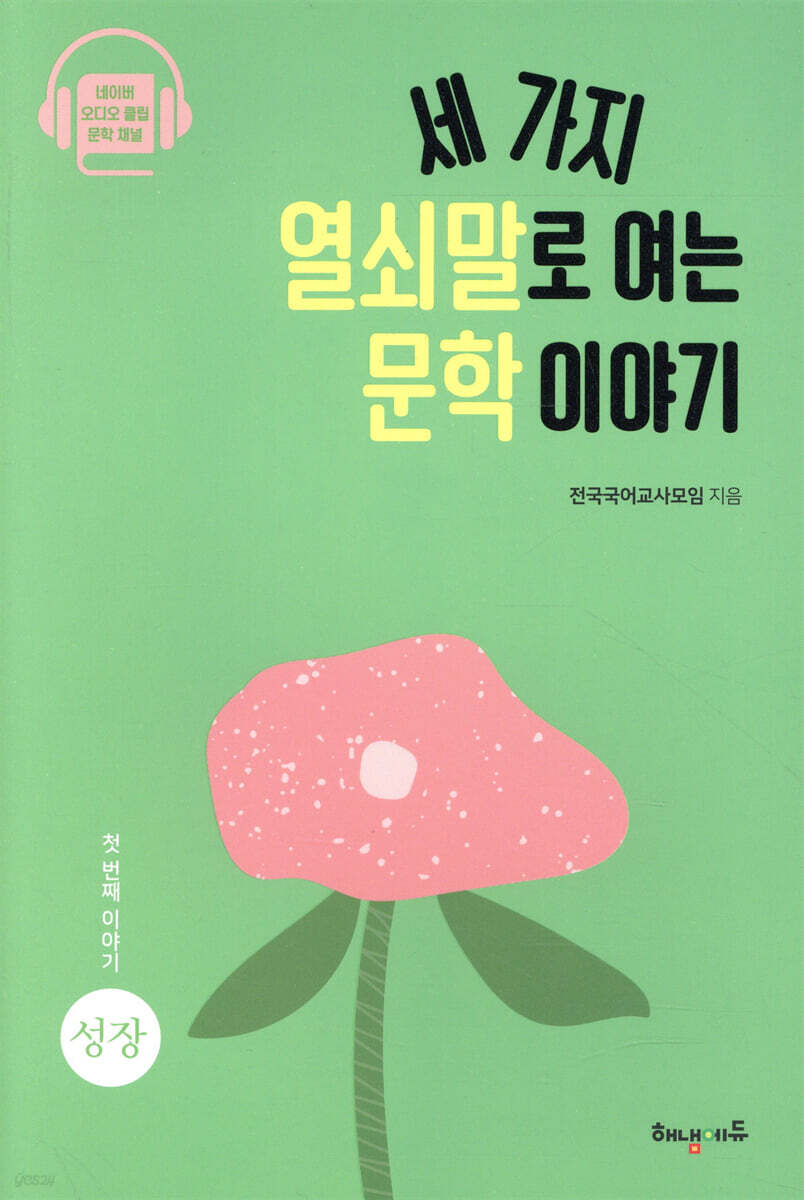
Literary Stories Opened with Three Keywords 1
 |
Description
Book Introduction
The National Association of Korean Language Teachers analyzed it with three keywords:
Commentary on must-read literary works for teenagers
Since 2018, the National Korean Language Teachers Association has been consistently introducing various literary works through in-depth and engaging commentary on the Naver Audio Clip channel [Literary Stories Opened with Three Keywords].
The series, “Literary Stories Opened with Three Keyword Words,” is a new compilation of recordings made over six years for young people and general readers who enjoy literature.
This book extracts three keywords that are essential for understanding a literary work and develops the story around them.
Keywords extracted by Korean language teachers teaching literature in schools shine like stars, revealing the hidden meaning of literary works.
Even though it is a sharp and profound literary criticism and commentary, readers feel as if they are listening to a chatterbox, because the tone of conversation, as if sitting face to face with someone and having a lively conversation, is alive and well in the book.
Each volume contains commentaries on approximately 40 literary works.
In addition to popularly known works like "Wandeukie," you can also frequently encounter works that have never been explained before through the media.
The selection of works covers a wide range of eras and themes, from must-reads featured in textbooks to works currently enjoying popularity.
The diversity of authors is also a strength of this book.
The book includes commentary on the works of a diverse group of authors, from long-time readers' favorites like Park Wan-seo, Hwang Sok-yong, Seong Seok-je, and Hyeon Deok, to recent famous and emerging authors like Kim Ryeo-ryeong, Kim Ae-ran, Son Won-pyeong, and Hwang Yeong-mi.
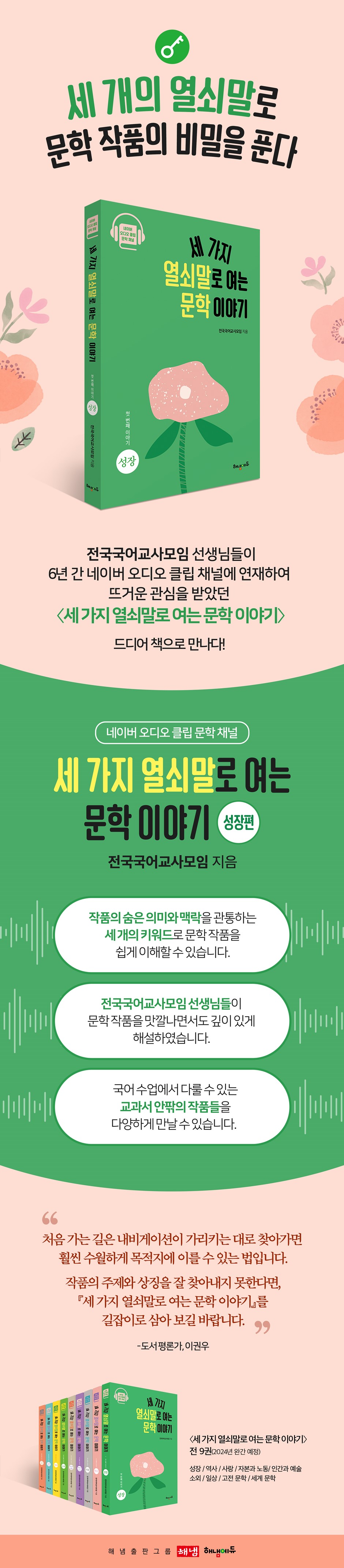
"Literary Stories Opened with Three Keyword" consists of nine volumes, and the first volume contains commentary on 40 works that contain the pain, worries, and growth of young people.
In the future, the complete book will be published, expanding its themes to include history, love, capital and labor, humans and art, alienation, daily life, classical literature, and world literature.
Commentary on must-read literary works for teenagers
Since 2018, the National Korean Language Teachers Association has been consistently introducing various literary works through in-depth and engaging commentary on the Naver Audio Clip channel [Literary Stories Opened with Three Keywords].
The series, “Literary Stories Opened with Three Keyword Words,” is a new compilation of recordings made over six years for young people and general readers who enjoy literature.
This book extracts three keywords that are essential for understanding a literary work and develops the story around them.
Keywords extracted by Korean language teachers teaching literature in schools shine like stars, revealing the hidden meaning of literary works.
Even though it is a sharp and profound literary criticism and commentary, readers feel as if they are listening to a chatterbox, because the tone of conversation, as if sitting face to face with someone and having a lively conversation, is alive and well in the book.
Each volume contains commentaries on approximately 40 literary works.
In addition to popularly known works like "Wandeukie," you can also frequently encounter works that have never been explained before through the media.
The selection of works covers a wide range of eras and themes, from must-reads featured in textbooks to works currently enjoying popularity.
The diversity of authors is also a strength of this book.
The book includes commentary on the works of a diverse group of authors, from long-time readers' favorites like Park Wan-seo, Hwang Sok-yong, Seong Seok-je, and Hyeon Deok, to recent famous and emerging authors like Kim Ryeo-ryeong, Kim Ae-ran, Son Won-pyeong, and Hwang Yeong-mi.
"Literary Stories Opened with Three Keyword" consists of nine volumes, and the first volume contains commentary on 40 works that contain the pain, worries, and growth of young people.
In the future, the complete book will be published, expanding its themes to include history, love, capital and labor, humans and art, alienation, daily life, classical literature, and world literature.
- You can preview some of the book's contents.
Preview
index
Part 1: Facing each other
Seong Seok-je / A painting of Himalayan cedar trees drawn by me
Kim Ryeo-ryeong/Wandeuk-i
Choi Jin-young / Today's Coffee
Eun Hee-kyung / Bird's Gift
Kim Jung-hyuk / Me and B
Baek Su-rin/ A Quiet Incident
Yoon Hu-myeong / All the stars make music
Hyundeok/ The sky is clear
Kwon Jeong-saeng/ Dog Poop
Kim Ae-ran / Noh Chan-seong and Evan
Song Ki-won / Beautiful Face
Part 2: There is no family without a story
Kim Ae-ran / Run, Dad
Yoo Ha-soon / Bad Juice Shop
Gong Seon-ok / I will not die
Lee Hee-young/ Paint
Kim Seon-young / Special Delivery
Park Wan-seo / Who Ate All Those Singa?
Shim Yun-kyung/Seol-i
Choi Eun-young / Shoko's Smile
Part 3 Friends, Growing Together
Gong Seon-ok / Ramen is cool
Hae-i-su/Sib-beon-gi
Im Tae-hee / A lump of hypocrisy
Lee Kkotnim/ Good luck is coming to you
Lee Do-woo/ Put on your pajamas
Lee Kyung-hwa / A Wicked Prank
Im Sol-ah / The Best Life
Kim Ryeo-ryeong / Elegant Lies
Hwang Young-mi / Cherry Shrimp: This is a secret post.
Part 4: Going Out into the World
Park Wan-seo / Bicycle Thief
Hwang Seok-young / For my younger brother
Ahn Do-hyun / Jjajangmyeon
Baek On-yu/ Yu-won
Nam Sang-soon / Dialect Ghost
Kim Seon-yeong / The Store That Sells Time
Choi Si-han/ Time to learn Heo Saeng-jeon
Lee Kyung-hwa/ My homeroom teacher is AI
Park Wan-seo / Summer of Betrayal
Song Byung-soo/Shorry Kim
Son Won-pyeong/Almond
Eun Hee-kyung / It doesn't snow in my hometown anymore.
Seong Seok-je / A painting of Himalayan cedar trees drawn by me
Kim Ryeo-ryeong/Wandeuk-i
Choi Jin-young / Today's Coffee
Eun Hee-kyung / Bird's Gift
Kim Jung-hyuk / Me and B
Baek Su-rin/ A Quiet Incident
Yoon Hu-myeong / All the stars make music
Hyundeok/ The sky is clear
Kwon Jeong-saeng/ Dog Poop
Kim Ae-ran / Noh Chan-seong and Evan
Song Ki-won / Beautiful Face
Part 2: There is no family without a story
Kim Ae-ran / Run, Dad
Yoo Ha-soon / Bad Juice Shop
Gong Seon-ok / I will not die
Lee Hee-young/ Paint
Kim Seon-young / Special Delivery
Park Wan-seo / Who Ate All Those Singa?
Shim Yun-kyung/Seol-i
Choi Eun-young / Shoko's Smile
Part 3 Friends, Growing Together
Gong Seon-ok / Ramen is cool
Hae-i-su/Sib-beon-gi
Im Tae-hee / A lump of hypocrisy
Lee Kkotnim/ Good luck is coming to you
Lee Do-woo/ Put on your pajamas
Lee Kyung-hwa / A Wicked Prank
Im Sol-ah / The Best Life
Kim Ryeo-ryeong / Elegant Lies
Hwang Young-mi / Cherry Shrimp: This is a secret post.
Part 4: Going Out into the World
Park Wan-seo / Bicycle Thief
Hwang Seok-young / For my younger brother
Ahn Do-hyun / Jjajangmyeon
Baek On-yu/ Yu-won
Nam Sang-soon / Dialect Ghost
Kim Seon-yeong / The Store That Sells Time
Choi Si-han/ Time to learn Heo Saeng-jeon
Lee Kyung-hwa/ My homeroom teacher is AI
Park Wan-seo / Summer of Betrayal
Song Byung-soo/Shorry Kim
Son Won-pyeong/Almond
Eun Hee-kyung / It doesn't snow in my hometown anymore.
Detailed image
Into the book
The separation of the 'me who looks' and the 'me who is seen' is possible because Jinhee has an attitude of keeping life at a distance and not being attached to it.
It's a habit I've had for over 20 years, since I was twelve.
As I said before, the reason Jinhee is able to separate herself is because she is looking at life from a bit of a distance.
If you distance yourself from your life and observe it, your hot emotions can cool down and become purified.
In the epilogue, Jinhee leaves her grandmother's house and follows her father, remaining indifferent to the new life that opens up for her.
There is no expectation of a new life unfolding.
Even if you go to a new place, you will probably try to distance yourself from your own life anyway.
When we realize life isn't kind to us, what can we do? Think about the conditions that torment us, the circumstances we find ourselves in, even though they weren't our own choosing.
I look at the cynical Jinhee and think about how to endure sadness.
I think that's the best choice for Jinhee.
As Jinhee begins to distance herself from life, she begins to see the secrets of adults, the dark side of life, and things that are closer to the truth.
--- From "Eun Hee-kyung/The Bird's Gift"
As Hana and Haeo-reum apply for adoption, they reflect on their relationship with their parents.
One is the conflict with the mother who tried to feel vicarious satisfaction through her child, and comes to the realization that not only the child but also the parent needs independence from the child.
One said that although they were not able to adopt, this incident gave them time to study and reflect on what they needed to fix and their bad habits, and that they were grateful to Jenu301.
--- From "Lee Hee-young/ Paint"
There is a reason why I chose 'interesting' as the last keyword.
Changing someone's life is difficult.
Who else would volunteer for such a difficult task? But if you "care," you can change it.
Even if most people ignore you, if someone watches and waits, won't a small light shine into your dark and gloomy life? That's how good luck will come to you.
--- From "This Flower/Luck is Coming to You"
In "Summer of Betrayal," each episode is conveyed through this technique of irony.
Especially in the second betrayal, the readers learn what the father's occupation is through expressions such as 'black uniform with gold buttons' and 'necktie man', but the protagonist is left unaware and is shocked.
The same goes for the third episode, "The rat-like guy is a lightbulb teacher."
In such situations, irony arises when the protagonist's ignorance leads to results that are contrary to expectations.
This ironic technique serves to convey the theme of the work more clearly by inducing a dramatic reversal.
It's a habit I've had for over 20 years, since I was twelve.
As I said before, the reason Jinhee is able to separate herself is because she is looking at life from a bit of a distance.
If you distance yourself from your life and observe it, your hot emotions can cool down and become purified.
In the epilogue, Jinhee leaves her grandmother's house and follows her father, remaining indifferent to the new life that opens up for her.
There is no expectation of a new life unfolding.
Even if you go to a new place, you will probably try to distance yourself from your own life anyway.
When we realize life isn't kind to us, what can we do? Think about the conditions that torment us, the circumstances we find ourselves in, even though they weren't our own choosing.
I look at the cynical Jinhee and think about how to endure sadness.
I think that's the best choice for Jinhee.
As Jinhee begins to distance herself from life, she begins to see the secrets of adults, the dark side of life, and things that are closer to the truth.
--- From "Eun Hee-kyung/The Bird's Gift"
As Hana and Haeo-reum apply for adoption, they reflect on their relationship with their parents.
One is the conflict with the mother who tried to feel vicarious satisfaction through her child, and comes to the realization that not only the child but also the parent needs independence from the child.
One said that although they were not able to adopt, this incident gave them time to study and reflect on what they needed to fix and their bad habits, and that they were grateful to Jenu301.
--- From "Lee Hee-young/ Paint"
There is a reason why I chose 'interesting' as the last keyword.
Changing someone's life is difficult.
Who else would volunteer for such a difficult task? But if you "care," you can change it.
Even if most people ignore you, if someone watches and waits, won't a small light shine into your dark and gloomy life? That's how good luck will come to you.
--- From "This Flower/Luck is Coming to You"
In "Summer of Betrayal," each episode is conveyed through this technique of irony.
Especially in the second betrayal, the readers learn what the father's occupation is through expressions such as 'black uniform with gold buttons' and 'necktie man', but the protagonist is left unaware and is shocked.
The same goes for the third episode, "The rat-like guy is a lightbulb teacher."
In such situations, irony arises when the protagonist's ignorance leads to results that are contrary to expectations.
This ironic technique serves to convey the theme of the work more clearly by inducing a dramatic reversal.
--- From "Park Wan-seo/ Summer of Betrayal"
Publisher's Review
Three keys to unlocking the secrets of literary works!
Teachers from the National Association of Korean Language Teachers selected the core keywords of the work.
A vivid and engaging literary story
The power of keywords that penetrate the core of a literary work!
In the revised 2022 curriculum, the purpose of literature courses is to cultivate students' ability to accept and produce works through diverse literary experiences and activities, broaden their understanding of humanity and the world, and cultivate an attitude that allows them to live as active participants in literary activities.
In schools, teachers aim to achieve this by providing students with various forms of literature classes and activities, but there are limitations to covering all the countless literary works available through numerous textbooks and media.
"Literary Stories Opened with Three Keyword Words" was planned to help schools like this.
In 2018, the National Association of Korean Language Teachers uploaded commentaries on literary works to Naver Audio Clip, ensuring that this content would be helpful not only for students but also for general readers to understand literary works.
There are many ways to interpret a literary work, but to avoid overwhelming readers, we have established a clear concept called 'three keywords', or 'key words'.
Keywords that penetrate the hidden meaning and context of the work guide readers to the core of the work.
In this process, readers develop the ability to extract their own keywords and interpret any literary work they encounter.
The first volume of the series is a selection of works that contain the pain, worries, and growth of teenagers.
In addition to works that capture the interests and concerns of youth in today's society, we also include works based on modern and contemporary Korean history, allowing viewers to delve into the era and its historical significance.
Through this book, readers will not only be able to develop their literary appreciation skills, but will also be able to feel the comforting hand of literature.
Teachers from the National Association of Korean Language Teachers selected the core keywords of the work.
A vivid and engaging literary story
The power of keywords that penetrate the core of a literary work!
In the revised 2022 curriculum, the purpose of literature courses is to cultivate students' ability to accept and produce works through diverse literary experiences and activities, broaden their understanding of humanity and the world, and cultivate an attitude that allows them to live as active participants in literary activities.
In schools, teachers aim to achieve this by providing students with various forms of literature classes and activities, but there are limitations to covering all the countless literary works available through numerous textbooks and media.
"Literary Stories Opened with Three Keyword Words" was planned to help schools like this.
In 2018, the National Association of Korean Language Teachers uploaded commentaries on literary works to Naver Audio Clip, ensuring that this content would be helpful not only for students but also for general readers to understand literary works.
There are many ways to interpret a literary work, but to avoid overwhelming readers, we have established a clear concept called 'three keywords', or 'key words'.
Keywords that penetrate the hidden meaning and context of the work guide readers to the core of the work.
In this process, readers develop the ability to extract their own keywords and interpret any literary work they encounter.
The first volume of the series is a selection of works that contain the pain, worries, and growth of teenagers.
In addition to works that capture the interests and concerns of youth in today's society, we also include works based on modern and contemporary Korean history, allowing viewers to delve into the era and its historical significance.
Through this book, readers will not only be able to develop their literary appreciation skills, but will also be able to feel the comforting hand of literature.
GOODS SPECIFICS
- Date of issue: January 15, 2024
- Page count, weight, size: 272 pages | 426g | 152*225*17mm
- ISBN13: 9788964460870
You may also like
카테고리
korean


korean

![GQ KOREA Mark (Monthly): December [2025]](http://librairie.coreenne.fr/cdn/shop/files/8ef265dbbfbf186523ed75ba7319009d.jpg?v=1765340328&width=3840)


