

Come to the Lord's table
 |
Description
Book Introduction
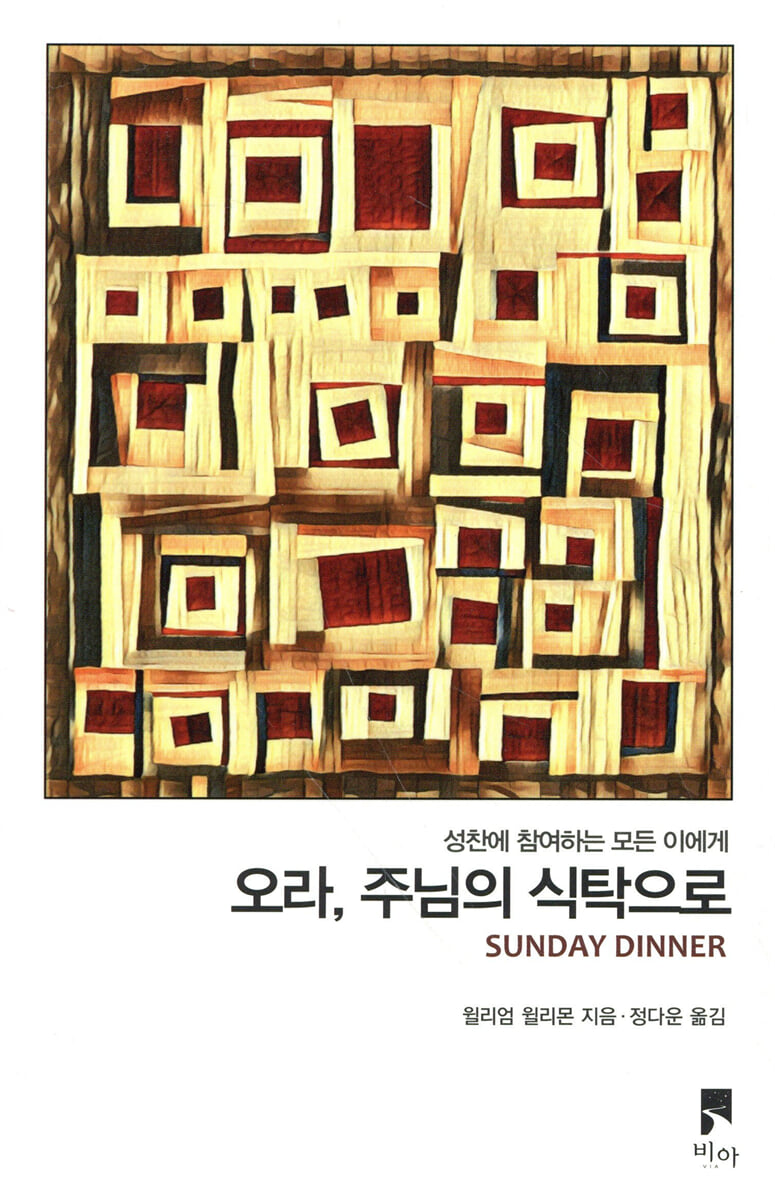
A work on the Eucharist by William Willimon, a leading preacher and practical theologian in the English-speaking world. This modern classic on the Eucharist, first published in 1981 and a companion work to Remember Who You Are (1980), has been reprinted 50 times in the United States to date. It covers everything about the Eucharist, including the meaning of the Eucharist, theological debates about the Eucharist, and the characteristics of the Christian life that can be seen through the Eucharist. Its plain and friendly writing style makes it a popular textbook on the Eucharist and an introductory textbook for the Christian faith. The Eucharist, along with baptism, is considered the most important rite in the Christian church and a crucial practice that serves as the source of all Christian imagination and practice. However, most churches, especially Protestant churches, tend to regard the Eucharist as a ritual performed once a month or on special occasions, and even churches that frequently perform the Eucharist do not provide sufficient opportunities to reflect on the meaning contained in the Eucharist. The author criticizes the current state of the church and emphasizes that the Eucharist is the core practice that makes Christians Christians, a 'meal' that provides nourishment for the Christian's journey of faith, and provides general information about the Eucharist. This book will be a good guide for those who are concerned about the Eucharist, the meaning of the church, and what it means to be a Christian. |
- You can preview some of the book's contents.
Preview
index
Introduction: Sunday Dinner
1.
Memories of a meal
Stories Shared Around the Table / Jewish Meals and Stories / Meals from the Past / Remember Who You Are
2.
He took the bread and blessed it.
Signs of Love / Sacraments / Real Presence / The Lord Who Gives Himself
3.
Start the feast
Water turns to wine / The gift of food / The glory of the ordinary
4.
Who are you to save a sinner like me?
Adults and Sinners / In Levi's House / Pharisees and Prostitutes / Sinners Sitting at the Feast of the Gospel
5.
When holding a feast
Be Courteous / New Etiquette / Insiders and Outsiders / Invitations
6.
Blessed are the hungry
Hunger / Pity / The sacredness of food / Take this.
Share.
7.
garret
Passover / Four Conversations / Good News in the Midst of Bad Things
8.
Declare death
Is it the table or the altar? / Take this cup from us / As often as we eat this bread and drink this cup
9.
When I sat down at the table with them
The Meal at Emmaus / The Resurrection Meal / Enduring / Easter Dinner
10.
Come to the Lord's table
Eating together / Eating alone / Eating together
1.
Memories of a meal
Stories Shared Around the Table / Jewish Meals and Stories / Meals from the Past / Remember Who You Are
2.
He took the bread and blessed it.
Signs of Love / Sacraments / Real Presence / The Lord Who Gives Himself
3.
Start the feast
Water turns to wine / The gift of food / The glory of the ordinary
4.
Who are you to save a sinner like me?
Adults and Sinners / In Levi's House / Pharisees and Prostitutes / Sinners Sitting at the Feast of the Gospel
5.
When holding a feast
Be Courteous / New Etiquette / Insiders and Outsiders / Invitations
6.
Blessed are the hungry
Hunger / Pity / The sacredness of food / Take this.
Share.
7.
garret
Passover / Four Conversations / Good News in the Midst of Bad Things
8.
Declare death
Is it the table or the altar? / Take this cup from us / As often as we eat this bread and drink this cup
9.
When I sat down at the table with them
The Meal at Emmaus / The Resurrection Meal / Enduring / Easter Dinner
10.
Come to the Lord's table
Eating together / Eating alone / Eating together
Into the book
In Remember Who You Are, I said that baptism is the starting point of the pilgrimage that Christians embark on.
This book will discuss how to continue that pilgrimage and how to grow.
In other words, this book is about the Eucharist, the Lord's Supper, and therefore it is also a book about our food, our meals.
I wrote this book with the conviction that participating in the Lord's Supper is a place where we form our identity as Christians, receive nourishment, change the direction of our lives, and grow.
In this book, I want to tell you that the bread and wine we eat and drink in the Eucharist are an extremely ordinary meal for Christians.
---p.11,12
One of the reasons Christians gather for the Lord's Supper today is to 'remember.'
Christians gather together to remember past meals.
We remember the covenant meal, the Passover meal, the Last Supper, the meal at Emmaus, Pentecost, and many other meals.
When we eat in remembrance of the Lord, our meal with Him in the 'here and now' becomes even more enriching.
---p.32
To the casual observer outside, the bread and wine shared in the Eucharist are just bread and wine.
But to the disciples, that ordinary, unremarkable bread is a symbol of the Lord's love, a love that has been passed down through the ages, visible and tangible.
To the unsuspecting outsider, Jesus was just an ordinary carpenter living in first-century Judea.
But to his disciples he is a visible symbol of the love of the Holy Father.
---p.40
The difference between religions that do not speak of the Incarnation and Christianity that does speak of the Incarnation is comparable to the difference between receiving a letter from a loved one and receiving a hug from that loved one.
Letters are wonderful, but what can compare to a hug from a loved one? Every time we look to Jesus, we are reminded that our Heavenly Father did not just write letters or preach to us; He personally participated in the drama of salvation.
The Lord does not abandon the world, nor does He command us to abandon the world.
Our Lord is not content with a love that stays somewhere far above the clouds and keeps a reasonable distance.
The Lord came in the flesh, was born in a manger, lived as a young Jew in Nazareth, and was crucified.
The Lord's love was a visible, tangible, concrete, physical, and material love.
---p.44
Hunger and the hunger of the soul are not separate.
Poverty is not an abstract concept.
Poverty affects not only our heads and hearts, but our entire being.
Chronic poverty has a detrimental emotional impact on many levels.
Modern medicine clearly demonstrates that mental health and physical health are closely linked.
A person who is poor because he or she has no food, clothing, or shelter is “poor in spirit.”
Those who thirst for the Lord's righteousness are those who "hunger and thirst" for all the gifts the Lord provides for His people.
This book will discuss how to continue that pilgrimage and how to grow.
In other words, this book is about the Eucharist, the Lord's Supper, and therefore it is also a book about our food, our meals.
I wrote this book with the conviction that participating in the Lord's Supper is a place where we form our identity as Christians, receive nourishment, change the direction of our lives, and grow.
In this book, I want to tell you that the bread and wine we eat and drink in the Eucharist are an extremely ordinary meal for Christians.
---p.11,12
One of the reasons Christians gather for the Lord's Supper today is to 'remember.'
Christians gather together to remember past meals.
We remember the covenant meal, the Passover meal, the Last Supper, the meal at Emmaus, Pentecost, and many other meals.
When we eat in remembrance of the Lord, our meal with Him in the 'here and now' becomes even more enriching.
---p.32
To the casual observer outside, the bread and wine shared in the Eucharist are just bread and wine.
But to the disciples, that ordinary, unremarkable bread is a symbol of the Lord's love, a love that has been passed down through the ages, visible and tangible.
To the unsuspecting outsider, Jesus was just an ordinary carpenter living in first-century Judea.
But to his disciples he is a visible symbol of the love of the Holy Father.
---p.40
The difference between religions that do not speak of the Incarnation and Christianity that does speak of the Incarnation is comparable to the difference between receiving a letter from a loved one and receiving a hug from that loved one.
Letters are wonderful, but what can compare to a hug from a loved one? Every time we look to Jesus, we are reminded that our Heavenly Father did not just write letters or preach to us; He personally participated in the drama of salvation.
The Lord does not abandon the world, nor does He command us to abandon the world.
Our Lord is not content with a love that stays somewhere far above the clouds and keeps a reasonable distance.
The Lord came in the flesh, was born in a manger, lived as a young Jew in Nazareth, and was crucified.
The Lord's love was a visible, tangible, concrete, physical, and material love.
---p.44
Hunger and the hunger of the soul are not separate.
Poverty is not an abstract concept.
Poverty affects not only our heads and hearts, but our entire being.
Chronic poverty has a detrimental emotional impact on many levels.
Modern medicine clearly demonstrates that mental health and physical health are closely linked.
A person who is poor because he or she has no food, clothing, or shelter is “poor in spirit.”
Those who thirst for the Lord's righteousness are those who "hunger and thirst" for all the gifts the Lord provides for His people.
--p.125
Publisher's Review
A classic of the Holy Communion, published in 1981 and reprinted 50 times in the English-speaking world.
The Eucharist as explained by the preacher among preachers, and the Christian life as seen through the Eucharist
“This book is about the Eucharist, the Lord’s Supper, and therefore it is also about our food, our meals.
I wrote this book with the conviction that participating in the Lord's Supper is a place where we form our identity as Christians, receive nourishment, change the direction of our lives, and grow.
“The Eucharist is a rich experience that goes beyond mere ‘words.’” - From the Preface
A work on the Eucharist by William Willimon, a leading preacher and practical theologian in the English-speaking world.
This modern classic on the Eucharist, first published in 1981 and a companion work to Remember Who You Are (1980), has been reprinted 50 times in the United States to date.
It covers everything about the Eucharist, including the meaning of the Eucharist, theological debates about the Eucharist, and the characteristics of the Christian life that can be seen through the Eucharist. Its plain and friendly writing style makes it a popular textbook on the Eucharist and an introductory textbook for the Christian faith.
The Eucharist, along with baptism, is considered the most important rite in the Christian church and a crucial practice that serves as the source of all Christian imagination and practice.
However, most churches, especially Protestant churches, tend to regard the Eucharist as a ritual performed once a month or on special occasions, and even churches that frequently perform the Eucharist do not provide sufficient opportunities to reflect on the meaning contained in the Eucharist.
The author criticizes the current state of the church and emphasizes that the Eucharist is the core practice that makes Christians Christians, a 'meal' that provides nourishment for the Christian's journey of faith, and provides general information about the Eucharist.
This book will be a good guide for those who are concerned about the Eucharist, the meaning of the church, and what it means to be a Christian.
The Eucharist as explained by the preacher among preachers, and the Christian life as seen through the Eucharist
“This book is about the Eucharist, the Lord’s Supper, and therefore it is also about our food, our meals.
I wrote this book with the conviction that participating in the Lord's Supper is a place where we form our identity as Christians, receive nourishment, change the direction of our lives, and grow.
“The Eucharist is a rich experience that goes beyond mere ‘words.’” - From the Preface
A work on the Eucharist by William Willimon, a leading preacher and practical theologian in the English-speaking world.
This modern classic on the Eucharist, first published in 1981 and a companion work to Remember Who You Are (1980), has been reprinted 50 times in the United States to date.
It covers everything about the Eucharist, including the meaning of the Eucharist, theological debates about the Eucharist, and the characteristics of the Christian life that can be seen through the Eucharist. Its plain and friendly writing style makes it a popular textbook on the Eucharist and an introductory textbook for the Christian faith.
The Eucharist, along with baptism, is considered the most important rite in the Christian church and a crucial practice that serves as the source of all Christian imagination and practice.
However, most churches, especially Protestant churches, tend to regard the Eucharist as a ritual performed once a month or on special occasions, and even churches that frequently perform the Eucharist do not provide sufficient opportunities to reflect on the meaning contained in the Eucharist.
The author criticizes the current state of the church and emphasizes that the Eucharist is the core practice that makes Christians Christians, a 'meal' that provides nourishment for the Christian's journey of faith, and provides general information about the Eucharist.
This book will be a good guide for those who are concerned about the Eucharist, the meaning of the church, and what it means to be a Christian.
GOODS SPECIFICS
- Date of issue: April 1, 2021
- Page count, weight, size: 232 pages | 248g | 130*201*16mm
- ISBN13: 9791191239119
- ISBN10: 119123911X
You may also like
카테고리
korean


korean

![ELLE 엘르 스페셜 에디션 A형 : 12월 [2025]](http://librairie.coreenne.fr/cdn/shop/files/b8e27a3de6c9538896439686c6b0e8fb.jpg?v=1766436872&width=3840)


