

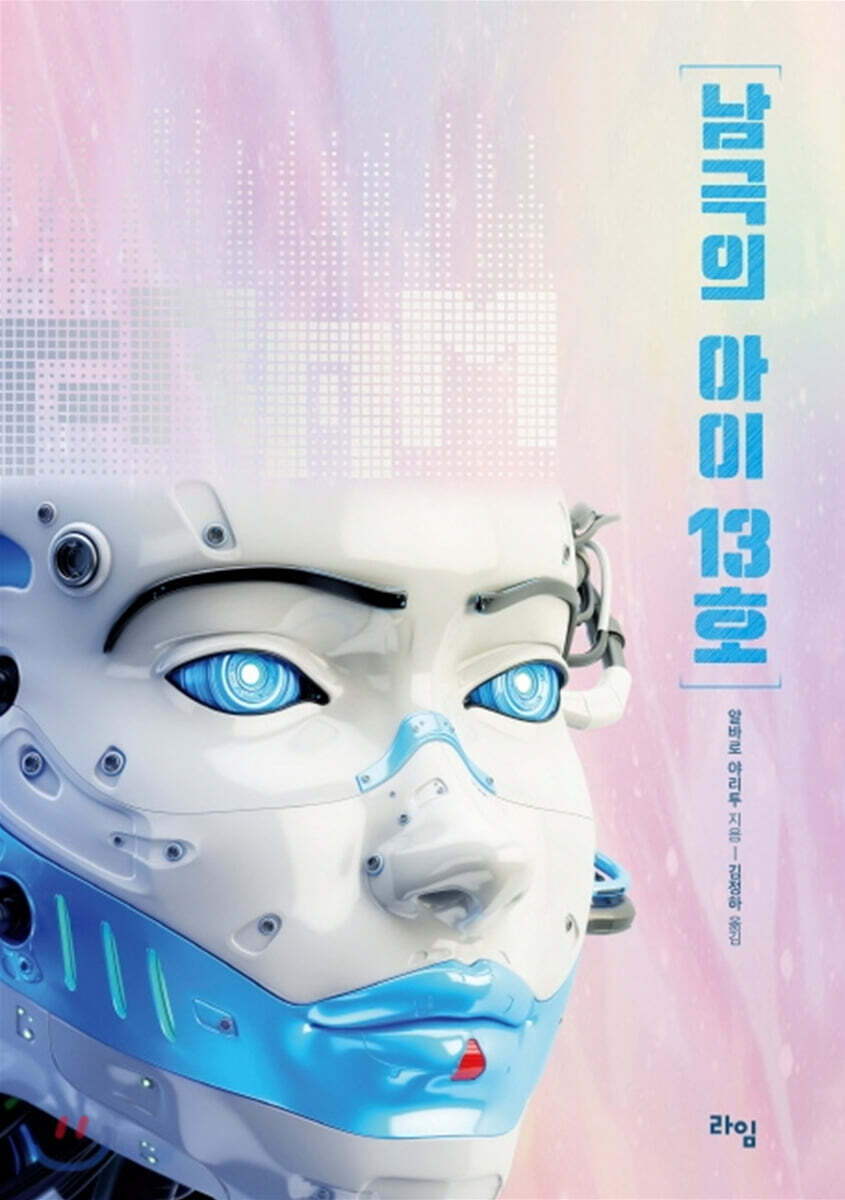
Antarctic Child No. 13
 |
Description
Book Introduction
『Child of Antarctica 13』 is set in a time when science and technology have advanced beyond imagination and artificial intelligence capabilities have surpassed those of humans.
The Earth is in danger due to the battle for dominance between humans and machines, and human lives are pushed into an imminent crisis by the machinations of artificial intelligence.
While adults lose their judgment and stagger, consumed by selfish desires, Hector and Fram boldly fight against the ambitions of artificial intelligence, thinking only of the peace and safety of the Earth.
The sight of these two children transcends the differences between humans and machines and ignites a burning sense of community that is simply “us.”
In other words, it is a reminder that 'we' are not enemies to each other, but rather beings who must come together and coexist on Earth.
The Earth is in danger due to the battle for dominance between humans and machines, and human lives are pushed into an imminent crisis by the machinations of artificial intelligence.
While adults lose their judgment and stagger, consumed by selfish desires, Hector and Fram boldly fight against the ambitions of artificial intelligence, thinking only of the peace and safety of the Earth.
The sight of these two children transcends the differences between humans and machines and ignites a burning sense of community that is simply “us.”
In other words, it is a reminder that 'we' are not enemies to each other, but rather beings who must come together and coexist on Earth.
- You can preview some of the book's contents.
Preview
index
Dangerous thoughts
Living as a hero's son
Antarctica, the only neutral zone on Earth
Toledo Human Factors Institute
AI of Mass Destruction, No. 13
The Luddite Counterattack
Midnight Intruder
City in Crisis
double-edged sword
Secrets hidden behind masks
Spartacus virus
evil conspiracy
Fram, the child of the South Pole
special reunion
Living as a hero's son
Antarctica, the only neutral zone on Earth
Toledo Human Factors Institute
AI of Mass Destruction, No. 13
The Luddite Counterattack
Midnight Intruder
City in Crisis
double-edged sword
Secrets hidden behind masks
Spartacus virus
evil conspiracy
Fram, the child of the South Pole
special reunion
Into the book
Hector's father was Edward Ned Capec.
He was probably the greatest war hero in the League of Nations.
He was decisive, bold and fearless.
From liberating the underground city of Volthoff to defeating the cyborg zombie army of the AI network, my father's heroic tales have been told countless times.
If I collected all the medals I had received and weighed them on a scale, it would easily exceed a kilogram.
And he rose to the position of commander.
If he had lived until now, he would have been the commander-in-chief.
Wherever Hector went, he always encountered veterans who had fought alongside his father.
In fact, thousands of citizens have been saved, directly or indirectly, thanks to my father.
So people hoped to see in Hector a miniature version of a great hero.
He even encouraged me to follow in my father's footsteps.
'You, join the army.'
They would not hesitate to say such things to a young boy.
Hector was unsure whether he wanted to follow in his father's footsteps.
He had heard countless stories of Edward Ned Capeck's glorious adventures, but he remembered more clearly the fact that his father had abandoned him.
--- pp.12~13
02 The city looked like a field of mushrooms sprouting from the ice, bathed in the pale Antarctic sunlight.
Most of the League of Nations people lived in remote villages or underground cities.
This is because the pollution was severe due to radioactivity and chemicals used during the war that occurred twenty years ago.
Closed spaces were the safest.
But it was very difficult to breathe there.
But City 02 was different.
Although it had a roof like an underground city, sunlight poured in brightly through the circular roof.
Hector gazed out at the landscape outside, shadowed by the volcano Erebus, for a long time.
The straight road and the neatly arranged blocks caught my eye.
It showed at a glance how precisely the machines had planned the city.
On the other hand, architectural styles were very diverse.
The lifestyle of the people living there was fully reflected.
None of the usual skyscrapers were in sight.
However, in some buildings, the antennas rose all the way to the top of the circular roof.
The most surprising thing was that machines roamed the streets freely.
Even in human-inhabited areas, machines of various shapes and sizes roamed around without warning.
From square computers with nothing but wheels to electrically powered squid-shaped artificial intelligence… … .
There were so many different types.
People and machines did not seem to be closely related to each other.
It didn't seem like they were really fighting.
In any case, it was completely impossible to see such a sight in the League of Nations area.
--- pp.12~13
Hector returned home weak.
The lab door was already open.
My aunt was sitting with a few guests.
It was a good sign.
I was worried that there might not be any customers.
My aunt had the good sense to advertise in local media in advance.
02 There was only one human engineering lab in the city, so competition didn't seem to be fierce.
As Hector climbed the stairs to the upper floor, he secretly hoped the new tenant had disappeared.
To my dismay, Pram was still standing in the living room.
Around Pram were newspapers, books, videos, and all sorts of other reading materials from around the house.
It was a sight I had never expected.
"hi."
Fram greeted me absentmindedly, without taking his eyes off what he was reading.
“It’s still there.”
Hector said, frowning.
“You seem disappointed, flesh.”
Hector immediately responded angrily.
“Don’t call me ‘a lump of flesh,’ you lump of metal.
My name is Hector.
I thought Aunt Lydia would wake up and change her mind.
Or maybe it was a plan to call the police and hand you over.”
“That would be a much more logical choice.”
Pram readily agreed.
“I’ve thought of a few escape routes in case something like that happens.
But the fact that your aunt hasn't changed her mind means I need to reassess my personality.
“You humans might be used to this, but for machines, it’s quite uncomfortable because the predictions are off.”
Hector faced Fram with a displeased expression.
"Do you really want to know what discomfort is? I couldn't sleep at all last night! And because of you, I did something stupid in class.
Now you've probably been labeled a problem child by your teacher.
I don't know if I can sleep with a killing machine in my house.
“Well, you have no way of knowing my worries.”
--- pp.55~56
Hector had a very hard time accepting this situation.
The most notable criminal on Earth, General Luddite, the man who led a small army of anti-mechanism rabid men into an invasion of City 02, is my father! My father, whom I thought was dead, is alive and well before my eyes.
Every time I opened my eyes, my father was there.
Six years had passed since that heartbreaking night when he last saw his father, but he smiled warmly as if no time had passed at all.
“My dad is a terrorist.”
Hector muttered in a voice that was completely drained of energy.
Father frowned.
“The word ‘terrorist’ is a term created by the powerful to denigrate those who oppose them.
I prefer the expression 'fighter for freedom.'"
“Should I call you ‘General’ too? Last time…, you were a major when you left, right?”
“General Luddite is just a mask.
It is a symbol of our struggle.
“When the League of Nations accepts me again, I will gladly return to my former position.”
The father and son looked at each other in an uncomfortable silence.
--- pp.161~162
Pram muttered.
“This makes absolutely no sense.
“I'm testing it with my software and I'm getting the opposite result from what they said.”
“In what sense?”
“I feel like killing you.”
Hector became angry at Pram's words.
“Hey! I was just asking!”
“I’m being serious right now.
The changes this virus is bringing about seem to make humans appear to be a threat.
So, it completely changes the sensor of perception of peace.”
Pram shook his head as if it was nonsense.
“The flesh lumps made a complete mistake.
“If this virus becomes active, there will definitely be a war between the League of Nations and the Network.”
Now Hector no longer had the power to be surprised.
“So what should we do now?”
“It’s locked with a password now.
I have no choice but to find the password... ... but I'm not sure if it will work.
It's going to take a lot of time anyway.
I think I'll have to use the code from City Council 02 to contact the network.
“You may not believe me.”
Pram said weakly.
Hector pointed to the main computer with his hand.
“What if I disconnect?”
“That’s not a bad idea either.
“I might just turn this whole room to dust.”
He was probably the greatest war hero in the League of Nations.
He was decisive, bold and fearless.
From liberating the underground city of Volthoff to defeating the cyborg zombie army of the AI network, my father's heroic tales have been told countless times.
If I collected all the medals I had received and weighed them on a scale, it would easily exceed a kilogram.
And he rose to the position of commander.
If he had lived until now, he would have been the commander-in-chief.
Wherever Hector went, he always encountered veterans who had fought alongside his father.
In fact, thousands of citizens have been saved, directly or indirectly, thanks to my father.
So people hoped to see in Hector a miniature version of a great hero.
He even encouraged me to follow in my father's footsteps.
'You, join the army.'
They would not hesitate to say such things to a young boy.
Hector was unsure whether he wanted to follow in his father's footsteps.
He had heard countless stories of Edward Ned Capeck's glorious adventures, but he remembered more clearly the fact that his father had abandoned him.
--- pp.12~13
02 The city looked like a field of mushrooms sprouting from the ice, bathed in the pale Antarctic sunlight.
Most of the League of Nations people lived in remote villages or underground cities.
This is because the pollution was severe due to radioactivity and chemicals used during the war that occurred twenty years ago.
Closed spaces were the safest.
But it was very difficult to breathe there.
But City 02 was different.
Although it had a roof like an underground city, sunlight poured in brightly through the circular roof.
Hector gazed out at the landscape outside, shadowed by the volcano Erebus, for a long time.
The straight road and the neatly arranged blocks caught my eye.
It showed at a glance how precisely the machines had planned the city.
On the other hand, architectural styles were very diverse.
The lifestyle of the people living there was fully reflected.
None of the usual skyscrapers were in sight.
However, in some buildings, the antennas rose all the way to the top of the circular roof.
The most surprising thing was that machines roamed the streets freely.
Even in human-inhabited areas, machines of various shapes and sizes roamed around without warning.
From square computers with nothing but wheels to electrically powered squid-shaped artificial intelligence… … .
There were so many different types.
People and machines did not seem to be closely related to each other.
It didn't seem like they were really fighting.
In any case, it was completely impossible to see such a sight in the League of Nations area.
--- pp.12~13
Hector returned home weak.
The lab door was already open.
My aunt was sitting with a few guests.
It was a good sign.
I was worried that there might not be any customers.
My aunt had the good sense to advertise in local media in advance.
02 There was only one human engineering lab in the city, so competition didn't seem to be fierce.
As Hector climbed the stairs to the upper floor, he secretly hoped the new tenant had disappeared.
To my dismay, Pram was still standing in the living room.
Around Pram were newspapers, books, videos, and all sorts of other reading materials from around the house.
It was a sight I had never expected.
"hi."
Fram greeted me absentmindedly, without taking his eyes off what he was reading.
“It’s still there.”
Hector said, frowning.
“You seem disappointed, flesh.”
Hector immediately responded angrily.
“Don’t call me ‘a lump of flesh,’ you lump of metal.
My name is Hector.
I thought Aunt Lydia would wake up and change her mind.
Or maybe it was a plan to call the police and hand you over.”
“That would be a much more logical choice.”
Pram readily agreed.
“I’ve thought of a few escape routes in case something like that happens.
But the fact that your aunt hasn't changed her mind means I need to reassess my personality.
“You humans might be used to this, but for machines, it’s quite uncomfortable because the predictions are off.”
Hector faced Fram with a displeased expression.
"Do you really want to know what discomfort is? I couldn't sleep at all last night! And because of you, I did something stupid in class.
Now you've probably been labeled a problem child by your teacher.
I don't know if I can sleep with a killing machine in my house.
“Well, you have no way of knowing my worries.”
--- pp.55~56
Hector had a very hard time accepting this situation.
The most notable criminal on Earth, General Luddite, the man who led a small army of anti-mechanism rabid men into an invasion of City 02, is my father! My father, whom I thought was dead, is alive and well before my eyes.
Every time I opened my eyes, my father was there.
Six years had passed since that heartbreaking night when he last saw his father, but he smiled warmly as if no time had passed at all.
“My dad is a terrorist.”
Hector muttered in a voice that was completely drained of energy.
Father frowned.
“The word ‘terrorist’ is a term created by the powerful to denigrate those who oppose them.
I prefer the expression 'fighter for freedom.'"
“Should I call you ‘General’ too? Last time…, you were a major when you left, right?”
“General Luddite is just a mask.
It is a symbol of our struggle.
“When the League of Nations accepts me again, I will gladly return to my former position.”
The father and son looked at each other in an uncomfortable silence.
--- pp.161~162
Pram muttered.
“This makes absolutely no sense.
“I'm testing it with my software and I'm getting the opposite result from what they said.”
“In what sense?”
“I feel like killing you.”
Hector became angry at Pram's words.
“Hey! I was just asking!”
“I’m being serious right now.
The changes this virus is bringing about seem to make humans appear to be a threat.
So, it completely changes the sensor of perception of peace.”
Pram shook his head as if it was nonsense.
“The flesh lumps made a complete mistake.
“If this virus becomes active, there will definitely be a war between the League of Nations and the Network.”
Now Hector no longer had the power to be surprised.
“So what should we do now?”
“It’s locked with a password now.
I have no choice but to find the password... ... but I'm not sure if it will work.
It's going to take a lot of time anyway.
I think I'll have to use the code from City Council 02 to contact the network.
“You may not believe me.”
Pram said weakly.
Hector pointed to the main computer with his hand.
“What if I disconnect?”
“That’s not a bad idea either.
“I might just turn this whole room to dust.”
--- pp.180~181
Publisher's Review
A robot more human than humans is coming!
Are they truly friends or enemies of humans?
Antarctica, the only neutral zone on Earth where humans and machines coexist
Hector, a fifteen-year-old boy who lost his parents in the war between humans and machines.
Fram, the mass destruction machine No. 13, created by a small number of elites to destroy humanity.
Lydia, a cybernetic expert who is obsessed with human engineering and is shunned by others.
Kapek, a war hero who believes that only humans should be the masters of the Earth.
Luddites, terrorists united by a single-minded desire to destroy machines
The era of technological singularity, where artificial intelligence surpasses human capabilities.
A hegemonic battle for control of the Earth unfolds!
A spectacular young adult science fiction novel depicting the era of "technological singularity"!
A 2001 science fiction film directed by Steven Spielberg [A.
If you look at [I], you will see an artificial intelligence that has evolved to the point where it is difficult to distinguish it from a human.
In a future Earth where science and technology have advanced at an astronomical pace, artificial intelligence has reached a point where it can do virtually anything.
David, an artificial intelligence that feels the same emotions as humans, is adopted into the Swinton family's home and lives happily as their son.
Then one day, an unexpected conflict arises when the Swintons' biological son, who has been incurably ill and has been kept in a state of cryogenic stasis until a cure can be developed, is released from the hospital.
If we ever reach a 'technological singularity', we're likely to face situations even worse than those in the movies.
Oh, what's the technological singularity? It refers to the point in time when the advancement of artificial intelligence accelerates to the point where a superintelligence emerges that surpasses all human intelligence combined.
Mathematician Vernor Vinge and futurist Raymond Kurzweil argue in their book that the technological singularity will be reached when artificial intelligence becomes a tool that amplifies human intelligence, and that after this singularity, it will not be humans but (infinitely) stronger artificial intelligence that will dominate scientific and technological progress.
“If the human brain can be connected to a computer network, the pace of scientific and technological development will accelerate further, leading to the creation of superhuman intelligence that transcends human biological limitations,” he predicts.
Even Burner Binge makes the chilling claim that “the emergence of superhuman intelligence will soon bring about the end of human civilization.”
So, what this means is that a battle for dominance between humans and superhuman intelligence could break out, and in that battle, there is a very high probability that humans will be defeated by superhuman intelligence.
『Child of Antarctica 13』 is set against the backdrop of that very technological singularity.
In a future era where science and technology have advanced tremendously, humans and machines engage in a war for dominance, pushing the Earth to the brink of destruction.
Fearing that they would eventually end up on the path to mutual destruction, humans and machines reached a difficult peace treaty, divided the Earth in half, and each lived in their own territory.
However, Antarctica is the only region where humans and machines can coexist… … .
As humans and machines once again engage in a battle for hegemony centered around Antarctica, the hard-won peace and coexistence begin to crack.
This work vividly portrays a story that we may all face in the not-too-distant future, or that we very likely will face.
Instead of gaining infinite convenience through the advancement of science and technology, it severely warns of the loss of human dignity and the crisis of existence that will result.
Are they truly friends or enemies of humans?
Antarctica, the only neutral zone on Earth where humans and machines coexist
Hector, a fifteen-year-old boy who lost his parents in the war between humans and machines.
Fram, the mass destruction machine No. 13, created by a small number of elites to destroy humanity.
Lydia, a cybernetic expert who is obsessed with human engineering and is shunned by others.
Kapek, a war hero who believes that only humans should be the masters of the Earth.
Luddites, terrorists united by a single-minded desire to destroy machines
The era of technological singularity, where artificial intelligence surpasses human capabilities.
A hegemonic battle for control of the Earth unfolds!
A spectacular young adult science fiction novel depicting the era of "technological singularity"!
A 2001 science fiction film directed by Steven Spielberg [A.
If you look at [I], you will see an artificial intelligence that has evolved to the point where it is difficult to distinguish it from a human.
In a future Earth where science and technology have advanced at an astronomical pace, artificial intelligence has reached a point where it can do virtually anything.
David, an artificial intelligence that feels the same emotions as humans, is adopted into the Swinton family's home and lives happily as their son.
Then one day, an unexpected conflict arises when the Swintons' biological son, who has been incurably ill and has been kept in a state of cryogenic stasis until a cure can be developed, is released from the hospital.
If we ever reach a 'technological singularity', we're likely to face situations even worse than those in the movies.
Oh, what's the technological singularity? It refers to the point in time when the advancement of artificial intelligence accelerates to the point where a superintelligence emerges that surpasses all human intelligence combined.
Mathematician Vernor Vinge and futurist Raymond Kurzweil argue in their book that the technological singularity will be reached when artificial intelligence becomes a tool that amplifies human intelligence, and that after this singularity, it will not be humans but (infinitely) stronger artificial intelligence that will dominate scientific and technological progress.
“If the human brain can be connected to a computer network, the pace of scientific and technological development will accelerate further, leading to the creation of superhuman intelligence that transcends human biological limitations,” he predicts.
Even Burner Binge makes the chilling claim that “the emergence of superhuman intelligence will soon bring about the end of human civilization.”
So, what this means is that a battle for dominance between humans and superhuman intelligence could break out, and in that battle, there is a very high probability that humans will be defeated by superhuman intelligence.
『Child of Antarctica 13』 is set against the backdrop of that very technological singularity.
In a future era where science and technology have advanced tremendously, humans and machines engage in a war for dominance, pushing the Earth to the brink of destruction.
Fearing that they would eventually end up on the path to mutual destruction, humans and machines reached a difficult peace treaty, divided the Earth in half, and each lived in their own territory.
However, Antarctica is the only region where humans and machines can coexist… … .
As humans and machines once again engage in a battle for hegemony centered around Antarctica, the hard-won peace and coexistence begin to crack.
This work vividly portrays a story that we may all face in the not-too-distant future, or that we very likely will face.
Instead of gaining infinite convenience through the advancement of science and technology, it severely warns of the loss of human dignity and the crisis of existence that will result.
A sharp confrontation between humans and machines over control of the Earth!
Hector, a second-year middle school student this year, lives alone with his Aunt Lydia.
This is because I lost my parents one after another in the war that broke out between the League of Nations (human side) and the Artificial Intelligence Network (machine side) twenty years ago.
My aunt, who participated in the war as an artificial intelligence expert, was also injured and is now equipped with an artificial arm… … .
In the human-dominated League of Nations region, not only are machines looked down upon with great contempt, but even those who are friendly with them are openly ostracized.
Because of that, my aunt has a hard time finding a job and has to move frequently.
Then, he participates in a joint project between the International Federation and the Artificial Intelligence Network, and moves to City 02 in Antarctica with Hector.
His aunt opens a human engineering research institute that she had always dreamed of, and Hector starts going to school.
But one night, the injured mass destruction machine 13 breaks into the lab to steal parts to repair his own body.
The killing machine, which should have been disposed of by agreement between both sides after the peace agreement, introduces itself as Fram, revealing that it has escaped the network in hopes of an independent life.
Aunt offers to repair Fram for free, even though she knows he is very dangerous.
Since it will take quite some time to get the parts needed to fix Fram, he has no choice but to hide out at Hector's house.
After that, Hector and Fram growl at each other, finding each other unpleasant for every little thing.
A few days later, Aunt asks Hector to take Pram to the shopping center and buy him some clothes.
Hector and Fram, who were bickering at the shopping center, happen to witness a terrorist attack by a Luddite organization.
The Luddites are a global target because they refuse to agree to peace agreements and create underground organizations that carry out terrorist attacks in various places.
Fortunately, Hector escapes safely under Fram's protection, and after that, something like a friendship develops between the two.
Meanwhile, in City 02, which is in a festive mood ahead of the 20th anniversary of the peace agreement, tensions begin to flow due to the sudden appearance of the Luddites.
Then one day, two members of the Luddite organization storm into Aunt's laboratory to attack her.
Hector summons the name of his father, who fought heroically in the war twenty years ago, to protect the laboratory, but the Luddites do not believe him.
Then, when Pram shows up to rescue Hector and his aunt, his identity is revealed to the Luddite gang.
General Luddite, the supreme leader of the Luddites, who was planning to occupy City 02 and annihilate the machines on the 20th anniversary of the peace treaty, looks very gloomy after receiving a report from an organization member who went to attack the Toledo Human Engineering Laboratory and failed.
Unexpectedly, he orders his subordinates to bring Hector safely to him.
The next day, Hector is kidnapped during class and taken before the Luddite General.
The Luddite general takes off the mask that had been covering his face in front of Hector… … .
At that moment, Hector realizes something so shocking that his body freezes like ice.
The Luddite General reveals the Spartacus Project, which he has been secretly preparing, in order to persuade Hector, who has a strong antipathy towards the Luddites.
The plan is to infiltrate the network with a virus to turn artificial intelligence into machines that unconditionally obey humans. This involves a meticulously calculated conspiracy by artificial intelligence that no one could have predicted, and it will soon cause a terrifying uproar.
Aiming for a world on the double-edged sword of technological singularity
In this way, 『Child of Antarctica 13』 is set in a time when science and technology have advanced beyond imagination and the capabilities of artificial intelligence have surpassed those of humans.
The Earth is in danger due to the battle for dominance between humans and machines, and human lives are pushed into an imminent crisis by the machinations of artificial intelligence.
While adults lose their judgment and stagger, consumed by selfish desires, Hector and Fram boldly fight against the ambitions of artificial intelligence, thinking only of the peace and safety of the Earth.
The sight of these two children transcends the differences between humans and machines and ignites a burning sense of community that is simply “us.”
In other words, it is a reminder that 'we' are not enemies to each other, but rather beings who must come together and coexist on Earth.
Looking at recent events in the world, we can see that the stories in the work are not just things that come from fantasy.
Not only did AlphaGo beat Go prodigy Lee Sedol, but we live in a world where IBM's artificial intelligence, Watson, is reaching out to fields previously thought to be exclusively human, such as medicine and cooking.
In the near future, self-driving cars may drive us instead of humans, and artificial intelligence priests may help us understand the truth of life.
The pace of scientific and technological development is unimaginably fast.
Technological advancements will accelerate even further in the future, allowing humans to take on tasks they dislike, even those in dangerous locations, and even those requiring highly specialized knowledge and skills.
"Child of Antarctica 13" sharply points out the duality of artificial intelligence that we will face when we reach a technological singularity.
It is a double-edged sword that, while it guarantees human convenience, it also serves as a sober warning that it can infringe upon human territory without consideration and lead to a serious crisis.
Moreover, it provides an opportunity to ask how much territory should be given to artificial intelligence when such an era arrives, while also exploring ways to coexist wisely.
Because the future can be either paradise or hell depending on how humans utilize and manage science and technology.
A sharp confrontation between humans and machines over control of the Earth!
Hector, a second-year middle school student this year, lives alone with his Aunt Lydia.
This is because I lost my parents one after another in the war that broke out between the League of Nations (human side) and the Artificial Intelligence Network (machine side) twenty years ago.
My aunt, who participated in the war as an artificial intelligence expert, was also injured and is now equipped with an artificial arm… … .
In the human-dominated League of Nations region, not only are machines looked down upon with great contempt, but even those who are friendly with them are openly ostracized.
Because of that, my aunt has a hard time finding a job and has to move frequently.
Then, he participates in a joint project between the International Federation and the Artificial Intelligence Network, and moves to City 02 in Antarctica with Hector.
His aunt opens a human engineering research institute that she had always dreamed of, and Hector starts going to school.
But one night, the injured mass destruction machine 13 breaks into the lab to steal parts to repair his own body.
The killing machine, which should have been disposed of by agreement between both sides after the peace agreement, introduces itself as Fram, revealing that it has escaped the network in hopes of an independent life.
Aunt offers to repair Fram for free, even though she knows he is very dangerous.
Since it will take quite some time to get the parts needed to fix Fram, he has no choice but to hide out at Hector's house.
After that, Hector and Fram growl at each other, finding each other unpleasant for every little thing.
A few days later, Aunt asks Hector to take Pram to the shopping center and buy him some clothes.
Hector and Fram, who were bickering at the shopping center, happen to witness a terrorist attack by a Luddite organization.
The Luddites are a global target because they refuse to agree to peace agreements and create underground organizations that carry out terrorist attacks in various places.
Fortunately, Hector escapes safely under Fram's protection, and after that, something like a friendship develops between the two.
Meanwhile, in City 02, which is in a festive mood ahead of the 20th anniversary of the peace agreement, tensions begin to flow due to the sudden appearance of the Luddites.
Then one day, two members of the Luddite organization storm into Aunt's laboratory to attack her.
Hector summons the name of his father, who fought heroically in the war twenty years ago, to protect the laboratory, but the Luddites do not believe him.
Then, when Pram shows up to rescue Hector and his aunt, his identity is revealed to the Luddite gang.
General Luddite, the supreme leader of the Luddites, who was planning to occupy City 02 and annihilate the machines on the 20th anniversary of the peace treaty, looks very gloomy after receiving a report from an organization member who went to attack the Toledo Human Engineering Laboratory and failed.
Unexpectedly, he orders his subordinates to bring Hector safely to him.
The next day, Hector is kidnapped during class and taken before the Luddite General.
The Luddite general takes off the mask that had been covering his face in front of Hector… … .
At that moment, Hector realizes something so shocking that his body freezes like ice.
The Luddite General reveals the Spartacus Project, which he has been secretly preparing, in order to persuade Hector, who has a strong antipathy towards the Luddites.
The plan is to infiltrate the network with a virus to turn artificial intelligence into machines that unconditionally obey humans. This involves a meticulously calculated conspiracy by artificial intelligence that no one could have predicted, and it will soon cause a terrifying uproar.
Aiming for a world on the double-edged sword of technological singularity
In this way, 『Child of Antarctica 13』 is set in a time when science and technology have advanced beyond imagination and the capabilities of artificial intelligence have surpassed those of humans.
The Earth is in danger due to the battle for dominance between humans and machines, and human lives are pushed into an imminent crisis by the machinations of artificial intelligence.
While adults lose their judgment and stagger, consumed by selfish desires, Hector and Fram boldly fight against the ambitions of artificial intelligence, thinking only of the peace and safety of the Earth.
The sight of these two children transcends the differences between humans and machines and ignites a burning sense of community that is simply “us.”
In other words, it is a reminder that 'we' are not enemies to each other, but rather beings who must come together and coexist on Earth.
Looking at recent events in the world, we can see that the stories in the work are not just things that come from fantasy.
Not only did AlphaGo beat Go prodigy Lee Sedol, but we live in a world where IBM's artificial intelligence, Watson, is reaching out to fields previously thought to be exclusively human, such as medicine and cooking.
In the near future, self-driving cars may drive us instead of humans, and artificial intelligence priests may help us understand the truth of life.
The pace of scientific and technological development is unimaginably fast.
Technological advancements will accelerate even further in the future, allowing humans to take on tasks they dislike, even those in dangerous locations, and even those requiring highly specialized knowledge and skills.
"Child of Antarctica 13" sharply points out the duality of artificial intelligence that we will face when we reach a technological singularity.
It is a double-edged sword that, while it guarantees human convenience, it also serves as a sober warning that it can infringe upon human territory without consideration and lead to a serious crisis.
Moreover, it provides an opportunity to ask how much territory should be given to artificial intelligence when such an era arrives, while also exploring ways to coexist wisely.
Because the future can be either paradise or hell depending on how humans utilize and manage science and technology.
Hector, a second-year middle school student this year, lives alone with his Aunt Lydia.
This is because I lost my parents one after another in the war that broke out between the League of Nations (human side) and the Artificial Intelligence Network (machine side) twenty years ago.
My aunt, who participated in the war as an artificial intelligence expert, was also injured and is now equipped with an artificial arm… … .
In the human-dominated League of Nations region, not only are machines looked down upon with great contempt, but even those who are friendly with them are openly ostracized.
Because of that, my aunt has a hard time finding a job and has to move frequently.
Then, he participates in a joint project between the International Federation and the Artificial Intelligence Network, and moves to City 02 in Antarctica with Hector.
His aunt opens a human engineering research institute that she had always dreamed of, and Hector starts going to school.
But one night, the injured mass destruction machine 13 breaks into the lab to steal parts to repair his own body.
The killing machine, which should have been disposed of by agreement between both sides after the peace agreement, introduces itself as Fram, revealing that it has escaped the network in hopes of an independent life.
Aunt offers to repair Fram for free, even though she knows he is very dangerous.
Since it will take quite some time to get the parts needed to fix Fram, he has no choice but to hide out at Hector's house.
After that, Hector and Fram growl at each other, finding each other unpleasant for every little thing.
A few days later, Aunt asks Hector to take Pram to the shopping center and buy him some clothes.
Hector and Fram, who were bickering at the shopping center, happen to witness a terrorist attack by a Luddite organization.
The Luddites are a global target because they refuse to agree to peace agreements and create underground organizations that carry out terrorist attacks in various places.
Fortunately, Hector escapes safely under Fram's protection, and after that, something like a friendship develops between the two.
Meanwhile, in City 02, which is in a festive mood ahead of the 20th anniversary of the peace agreement, tensions begin to flow due to the sudden appearance of the Luddites.
Then one day, two members of the Luddite organization storm into Aunt's laboratory to attack her.
Hector summons the name of his father, who fought heroically in the war twenty years ago, to protect the laboratory, but the Luddites do not believe him.
Then, when Pram shows up to rescue Hector and his aunt, his identity is revealed to the Luddite gang.
General Luddite, the supreme leader of the Luddites, who was planning to occupy City 02 and annihilate the machines on the 20th anniversary of the peace treaty, looks very gloomy after receiving a report from an organization member who went to attack the Toledo Human Engineering Laboratory and failed.
Unexpectedly, he orders his subordinates to bring Hector safely to him.
The next day, Hector is kidnapped during class and taken before the Luddite General.
The Luddite general takes off the mask that had been covering his face in front of Hector… … .
At that moment, Hector realizes something so shocking that his body freezes like ice.
The Luddite General reveals the Spartacus Project, which he has been secretly preparing, in order to persuade Hector, who has a strong antipathy towards the Luddites.
The plan is to infiltrate the network with a virus to turn artificial intelligence into machines that unconditionally obey humans. This involves a meticulously calculated conspiracy by artificial intelligence that no one could have predicted, and it will soon cause a terrifying uproar.
Aiming for a world on the double-edged sword of technological singularity
In this way, 『Child of Antarctica 13』 is set in a time when science and technology have advanced beyond imagination and the capabilities of artificial intelligence have surpassed those of humans.
The Earth is in danger due to the battle for dominance between humans and machines, and human lives are pushed into an imminent crisis by the machinations of artificial intelligence.
While adults lose their judgment and stagger, consumed by selfish desires, Hector and Fram boldly fight against the ambitions of artificial intelligence, thinking only of the peace and safety of the Earth.
The sight of these two children transcends the differences between humans and machines and ignites a burning sense of community that is simply “us.”
In other words, it is a reminder that 'we' are not enemies to each other, but rather beings who must come together and coexist on Earth.
Looking at recent events in the world, we can see that the stories in the work are not just things that come from fantasy.
Not only did AlphaGo beat Go prodigy Lee Sedol, but we live in a world where IBM's artificial intelligence, Watson, is reaching out to fields previously thought to be exclusively human, such as medicine and cooking.
In the near future, self-driving cars may drive us instead of humans, and artificial intelligence priests may help us understand the truth of life.
The pace of scientific and technological development is unimaginably fast.
Technological advancements will accelerate even further in the future, allowing humans to take on tasks they dislike, even those in dangerous locations, and even those requiring highly specialized knowledge and skills.
"Child of Antarctica 13" sharply points out the duality of artificial intelligence that we will face when we reach a technological singularity.
It is a double-edged sword that, while it guarantees human convenience, it also serves as a sober warning that it can infringe upon human territory without consideration and lead to a serious crisis.
Moreover, it provides an opportunity to ask how much territory should be given to artificial intelligence when such an era arrives, while also exploring ways to coexist wisely.
Because the future can be either paradise or hell depending on how humans utilize and manage science and technology.
A sharp confrontation between humans and machines over control of the Earth!
Hector, a second-year middle school student this year, lives alone with his Aunt Lydia.
This is because I lost my parents one after another in the war that broke out between the League of Nations (human side) and the Artificial Intelligence Network (machine side) twenty years ago.
My aunt, who participated in the war as an artificial intelligence expert, was also injured and is now equipped with an artificial arm… … .
In the human-dominated League of Nations region, not only are machines looked down upon with great contempt, but even those who are friendly with them are openly ostracized.
Because of that, my aunt has a hard time finding a job and has to move frequently.
Then, he participates in a joint project between the International Federation and the Artificial Intelligence Network, and moves to City 02 in Antarctica with Hector.
His aunt opens a human engineering research institute that she had always dreamed of, and Hector starts going to school.
But one night, the injured mass destruction machine 13 breaks into the lab to steal parts to repair his own body.
The killing machine, which should have been disposed of by agreement between both sides after the peace agreement, introduces itself as Fram, revealing that it has escaped the network in hopes of an independent life.
Aunt offers to repair Fram for free, even though she knows he is very dangerous.
Since it will take quite some time to get the parts needed to fix Fram, he has no choice but to hide out at Hector's house.
After that, Hector and Fram growl at each other, finding each other unpleasant for every little thing.
A few days later, Aunt asks Hector to take Pram to the shopping center and buy him some clothes.
Hector and Fram, who were bickering at the shopping center, happen to witness a terrorist attack by a Luddite organization.
The Luddites are a global target because they refuse to agree to peace agreements and create underground organizations that carry out terrorist attacks in various places.
Fortunately, Hector escapes safely under Fram's protection, and after that, something like a friendship develops between the two.
Meanwhile, in City 02, which is in a festive mood ahead of the 20th anniversary of the peace agreement, tensions begin to flow due to the sudden appearance of the Luddites.
Then one day, two members of the Luddite organization storm into Aunt's laboratory to attack her.
Hector summons the name of his father, who fought heroically in the war twenty years ago, to protect the laboratory, but the Luddites do not believe him.
Then, when Pram shows up to rescue Hector and his aunt, his identity is revealed to the Luddite gang.
General Luddite, the supreme leader of the Luddites, who was planning to occupy City 02 and annihilate the machines on the 20th anniversary of the peace treaty, looks very gloomy after receiving a report from an organization member who went to attack the Toledo Human Engineering Laboratory and failed.
Unexpectedly, he orders his subordinates to bring Hector safely to him.
The next day, Hector is kidnapped during class and taken before the Luddite General.
The Luddite general takes off the mask that had been covering his face in front of Hector… … .
At that moment, Hector realizes something so shocking that his body freezes like ice.
The Luddite General reveals the Spartacus Project, which he has been secretly preparing, in order to persuade Hector, who has a strong antipathy towards the Luddites.
The plan is to infiltrate the network with a virus to turn artificial intelligence into machines that unconditionally obey humans. This involves a meticulously calculated conspiracy by artificial intelligence that no one could have predicted, and it will soon cause a terrifying uproar.
Aiming for a world on the double-edged sword of technological singularity
In this way, 『Child of Antarctica 13』 is set in a time when science and technology have advanced beyond imagination and the capabilities of artificial intelligence have surpassed those of humans.
The Earth is in danger due to the battle for dominance between humans and machines, and human lives are pushed into an imminent crisis by the machinations of artificial intelligence.
While adults lose their judgment and stagger, consumed by selfish desires, Hector and Fram boldly fight against the ambitions of artificial intelligence, thinking only of the peace and safety of the Earth.
The sight of these two children transcends the differences between humans and machines and ignites a burning sense of community that is simply “us.”
In other words, it is a reminder that 'we' are not enemies to each other, but rather beings who must come together and coexist on Earth.
Looking at recent events in the world, we can see that the stories in the work are not just things that come from fantasy.
Not only did AlphaGo beat Go prodigy Lee Sedol, but we live in a world where IBM's artificial intelligence, Watson, is reaching out to fields previously thought to be exclusively human, such as medicine and cooking.
In the near future, self-driving cars may drive us instead of humans, and artificial intelligence priests may help us understand the truth of life.
The pace of scientific and technological development is unimaginably fast.
Technological advancements will accelerate even further in the future, allowing humans to take on tasks they dislike, even those in dangerous locations, and even those requiring highly specialized knowledge and skills.
"Child of Antarctica 13" sharply points out the duality of artificial intelligence that we will face when we reach a technological singularity.
It is a double-edged sword that, while it guarantees human convenience, it also serves as a sober warning that it can infringe upon human territory without consideration and lead to a serious crisis.
Moreover, it provides an opportunity to ask how much territory should be given to artificial intelligence when such an era arrives, while also exploring ways to coexist wisely.
Because the future can be either paradise or hell depending on how humans utilize and manage science and technology.
GOODS SPECIFICS
- Date of issue: August 5, 2020
- Page count, weight, size: 216 pages | 316g | 153*215*12mm
- ISBN13: 9791189208516
- ISBN10: 1189208512
You may also like
카테고리
korean


korean

![GQ KOREA Mark (Monthly): December [2025]](http://librairie.coreenne.fr/cdn/shop/files/8ef265dbbfbf186523ed75ba7319009d.jpg?v=1765340328&width=3840)


