

The Blue Wolf's Keeper
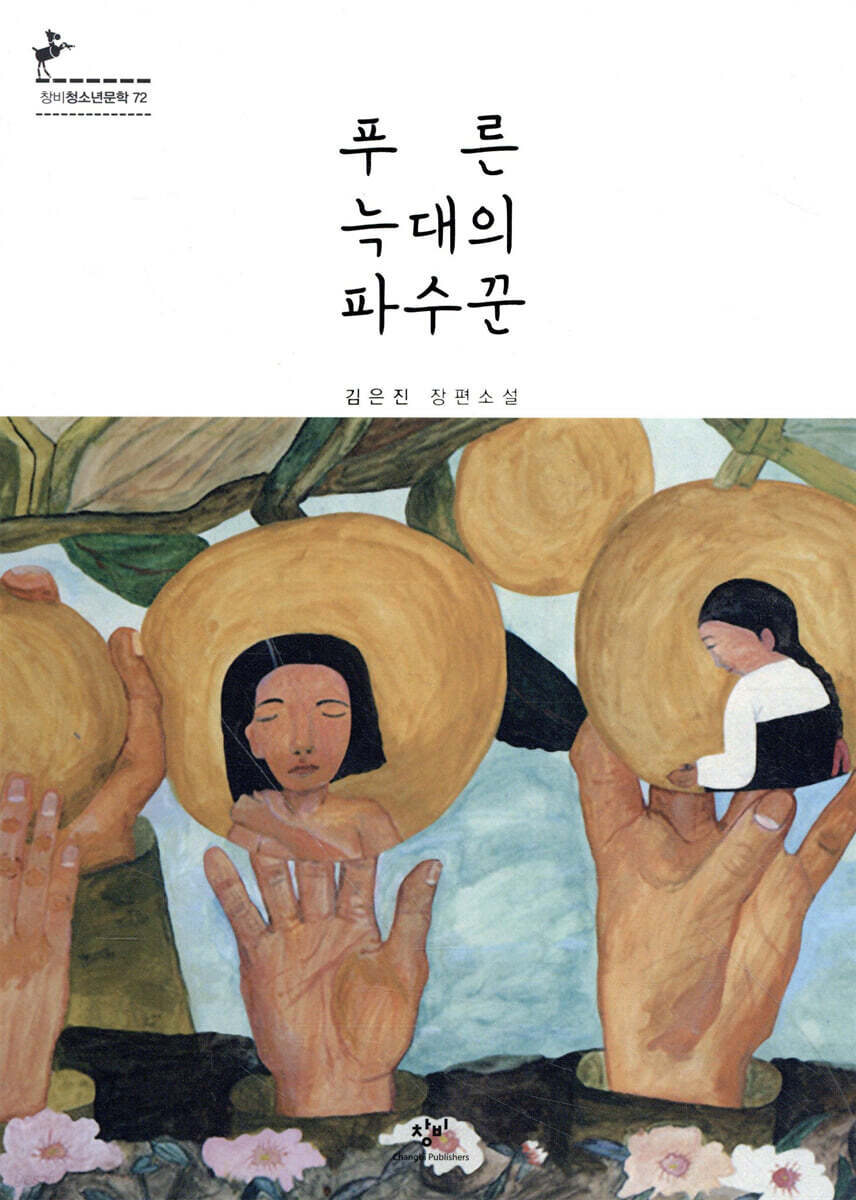 |
Description
Book Introduction
A special time travel for our grandmothers
The emergence of a meaningful youth novel addressing the issue of forced comfort women for the Japanese military.
"The Blue Wolf's Watchman" is the ninth winner of the Changbi Youth Literature Award.
This work will live up to the expectations placed on the Changbi Youth Literature Award, which has begun to expand its reach beyond Korea to the world. It deeply addresses the historical fact of forced comfort women for the Japanese military, while also containing literary tension and fun that will captivate young people.
The work is set in present-day Seoul in 2016 and the streets of Gyeongseong during the Japanese colonial period in the 1940s.
The tightly structured structure that moves between the present and the past creates a tension that keeps you glued to your eyes.
Oh Haet-gwi, a 16-year-old boy who lives alone with his mother, visits his grandmother's house to do volunteer work.
My grandmother's name is 'Hyunsuin'.
It is said that she once dreamed of becoming the best female singer in Joseon, making her friends happy with her clear singing voice, but now she is sick and tired and just lies in bed.
What on earth could have happened to Grandma? Watching her groan in pain every time she reminisces about the past, Haet-gwi, curious about her grandmother's secret, stumbles upon a clock that winds backwards and is sucked into 1940s Gyeongseong.
There, Haetgui meets Suin as a girl and Haruko, the daughter of the family where Suin works as a maid, and soon learns that a nightmarish fate awaits Suin.
Haetgwi confronts the issue of forced comfort women by the Japanese military, an indelible scar on our history.
Will Haetgwi's desperate desire to save the girl Suin, who crosses the boundaries of time, be successful?
Artist Eun-jin Kim, who created the work after five years of research, realistically restored the Gyeongseong stage in the 1940s.
The lyrics of popular songs such as “Phone Diary” and “Youth Class” are full of wit, and scenes such as the rooftop garden of Mitsukoshi Department Store and the scenery of Changgyeongwon (today’s Changgyeonggung Palace) are vividly depicted.
However, in that landscape, Suin, who was shining in all natural colors, meets a tragic fate.
It is a time that cannot be returned to even if one wants to, and the one and only youth is ultimately taken away.
Suin's bright and cheerful appearance is contrasted with her miserable experience as a forced comfort woman for the Japanese military, making her even more vivid and vivid.
This work will be remembered as a new achievement in our youth literature by providing the pleasure of looking into history through literature.
The emergence of a meaningful youth novel addressing the issue of forced comfort women for the Japanese military.
"The Blue Wolf's Watchman" is the ninth winner of the Changbi Youth Literature Award.
This work will live up to the expectations placed on the Changbi Youth Literature Award, which has begun to expand its reach beyond Korea to the world. It deeply addresses the historical fact of forced comfort women for the Japanese military, while also containing literary tension and fun that will captivate young people.
The work is set in present-day Seoul in 2016 and the streets of Gyeongseong during the Japanese colonial period in the 1940s.
The tightly structured structure that moves between the present and the past creates a tension that keeps you glued to your eyes.
Oh Haet-gwi, a 16-year-old boy who lives alone with his mother, visits his grandmother's house to do volunteer work.
My grandmother's name is 'Hyunsuin'.
It is said that she once dreamed of becoming the best female singer in Joseon, making her friends happy with her clear singing voice, but now she is sick and tired and just lies in bed.
What on earth could have happened to Grandma? Watching her groan in pain every time she reminisces about the past, Haet-gwi, curious about her grandmother's secret, stumbles upon a clock that winds backwards and is sucked into 1940s Gyeongseong.
There, Haetgui meets Suin as a girl and Haruko, the daughter of the family where Suin works as a maid, and soon learns that a nightmarish fate awaits Suin.
Haetgwi confronts the issue of forced comfort women by the Japanese military, an indelible scar on our history.
Will Haetgwi's desperate desire to save the girl Suin, who crosses the boundaries of time, be successful?
Artist Eun-jin Kim, who created the work after five years of research, realistically restored the Gyeongseong stage in the 1940s.
The lyrics of popular songs such as “Phone Diary” and “Youth Class” are full of wit, and scenes such as the rooftop garden of Mitsukoshi Department Store and the scenery of Changgyeongwon (today’s Changgyeonggung Palace) are vividly depicted.
However, in that landscape, Suin, who was shining in all natural colors, meets a tragic fate.
It is a time that cannot be returned to even if one wants to, and the one and only youth is ultimately taken away.
Suin's bright and cheerful appearance is contrasted with her miserable experience as a forced comfort woman for the Japanese military, making her even more vivid and vivid.
This work will be remembered as a new achievement in our youth literature by providing the pleasure of looking into history through literature.
- You can preview some of the book's contents.
Preview
Publisher's Review
Winner of the 9th Changbi Youth Literature Award
A special time travel for our grandmothers
The Changbi Youth Literature Award is publishing its ninth award-winning work, “The Blue Wolf’s Watchman.”
The Changbi Youth Literature Award, established in 2007 by Changbi, a leader in Korean literature and children's literature, to truly revitalize youth literature, has breathed fresh vitality into our youth literature by announcing notable works each year.
The first award-winning work, "Wandeukie," was made into a movie of the same name and gained widespread popularity. The second award-winning work, "Wizard Bakery," was translated into Spanish and exported, with 10,000 copies published in Mexico in December 2015.
There is news that the work is receiving a hot response locally, with Mexican youth leaving vivid reviews on their personal blogs and YouTube.
The 9th award-winning work, "The Blue Wolf's Watchman," is a work that lives up to the expectations placed on the Changbi Youth Literature Award, which is beginning to expand its reach beyond Korea to the world. It deeply addresses the historical fact of forced comfort women for the Japanese military, while also containing literary tension and fun that will captivate young people.
This work will be remembered as a new achievement in our youth literature by providing the pleasure of looking into history through literature.
The emergence of a meaningful youth novel addressing the issue of forced comfort women for the Japanese military.
Although there have been rare youth novels published that deal with the subject of forced comfort women for the Japanese military, it is rare to find a work of this level of perfection.
Not only the four judges, but also the six young people who participated in the judging process were amazed that a heartbreaking past could be unraveled in this way.
He praised it, saying, “It has a high sense of realism.”
The work is set in present-day Seoul in 2016 and the streets of Gyeongseong during the Japanese colonial period in the 1940s.
The tightly structured structure that moves between the present and the past creates a tension that keeps you glued to your eyes.
Oh Haet-gwi, a 16-year-old boy who lives alone with his mother, visits his grandmother's house to do volunteer work.
My grandmother's name is 'Hyunsuin'.
It is said that she once dreamed of becoming the best female singer in Joseon, making her friends happy with her clear singing voice, but now she is sick and tired and just lies in bed.
What on earth could have happened to Grandma? Watching her groan in pain every time she reminisces about the past, Haet-gwi, curious about her grandmother's secret, stumbles upon a clock that winds backwards and is sucked into 1940s Gyeongseong.
There, Haetgui meets Suin as a girl and Haruko, the daughter of the family where Suin works as a maid, and soon learns that a nightmarish fate awaits Suin.
Haetgwi confronts the issue of forced comfort women by the Japanese military, an indelible scar on our history.
Will Haetgwi's desperate desire to save the girl Suin, who crosses the boundaries of time, be successful?
The new female protagonist, Hyun Soo-in, follows in Wan-deuk's footsteps.
The birth of a vibrant girl character
『The Blue Wolf's Watchman』 features teenagers with various desires.
Su-in, born in Pyongyang in 1927, dreams of becoming the greatest star of her time, asking, “Abadi, what if you become a singer someday?” (page 20), while Haruko dreams of meeting a decent salaryman and falling in romantic love.
The year 2016 is a year where Haetgui's wish is to escape from his stifling life.
The scenes where three people with strong personalities meet across time are vivid and exciting.
In particular, Suin, who sings cheerfully and never loses her positive energy in any situation, shows off her unique charm.
The judges welcomed the appearance of this lively female protagonist, to the point where they even commented, “The male protagonist is Wandeuk, and the female protagonist following him is probably ‘Suin’” (children and youth literature critic Park Sook-kyung).
Su-in was originally the youngest daughter of a famous and beloved rascal, but when her father, who had secretly helped independence fighters during the Japanese colonial period, was imprisoned, she was sent to work as a housekeeper at the house of an official of the Japanese Government-General of Korea in Gyeongseong.
Even while working as a maid, Suin said, “I am Hyeonsuin.
He struggles and shouts, “I won’t give up on life to this extent” (page 126), and makes readers laugh and cry with his cheerful wit.
The appearance of Hyun-soo-in, a living character who has been pointed out as a regrettable gap in our youth literature, is enough to capture the heart.
My stolen youth! Youth suddenly appeared at the end of Kim Hae-song's voice and ran towards me.
Like a storm, like a lion.
I had the freedom to dance like a storm and sing like a lion roaring.
I danced around the table, dancing to the rhythm of Kim Hae-song's song, as if intoxicated.
I even tried tap dancing awkwardly with bare feet.
He lifted his glass and pretended to drink whiskey.
- From the text (page 129)
Haruko, the Japanese girl who is paired with Suin, is also a lovable character.
Haruko, who is going through puberty, says, “There are times when I feel so sad that I feel like I’m going to die, then suddenly I feel happy, and then there are times when I get so angry that I go crazy.
“What kind of illness could it be? (…) Maybe I’ll die alone.” (page 154) She worries and is distressed, saying that she does not want to become a nursing officer and go to the battlefield.
He also experiences heartache over his first love for his teacher.
Despite the big difference between the daughter of a government official and the maid, the two go through a time together as helpless teenagers and become a comfort to each other.
The friendship between these people, which transcends national borders and class, breathes warmth into the work.
Words I haven't heard yet
“I’m sorry, from the bottom of my heart.”
Artist Eun-jin Kim, who created the work after five years of research, realistically restores the Gyeongseong stage in the 1940s.
The lyrics of popular songs such as “Phone Diary” and “Youth Class” are full of wit, and scenes such as the rooftop garden of Mitsukoshi Department Store and the scenery of Changgyeongwon (today’s Changgyeonggung Palace) are vividly depicted.
However, in that landscape, Suin, who was shining in all natural colors, meets a tragic fate.
It is a time that cannot be returned to even if one wants to, and the one and only youth is ultimately taken away.
Suin's bright and cheerful appearance is contrasted with her miserable experience as a forced comfort woman for the Japanese military, making her even more vivid and vivid.
Perhaps young readers have come to regard the Japanese colonial period as a time when “no matter how many times they hear about it, it never touches their hearts” (p. 73).
However, author Kim Eun-jin says this through the mouth of a Japanese girl.
“Wolves are everywhere.
Even if you run away, we will meet again.
"Once you run away, you run away forever." (p. 104) How can we stand with the comfort women, who are still fighting a war that is not over, without running away? This is a weighty question for the reader.
A special time travel for our grandmothers
The Changbi Youth Literature Award is publishing its ninth award-winning work, “The Blue Wolf’s Watchman.”
The Changbi Youth Literature Award, established in 2007 by Changbi, a leader in Korean literature and children's literature, to truly revitalize youth literature, has breathed fresh vitality into our youth literature by announcing notable works each year.
The first award-winning work, "Wandeukie," was made into a movie of the same name and gained widespread popularity. The second award-winning work, "Wizard Bakery," was translated into Spanish and exported, with 10,000 copies published in Mexico in December 2015.
There is news that the work is receiving a hot response locally, with Mexican youth leaving vivid reviews on their personal blogs and YouTube.
The 9th award-winning work, "The Blue Wolf's Watchman," is a work that lives up to the expectations placed on the Changbi Youth Literature Award, which is beginning to expand its reach beyond Korea to the world. It deeply addresses the historical fact of forced comfort women for the Japanese military, while also containing literary tension and fun that will captivate young people.
This work will be remembered as a new achievement in our youth literature by providing the pleasure of looking into history through literature.
The emergence of a meaningful youth novel addressing the issue of forced comfort women for the Japanese military.
Although there have been rare youth novels published that deal with the subject of forced comfort women for the Japanese military, it is rare to find a work of this level of perfection.
Not only the four judges, but also the six young people who participated in the judging process were amazed that a heartbreaking past could be unraveled in this way.
He praised it, saying, “It has a high sense of realism.”
The work is set in present-day Seoul in 2016 and the streets of Gyeongseong during the Japanese colonial period in the 1940s.
The tightly structured structure that moves between the present and the past creates a tension that keeps you glued to your eyes.
Oh Haet-gwi, a 16-year-old boy who lives alone with his mother, visits his grandmother's house to do volunteer work.
My grandmother's name is 'Hyunsuin'.
It is said that she once dreamed of becoming the best female singer in Joseon, making her friends happy with her clear singing voice, but now she is sick and tired and just lies in bed.
What on earth could have happened to Grandma? Watching her groan in pain every time she reminisces about the past, Haet-gwi, curious about her grandmother's secret, stumbles upon a clock that winds backwards and is sucked into 1940s Gyeongseong.
There, Haetgui meets Suin as a girl and Haruko, the daughter of the family where Suin works as a maid, and soon learns that a nightmarish fate awaits Suin.
Haetgwi confronts the issue of forced comfort women by the Japanese military, an indelible scar on our history.
Will Haetgwi's desperate desire to save the girl Suin, who crosses the boundaries of time, be successful?
The new female protagonist, Hyun Soo-in, follows in Wan-deuk's footsteps.
The birth of a vibrant girl character
『The Blue Wolf's Watchman』 features teenagers with various desires.
Su-in, born in Pyongyang in 1927, dreams of becoming the greatest star of her time, asking, “Abadi, what if you become a singer someday?” (page 20), while Haruko dreams of meeting a decent salaryman and falling in romantic love.
The year 2016 is a year where Haetgui's wish is to escape from his stifling life.
The scenes where three people with strong personalities meet across time are vivid and exciting.
In particular, Suin, who sings cheerfully and never loses her positive energy in any situation, shows off her unique charm.
The judges welcomed the appearance of this lively female protagonist, to the point where they even commented, “The male protagonist is Wandeuk, and the female protagonist following him is probably ‘Suin’” (children and youth literature critic Park Sook-kyung).
Su-in was originally the youngest daughter of a famous and beloved rascal, but when her father, who had secretly helped independence fighters during the Japanese colonial period, was imprisoned, she was sent to work as a housekeeper at the house of an official of the Japanese Government-General of Korea in Gyeongseong.
Even while working as a maid, Suin said, “I am Hyeonsuin.
He struggles and shouts, “I won’t give up on life to this extent” (page 126), and makes readers laugh and cry with his cheerful wit.
The appearance of Hyun-soo-in, a living character who has been pointed out as a regrettable gap in our youth literature, is enough to capture the heart.
My stolen youth! Youth suddenly appeared at the end of Kim Hae-song's voice and ran towards me.
Like a storm, like a lion.
I had the freedom to dance like a storm and sing like a lion roaring.
I danced around the table, dancing to the rhythm of Kim Hae-song's song, as if intoxicated.
I even tried tap dancing awkwardly with bare feet.
He lifted his glass and pretended to drink whiskey.
- From the text (page 129)
Haruko, the Japanese girl who is paired with Suin, is also a lovable character.
Haruko, who is going through puberty, says, “There are times when I feel so sad that I feel like I’m going to die, then suddenly I feel happy, and then there are times when I get so angry that I go crazy.
“What kind of illness could it be? (…) Maybe I’ll die alone.” (page 154) She worries and is distressed, saying that she does not want to become a nursing officer and go to the battlefield.
He also experiences heartache over his first love for his teacher.
Despite the big difference between the daughter of a government official and the maid, the two go through a time together as helpless teenagers and become a comfort to each other.
The friendship between these people, which transcends national borders and class, breathes warmth into the work.
Words I haven't heard yet
“I’m sorry, from the bottom of my heart.”
Artist Eun-jin Kim, who created the work after five years of research, realistically restores the Gyeongseong stage in the 1940s.
The lyrics of popular songs such as “Phone Diary” and “Youth Class” are full of wit, and scenes such as the rooftop garden of Mitsukoshi Department Store and the scenery of Changgyeongwon (today’s Changgyeonggung Palace) are vividly depicted.
However, in that landscape, Suin, who was shining in all natural colors, meets a tragic fate.
It is a time that cannot be returned to even if one wants to, and the one and only youth is ultimately taken away.
Suin's bright and cheerful appearance is contrasted with her miserable experience as a forced comfort woman for the Japanese military, making her even more vivid and vivid.
Perhaps young readers have come to regard the Japanese colonial period as a time when “no matter how many times they hear about it, it never touches their hearts” (p. 73).
However, author Kim Eun-jin says this through the mouth of a Japanese girl.
“Wolves are everywhere.
Even if you run away, we will meet again.
"Once you run away, you run away forever." (p. 104) How can we stand with the comfort women, who are still fighting a war that is not over, without running away? This is a weighty question for the reader.
GOODS SPECIFICS
- Date of issue: April 18, 2016
- Page count, weight, size: 276 pages | 450g | 148*210*16mm
- ISBN13: 9788936456726
- ISBN10: 8936456725
You may also like
카테고리
korean


korean

![GQ KOREA Mark (Monthly): December [2025]](http://librairie.coreenne.fr/cdn/shop/files/8ef265dbbfbf186523ed75ba7319009d.jpg?v=1765340328&width=3840)


