

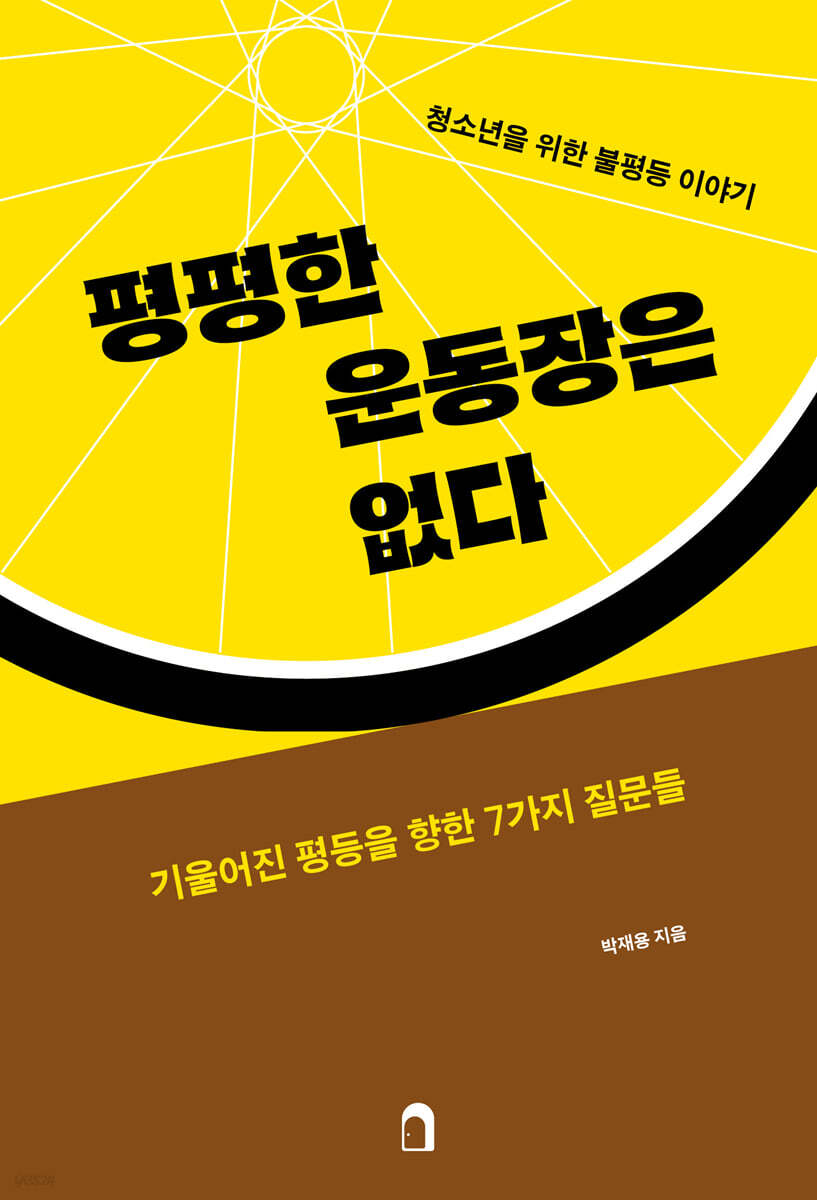
There is no level playing field
 |
Description
Book Introduction
How to Face the Unequal Society We Will Encounter
7 Questions for a Tilted Equality
When you ask young people about their hopes for the future, they say they want to become socially respected people, have economically stable jobs, and do what they love.
However, there are far fewer people working in the professions that many people aspire to.
Most of us will work for companies that are generally not very large, many of us will be factory workers, some of us will become disabled by accidents or illnesses, and nearly half of women will leave their jobs in their early to mid-30s when they get married and have children.
Some of us become self-employed, running stores like convenience stores, restaurants, cafes, and real estate agencies, while about a third of us work in irregular jobs.
In this series of life processes, we encounter various unequal situations.
I hope that young people will continue to think and discuss about how to overcome the seven major inequalities that have shaped the current Republic of Korea.
Through this book, I hope that we can create a society that is enriched by diversity, rather than one where people are discriminated against because they are women, disabled, sexual minorities, or foreigners.
I hope this will be a small step towards overcoming the climate crisis and, in the process, creating a more equal world.
7 Questions for a Tilted Equality
When you ask young people about their hopes for the future, they say they want to become socially respected people, have economically stable jobs, and do what they love.
However, there are far fewer people working in the professions that many people aspire to.
Most of us will work for companies that are generally not very large, many of us will be factory workers, some of us will become disabled by accidents or illnesses, and nearly half of women will leave their jobs in their early to mid-30s when they get married and have children.
Some of us become self-employed, running stores like convenience stores, restaurants, cafes, and real estate agencies, while about a third of us work in irregular jobs.
In this series of life processes, we encounter various unequal situations.
I hope that young people will continue to think and discuss about how to overcome the seven major inequalities that have shaped the current Republic of Korea.
Through this book, I hope that we can create a society that is enriched by diversity, rather than one where people are discriminated against because they are women, disabled, sexual minorities, or foreigners.
I hope this will be a small step towards overcoming the climate crisis and, in the process, creating a more equal world.
- You can preview some of the book's contents.
Preview
index
time
Opening Remarks - The Unequal Society We Will Encounter
0 About labor
Why is there a minimum wage system? / Growing labor inequality / About irregular workers
Thought Plus - Labor and Labor Unions
1.
disabled people
Family Murder / Health of the Disabled / Disabled People Have No Minimum Wage.
Thought Plus - Disability is not innate.
2.
female
A Young Man's View of Women/Career Breaks/Single-Parent Families
Thought Plus - Low Birth Rate
3.
Refugees and migrant workers
We are all descendants of refugees/ We depend on foreign workers/ Multicultural families
Thought Plus - About Immigration
4.
poor people
People who can't work/ The weight of moving/ Having a place to rest comfortably
Thought Plus - Rights of the Distressed
5.
Invisible inequality
Is the law equal? / Education and inequality / About industrial accidents
Thought Plus - Why can't I see it?
6.
Inequality in the Climate Crisis
Responsibility for the climate crisis/The damage falls on the poor/Inequality in the process of overcoming the climate crisis
Think Plus - Climate Justice
Closing remarks
reference book
Opening Remarks - The Unequal Society We Will Encounter
0 About labor
Why is there a minimum wage system? / Growing labor inequality / About irregular workers
Thought Plus - Labor and Labor Unions
1.
disabled people
Family Murder / Health of the Disabled / Disabled People Have No Minimum Wage.
Thought Plus - Disability is not innate.
2.
female
A Young Man's View of Women/Career Breaks/Single-Parent Families
Thought Plus - Low Birth Rate
3.
Refugees and migrant workers
We are all descendants of refugees/ We depend on foreign workers/ Multicultural families
Thought Plus - About Immigration
4.
poor people
People who can't work/ The weight of moving/ Having a place to rest comfortably
Thought Plus - Rights of the Distressed
5.
Invisible inequality
Is the law equal? / Education and inequality / About industrial accidents
Thought Plus - Why can't I see it?
6.
Inequality in the Climate Crisis
Responsibility for the climate crisis/The damage falls on the poor/Inequality in the process of overcoming the climate crisis
Think Plus - Climate Justice
Closing remarks
reference book
Into the book
Even though adults still have more of the responsibility, I hope this book will make a small contribution to helping you think about, discuss, and create your own future.
To do that, we need to take a hard look at the current inequality.
--- p.10~11
The reason why we start the discussion about labor with 0 rather than 1 is because labor is the basic foundation for the discussions we will cover later on, such as women, labor, and income inequality.
Since the dawn of civilization, most people have made a living through their own labor.
But the nature of this work is quite different now than it was in the past.
--- p.16
However, in our country, the labor union organization rate still remains at 14%.
Among them, small and medium-sized enterprises have a lower unionization rate than large corporations, and the number of non-regular workers is lower than that of regular workers.
The unionization rate of irregular workers is less than 3%.
This situation makes irregular workers' wages lower and their working conditions worse than regular workers'.
So, what do you think is needed to create more unions and make them more active?
--- p.41~42
Moreover, the number of people with disabilities in our country is only about half or one-third of that of other developed countries.
This is not because our country has a particularly low number of disabled people, but because the government's standards are very strict.
In other developed countries, the percentage of people with disabilities is between 10 and 20%.
With this in mind, we all have the potential to become disabled someday, and the probability is that one in three or one in two of us will become disabled.
--- p.69~70
So it's not that women thought they wouldn't have children when they were young or adolescence.
Up until their early 20s, 100% of women were filled with the desire to have children, but in just 20 years, they all came to the conclusion that 'children are not possible!'
What exactly drives women to decide not to have children? And what should society do to ensure that women who want to have children feel safe doing so?
--- p.95
And there are about 14,000 homeless people across the country.
Are there really that many? There are roughly 1,600 people living on the streets, but there are also over 5,000 living in boarding houses and 7,000 in nursing homes or rehabilitation facilities.
And there are about 30,000 people living in boarding houses or motels.
There are over 300,000 people who do not have their own homes and live in places that are not even residential, including goshiwon (boarding houses), part of the workplace, inns, motels, small rooms, and even homeless people.
To do that, we need to take a hard look at the current inequality.
--- p.10~11
The reason why we start the discussion about labor with 0 rather than 1 is because labor is the basic foundation for the discussions we will cover later on, such as women, labor, and income inequality.
Since the dawn of civilization, most people have made a living through their own labor.
But the nature of this work is quite different now than it was in the past.
--- p.16
However, in our country, the labor union organization rate still remains at 14%.
Among them, small and medium-sized enterprises have a lower unionization rate than large corporations, and the number of non-regular workers is lower than that of regular workers.
The unionization rate of irregular workers is less than 3%.
This situation makes irregular workers' wages lower and their working conditions worse than regular workers'.
So, what do you think is needed to create more unions and make them more active?
--- p.41~42
Moreover, the number of people with disabilities in our country is only about half or one-third of that of other developed countries.
This is not because our country has a particularly low number of disabled people, but because the government's standards are very strict.
In other developed countries, the percentage of people with disabilities is between 10 and 20%.
With this in mind, we all have the potential to become disabled someday, and the probability is that one in three or one in two of us will become disabled.
--- p.69~70
So it's not that women thought they wouldn't have children when they were young or adolescence.
Up until their early 20s, 100% of women were filled with the desire to have children, but in just 20 years, they all came to the conclusion that 'children are not possible!'
What exactly drives women to decide not to have children? And what should society do to ensure that women who want to have children feel safe doing so?
--- p.95
And there are about 14,000 homeless people across the country.
Are there really that many? There are roughly 1,600 people living on the streets, but there are also over 5,000 living in boarding houses and 7,000 in nursing homes or rehabilitation facilities.
And there are about 30,000 people living in boarding houses or motels.
There are over 300,000 people who do not have their own homes and live in places that are not even residential, including goshiwon (boarding houses), part of the workplace, inns, motels, small rooms, and even homeless people.
--- p.145
Publisher's Review
What we need to do for a better world
Facing current inequality head-on
Labor, the disabled, women, refugees and migrant workers, the poor, invisible inequality, and the climate crisis
A Story of Inequality for Youth Through 7 Questions
How should we view the unequal society we live in?
Although our country is a developed country, it also has various inequalities. One of the important reasons is that our country has achieved compressed growth.
While other countries took at least 100 years to become developed, we went from being one of the poorest countries in the world to a developed country in just 60 years.
In the process, the focus was on growth rather than on resolving inequality.
There are both positive and negative views on this process.
Some argue that in a reality where competition with other countries is fierce and cold, it was an inevitable choice to somehow increase national power, while others say that creating a society where everyone is happy was a priority, even if it meant slowing down growth.
The important point is that inequality has worsened in the process of becoming a developed country.
7 Stories of Inequality We Face
labor
Everyone wants a good job, but 45% of us end up in non-regular jobs.
Only about 15% of us can achieve the coveted full-time office jobs at large corporations or professional positions such as lawyers, professors, and doctors.
disabled people
You may not have many friends with disabilities now, but by the time you reach your 30s, one in a hundred people will be disabled.
By the time people turn 50, one in 20 will have a disability, by the time they turn 65, one in five will have a disability, and by the time they turn 75, one in three will have a disability.
Most disabilities are acquired.
Most congenital disabilities are intellectual disabilities or autism spectrum disorders, and most physical disabilities are caused by accidents or diseases.
And households with disabled people have lower income and higher expenses than households without disabled people, making them low-income households.
female
When I grow up, will I be a mother? Even if I have a friend now, marriage is probably still a long way off.
But when you reach your 20s, marriage, childbirth, and childcare become a future that is just around the corner.
Women are more troubled because it is their own problem.
Marriage, childbirth, and childrearing are very important issues in life, but life is not just about marriage, childbirth, and childrearing.
Each of us has a life we want to live, a job we want to have, and a future we dream of.
But for women, these two things do not easily coexist.
By the time they reach their 30s, about 80% of women are married, and of those, over 80% have children, and about half of them experience a career break due to childcare, and women who had no significant income difference from men in their late 20s or early 30s have an average income that is half that of men in their early 40s.
Refugees and migrant workers
There are approximately 2.26 million immigrants in our country, accounting for 4.4% of the total population.
One in twenty people is an immigrant.
In 2006, about 15 years ago, it was 540,000, or 1.1%, so it has quadrupled since then.
Given various circumstances, the number of immigrants is bound to increase in the future, and the proportion will also increase further.
These immigrants are different from our people in appearance, culture, and customs.
In our country, there is a stronger sense of alienation toward foreigners than in other countries, and there is a strong tendency to look down on people from countries that are less fortunate than ours.
So, most of the conflicts that arise in relationships with immigrants are not caused by the immigrants, but by our own people.
poverty
Relative poverty refers to a household of three whose monthly income is less than 2 million won, and in Korea, about 15% of the population falls into this category.
If we look a little more closely, 8% of households in our country earn less than 1 million won a month.
Also, about 20% of households in our country live on less than 2 million won per month.
Invisible inequality
More than 300,000 people do not live in proper housing, but unless we visit gosiwon, shantytowns, and old boarding houses to check on them, we cannot see them.
People with disabilities who have difficulty moving, severe developmental disabilities, or severe intellectual disabilities are unable to leave their homes unless absolutely necessary.
The same goes for the visually impaired.
If we don't look for their lives, we won't see them.
Every year, more than 2,000 people die from industrial accidents, and several times that number are left permanently disabled.
This too is invisible unless you look for statistics and visit the factory or construction site.
climate crisis
The climate crisis is getting worse.
Adults created the climate crisis, but it is young people who will live through it.
We must all achieve net zero greenhouse gas emissions by 2050, and the remaining 20 years or so are a crucial period that will determine what kind of future humanity can create.
This is the time when teenagers become adults, have jobs, and live as young people in our country.
Even in the process of overcoming the climate crisis, we will inevitably encounter inequality, not only in the damage caused by the climate crisis, such as heavy rains, heat waves, extreme weather events, rising sea levels, a surge in climate refugees, and food shortages that may occur during that period, but also in the process of overcoming the climate crisis.
What kind of world should we prepare for?
The world we desire is not one where more people go to prestigious universities, but one where people are content without having to go to prestigious universities.
A future where more people are employed as office workers at large corporations, rather than a future where irregular workers, small and medium-sized enterprises, and production workers can all find fulfillment and happiness.
I hope that our society will become richer through diversity, rather than one where people are discriminated against because they are women, disabled, sexual minorities, or foreigners.
To do so, we need to confront the current inequality head on.
To overcome the climate crisis and create a more equal world in the process, we must think about, discuss, and create our own future.
I hope that this book will lead to in-depth discussions among young people about the seven major inequalities that have created the current Republic of Korea and how to overcome them.
Facing current inequality head-on
Labor, the disabled, women, refugees and migrant workers, the poor, invisible inequality, and the climate crisis
A Story of Inequality for Youth Through 7 Questions
How should we view the unequal society we live in?
Although our country is a developed country, it also has various inequalities. One of the important reasons is that our country has achieved compressed growth.
While other countries took at least 100 years to become developed, we went from being one of the poorest countries in the world to a developed country in just 60 years.
In the process, the focus was on growth rather than on resolving inequality.
There are both positive and negative views on this process.
Some argue that in a reality where competition with other countries is fierce and cold, it was an inevitable choice to somehow increase national power, while others say that creating a society where everyone is happy was a priority, even if it meant slowing down growth.
The important point is that inequality has worsened in the process of becoming a developed country.
7 Stories of Inequality We Face
labor
Everyone wants a good job, but 45% of us end up in non-regular jobs.
Only about 15% of us can achieve the coveted full-time office jobs at large corporations or professional positions such as lawyers, professors, and doctors.
disabled people
You may not have many friends with disabilities now, but by the time you reach your 30s, one in a hundred people will be disabled.
By the time people turn 50, one in 20 will have a disability, by the time they turn 65, one in five will have a disability, and by the time they turn 75, one in three will have a disability.
Most disabilities are acquired.
Most congenital disabilities are intellectual disabilities or autism spectrum disorders, and most physical disabilities are caused by accidents or diseases.
And households with disabled people have lower income and higher expenses than households without disabled people, making them low-income households.
female
When I grow up, will I be a mother? Even if I have a friend now, marriage is probably still a long way off.
But when you reach your 20s, marriage, childbirth, and childcare become a future that is just around the corner.
Women are more troubled because it is their own problem.
Marriage, childbirth, and childrearing are very important issues in life, but life is not just about marriage, childbirth, and childrearing.
Each of us has a life we want to live, a job we want to have, and a future we dream of.
But for women, these two things do not easily coexist.
By the time they reach their 30s, about 80% of women are married, and of those, over 80% have children, and about half of them experience a career break due to childcare, and women who had no significant income difference from men in their late 20s or early 30s have an average income that is half that of men in their early 40s.
Refugees and migrant workers
There are approximately 2.26 million immigrants in our country, accounting for 4.4% of the total population.
One in twenty people is an immigrant.
In 2006, about 15 years ago, it was 540,000, or 1.1%, so it has quadrupled since then.
Given various circumstances, the number of immigrants is bound to increase in the future, and the proportion will also increase further.
These immigrants are different from our people in appearance, culture, and customs.
In our country, there is a stronger sense of alienation toward foreigners than in other countries, and there is a strong tendency to look down on people from countries that are less fortunate than ours.
So, most of the conflicts that arise in relationships with immigrants are not caused by the immigrants, but by our own people.
poverty
Relative poverty refers to a household of three whose monthly income is less than 2 million won, and in Korea, about 15% of the population falls into this category.
If we look a little more closely, 8% of households in our country earn less than 1 million won a month.
Also, about 20% of households in our country live on less than 2 million won per month.
Invisible inequality
More than 300,000 people do not live in proper housing, but unless we visit gosiwon, shantytowns, and old boarding houses to check on them, we cannot see them.
People with disabilities who have difficulty moving, severe developmental disabilities, or severe intellectual disabilities are unable to leave their homes unless absolutely necessary.
The same goes for the visually impaired.
If we don't look for their lives, we won't see them.
Every year, more than 2,000 people die from industrial accidents, and several times that number are left permanently disabled.
This too is invisible unless you look for statistics and visit the factory or construction site.
climate crisis
The climate crisis is getting worse.
Adults created the climate crisis, but it is young people who will live through it.
We must all achieve net zero greenhouse gas emissions by 2050, and the remaining 20 years or so are a crucial period that will determine what kind of future humanity can create.
This is the time when teenagers become adults, have jobs, and live as young people in our country.
Even in the process of overcoming the climate crisis, we will inevitably encounter inequality, not only in the damage caused by the climate crisis, such as heavy rains, heat waves, extreme weather events, rising sea levels, a surge in climate refugees, and food shortages that may occur during that period, but also in the process of overcoming the climate crisis.
What kind of world should we prepare for?
The world we desire is not one where more people go to prestigious universities, but one where people are content without having to go to prestigious universities.
A future where more people are employed as office workers at large corporations, rather than a future where irregular workers, small and medium-sized enterprises, and production workers can all find fulfillment and happiness.
I hope that our society will become richer through diversity, rather than one where people are discriminated against because they are women, disabled, sexual minorities, or foreigners.
To do so, we need to confront the current inequality head on.
To overcome the climate crisis and create a more equal world in the process, we must think about, discuss, and create our own future.
I hope that this book will lead to in-depth discussions among young people about the seven major inequalities that have created the current Republic of Korea and how to overcome them.
GOODS SPECIFICS
- Date of issue: October 28, 2025
- Page count, weight, size: 204 pages | 225g | 128*188*13mm
- ISBN13: 9791199407572
- ISBN10: 1199407577
You may also like
카테고리
korean


korean

![GQ KOREA Mark (Monthly): December [2025]](http://librairie.coreenne.fr/cdn/shop/files/8ef265dbbfbf186523ed75ba7319009d.jpg?v=1765340328&width=3840)


