

Chilseong Ace
 |
Description
Book Introduction
“Still, we will play baseball.”
The ultimate match that you'll want to win to the death has arrived!
What is given to some as a matter of course can be achieved only by others who work hard for it.
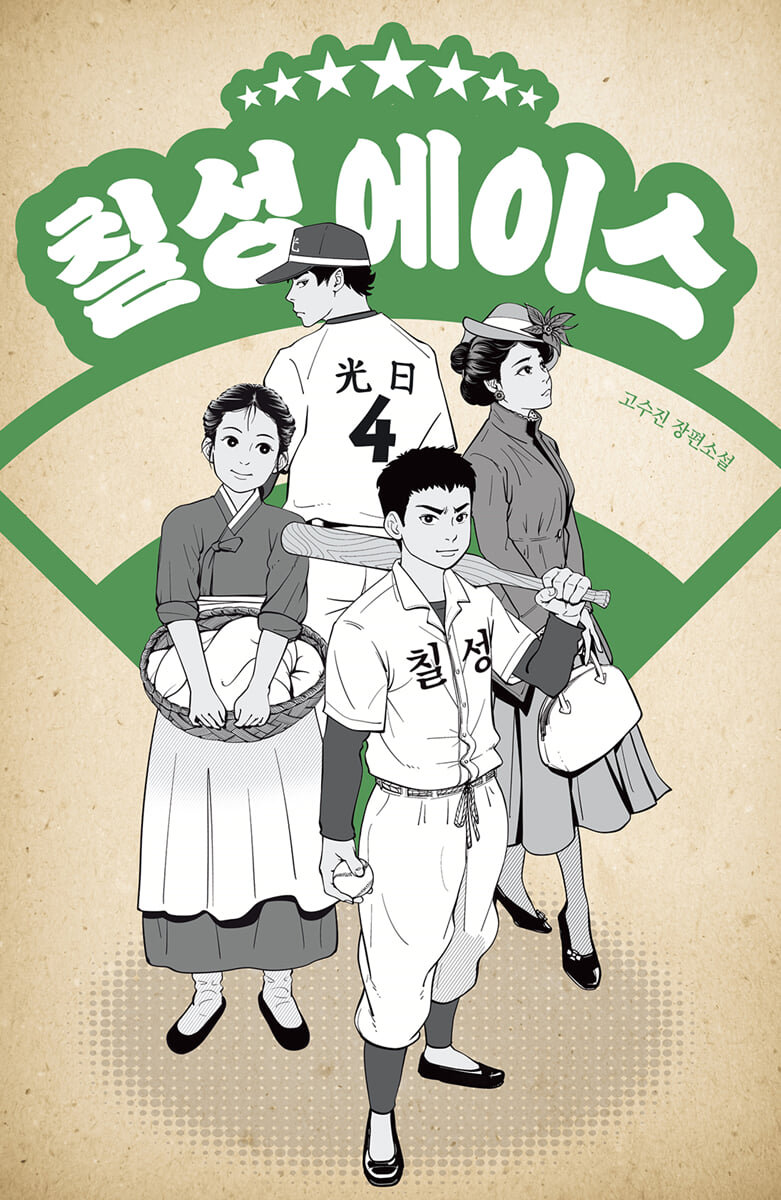
The novel "Chilseong Ace" is a historical novel set during the Japanese colonial period that depicts the protagonist Chang-i's fierce baseball matches and a secret that no one knows about.
During the times when I struggled to get through the day, I learned the spirit of not losing my dreams and the relationship between friends and rivals.
During adolescence, a 'friend' is the person you spend the most time with and care about.
Chang-i also belongs to the Chilseong baseball team and trains and strengthens his resolve with his teammates.
Then, for the first time, I got the chance to participate in a baseball competition.
But the excitement was short-lived, as the sudden death of his grandmother led to the discovery of a mysterious woman, Mrs. Hitomi.
Even though he was in a state of confusion, Chang-i couldn't stop practicing baseball.
A leap toward a challenge transcends time and circumstances.
In this way, 『Chilsung Ace』 is a work that encourages not only external but also internal growth for all who are stepping into the future.
It is also noteworthy that this is the first full-length novel by author Go Soo-jin, who will enrich youth literature.
The ultimate match that you'll want to win to the death has arrived!
What is given to some as a matter of course can be achieved only by others who work hard for it.
The novel "Chilseong Ace" is a historical novel set during the Japanese colonial period that depicts the protagonist Chang-i's fierce baseball matches and a secret that no one knows about.
During the times when I struggled to get through the day, I learned the spirit of not losing my dreams and the relationship between friends and rivals.
During adolescence, a 'friend' is the person you spend the most time with and care about.
Chang-i also belongs to the Chilseong baseball team and trains and strengthens his resolve with his teammates.
Then, for the first time, I got the chance to participate in a baseball competition.
But the excitement was short-lived, as the sudden death of his grandmother led to the discovery of a mysterious woman, Mrs. Hitomi.
Even though he was in a state of confusion, Chang-i couldn't stop practicing baseball.
A leap toward a challenge transcends time and circumstances.
In this way, 『Chilsung Ace』 is a work that encourages not only external but also internal growth for all who are stepping into the future.
It is also noteworthy that this is the first full-length novel by author Go Soo-jin, who will enrich youth literature.
- You can preview some of the book's contents.
Preview
index
new face
Be alone
First encounter
Changeup
A wandering heart
friendly match
A tree that cannot be climbed
pride
Throw it somewhere
warning
Mrs. Hitomi
heartburn
Chiyo's older brother
Let's stick together properly
Shaking Ace
head-on confrontation
Author's Note
Be alone
First encounter
Changeup
A wandering heart
friendly match
A tree that cannot be climbed
pride
Throw it somewhere
warning
Mrs. Hitomi
heartburn
Chiyo's older brother
Let's stick together properly
Shaking Ace
head-on confrontation
Author's Note
Detailed image

Into the book
When I came running after hearing Nanyoung's words a few days ago, her grandmother had already passed away.
Until that morning, I had been talking face to face with my grandmother, but I never knew that a person's life could be lost in an instant.
Chang-i grabbed her grandmother's hand and screamed instead of crying.
Wake up, open your eyes.
But Grandma's tightly shut eyes did not open, and her expression was even calm.
Chang-i hugged his grandmother, his whole body trembling.
I couldn't send my grandmother away like this.
--- p.26
Suddenly, it occurred to me that the parasol the woman was holding looked similar to the parasol held by the Japanese woman I had seen at the pond in the annex of Cheongwolru.
Chang-i immediately started running towards Cheongwolru.
'Surely not, right? They just look alike, right? There are so many people in the world who look alike...
Even though Chang-i thought that his thoughts might be wrong, he couldn't stop running.
To say no, Mrs. Hitomi looks too much like the mother in the photo.
Moreover, I was also concerned about the conversations of people who said that Madam Hitomi was Korean.
--- p.54
“I took it to mean that we should compete fairly without distinguishing between Koreans and Japanese.”
Yoshida chuckled at Chang-i's words.
“Even if you compete, you have to do it while looking at your opponent.
“Do you think Japanese and Koreans can be each other’s opponents?”
"what?"
Chang-i was dumbfounded.
I thought I had been making a big mistake about Yoshida all this time.
I even felt betrayed.
Yoshida was no different from the other guys.
But Chang-i suppressed his anger and opened his mouth again.
Until that morning, I had been talking face to face with my grandmother, but I never knew that a person's life could be lost in an instant.
Chang-i grabbed her grandmother's hand and screamed instead of crying.
Wake up, open your eyes.
But Grandma's tightly shut eyes did not open, and her expression was even calm.
Chang-i hugged his grandmother, his whole body trembling.
I couldn't send my grandmother away like this.
--- p.26
Suddenly, it occurred to me that the parasol the woman was holding looked similar to the parasol held by the Japanese woman I had seen at the pond in the annex of Cheongwolru.
Chang-i immediately started running towards Cheongwolru.
'Surely not, right? They just look alike, right? There are so many people in the world who look alike...
Even though Chang-i thought that his thoughts might be wrong, he couldn't stop running.
To say no, Mrs. Hitomi looks too much like the mother in the photo.
Moreover, I was also concerned about the conversations of people who said that Madam Hitomi was Korean.
--- p.54
“I took it to mean that we should compete fairly without distinguishing between Koreans and Japanese.”
Yoshida chuckled at Chang-i's words.
“Even if you compete, you have to do it while looking at your opponent.
“Do you think Japanese and Koreans can be each other’s opponents?”
"what?"
Chang-i was dumbfounded.
I thought I had been making a big mistake about Yoshida all this time.
I even felt betrayed.
Yoshida was no different from the other guys.
But Chang-i suppressed his anger and opened his mouth again.
--- p.91
Publisher's Review
Bottom of the 9th, 2 outs, the game is just beginning!
Introducing a novel that combines history with baseball.
"Chilsung Ace" centers around the protagonist Chang-i, who plays baseball wearing rubber shoes during the Japanese colonial era, and engages in a baseball competition.
Chang-i is strong-willed and gives his all when he sets a goal.
Even in Chang-i's voice and actions revealed in the novel, strength is felt.
But what about the inside, not the outside?
Even for someone like Chang, there is a pain called ‘family.’
For Chang-i, who had no parents, his grandmother was his only family.
That grandmother passed away.
Chang-i still couldn't believe this situation.
My eyes wandered here and there, lost where to go.
Was the room originally this spacious?
When my grandmother lay down, the room that had been full became like a barren field.
'Why did that happen?'
I lowered my head as regret washed over me again.
I wasn't going to baseball practice.
I had to stay by my grandmother's side until she got better.
When I came running after hearing Nanyoung's words a few days ago, her grandmother had already passed away.
Until that morning, I had been talking face to face with my grandmother, but I never knew that a person's life could be lost in an instant.
Chang-i grabbed her grandmother's hand and screamed instead of crying.
p.26
Chang-i felt with his whole body that he was truly left alone.
The author speeds up the story by leaving the protagonist alone.
And the character's emotional line was captured in detail, and the environment and situations in which he was placed were expressed prominently.
Does Chang-i's family story end here? No.
There was still a photo taken on my parents' wedding day that I had looked at until the window was worn out.
Among them, the mother in the photo resembles Mrs. Hitomi, the mother of Yoshida, who is Chang-i's rival in the novel.
'Surely not, right? They just look alike, right? There are so many people in the world who look alike...
Even though Chang-i thought that his thoughts might be wrong, he couldn't stop running.
To say no, Mrs. Hitomi looks too much like the mother in the photo.
Moreover, I was also concerned about the conversations of people who said that Madam Hitomi was Korean.
'But my grandmother said that my mother had passed away... ... .'
p.55
A lot of things happened to Chang-i at once.
The fact that it is a family goes beyond the twists and turns of the story and is intertwined with the complex emotions and stories of the individual characters.
You can also see that it subtly overlaps with the conflict over the baseball competition that appears at the forefront of the story.
The competition is drawing near.
Today too, Chang-i stood up bravely and ran to the training ground.
It didn't matter if he was Korean, as long as he won at baseball.
Chang-i couldn't stop playing baseball.
If I let go of this, it felt like something would fall apart.
And baseball was Chang-i's dream and a game that anyone could play fairly.
But I couldn't play the game with peace of mind.
It was because I was Korean.
The novel is set during the Japanese colonial period, a time of national suffering for our country.
It was around that time.
A commotion was heard from the entrance to the training ground.
Chang-i turned his head absentmindedly and frowned.
They were the baseball team members of Gwangil Middle School, where Japanese students attend.
Sato, a third-year student, was acting as the leader and leading the rest of the guys.
Judging by the way he was giggling, it seemed like there was something else going on.
"hey.
Everybody get out.
“This is where we write.”
Sato stood in his spot and suddenly shouted an order.
“What do you mean we came first?”
Chang-i strode towards Sato.
Then he got angry and fought back.
“Anyway, Joseon people can’t understand if you say it all at once, right?”
“Don’t pick a fight for no reason.
“You can just practice at the school playground!”
Despite Sato's sarcasm, Chang-i did not back down.
It was the beginning again.
p.16
My longing for baseball grew stronger and stronger.
Chang-i just wants to throw the ball.
Even if you want to settle the score through a match, the other side will not accept it or you will start a fight.
In addition, the oppression of Koreans was so obvious that the police would pick on Korean students and beat them, or search their belongings if they saw someone suspicious on the street.
Chang-i lived with resentment suppressed in his heart.
But I didn't want to lose at least in baseball.
That moment of throwing a baseball was when I shined as a baseball player.
“Only baseball can show me.”
Let's think of words that can describe me.
What comes to mind?
There are countless descriptions such as beautiful, emotional, and lively.
It seems natural that the word 'baseball' would follow Chang-i rather than 'image'.
I don't blame the difficult training and poor equipment, and I live with only one desire to play.
Chang-i liked baseball.
The more I threw the baseball, the more my heart grew.
So, my heart was rather heavy.
As a colonial subject, liking baseball felt like a luxury.
But that's why Changi had to be a baseball player.
Baseball was a game in which anyone, regardless of whether they were Korean or Japanese, could equally stand at the plate and throw the ball as many times as they were given the opportunity.
Inside the stadium, everyone was equal.
Those moments were precious to Chang-i.
p.148
The case of Yoshida, whom Chang-i considers a rival, is similar.
It is said that there are many cases where adults force their children to fulfill the dreams they have set for themselves or have not yet achieved.
Yoshida's father also opposes baseball.
Even in such a situation, Yoshida clearly states his dream.
In this way, the novel appropriately shows the period in which I was establishing myself without being swayed by anything.
"Stop playing baseball right now and go back to Japan! You must become a soldier of the Japanese Empire! You must bring honor to our family!"
His rough voice echoed throughout the garden.
Meanwhile, the word baseball caught Chang-i's ear.
“No! Being a soldier is my father’s dream, not mine.
“My dream is to play baseball!”
p.125
"Chilsung Ace" contains a story about how people become stepping stones for each other and grow during the dark times of Japanese colonial rule.
Although it is a busy time to protect the country and make a living, children's journey toward their dreams does not stop.
I hope that the main character, Chang-i, will become a great player like a baseball that flies into the sky.
Introducing a novel that combines history with baseball.
"Chilsung Ace" centers around the protagonist Chang-i, who plays baseball wearing rubber shoes during the Japanese colonial era, and engages in a baseball competition.
Chang-i is strong-willed and gives his all when he sets a goal.
Even in Chang-i's voice and actions revealed in the novel, strength is felt.
But what about the inside, not the outside?
Even for someone like Chang, there is a pain called ‘family.’
For Chang-i, who had no parents, his grandmother was his only family.
That grandmother passed away.
Chang-i still couldn't believe this situation.
My eyes wandered here and there, lost where to go.
Was the room originally this spacious?
When my grandmother lay down, the room that had been full became like a barren field.
'Why did that happen?'
I lowered my head as regret washed over me again.
I wasn't going to baseball practice.
I had to stay by my grandmother's side until she got better.
When I came running after hearing Nanyoung's words a few days ago, her grandmother had already passed away.
Until that morning, I had been talking face to face with my grandmother, but I never knew that a person's life could be lost in an instant.
Chang-i grabbed her grandmother's hand and screamed instead of crying.
p.26
Chang-i felt with his whole body that he was truly left alone.
The author speeds up the story by leaving the protagonist alone.
And the character's emotional line was captured in detail, and the environment and situations in which he was placed were expressed prominently.
Does Chang-i's family story end here? No.
There was still a photo taken on my parents' wedding day that I had looked at until the window was worn out.
Among them, the mother in the photo resembles Mrs. Hitomi, the mother of Yoshida, who is Chang-i's rival in the novel.
'Surely not, right? They just look alike, right? There are so many people in the world who look alike...
Even though Chang-i thought that his thoughts might be wrong, he couldn't stop running.
To say no, Mrs. Hitomi looks too much like the mother in the photo.
Moreover, I was also concerned about the conversations of people who said that Madam Hitomi was Korean.
'But my grandmother said that my mother had passed away... ... .'
p.55
A lot of things happened to Chang-i at once.
The fact that it is a family goes beyond the twists and turns of the story and is intertwined with the complex emotions and stories of the individual characters.
You can also see that it subtly overlaps with the conflict over the baseball competition that appears at the forefront of the story.
The competition is drawing near.
Today too, Chang-i stood up bravely and ran to the training ground.
It didn't matter if he was Korean, as long as he won at baseball.
Chang-i couldn't stop playing baseball.
If I let go of this, it felt like something would fall apart.
And baseball was Chang-i's dream and a game that anyone could play fairly.
But I couldn't play the game with peace of mind.
It was because I was Korean.
The novel is set during the Japanese colonial period, a time of national suffering for our country.
It was around that time.
A commotion was heard from the entrance to the training ground.
Chang-i turned his head absentmindedly and frowned.
They were the baseball team members of Gwangil Middle School, where Japanese students attend.
Sato, a third-year student, was acting as the leader and leading the rest of the guys.
Judging by the way he was giggling, it seemed like there was something else going on.
"hey.
Everybody get out.
“This is where we write.”
Sato stood in his spot and suddenly shouted an order.
“What do you mean we came first?”
Chang-i strode towards Sato.
Then he got angry and fought back.
“Anyway, Joseon people can’t understand if you say it all at once, right?”
“Don’t pick a fight for no reason.
“You can just practice at the school playground!”
Despite Sato's sarcasm, Chang-i did not back down.
It was the beginning again.
p.16
My longing for baseball grew stronger and stronger.
Chang-i just wants to throw the ball.
Even if you want to settle the score through a match, the other side will not accept it or you will start a fight.
In addition, the oppression of Koreans was so obvious that the police would pick on Korean students and beat them, or search their belongings if they saw someone suspicious on the street.
Chang-i lived with resentment suppressed in his heart.
But I didn't want to lose at least in baseball.
That moment of throwing a baseball was when I shined as a baseball player.
“Only baseball can show me.”
Let's think of words that can describe me.
What comes to mind?
There are countless descriptions such as beautiful, emotional, and lively.
It seems natural that the word 'baseball' would follow Chang-i rather than 'image'.
I don't blame the difficult training and poor equipment, and I live with only one desire to play.
Chang-i liked baseball.
The more I threw the baseball, the more my heart grew.
So, my heart was rather heavy.
As a colonial subject, liking baseball felt like a luxury.
But that's why Changi had to be a baseball player.
Baseball was a game in which anyone, regardless of whether they were Korean or Japanese, could equally stand at the plate and throw the ball as many times as they were given the opportunity.
Inside the stadium, everyone was equal.
Those moments were precious to Chang-i.
p.148
The case of Yoshida, whom Chang-i considers a rival, is similar.
It is said that there are many cases where adults force their children to fulfill the dreams they have set for themselves or have not yet achieved.
Yoshida's father also opposes baseball.
Even in such a situation, Yoshida clearly states his dream.
In this way, the novel appropriately shows the period in which I was establishing myself without being swayed by anything.
"Stop playing baseball right now and go back to Japan! You must become a soldier of the Japanese Empire! You must bring honor to our family!"
His rough voice echoed throughout the garden.
Meanwhile, the word baseball caught Chang-i's ear.
“No! Being a soldier is my father’s dream, not mine.
“My dream is to play baseball!”
p.125
"Chilsung Ace" contains a story about how people become stepping stones for each other and grow during the dark times of Japanese colonial rule.
Although it is a busy time to protect the country and make a living, children's journey toward their dreams does not stop.
I hope that the main character, Chang-i, will become a great player like a baseball that flies into the sky.
GOODS SPECIFICS
- Date of issue: December 20, 2024
- Page count, weight, size: 176 pages | 140*215*20mm
- ISBN13: 9788983949899
- ISBN10: 8983949899
You may also like
카테고리
korean


korean

![GQ KOREA Mark (Monthly): December [2025]](http://librairie.coreenne.fr/cdn/shop/files/8ef265dbbfbf186523ed75ba7319009d.jpg?v=1765340328&width=3840)


