

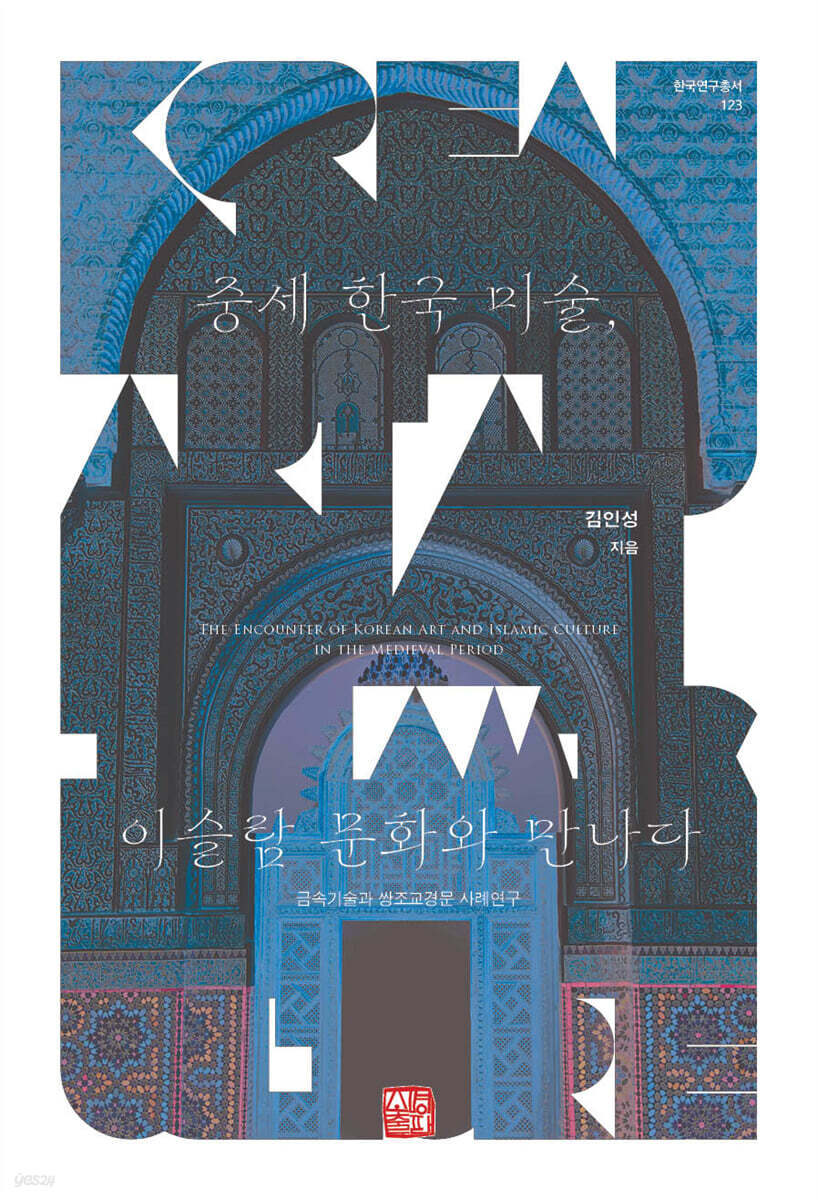
Medieval Korean Art Meets Islamic Culture
 |
Description
Book Introduction
Islamic culture left behind in Korean culture
This is a journey to find traces of Islamic culture, which contains religious specificity, within our culture.
If we can uncover records of the Korean Peninsula's dynasties and empires through phenomena and relics, the horizons of Korean art could be significantly expanded, and the inclusiveness of Korean culture could be greatly highlighted.
Moreover, as we contemplate the relationship between Islamic culture and our own culture, we are forced to reexamine what we now take for granted as “art” and “artwork.”
Furthermore, we are led to reflect on whether our standards for defining culture may be overly biased and Western-centric.
The potential for exchange between our culture and Islamic culture makes us reflect on existing prejudices from another perspective.
Westerners often seem to view the Islamic world through the lens of a "clash of civilizations," but the material culture often deals with the interactions between the Byzantine Empire, a medieval Christian civilization, and the Islamic world, as well as between Western Europe and the Islamic world in the early modern period.
It helps to reconstruct historical reality from a multifaceted perspective.
Looking at this kind of research, I realize that we can reconstruct history more concretely by filling in the gaps in history with examples of material culture.
This is a journey to find traces of Islamic culture, which contains religious specificity, within our culture.
If we can uncover records of the Korean Peninsula's dynasties and empires through phenomena and relics, the horizons of Korean art could be significantly expanded, and the inclusiveness of Korean culture could be greatly highlighted.
Moreover, as we contemplate the relationship between Islamic culture and our own culture, we are forced to reexamine what we now take for granted as “art” and “artwork.”
Furthermore, we are led to reflect on whether our standards for defining culture may be overly biased and Western-centric.
The potential for exchange between our culture and Islamic culture makes us reflect on existing prejudices from another perspective.
Westerners often seem to view the Islamic world through the lens of a "clash of civilizations," but the material culture often deals with the interactions between the Byzantine Empire, a medieval Christian civilization, and the Islamic world, as well as between Western Europe and the Islamic world in the early modern period.
It helps to reconstruct historical reality from a multifaceted perspective.
Looking at this kind of research, I realize that we can reconstruct history more concretely by filling in the gaps in history with examples of material culture.
index
introduction
preface
[Part 1] Exchanges between Silla and the Islamic World
Chapter 1: Historical Background
1.
Al-Silla from the late 8th century to the 11th century
2.
The meeting between the Silla people and Muslims through China
3.
Military and Political Contacts between the Islamic Cultural Sphere and China
4.
Trade between the Islamic Cultural Sphere and China 2
5.
The Encounter between Silla and Muslims: Navigation and the Art of Exploration
6.
Yangzhou: A Case of Encounter Between Silla and Muslims
Chapter 2: From the Islamic World to Silla: Safidruy and Brassware
1.
The origins and characteristics of 'Islamic art'
2.
The demands of the Islamic religion and the response of Islamic art: white bronze, safidruy
3.
The concept of metal technology and copper
4.
The manufacturing process of white copper, saphidrui and brassware
5.
Silla's metalworking technology and spinning equipment
6.
White bronze 'Sahari', Silla's Yugi, and Iran's 'Sapidrui'
7.
The cultural significance of Silla's white bronze spoons
8.
Tin and its influx from the Sahari, Yugi, and Sapidrui White Bronzes
9.
White bronze technology in Iranian Islamic culture from Silla
Chapter 3: Wire Drawing Techniques from Silla to the Islamic World
1.
Trade goods from the Korean Peninsula to the Islamic world
2.
Silla's gold and gold thread
3.
Gold thread manufacturing method drawing processing
4.
The origin and spread of Silla's gold thread printing technique
5.
From Silla to the Islamic world of Iran
[Part 2] Medieval Globalization and the Twin Canons?
Chapter 1: The Korean Peninsula and Medieval Globalism
1.
Muslims who came to the Korean Peninsula to eat big and return
2.
Daesik (大食) comes to Goryeo
3.
Coexistence during the Mongol Empire
Chapter 2: The Pattern of Medieval Globalism: The "Twin Birds Crossing Neck Pattern"
1.
Definition of the concept of the double-bird crossing neck pattern
2.
The case of Goryeo
3.
Cases from the Islamic world
4.
The Origin and Spread of the International Style of the Twin-Crossed Sutras in Inland Asia
5.
East Asia's twin Buddhist scriptures
6.
The Transformation and Disappearance of the Ssangjogyo-gyeongmun Pattern in Joseon
In conclusion
[supplement]
Table 1.
Records of Korea in Islamic historical literature
Table 2.
Records of Islam in Korean historical documents
References
List of illustrations
Search
preface
[Part 1] Exchanges between Silla and the Islamic World
Chapter 1: Historical Background
1.
Al-Silla from the late 8th century to the 11th century
2.
The meeting between the Silla people and Muslims through China
3.
Military and Political Contacts between the Islamic Cultural Sphere and China
4.
Trade between the Islamic Cultural Sphere and China 2
5.
The Encounter between Silla and Muslims: Navigation and the Art of Exploration
6.
Yangzhou: A Case of Encounter Between Silla and Muslims
Chapter 2: From the Islamic World to Silla: Safidruy and Brassware
1.
The origins and characteristics of 'Islamic art'
2.
The demands of the Islamic religion and the response of Islamic art: white bronze, safidruy
3.
The concept of metal technology and copper
4.
The manufacturing process of white copper, saphidrui and brassware
5.
Silla's metalworking technology and spinning equipment
6.
White bronze 'Sahari', Silla's Yugi, and Iran's 'Sapidrui'
7.
The cultural significance of Silla's white bronze spoons
8.
Tin and its influx from the Sahari, Yugi, and Sapidrui White Bronzes
9.
White bronze technology in Iranian Islamic culture from Silla
Chapter 3: Wire Drawing Techniques from Silla to the Islamic World
1.
Trade goods from the Korean Peninsula to the Islamic world
2.
Silla's gold and gold thread
3.
Gold thread manufacturing method drawing processing
4.
The origin and spread of Silla's gold thread printing technique
5.
From Silla to the Islamic world of Iran
[Part 2] Medieval Globalization and the Twin Canons?
Chapter 1: The Korean Peninsula and Medieval Globalism
1.
Muslims who came to the Korean Peninsula to eat big and return
2.
Daesik (大食) comes to Goryeo
3.
Coexistence during the Mongol Empire
Chapter 2: The Pattern of Medieval Globalism: The "Twin Birds Crossing Neck Pattern"
1.
Definition of the concept of the double-bird crossing neck pattern
2.
The case of Goryeo
3.
Cases from the Islamic world
4.
The Origin and Spread of the International Style of the Twin-Crossed Sutras in Inland Asia
5.
East Asia's twin Buddhist scriptures
6.
The Transformation and Disappearance of the Ssangjogyo-gyeongmun Pattern in Joseon
In conclusion
[supplement]
Table 1.
Records of Korea in Islamic historical literature
Table 2.
Records of Islam in Korean historical documents
References
List of illustrations
Search
Publisher's Review
Exploring the possibilities of cultural exchange today
Without us even knowing it, material culture has a hierarchy based on its form of expression.
In reality, architecture is considered the most important, followed by sculpture, painting, and crafts.
Looking back at this order, it is also the perspective from which Westerners viewed their art.
For them, the art of calligraphy did not exist.
In pre-modern East Asia, calligraphy was truly an art, and the most important art at that.
Because they painted and wrote with the same brush, poetry, calligraphy, and painting, that is, poetry, calligraphy, and painting, always went together.
Calligraphy was also the most important art form in Islamic culture.
Sculpture is extremely rare in traditional Islamic art.
There aren't many conversations either.
Just as we left behind pictures in the form of scrolls, they also left behind pictures as illustrations for books.
While Western paintings were created on canvas with exhibitions in mind, paintings from East Asian and Islamic cultures are objects of private appreciation.
I hope that you will be able to understand the unique value of Islamic culture and art.
Islamic art did not follow the hierarchy of material culture that Westerners take for granted, but instead devoted considerable effort to crafts considered so-called 'minor arts'.
There are so many elaborate and ornate works that it feels like all the energy of artists and craftsmen has been concentrated here because other forms of expression were not active.
British people, who were depressed by the indiscriminate production of factory products during the Industrial Revolution, also found solace in the handicrafts of Muslims.
Everyday items made by Muslims, such as basins and pitchers, were favored by European royalty and were even specially treated as royal baptismal vessels.
Because of the characteristics of Islamic material civilization, which blends everyday life with artistry, their crafts were able to flow into any religion or cultural sphere.
The practical nature of Islamic art makes me think that their crafts could have been accepted without resistance in Korean material culture.
There is something unique about the potential for exchange between our culture and Islamic culture.
Korea's geopolitical location, religious background, and historical development do not show any commonality with the Islamic world.
In addition, even researchers who are active in the study of the exchange between Christianity and Islam are skeptical to the point of being negative about the historical relationship between Buddhism and Islam.
The heterogeneity between Buddhism and Islam is largely a product of our times.
In the Middle Ages, at least in the Islamic world, other cultures were not as alienated from each other as they are today.
In fact, the Baqrmak family, which wielded great political power under the Abbasid Caliph in Baghdad, was an old Buddhist family.
Ultimately, it was not impossible for any type of exchange or cultural contact to occur between the Islamic Empire and the Korean Peninsula, which was a Buddhist cultural sphere.
Beyond the limitations of such notions, I hope that in "Medieval Korean Art Meets Islamic Culture," we can find a point where we can rekindle the exchange of Islamic culture that began in the Middle Ages.
Without us even knowing it, material culture has a hierarchy based on its form of expression.
In reality, architecture is considered the most important, followed by sculpture, painting, and crafts.
Looking back at this order, it is also the perspective from which Westerners viewed their art.
For them, the art of calligraphy did not exist.
In pre-modern East Asia, calligraphy was truly an art, and the most important art at that.
Because they painted and wrote with the same brush, poetry, calligraphy, and painting, that is, poetry, calligraphy, and painting, always went together.
Calligraphy was also the most important art form in Islamic culture.
Sculpture is extremely rare in traditional Islamic art.
There aren't many conversations either.
Just as we left behind pictures in the form of scrolls, they also left behind pictures as illustrations for books.
While Western paintings were created on canvas with exhibitions in mind, paintings from East Asian and Islamic cultures are objects of private appreciation.
I hope that you will be able to understand the unique value of Islamic culture and art.
Islamic art did not follow the hierarchy of material culture that Westerners take for granted, but instead devoted considerable effort to crafts considered so-called 'minor arts'.
There are so many elaborate and ornate works that it feels like all the energy of artists and craftsmen has been concentrated here because other forms of expression were not active.
British people, who were depressed by the indiscriminate production of factory products during the Industrial Revolution, also found solace in the handicrafts of Muslims.
Everyday items made by Muslims, such as basins and pitchers, were favored by European royalty and were even specially treated as royal baptismal vessels.
Because of the characteristics of Islamic material civilization, which blends everyday life with artistry, their crafts were able to flow into any religion or cultural sphere.
The practical nature of Islamic art makes me think that their crafts could have been accepted without resistance in Korean material culture.
There is something unique about the potential for exchange between our culture and Islamic culture.
Korea's geopolitical location, religious background, and historical development do not show any commonality with the Islamic world.
In addition, even researchers who are active in the study of the exchange between Christianity and Islam are skeptical to the point of being negative about the historical relationship between Buddhism and Islam.
The heterogeneity between Buddhism and Islam is largely a product of our times.
In the Middle Ages, at least in the Islamic world, other cultures were not as alienated from each other as they are today.
In fact, the Baqrmak family, which wielded great political power under the Abbasid Caliph in Baghdad, was an old Buddhist family.
Ultimately, it was not impossible for any type of exchange or cultural contact to occur between the Islamic Empire and the Korean Peninsula, which was a Buddhist cultural sphere.
Beyond the limitations of such notions, I hope that in "Medieval Korean Art Meets Islamic Culture," we can find a point where we can rekindle the exchange of Islamic culture that began in the Middle Ages.
GOODS SPECIFICS
- Date of issue: November 15, 2025
- Format: Paperback book binding method guide
- Page count, weight, size: 360 pages | 152*223*19mm
- ISBN13: 9791175490093
You may also like
카테고리
korean


korean

![GQ KOREA Mark (Monthly): December [2025]](http://librairie.coreenne.fr/cdn/shop/files/8ef265dbbfbf186523ed75ba7319009d.jpg?v=1765340328&width=3840)


