

Silk Road History Express
 |
Description
Book Introduction
The "Magic Road," a bridge that connects Eastern and Western history, comes to life in 18 stories.
This book contains the story of the fascinating history of the Silk Road, the 'magic road'.
This book is enough to give teenagers and adults who are new to the Silk Road a 'first taste' of the Silk Road.
You can learn basic knowledge about the Silk Road, as well as encounter a wealth of side stories.
The Silk Road itself can be seen as a giant story tree with countless branches.
The dramatic moments of exchange between the East and the West along the Silk Road are valuable historical records that shaped the geography and structure of the world today.
Also noteworthy is the story of our country's history, which is closely intertwined with the Silk Road and appears at important points.
Rather than a rigid chronological narrative, the story is structured around interesting episodes and characters, creating a sense of realism. It also includes abundant reference photos, illustrated maps, and information to meet the reader's level.
This book contains the story of the fascinating history of the Silk Road, the 'magic road'.
This book is enough to give teenagers and adults who are new to the Silk Road a 'first taste' of the Silk Road.
You can learn basic knowledge about the Silk Road, as well as encounter a wealth of side stories.
The Silk Road itself can be seen as a giant story tree with countless branches.
The dramatic moments of exchange between the East and the West along the Silk Road are valuable historical records that shaped the geography and structure of the world today.
Also noteworthy is the story of our country's history, which is closely intertwined with the Silk Road and appears at important points.
Rather than a rigid chronological narrative, the story is structured around interesting episodes and characters, creating a sense of realism. It also includes abundant reference photos, illustrated maps, and information to meet the reader's level.
- You can preview some of the book's contents.
Preview
index
preface
1.
Blue-Eyed Conquerors: The Silk Road and Ancient Greece
2.
Meeting Dangun in Cheonsan - The Silk Road and the Ancient Korean Peninsula
3.
Why is the Silk Merchant Wang Seo-guk? - The Birth of the Silk Road
4.
The Road to Rome - Ancient Empires of the East and West on the Silk Road
5.
To catch a tiger, you must enter its den: The Han and Xiongnu conflicts over the Silk Road.
6.
Was the King of Silla a Descendant of the Huns? - The Silk Road of the Three Kingdoms Period
7.
Written as Gokturk and read as Türkiye - The confrontation between the Tang and Gokturk over the Silk Road
8.
If Tripitaka had come to Goguryeo - Buddhism and the Silk Road
9.
Westerners Playing on a Moonlit Night in Seorabeol - Unified Silla and the Silk Road
10.
The story of paper's westward migration after Gao Xianzhi's defeat - The Silk Road and the exchange of civilizations
11.
Why Confucianism Failed to Become a World Religion - The Silk Road and the Cultural Exchange Between East and West
12.
Why Marco Polo Went East - The Mongol Empire and the Silk Road
13.
Zheng He went west, Columbus went even further west - the Maritime Silk Road and the Age of Exploration
14.
The Imjin War, the Beginning of the Globalization of Ceramics - Joseon's Blue and White Porcelain and the "Ceramic Road"
15.
The Last Nomadic Empire: The Qing Empire and the End of the Silk Road
16.
Why Are the Treasures of the Silk Road in Our Country? - Seo Se-dong and "The Demons of the Silk Road"
17.
Reflecting on Democracy on the Silk Road: Ancient Democracy and Modern Democracy
18.
Thinking about unification along the Silk Road: The Belt and Road Initiative and the unification of North and South Korea.
1.
Blue-Eyed Conquerors: The Silk Road and Ancient Greece
2.
Meeting Dangun in Cheonsan - The Silk Road and the Ancient Korean Peninsula
3.
Why is the Silk Merchant Wang Seo-guk? - The Birth of the Silk Road
4.
The Road to Rome - Ancient Empires of the East and West on the Silk Road
5.
To catch a tiger, you must enter its den: The Han and Xiongnu conflicts over the Silk Road.
6.
Was the King of Silla a Descendant of the Huns? - The Silk Road of the Three Kingdoms Period
7.
Written as Gokturk and read as Türkiye - The confrontation between the Tang and Gokturk over the Silk Road
8.
If Tripitaka had come to Goguryeo - Buddhism and the Silk Road
9.
Westerners Playing on a Moonlit Night in Seorabeol - Unified Silla and the Silk Road
10.
The story of paper's westward migration after Gao Xianzhi's defeat - The Silk Road and the exchange of civilizations
11.
Why Confucianism Failed to Become a World Religion - The Silk Road and the Cultural Exchange Between East and West
12.
Why Marco Polo Went East - The Mongol Empire and the Silk Road
13.
Zheng He went west, Columbus went even further west - the Maritime Silk Road and the Age of Exploration
14.
The Imjin War, the Beginning of the Globalization of Ceramics - Joseon's Blue and White Porcelain and the "Ceramic Road"
15.
The Last Nomadic Empire: The Qing Empire and the End of the Silk Road
16.
Why Are the Treasures of the Silk Road in Our Country? - Seo Se-dong and "The Demons of the Silk Road"
17.
Reflecting on Democracy on the Silk Road: Ancient Democracy and Modern Democracy
18.
Thinking about unification along the Silk Road: The Belt and Road Initiative and the unification of North and South Korea.
Into the book
Perhaps we have forgotten the Silk Road all this time.
Perhaps we only know of a few civilized nations in the East and the West that prospered on both sides of the Silk Road, and we may only remember a few of the cultural artifacts they exchanged along the Silk Road.
The great wave of history that occurred in the heart of the Eurasian continent may have been forgotten like a childhood dream.
From now on, I would like to travel with you to the forgotten Silk Road and witness the true face of its resurrected history and culture.
If you do this, you will surprisingly realize that the historical scenes that unfolded around the Silk Road are not unrelated to our country's history.
--- p.6
If you look at figures carved on ancient Greek statues or vessels made around 500 BC, they are often wrapped in fabrics that look light and luxurious, as if they could fly away.
The fabric is most likely silk.
Of course, since the Greeks did not know how to raise sericulture or weave silk, the silk came from China and was very expensive.
Unless you were a nobleman who could afford to indulge in luxury, you could not afford to wear silk clothes.
It wasn't just Greece.
A corpse dressed in silk was also discovered in a 5th century BC tomb near Stuttgart, Germany.
Chinese silk artifacts dating back to the 3rd century BC were also discovered in the Crimea region of Russia.
At that time, the Silk Road had not yet been officially opened by China.
So, even before China built and managed the roads to sell silk, silk was being sold across the Eurasian continent in places like Greece and Germany.
--- p.38
What exactly is the relationship between China's Uyghur minority and the Turks that would lead them to protest over the suffering of the Uyghurs in China? Turks consider the Uyghurs of China's Xinjiang Uyghur Autonomous Region, as well as the peoples of Azerbaijan, Uzbekistan, and Kazakhstan to the west, as fraternal peoples.
And the region of Central Asia where they live is called 'Turkestan'.
It means 'land of Türkiye'.
So what is the relationship between the Turks and the various peoples of Turkestan? This question holds the secret to understanding Central Asia today.
And the key to unlocking that secret is the Turkic empire that ruled over ancient Turkestan.
--- p.86
We can see Muslims living in Unified Silla all over Gyeongju.
In Oedong-eup, on the road from Gyeongju to Ulsan, there is the tomb of King Wonseong (reign 785-798), who ruled Unified Silla in the late 8th century.
In front of this tomb stand a pair of unmanned stone statues, each 2.5 meters tall.
There are also similar unmanned stone statues at the Heungdeok Royal Tomb in Angang-eup and the Heondeok Royal Tomb next to Bukcheon in Gyeongju.
--- p.122
In terms of timing, Zheng He reached the Indian Ocean almost a century before Columbus and Vasco da Gama.
Therefore, if we treat them fairly, it is right to say that all the great explorers of the West combined would not be able to match the number of Jeong Hwa alone.
Even today, in Malacca, a port city in Malaysia, and in Indonesia, Thailand, Myanmar, Cambodia, Vietnam, and the Philippines, you can find numerous relics honoring Zheng He as the god of the sea, and you can see that the Chinese people he nurtured are now traveling the seas and lands of the world.
--- p.182
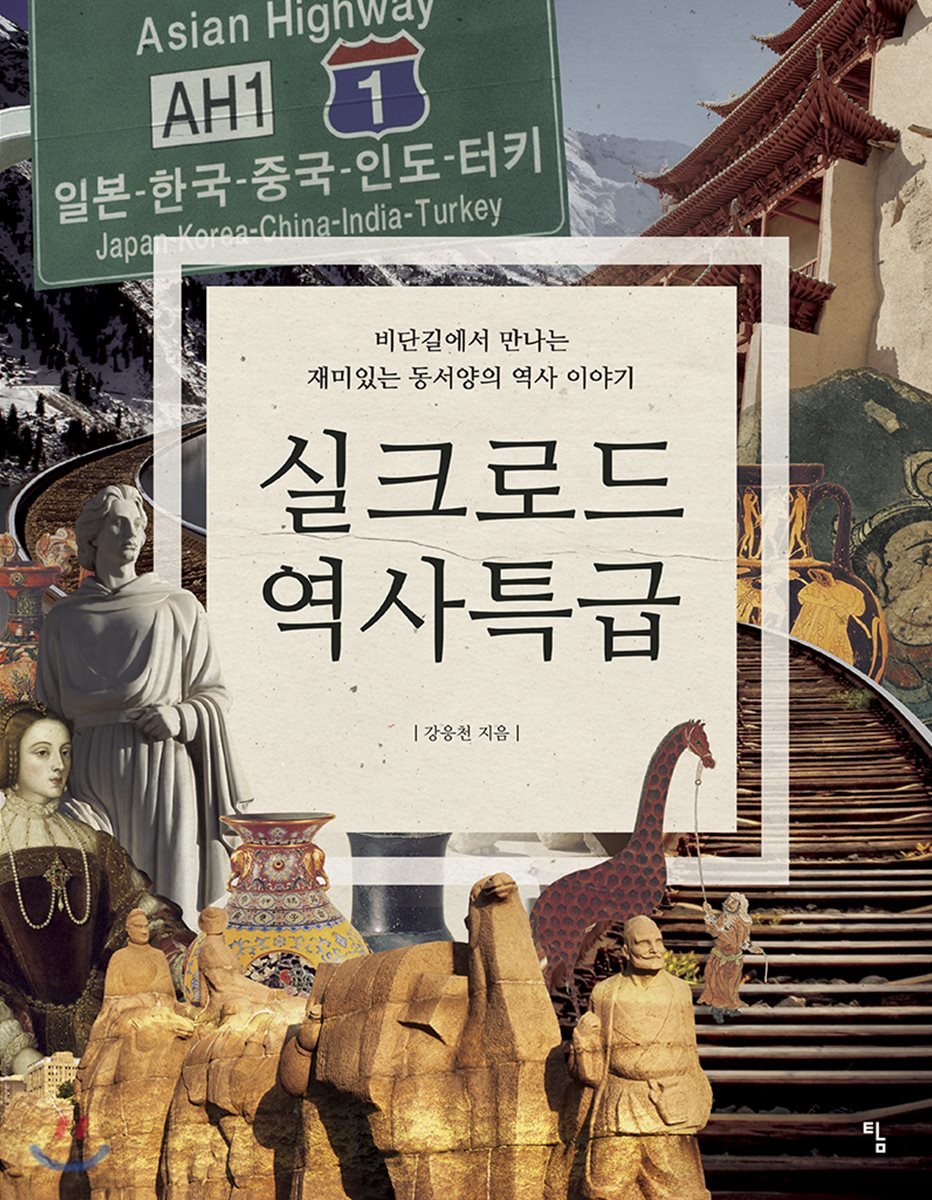
But just as my friends tilted their heads when they saw the AH1 sign earlier, there is a crucial obstacle preventing us from fully utilizing this modern Silk Road.
It is the division of North and South Korea.
We can freely travel to almost any country in the world with a South Korean passport, but we cannot go to the nearest country, North Korea.
Because our steps stop at the Military Demarcation Line, we cannot go beyond it on the Silk Road.
It might only take a few hours to drive through North Korea, but because those few hours are not allowed, we are deprived of the tens or hundreds of hours of freedom that the Silk Road offers.
Perhaps we only know of a few civilized nations in the East and the West that prospered on both sides of the Silk Road, and we may only remember a few of the cultural artifacts they exchanged along the Silk Road.
The great wave of history that occurred in the heart of the Eurasian continent may have been forgotten like a childhood dream.
From now on, I would like to travel with you to the forgotten Silk Road and witness the true face of its resurrected history and culture.
If you do this, you will surprisingly realize that the historical scenes that unfolded around the Silk Road are not unrelated to our country's history.
--- p.6
If you look at figures carved on ancient Greek statues or vessels made around 500 BC, they are often wrapped in fabrics that look light and luxurious, as if they could fly away.
The fabric is most likely silk.
Of course, since the Greeks did not know how to raise sericulture or weave silk, the silk came from China and was very expensive.
Unless you were a nobleman who could afford to indulge in luxury, you could not afford to wear silk clothes.
It wasn't just Greece.
A corpse dressed in silk was also discovered in a 5th century BC tomb near Stuttgart, Germany.
Chinese silk artifacts dating back to the 3rd century BC were also discovered in the Crimea region of Russia.
At that time, the Silk Road had not yet been officially opened by China.
So, even before China built and managed the roads to sell silk, silk was being sold across the Eurasian continent in places like Greece and Germany.
--- p.38
What exactly is the relationship between China's Uyghur minority and the Turks that would lead them to protest over the suffering of the Uyghurs in China? Turks consider the Uyghurs of China's Xinjiang Uyghur Autonomous Region, as well as the peoples of Azerbaijan, Uzbekistan, and Kazakhstan to the west, as fraternal peoples.
And the region of Central Asia where they live is called 'Turkestan'.
It means 'land of Türkiye'.
So what is the relationship between the Turks and the various peoples of Turkestan? This question holds the secret to understanding Central Asia today.
And the key to unlocking that secret is the Turkic empire that ruled over ancient Turkestan.
--- p.86
We can see Muslims living in Unified Silla all over Gyeongju.
In Oedong-eup, on the road from Gyeongju to Ulsan, there is the tomb of King Wonseong (reign 785-798), who ruled Unified Silla in the late 8th century.
In front of this tomb stand a pair of unmanned stone statues, each 2.5 meters tall.
There are also similar unmanned stone statues at the Heungdeok Royal Tomb in Angang-eup and the Heondeok Royal Tomb next to Bukcheon in Gyeongju.
--- p.122
In terms of timing, Zheng He reached the Indian Ocean almost a century before Columbus and Vasco da Gama.
Therefore, if we treat them fairly, it is right to say that all the great explorers of the West combined would not be able to match the number of Jeong Hwa alone.
Even today, in Malacca, a port city in Malaysia, and in Indonesia, Thailand, Myanmar, Cambodia, Vietnam, and the Philippines, you can find numerous relics honoring Zheng He as the god of the sea, and you can see that the Chinese people he nurtured are now traveling the seas and lands of the world.
--- p.182
But just as my friends tilted their heads when they saw the AH1 sign earlier, there is a crucial obstacle preventing us from fully utilizing this modern Silk Road.
It is the division of North and South Korea.
We can freely travel to almost any country in the world with a South Korean passport, but we cannot go to the nearest country, North Korea.
Because our steps stop at the Military Demarcation Line, we cannot go beyond it on the Silk Road.
It might only take a few hours to drive through North Korea, but because those few hours are not allowed, we are deprived of the tens or hundreds of hours of freedom that the Silk Road offers.
--- p.257
Publisher's Review
Stories of people taking their first steps into the unknown.
The Silk Road doesn't just have a lot of interesting stories to tell us.
The reason why the desert road along which Chinese silk was sold in the old days still holds significance for us today is that, first of all, this road is a site that vividly testifies to the history of exchange between the East and the West.
The East and West of the Eurasian continent, separated by mountainous regions and the grasslands and deserts to the north, developed distinct human civilizations. The former established itself as an empire called the Han Dynasty, and the latter as an empire called Rome.
The two empires that became the spires of this great civilization may not have even known that the other existed at first.
Then, someone decides to set out on a new path for the first time.
The purpose may be clear—conquest, negotiation, a request for help, or cultural exchange—but isn't it, in fact, a very fundamental and natural human desire? The truth that people live beyond those high mountains, beyond the deadly desert, and the hope that we might be able to communicate with them.
There are people who take the first step toward an uncertain future, and because of them, history truly begins.
In this book, you can meet the various aspects of those people.
Meeting 'Us Now' on the Old Desert Road
Another point of this book is that the Silk Road is not limited to the history of China and the Western Regions, but also has many interesting connections with our own history.
Just as we are playing 'find the same picture' rather than 'find the different picture', discovering the traces of the Silk Road that remain for us is very interesting and informative.
Why is it that a turbaned, hairy Western general statue guards the tomb of the Unified Silla king in Gyeongju? Why is the appearance of the well-known Silla man, Cheoyong, so clearly Arab? … There is a joy in knowing the story, as it fits together like a puzzle.
Beyond mere entertainment, what this suggests to us today is very important.
Just like the people from the West, people from unfamiliar and distant worlds have actually been living among us for a very long time.
This could be an opportunity to ask young people about how the myth of a "pure" people unmixed with the "outside" is now a fiction and dangerous.
It is also quite striking that the Silk Road travel route mentions the candlelight protests against the impeachment of our country's former president, and that the final destination ends with "Thinking about unification on the Silk Road: One Belt One Road and unification of North and South Korea."
The end of the desolate desert road that the 'Silk Merchant King Seobang' set out on in the old days does not end in desert, but seems to be telling us that it is the path to the future that the young people who will read this book must create together with people from other parts of the world.
Between reading and traveling
Author Kang Eung-cheon, a historical writer, has consistently written and produced books that explain Korean and global history and culture in an accessible and engaging way. He is also the host of MBC Standard FM's "History Journey" program.
He also has a special affection and deep understanding of the Silk Road, to the point where he oversees the 'Silk Road Special Exhibition' in Korea and guides the 'Silk Road Cultural Tour of the Eurasian Civilization Road'.
So, the feeling you get while reading this book is perhaps closer to a journey than reading.
It is not only a vast geographical journey that stretches from China, West Asia, Central Asia, and Europe, but also a long time journey that stretches from ancient times to the present.
The author's unique writing style, which moves freely and quickly between world history and Korean history, and the stories of various topics and people, will serve as a reliable time machine.
The Silk Road doesn't just have a lot of interesting stories to tell us.
The reason why the desert road along which Chinese silk was sold in the old days still holds significance for us today is that, first of all, this road is a site that vividly testifies to the history of exchange between the East and the West.
The East and West of the Eurasian continent, separated by mountainous regions and the grasslands and deserts to the north, developed distinct human civilizations. The former established itself as an empire called the Han Dynasty, and the latter as an empire called Rome.
The two empires that became the spires of this great civilization may not have even known that the other existed at first.
Then, someone decides to set out on a new path for the first time.
The purpose may be clear—conquest, negotiation, a request for help, or cultural exchange—but isn't it, in fact, a very fundamental and natural human desire? The truth that people live beyond those high mountains, beyond the deadly desert, and the hope that we might be able to communicate with them.
There are people who take the first step toward an uncertain future, and because of them, history truly begins.
In this book, you can meet the various aspects of those people.
Meeting 'Us Now' on the Old Desert Road
Another point of this book is that the Silk Road is not limited to the history of China and the Western Regions, but also has many interesting connections with our own history.
Just as we are playing 'find the same picture' rather than 'find the different picture', discovering the traces of the Silk Road that remain for us is very interesting and informative.
Why is it that a turbaned, hairy Western general statue guards the tomb of the Unified Silla king in Gyeongju? Why is the appearance of the well-known Silla man, Cheoyong, so clearly Arab? … There is a joy in knowing the story, as it fits together like a puzzle.
Beyond mere entertainment, what this suggests to us today is very important.
Just like the people from the West, people from unfamiliar and distant worlds have actually been living among us for a very long time.
This could be an opportunity to ask young people about how the myth of a "pure" people unmixed with the "outside" is now a fiction and dangerous.
It is also quite striking that the Silk Road travel route mentions the candlelight protests against the impeachment of our country's former president, and that the final destination ends with "Thinking about unification on the Silk Road: One Belt One Road and unification of North and South Korea."
The end of the desolate desert road that the 'Silk Merchant King Seobang' set out on in the old days does not end in desert, but seems to be telling us that it is the path to the future that the young people who will read this book must create together with people from other parts of the world.
Between reading and traveling
Author Kang Eung-cheon, a historical writer, has consistently written and produced books that explain Korean and global history and culture in an accessible and engaging way. He is also the host of MBC Standard FM's "History Journey" program.
He also has a special affection and deep understanding of the Silk Road, to the point where he oversees the 'Silk Road Special Exhibition' in Korea and guides the 'Silk Road Cultural Tour of the Eurasian Civilization Road'.
So, the feeling you get while reading this book is perhaps closer to a journey than reading.
It is not only a vast geographical journey that stretches from China, West Asia, Central Asia, and Europe, but also a long time journey that stretches from ancient times to the present.
The author's unique writing style, which moves freely and quickly between world history and Korean history, and the stories of various topics and people, will serve as a reliable time machine.
GOODS SPECIFICS
- Date of issue: April 15, 2019
- Page count, weight, size: 261 pages | 690g | 190*245*20mm
- ISBN13: 9788964963500
- ISBN10: 8964963504
You may also like
카테고리
korean


korean

![GQ KOREA Mark (Monthly): December [2025]](http://librairie.coreenne.fr/cdn/shop/files/8ef265dbbfbf186523ed75ba7319009d.jpg?v=1765340328&width=3840)


