

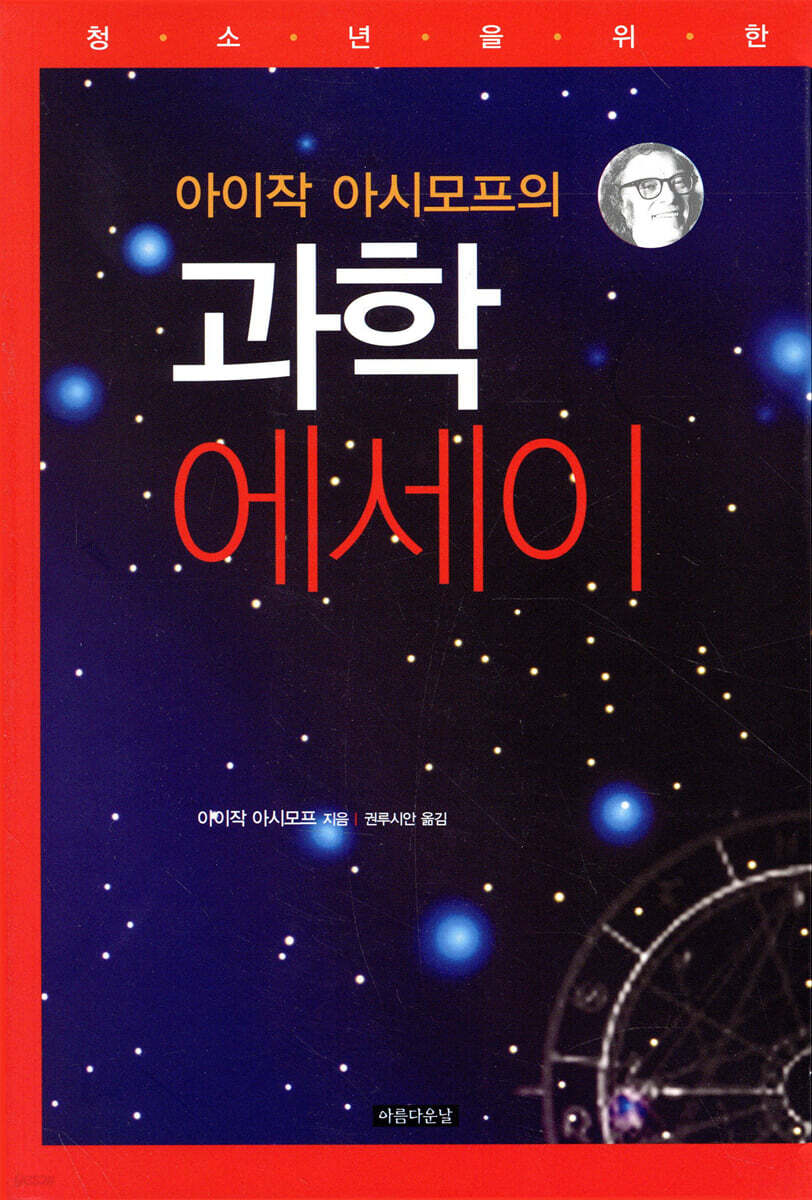
Isaac Asimov's Science Essays
 |
Description
Book Introduction
The word 'science' comes from the Latin word 'scientia', meaning knowledge, and refers to a systematic and consistent explanation of the real world.
It cannot be said that a billiards master necessarily studied physics and mechanics.
They play billiards by carefully applying scientific principles without understanding the complex mathematics of angular momentum generated by spinning the ball, let alone the law of conservation of momentum.
The same goes for pitchers who throw fastballs and breaking balls exquisitely or batters who hit the ball at the right time.
They have mastered applied mechanics techniques without even having learned the basics of physics.
In that sense, athletes, without even realizing it, are scientists who deal with physics, chefs with chemistry, gardeners with biology, sailors with meteorology, and artists with mathematics.
But what do we commonly call scientists? They are people who unravel nature's mysterious knots.
So why should we learn the difficult science of unraveling nature's mysterious knots? Modern society is built on science and engineering, the activities that apply science to everyday life.
Today, we use advanced devices such as cars, phones, televisions, and computers, all of which utilize scientific principles.
As science becomes more important, the jobs that people want and that pay well will go to people who understand science.
It cannot be said that a billiards master necessarily studied physics and mechanics.
They play billiards by carefully applying scientific principles without understanding the complex mathematics of angular momentum generated by spinning the ball, let alone the law of conservation of momentum.
The same goes for pitchers who throw fastballs and breaking balls exquisitely or batters who hit the ball at the right time.
They have mastered applied mechanics techniques without even having learned the basics of physics.
In that sense, athletes, without even realizing it, are scientists who deal with physics, chefs with chemistry, gardeners with biology, sailors with meteorology, and artists with mathematics.
But what do we commonly call scientists? They are people who unravel nature's mysterious knots.
So why should we learn the difficult science of unraveling nature's mysterious knots? Modern society is built on science and engineering, the activities that apply science to everyday life.
Today, we use advanced devices such as cars, phones, televisions, and computers, all of which utilize scientific principles.
As science becomes more important, the jobs that people want and that pay well will go to people who understand science.
index
preface
1.
A large meteor threatens Earth
2.
Shooting Star Hunting Contest
3.
Halley's Comet, made of ice and dust
4.
The never-ending homework, pie
5.
How did language evolve?
6.
Are we alone in the universe?
7.
The universe made up of the smallest things
8.
Acid rain protects living things
9.
Would you like to try on a diamond necklace?
10.
Why We Are Fascinated by Astrology
11.
97% of all life on Earth is insects.
12.
A creature that has lived for 4,900 years
13.
Let's live in an underground city
14.
The Earth revolves
15.
When pressure builds up, the Earth explodes.
16.
Evolve your robot
17.
All information is available in the computer library.
18.
What people do, what computers do
19.
What men do, what women do
20.
Why do humans go on expeditions?
21.
The moon is a perfect space station
22.
Space tourism in 2080 AD
23.
Do aliens exist?
24.
What if the ozone layer disappeared?
25.
The power of nature
26.
Two scientists who jointly proposed the theory of evolution
27.
The scholar who fell into the well
28.
Galileo's cipher letter
29.
Who was the first 'scientist'?
30.
A scientist who was terribly unlucky
31.
The man who 'saw' and 'discovered' Uranus
32.
The wronged scientist
33.
A masterpiece from prison
34.
The first step to becoming a scientist
35.
The Jade Rabbit and the Cassia Tree
36.
A flying saucer with a devil and an angel
37.
gold mined from the sun
38.
Great discoveries from failure
39.
How old is the Earth?
40.
Scientists who were hurt and committed suicide
41.
The oldest person to win a Nobel Prize
42.
A Special Reason Why You Should Know Science
43.
Science acts as its own police officer.
44.
Is science good or evil?
45.
Don't drop the nuclear bomb
46.
The tail wags the dog
47.
The Two Faces of Psychology
48.
The Twelve Horrors of Christmas
49.
The fun of traveling through fantasy worlds
50.
Jupiter and its sixteen moons
51.
Our eyes are increasingly widening as we look at the universe.
52.
How long will the universe continue to expand?
53.
A man who changed the scientific world
54.
Is there a fifth force?
55.
An animal far more dangerous than a dinosaur
56.
hot-blooded animal
57.
Speed and conditions for reaching the stars
58.
The last human on Earth
59.
What kind of 'Superman' do humans want to evolve into?
60.
fantasy about heroes
behind the book
1.
A large meteor threatens Earth
2.
Shooting Star Hunting Contest
3.
Halley's Comet, made of ice and dust
4.
The never-ending homework, pie
5.
How did language evolve?
6.
Are we alone in the universe?
7.
The universe made up of the smallest things
8.
Acid rain protects living things
9.
Would you like to try on a diamond necklace?
10.
Why We Are Fascinated by Astrology
11.
97% of all life on Earth is insects.
12.
A creature that has lived for 4,900 years
13.
Let's live in an underground city
14.
The Earth revolves
15.
When pressure builds up, the Earth explodes.
16.
Evolve your robot
17.
All information is available in the computer library.
18.
What people do, what computers do
19.
What men do, what women do
20.
Why do humans go on expeditions?
21.
The moon is a perfect space station
22.
Space tourism in 2080 AD
23.
Do aliens exist?
24.
What if the ozone layer disappeared?
25.
The power of nature
26.
Two scientists who jointly proposed the theory of evolution
27.
The scholar who fell into the well
28.
Galileo's cipher letter
29.
Who was the first 'scientist'?
30.
A scientist who was terribly unlucky
31.
The man who 'saw' and 'discovered' Uranus
32.
The wronged scientist
33.
A masterpiece from prison
34.
The first step to becoming a scientist
35.
The Jade Rabbit and the Cassia Tree
36.
A flying saucer with a devil and an angel
37.
gold mined from the sun
38.
Great discoveries from failure
39.
How old is the Earth?
40.
Scientists who were hurt and committed suicide
41.
The oldest person to win a Nobel Prize
42.
A Special Reason Why You Should Know Science
43.
Science acts as its own police officer.
44.
Is science good or evil?
45.
Don't drop the nuclear bomb
46.
The tail wags the dog
47.
The Two Faces of Psychology
48.
The Twelve Horrors of Christmas
49.
The fun of traveling through fantasy worlds
50.
Jupiter and its sixteen moons
51.
Our eyes are increasingly widening as we look at the universe.
52.
How long will the universe continue to expand?
53.
A man who changed the scientific world
54.
Is there a fifth force?
55.
An animal far more dangerous than a dinosaur
56.
hot-blooded animal
57.
Speed and conditions for reaching the stars
58.
The last human on Earth
59.
What kind of 'Superman' do humans want to evolve into?
60.
fantasy about heroes
behind the book
GOODS SPECIFICS
- Date of issue: October 20, 2007
- Page count, weight, size: 312 pages | 478g | 153*224*30mm
- ISBN13: 9788989354802
- ISBN10: 8989354803
You may also like
카테고리
korean


korean

![GQ KOREA Mark (Monthly): December [2025]](http://librairie.coreenne.fr/cdn/shop/files/8ef265dbbfbf186523ed75ba7319009d.jpg?v=1765340328&width=3840)


