

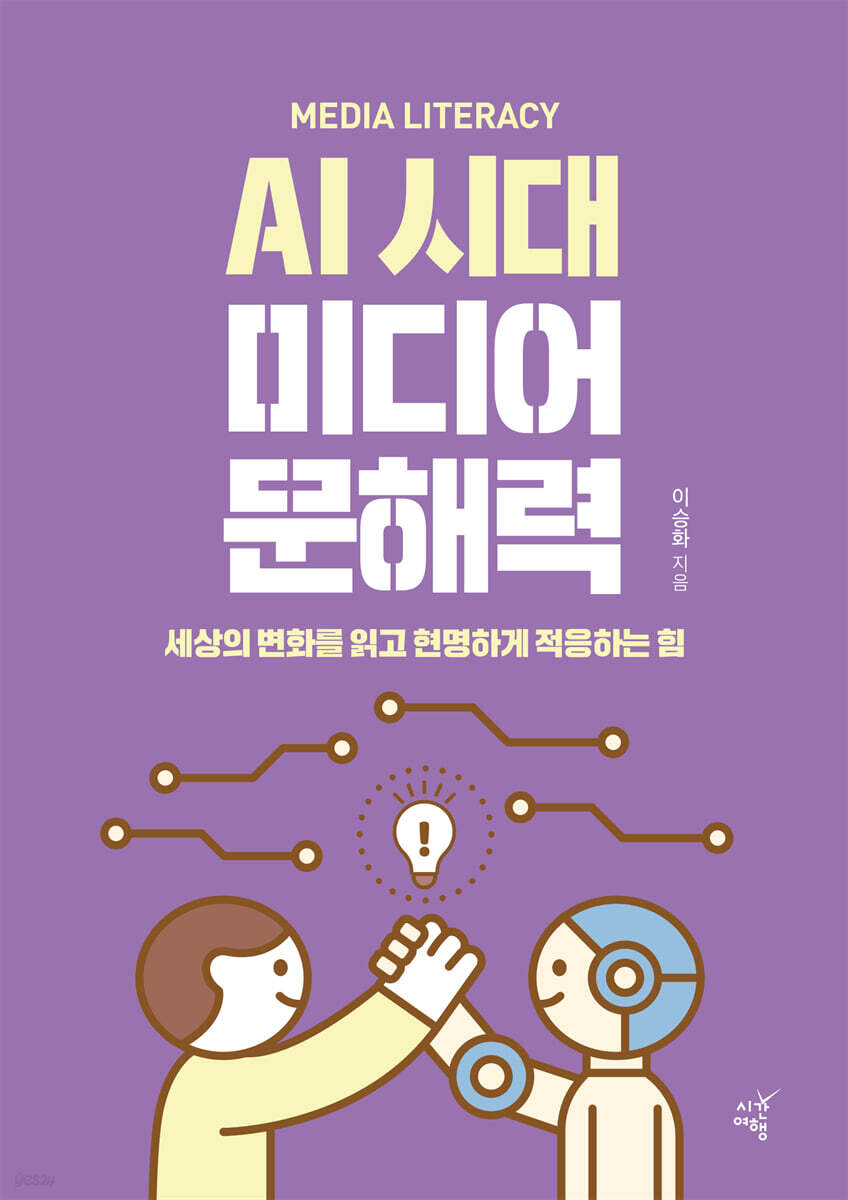
Media Literacy in the AI Era
 |
Description
Book Introduction
Media literacy essential in the AI era
The power to adapt wisely in a rapidly changing era
From the Fourth Industrial Revolution of 2016 to the metaverse during the pandemic in 2020, to generative AI represented by ChatGPT today, new keywords are buzzing the world every moment.
Especially in the era of artificial intelligence, the pace of technological development is accelerating and is having a significant impact on society.
Have you ever heard of the word "illiterate"? It refers to someone who can't read or understand letters properly.
Now its meaning is expanding.
Digital illiteracy and digital exclusion are representative examples.
The digital literacy gap is growing.
The ability to adapt is essential in these times.
The ability to keep up with the changing world and not be left out.
The process of reading the world and adapting wisely is important.
To do this, literacy, which is the ability to independently understand new stimuli, actively utilize them, and creatively express them, is essential.
The power to adapt wisely in a rapidly changing era
From the Fourth Industrial Revolution of 2016 to the metaverse during the pandemic in 2020, to generative AI represented by ChatGPT today, new keywords are buzzing the world every moment.
Especially in the era of artificial intelligence, the pace of technological development is accelerating and is having a significant impact on society.
Have you ever heard of the word "illiterate"? It refers to someone who can't read or understand letters properly.
Now its meaning is expanding.
Digital illiteracy and digital exclusion are representative examples.
The digital literacy gap is growing.
The ability to adapt is essential in these times.
The ability to keep up with the changing world and not be left out.
The process of reading the world and adapting wisely is important.
To do this, literacy, which is the ability to independently understand new stimuli, actively utilize them, and creatively express them, is essential.
index
│Introduction│Ultimately, literacy is the power to read and adapt to the world 4
Chapter 1 What is Media Literacy?
01 Living with Artificial Intelligence
The AI Era: The Singularity Arrives 17
The Power of Coping with Uncertainty 20
22 Things We Must Protect
02 Media that connects people
What is Media? 24
The media is made up of someone 26
There's no such thing as bad media!? 29
Media is ultimately about interaction 31
03 Understanding Media Literacy
Are you illiterate too? 34
The Concept of Media Literacy 36
Perspectives on Media Literacy 38
[Issue Discussion] Should AI be used for performance evaluations? 42
Chapter 2: Healthy Media Lifestyle
01 Self-control to overcome addiction
Breaking Free from Anxiety 47
Escape Media Addiction 51
Balancing with Self-Regulation 55
02 Access to good content
Imitation learning that I follow without realizing it 62
Let's at least avoid this 64
Why do yellow tags stick? 67
Don't be fooled by algorithms 70
03 Understanding subjectively
What is critical thinking? 76
Separating Subjective and Objective 82
Creating Your Own Meaning with Internalized Questions 86
[Issue Discussion] Can I make money using my data, as AI learns it? 90
Chapter 3 Media Literacy by Resolution
01 Changes in traditional media
From Analog to Digital, Book 95
A Harmony of Commerciality and Art: Film 102
02 The basic roots of the media ecosystem
The Money-Generating Housekeeper, Advertisement 109
News 114, the deliveryman of new information
03 Intuitive and subjective fun
Easy and intuitive appeal, comics and webtoons 123
Participation and Experience, Game 130
04 The Beginning of the Creator Era
Another meeting place, social media 137
Small but influential, personal broadcasting 145
[Issue Discussion] Can Conversations with AI Help Social Development? 152
Chapter 4: Using Media Creatively
01 Living and Moving Media Trends
Everyone is both a consumer and a producer 157
Media Transformation as Seen Through the History of Social Media 159
OSMU and Transmedia 164: Across Media
Hyper-realism that is more real than reality 170
Content with AI 172
02 Studying with Media
Self-directed learning through social media 176
Effective Online Lecture Study Methods 182
Media-Based Career Alignment 185
4 Steps to Finding Your Dream Career Path 188
03 Using Generative AI
Creating Design Content with Canva 194
Create your own music with Suno AI 198
Creating Videos with VREW 201
Writing in Luton 204
[Issue Discussion] Are AI Content Copyright Issues Concerned? 212
│Exiting Remarks │If AI Does Everything Anyway, What Will We Do? 214
Chapter 1 What is Media Literacy?
01 Living with Artificial Intelligence
The AI Era: The Singularity Arrives 17
The Power of Coping with Uncertainty 20
22 Things We Must Protect
02 Media that connects people
What is Media? 24
The media is made up of someone 26
There's no such thing as bad media!? 29
Media is ultimately about interaction 31
03 Understanding Media Literacy
Are you illiterate too? 34
The Concept of Media Literacy 36
Perspectives on Media Literacy 38
[Issue Discussion] Should AI be used for performance evaluations? 42
Chapter 2: Healthy Media Lifestyle
01 Self-control to overcome addiction
Breaking Free from Anxiety 47
Escape Media Addiction 51
Balancing with Self-Regulation 55
02 Access to good content
Imitation learning that I follow without realizing it 62
Let's at least avoid this 64
Why do yellow tags stick? 67
Don't be fooled by algorithms 70
03 Understanding subjectively
What is critical thinking? 76
Separating Subjective and Objective 82
Creating Your Own Meaning with Internalized Questions 86
[Issue Discussion] Can I make money using my data, as AI learns it? 90
Chapter 3 Media Literacy by Resolution
01 Changes in traditional media
From Analog to Digital, Book 95
A Harmony of Commerciality and Art: Film 102
02 The basic roots of the media ecosystem
The Money-Generating Housekeeper, Advertisement 109
News 114, the deliveryman of new information
03 Intuitive and subjective fun
Easy and intuitive appeal, comics and webtoons 123
Participation and Experience, Game 130
04 The Beginning of the Creator Era
Another meeting place, social media 137
Small but influential, personal broadcasting 145
[Issue Discussion] Can Conversations with AI Help Social Development? 152
Chapter 4: Using Media Creatively
01 Living and Moving Media Trends
Everyone is both a consumer and a producer 157
Media Transformation as Seen Through the History of Social Media 159
OSMU and Transmedia 164: Across Media
Hyper-realism that is more real than reality 170
Content with AI 172
02 Studying with Media
Self-directed learning through social media 176
Effective Online Lecture Study Methods 182
Media-Based Career Alignment 185
4 Steps to Finding Your Dream Career Path 188
03 Using Generative AI
Creating Design Content with Canva 194
Create your own music with Suno AI 198
Creating Videos with VREW 201
Writing in Luton 204
[Issue Discussion] Are AI Content Copyright Issues Concerned? 212
│Exiting Remarks │If AI Does Everything Anyway, What Will We Do? 214
Into the book
※ Literacy begins with reading and writing, but eventually its scope expands to the world.
The media is a medium that actively reflects this world.
If we expand the text to be read into the world, we can say that literacy includes understanding the world and expressing one's thoughts to the world.
This is similar to the power to adapt to the world and live independently.
The world you will live in from now on will undergo more dynamic changes.
Literacy then gives you the power to live independently in the world.
---「7p.
Introductory text: “Ultimately, literacy is the power to read and adapt to the world.”
※ AI is getting smarter and smarter.
We need to be more than just givers of instructions; we need to be people who can think ahead of AI and ask meaningful questions.
So, prompts, which are commands or questions that can be used to effectively instruct AI, are becoming increasingly important.
Ultimately, you need to be able to review and evaluate whether your desired intentions have been well reflected.
The standard is precisely the subjectivity and creativity that you set for yourself.
In the future, the ability to think on one's own terms and express it creatively will become more important.
This is why subjectivity and creativity are considered the "irreplaceable qualities" we will need to safeguard in the future.
---「23p.
Chapter 1.
From "Media Literacy"
※ It is wise to overcome the temptation of unlimited refills and eat according to your health, taste, and constitution.
In this 'age of excess', it is important to enjoy and savor things with self-restraint.
Take a deep breath and enjoy it.
In the logic of 'hurry hurry', much of what is covered in this book feels luxurious.
Time to read and think about the work, time to question it, time to discuss it, time to compare it with other media, time to transform and create.
These are times you have to create for yourself.
In that sense, try to free yourself from the unreasonable obsession with ‘hurry up, hurry up’ and regain some peace of mind.
---「51p.
Chapter 2.
From “Healthy Media Life”
※In particular, cyber-reckoning is the biggest headache in the fake news problem.
There are many cases where information is spread by exaggerating and distorting it without fact-checking, invading an individual's privacy and damaging their reputation.
You should be careful because most of these are acts intended to attract public attention and gain profit.
In the age of artificial intelligence, fake news creates even more realistic fakes, called deepfakes.
It creates realistic images of famous politicians, celebrities, and even ordinary people's faces and actions.
It is difficult to distinguish with the human eye.
It's a world where you can make up stories out of nothing and even smoke can come out of a chimney when there's nothing.
---「120p.
Chapter 3.
From “Media Literacy According to the Results”
※We need to have the mindset that we are using AI not to write easily and conveniently, but to write better.
Easy and convenient writing is boring and can be written by anyone. With the help of AI, we need to create compelling writing that reflects our unique thoughts and experiences. It's important to practice collaborating with AI to create writing that reflects our unique personality and thoughts.
---「211p.
Chapter 4.
From “Using Media Creatively”
※"If AI does everything anyway... what are we going to do? I feel like I'll be replaced no matter what I do, so I'm not motivated."
First of all, there is an often-quoted answer to this question.
“AI won’t replace you, it’ll be the people who use AI who will replace you.”
There is no need to view AI itself as a negative entity.
Think of it as something that opens up a new market, not something that is taking away your rice bowl.
We can decide how we treat that object.
It's a difference in mindset and attitude.
The media is a medium that actively reflects this world.
If we expand the text to be read into the world, we can say that literacy includes understanding the world and expressing one's thoughts to the world.
This is similar to the power to adapt to the world and live independently.
The world you will live in from now on will undergo more dynamic changes.
Literacy then gives you the power to live independently in the world.
---「7p.
Introductory text: “Ultimately, literacy is the power to read and adapt to the world.”
※ AI is getting smarter and smarter.
We need to be more than just givers of instructions; we need to be people who can think ahead of AI and ask meaningful questions.
So, prompts, which are commands or questions that can be used to effectively instruct AI, are becoming increasingly important.
Ultimately, you need to be able to review and evaluate whether your desired intentions have been well reflected.
The standard is precisely the subjectivity and creativity that you set for yourself.
In the future, the ability to think on one's own terms and express it creatively will become more important.
This is why subjectivity and creativity are considered the "irreplaceable qualities" we will need to safeguard in the future.
---「23p.
Chapter 1.
From "Media Literacy"
※ It is wise to overcome the temptation of unlimited refills and eat according to your health, taste, and constitution.
In this 'age of excess', it is important to enjoy and savor things with self-restraint.
Take a deep breath and enjoy it.
In the logic of 'hurry hurry', much of what is covered in this book feels luxurious.
Time to read and think about the work, time to question it, time to discuss it, time to compare it with other media, time to transform and create.
These are times you have to create for yourself.
In that sense, try to free yourself from the unreasonable obsession with ‘hurry up, hurry up’ and regain some peace of mind.
---「51p.
Chapter 2.
From “Healthy Media Life”
※In particular, cyber-reckoning is the biggest headache in the fake news problem.
There are many cases where information is spread by exaggerating and distorting it without fact-checking, invading an individual's privacy and damaging their reputation.
You should be careful because most of these are acts intended to attract public attention and gain profit.
In the age of artificial intelligence, fake news creates even more realistic fakes, called deepfakes.
It creates realistic images of famous politicians, celebrities, and even ordinary people's faces and actions.
It is difficult to distinguish with the human eye.
It's a world where you can make up stories out of nothing and even smoke can come out of a chimney when there's nothing.
---「120p.
Chapter 3.
From “Media Literacy According to the Results”
※We need to have the mindset that we are using AI not to write easily and conveniently, but to write better.
Easy and convenient writing is boring and can be written by anyone. With the help of AI, we need to create compelling writing that reflects our unique thoughts and experiences. It's important to practice collaborating with AI to create writing that reflects our unique personality and thoughts.
---「211p.
Chapter 4.
From “Using Media Creatively”
※"If AI does everything anyway... what are we going to do? I feel like I'll be replaced no matter what I do, so I'm not motivated."
First of all, there is an often-quoted answer to this question.
“AI won’t replace you, it’ll be the people who use AI who will replace you.”
There is no need to view AI itself as a negative entity.
Think of it as something that opens up a new market, not something that is taking away your rice bowl.
We can decide how we treat that object.
It's a difference in mindset and attitude.
---「214p.
From "Outgoing Remarks: What Will We Do If AI Does Everything Anyway?"
From "Outgoing Remarks: What Will We Do If AI Does Everything Anyway?"
Publisher's Review
What is Media Literacy?
We can say that we live in the age of media.
Nowadays, people get most of their information from media such as news, YouTube, and social media.
I also spend my free time watching movies, reading webtoons, and playing games.
Media offers anyone the opportunity to become a creator and influential influencer.
It is a structure that is directly linked to career path and economic benefits.
This media that someone creates has many positive aspects, but it also has negative aspects.
Fake news is becoming increasingly difficult to distinguish, algorithms that lead to over-reliance on provocative content, numerous voice phishing scams, and digital sex crimes are becoming increasingly problematic.
Media literacy is the ability to approach media wisely, understand it critically, communicate socially, and express it creatively, all while facing its dualities.
The influence of media is growing even more as artificial intelligence technology is incorporated.
In line with this, our media literacy must also advance to a higher level.
An attitude essential for the youth who will live in the future
"If AI does everything anyway... what are we going to do? I feel like I'll be replaced no matter what I do, so I'm not motivated."
This is a question and complaint from a student.
In this rapidly changing era, many students feel helpless.
It's hard to keep up with the changing times, so I understand the desire to stop and rest.
There is something I always say in such cases.
“AI won’t replace you, it’ll be the people who use AI who will replace you.” Don’t be afraid of AI, but be afraid of yourself giving up.
We must develop the ability to adapt to the changing times.
Rather, technological advancements offer greater opportunities and possibilities. AI tools narrow the gap in individual abilities and open the door to transforming ideas into reality.
In times like these, what is important is a proactive and enterprising attitude.
With media literacy, no change is fearless.
Welcome the era of change with a positive attitude.
We can say that we live in the age of media.
Nowadays, people get most of their information from media such as news, YouTube, and social media.
I also spend my free time watching movies, reading webtoons, and playing games.
Media offers anyone the opportunity to become a creator and influential influencer.
It is a structure that is directly linked to career path and economic benefits.
This media that someone creates has many positive aspects, but it also has negative aspects.
Fake news is becoming increasingly difficult to distinguish, algorithms that lead to over-reliance on provocative content, numerous voice phishing scams, and digital sex crimes are becoming increasingly problematic.
Media literacy is the ability to approach media wisely, understand it critically, communicate socially, and express it creatively, all while facing its dualities.
The influence of media is growing even more as artificial intelligence technology is incorporated.
In line with this, our media literacy must also advance to a higher level.
An attitude essential for the youth who will live in the future
"If AI does everything anyway... what are we going to do? I feel like I'll be replaced no matter what I do, so I'm not motivated."
This is a question and complaint from a student.
In this rapidly changing era, many students feel helpless.
It's hard to keep up with the changing times, so I understand the desire to stop and rest.
There is something I always say in such cases.
“AI won’t replace you, it’ll be the people who use AI who will replace you.” Don’t be afraid of AI, but be afraid of yourself giving up.
We must develop the ability to adapt to the changing times.
Rather, technological advancements offer greater opportunities and possibilities. AI tools narrow the gap in individual abilities and open the door to transforming ideas into reality.
In times like these, what is important is a proactive and enterprising attitude.
With media literacy, no change is fearless.
Welcome the era of change with a positive attitude.
GOODS SPECIFICS
- Date of issue: October 5, 2025
- Page count, weight, size: 220 pages | 356g | 145*205*13mm
- ISBN13: 9791190301374
You may also like
카테고리
korean


korean

![GQ KOREA Mark (Monthly): December [2025]](http://librairie.coreenne.fr/cdn/shop/files/8ef265dbbfbf186523ed75ba7319009d.jpg?v=1765340328&width=3840)


