

Be free with music
 |
Description
Book Introduction
The first Asian to win an Academy Award for Best Original Score, a Golden Globe Award, and a Grammy Award
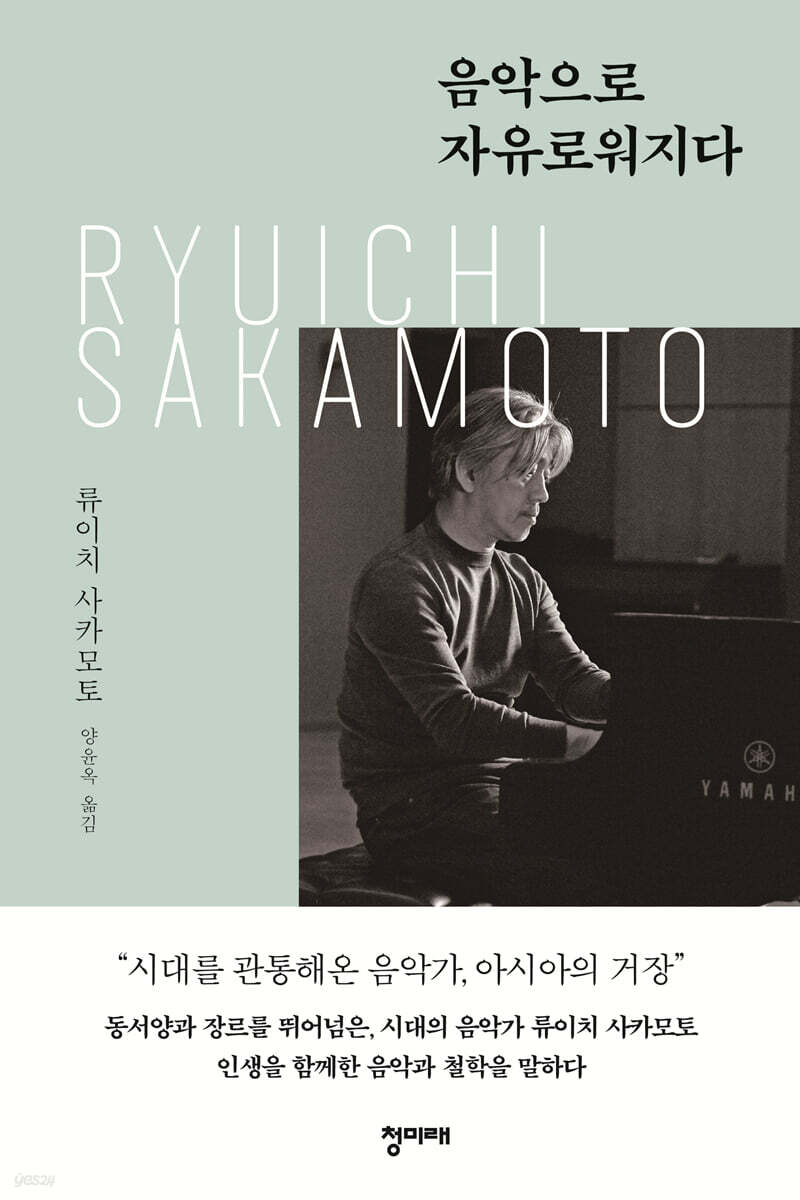
Ryuichi Sakamoto's first autobiography telling the story of his life.
The first autobiography of world-renowned musician Ryuichi Sakamoto, who first gained fame in the West and is now familiar to us, has returned to readers after about 10 years.
"Merry Christmas Mr.
He is a composer of film scores widely known in Korea, including “Lawrence” and “Rain,” and a pioneer of electronic music. He has also worked as a film actor, model, and social activist. In this book, he looks back on half of his life and talks about his growth process and the musical world surrounding him.
In it, a young child who composed "Rabbit's Song" as a kindergarten homework grows up to be a member of the world-famous band YMO, a solo musician, and a famous film composer, and a teenage boy who led the student movement by leading his schoolmates transforms into a social activist who raises his voice against war and environmental issues.
This book, a compilation of interviews conducted in the magazine "ENGINE" from 2007 to 2009, will invite readers into the world of Ryuichi Sakamoto, who gained fame as a master of Asia, by honestly revealing his concerns as a musician and his thoughts as a contemporary.
Ryuichi Sakamoto's first autobiography telling the story of his life.
The first autobiography of world-renowned musician Ryuichi Sakamoto, who first gained fame in the West and is now familiar to us, has returned to readers after about 10 years.
"Merry Christmas Mr.
He is a composer of film scores widely known in Korea, including “Lawrence” and “Rain,” and a pioneer of electronic music. He has also worked as a film actor, model, and social activist. In this book, he looks back on half of his life and talks about his growth process and the musical world surrounding him.
In it, a young child who composed "Rabbit's Song" as a kindergarten homework grows up to be a member of the world-famous band YMO, a solo musician, and a famous film composer, and a teenage boy who led the student movement by leading his schoolmates transforms into a social activist who raises his voice against war and environmental issues.
This book, a compilation of interviews conducted in the magazine "ENGINE" from 2007 to 2009, will invite readers into the world of Ryuichi Sakamoto, who gained fame as a master of Asia, by honestly revealing his concerns as a musician and his thoughts as a contemporary.
- You can preview some of the book's contents.
Preview
index
prolog
Part 1 1952-1969
01 Rabbit's Song
02 Me in the Mirror, the World in the Sheet Music
03 The Beatles
04 I like music quite a bit.
05 The beginning of a special time
06 A Rosy Life
07 From 1967 to 1969
08 The point where two streams intersect
Part 2 1970-1977
09 Hibiya Night Concert Hall and Mr. Takemitsu
10 Ethnic Music, Electronic Music, and Marriage
11. Go on a journey along the stage
12 People with the same language
13 Countdown
Part 3 1978-1985
14 YMO, start
15 YMO, to the world
16 Rebellion against YMO
17 When to go on the road
18 Music Encyclopedia
Part 4 1986-2000
19 In Beijing
20 Make music right now
21 Unexpected Gifts
22 To New York with family
23 Heartbeat
The End of the 24th Century
Part 5 2001-
25 The Day the World Changed
26 New Era Work
27 Music as it is
Epilogue
annual report
Search
Part 1 1952-1969
01 Rabbit's Song
02 Me in the Mirror, the World in the Sheet Music
03 The Beatles
04 I like music quite a bit.
05 The beginning of a special time
06 A Rosy Life
07 From 1967 to 1969
08 The point where two streams intersect
Part 2 1970-1977
09 Hibiya Night Concert Hall and Mr. Takemitsu
10 Ethnic Music, Electronic Music, and Marriage
11. Go on a journey along the stage
12 People with the same language
13 Countdown
Part 3 1978-1985
14 YMO, start
15 YMO, to the world
16 Rebellion against YMO
17 When to go on the road
18 Music Encyclopedia
Part 4 1986-2000
19 In Beijing
20 Make music right now
21 Unexpected Gifts
22 To New York with family
23 Heartbeat
The End of the 24th Century
Part 5 2001-
25 The Day the World Changed
26 New Era Work
27 Music as it is
Epilogue
annual report
Search
Detailed image
Publisher's Review
Ryuichi Sakamoto, a musician of the era who transcended East and West and genres
Talking about the music and philosophy that have accompanied my life
From my first exposure to piano and composition in kindergarten to Debussy, the Beatles, John Cage, and YMO,
The musical world surrounding Ryuichi Sakamoto
Ryuichi Sakamoto first encountered piano and composition in kindergarten as a child.
He said that he felt both a “tingling joy” and a “sense of discomfort” at the moment when his experiences were reborn as music, and he continued to study music throughout his teenage years, slowly expanding his world to include classical music, pop music, and even contemporary music.
At one time, he considered himself the reincarnation of Debussy, but he soon became interested in ethnic music beyond Western music, such as that of India, Okinawa, and Africa, and sought ways to popularize music through electronic music, pursuing “music for the people.”
His activities in the band YMO with Haruomi Hosono and Yukihiro Takahashi brought about a major change for him, who had been living each day as a “day laborer” musician after graduating from graduate school.
Unlike Sakamoto, who had been exposed to contemporary music since childhood and studied under university professors, the music of Hosono and Takahashi, which was based on rock and pop, provided new stimulation to Sakamoto and provided him with an opportunity to absorb a variety of music.
At one time, YMO's fame and the conflicts among its members acted as oppressive forces on him, but Ryuichi Sakamoto confesses that it was through this process that he finally became an "adult."
Working on "The Last Emperor" with world-renowned film director Bertolucci
There are many adjectives that describe Ryuichi Sakamoto, but the genre that brought him to the public's attention is film music.
In this book, he lovingly describes his work on the film "The Last Emperor," which brought him fame as a film composer.
Having initially participated in this film as an actor, he was deeply troubled by the role of the imperialist Masahiko Amakasu, and felt a sense of discomfort on the set, which still had traces of the Japanese puppet state of Manchukuo.
Then, at the sudden request of director Bertolucci, I composed live music to be used on set, and ended up taking charge of the entire film score.
At a time when the Internet was not yet developed, Sakamoto and the film production team created the music in two weeks by exchanging data via the BBC and NHK lines, and through this music, he became the first Asian to win the Academy Award for Best Original Score.
From a teenage boy who led the student movement
As a social activist who raises his voice on anti-war and environmental issues
Ryuichi Sakamoto was a member of the Zenkoku Struggle Generation, a representative student movement in Japan, and was a rare figure in his teens who led the student movement.
He led a boycott of classes, calling for the abolition of school uniforms and hats, and the abolition of exams and student reports. Even after entering university, he preferred to go to demonstrations and breathe with the people rather than on campus.
This movement was further solidified by the 9/11 terrorist attacks, which Sakamoto witnessed firsthand, and led him to raise his voice for peace and anti-war.
He also started the “More Trees” project to combat global warming, conscious that the problems of civil war and famine are essentially linked to environmental issues.
At the end of the book, Ryuichi Sakamoto states that it was purely thanks to the environment he was given that he was able to call himself a musician.
In keeping with this, the book contains stories of various arts that influenced Sakamoto, including music, literature, and film, as well as personal stories about his family, friends, love lives, and marriage.
What he encountered and absorbed from childhood continues to weave his artistic world to this day.
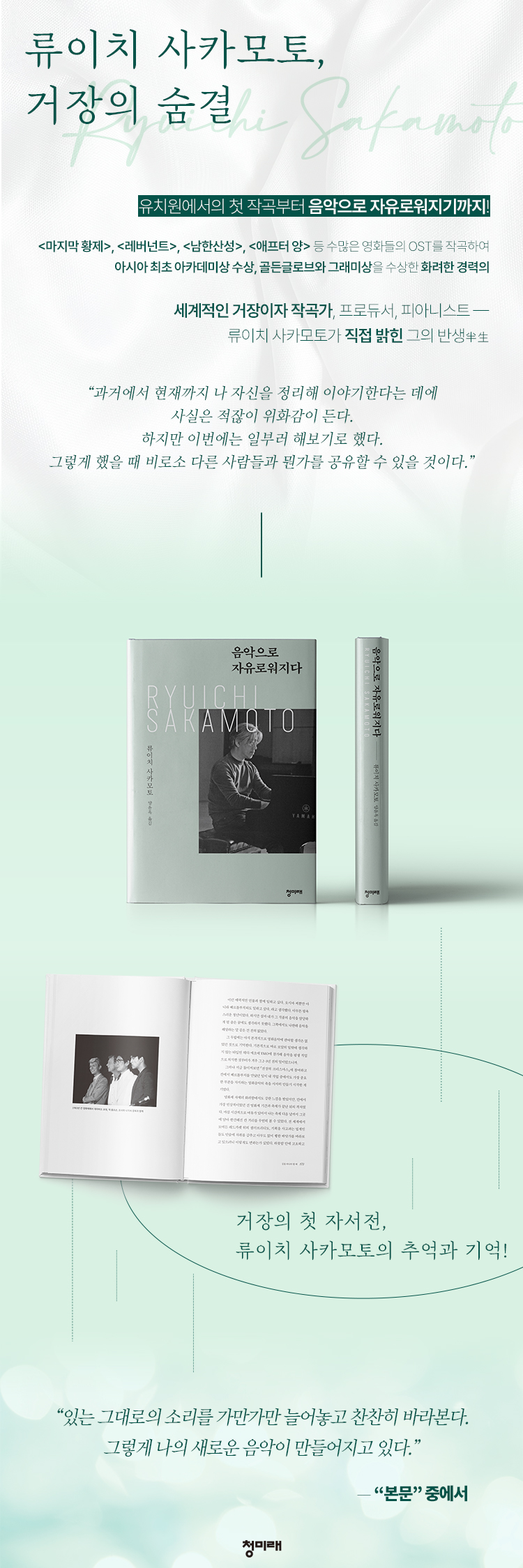
This book, which vividly depicts Ryuichi Sakamoto's life story through photographs, is his first autobiography and will be a wonderful gift for his domestic fans.
Talking about the music and philosophy that have accompanied my life
From my first exposure to piano and composition in kindergarten to Debussy, the Beatles, John Cage, and YMO,
The musical world surrounding Ryuichi Sakamoto
Ryuichi Sakamoto first encountered piano and composition in kindergarten as a child.
He said that he felt both a “tingling joy” and a “sense of discomfort” at the moment when his experiences were reborn as music, and he continued to study music throughout his teenage years, slowly expanding his world to include classical music, pop music, and even contemporary music.
At one time, he considered himself the reincarnation of Debussy, but he soon became interested in ethnic music beyond Western music, such as that of India, Okinawa, and Africa, and sought ways to popularize music through electronic music, pursuing “music for the people.”
His activities in the band YMO with Haruomi Hosono and Yukihiro Takahashi brought about a major change for him, who had been living each day as a “day laborer” musician after graduating from graduate school.
Unlike Sakamoto, who had been exposed to contemporary music since childhood and studied under university professors, the music of Hosono and Takahashi, which was based on rock and pop, provided new stimulation to Sakamoto and provided him with an opportunity to absorb a variety of music.
At one time, YMO's fame and the conflicts among its members acted as oppressive forces on him, but Ryuichi Sakamoto confesses that it was through this process that he finally became an "adult."
Working on "The Last Emperor" with world-renowned film director Bertolucci
There are many adjectives that describe Ryuichi Sakamoto, but the genre that brought him to the public's attention is film music.
In this book, he lovingly describes his work on the film "The Last Emperor," which brought him fame as a film composer.
Having initially participated in this film as an actor, he was deeply troubled by the role of the imperialist Masahiko Amakasu, and felt a sense of discomfort on the set, which still had traces of the Japanese puppet state of Manchukuo.
Then, at the sudden request of director Bertolucci, I composed live music to be used on set, and ended up taking charge of the entire film score.
At a time when the Internet was not yet developed, Sakamoto and the film production team created the music in two weeks by exchanging data via the BBC and NHK lines, and through this music, he became the first Asian to win the Academy Award for Best Original Score.
From a teenage boy who led the student movement
As a social activist who raises his voice on anti-war and environmental issues
Ryuichi Sakamoto was a member of the Zenkoku Struggle Generation, a representative student movement in Japan, and was a rare figure in his teens who led the student movement.
He led a boycott of classes, calling for the abolition of school uniforms and hats, and the abolition of exams and student reports. Even after entering university, he preferred to go to demonstrations and breathe with the people rather than on campus.
This movement was further solidified by the 9/11 terrorist attacks, which Sakamoto witnessed firsthand, and led him to raise his voice for peace and anti-war.
He also started the “More Trees” project to combat global warming, conscious that the problems of civil war and famine are essentially linked to environmental issues.
At the end of the book, Ryuichi Sakamoto states that it was purely thanks to the environment he was given that he was able to call himself a musician.
In keeping with this, the book contains stories of various arts that influenced Sakamoto, including music, literature, and film, as well as personal stories about his family, friends, love lives, and marriage.
What he encountered and absorbed from childhood continues to weave his artistic world to this day.
This book, which vividly depicts Ryuichi Sakamoto's life story through photographs, is his first autobiography and will be a wonderful gift for his domestic fans.
GOODS SPECIFICS
- Date of issue: April 3, 2023
- Format: Hardcover book binding method guide
- Page count, weight, size: 298 pages | 472g | 135*205*24mm
- ISBN13: 9788986836882
- ISBN10: 8986836882
You may also like
카테고리
korean


korean

![GQ KOREA Mark (Monthly): December [2025]](http://librairie.coreenne.fr/cdn/shop/files/8ef265dbbfbf186523ed75ba7319009d.jpg?v=1765340328&width=3840)


