

Literary Stories: 6: Three Keyword Openings
 |
Description
Book Introduction
The National Association of Korean Language Teachers analyzed it with three keywords:
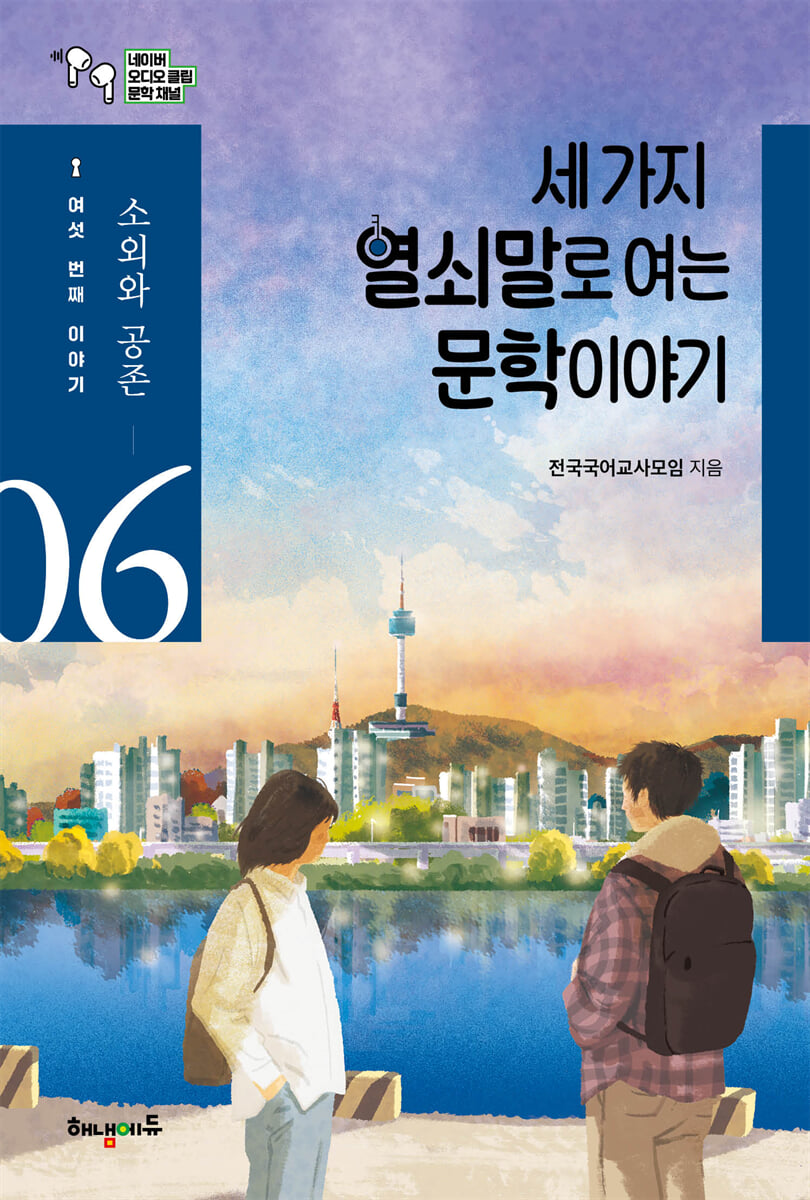
The sixth story in the commentary on must-read literature for young people: "Alienation and Coexistence."
Since 2018, the National Korean Language Teachers Association has been consistently introducing various literary works through the Naver Audio Clip channel, "Literary Stories Opened with Three Keywords," with in-depth and engaging commentary.
The series, “Literary Stories Opened with Three Keyword Words,” is a new compilation of recordings made over eight years for young people and general readers who enjoy literature.
This book extracts three keywords that are essential for understanding a literary work and develops the story around them.
Keywords extracted by Korean language teachers teaching literature in schools shine like stars, revealing the hidden meaning of literary works.
Even though it is a sharp and profound literary criticism and commentary, readers feel as if they are listening to a chatterbox, because the tone of the book is alive and well, as if they were sitting face to face with someone and having a lively conversation.
Each volume contains commentaries on approximately 40 literary works.
In the newly published “Sixth Story_Alienation and Coexistence,” you can find not only popular works such as “Your Heaven” and “Seoul, Winter 1964,” but also many works that have never been explained in the media before.
The selection of works covers a wide range of eras and themes, from must-reads featured in textbooks to works currently enjoying popularity.
The diversity of authors is also a strength of this book.
The book includes commentary on the works of a diverse group of authors, from long-time readers' favorites like Lee Cheong-jun, Yang Gui-ja, Park Wan-seo, and Jo Se-hee, to recent famous and emerging authors like Gong Seon-ok, Kim Ae-ran, Lee Kkot-nim, and Ruri.
Beginning with “The First Story_Growth,” continuing with “The Second Story_History,” “The Third Story_Love,” “The Fourth Story_Labor and Daily Life,” “The Fifth Story_Humanity and Art,” and finally with the recently published “The Sixth Story_Alienation and Coexistence,” 『Literary Stories Opened by Three Keywords』 will be completed in six volumes and will establish itself as a meaningful series that opens up the depth of literature.
The sixth story in the commentary on must-read literature for young people: "Alienation and Coexistence."
Since 2018, the National Korean Language Teachers Association has been consistently introducing various literary works through the Naver Audio Clip channel, "Literary Stories Opened with Three Keywords," with in-depth and engaging commentary.
The series, “Literary Stories Opened with Three Keyword Words,” is a new compilation of recordings made over eight years for young people and general readers who enjoy literature.
This book extracts three keywords that are essential for understanding a literary work and develops the story around them.
Keywords extracted by Korean language teachers teaching literature in schools shine like stars, revealing the hidden meaning of literary works.
Even though it is a sharp and profound literary criticism and commentary, readers feel as if they are listening to a chatterbox, because the tone of the book is alive and well, as if they were sitting face to face with someone and having a lively conversation.
Each volume contains commentaries on approximately 40 literary works.
In the newly published “Sixth Story_Alienation and Coexistence,” you can find not only popular works such as “Your Heaven” and “Seoul, Winter 1964,” but also many works that have never been explained in the media before.
The selection of works covers a wide range of eras and themes, from must-reads featured in textbooks to works currently enjoying popularity.
The diversity of authors is also a strength of this book.
The book includes commentary on the works of a diverse group of authors, from long-time readers' favorites like Lee Cheong-jun, Yang Gui-ja, Park Wan-seo, and Jo Se-hee, to recent famous and emerging authors like Gong Seon-ok, Kim Ae-ran, Lee Kkot-nim, and Ruri.
Beginning with “The First Story_Growth,” continuing with “The Second Story_History,” “The Third Story_Love,” “The Fourth Story_Labor and Daily Life,” “The Fifth Story_Humanity and Art,” and finally with the recently published “The Sixth Story_Alienation and Coexistence,” 『Literary Stories Opened by Three Keywords』 will be completed in six volumes and will establish itself as a meaningful series that opens up the depth of literature.
index
Part 1 Living Together
Lee Cheong-jun / Your Heaven
Ruri/ Long Long Night
Jeong Se-rang/Reset
Jeong-eun/ Time to listen to a walk
Pyo Myung-hee / One Day Refugee
Kim Cho-yeop / Greenhouse at the End of the Earth
Nam Yu-ha/ blue hair
Gu Byeong-mo / Your Neighbor's Table
Kim Won-il / Meditations on the Toad
Part 2 In an Absurd World
Jo Se-hee / Möbius Strip
Yoon Heung-gil / The Man Left with Nine Pairs of Shoes
Lee Ki-ho/ I'm good at apologizing
Yang Gui-ja / Night's Diary
Park Wan-seo / Stolen Poverty
Albert Camus/The Stranger
Jang Kang-myeong/ Because I hate Korea
Kim Jae-young / Elephant
Hae-isu/ Irrigation and milk
Part 3: Standing Alone
Kim Ae-ran / I go to the convenience store
Kim Seung-ok / Seoul, winter 1964
Choi In-ho / Someone Else's Room
Seong Seok-je / Invisible Man
Jang Hee-won/ Scrap car
Jeong I-hyeon / Young-young, Summer
Lee Seung-woo / A cautious person
Franz Kafka/ The Metamorphosis
Bae Myung-hoon / With the passion of Chakatapa
Part 4 Because you and I are different
This flower/The child I want to kill
Gong Seon-ok / A Cheerful Night Road
Jeong Yong-jun / Seolleung Stroll
Jeon Seong-tae / Imitation
Kim Ae-ran / The Hand That Covers
Nathaniel Hawthorne/The Scarlet Letter
Kim Ji-yeon/ In the park
Jang Hee-won / Going Out
Kim Jung-hyuk / Offbeat D
Lee Cheong-jun / Your Heaven
Ruri/ Long Long Night
Jeong Se-rang/Reset
Jeong-eun/ Time to listen to a walk
Pyo Myung-hee / One Day Refugee
Kim Cho-yeop / Greenhouse at the End of the Earth
Nam Yu-ha/ blue hair
Gu Byeong-mo / Your Neighbor's Table
Kim Won-il / Meditations on the Toad
Part 2 In an Absurd World
Jo Se-hee / Möbius Strip
Yoon Heung-gil / The Man Left with Nine Pairs of Shoes
Lee Ki-ho/ I'm good at apologizing
Yang Gui-ja / Night's Diary
Park Wan-seo / Stolen Poverty
Albert Camus/The Stranger
Jang Kang-myeong/ Because I hate Korea
Kim Jae-young / Elephant
Hae-isu/ Irrigation and milk
Part 3: Standing Alone
Kim Ae-ran / I go to the convenience store
Kim Seung-ok / Seoul, winter 1964
Choi In-ho / Someone Else's Room
Seong Seok-je / Invisible Man
Jang Hee-won/ Scrap car
Jeong I-hyeon / Young-young, Summer
Lee Seung-woo / A cautious person
Franz Kafka/ The Metamorphosis
Bae Myung-hoon / With the passion of Chakatapa
Part 4 Because you and I are different
This flower/The child I want to kill
Gong Seon-ok / A Cheerful Night Road
Jeong Yong-jun / Seolleung Stroll
Jeon Seong-tae / Imitation
Kim Ae-ran / The Hand That Covers
Nathaniel Hawthorne/The Scarlet Letter
Kim Ji-yeon/ In the park
Jang Hee-won / Going Out
Kim Jung-hyuk / Offbeat D
Detailed image

Into the book
When we honestly share our pain with another being and receive comfort, our wounds heal, and we grow as we heal.
So, in this book, I think the 'long night' is a time when existence grows.
In the process, it takes time to reveal one's wounds, and it also takes a long time to heal, so isn't it possible that the author expressed it as a 'long night' rather than just a 'long night'?
--- p.20, from "Ruri/ The Long Night"
There are things that don't change much even as times change.
One of them is that there will always be poor and marginalized people.
Perhaps there are more hunchbacks and cripples today than in the 1970s, the setting of the novel.
I hope that those of you reading this novel will take a moment to consider whether there are people around you who are marginalized not simply because of physical discomfort, but because of poverty, competition, and discrimination.
--- p.85, from “Jo Se-hee/Möbius Strip”
Taehee, who thought she would act a little differently from others, ends up acting just like everyone else.
Looking at this, even if Tae-hee had been home when the robbery broke into her house next door, wouldn't she have acted the same way as her neighbors? Those who came out only after the danger had passed to comfort the woman next door, or Tae-hee who turned a blind eye to the abuse of young women by thugs—they're all the same.
Putting what you believe is right into practice is not easy.
Many people act like bystanders, turning a blind eye to things that are not their business but someone else's.
Why is this novel titled "Night Diary"? It's good to consider that if we ignore violence, violence like Night can occur at any time in our daily lives. Our indifferent attitude ultimately fuels violence, and that violence ultimately returns to us.
--- p.106, from “Yang Gui-ja/ Night Diary”
There is something unusual about this piece.
The names of the characters are not revealed, and are only presented as 'I', 'An', and 'Man'.
Have you ever heard of Kim Chun-su's poem "Flower"? It's about a desire for "I" to become a meaningful being (a "flower") to someone else by having "that person" call me a name that matches my "color and fragrance," which symbolize my individuality.
In this regard, the fact that the author does not give names to the characters in Kim Seung-ok's work indicates his intention not to give them individuality.
They are just part of the crowd.
That is why it can rather represent the countless people who lived in Seoul in 1964.
That is, the meaning of each character's story can be expanded to include problems that most people were experiencing at the time.
--- p.157~158, from “Kim Seung-ok/Seoul, Winter 1964”
Attorney Kim's words, "If people believe something, it becomes true; facts don't matter," provide a clue to the answer to this question.
Everyone interviewed said they were telling the truth.
But what they said wasn't true.
Everyone understands the facts based on what they believe and know, and speaks as if those facts were the truth.
People who were interviewed judged that Jooyeon was bullying Seoeun just by looking at Jooyeon and Seoeun's behavior.
I neither knew nor cared what happened between them.
I evaluated the two children based on my own experiences.
So, in this book, I think the 'long night' is a time when existence grows.
In the process, it takes time to reveal one's wounds, and it also takes a long time to heal, so isn't it possible that the author expressed it as a 'long night' rather than just a 'long night'?
--- p.20, from "Ruri/ The Long Night"
There are things that don't change much even as times change.
One of them is that there will always be poor and marginalized people.
Perhaps there are more hunchbacks and cripples today than in the 1970s, the setting of the novel.
I hope that those of you reading this novel will take a moment to consider whether there are people around you who are marginalized not simply because of physical discomfort, but because of poverty, competition, and discrimination.
--- p.85, from “Jo Se-hee/Möbius Strip”
Taehee, who thought she would act a little differently from others, ends up acting just like everyone else.
Looking at this, even if Tae-hee had been home when the robbery broke into her house next door, wouldn't she have acted the same way as her neighbors? Those who came out only after the danger had passed to comfort the woman next door, or Tae-hee who turned a blind eye to the abuse of young women by thugs—they're all the same.
Putting what you believe is right into practice is not easy.
Many people act like bystanders, turning a blind eye to things that are not their business but someone else's.
Why is this novel titled "Night Diary"? It's good to consider that if we ignore violence, violence like Night can occur at any time in our daily lives. Our indifferent attitude ultimately fuels violence, and that violence ultimately returns to us.
--- p.106, from “Yang Gui-ja/ Night Diary”
There is something unusual about this piece.
The names of the characters are not revealed, and are only presented as 'I', 'An', and 'Man'.
Have you ever heard of Kim Chun-su's poem "Flower"? It's about a desire for "I" to become a meaningful being (a "flower") to someone else by having "that person" call me a name that matches my "color and fragrance," which symbolize my individuality.
In this regard, the fact that the author does not give names to the characters in Kim Seung-ok's work indicates his intention not to give them individuality.
They are just part of the crowd.
That is why it can rather represent the countless people who lived in Seoul in 1964.
That is, the meaning of each character's story can be expanded to include problems that most people were experiencing at the time.
--- p.157~158, from “Kim Seung-ok/Seoul, Winter 1964”
Attorney Kim's words, "If people believe something, it becomes true; facts don't matter," provide a clue to the answer to this question.
Everyone interviewed said they were telling the truth.
But what they said wasn't true.
Everyone understands the facts based on what they believe and know, and speaks as if those facts were the truth.
People who were interviewed judged that Jooyeon was bullying Seoeun just by looking at Jooyeon and Seoeun's behavior.
I neither knew nor cared what happened between them.
I evaluated the two children based on my own experiences.
--- p.219, from “This Flower/The Child I Want to Kill”
Publisher's Review
The power of keywords that penetrate the core of a literary work!
In the revised 2022 curriculum, the purpose of literature courses is to cultivate students' ability to accept and produce works through diverse literary experiences and activities, broaden their understanding of humanity and the world, and cultivate an attitude that allows them to live as active participants in literary activities.
In schools, teachers aim to achieve this by providing students with various forms of literature classes and activities, but there are limitations to covering all the countless literary works available through numerous textbooks and media.
『Literary Stories Opened with Three Keyword Words』 was planned to help schools like this.
In 2018, the National Association of Korean Language Teachers uploaded commentaries on literary works to Naver Audio Clip, ensuring that this content would be helpful not only for students but also for general readers to understand literary works.
There are many ways to interpret a literary work, but to avoid overwhelming readers, we have established a clear concept called 'three keywords', or 'key words'.
Keywords that penetrate the hidden meaning and context of the work guide readers to the core of the work.
In this process, readers develop the ability to extract their own keywords and interpret any literary work they encounter.
The recently published “Sixth Story_Alienation and Coexistence” is the final installment in the series “Literary Stories Opened with Three Keywords,” and introduces domestic and international literary works that address issues such as alienation of modern people due to industrialization and urbanization, environmental problems caused by climate change, and prejudice and absurd social problems against the socially disadvantaged.
Through this book, readers will not only be able to enhance their literary appreciation and broaden their perspective on society, but they will also be able to feel the warm comfort that literature offers.
In the revised 2022 curriculum, the purpose of literature courses is to cultivate students' ability to accept and produce works through diverse literary experiences and activities, broaden their understanding of humanity and the world, and cultivate an attitude that allows them to live as active participants in literary activities.
In schools, teachers aim to achieve this by providing students with various forms of literature classes and activities, but there are limitations to covering all the countless literary works available through numerous textbooks and media.
『Literary Stories Opened with Three Keyword Words』 was planned to help schools like this.
In 2018, the National Association of Korean Language Teachers uploaded commentaries on literary works to Naver Audio Clip, ensuring that this content would be helpful not only for students but also for general readers to understand literary works.
There are many ways to interpret a literary work, but to avoid overwhelming readers, we have established a clear concept called 'three keywords', or 'key words'.
Keywords that penetrate the hidden meaning and context of the work guide readers to the core of the work.
In this process, readers develop the ability to extract their own keywords and interpret any literary work they encounter.
The recently published “Sixth Story_Alienation and Coexistence” is the final installment in the series “Literary Stories Opened with Three Keywords,” and introduces domestic and international literary works that address issues such as alienation of modern people due to industrialization and urbanization, environmental problems caused by climate change, and prejudice and absurd social problems against the socially disadvantaged.
Through this book, readers will not only be able to enhance their literary appreciation and broaden their perspective on society, but they will also be able to feel the warm comfort that literature offers.
GOODS SPECIFICS
- Date of issue: July 31, 2025
- Page count, weight, size: 284 pages | 501g | 152*225*16mm
- ISBN13: 9788964462805
You may also like
카테고리
korean


korean

![GQ KOREA Mark (Monthly): December [2025]](http://librairie.coreenne.fr/cdn/shop/files/8ef265dbbfbf186523ed75ba7319009d.jpg?v=1765340328&width=3840)


