

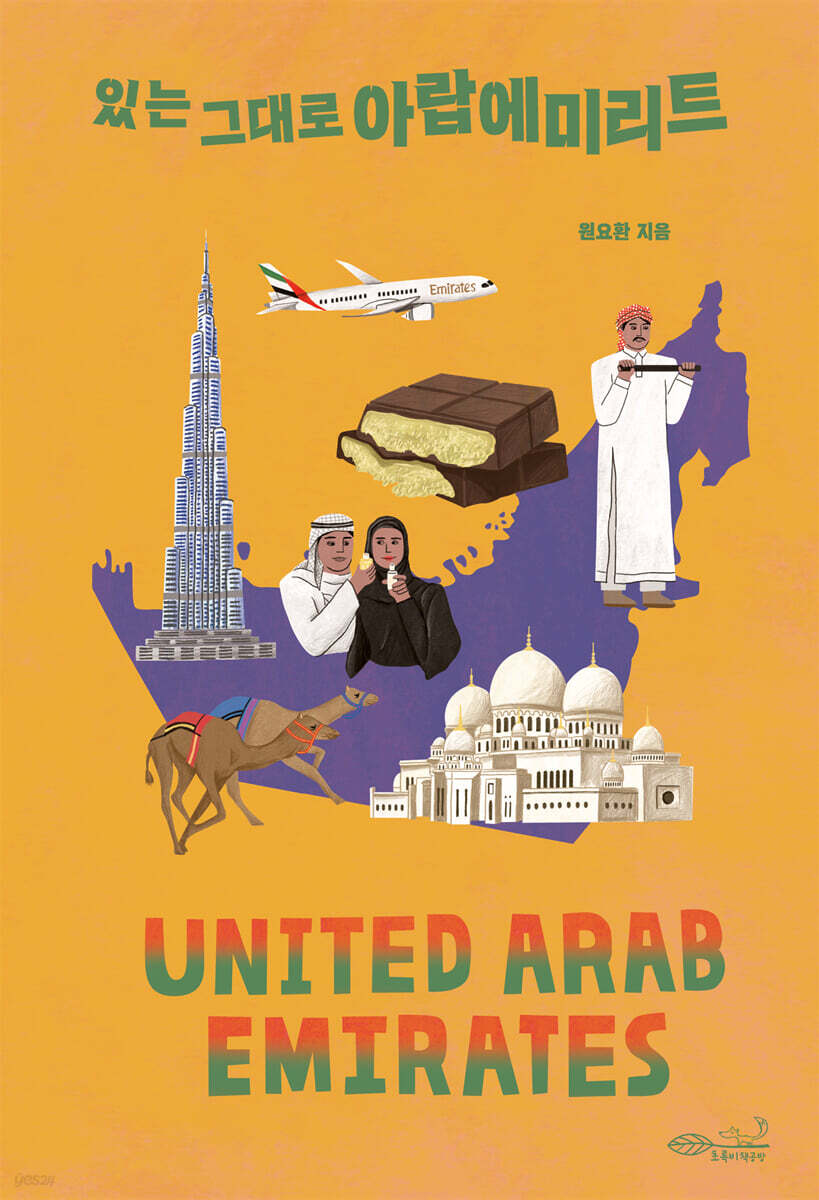
United Arab Emirates as it is
 |
Description
Book Introduction
A miracle country built on the desert
How did the United Arab Emirates become the center of the world?
The United Arab Emirates is a country that cannot be described as Dubai and Abu Dhabi.
It can't be explained with just sand and oil.
This is a land where tradition and modernity coexist, and where challenges to dream of the future continue unabated.
The combination of ultra-modern cities built on the desert, Islamic traditions breathing within them, and global innovation is capturing the world's attention.
This book goes beyond introducing spectacular landmarks like the world's tallest building, the Burj Khalifa, and the Dubai Mall, the largest shopping mall in the Middle East, to explore the essence of the United Arab Emirates.
It highlights the unique political structure of the seven emirates, the advanced technologies and sustainability of the post-oil era, and the true face of a multicultural society coexisting with foreigners.
The power of achieving harmonious coexistence, especially in a unique social structure where 90% of the population is foreign, provides an important lesson for today's global era.
The author, a former Korean journalist, worked as a civil aviation pilot in the United Arab Emirates, experiencing firsthand the diverse local culture and society.
The people he met, the events he experienced, and the insights he gained go beyond mere information to provide a vivid sense of presence.
The author also highlights the country's efforts to maintain its identity as an Islamic nation while fostering openness and religious harmony toward foreigners, and emphasizes the importance of cultural tolerance and policies that make this possible.
This book is also linked to the elementary and secondary school curriculum, making it a useful resource for students studying world history, geography, religion, and cultural diversity.
You will be able to gain the open mind and new perspectives required in the global era.
How did the United Arab Emirates become the center of the world?
The United Arab Emirates is a country that cannot be described as Dubai and Abu Dhabi.
It can't be explained with just sand and oil.
This is a land where tradition and modernity coexist, and where challenges to dream of the future continue unabated.
The combination of ultra-modern cities built on the desert, Islamic traditions breathing within them, and global innovation is capturing the world's attention.
This book goes beyond introducing spectacular landmarks like the world's tallest building, the Burj Khalifa, and the Dubai Mall, the largest shopping mall in the Middle East, to explore the essence of the United Arab Emirates.
It highlights the unique political structure of the seven emirates, the advanced technologies and sustainability of the post-oil era, and the true face of a multicultural society coexisting with foreigners.
The power of achieving harmonious coexistence, especially in a unique social structure where 90% of the population is foreign, provides an important lesson for today's global era.
The author, a former Korean journalist, worked as a civil aviation pilot in the United Arab Emirates, experiencing firsthand the diverse local culture and society.
The people he met, the events he experienced, and the insights he gained go beyond mere information to provide a vivid sense of presence.
The author also highlights the country's efforts to maintain its identity as an Islamic nation while fostering openness and religious harmony toward foreigners, and emphasizes the importance of cultural tolerance and policies that make this possible.
This book is also linked to the elementary and secondary school curriculum, making it a useful resource for students studying world history, geography, religion, and cultural diversity.
You will be able to gain the open mind and new perspectives required in the global era.
- You can preview some of the book's contents.
Preview
index
Prologue | A Country Where Tradition, Present, and Future Coexist
Meet the United Arab Emirates through a quiz
Part 1: Asalamu Alaikum! United Arab Emirates
Welcome to the United Arab Emirates
Geography and Climate of the United Arab Emirates
Flag, national emblem, and national anthem
Politics in the United Arab Emirates
Islamic state pursuing religious harmony
Dream Metropolises: Dubai and Abu Dhabi
Economic system and operating principles
Going beyond Earth into space
Part 2: The Ins and Outs of the People of the United Arab Emirates
The friendly and proud Emiratis
Languages of the United Arab Emirates
A peek at transportation
Experience a traditional souk
Why Date Palms Are Loved
Education Policy in the United Arab Emirates
Soccer, a sport beyond that
Favorite sport besides soccer
Part 3: The United Arab Emirates Through History
Bedouin people of the Arabian Peninsula
The Birth of the United Arab Emirates
Examining Relations with Other Countries
Oil and energy resources, a source of wealth
Dubai, the symbol of innovation in the United Arab Emirates
territorial disputes between the United Arab Emirates and Iran
Part 4: The United Arab Emirates Through Culture
The Enchanting World of Oud, the Fragrance of Arabia
The United Arab Emirates through food
Have you heard of kimchi and hummus from the Middle East?
Two major festivals in the UAE with religious significance
Weekends and Holidays for Emiratis
Wedding and Funeral Culture in the United Arab Emirates
Becoming friends with Emirati
The literary world of the United Arab Emirates
At the forefront of UAE art
Music of the United Arab Emirates
Enjoy the UAE festival with people from all over the world
Part 5: If you go here, you will see the United Arab Emirates.
Dubai tourist attractions
Abu Dhabi tourist attractions
Sharjah Tourist Attractions
The highlight of your trip to the UAE: a desert safari
Epilogue | Meeting in the Middle Eastern Skies
References
Meet the United Arab Emirates through a quiz
Part 1: Asalamu Alaikum! United Arab Emirates
Welcome to the United Arab Emirates
Geography and Climate of the United Arab Emirates
Flag, national emblem, and national anthem
Politics in the United Arab Emirates
Islamic state pursuing religious harmony
Dream Metropolises: Dubai and Abu Dhabi
Economic system and operating principles
Going beyond Earth into space
Part 2: The Ins and Outs of the People of the United Arab Emirates
The friendly and proud Emiratis
Languages of the United Arab Emirates
A peek at transportation
Experience a traditional souk
Why Date Palms Are Loved
Education Policy in the United Arab Emirates
Soccer, a sport beyond that
Favorite sport besides soccer
Part 3: The United Arab Emirates Through History
Bedouin people of the Arabian Peninsula
The Birth of the United Arab Emirates
Examining Relations with Other Countries
Oil and energy resources, a source of wealth
Dubai, the symbol of innovation in the United Arab Emirates
territorial disputes between the United Arab Emirates and Iran
Part 4: The United Arab Emirates Through Culture
The Enchanting World of Oud, the Fragrance of Arabia
The United Arab Emirates through food
Have you heard of kimchi and hummus from the Middle East?
Two major festivals in the UAE with religious significance
Weekends and Holidays for Emiratis
Wedding and Funeral Culture in the United Arab Emirates
Becoming friends with Emirati
The literary world of the United Arab Emirates
At the forefront of UAE art
Music of the United Arab Emirates
Enjoy the UAE festival with people from all over the world
Part 5: If you go here, you will see the United Arab Emirates.
Dubai tourist attractions
Abu Dhabi tourist attractions
Sharjah Tourist Attractions
The highlight of your trip to the UAE: a desert safari
Epilogue | Meeting in the Middle Eastern Skies
References
Detailed image
.jpg)
Into the book
This book introduces the United Arab Emirates' unique culture, where tradition, modernity, and future coexist.
The United Arab Emirates' major cities, represented by Dubai and Abu Dhabi, have achieved remarkable development and are now positioned as innovative nations that attract global attention.
The country, aware that oil will eventually run out, is pursuing a multifaceted strategy of fostering industry and pursuing cutting-edge technologies to achieve a balance between education, science and technology, and the economy.
A stable national system and politics are a great advantage of this country.
Thanks to the continuity of national policies that remain unchanged for decades once established, investment is pouring in from around the world, and global companies are rapidly accumulating wealth by entering the country with attractive tax policies.
Under the strong leadership of the King, we are also working to develop future generations by establishing long-term plans for sustainable development and building smart cities.
--- pp.5-6
Even this seemingly wealthy country is not without its challenges.
The biggest concern is that oil resources are rapidly being depleted.
To counter this, the United Arab Emirates is preparing for a post-oil future more than any other Middle Eastern country.
To attract attention, the UAE has focused on building some of the world's largest and best.
Dubai has attracted international attention with the world's tallest building, the Burj Khalifa; the largest shopping mall, the Dubai Mall; the Middle East's first indoor ski resort; the world's most expensive hotel, the Burj Al Arab; and the world's largest man-made island, Palm Jumeirah, and has successfully attracted large-scale foreign investment based on this attention.
Building on Dubai's successful strategy, Abu Dhabi is also pursuing economic development.
Abu Dhabi is making efforts to become a world-class tourist destination, including attracting the Louvre and Guggenheim Museums and building Ferrari World.
--- pp.26-27
The United Arab Emirates has a presidential system, but is closer to a federated absolute monarchy ruled by a king.
The UAE's highest executive and legislative body is the Federal Supreme Council, established by the constitution and composed of the rulers of the seven emirates, which elect the president and the prime minister.
The President is the head of state for a five-year term and is traditionally elected by the ruler of the Emirate of Abu Dhabi.
The President concurrently serves as Commander-in-Chief of the United Arab Emirates Armed Forces.
In 2022, when Sheikh Khalifa bin Zayed Al Nahyan, the ruler of Abu Dhabi and the second President of the United Arab Emirates, passed away from a chronic illness, Mohammed bin Zayed Al Nahyan became the third President of the United Arab Emirates and the Amir of Abu Dhabi.
--- pp.38-39
If you were to pick the country with the most developed aerospace industry in the Middle East, it would be the United Arab Emirates.
The United Arab Emirates is capturing the world's attention by pursuing space exploration more boldly than ever before.
In 2021, it became the first Middle Eastern country to place the Mars probe 'Amal' into Mars' orbit.
Since then, they have been showing their confidence by boldly pursuing lunar exploration, asteroid exploration, and even plans to settle on Mars.
The Mohammed bin Rashid Space Centre, established in Dubai in 2006, and the Space Agency, established in 2014, oversee space development in the United Arab Emirates.
And just 15 years after beginning this space exploration, the United Arab Emirates reached Mars.
This is thanks to the UAE's active use of knowledge exchange programs with Korea's KAIST to acquire space development technology.
Most of the early leaders of space development, including Amer al-Sayeh and Omran Sharaf, studied abroad in Korea and acquired their skills.
They laid the foundation for space development by developing the United Arab Emirates' first artificial satellite, DubaiSat-1.
Although Korea transferred the technology, the United Arab Emirates achieved the results first.
--- pp.59-60
The UAE's policy of prioritizing education was possible thanks to the vision of its first president, Zayed.
He emphasized the importance of education and implemented an open-door policy, including establishing the first Western-style school and hiring foreign teachers in the 1950s.
The United Arab Emirates, once a poor country, has become one of the most advanced countries in the Middle East.
Former President Zayed provided free tuition, textbooks, clothing, and meals from elementary school to high school, and in particular, he opened separate campuses for men and women, which encouraged women from all over the Middle East as well as Korea to come to study in the United Arab Emirates.
The United Arab Emirates spends a huge amount of money on education every year.
It amounts to 17-20% of the total federal budget.
As a result, the UAE's literacy rate is around 4%, the lowest in the Middle East.
The teacher-to-elementary school ratio is the highest at 1:15, and education is compulsory up to high school.
If you advance to a university abroad, we provide support for local tuition and living expenses.
If you want to go to college, it is an environment where you can study freely without worrying about finances.
--- pp.95-96
The United Arab Emirates has oil reserves of approximately 100 billion barrels, ranking 7th in the world.
Most of these are located in Abu Dhabi (96%), with Dubai and other emirates each holding 2%.
The UAE's current oil production capacity is approximately 3 million barrels per day, with plans to expand that to 5 million barrels per day depending on market conditions.
This is to monetize oil resources early and secure the necessary funds for economic diversification.
The amount of oil that can be extracted from Abu Dhabi's oil fields is approximately 90 years based on current production, and the production ratio between onshore and offshore oil fields is approximately 50:50.
The United Arab Emirates' oil exports are concentrated in Asia.
Our country ranked 5th in total oil imports from the United Arab Emirates in 2023.
(…) Dubai, which has been producing a lot of oil, has been trying to diversify its economic structure from early on, focusing on trade, tourism, and finance, and Abu Dhabi is also increasing its investment in industries other than oil.
This economic diversification is a key cornerstone for the UAE to reduce its dependence on oil and achieve sustainable development.
--- pp.138-139
In the United Arab Emirates, there is a dish that has the same status as our country's 'kimchi'.
Hummus is both delicious and nutritious.
Hummus, which means 'chickpea' in Arabic, is a food that has been eaten in the Middle East since ancient times.
It is not known exactly when people began eating it, but there are records from medieval Egypt, so it must have been at least 700 to 800 years ago.
It is mainly eaten as a dip for bread, and although it has a slightly sour taste, it is good for the body and tastes good, making it an ideal food for people living in other places to replenish their energy.
Hummus was even selected as one of the 'foods you must eat before you die'.
In the Middle East, there is a saying that “a table without hummus is like the Arabian Nights without stories,” and it is one of the foods that is always served on the table.
--- pp.165-166
Emirati refers to indigenous Arab citizens born and raised in the United Arab Emirates.
In Emirati society, friendships are strictly regulated along gender lines.
There are very few situations where men and women become friends.
This is due to religious, historical and cultural factors.
A common way for outsiders to connect with Emiratis is to work together within their organizations.
Foreigners and Muslims with similar cultural backgrounds tend to become closer to Emiratis more easily.
Emirati take friendship very seriously.
I believe that friendship takes time and sincerity to form, and once a friendship is formed, it is rare to go back to the way it was before.
So when a friendship breaks down, it can lead to deep resentment.
Some Emiratis feel disappointed when someone who was once open and friendly later becomes distant.
--- pp.183-184
The Middle Eastern art market is made up of the 'Big 3' markets of the United Arab Emirates, Saudi Arabia, and Qatar, with the United Arab Emirates being the largest and most active market.
However, Saudi Arabia, led by Crown Prince Mohammed bin Salman, and Qatar, which is trying to become a cultural hub through its '2030 Cultural Plan', are fiercely pursuing each other, so it will be worth watching to see what kind of competition they will have in the future.
(…)
Art Dubai is the largest art fair in Dubai.
Held annually in March, it has established itself as a central axis of the Middle Eastern art world by introducing diverse and unique art from the Middle East, North Africa, and South Asia to the world stage while providing a platform for exchange with the global art community.
According to the Dubai government, the Art Dubai event generates an economic impact of over AED 100 million annually.
It consists of various programs and events that can be enjoyed by the general public, and the contemporary and modern art pieces on display from famous galleries around the world are particularly eye-catching.
--- pp.193-194
There are many experiential activities in the United Arab Emirates, but the most well-known one is probably the 'desert safari'.
Desert safari is a comprehensive tourism package that allows you to experience various traditional activities such as falconry and camel riding while driving a four-wheel drive vehicle through the desert.
When an acquaintance of mine came to visit and asked, “What should I do when I get there?”, my answer was, “I should take half a day to go on a desert safari.”
When foreign tourists come to Seoul, they go to Namsan Tower and Gyeongbokgung Palace.
In fact, there are many desert safari experience companies based here.
Among them, there are some companies that are not trustworthy and some that are controversial for dine-and-dash.
However, there are various programs available, from a leisurely tour to a dynamic all-day drive through the desert, so choose carefully.
The United Arab Emirates' major cities, represented by Dubai and Abu Dhabi, have achieved remarkable development and are now positioned as innovative nations that attract global attention.
The country, aware that oil will eventually run out, is pursuing a multifaceted strategy of fostering industry and pursuing cutting-edge technologies to achieve a balance between education, science and technology, and the economy.
A stable national system and politics are a great advantage of this country.
Thanks to the continuity of national policies that remain unchanged for decades once established, investment is pouring in from around the world, and global companies are rapidly accumulating wealth by entering the country with attractive tax policies.
Under the strong leadership of the King, we are also working to develop future generations by establishing long-term plans for sustainable development and building smart cities.
--- pp.5-6
Even this seemingly wealthy country is not without its challenges.
The biggest concern is that oil resources are rapidly being depleted.
To counter this, the United Arab Emirates is preparing for a post-oil future more than any other Middle Eastern country.
To attract attention, the UAE has focused on building some of the world's largest and best.
Dubai has attracted international attention with the world's tallest building, the Burj Khalifa; the largest shopping mall, the Dubai Mall; the Middle East's first indoor ski resort; the world's most expensive hotel, the Burj Al Arab; and the world's largest man-made island, Palm Jumeirah, and has successfully attracted large-scale foreign investment based on this attention.
Building on Dubai's successful strategy, Abu Dhabi is also pursuing economic development.
Abu Dhabi is making efforts to become a world-class tourist destination, including attracting the Louvre and Guggenheim Museums and building Ferrari World.
--- pp.26-27
The United Arab Emirates has a presidential system, but is closer to a federated absolute monarchy ruled by a king.
The UAE's highest executive and legislative body is the Federal Supreme Council, established by the constitution and composed of the rulers of the seven emirates, which elect the president and the prime minister.
The President is the head of state for a five-year term and is traditionally elected by the ruler of the Emirate of Abu Dhabi.
The President concurrently serves as Commander-in-Chief of the United Arab Emirates Armed Forces.
In 2022, when Sheikh Khalifa bin Zayed Al Nahyan, the ruler of Abu Dhabi and the second President of the United Arab Emirates, passed away from a chronic illness, Mohammed bin Zayed Al Nahyan became the third President of the United Arab Emirates and the Amir of Abu Dhabi.
--- pp.38-39
If you were to pick the country with the most developed aerospace industry in the Middle East, it would be the United Arab Emirates.
The United Arab Emirates is capturing the world's attention by pursuing space exploration more boldly than ever before.
In 2021, it became the first Middle Eastern country to place the Mars probe 'Amal' into Mars' orbit.
Since then, they have been showing their confidence by boldly pursuing lunar exploration, asteroid exploration, and even plans to settle on Mars.
The Mohammed bin Rashid Space Centre, established in Dubai in 2006, and the Space Agency, established in 2014, oversee space development in the United Arab Emirates.
And just 15 years after beginning this space exploration, the United Arab Emirates reached Mars.
This is thanks to the UAE's active use of knowledge exchange programs with Korea's KAIST to acquire space development technology.
Most of the early leaders of space development, including Amer al-Sayeh and Omran Sharaf, studied abroad in Korea and acquired their skills.
They laid the foundation for space development by developing the United Arab Emirates' first artificial satellite, DubaiSat-1.
Although Korea transferred the technology, the United Arab Emirates achieved the results first.
--- pp.59-60
The UAE's policy of prioritizing education was possible thanks to the vision of its first president, Zayed.
He emphasized the importance of education and implemented an open-door policy, including establishing the first Western-style school and hiring foreign teachers in the 1950s.
The United Arab Emirates, once a poor country, has become one of the most advanced countries in the Middle East.
Former President Zayed provided free tuition, textbooks, clothing, and meals from elementary school to high school, and in particular, he opened separate campuses for men and women, which encouraged women from all over the Middle East as well as Korea to come to study in the United Arab Emirates.
The United Arab Emirates spends a huge amount of money on education every year.
It amounts to 17-20% of the total federal budget.
As a result, the UAE's literacy rate is around 4%, the lowest in the Middle East.
The teacher-to-elementary school ratio is the highest at 1:15, and education is compulsory up to high school.
If you advance to a university abroad, we provide support for local tuition and living expenses.
If you want to go to college, it is an environment where you can study freely without worrying about finances.
--- pp.95-96
The United Arab Emirates has oil reserves of approximately 100 billion barrels, ranking 7th in the world.
Most of these are located in Abu Dhabi (96%), with Dubai and other emirates each holding 2%.
The UAE's current oil production capacity is approximately 3 million barrels per day, with plans to expand that to 5 million barrels per day depending on market conditions.
This is to monetize oil resources early and secure the necessary funds for economic diversification.
The amount of oil that can be extracted from Abu Dhabi's oil fields is approximately 90 years based on current production, and the production ratio between onshore and offshore oil fields is approximately 50:50.
The United Arab Emirates' oil exports are concentrated in Asia.
Our country ranked 5th in total oil imports from the United Arab Emirates in 2023.
(…) Dubai, which has been producing a lot of oil, has been trying to diversify its economic structure from early on, focusing on trade, tourism, and finance, and Abu Dhabi is also increasing its investment in industries other than oil.
This economic diversification is a key cornerstone for the UAE to reduce its dependence on oil and achieve sustainable development.
--- pp.138-139
In the United Arab Emirates, there is a dish that has the same status as our country's 'kimchi'.
Hummus is both delicious and nutritious.
Hummus, which means 'chickpea' in Arabic, is a food that has been eaten in the Middle East since ancient times.
It is not known exactly when people began eating it, but there are records from medieval Egypt, so it must have been at least 700 to 800 years ago.
It is mainly eaten as a dip for bread, and although it has a slightly sour taste, it is good for the body and tastes good, making it an ideal food for people living in other places to replenish their energy.
Hummus was even selected as one of the 'foods you must eat before you die'.
In the Middle East, there is a saying that “a table without hummus is like the Arabian Nights without stories,” and it is one of the foods that is always served on the table.
--- pp.165-166
Emirati refers to indigenous Arab citizens born and raised in the United Arab Emirates.
In Emirati society, friendships are strictly regulated along gender lines.
There are very few situations where men and women become friends.
This is due to religious, historical and cultural factors.
A common way for outsiders to connect with Emiratis is to work together within their organizations.
Foreigners and Muslims with similar cultural backgrounds tend to become closer to Emiratis more easily.
Emirati take friendship very seriously.
I believe that friendship takes time and sincerity to form, and once a friendship is formed, it is rare to go back to the way it was before.
So when a friendship breaks down, it can lead to deep resentment.
Some Emiratis feel disappointed when someone who was once open and friendly later becomes distant.
--- pp.183-184
The Middle Eastern art market is made up of the 'Big 3' markets of the United Arab Emirates, Saudi Arabia, and Qatar, with the United Arab Emirates being the largest and most active market.
However, Saudi Arabia, led by Crown Prince Mohammed bin Salman, and Qatar, which is trying to become a cultural hub through its '2030 Cultural Plan', are fiercely pursuing each other, so it will be worth watching to see what kind of competition they will have in the future.
(…)
Art Dubai is the largest art fair in Dubai.
Held annually in March, it has established itself as a central axis of the Middle Eastern art world by introducing diverse and unique art from the Middle East, North Africa, and South Asia to the world stage while providing a platform for exchange with the global art community.
According to the Dubai government, the Art Dubai event generates an economic impact of over AED 100 million annually.
It consists of various programs and events that can be enjoyed by the general public, and the contemporary and modern art pieces on display from famous galleries around the world are particularly eye-catching.
--- pp.193-194
There are many experiential activities in the United Arab Emirates, but the most well-known one is probably the 'desert safari'.
Desert safari is a comprehensive tourism package that allows you to experience various traditional activities such as falconry and camel riding while driving a four-wheel drive vehicle through the desert.
When an acquaintance of mine came to visit and asked, “What should I do when I get there?”, my answer was, “I should take half a day to go on a desert safari.”
When foreign tourists come to Seoul, they go to Namsan Tower and Gyeongbokgung Palace.
In fact, there are many desert safari experience companies based here.
Among them, there are some companies that are not trustworthy and some that are controversial for dine-and-dash.
However, there are various programs available, from a leisurely tour to a dynamic all-day drive through the desert, so choose carefully.
--- pp.231-232
Publisher's Review
A country that the world is paying attention to
A New Perspective on Understanding the United Arab Emirates
The United Arab Emirates is a federal state, with seven emirates maintaining their own distinct identities while also driving national development through cooperation and competition.
Dubai's economy is based on logistics, tourism, and finance, while Abu Dhabi's finances are financed by oil and a sovereign wealth fund.
This economic diversification and political stability have established the United Arab Emirates as a model of success in the Middle East.
Additionally, the United Arab Emirates is geographically located at the heart of the Middle East, serving as an important gateway connecting Europe, Asia, and Africa.
Global airlines such as Emirates and Etihad Airways have helped establish the country as a global logistics and transportation hub.
This book examines from various perspectives how the United Arab Emirates creates international value and engages with the world.
A country preparing for the future
Addressing the Post-Oil Era with Innovation
The United Arab Emirates is a country constantly changing and challenging itself as it prepares for a future in which its oil resources will be depleted.
Dubai and Abu Dhabi are moving beyond oil dependence and leading innovative future strategies, including smart cities, space industries, and sustainable energy development.
Landmarks such as the world's tallest building, Burj Khalifa, the largest shopping mall, Dubai Mall, and the Middle East's first indoor ski resort are not just tourist attractions, but also attract foreign investment and international attention, while stable financial operations such as Abu Dhabi's sovereign wealth fund demonstrate the UAE's growth as a global economic hub.
The United Arab Emirates' ambitious vision to build a city on Mars by 2117 is noteworthy not only for its scientific goals but also for its potential to address global environmental challenges.
A land of multicultural coexistence
A country where 90% of the population is foreigners, and the world lives together.
The United Arab Emirates is a unique society with more than 90% of its population comprised of foreigners.
It's commonplace to see cafes where Nepalese staff greet customers, Indian chefs prepare food, and Moroccans man the counter. Major cities like Dubai and Abu Dhabi are home to people from all over the world living together in harmony.
In particular, the Abrahamic Family House is a symbol of religious harmony, with a mosque, a cathedral, and a Jewish synagogue all housed in one space.
This openness and tolerance sets the UAE apart from other Middle Eastern countries and makes it a tolerant society for foreigners.
A space where tradition and modernity meet
The depth of Islamic culture spread across the desert
Despite building ultra-modern cities in the middle of the desert, the United Arab Emirates still values a balance between tradition and modernity.
The history and heritage of the ancient Bedouin people live vividly even amidst the splendor of today's cities, and the traditional souks offer a taste of Arabian hospitality.
Buildings like the Sheikh Zayed Grand Mosque and the Louvre Abu Dhabi demonstrate the value of tradition in the face of modern innovation.
In this way, the United Arab Emirates is attracting global attention as a country that is merging Islamic values with a modern vision, preserving tradition while ushering in a new era.
The author, a former journalist and Middle Eastern airline pilot, has lived in the United Arab Emirates for over 10 years and has personally seen and experienced the country, calling it "a country where tradition, present, and future coexist."
Through the author's vivid experiences and objective insights, readers can understand the United Arab Emirates and learn about the importance of multicultural values and innovation in the global era.
This book is recommended for readers who wish to broaden their understanding of the Middle East and Islamic culture, learn about multicultural coexistence and economic innovation in the global era, and explore the deep cultural roots of the United Arab Emirates beyond travel.
*** This book is composed of post-reading activity sheets with topics and questions related to various topics.
What is my first multicultural class series?
In today's world where we live with people of all nationalities, we need to understand cultural diversity.
The 'My First Multicultural Class Series' tells stories from various countries around the world that young people have heard of but are not familiar with, in an easy and fun way that is tailored to the perspective of young people.
This series is designed to foster cultural diversity and an open-minded perspective, and to help develop a broader perspective on the world.
A New Perspective on Understanding the United Arab Emirates
The United Arab Emirates is a federal state, with seven emirates maintaining their own distinct identities while also driving national development through cooperation and competition.
Dubai's economy is based on logistics, tourism, and finance, while Abu Dhabi's finances are financed by oil and a sovereign wealth fund.
This economic diversification and political stability have established the United Arab Emirates as a model of success in the Middle East.
Additionally, the United Arab Emirates is geographically located at the heart of the Middle East, serving as an important gateway connecting Europe, Asia, and Africa.
Global airlines such as Emirates and Etihad Airways have helped establish the country as a global logistics and transportation hub.
This book examines from various perspectives how the United Arab Emirates creates international value and engages with the world.
A country preparing for the future
Addressing the Post-Oil Era with Innovation
The United Arab Emirates is a country constantly changing and challenging itself as it prepares for a future in which its oil resources will be depleted.
Dubai and Abu Dhabi are moving beyond oil dependence and leading innovative future strategies, including smart cities, space industries, and sustainable energy development.
Landmarks such as the world's tallest building, Burj Khalifa, the largest shopping mall, Dubai Mall, and the Middle East's first indoor ski resort are not just tourist attractions, but also attract foreign investment and international attention, while stable financial operations such as Abu Dhabi's sovereign wealth fund demonstrate the UAE's growth as a global economic hub.
The United Arab Emirates' ambitious vision to build a city on Mars by 2117 is noteworthy not only for its scientific goals but also for its potential to address global environmental challenges.
A land of multicultural coexistence
A country where 90% of the population is foreigners, and the world lives together.
The United Arab Emirates is a unique society with more than 90% of its population comprised of foreigners.
It's commonplace to see cafes where Nepalese staff greet customers, Indian chefs prepare food, and Moroccans man the counter. Major cities like Dubai and Abu Dhabi are home to people from all over the world living together in harmony.
In particular, the Abrahamic Family House is a symbol of religious harmony, with a mosque, a cathedral, and a Jewish synagogue all housed in one space.
This openness and tolerance sets the UAE apart from other Middle Eastern countries and makes it a tolerant society for foreigners.
A space where tradition and modernity meet
The depth of Islamic culture spread across the desert
Despite building ultra-modern cities in the middle of the desert, the United Arab Emirates still values a balance between tradition and modernity.
The history and heritage of the ancient Bedouin people live vividly even amidst the splendor of today's cities, and the traditional souks offer a taste of Arabian hospitality.
Buildings like the Sheikh Zayed Grand Mosque and the Louvre Abu Dhabi demonstrate the value of tradition in the face of modern innovation.
In this way, the United Arab Emirates is attracting global attention as a country that is merging Islamic values with a modern vision, preserving tradition while ushering in a new era.
The author, a former journalist and Middle Eastern airline pilot, has lived in the United Arab Emirates for over 10 years and has personally seen and experienced the country, calling it "a country where tradition, present, and future coexist."
Through the author's vivid experiences and objective insights, readers can understand the United Arab Emirates and learn about the importance of multicultural values and innovation in the global era.
This book is recommended for readers who wish to broaden their understanding of the Middle East and Islamic culture, learn about multicultural coexistence and economic innovation in the global era, and explore the deep cultural roots of the United Arab Emirates beyond travel.
*** This book is composed of post-reading activity sheets with topics and questions related to various topics.
What is my first multicultural class series?
In today's world where we live with people of all nationalities, we need to understand cultural diversity.
The 'My First Multicultural Class Series' tells stories from various countries around the world that young people have heard of but are not familiar with, in an easy and fun way that is tailored to the perspective of young people.
This series is designed to foster cultural diversity and an open-minded perspective, and to help develop a broader perspective on the world.
GOODS SPECIFICS
- Date of issue: January 10, 2025
- Page count, weight, size: 240 pages | 310g | 140*205*15mm
- ISBN13: 9791193296806
You may also like
카테고리
korean


korean

![GQ KOREA Mark (Monthly): December [2025]](http://librairie.coreenne.fr/cdn/shop/files/8ef265dbbfbf186523ed75ba7319009d.jpg?v=1765340328&width=3840)


