

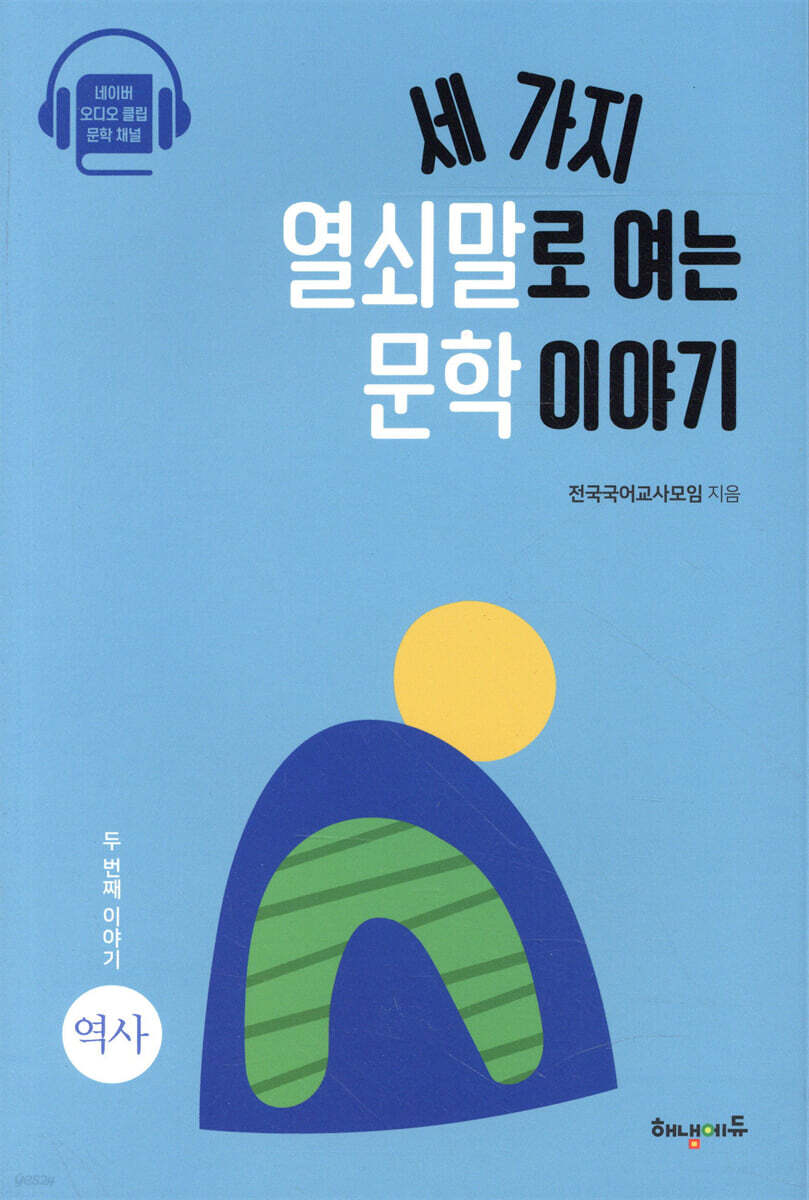
Literary Stories Opened with Three Keywords Part 2
 |
Description
Book Introduction
The National Association of Korean Language Teachers analyzed it with three keywords:
The second story in this must-read literary commentary for young people: "History."
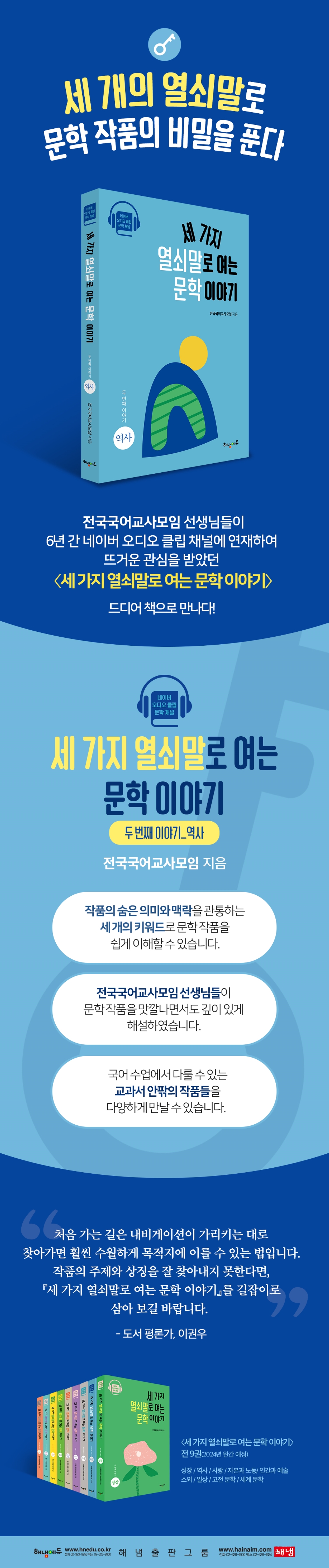
Since 2018, the National Korean Language Teachers Association has been consistently introducing various literary works through in-depth and engaging commentary on the Naver Audio Clip channel [Literary Stories Opened with Three Keywords].
The series, “Literary Stories Opened with Three Keyword Words,” is a new compilation of recordings made over six years for young people and general readers who enjoy literature.
This book extracts three keywords that are essential for understanding a literary work and develops the story around them.
Keywords extracted by Korean language teachers teaching literature in schools shine like stars, revealing the hidden meaning of literary works.
Even though it is a sharp and profound literary criticism and commentary, readers feel as if they are listening to a chatterbox, because the tone of conversation, as if sitting face to face with someone and having a lively conversation, is alive and well in the book.
The second story, 'History', published this time, contains commentary on 38 literary works that use history as their main background.
A diverse selection of works has been selected, including works based on historical events we are familiar with, such as "The Song of the Sword," as well as lesser-known contemporary events, which are essential for us to remember and reflect on throughout history.
Through these works, and through the commentary of teachers who rediscover their meaning, we will learn how literature expresses history and how humans grow, face setbacks, and overcome crises within history.
Moreover, it will provide an opportunity to gain a new perspective on history through the diverse human figures in history.
The diversity of authors is also a strength of this book.
The book includes commentary on the works of a diverse group of authors, from long-time readers' favorites like Kim Hoon, Choi Myeong-hee, Shim Hoon, Jo Jeong-rae, and Kwon Jeong-saeng, to recent famous and emerging authors like Han Kang, Gong Ji-young, Seong Seok-je, Lee Gi-ho, and Jeong I-hyeon.
This is the second installment of the "Literary Stories Opened with Three Keyword" series, which began with "The First Story: Growth" last January.
The growth section contains commentary on 40 literary works that contain the pain, worries, and growth of teenagers.
The series, "Literary Stories Opened by Three Keyword", will continue to expand its themes to include love, capital and labor, humans and art, alienation, daily life, classical literature, and world literature, with the goal of publishing a complete nine-volume series.
The second story in this must-read literary commentary for young people: "History."
Since 2018, the National Korean Language Teachers Association has been consistently introducing various literary works through in-depth and engaging commentary on the Naver Audio Clip channel [Literary Stories Opened with Three Keywords].
The series, “Literary Stories Opened with Three Keyword Words,” is a new compilation of recordings made over six years for young people and general readers who enjoy literature.
This book extracts three keywords that are essential for understanding a literary work and develops the story around them.
Keywords extracted by Korean language teachers teaching literature in schools shine like stars, revealing the hidden meaning of literary works.
Even though it is a sharp and profound literary criticism and commentary, readers feel as if they are listening to a chatterbox, because the tone of conversation, as if sitting face to face with someone and having a lively conversation, is alive and well in the book.
The second story, 'History', published this time, contains commentary on 38 literary works that use history as their main background.
A diverse selection of works has been selected, including works based on historical events we are familiar with, such as "The Song of the Sword," as well as lesser-known contemporary events, which are essential for us to remember and reflect on throughout history.
Through these works, and through the commentary of teachers who rediscover their meaning, we will learn how literature expresses history and how humans grow, face setbacks, and overcome crises within history.
Moreover, it will provide an opportunity to gain a new perspective on history through the diverse human figures in history.
The diversity of authors is also a strength of this book.
The book includes commentary on the works of a diverse group of authors, from long-time readers' favorites like Kim Hoon, Choi Myeong-hee, Shim Hoon, Jo Jeong-rae, and Kwon Jeong-saeng, to recent famous and emerging authors like Han Kang, Gong Ji-young, Seong Seok-je, Lee Gi-ho, and Jeong I-hyeon.
This is the second installment of the "Literary Stories Opened with Three Keyword" series, which began with "The First Story: Growth" last January.
The growth section contains commentary on 40 literary works that contain the pain, worries, and growth of teenagers.
The series, "Literary Stories Opened by Three Keyword", will continue to expand its themes to include love, capital and labor, humans and art, alienation, daily life, classical literature, and world literature, with the goal of publishing a complete nine-volume series.
- You can preview some of the book's contents.
Preview
index
Part 1: The Man Who Made History
Kim Hoon / Song of the Sword
Park Seo-ryeon / Kang Ju-ryong, a gym girl
Choi Myung-hee/Honbul
Sim Hoon/ Evergreen
Jo Myeong-hee/Nakdonggang
Lee Kwang-soo / Heartless
Part 2: Crushed by the Weight of History
Jo Jeong-rae/Yoo Hyeong's Land
Baek Shin-ae/Gkeorae
Eugene Oh / Changrangjeonggi
Chae Man-sik / Peaceful World
Jo Hae-jin/ Farewell to Things
Choi Yoon / Gray Snowman
Part 3: A Story You Must Not Forget
Hyun Ki-young/Soon-i's Uncle
Han River/ No Farewell
Yoon Jeong-mo / Night Road
Lee Soon-won / face
Han River/The Boy Comes
Gong Ji-young / Courtesy toward humans
Jeong I-hyeon / Sampoong Department Store
Part 4: War and Wounds
Kim So-jin / Rat Catcher
Lee Ki-ho / Grandma, don't worry anymore.
Sunwoo Hwi/Fireworks
Yoon Heung-gil/ Jangma
Lim Cheol-woo / Father's Land
Lee Chang-dong / Soji
Part 5: The Blade of Ideology
Choi In-hoon/ Square
Choi Eun-young / Xin Zhao, Xin Zhao
Park Tae-soon / Collapsed Theater
Lim Cheol-woo / Red Room
Heo Jun/ back
Park Sang-woo / Snow Falling in Chagall's Village
Part 6: Life Still Goes On
Kwon Jeong-saeng / Haneul of Haneul
Imireuk/ The Yalu River flows
Yeom Sang-seop / Mansejeon
Chae Man-sik/ Chi-suk
Hyun Jin-geon / A society that encourages drinking
Seongseokje/Jodonggwan Pharmacopoeia
Lee Ho-cheol/ Not going to the post of Vice Mayor
Kim Hoon / Song of the Sword
Park Seo-ryeon / Kang Ju-ryong, a gym girl
Choi Myung-hee/Honbul
Sim Hoon/ Evergreen
Jo Myeong-hee/Nakdonggang
Lee Kwang-soo / Heartless
Part 2: Crushed by the Weight of History
Jo Jeong-rae/Yoo Hyeong's Land
Baek Shin-ae/Gkeorae
Eugene Oh / Changrangjeonggi
Chae Man-sik / Peaceful World
Jo Hae-jin/ Farewell to Things
Choi Yoon / Gray Snowman
Part 3: A Story You Must Not Forget
Hyun Ki-young/Soon-i's Uncle
Han River/ No Farewell
Yoon Jeong-mo / Night Road
Lee Soon-won / face
Han River/The Boy Comes
Gong Ji-young / Courtesy toward humans
Jeong I-hyeon / Sampoong Department Store
Part 4: War and Wounds
Kim So-jin / Rat Catcher
Lee Ki-ho / Grandma, don't worry anymore.
Sunwoo Hwi/Fireworks
Yoon Heung-gil/ Jangma
Lim Cheol-woo / Father's Land
Lee Chang-dong / Soji
Part 5: The Blade of Ideology
Choi In-hoon/ Square
Choi Eun-young / Xin Zhao, Xin Zhao
Park Tae-soon / Collapsed Theater
Lim Cheol-woo / Red Room
Heo Jun/ back
Park Sang-woo / Snow Falling in Chagall's Village
Part 6: Life Still Goes On
Kwon Jeong-saeng / Haneul of Haneul
Imireuk/ The Yalu River flows
Yeom Sang-seop / Mansejeon
Chae Man-sik/ Chi-suk
Hyun Jin-geon / A society that encourages drinking
Seongseokje/Jodonggwan Pharmacopoeia
Lee Ho-cheol/ Not going to the post of Vice Mayor
Detailed image
Into the book
Manseok's life is, of course, a personal tragedy, but it is not just an individual problem; it is closely linked to historical circumstances.
Although Mr. Hwang also says that the current situation is the problem, I cannot help but think about the pitiful lives of those who have been oppressed under a caste system where the differences between the status of the nobles and the commoners are as great as heaven and earth.
And we cannot leave out the history of bloodshed through confrontation and retaliation during the Korean War.
I think we can rethink human dignity and the meaning of history through the venting of a human being who has lived a humble life on this earth.
--- p.62 From “Jo Jeong-rae/ The Land of Yoo Hyeong”
"Uncle Sooni" is a work that brought the Jeju April 3 Incident, a history of sorrow and taboo, to the surface and made it widely known to the world.
At the time, it was designated as a banned book and sales were banned.
The author's spirit of participation, which sought to reveal the truth of history that had been kept quiet, has come to light nine years later.
After the June Struggle of 1987, the wave of democratization brought the voices of the April 3 Incident to the world.
New results were announced based on relevant books and testimonies, mainly from social groups and academia.
The fictional world of literature brings history, based on objective facts, to the real world.
It is a new story of the history of Jeju 4.3 through a fictional character named 'Sooni' who passed through the site of Jeju 4.3.
Literature is fiction.
But through fiction, it also reminds us of historical facts.
"Uncle Sooni" is a work that clearly shows how literature tells history.
--- p.108 From “Hyun Ki-young/ Uncle Sooni”
The author has confessed that he could not avoid this novel, that he could not go anywhere without passing through it.
This work can be seen as the author's painful process of meeting a boy who died in Gwangju 30 years ago.
And the author believes that Gwangju continues even in the 21st century.
When I look at the Yongsan tragedy in 2009, I think of Gwangju.
A soldier who was deployed as an airborne unit during the Buma Uprising said that he had no reason not to beat someone if they were told to do so while giving him money for the mat.
It also tells the story of a massacre committed by a Korean platoon deployed to the Vietnam War, and constantly raises questions about human cruelty.
In rural Vietnamese villages, they would gather women, children, and the elderly and burn them to death, and then receive rewards.
Some of them came to Gwangju with such memories, with the same brutality engraved in their genes.
The author constantly questions violence and human dignity.
Writing about that process is a painful struggle.
I, too, found it painful to read the vividly depicted scenes of brutal massacre and violence in this novel.
Although it is painful, facing violence and massacre head-on, recording and remembering it can be seen as a process of struggle to protect human dignity.
--- p.135 From “Han River/The Boy Comes”
This series of events, where he reunites with R, becomes rapidly closer to him, and then drifts away again, makes the fact that he will never see 'R' again even more heartbreaking.
The belated realization of the importance of this relationship and the regret over my attitude of not being able to get closer to it hit me like a 'sense of loss', and I was struggling to the point where I couldn't return to my daily life for a while.
The irreversible loss of a relationship that becomes clearer as time goes by is something that time cannot heal.
How many people must have experienced the loss of relationships due to that accident? Each of us must be carrying in our hearts the memories of lost time and the daily lives we can never return to.
--- p.154 From "Jeong I-hyeon/Sampoong Department Store"
My maternal grandmother's family, including my aunt, came to our house as refugees because of the war.
Although my maternal uncle was a member of the national army and my uncle was a guerrilla, my grandmother and maternal grandmother got along well with each other.
However, when the grandmother hears the curses her son is spewing, she takes them as a warning to her son to die.
So the relationship between my maternal grandmother and my grandmother becomes very bad.
However, it is difficult to view the conflict between my grandmother and my maternal grandmother as an ideological conflict between the left and right.
The conflict triggered by the maternal grandmother's curse was not so much a conflict of ideologies as a conflict of maternal love, as the maternal grandmother loved her maternal uncle and the grandmother loved her uncle.
--- p.182 From "Yoon Heung-gil/Rainy Season"
How can we shed the old era, so full of injustice, and open a new world? If the majority of the people suffer under the oppression of a small minority with absolute power, then that era must be ended.
As our history shows, the process of the people resisting and achieving victory against unjust power requires enormous sacrifice.
The freedom and equality that are given to you like air are the result of the struggles of many people throughout history.
Some risked their lives for democracy, while others traded it for a peaceful future.
Although Mr. Hwang also says that the current situation is the problem, I cannot help but think about the pitiful lives of those who have been oppressed under a caste system where the differences between the status of the nobles and the commoners are as great as heaven and earth.
And we cannot leave out the history of bloodshed through confrontation and retaliation during the Korean War.
I think we can rethink human dignity and the meaning of history through the venting of a human being who has lived a humble life on this earth.
--- p.62 From “Jo Jeong-rae/ The Land of Yoo Hyeong”
"Uncle Sooni" is a work that brought the Jeju April 3 Incident, a history of sorrow and taboo, to the surface and made it widely known to the world.
At the time, it was designated as a banned book and sales were banned.
The author's spirit of participation, which sought to reveal the truth of history that had been kept quiet, has come to light nine years later.
After the June Struggle of 1987, the wave of democratization brought the voices of the April 3 Incident to the world.
New results were announced based on relevant books and testimonies, mainly from social groups and academia.
The fictional world of literature brings history, based on objective facts, to the real world.
It is a new story of the history of Jeju 4.3 through a fictional character named 'Sooni' who passed through the site of Jeju 4.3.
Literature is fiction.
But through fiction, it also reminds us of historical facts.
"Uncle Sooni" is a work that clearly shows how literature tells history.
--- p.108 From “Hyun Ki-young/ Uncle Sooni”
The author has confessed that he could not avoid this novel, that he could not go anywhere without passing through it.
This work can be seen as the author's painful process of meeting a boy who died in Gwangju 30 years ago.
And the author believes that Gwangju continues even in the 21st century.
When I look at the Yongsan tragedy in 2009, I think of Gwangju.
A soldier who was deployed as an airborne unit during the Buma Uprising said that he had no reason not to beat someone if they were told to do so while giving him money for the mat.
It also tells the story of a massacre committed by a Korean platoon deployed to the Vietnam War, and constantly raises questions about human cruelty.
In rural Vietnamese villages, they would gather women, children, and the elderly and burn them to death, and then receive rewards.
Some of them came to Gwangju with such memories, with the same brutality engraved in their genes.
The author constantly questions violence and human dignity.
Writing about that process is a painful struggle.
I, too, found it painful to read the vividly depicted scenes of brutal massacre and violence in this novel.
Although it is painful, facing violence and massacre head-on, recording and remembering it can be seen as a process of struggle to protect human dignity.
--- p.135 From “Han River/The Boy Comes”
This series of events, where he reunites with R, becomes rapidly closer to him, and then drifts away again, makes the fact that he will never see 'R' again even more heartbreaking.
The belated realization of the importance of this relationship and the regret over my attitude of not being able to get closer to it hit me like a 'sense of loss', and I was struggling to the point where I couldn't return to my daily life for a while.
The irreversible loss of a relationship that becomes clearer as time goes by is something that time cannot heal.
How many people must have experienced the loss of relationships due to that accident? Each of us must be carrying in our hearts the memories of lost time and the daily lives we can never return to.
--- p.154 From "Jeong I-hyeon/Sampoong Department Store"
My maternal grandmother's family, including my aunt, came to our house as refugees because of the war.
Although my maternal uncle was a member of the national army and my uncle was a guerrilla, my grandmother and maternal grandmother got along well with each other.
However, when the grandmother hears the curses her son is spewing, she takes them as a warning to her son to die.
So the relationship between my maternal grandmother and my grandmother becomes very bad.
However, it is difficult to view the conflict between my grandmother and my maternal grandmother as an ideological conflict between the left and right.
The conflict triggered by the maternal grandmother's curse was not so much a conflict of ideologies as a conflict of maternal love, as the maternal grandmother loved her maternal uncle and the grandmother loved her uncle.
--- p.182 From "Yoon Heung-gil/Rainy Season"
How can we shed the old era, so full of injustice, and open a new world? If the majority of the people suffer under the oppression of a small minority with absolute power, then that era must be ended.
As our history shows, the process of the people resisting and achieving victory against unjust power requires enormous sacrifice.
The freedom and equality that are given to you like air are the result of the struggles of many people throughout history.
Some risked their lives for democracy, while others traded it for a peaceful future.
--- p.222~223 From "Park Tae-sun/The Collapsed Theater"
Publisher's Review
The power of keywords that penetrate the core of a literary work!
A Guide to Appreciating Literary Works that Reflect Our History
In the revised 2022 curriculum, the purpose of literature courses is to cultivate students' ability to accept and produce works through diverse literary experiences and activities, broaden their understanding of humanity and the world, and cultivate an attitude that allows them to live as active participants in literary activities.
In schools, teachers aim to achieve this by providing students with various forms of literature classes and activities, but there are limitations to covering all the countless literary works available through numerous textbooks and media.
"Literary Stories Opened with Three Keyword Words" was planned to help schools like this.
In 2018, the National Association of Korean Language Teachers uploaded commentaries on literary works to Naver Audio Clip, ensuring that this content would be helpful not only for students but also for general readers to understand literary works.
There are many ways to interpret a literary work, but to avoid overwhelming readers, we have established a clear concept called 'three keywords', or 'key words'.
Keywords that penetrate the hidden meaning and context of the work guide readers to the core of the work.
In this process, readers develop the ability to extract their own keywords and interpret any literary work they encounter.
The “Second Story of History” in the series published this time is composed of works that are set in modern and contemporary Korean history, including the Joseon Dynasty, as well as works that are significant in terms of literary history, allowing readers to simultaneously examine both historical and literary aspects.
Through this book, readers will be able to broaden their understanding of the historical and social roles of literature and their perspectives on historical events of each era.
A Guide to Appreciating Literary Works that Reflect Our History
In the revised 2022 curriculum, the purpose of literature courses is to cultivate students' ability to accept and produce works through diverse literary experiences and activities, broaden their understanding of humanity and the world, and cultivate an attitude that allows them to live as active participants in literary activities.
In schools, teachers aim to achieve this by providing students with various forms of literature classes and activities, but there are limitations to covering all the countless literary works available through numerous textbooks and media.
"Literary Stories Opened with Three Keyword Words" was planned to help schools like this.
In 2018, the National Association of Korean Language Teachers uploaded commentaries on literary works to Naver Audio Clip, ensuring that this content would be helpful not only for students but also for general readers to understand literary works.
There are many ways to interpret a literary work, but to avoid overwhelming readers, we have established a clear concept called 'three keywords', or 'key words'.
Keywords that penetrate the hidden meaning and context of the work guide readers to the core of the work.
In this process, readers develop the ability to extract their own keywords and interpret any literary work they encounter.
The “Second Story of History” in the series published this time is composed of works that are set in modern and contemporary Korean history, including the Joseon Dynasty, as well as works that are significant in terms of literary history, allowing readers to simultaneously examine both historical and literary aspects.
Through this book, readers will be able to broaden their understanding of the historical and social roles of literature and their perspectives on historical events of each era.
GOODS SPECIFICS
- Date of issue: May 28, 2024
- Page count, weight, size: 300 pages | 544g | 152*225*19mm
- ISBN13: 9788964462072
- ISBN10: 8964462076
You may also like
카테고리
korean


korean

![GQ KOREA Mark (Monthly): December [2025]](http://librairie.coreenne.fr/cdn/shop/files/8ef265dbbfbf186523ed75ba7319009d.jpg?v=1765340328&width=3840)


