

Samguk Sagi and Samguk Yusa
 |
Description
Book Introduction
In search of the archetype of our story
Mysterious and spiritual tales of our people
Samguk Sagi and Samguk Yusa
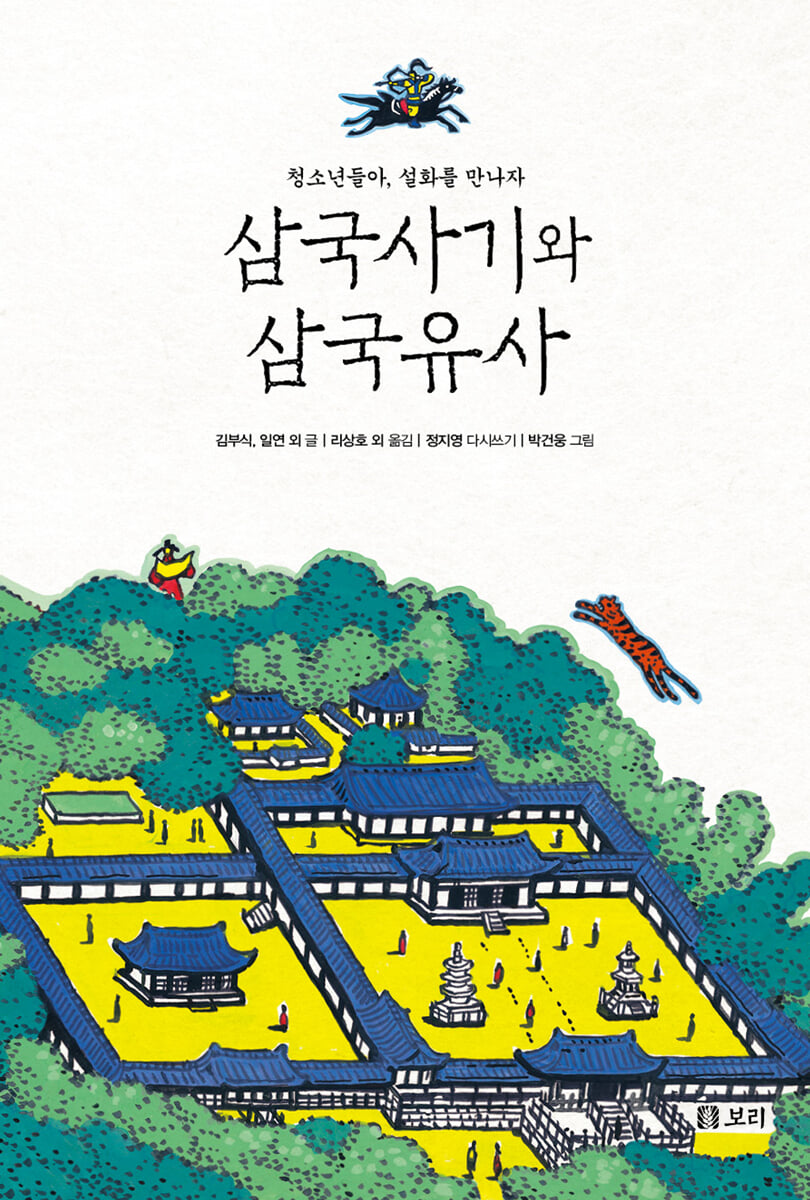
The third book in the Barley Youth Classics 'Encounter' series, 'Samguk Sagi and Samguk Yusa: Youth, Let's Meet the Tales' has been published.
We have selected tales, biographies, and folk tales that have been passed down from ancient times from our people's old history books, 『Samguk Sagi』 and 『Samguk Yusa』.
It contains stories of the founding myths of Goguryeo, Baekje, Silla, and Gaya, the Dangun myth, the stories of outstanding figures who were active during that era, and the stories of the people who were strong and wise in the midst of difficult lives.
In an age overflowing with stories, we have compiled in one volume the folktales that are the roots of our stories and the source of our ancestors' thoughts and imagination.
Author Jiyoung Jeong, a current Korean language teacher, rewrote the book to suit the level of young people and added friendly commentary.
By reading our classics in an enjoyable way, we can look back on our history and the lives of our ancestors.
Mysterious and spiritual tales of our people
Samguk Sagi and Samguk Yusa
The third book in the Barley Youth Classics 'Encounter' series, 'Samguk Sagi and Samguk Yusa: Youth, Let's Meet the Tales' has been published.
We have selected tales, biographies, and folk tales that have been passed down from ancient times from our people's old history books, 『Samguk Sagi』 and 『Samguk Yusa』.
It contains stories of the founding myths of Goguryeo, Baekje, Silla, and Gaya, the Dangun myth, the stories of outstanding figures who were active during that era, and the stories of the people who were strong and wise in the midst of difficult lives.
In an age overflowing with stories, we have compiled in one volume the folktales that are the roots of our stories and the source of our ancestors' thoughts and imagination.
Author Jiyoung Jeong, a current Korean language teacher, rewrote the book to suit the level of young people and added friendly commentary.
By reading our classics in an enjoyable way, we can look back on our history and the lives of our ancestors.
- You can preview some of the book's contents.
Preview
index
Part 1: Benefit All Under Heaven
Gojoseon Dangun 10
Jellyfish and Oil Painting 13
Jumong 19
Glass King 28
Biryu and Onjo 31
Hyeokgeose and Aryeong 35
Seoktalhae 38
Kim Alji's birth 42
Garak Kingdom Story 1 44
Garak Kingdom Story 2 47
Garak Kingdom Story 3 49
Garak Kingdom Story 4 53
Tamna Kingdom Legend 55
Later Baekje King Gyeon Hwon (58th year)
Part 2 Baekje is the round moon, Silla is the crescent moon
Yeo-ok and Gong Hu-in 62
King Yuri and the Emperor 64
Self-Boiling Rice Pot 66
Eulduji's Outstanding Wisdom 68
Prince Hodong 71
The Domi Couple, 73, Who Kept Their Faith
Myungrim Dapbu 76, who did not return even a single horse
Milu and Yuyu, who fought for their country, 78
Changjo-ri 81, who drove out the cruel king
Prince's Horse Footprints 84
Foolish Dog King 86
Ondal and Princess Pyeonggang 91
Seodong and Princess Seonhwa, Ties Through Song, Part 96
Eulji Mundeok of the Battle of Salsu 100
Baekje had a full moon, Silla had a crescent moon 104
Gyebaek, the last general of Baekje, 108
Falling Dead Rock 110
Mangbuseok and Jeongeupsa Temple 112
Part 3: The Chopsticks that Calm the Rough Waves
The Origin and Reminiscence of Gabbae 116
Yeonorang and Seonyeo 118
120 bamboo leaves
Park Jae-sang and his wife 122
The Origin of Yakbap 130
The Taoist Woman and the Ghost's Son, Bihyeongrang 133
Hwangryongsa Temple Nine-story Pagoda 137
The Tortoise and the Hare Story 141
Chosin's Dream 144
Gyeongheung Meets Adults 149
Manpasikjeok 152, a raft that calms rough waves
Manpasikjeok 156, recovered by Bulye-rang
Mrs. Suro 160
The Legend of Jemangmaega and Wolmyeongri 163
King Wonseong 165
Kim Hyun and the Honyeo 168
The Three Dragons that Protect the Nation 173
Cheoyongrang and Manghaesa Temple 175
Geotaji who saved the dragon 178
Solgeo, the painter who fooled even crows, 182
Resurrected Melody 183
Part 4: I will comfort you with a song of lamentation
188 Watermen who achieved great things but were not recognized
Seok-woo, who gave up his life for a single word, 191
Poor Musician Baekgyeol 194
Musician Uruk 196
Kim Hu-jik, who healed the king's faults even after death, 199
Seol's Daughter 202
Three Things Queen Seondeok Guessed 206
The virtuous writer Kang Su 210
Gwanchang, who saved the country by dying 215
Snow Chong and the Flower King 218
Kim Saeng, who never put down his brush, 222
Kim Dae-seong, founder of Bulguksa Temple, 224
Jang Bogo and Jeongnyeon 228
Donkey Ears with the Sutra 231
Choi Chi-won, the outstanding writer 233
238 by Ji-eun, a filial daughter
Reading our classics in depth
ㆍ About Tales and Biographies
ㆍ《Samguk Sagi》 and Kim Bu-sik
ㆍ《Samguk Yusa》 and Ilyeon
Gojoseon Dangun 10
Jellyfish and Oil Painting 13
Jumong 19
Glass King 28
Biryu and Onjo 31
Hyeokgeose and Aryeong 35
Seoktalhae 38
Kim Alji's birth 42
Garak Kingdom Story 1 44
Garak Kingdom Story 2 47
Garak Kingdom Story 3 49
Garak Kingdom Story 4 53
Tamna Kingdom Legend 55
Later Baekje King Gyeon Hwon (58th year)
Part 2 Baekje is the round moon, Silla is the crescent moon
Yeo-ok and Gong Hu-in 62
King Yuri and the Emperor 64
Self-Boiling Rice Pot 66
Eulduji's Outstanding Wisdom 68
Prince Hodong 71
The Domi Couple, 73, Who Kept Their Faith
Myungrim Dapbu 76, who did not return even a single horse
Milu and Yuyu, who fought for their country, 78
Changjo-ri 81, who drove out the cruel king
Prince's Horse Footprints 84
Foolish Dog King 86
Ondal and Princess Pyeonggang 91
Seodong and Princess Seonhwa, Ties Through Song, Part 96
Eulji Mundeok of the Battle of Salsu 100
Baekje had a full moon, Silla had a crescent moon 104
Gyebaek, the last general of Baekje, 108
Falling Dead Rock 110
Mangbuseok and Jeongeupsa Temple 112
Part 3: The Chopsticks that Calm the Rough Waves
The Origin and Reminiscence of Gabbae 116
Yeonorang and Seonyeo 118
120 bamboo leaves
Park Jae-sang and his wife 122
The Origin of Yakbap 130
The Taoist Woman and the Ghost's Son, Bihyeongrang 133
Hwangryongsa Temple Nine-story Pagoda 137
The Tortoise and the Hare Story 141
Chosin's Dream 144
Gyeongheung Meets Adults 149
Manpasikjeok 152, a raft that calms rough waves
Manpasikjeok 156, recovered by Bulye-rang
Mrs. Suro 160
The Legend of Jemangmaega and Wolmyeongri 163
King Wonseong 165
Kim Hyun and the Honyeo 168
The Three Dragons that Protect the Nation 173
Cheoyongrang and Manghaesa Temple 175
Geotaji who saved the dragon 178
Solgeo, the painter who fooled even crows, 182
Resurrected Melody 183
Part 4: I will comfort you with a song of lamentation
188 Watermen who achieved great things but were not recognized
Seok-woo, who gave up his life for a single word, 191
Poor Musician Baekgyeol 194
Musician Uruk 196
Kim Hu-jik, who healed the king's faults even after death, 199
Seol's Daughter 202
Three Things Queen Seondeok Guessed 206
The virtuous writer Kang Su 210
Gwanchang, who saved the country by dying 215
Snow Chong and the Flower King 218
Kim Saeng, who never put down his brush, 222
Kim Dae-seong, founder of Bulguksa Temple, 224
Jang Bogo and Jeongnyeon 228
Donkey Ears with the Sutra 231
Choi Chi-won, the outstanding writer 233
238 by Ji-eun, a filial daughter
Reading our classics in depth
ㆍ About Tales and Biographies
ㆍ《Samguk Sagi》 and Kim Bu-sik
ㆍ《Samguk Yusa》 and Ilyeon
Detailed image
.jpg)
Into the book
Finally, Jumong left for the southern land and arrived at a place called Eomchesu (present-day Amnok River).
I tried to cross the river, but there was no boat.
He was worried that the pursuing soldiers would soon catch up.
Jumong pointed to the sky with his whip and sighed deeply as he prayed.
“I am the grandson of the Emperor of Heaven and the grandson of the River God.
Now that I have escaped the tributary and come here, may heaven and earth have mercy on your descendants and quickly build a bridge for them.”
Then, when he struck the water with his bow, fish and snails floated to the surface of the water and formed a bridge.
Finally, Jumong was able to cross the river.
Soon the pursuing soldiers arrived, but as they reached the riverbank, the bridge made by the fish and the sea urchins soon fell apart.
So all those who had already climbed onto the bridge fell into the water and died.
--- p.22 "Go Jumong"
One day, Gwak Ri-ja-go woke up at dawn and went out to the river to do some fishing.
At that moment, a crazy man with white hair, his hair in a messy bun, holding a bottle, was crossing the river against the rushing waves.
His wife followed him in a panic and shouted at him not to cross, but before she could do anything, the man was swept into the river and drowned.
When things turned out this way, the wife took out the gonghu and composed a song called “I told you not to cross the river [Gongmudoha],” and the melody was very sad and sorrowful.
And when the woman finished singing, she threw herself into the river and died.
--- p.62 "Yeo-ok and Gong Hu-in"
The king said in anger.
“You are already my subject, so how can you say you are a subject of Gyerim? I should punish you in every way, but if you simply say you are a subject of Wa, I will surely reward you with a high position.”
Park Jae-sang said.
“I would rather be a dog or a pig in Gyerim than a subject of Wa.
“I would rather be beaten by Gyerim than accept a foreign official position or salary.”
The king of Wa had the stuffed animal skinned and run on a stump made of reeds.
The king asked again.
--- p.127 "Park Jae-sang and his wife"
"As the old saying goes, 'Many mouths can melt even iron.' So how could such a small creature in the ocean not fear the voices of many people? If you have the people of this region sing a song and tap the hill with sticks, you will be able to see your wife."
When Sunjeonggong did as he was told, the dragon came out of the sea with his wife and presented her to him.
When the Duke asked his wife about the underwater world, she said:
“In a palace adorned with various jewels, the food was sweet, soft, fragrant, and clean, not like the food eaten in the human world.”
--- p.161 "Lady Suro"
When Seol refused and tried to run away quietly, he was unable to do so. He went to the stable and saw the horse that Gasil had left behind. He sighed deeply and shed tears.
At that time, Gasil came back to replace him, but he looked so haggard and his clothes were worn out that even the people in the house did not recognize him and said he was a different person.
Gasil ran forward and threw a broken mirror, and Seol-ssi caught it and started sobbing.
My father and his family were so happy that they didn't know what to do.
I tried to cross the river, but there was no boat.
He was worried that the pursuing soldiers would soon catch up.
Jumong pointed to the sky with his whip and sighed deeply as he prayed.
“I am the grandson of the Emperor of Heaven and the grandson of the River God.
Now that I have escaped the tributary and come here, may heaven and earth have mercy on your descendants and quickly build a bridge for them.”
Then, when he struck the water with his bow, fish and snails floated to the surface of the water and formed a bridge.
Finally, Jumong was able to cross the river.
Soon the pursuing soldiers arrived, but as they reached the riverbank, the bridge made by the fish and the sea urchins soon fell apart.
So all those who had already climbed onto the bridge fell into the water and died.
--- p.22 "Go Jumong"
One day, Gwak Ri-ja-go woke up at dawn and went out to the river to do some fishing.
At that moment, a crazy man with white hair, his hair in a messy bun, holding a bottle, was crossing the river against the rushing waves.
His wife followed him in a panic and shouted at him not to cross, but before she could do anything, the man was swept into the river and drowned.
When things turned out this way, the wife took out the gonghu and composed a song called “I told you not to cross the river [Gongmudoha],” and the melody was very sad and sorrowful.
And when the woman finished singing, she threw herself into the river and died.
--- p.62 "Yeo-ok and Gong Hu-in"
The king said in anger.
“You are already my subject, so how can you say you are a subject of Gyerim? I should punish you in every way, but if you simply say you are a subject of Wa, I will surely reward you with a high position.”
Park Jae-sang said.
“I would rather be a dog or a pig in Gyerim than a subject of Wa.
“I would rather be beaten by Gyerim than accept a foreign official position or salary.”
The king of Wa had the stuffed animal skinned and run on a stump made of reeds.
The king asked again.
--- p.127 "Park Jae-sang and his wife"
"As the old saying goes, 'Many mouths can melt even iron.' So how could such a small creature in the ocean not fear the voices of many people? If you have the people of this region sing a song and tap the hill with sticks, you will be able to see your wife."
When Sunjeonggong did as he was told, the dragon came out of the sea with his wife and presented her to him.
When the Duke asked his wife about the underwater world, she said:
“In a palace adorned with various jewels, the food was sweet, soft, fragrant, and clean, not like the food eaten in the human world.”
--- p.161 "Lady Suro"
When Seol refused and tried to run away quietly, he was unable to do so. He went to the stable and saw the horse that Gasil had left behind. He sighed deeply and shed tears.
At that time, Gasil came back to replace him, but he looked so haggard and his clothes were worn out that even the people in the house did not recognize him and said he was a different person.
Gasil ran forward and threw a broken mirror, and Seol-ssi caught it and started sobbing.
My father and his family were so happy that they didn't know what to do.
--- p.205 "Mr. Seol's Daughter"
Publisher's Review
In an age overflowing with stories, why should we read the archetypes of our own stories, the "folk tales"?
Now is the 'age of stories'.
Storytelling is essential for marketing products produced by companies, and it also serves as a powerful weapon for contestants in television audition programs.
The dramas and other content we enjoy watching also have a hard time gaining popularity if the story is weak.
Stories move people's hearts and bring people together.
Some people find strength to live and learn wisdom from stories.
The stories people love and relate to are similar in many ways and seem to come from the same roots.
So what are the roots of our story? What is the beginning, the first story?
The prototype of our story can be found in ‘folk tales.’
A folktale is a story that has been passed down from ancient times.
It has been created, added to, developed, and enriched over a long period of time from the primitive era to the present day.
Tales, which encompass the real world and the fantasy world, the conscious and the unconscious, fully capture the image of the era in which they were created and the thoughts and imagination of the people of that era.
Afterwards, it developed into gossip, anecdotes, novels, and folk tales, and has had an influence to this day.
Our classics, Samguk Sagi and Samguk Yusa, are easy for young people to read.
The third in the series of Barley Youth Classics ‘Meeting’, ‘Samguk Sagi and Samguk Yusa - Youth, Let’s Meet Tales’, is based on ‘Samguk Sagi’ and ‘Samguk Yusa’, and includes tales and biographical works selected from national classics such as ‘Osan Seollim’ and ‘Dongguk Yeoji Seungram’.
Our people's old history books, Samguk Sagi and Samguk Yusa, contain the founding myths, legends, and folk tales of Gojoseon, Goguryeo, Baekje, Silla, and Gaya.
These stories were probably created long before the writing of the Samguk Sagi and Samguk Yusa, and were passed down by word of mouth before being included in books.
These are stories that people in the past created and passed down, adding to or subtracting from, and developing together.
In "Samguk Sagi and Samguk Yusa - Youth, Let's Meet the Tales," the mysterious myths and legends from the Dangun era to the Goryeo Dynasty, as well as the stories of various figures who were active during that era, unfold in an exciting way.
Lee Sang-ho, who translated the original text written in Chinese characters into Korean, completed an easy-to-read translation using simple language and rhythmic sentences.
Based on this translation, author Jiyoung Jeong, a current Korean language teacher, refined the sentences and added explanations to make it easier for young people to read.
At the end of each chapter, a commentary is provided that adds historical background and detailed explanations to aid understanding.
Additionally, artist Park Geon-woong's sophisticated and lively drawings add to the interest.
A time to meet old people and learn more about our history and culture.
The 12th century Goryeo Dynasty, when the Samguk Sagi was written, was a time of political turmoil both internally and externally, as the Jin Dynasty destroyed the Northern Song Dynasty.
Samguk Yusa was written during a time when the country was reduced to ashes due to the war with Mongolia.
The editors of this book, Kim Bu-sik and Il-yeon, compiled it with the hope that the people would take pride in their history and culture.
The mysterious founding myths of Gojoseon, Goguryeo, Baekje, Silla, and Gaya ('Gojoseon Dangun', 'Haemosu and Yuhwa', 'The Legend of Tamna County', etc.), and stories about kings ('The Foolish King Gaero', 'King Wonseong', 'Three Things Guessed by Queen Seondeok', etc.), stories about brave generals and loyal subjects ('Changjori, Who Drives Out the Vicious King', 'Eulji Mundeok of the Battle of Salsu', 'Gyebaek, the Last General of Baekje', etc.), stories about outstanding artists ('Solgeo, the Painter Who Deceived Even Crows', 'The Poor Musician Baekgyeol', 'The Excellent Musician Choi Chiwon', etc.), stories about old songs such as hyangga and gayo ('Yeo-ok and Gonghu-in', 'King Yuri's Hwangjo-ga', 'Mangbu-seok and Jeongeupsa Temple', 'The Legend of Jemangmae-ga and Wolmyeong-ri', etc.), and stories about wise and upright people ('The Man who Kept Faith') In the fields of ‘Domi Couple’, ‘Hyo-nyeo Ji-eun’, etc., we can meet people from the past who are vividly alive and moving.
By reading about the lives and thoughts of people from the past, we can gain a deeper understanding of our land, our history, and our culture.
Now is the 'age of stories'.
Storytelling is essential for marketing products produced by companies, and it also serves as a powerful weapon for contestants in television audition programs.
The dramas and other content we enjoy watching also have a hard time gaining popularity if the story is weak.
Stories move people's hearts and bring people together.
Some people find strength to live and learn wisdom from stories.
The stories people love and relate to are similar in many ways and seem to come from the same roots.
So what are the roots of our story? What is the beginning, the first story?
The prototype of our story can be found in ‘folk tales.’
A folktale is a story that has been passed down from ancient times.
It has been created, added to, developed, and enriched over a long period of time from the primitive era to the present day.
Tales, which encompass the real world and the fantasy world, the conscious and the unconscious, fully capture the image of the era in which they were created and the thoughts and imagination of the people of that era.
Afterwards, it developed into gossip, anecdotes, novels, and folk tales, and has had an influence to this day.
Our classics, Samguk Sagi and Samguk Yusa, are easy for young people to read.
The third in the series of Barley Youth Classics ‘Meeting’, ‘Samguk Sagi and Samguk Yusa - Youth, Let’s Meet Tales’, is based on ‘Samguk Sagi’ and ‘Samguk Yusa’, and includes tales and biographical works selected from national classics such as ‘Osan Seollim’ and ‘Dongguk Yeoji Seungram’.
Our people's old history books, Samguk Sagi and Samguk Yusa, contain the founding myths, legends, and folk tales of Gojoseon, Goguryeo, Baekje, Silla, and Gaya.
These stories were probably created long before the writing of the Samguk Sagi and Samguk Yusa, and were passed down by word of mouth before being included in books.
These are stories that people in the past created and passed down, adding to or subtracting from, and developing together.
In "Samguk Sagi and Samguk Yusa - Youth, Let's Meet the Tales," the mysterious myths and legends from the Dangun era to the Goryeo Dynasty, as well as the stories of various figures who were active during that era, unfold in an exciting way.
Lee Sang-ho, who translated the original text written in Chinese characters into Korean, completed an easy-to-read translation using simple language and rhythmic sentences.
Based on this translation, author Jiyoung Jeong, a current Korean language teacher, refined the sentences and added explanations to make it easier for young people to read.
At the end of each chapter, a commentary is provided that adds historical background and detailed explanations to aid understanding.
Additionally, artist Park Geon-woong's sophisticated and lively drawings add to the interest.
A time to meet old people and learn more about our history and culture.
The 12th century Goryeo Dynasty, when the Samguk Sagi was written, was a time of political turmoil both internally and externally, as the Jin Dynasty destroyed the Northern Song Dynasty.
Samguk Yusa was written during a time when the country was reduced to ashes due to the war with Mongolia.
The editors of this book, Kim Bu-sik and Il-yeon, compiled it with the hope that the people would take pride in their history and culture.
The mysterious founding myths of Gojoseon, Goguryeo, Baekje, Silla, and Gaya ('Gojoseon Dangun', 'Haemosu and Yuhwa', 'The Legend of Tamna County', etc.), and stories about kings ('The Foolish King Gaero', 'King Wonseong', 'Three Things Guessed by Queen Seondeok', etc.), stories about brave generals and loyal subjects ('Changjori, Who Drives Out the Vicious King', 'Eulji Mundeok of the Battle of Salsu', 'Gyebaek, the Last General of Baekje', etc.), stories about outstanding artists ('Solgeo, the Painter Who Deceived Even Crows', 'The Poor Musician Baekgyeol', 'The Excellent Musician Choi Chiwon', etc.), stories about old songs such as hyangga and gayo ('Yeo-ok and Gonghu-in', 'King Yuri's Hwangjo-ga', 'Mangbu-seok and Jeongeupsa Temple', 'The Legend of Jemangmae-ga and Wolmyeong-ri', etc.), and stories about wise and upright people ('The Man who Kept Faith') In the fields of ‘Domi Couple’, ‘Hyo-nyeo Ji-eun’, etc., we can meet people from the past who are vividly alive and moving.
By reading about the lives and thoughts of people from the past, we can gain a deeper understanding of our land, our history, and our culture.
GOODS SPECIFICS
- Date of issue: April 29, 2024
- Page count, weight, size: 252 pages | 456g | 152*225*16mm
- ISBN13: 9791163143574
You may also like
카테고리
korean


korean

![GQ KOREA Mark (Monthly): December [2025]](http://librairie.coreenne.fr/cdn/shop/files/8ef265dbbfbf186523ed75ba7319009d.jpg?v=1765340328&width=3840)


