

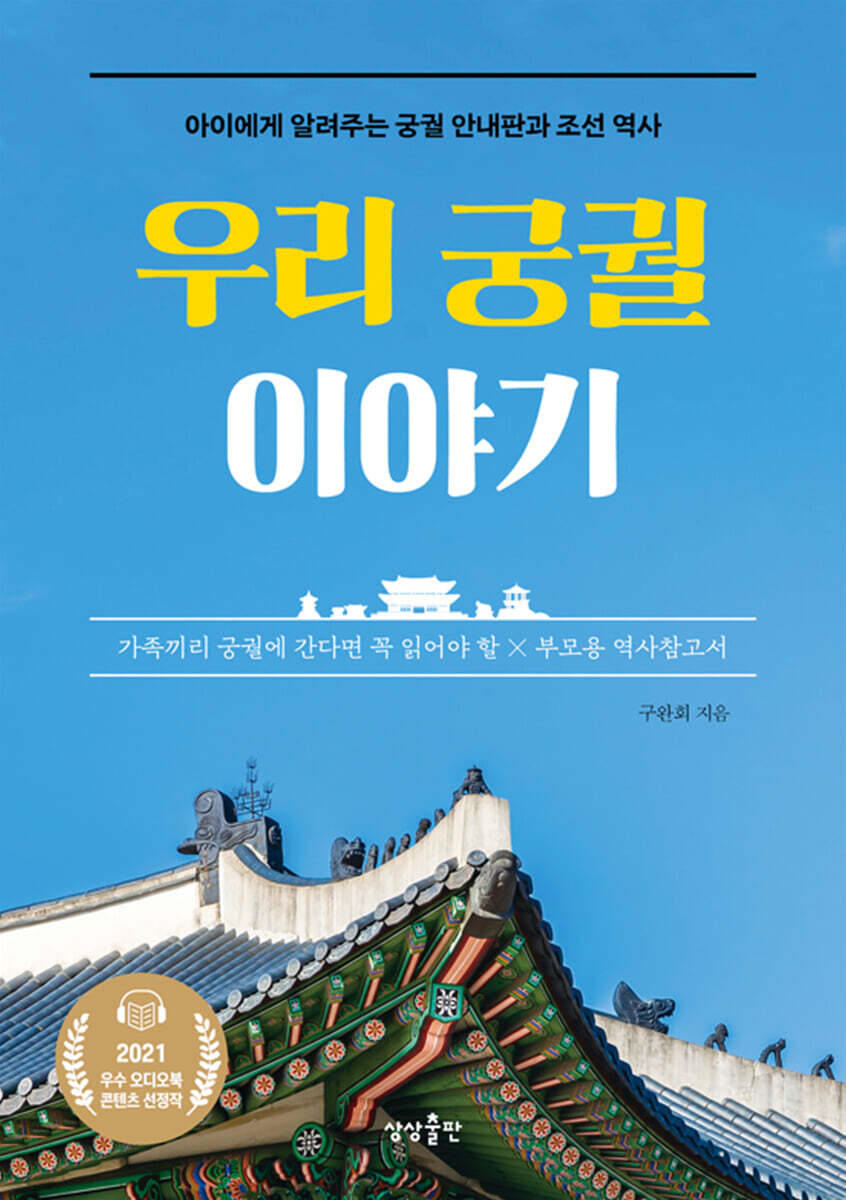
Our Palace Story
 |
Description
Book Introduction
The palace guide signs provide easy and detailed explanations.
The only book in Korea!
The first thing you see when you visit the palace is the signboard guarding the front of the building.
The palace information boards convey information in a concise and efficient manner, but they still feel difficult and stiff.
It is also full of Chinese characters and old words that seem familiar but are not, such as Beopgung, Jeongjeon, Haenggak, Geumcheon, Naejeon, and Oejeon.
Any parent has probably had the experience of reading these signs with their children and being confused by the unfamiliar content.
“Our Palace Story” is a book for such people.
Parents should first understand the contents of the palace information board and then guide them to explain it to their children in an easy and fun way.
This book is not simply a guidebook for palace tours.
This is a storybook that explores the past and present of the palace, and can be considered a historical reference book for parents.
It goes beyond simply explaining the contents of the signboard, and also presents various stories, including the historical events intertwined with each building, as well as related figures, architectural styles, the appearance of the royal family and court life during the Joseon Dynasty, and even the pain of the Japanese colonial period.
This is a good read not only for parents who want to teach their children, but also for the general public who do not know much about history.
With the information on the guide board, written from a child's perspective, you can take a step closer to our cultural heritage and history, which we have always known little about.
We encourage you to enjoy the interesting and rich stories of our palaces through “Our Palace Stories.”
The only book in Korea!
The first thing you see when you visit the palace is the signboard guarding the front of the building.
The palace information boards convey information in a concise and efficient manner, but they still feel difficult and stiff.
It is also full of Chinese characters and old words that seem familiar but are not, such as Beopgung, Jeongjeon, Haenggak, Geumcheon, Naejeon, and Oejeon.
Any parent has probably had the experience of reading these signs with their children and being confused by the unfamiliar content.
“Our Palace Story” is a book for such people.
Parents should first understand the contents of the palace information board and then guide them to explain it to their children in an easy and fun way.
This book is not simply a guidebook for palace tours.
This is a storybook that explores the past and present of the palace, and can be considered a historical reference book for parents.
It goes beyond simply explaining the contents of the signboard, and also presents various stories, including the historical events intertwined with each building, as well as related figures, architectural styles, the appearance of the royal family and court life during the Joseon Dynasty, and even the pain of the Japanese colonial period.
This is a good read not only for parents who want to teach their children, but also for the general public who do not know much about history.
With the information on the guide board, written from a child's perspective, you can take a step closer to our cultural heritage and history, which we have always known little about.
We encourage you to enjoy the interesting and rich stories of our palaces through “Our Palace Stories.”
- You can preview some of the book's contents.
Preview
index
Author's Note: If you know the sign, you can see our palace!
Prologue_ Why are there five palaces in Joseon?
Chapter 1: Gyeongbokgung Palace: The turbulent Joseon Dynasty, the foremost royal palace
Gyeongbokgung Palace: Three Things to Know Before You Visit
Map_ Gyeongbokgung Palace past and present
Gwanghwamun and the Palace Wall_ The Japanese Empire and the Government-General of Korea, the Gwanghwamun Suffering
Geunjeongjeon Hall area_ Hwama and Deumu, Phoenix Dapdo and Park Seok's wisdom
Donggung Palace area_ Crown Prince's study and palace back room
Sojubang_ The King's Table
Sajeongjeon Ilwon_Sangcham and Gyeongyeon Story
Gangnyeongjeon and Gyotaejeon_The King's Bedchamber and Yongmaru
Jagyeongjeon Hall_ Flower Wall of Heungseon Daewongun and Queen Dowager Jo
Hyangwonjeong and Geoncheonggung Palace_ A figure skating party enjoyed by Empress Myeongseong
Jibokjae area_ Chinese-style royal library
Taewonjeon area_ The King's portrait, a tragedy of modern history
Gyeonghoeru_ The story of King Danjong's love affair and his wild rage
Before the Sujeongjeon and the Royal Cabinet_ The story of King Sejong, Jiphyeonjeon, and the Royal Cabinet
A more interesting historical story when you know it 1_ A busy, busy day in the life of a Joseon king
A more interesting historical story when you know it 2_ Please don't let me be born as a queen again
Chapter 2: Changdeokgung Palace's Nine-tiered Palace, Secret Beauty
Changdeokgung Palace: Three Things to Know Before You Visit
Map_ Changdeokgung Palace past and present
Donhwamun area_Why were the 'Samjeongseung trees' planted?
Gwolnaegaksa_ If you want to be successful, go to 'Okdang'!
Injeongjeon Hall_ The meaning of the plum blossom pattern on the ridge
Seonjeongjeon_ The only blue and white tiles in Joseon palaces
Heejeongdang_ Prince Hyomyeong's dream that never fully bloomed
Daejojeon area_ The tragic scene of the Gyeongsul national shame
Nakseonjae area_ The story of Princess Deokhye, the youngest daughter of King Gojong
Buyongji Pond and Juhapnu Pavilion - Where Yi Mong-ryong from Chunhyangjeon took the civil service examination
Aeryeonji and Uiduhap_ King Sukjong, who loved lotus flowers
Yeongyeongdang: Strengthening royal authority through ritual, 'politics of etiquette and music'
Jondeokjeong and Pyumwusa - Enjoying Joseon's Various Pavilions
Okryucheon area_ Okryucheon waterfall is a whopping 400m?
History Stories That Are More Interesting When You Know Them 3_ The Pie in the Sky, Sinmungo
History Stories That Are More Interesting When You Know Them 4_ A Complete Guide to the Mysterious Royal Titles
Chapter 3: The Curse of Jang Hui-bin of Changgyeonggung Palace and the Tragedy of Crown Prince Sado
Changgyeonggung Palace: Two Good Things to Know
Map_ Changgyeonggung Palace past and present
Honghwamun Gate and the Outer Pavilion: A Meeting Place for King Yeongjo and His People
Myeongjeongjeon area_ In search of King Jeongjo's personal guard, Jangyongyeong
Munjeongjeon Hall_The scene of Prince Sado's tragedy
Gwancheondae_ Joseon Dynasty astronomical observatory
Sungmundang and Haminjeong_ Admiring King Yeongjo's handwritten plaque
Gyeongchunjeon and Hwangyeongjeon: The Story of Dae Jang Geum, King Jungjong's Physician
Tongmyeongjeon and Yanghwadang - Where Jang Hui-bin's Curse Remains
Yeongchunjeon and Jibokheon_ What is the truth behind the theory that King Jeongjo was poisoned?
Gwandeokjeong and Jipchunmun_ Cooling off in the cool breeze
History Stories That Are More Interesting When You Know Them 5_ From Death to the Royal Tomb, the King's Funeral
History Stories That Are More Interesting When You Know Them 6_ Palace People, Court Ladies, and Eunuchs
Chapter 4: Deoksugung Palace: The Temporary Palace of the Imjin War, the Imperial Palace of the Korean Empire
Deoksugung Palace, two good things to know when you visit
Map_ Deoksugung Palace past and present
Hwangudan_ Where Emperor Gojong ascended to the throne
Daehanmun Ilwon_ Long live the Korean Empire!
The Junghwajeon Hall_ The Emperor's abdication ceremony performed by a eunuch
Member of the Jikjodang_ Gwanghaegun's ascension to the throne, the scene of Injo's Restoration
Seokjojeon Hall Area_ A building that shared the same fate as the Korean Empire
Jeonggwanheon_ Coffee and the attempted assassination of Emperor Gojong
Hamnyeongjeon and Deokhongjeon_ A phone call from Emperor Gojong that saved the young Kim Gu
Jungmyeongjeon_From the Eulsa Treaty to the Hague Secret Envoy
Former Russian Embassy_ Revisiting the 'Agwan Pacheon'
History stories that are more interesting when you know them 7_ The King's Toilet, Very Tight
History Stories That Are More Interesting When You Know Them 8_ Palace Guardians, Miscellaneous Statues, and Numbers
Chapter 5: Gyeonghee Palace: Rediscovering Our Palace, Rediscovering Our History
Gyeonghee Palace: A Good Story to Know
Map_ Gyeonghee Palace past and present
Gyeonghee Palace's Heunghwamun Gate_ The Strange Fate of Heunghwamun Gate
Sungjeongjeon_Why are there two Sungjeongjeon?
Taeryeongjeon_ Portrait of the King, a story of virtue
History Stories That Are More Interesting When You Know Them 9_ Naming Old Buildings, Jeon-dang-hap-gak-jae-heon-ru-jeong
History Stories That Are More Interesting When You Know Them 10_ Reading Old Buildings Through Pictures
Prologue_ Why are there five palaces in Joseon?
Chapter 1: Gyeongbokgung Palace: The turbulent Joseon Dynasty, the foremost royal palace
Gyeongbokgung Palace: Three Things to Know Before You Visit
Map_ Gyeongbokgung Palace past and present
Gwanghwamun and the Palace Wall_ The Japanese Empire and the Government-General of Korea, the Gwanghwamun Suffering
Geunjeongjeon Hall area_ Hwama and Deumu, Phoenix Dapdo and Park Seok's wisdom
Donggung Palace area_ Crown Prince's study and palace back room
Sojubang_ The King's Table
Sajeongjeon Ilwon_Sangcham and Gyeongyeon Story
Gangnyeongjeon and Gyotaejeon_The King's Bedchamber and Yongmaru
Jagyeongjeon Hall_ Flower Wall of Heungseon Daewongun and Queen Dowager Jo
Hyangwonjeong and Geoncheonggung Palace_ A figure skating party enjoyed by Empress Myeongseong
Jibokjae area_ Chinese-style royal library
Taewonjeon area_ The King's portrait, a tragedy of modern history
Gyeonghoeru_ The story of King Danjong's love affair and his wild rage
Before the Sujeongjeon and the Royal Cabinet_ The story of King Sejong, Jiphyeonjeon, and the Royal Cabinet
A more interesting historical story when you know it 1_ A busy, busy day in the life of a Joseon king
A more interesting historical story when you know it 2_ Please don't let me be born as a queen again
Chapter 2: Changdeokgung Palace's Nine-tiered Palace, Secret Beauty
Changdeokgung Palace: Three Things to Know Before You Visit
Map_ Changdeokgung Palace past and present
Donhwamun area_Why were the 'Samjeongseung trees' planted?
Gwolnaegaksa_ If you want to be successful, go to 'Okdang'!
Injeongjeon Hall_ The meaning of the plum blossom pattern on the ridge
Seonjeongjeon_ The only blue and white tiles in Joseon palaces
Heejeongdang_ Prince Hyomyeong's dream that never fully bloomed
Daejojeon area_ The tragic scene of the Gyeongsul national shame
Nakseonjae area_ The story of Princess Deokhye, the youngest daughter of King Gojong
Buyongji Pond and Juhapnu Pavilion - Where Yi Mong-ryong from Chunhyangjeon took the civil service examination
Aeryeonji and Uiduhap_ King Sukjong, who loved lotus flowers
Yeongyeongdang: Strengthening royal authority through ritual, 'politics of etiquette and music'
Jondeokjeong and Pyumwusa - Enjoying Joseon's Various Pavilions
Okryucheon area_ Okryucheon waterfall is a whopping 400m?
History Stories That Are More Interesting When You Know Them 3_ The Pie in the Sky, Sinmungo
History Stories That Are More Interesting When You Know Them 4_ A Complete Guide to the Mysterious Royal Titles
Chapter 3: The Curse of Jang Hui-bin of Changgyeonggung Palace and the Tragedy of Crown Prince Sado
Changgyeonggung Palace: Two Good Things to Know
Map_ Changgyeonggung Palace past and present
Honghwamun Gate and the Outer Pavilion: A Meeting Place for King Yeongjo and His People
Myeongjeongjeon area_ In search of King Jeongjo's personal guard, Jangyongyeong
Munjeongjeon Hall_The scene of Prince Sado's tragedy
Gwancheondae_ Joseon Dynasty astronomical observatory
Sungmundang and Haminjeong_ Admiring King Yeongjo's handwritten plaque
Gyeongchunjeon and Hwangyeongjeon: The Story of Dae Jang Geum, King Jungjong's Physician
Tongmyeongjeon and Yanghwadang - Where Jang Hui-bin's Curse Remains
Yeongchunjeon and Jibokheon_ What is the truth behind the theory that King Jeongjo was poisoned?
Gwandeokjeong and Jipchunmun_ Cooling off in the cool breeze
History Stories That Are More Interesting When You Know Them 5_ From Death to the Royal Tomb, the King's Funeral
History Stories That Are More Interesting When You Know Them 6_ Palace People, Court Ladies, and Eunuchs
Chapter 4: Deoksugung Palace: The Temporary Palace of the Imjin War, the Imperial Palace of the Korean Empire
Deoksugung Palace, two good things to know when you visit
Map_ Deoksugung Palace past and present
Hwangudan_ Where Emperor Gojong ascended to the throne
Daehanmun Ilwon_ Long live the Korean Empire!
The Junghwajeon Hall_ The Emperor's abdication ceremony performed by a eunuch
Member of the Jikjodang_ Gwanghaegun's ascension to the throne, the scene of Injo's Restoration
Seokjojeon Hall Area_ A building that shared the same fate as the Korean Empire
Jeonggwanheon_ Coffee and the attempted assassination of Emperor Gojong
Hamnyeongjeon and Deokhongjeon_ A phone call from Emperor Gojong that saved the young Kim Gu
Jungmyeongjeon_From the Eulsa Treaty to the Hague Secret Envoy
Former Russian Embassy_ Revisiting the 'Agwan Pacheon'
History stories that are more interesting when you know them 7_ The King's Toilet, Very Tight
History Stories That Are More Interesting When You Know Them 8_ Palace Guardians, Miscellaneous Statues, and Numbers
Chapter 5: Gyeonghee Palace: Rediscovering Our Palace, Rediscovering Our History
Gyeonghee Palace: A Good Story to Know
Map_ Gyeonghee Palace past and present
Gyeonghee Palace's Heunghwamun Gate_ The Strange Fate of Heunghwamun Gate
Sungjeongjeon_Why are there two Sungjeongjeon?
Taeryeongjeon_ Portrait of the King, a story of virtue
History Stories That Are More Interesting When You Know Them 9_ Naming Old Buildings, Jeon-dang-hap-gak-jae-heon-ru-jeong
History Stories That Are More Interesting When You Know Them 10_ Reading Old Buildings Through Pictures
Detailed image

Publisher's Review
Approaching the palace with interest
500-year history of the Joseon Dynasty
The five palaces in Seoul witnessed the rise and fall of the Joseon Dynasty over the course of 500 years.
The palace is filled with the history and pain of countless destructions from the period of Chinese vassalage, the establishment of the Korean Empire, and the Japanese colonial period.
That is why Joseon history cannot be left out when touring the palace.
Children often find history difficult.
I perceive it as a boring subject full of things to memorize.
But, as the author says, history is an interesting old story that comes with both inspiration and lessons.
This book explains the history contained within the palace while touring it.
Aren't you curious about the stories of King Sejong personally covering his subjects with dragon robes? The story of Crown Prince Sado, who died trapped in a rice chest? The story of King Gojong, who was deprived of even the luxury of enjoying coffee? The stories of King Gwanghaegun and Crown Prince Sohyeon, Princess Deokhye, and Empress Sunjeong, who all lived tragic lives? And what about the humiliations the palace endured during the Japanese colonial period?
The Government-General Building, built in the middle of the palace to block the energy of Bukaksan Mountain, and Gwanghwamun Gate, which had to stand awkwardly because of it; Chundangji Pond, which the Japanese turned into a boating amusement park; and even the Grand Greenhouse, which was built to turn Changgyeonggung Palace into a zoo.
Traces of the numerous atrocities committed by the Japanese remain in our palaces until recently, or even now.
Through these stories, we can help children approach history in a more accessible and interesting way.
Curious stories about the palace buildings,
The more you know, the more interesting the backstory becomes.
When you tour the palace, these questions naturally arise.
Why are there five palaces in Seoul? Why is only Seonjeongjeon Hall in Changdeokgung Palace covered with blue tiles? Why isn't the grounds of Deoksugung Palace square? Why is Hwangudan, the main gate of Deoksugung Palace, used as the main gate of a hotel? Why is the site of Gyeonghuigung Palace called Gyeonghuigung Palace and not Gyeonghuigung Palace?
These books naturally elicit these questions and provide easy-to-understand explanations.
It's a story that you didn't know when you were walking around, but if you think about it, all the stories you're curious about are contained here.
Of course, if children are not curious, parents can guide the questions and provide information.
This way, you can learn naturally and have fun touring palaces that were previously considered boring historical sites or mere outing spots.
In addition, an interesting story was also included.
The story of the king's busy schedule, the royal archives that were considered a pie in the sky by the common people, the story of the queen who never wanted to be born again as queen, and the story of the palace maids and eunuchs were told in a way that was fun to understand and remember without having to memorize them.
A route to efficiently tour the palace
Must-see points in each building
Although restoration work is still actively underway on all five palaces, much of the damage has been done compared to when they were at their peak.
This is especially true for Deoksugung Palace, where private facilities have been built on a significant portion of the former palace grounds, and Gyeonghuigung Palace, which could be said to be in a state of disintegration.
Changdeokgung and Changgyeonggung, which were operated together under the name of 'Donggwol', were also humiliated by the Japanese in various ways.
This book includes an old map of each palace from the Joseon Dynasty at the beginning of each chapter, allowing readers to see at a glance how the original appearance differs from the current appearance.
Additionally, it provides the optimal route to efficiently tour the palace according to the flow of the story, as well as viewing points for each building.
It also points out things that you shouldn't miss in each building, such as the eleven miscellaneous statues that can only be found on the eaves of Gyeonghoeru, the seven-clawed yellow dragon painted on the ceiling of Geunjeongjeon, the ridge that is only absent on the roof of Gangnyeongjeon, the Nakseonjae signboard written by Heungseon Daewongun, and the blue tiles that can only be found on the roof of Seonjeongjeon in Changdeokgung among all the palaces.
Let's go on a time travel into the nine-story palace, shrouded in layers of secrets.
500-year history of the Joseon Dynasty
The five palaces in Seoul witnessed the rise and fall of the Joseon Dynasty over the course of 500 years.
The palace is filled with the history and pain of countless destructions from the period of Chinese vassalage, the establishment of the Korean Empire, and the Japanese colonial period.
That is why Joseon history cannot be left out when touring the palace.
Children often find history difficult.
I perceive it as a boring subject full of things to memorize.
But, as the author says, history is an interesting old story that comes with both inspiration and lessons.
This book explains the history contained within the palace while touring it.
Aren't you curious about the stories of King Sejong personally covering his subjects with dragon robes? The story of Crown Prince Sado, who died trapped in a rice chest? The story of King Gojong, who was deprived of even the luxury of enjoying coffee? The stories of King Gwanghaegun and Crown Prince Sohyeon, Princess Deokhye, and Empress Sunjeong, who all lived tragic lives? And what about the humiliations the palace endured during the Japanese colonial period?
The Government-General Building, built in the middle of the palace to block the energy of Bukaksan Mountain, and Gwanghwamun Gate, which had to stand awkwardly because of it; Chundangji Pond, which the Japanese turned into a boating amusement park; and even the Grand Greenhouse, which was built to turn Changgyeonggung Palace into a zoo.
Traces of the numerous atrocities committed by the Japanese remain in our palaces until recently, or even now.
Through these stories, we can help children approach history in a more accessible and interesting way.
Curious stories about the palace buildings,
The more you know, the more interesting the backstory becomes.
When you tour the palace, these questions naturally arise.
Why are there five palaces in Seoul? Why is only Seonjeongjeon Hall in Changdeokgung Palace covered with blue tiles? Why isn't the grounds of Deoksugung Palace square? Why is Hwangudan, the main gate of Deoksugung Palace, used as the main gate of a hotel? Why is the site of Gyeonghuigung Palace called Gyeonghuigung Palace and not Gyeonghuigung Palace?
These books naturally elicit these questions and provide easy-to-understand explanations.
It's a story that you didn't know when you were walking around, but if you think about it, all the stories you're curious about are contained here.
Of course, if children are not curious, parents can guide the questions and provide information.
This way, you can learn naturally and have fun touring palaces that were previously considered boring historical sites or mere outing spots.
In addition, an interesting story was also included.
The story of the king's busy schedule, the royal archives that were considered a pie in the sky by the common people, the story of the queen who never wanted to be born again as queen, and the story of the palace maids and eunuchs were told in a way that was fun to understand and remember without having to memorize them.
A route to efficiently tour the palace
Must-see points in each building
Although restoration work is still actively underway on all five palaces, much of the damage has been done compared to when they were at their peak.
This is especially true for Deoksugung Palace, where private facilities have been built on a significant portion of the former palace grounds, and Gyeonghuigung Palace, which could be said to be in a state of disintegration.
Changdeokgung and Changgyeonggung, which were operated together under the name of 'Donggwol', were also humiliated by the Japanese in various ways.
This book includes an old map of each palace from the Joseon Dynasty at the beginning of each chapter, allowing readers to see at a glance how the original appearance differs from the current appearance.
Additionally, it provides the optimal route to efficiently tour the palace according to the flow of the story, as well as viewing points for each building.
It also points out things that you shouldn't miss in each building, such as the eleven miscellaneous statues that can only be found on the eaves of Gyeonghoeru, the seven-clawed yellow dragon painted on the ceiling of Geunjeongjeon, the ridge that is only absent on the roof of Gangnyeongjeon, the Nakseonjae signboard written by Heungseon Daewongun, and the blue tiles that can only be found on the roof of Seonjeongjeon in Changdeokgung among all the palaces.
Let's go on a time travel into the nine-story palace, shrouded in layers of secrets.
GOODS SPECIFICS
- Publication date: November 1, 2021
- Page count, weight, size: 288 pages | 478g | 148*210*20mm
- ISBN13: 9791167820341
- ISBN10: 1167820347
You may also like
카테고리
korean


korean

![GQ KOREA Mark (Monthly): December [2025]](http://librairie.coreenne.fr/cdn/shop/files/8ef265dbbfbf186523ed75ba7319009d.jpg?v=1765340328&width=3840)


