

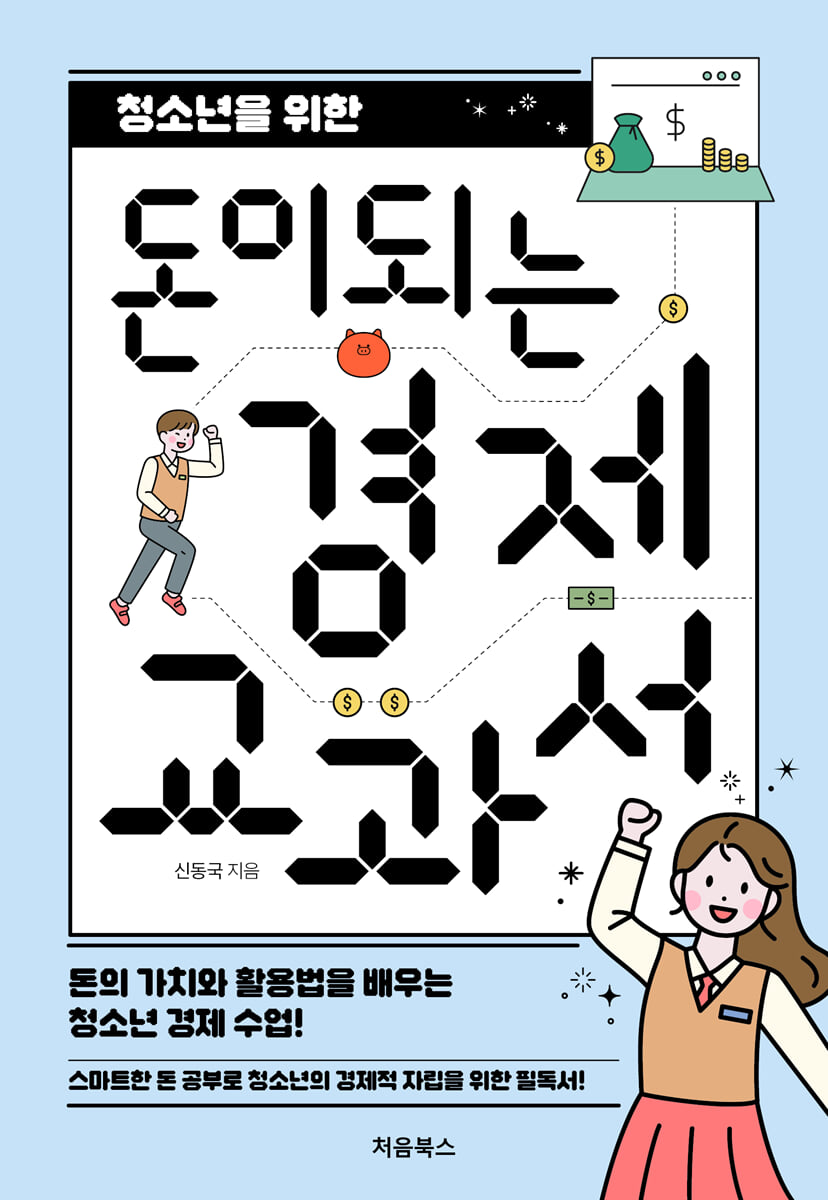
A Money-Making Economics Textbook for Teens
 |
Description
Book Introduction
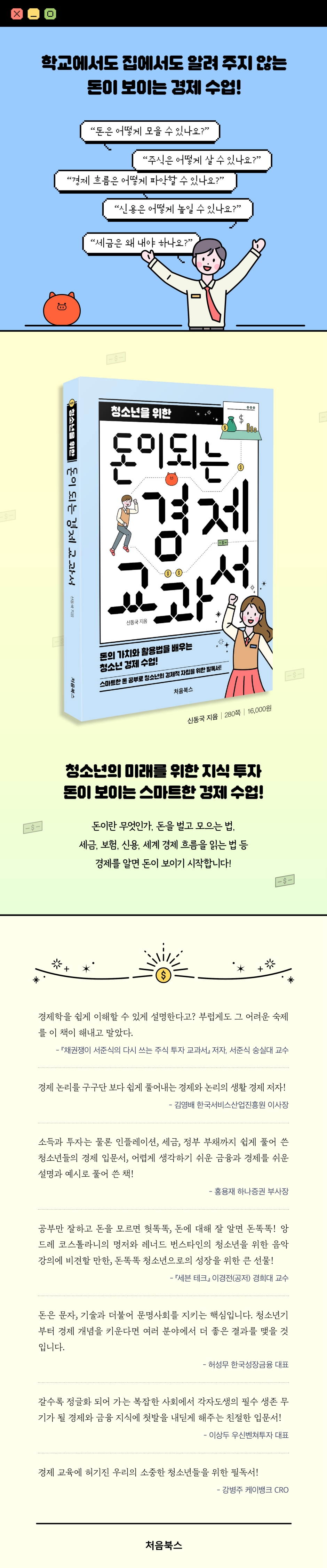
Investing in knowledge for the future of our youth!
What is money, how to earn and save money,
Taxes, insurance, credit, how to read global economic trends, etc.
A smart economics class that shows you how to make money!
- Recommended by Professor Lee Gyeong-jeon of Kyunghee University, co-author of Seven Tech
- "Stock Investment Textbook Rewritten by Bond Trader Seo Jun-sik" recommended by Professor Seo Jun-sik of Soongsil University
Dear young people, have you ever thought about how long we will continue to work in the future? Recent studies suggest that our average lifespan will now exceed 100 years, potentially reaching 120.
This may mean that we need to plan for economic activity for more than 100 years.
So, what preparations should we begin making during our teenage years?
Money is an essential element in our daily lives.
How we manage and utilize it will determine the foundation of our future lives.
What is important at this time is ‘economic education.’
Just as they prepare for college or employment, young people need to realize that they need to consistently prepare for the long-term economic life ahead.
"Economics Textbook for Young People: Money Making" systematically presents methods for earning, saving, and investing money, as well as how to interpret the nature of money, taxes, insurance, credit, and economic trends.
Adolescence is a critical time for forming financial habits and knowledge.
By taking their first steps into economics through this book, young people will be able to lay the economic foundation for future economic freedom and happiness.
What is money, how to earn and save money,
Taxes, insurance, credit, how to read global economic trends, etc.
A smart economics class that shows you how to make money!
- Recommended by Professor Lee Gyeong-jeon of Kyunghee University, co-author of Seven Tech
- "Stock Investment Textbook Rewritten by Bond Trader Seo Jun-sik" recommended by Professor Seo Jun-sik of Soongsil University
Dear young people, have you ever thought about how long we will continue to work in the future? Recent studies suggest that our average lifespan will now exceed 100 years, potentially reaching 120.
This may mean that we need to plan for economic activity for more than 100 years.
So, what preparations should we begin making during our teenage years?
Money is an essential element in our daily lives.
How we manage and utilize it will determine the foundation of our future lives.
What is important at this time is ‘economic education.’
Just as they prepare for college or employment, young people need to realize that they need to consistently prepare for the long-term economic life ahead.
"Economics Textbook for Young People: Money Making" systematically presents methods for earning, saving, and investing money, as well as how to interpret the nature of money, taxes, insurance, credit, and economic trends.
Adolescence is a critical time for forming financial habits and knowledge.
By taking their first steps into economics through this book, young people will be able to lay the economic foundation for future economic freedom and happiness.
- You can preview some of the book's contents.
Preview
index
Introduction: Studying Economics: The Money That's Essential in Society
Chapter 1.
What is money?
The history of money that evolved according to human needs
What role does money play?
Why should I earn money?
Four Ways to Earn Income
What is salary?
Can starting a business make you rich?
Return on my assets, property income
Previous income that does not require direct earnings
Life Cycle of Income
Chapter 2.
save money, borrow money
Choices for better spending
Understanding Opportunity Cost
What does a bank do?
Saving money: deposits, savings, installment savings
borrow money: loan
Fintech and Crowdfunding: The New Finance
They say that when you spend money, it costs money?
Student loans and scholarships
Chapter 3.
Call money
How should I call the money?
Desirable attitude toward investment
Investing is not speculation or gambling!
Bank deposits are also investments.
Does the stock price reflect the company's value?
Buying and Selling Stocks: Stock Trading
Various ways to make money
Chapter 4.
What are taxes?
Money for everyone, taxes
How to pay taxes, direct and indirect taxes
When do we pay taxes?
Chapter 5.
What is insurance?
Why do you need insurance?
What are the four major insurances?
Private Insurance: Non-life Insurance and Life Insurance
Chapter 6.
What is credit?
Three Meanings of Credit
Why Credit Ratings Became Important
How should I manage my credit?
Chapter 7.
7 Stories to Read the Flow of the Economy
What are the prices?
Inflation and deflation
boom and bust
Government fiscal and financial policies
What is national debt?
The role and influence of each country's central bank
Why You Need to Know the Global Economy
Preface: An Economics Textbook for the Future
References and Sources
Chapter 1.
What is money?
The history of money that evolved according to human needs
What role does money play?
Why should I earn money?
Four Ways to Earn Income
What is salary?
Can starting a business make you rich?
Return on my assets, property income
Previous income that does not require direct earnings
Life Cycle of Income
Chapter 2.
save money, borrow money
Choices for better spending
Understanding Opportunity Cost
What does a bank do?
Saving money: deposits, savings, installment savings
borrow money: loan
Fintech and Crowdfunding: The New Finance
They say that when you spend money, it costs money?
Student loans and scholarships
Chapter 3.
Call money
How should I call the money?
Desirable attitude toward investment
Investing is not speculation or gambling!
Bank deposits are also investments.
Does the stock price reflect the company's value?
Buying and Selling Stocks: Stock Trading
Various ways to make money
Chapter 4.
What are taxes?
Money for everyone, taxes
How to pay taxes, direct and indirect taxes
When do we pay taxes?
Chapter 5.
What is insurance?
Why do you need insurance?
What are the four major insurances?
Private Insurance: Non-life Insurance and Life Insurance
Chapter 6.
What is credit?
Three Meanings of Credit
Why Credit Ratings Became Important
How should I manage my credit?
Chapter 7.
7 Stories to Read the Flow of the Economy
What are the prices?
Inflation and deflation
boom and bust
Government fiscal and financial policies
What is national debt?
The role and influence of each country's central bank
Why You Need to Know the Global Economy
Preface: An Economics Textbook for the Future
References and Sources
Detailed image
Into the book
We need money to sustain our daily lives.
We need money not only to buy goods and services, but also to eat, enjoy leisure activities, and even relax at home.
And we want to earn more money than others, not only for basic living expenses but also for 'comparative consumption'.
This is because the more you pay, the better quality goods and services you can enjoy.
--- p.28
Income can be broadly viewed as compensation for the time, effort, or labor we provide.
Of course, even if you invest the same amount of time and effort, the amount of income you earn will vary from person to person.
This is because income is determined by many factors, including each person's expertise, ability, and education level.
So if we want to earn more money than we have now, we have to invest more time and effort.
This speaks to the correlation that exists between effort and reward.
--- p.34
When we are young, we all work to earn money, and our income tends to be more than our expenses.
But as you get older, your expenses may exceed your income.
While this pattern has been common for a long time, various changes in modern society are changing income patterns.
For example, changes in industrial structure, increasing life expectancy, delayed marriage, and increasing proportion of unmarried people are driving these changes.
Additionally, while income growth is stagnating due to the low economic growth trend, governments around the world are actively pursuing expansionary financial policies such as quantitative easing to stimulate their economies.
--- p.64
Using money to get more money is called investing.
Activities such as buying real estate or trading stocks are all types of investments.
However, it is important to remember that investing always carries risks.
To achieve high returns, you must also take on proportional risks.
Investing doesn't work the same for everyone.
Even if the same amount is invested, the results will be different because each person invests in different ways and in different directions.
So, we need time to learn and analyze investments to achieve better investment results.
--- p.125
When investing, you need to be prepared for risks and continue to manage them afterwards.
Investment results can sometimes bring large profits, but can also sometimes result in losses.
So investing carries the risk of losing money quickly.
Investment results are determined by a number of factors, including changing economic conditions and financial market conditions, and are therefore beyond the investor's complete control.
So, if you are not a professional investor, it is wise to choose an investment method that is less complicated and time-consuming.
We need money not only to buy goods and services, but also to eat, enjoy leisure activities, and even relax at home.
And we want to earn more money than others, not only for basic living expenses but also for 'comparative consumption'.
This is because the more you pay, the better quality goods and services you can enjoy.
--- p.28
Income can be broadly viewed as compensation for the time, effort, or labor we provide.
Of course, even if you invest the same amount of time and effort, the amount of income you earn will vary from person to person.
This is because income is determined by many factors, including each person's expertise, ability, and education level.
So if we want to earn more money than we have now, we have to invest more time and effort.
This speaks to the correlation that exists between effort and reward.
--- p.34
When we are young, we all work to earn money, and our income tends to be more than our expenses.
But as you get older, your expenses may exceed your income.
While this pattern has been common for a long time, various changes in modern society are changing income patterns.
For example, changes in industrial structure, increasing life expectancy, delayed marriage, and increasing proportion of unmarried people are driving these changes.
Additionally, while income growth is stagnating due to the low economic growth trend, governments around the world are actively pursuing expansionary financial policies such as quantitative easing to stimulate their economies.
--- p.64
Using money to get more money is called investing.
Activities such as buying real estate or trading stocks are all types of investments.
However, it is important to remember that investing always carries risks.
To achieve high returns, you must also take on proportional risks.
Investing doesn't work the same for everyone.
Even if the same amount is invested, the results will be different because each person invests in different ways and in different directions.
So, we need time to learn and analyze investments to achieve better investment results.
--- p.125
When investing, you need to be prepared for risks and continue to manage them afterwards.
Investment results can sometimes bring large profits, but can also sometimes result in losses.
So investing carries the risk of losing money quickly.
Investment results are determined by a number of factors, including changing economic conditions and financial market conditions, and are therefore beyond the investor's complete control.
So, if you are not a professional investor, it is wise to choose an investment method that is less complicated and time-consuming.
--- p.132
GOODS SPECIFICS
- Date of issue: August 25, 2023
- Page count, weight, size: 280 pages | 420g | 140*215*15mm
- ISBN13: 9791170222644
- ISBN10: 1170222641
You may also like
카테고리
korean


korean

![GQ KOREA Mark (Monthly): December [2025]](http://librairie.coreenne.fr/cdn/shop/files/8ef265dbbfbf186523ed75ba7319009d.jpg?v=1765340328&width=3840)


