

It would be great if you lived in New York.
 |
Description
Book Introduction
Memories and hearts of photographs that penetrate the landscapes of life
“Photographs make moments last forever.”
★ Park No-hae, who sees hope in a land of poverty and conflict
★ Joo Myung-deok, a family that is hazy, sad, and full of emotion
★ William Klein, who broke conventions in the gutter of New York
★ Erwin Olaf feels the anxiety and fear that comes from a sad and humorous daily life.
★ Yevgeny Mallorekha, waiting for peace in the Ukrainian war
★ Kang Woon-goo captures the decisive moments, from painter Jang Wook-jin to novelist Kim Seung-wook.
“It would be wonderful if you lived in New York!” wrote American photographer William Klein in his 1956 photo book, New York.
But when you open the photo album, a completely different scene unfolds.
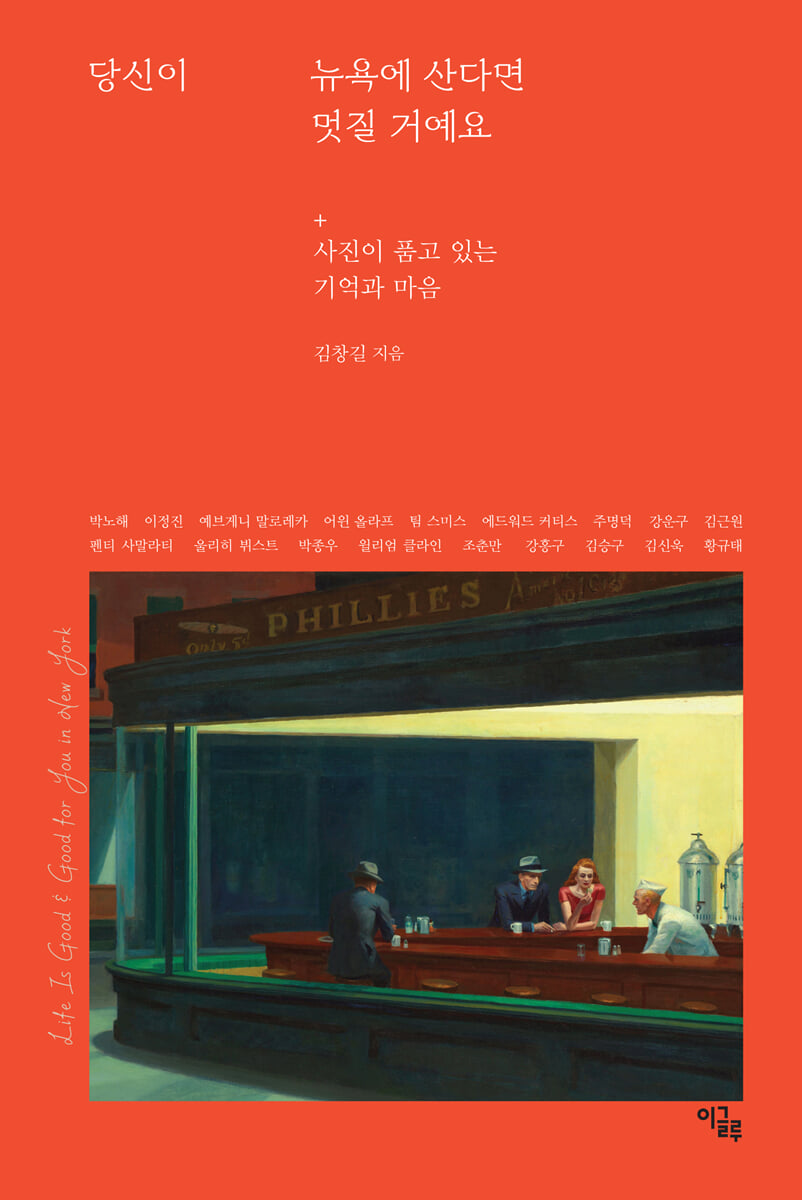
It is not a solitary landscape like the Edward Hopper painting on the cover of this book.
These are crumpled photos that I want to throw in the gutter.
New Yorkers who saw his photo album unanimously criticized it, saying, “This is not New York, it’s trash.”
But Parisians were captivated by his photographs.
What on earth is it about photography that makes reactions to it so drastically different?
Photography has the magic to stop time.
Through photographs, we can transcend the flow of time and relive moments from the past.
Those moments of the past are filled with the scenery of life, and we can meet the memories of the past.
Henri Cartier-Bresson said, “Photography allows us to remember a moment forever.”
A photograph permanently records a passing moment.
“Photographs say things I can’t say,” said Dorothea Lange.
Photography transcends the limits of language.
It can convey powerful messages by expressing emotions or thoughts that are difficult to express in words.
Sometimes, certain scenes in a photograph can seem surreal.
Roland Barthes said, “Photography is an omission of language, a compression of all that is ‘unspeakable’ in society.”
There's a lot that's not in the photo.
There is no voice, no smell, no taste, no touch, no movement, etc.
There is only one ray of light.
Some light strikes deeply into the heart, creating waves, just like a photograph being developed.
Some say it is because it shows traces of the irreversible past.
Photos always lack something.
The better the photo, the more room there is for imagination to penetrate, the more the waves of resonance are amplified.
So, it is said that photography is a fight against things that disappear.
This is the greatest power of photography.
Kim Chang-gil's "It Would Be Cool If You Lived in New York" is an homage to 18 world-renowned photographers.
Pictures tell us what they don't say.
Photography is about finding the invisible truth through visible images.
Photos are like warp and weft, weaving together the past and present to create stories.
The author connects photographs and words to make invisible stories and truths visible and speak.
There, he used his literary imagination to tell stories surrounding the photographs.
Readers will encounter the essence of humanistic essays that penetrate the landscapes of life and gaze into memories and the heart through the photographs of 18 photographers.
In Chapter 1, 'There is nothing that is not sad in the fight against time,' you can see photos by Park No-hae, who searches for the roots and fingerprints of poverty and conflict, Lee Jeong-jin, who finds hope in Israel, a land of conflict soaking in red blood, Yevgeny Mallorecca, who risked his life to document Russia's atrocities, Erwin Olaf, who experienced anxiety and fear in the sad daily life during the COVID-19 era, Tim Smith, who found a different life in Hutterite, a utopia on Earth, Edward Curtis, who restored the culture of Indians who lost the war against white people, Joo Myung-deok, a first-generation auteur photographer who only took family photos, Kang Un-gu, who does not hesitate to take pictures of writers and artists, and Kim Geun-won, who still searches for hairy mountain lodge keepers and Asiatic black bears.
In Chapter 2, 'Memory is anchored in a steep alley', you can see the photos of Penty Samalati who hunts the winter of Solovetsky while roaming the taiga, Ulrich Wust who takes a dandy stroll through Berlin where ideology has disappeared, Park Jong-woo who recorded Busan that even Busan people did not know, William Klein who captured 'bare face New York' with a provocative gaze, Jo Chun-man who collected Korea's industrial landscapes, Kang Hong-gu who left behind some memories of a disappeared house, Kim Seung-gu who recorded the white land and black sky with a large film camera in the digital age, Kim Shin-wook who sets out to find ghosts without flesh, blood, and bones, and Hwang Gyu-tae who is Homo Photocus and erases the boundaries of photography.
“Photographs make moments last forever.”
★ Park No-hae, who sees hope in a land of poverty and conflict
★ Joo Myung-deok, a family that is hazy, sad, and full of emotion
★ William Klein, who broke conventions in the gutter of New York
★ Erwin Olaf feels the anxiety and fear that comes from a sad and humorous daily life.
★ Yevgeny Mallorekha, waiting for peace in the Ukrainian war
★ Kang Woon-goo captures the decisive moments, from painter Jang Wook-jin to novelist Kim Seung-wook.
“It would be wonderful if you lived in New York!” wrote American photographer William Klein in his 1956 photo book, New York.
But when you open the photo album, a completely different scene unfolds.
It is not a solitary landscape like the Edward Hopper painting on the cover of this book.
These are crumpled photos that I want to throw in the gutter.
New Yorkers who saw his photo album unanimously criticized it, saying, “This is not New York, it’s trash.”
But Parisians were captivated by his photographs.
What on earth is it about photography that makes reactions to it so drastically different?
Photography has the magic to stop time.
Through photographs, we can transcend the flow of time and relive moments from the past.
Those moments of the past are filled with the scenery of life, and we can meet the memories of the past.
Henri Cartier-Bresson said, “Photography allows us to remember a moment forever.”
A photograph permanently records a passing moment.
“Photographs say things I can’t say,” said Dorothea Lange.
Photography transcends the limits of language.
It can convey powerful messages by expressing emotions or thoughts that are difficult to express in words.
Sometimes, certain scenes in a photograph can seem surreal.
Roland Barthes said, “Photography is an omission of language, a compression of all that is ‘unspeakable’ in society.”
There's a lot that's not in the photo.
There is no voice, no smell, no taste, no touch, no movement, etc.
There is only one ray of light.
Some light strikes deeply into the heart, creating waves, just like a photograph being developed.
Some say it is because it shows traces of the irreversible past.
Photos always lack something.
The better the photo, the more room there is for imagination to penetrate, the more the waves of resonance are amplified.
So, it is said that photography is a fight against things that disappear.
This is the greatest power of photography.
Kim Chang-gil's "It Would Be Cool If You Lived in New York" is an homage to 18 world-renowned photographers.
Pictures tell us what they don't say.
Photography is about finding the invisible truth through visible images.
Photos are like warp and weft, weaving together the past and present to create stories.
The author connects photographs and words to make invisible stories and truths visible and speak.
There, he used his literary imagination to tell stories surrounding the photographs.
Readers will encounter the essence of humanistic essays that penetrate the landscapes of life and gaze into memories and the heart through the photographs of 18 photographers.
In Chapter 1, 'There is nothing that is not sad in the fight against time,' you can see photos by Park No-hae, who searches for the roots and fingerprints of poverty and conflict, Lee Jeong-jin, who finds hope in Israel, a land of conflict soaking in red blood, Yevgeny Mallorecca, who risked his life to document Russia's atrocities, Erwin Olaf, who experienced anxiety and fear in the sad daily life during the COVID-19 era, Tim Smith, who found a different life in Hutterite, a utopia on Earth, Edward Curtis, who restored the culture of Indians who lost the war against white people, Joo Myung-deok, a first-generation auteur photographer who only took family photos, Kang Un-gu, who does not hesitate to take pictures of writers and artists, and Kim Geun-won, who still searches for hairy mountain lodge keepers and Asiatic black bears.
In Chapter 2, 'Memory is anchored in a steep alley', you can see the photos of Penty Samalati who hunts the winter of Solovetsky while roaming the taiga, Ulrich Wust who takes a dandy stroll through Berlin where ideology has disappeared, Park Jong-woo who recorded Busan that even Busan people did not know, William Klein who captured 'bare face New York' with a provocative gaze, Jo Chun-man who collected Korea's industrial landscapes, Kang Hong-gu who left behind some memories of a disappeared house, Kim Seung-gu who recorded the white land and black sky with a large film camera in the digital age, Kim Shin-wook who sets out to find ghosts without flesh, blood, and bones, and Hwang Gyu-tae who is Homo Photocus and erases the boundaries of photography.
- You can preview some of the book's contents.
Preview
index
Preface: The Power of Story - 6
Chapter 1: There is nothing without sadness in the race against time.
Under the Thousand-Year-Old Olive Tree | Park No-hae's Photos - 19
A Beast Roars on a Nameless Road | Lee Jeong-jin's Photos - 31
They, too, await scenes of peace | Photo by Yevgeny Mallorekha - 43
What expression are you making? | Erwin Olaf's Photographs - 57
Somewhere Over the Rainbow | Photo by Tim Smith - 69
Shadows Cast Over the Land of Headhunters | Edward Curtis's Photographs - 83
There lived a gold-digging father and a pretty daughter | Joo Myung-deok's photos - 99
Portraits of an Era, Opening the Doors of Time | Kang Woon-gu's Photography - 113
In Search of the Furry Mountain Lodge Keeper and the Asiatic Black Bear | Photo by Kim Geun-won - 125
Chapter 2: Memory is anchored in a steep alley
The Old Hunter's Winter Tale | Photographs by Penty Samalathi - 141
How to Stroll Through Berlin in Style | Ulrich Wüst's Photos - 155
Even the people of Busan didn't know | Park Jong-woo's photos - 169
Playing Bebop in the Gutters of New York | Photograph by William Klein - 183
When he presses the shutter, Goliath swims across the sea. | Jo Chun-man's Photo - 197
Memories of a Lost House | Kang Hong-gu's Photos - 209
Black Sky and White Earth | Photographs by Seung-gu Kim - 223
Ghosts Wandering Treasure Island | Kim Shin-wook's Photos - 235
Homo Photocus, Erasing the Boundaries of Photography | Hwang Gyu-tae's Photography - 247
References - 261
Chapter 1: There is nothing without sadness in the race against time.
Under the Thousand-Year-Old Olive Tree | Park No-hae's Photos - 19
A Beast Roars on a Nameless Road | Lee Jeong-jin's Photos - 31
They, too, await scenes of peace | Photo by Yevgeny Mallorekha - 43
What expression are you making? | Erwin Olaf's Photographs - 57
Somewhere Over the Rainbow | Photo by Tim Smith - 69
Shadows Cast Over the Land of Headhunters | Edward Curtis's Photographs - 83
There lived a gold-digging father and a pretty daughter | Joo Myung-deok's photos - 99
Portraits of an Era, Opening the Doors of Time | Kang Woon-gu's Photography - 113
In Search of the Furry Mountain Lodge Keeper and the Asiatic Black Bear | Photo by Kim Geun-won - 125
Chapter 2: Memory is anchored in a steep alley
The Old Hunter's Winter Tale | Photographs by Penty Samalathi - 141
How to Stroll Through Berlin in Style | Ulrich Wüst's Photos - 155
Even the people of Busan didn't know | Park Jong-woo's photos - 169
Playing Bebop in the Gutters of New York | Photograph by William Klein - 183
When he presses the shutter, Goliath swims across the sea. | Jo Chun-man's Photo - 197
Memories of a Lost House | Kang Hong-gu's Photos - 209
Black Sky and White Earth | Photographs by Seung-gu Kim - 223
Ghosts Wandering Treasure Island | Kim Shin-wook's Photos - 235
Homo Photocus, Erasing the Boundaries of Photography | Hwang Gyu-tae's Photography - 247
References - 261
Into the book
Lee Jeong-jin visited Canaan five times between 2010 and the following year.
The journey to capture the conflict zone on camera was an unfamiliar challenge.
An Israeli professor who had been his guide left him after experiencing the overwhelming fear that came over him as soon as he crossed the barrier of separation.
A Korean student who was studying photography locally took over the role of the runaway professor.
After completing the security check and entering the West Bank, the navigation system stopped working.
The map disappeared from the screen and alphabet letters appeared.
'Unnamed Road.'
--- p.35 From “A Beast Roars on a Nameless Road: Lee Jeong-jin’s Photography”
Edward Curtis's photographs received attention after his death.
In 1969, about 80 American Indian college students declared themselves "Indians of All Tribes" and occupied Alcatraz Island in San Francisco, which held notorious prisoners.
It was to condemn the Sioux Treaty, which stipulated that the original owners of Indian land could not use it.
The occupation of Alcatraz Island by 'Indians of All Tribes' marked the beginning of the 'Red Power' movement, which sought to revive indigenous Indian culture and traditions.
--- p.92 From "Shadows on the Land of Headhunters: Edward Curtis's Photographs"
My father passed away 25 years ago, leaving behind over 230,000 photos.
The son was at a loss before his father's vast legacy.
'Will I ever be able to organize my father's photos?' As soon as I started, I felt guilty.
"I almost lost this precious material!" After digitally restoring over 4,000 photos, I felt inspired to write about it.
Hidden in the photos were stories about the mountains that my father had told me while he was alive.
I went around looking for the people in the photo to check the facts.
--- pp.130-132 From "In Search of the Hairy Mountain Lodge Keeper and the Asiatic Black Bear: Photos by Kim Geun-won"
The animals captured by Penty Samalati are not the rare wild animals that can be captured with a super-telephoto lens, but rather domestic animals and companion animals that live alongside people.
Because it is close to people, it is not difficult to confine it within a frame.
What is at issue is the event contained within the photograph.
To borrow again from Willem Flusser, the photographer “tracks his prey not in the open meadows, but in the thickets of cultural objects.”
The place where he sets his trap is the crossroads of events “formed by the artificial taiga called culture.”
Old hunter Penty Samalati stands at the crossroads, sharpening the blade of his camera shutter.
--- p.149 From “The Old Hunter’s Winter Tale: Photographs by Penty Samalati”
Ulrich Wuest's urban photographs rarely feature people.
It's not like I took pictures at dawn like French photographer Eugène Atget (1859-1927).
His methodology is clear.
He removed people from the photographs “to draw attention to the buildings that people have built for people.”
He explains that no matter how small the person in the photo is, our eyes track the person like a facial recognition program on a smartphone.
In reality, our gaze wanders around looking for people in photographs, as he explains, and ends up failing.
--- p.162 From “How to Take a Dandy Stroll Through Berlin: Photographs by Ulrich Wüst”
In 1999, when Kang Hong-gu first visited Oso-ri, there were about 100 households left in Oso-ri who had nowhere to go.
A plane passed precariously over the village's power lines.
The photo shows the back of a student with his hand on his head, as if he doesn't want to go home.
Weeds grow among the abandoned heavy equipment on the ruins of a demolished house, laughing.
The land where farming was done still nurtured green life.
Photography was not fragmentary.
Scenes of rural areas, ruins, and cutting-edge technology represented by airplanes strangely coexisted in fragments.
Osori, which used to be a rural area where people grew green onions, water parsley, cabbage, and other crops, has now disappeared without a trace.
The journey to capture the conflict zone on camera was an unfamiliar challenge.
An Israeli professor who had been his guide left him after experiencing the overwhelming fear that came over him as soon as he crossed the barrier of separation.
A Korean student who was studying photography locally took over the role of the runaway professor.
After completing the security check and entering the West Bank, the navigation system stopped working.
The map disappeared from the screen and alphabet letters appeared.
'Unnamed Road.'
--- p.35 From “A Beast Roars on a Nameless Road: Lee Jeong-jin’s Photography”
Edward Curtis's photographs received attention after his death.
In 1969, about 80 American Indian college students declared themselves "Indians of All Tribes" and occupied Alcatraz Island in San Francisco, which held notorious prisoners.
It was to condemn the Sioux Treaty, which stipulated that the original owners of Indian land could not use it.
The occupation of Alcatraz Island by 'Indians of All Tribes' marked the beginning of the 'Red Power' movement, which sought to revive indigenous Indian culture and traditions.
--- p.92 From "Shadows on the Land of Headhunters: Edward Curtis's Photographs"
My father passed away 25 years ago, leaving behind over 230,000 photos.
The son was at a loss before his father's vast legacy.
'Will I ever be able to organize my father's photos?' As soon as I started, I felt guilty.
"I almost lost this precious material!" After digitally restoring over 4,000 photos, I felt inspired to write about it.
Hidden in the photos were stories about the mountains that my father had told me while he was alive.
I went around looking for the people in the photo to check the facts.
--- pp.130-132 From "In Search of the Hairy Mountain Lodge Keeper and the Asiatic Black Bear: Photos by Kim Geun-won"
The animals captured by Penty Samalati are not the rare wild animals that can be captured with a super-telephoto lens, but rather domestic animals and companion animals that live alongside people.
Because it is close to people, it is not difficult to confine it within a frame.
What is at issue is the event contained within the photograph.
To borrow again from Willem Flusser, the photographer “tracks his prey not in the open meadows, but in the thickets of cultural objects.”
The place where he sets his trap is the crossroads of events “formed by the artificial taiga called culture.”
Old hunter Penty Samalati stands at the crossroads, sharpening the blade of his camera shutter.
--- p.149 From “The Old Hunter’s Winter Tale: Photographs by Penty Samalati”
Ulrich Wuest's urban photographs rarely feature people.
It's not like I took pictures at dawn like French photographer Eugène Atget (1859-1927).
His methodology is clear.
He removed people from the photographs “to draw attention to the buildings that people have built for people.”
He explains that no matter how small the person in the photo is, our eyes track the person like a facial recognition program on a smartphone.
In reality, our gaze wanders around looking for people in photographs, as he explains, and ends up failing.
--- p.162 From “How to Take a Dandy Stroll Through Berlin: Photographs by Ulrich Wüst”
In 1999, when Kang Hong-gu first visited Oso-ri, there were about 100 households left in Oso-ri who had nowhere to go.
A plane passed precariously over the village's power lines.
The photo shows the back of a student with his hand on his head, as if he doesn't want to go home.
Weeds grow among the abandoned heavy equipment on the ruins of a demolished house, laughing.
The land where farming was done still nurtured green life.
Photography was not fragmentary.
Scenes of rural areas, ruins, and cutting-edge technology represented by airplanes strangely coexisted in fragments.
Osori, which used to be a rural area where people grew green onions, water parsley, cabbage, and other crops, has now disappeared without a trace.
--- p.217 From “Some Memories of a Disappeared House: Kang Hong-gu’s Photographs”
Publisher's Review
Finding Hope in a Battlefield of Poverty and Conflict
Park No-hae's work is love.
That is also 'love of the soles of the feet'.
Since your head and heart have no choice but to follow where your feet go, you can meet people, think, and feel wherever your feet go.
The work of the hands is also to record the traces of the feet.
One is holding a pen and writing in a notebook, while the other is pressing the shutter of a camera.
For Park No-hae, the notebook was an external hard drive that aided his memory, while the camera was a means of communication that allowed him to overcome language barriers.
It is difficult to capture sensational scenes with Park No-hae's old, small film camera.
But for photographers who are waiting for something, it could be a very suitable machine.
So, Park No-hae wanted to “seep into the roots of life where that incident occurred.”
Park No-hae says that a photograph is “the soles of my feet standing on the scene, the soles of my feet kissing the earth, the kiss of love imprinted on my two feet, the imprint of that soul.”
In other words, Park No-hae does not pursue sensational moments in scenes of dire poverty and conflict.
What Park No-hae wanted to capture in his photographs were the roots and fingerprints of poverty and conflict.
And so, I tried to approach them with a heart of awe, not pity, and see their complete appearance.
Park No-hae has been visiting places where war has occurred since the US invaded Iraq in 2003.
What he does there is stand by those suffering from war.
An olive tree in Beirut, Lebanon, which survived the bombing, is covered in gray dust.
He says that the olive tree, which is said to live for a thousand years, has been given and offered without reservation.
On February 24, 2022, Russia invaded Ukraine.
Yevgeny Malloleka, the Ukrainian photojournalist who brought the horrors of war to the world, left for the southern Ukrainian port city of Mariupol the day before.
He expected that Mariupol would be bombed more harshly than the capital, Kyiv, because of its geopolitical importance.
On March 9, Russia bombed a maternity hospital.
Yevgeny Mallorecca filmed a pregnant woman descending the chaotic hospital stairs.
What he left behind, risking his life, was not just visual evidence of Russian atrocities.
He recorded specific, individual sufferings, not vague statements about the horrors of war.
Rather than the feelings of compassion felt by the typist, it contained the pain and anger of the victims of war, and the hope of winning the war.
From painter Jang Wook-jin to novelist Kim Seung-wook,
Capturing the decisive moment
Kang Woon-gu believes that the subjects of the photo must win in order for the photo to be captured in a way that reflects that person's true self.
While there are people like painter Jang Wook-jin who are oblivious to the presence of a photographer, there are also sensitive people like novelist Park Tae-sun who freeze as soon as they see a camera.
Kang Un-gu has been capturing the faces of writers and artists for half a century.
I didn't go out of my way to seek out famous people.
They met by chance.
He said, “To properly photograph a person, you have to go out and find the place where that person is staying.
“This is the only way to capture the right light in your photos,” he says.
Somewhere in Seoul, during the dark days of curfew, where sunlight pouring through the windows creates diagonal lines of light and shade, Kang Woon-goo and Kim Seung-ok are facing each other.
Kim Seung-ok leans against the wall, holding a newspaper in his hand, and looks at Kang Woon-gu.
At this time, Kang Woon-gu catches the flickering light from Kim Seung-ok's face.
Kang Woon-gu says:
“A person’s aura radiates from the unique environment he or she has created while staying there for a long time.
Light and shadow pouring from its own space constantly intersect over people's faces.
Decisions are always made by those who are being photographed.
I silently accepted their actions.” Ultimately, the decisive moment was different for each person.
Family is a source of stories, like a spring that never dries up, even if you spend a lifetime writing it.
Joo Myung-deok says, “Family is a stairway to heaven, a place where naked children play together in the boundless sky and the quiet, distant seashore, and my beloved Clementine.”
Joo Myung-deok is a first-generation auteur photographer representing Korea.
His 'Korean Family' is a series of photographs that document the lives of people living in this country during the transition from extended families to nuclear families.
Joo Myung-deok traveled around the country taking pictures of Korean families.
[Korean Family, Nonsan] features forty-six people, including a dog bowing down to the camera.
Playing bebop in the gutter of New York
An editor of the fashion magazine Vogue, after seeing William Klein's photographs, criticized them, saying, "The focus is dull, the composition is tilted, the picture is shaky, and the frame mercilessly cuts off the body and facial features."
But Klein said, “I felt free.
“Photography has been a great joy to me,” he said, revolting against the stereotypical swing jazz and enjoying the spontaneity and freedom of a beatnik who was crazy about bebop jazz.
He wanted to create a photo book that was “rude, rough, and ink-splattered.”
“The camera can surprise us,” he says, and capture “the unexpected.”
The fashion photographs left behind by William Klein are special.
Model Antonio getting out of a yellow taxi, Dolores hailing a taxi with a large dog in tow, and Sandra hailing a taxi as seen through a full-length mirror in Times Square.
He expanded the scope of fashion photography, which had previously been limited to indoor studios, to the streets.
The scene where women glance at Simon and Nina as they cross the street makes us think about how far the designer's extravagant clothes are from real life, and how everything on the street feels like nothing more than an upper-class accessory.
Erwin Olaf expresses the anxiety and fear that emanates from the humorous yet sad aspects of everyday life through a series of 'April Fool's Day' photos.
He became a photo model himself and dressed up as a clown wearing a white hat and white mask.
But the clown may seem funny, but he leaves a scary aftertaste.
The waxy white mask creates an uncomfortable feeling.
The clown's white mask is imbued with an uneasy feeling of uncertainty about what form it might take.
During the COVID-19 pandemic, Olaf chose clowns to express the fear he felt in the face of city lockdowns.
But the clown's shopping spree ended in failure.
All that remains in his plastic-gloved hands is his handbag.
Such personal experiences connect to the social phenomena of disconnection and confinement that consumerist societies face.
Documenting Hutterite, Ulsan, and Busan
Tim Smith says that Hutterites “have the most successful communal culture in the Western world.”
Here, it would be okay to replace 'Western' with 'capitalism'.
The Hutterites, a utopia on Earth, lived a 'different life' free from capital and power.
He waits until he can feel himself a part of the Hutterite community.
That's his photography.
Tim Smith's photographs of the Hutterites fall into three broad categories.
The first are natural images captured by him, who has become almost transparent.
The second are scenes where the photographer is aware of the presence but doesn't really care.
The third are photographs that clearly show the photographer's presence and express themselves.
Jo Chun-man takes pictures of the Ulsan Heavy Industries Industrial Complex.
He was connecting pieces of iron, sending sparks flying like grains of rice, and he picked up the camera, saying, "Let's take pictures of where I lived and what I did!"
He was a welder for a shipyard subcontractor.
'Industry Korea' is the title of Jo Chun-man's photo series that began in 2013.
He is the only industrial photographer in Korea and the only photographer in the world to capture industrial images of heavy industry.
Jo Chun-man climbs up to his subjects' eye level or higher, carrying his camera to show them that the vast landscape of Korean heavy industry is worth seeing.
The scenery of petrochemical plants is like that.
Horizontal and vertical woven pipes, cylindrical and spherical storage tanks, and chimneys towering high into the sky.
He considers the machine as a living being.
Jo Chun-man's photographs can be called 'the natural history of Korean industry.'
Park Jong-woo took detailed still road views to complete a map of Busan from his childhood.
He meets his beloved grandmother on a steep hillside called 'Kkakkomak', encounters the unusually tall and huge chimney of a Busan bathhouse, encounters stairs on the hillside, and encounters water tanks on the roof. He visits the docks, the market, the Haeundae railroad, the breakwater, and alleyways.
How did he encounter the pot-bellied man sitting on a table in a hole-in-the-wall shop, chugging a glass of soju, the woman delivering food from the fish market with a tray on her head, and the woman performing a trick of flipping a 3,000-won jeon (rice cake) by levitating it? That's how Park Jong-woo became Korea's leading documentarian, documenting Busan through his photographs.
Park No-hae's work is love.
That is also 'love of the soles of the feet'.
Since your head and heart have no choice but to follow where your feet go, you can meet people, think, and feel wherever your feet go.
The work of the hands is also to record the traces of the feet.
One is holding a pen and writing in a notebook, while the other is pressing the shutter of a camera.
For Park No-hae, the notebook was an external hard drive that aided his memory, while the camera was a means of communication that allowed him to overcome language barriers.
It is difficult to capture sensational scenes with Park No-hae's old, small film camera.
But for photographers who are waiting for something, it could be a very suitable machine.
So, Park No-hae wanted to “seep into the roots of life where that incident occurred.”
Park No-hae says that a photograph is “the soles of my feet standing on the scene, the soles of my feet kissing the earth, the kiss of love imprinted on my two feet, the imprint of that soul.”
In other words, Park No-hae does not pursue sensational moments in scenes of dire poverty and conflict.
What Park No-hae wanted to capture in his photographs were the roots and fingerprints of poverty and conflict.
And so, I tried to approach them with a heart of awe, not pity, and see their complete appearance.
Park No-hae has been visiting places where war has occurred since the US invaded Iraq in 2003.
What he does there is stand by those suffering from war.
An olive tree in Beirut, Lebanon, which survived the bombing, is covered in gray dust.
He says that the olive tree, which is said to live for a thousand years, has been given and offered without reservation.
On February 24, 2022, Russia invaded Ukraine.
Yevgeny Malloleka, the Ukrainian photojournalist who brought the horrors of war to the world, left for the southern Ukrainian port city of Mariupol the day before.
He expected that Mariupol would be bombed more harshly than the capital, Kyiv, because of its geopolitical importance.
On March 9, Russia bombed a maternity hospital.
Yevgeny Mallorecca filmed a pregnant woman descending the chaotic hospital stairs.
What he left behind, risking his life, was not just visual evidence of Russian atrocities.
He recorded specific, individual sufferings, not vague statements about the horrors of war.
Rather than the feelings of compassion felt by the typist, it contained the pain and anger of the victims of war, and the hope of winning the war.
From painter Jang Wook-jin to novelist Kim Seung-wook,
Capturing the decisive moment
Kang Woon-gu believes that the subjects of the photo must win in order for the photo to be captured in a way that reflects that person's true self.
While there are people like painter Jang Wook-jin who are oblivious to the presence of a photographer, there are also sensitive people like novelist Park Tae-sun who freeze as soon as they see a camera.
Kang Un-gu has been capturing the faces of writers and artists for half a century.
I didn't go out of my way to seek out famous people.
They met by chance.
He said, “To properly photograph a person, you have to go out and find the place where that person is staying.
“This is the only way to capture the right light in your photos,” he says.
Somewhere in Seoul, during the dark days of curfew, where sunlight pouring through the windows creates diagonal lines of light and shade, Kang Woon-goo and Kim Seung-ok are facing each other.
Kim Seung-ok leans against the wall, holding a newspaper in his hand, and looks at Kang Woon-gu.
At this time, Kang Woon-gu catches the flickering light from Kim Seung-ok's face.
Kang Woon-gu says:
“A person’s aura radiates from the unique environment he or she has created while staying there for a long time.
Light and shadow pouring from its own space constantly intersect over people's faces.
Decisions are always made by those who are being photographed.
I silently accepted their actions.” Ultimately, the decisive moment was different for each person.
Family is a source of stories, like a spring that never dries up, even if you spend a lifetime writing it.
Joo Myung-deok says, “Family is a stairway to heaven, a place where naked children play together in the boundless sky and the quiet, distant seashore, and my beloved Clementine.”
Joo Myung-deok is a first-generation auteur photographer representing Korea.
His 'Korean Family' is a series of photographs that document the lives of people living in this country during the transition from extended families to nuclear families.
Joo Myung-deok traveled around the country taking pictures of Korean families.
[Korean Family, Nonsan] features forty-six people, including a dog bowing down to the camera.
Playing bebop in the gutter of New York
An editor of the fashion magazine Vogue, after seeing William Klein's photographs, criticized them, saying, "The focus is dull, the composition is tilted, the picture is shaky, and the frame mercilessly cuts off the body and facial features."
But Klein said, “I felt free.
“Photography has been a great joy to me,” he said, revolting against the stereotypical swing jazz and enjoying the spontaneity and freedom of a beatnik who was crazy about bebop jazz.
He wanted to create a photo book that was “rude, rough, and ink-splattered.”
“The camera can surprise us,” he says, and capture “the unexpected.”
The fashion photographs left behind by William Klein are special.
Model Antonio getting out of a yellow taxi, Dolores hailing a taxi with a large dog in tow, and Sandra hailing a taxi as seen through a full-length mirror in Times Square.
He expanded the scope of fashion photography, which had previously been limited to indoor studios, to the streets.
The scene where women glance at Simon and Nina as they cross the street makes us think about how far the designer's extravagant clothes are from real life, and how everything on the street feels like nothing more than an upper-class accessory.
Erwin Olaf expresses the anxiety and fear that emanates from the humorous yet sad aspects of everyday life through a series of 'April Fool's Day' photos.
He became a photo model himself and dressed up as a clown wearing a white hat and white mask.
But the clown may seem funny, but he leaves a scary aftertaste.
The waxy white mask creates an uncomfortable feeling.
The clown's white mask is imbued with an uneasy feeling of uncertainty about what form it might take.
During the COVID-19 pandemic, Olaf chose clowns to express the fear he felt in the face of city lockdowns.
But the clown's shopping spree ended in failure.
All that remains in his plastic-gloved hands is his handbag.
Such personal experiences connect to the social phenomena of disconnection and confinement that consumerist societies face.
Documenting Hutterite, Ulsan, and Busan
Tim Smith says that Hutterites “have the most successful communal culture in the Western world.”
Here, it would be okay to replace 'Western' with 'capitalism'.
The Hutterites, a utopia on Earth, lived a 'different life' free from capital and power.
He waits until he can feel himself a part of the Hutterite community.
That's his photography.
Tim Smith's photographs of the Hutterites fall into three broad categories.
The first are natural images captured by him, who has become almost transparent.
The second are scenes where the photographer is aware of the presence but doesn't really care.
The third are photographs that clearly show the photographer's presence and express themselves.
Jo Chun-man takes pictures of the Ulsan Heavy Industries Industrial Complex.
He was connecting pieces of iron, sending sparks flying like grains of rice, and he picked up the camera, saying, "Let's take pictures of where I lived and what I did!"
He was a welder for a shipyard subcontractor.
'Industry Korea' is the title of Jo Chun-man's photo series that began in 2013.
He is the only industrial photographer in Korea and the only photographer in the world to capture industrial images of heavy industry.
Jo Chun-man climbs up to his subjects' eye level or higher, carrying his camera to show them that the vast landscape of Korean heavy industry is worth seeing.
The scenery of petrochemical plants is like that.
Horizontal and vertical woven pipes, cylindrical and spherical storage tanks, and chimneys towering high into the sky.
He considers the machine as a living being.
Jo Chun-man's photographs can be called 'the natural history of Korean industry.'
Park Jong-woo took detailed still road views to complete a map of Busan from his childhood.
He meets his beloved grandmother on a steep hillside called 'Kkakkomak', encounters the unusually tall and huge chimney of a Busan bathhouse, encounters stairs on the hillside, and encounters water tanks on the roof. He visits the docks, the market, the Haeundae railroad, the breakwater, and alleyways.
How did he encounter the pot-bellied man sitting on a table in a hole-in-the-wall shop, chugging a glass of soju, the woman delivering food from the fish market with a tray on her head, and the woman performing a trick of flipping a 3,000-won jeon (rice cake) by levitating it? That's how Park Jong-woo became Korea's leading documentarian, documenting Busan through his photographs.
GOODS SPECIFICS
- Date of issue: March 28, 2025
- Page count, weight, size: 264 pages | 434g | 140*210*16mm
- ISBN13: 9791198788443
- ISBN10: 1198788445
You may also like
카테고리
korean


korean

![GQ KOREA Mark (Monthly): December [2025]](http://librairie.coreenne.fr/cdn/shop/files/8ef265dbbfbf186523ed75ba7319009d.jpg?v=1765340328&width=3840)


