

Archaeology in Everyday Life: My Solo Trip to Suwon Hwaseong Fortress
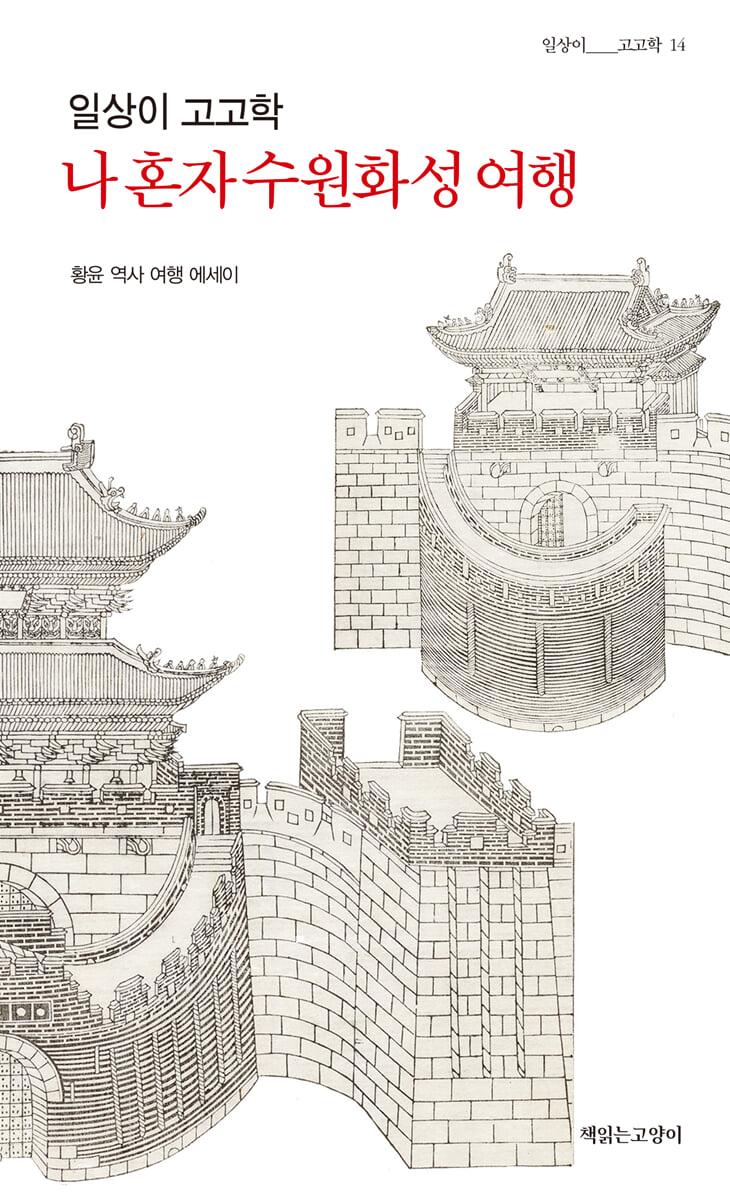 |
Description
Book Introduction
How to properly experience Hwaseong Fortress, the icon that permeates King Jeongjo's life
How the smart leader Jeongjo leveraged his contemporary Emperor Qianlong to realize his grand dream.
The book "Daily Archaeology: My Solo Trip to Suwon Hwaseong Fortress" has been published, which shows King Jeongjo's clear understanding of reality and meticulous execution skills to achieve his goals despite the shackles of being the son of Crown Prince Sado and his weak support base.
The unique approach of examining the new meaning of Suwon Hwaseong Fortress by comparing it to the Qianlong Emperor of the Qing Dynasty, who ruled during the same era as King Jeongjo, adds to the interest.
Coincidentally, both figures claimed to be rulers who were both civil and military, and actively utilized paintings and poetry as a means of governing. They also enjoyed personally touring the regions they ruled, which they called "tours," and their reigns even overlapped.
This is a new attempt to compare the two monarchs through the Suwon Hwaseong Fortress, and it also examines how the relationship between Joseon and the Qing, which had been tense for a considerable period after the Manchu invasion of Korea, changed after the reign of King Jeongjo.
In particular, it is worth noting the process by which Jeongjo obtained various diplomatic achievements from Emperor Qianlong for his own benefit.
How the smart leader Jeongjo leveraged his contemporary Emperor Qianlong to realize his grand dream.
The book "Daily Archaeology: My Solo Trip to Suwon Hwaseong Fortress" has been published, which shows King Jeongjo's clear understanding of reality and meticulous execution skills to achieve his goals despite the shackles of being the son of Crown Prince Sado and his weak support base.
The unique approach of examining the new meaning of Suwon Hwaseong Fortress by comparing it to the Qianlong Emperor of the Qing Dynasty, who ruled during the same era as King Jeongjo, adds to the interest.
Coincidentally, both figures claimed to be rulers who were both civil and military, and actively utilized paintings and poetry as a means of governing. They also enjoyed personally touring the regions they ruled, which they called "tours," and their reigns even overlapped.
This is a new attempt to compare the two monarchs through the Suwon Hwaseong Fortress, and it also examines how the relationship between Joseon and the Qing, which had been tense for a considerable period after the Manchu invasion of Korea, changed after the reign of King Jeongjo.
In particular, it is worth noting the process by which Jeongjo obtained various diplomatic achievements from Emperor Qianlong for his own benefit.
- You can preview some of the book's contents.
Preview
index
prolog
1.
Jeongjo, Crown Prince Sado, and Yeongjo
National Museum of Korea
Fire-born
The restoration of Crown Prince Sado
Gyujanggak
Jang Yong-young
2.
Appreciating the Mars journey
Alumni Association
Jeongjo's Tangpyeong policy and Chae Je-gong
Chae Je-gong's period of isolation
Chae Je-gong vs. Kim Jong-su
Mars Travel Map
Emperor Qianlong's tour of Jiangnan and various events
3.
Yongjusa Temple and Western painting techniques
Samsebulhoedo in Daeungbojeon Hall of Yongjusa Temple
Jeongjo and Buddhism
Yeonhaengsa Temple and Catholic Church
Nang Se-nyeong and Western painting techniques
Portraits and Western Painting Techniques
4.
Yungneung Royal Tomb
Take the bus
Crown Prince Sado and Yungneung
Jeongjo and Geolleung
The future Song Si-yeol saw
Jeong Yak-yong
5.
Entering Suwon Hwaseong Fortress
Nammun Market
Eat noodles
Jeong Yak-yong's design
Bongdon
Jo Sim-tae, head of Suwon Hwaseong Fortress construction
6.
A full tour of Suwon Hwaseong Fortress
Changyongmun Gate and bricks
Another defense facility, a current issue
Northeastern University
Northeast Gongsimdon
Jeongjo and Dongjangdae
Executive Director Lee Yu-kyung
7.
Go out of the castle
Fortress and gun tower
Firefighting water tank and northeastern turret
Pheasant
Passing through Hwahongmun
8.
Chang'an Gate and China
Jangangmun Gate
Jangangmun's defense system
Haengridan-gil
Appearance of Chinese castle
Jeong Yak-yong's inventions
Climb the West Gate
9.
Jeongjo's dream
Self-sufficiency of the city
Jang Yong-young's enormous funds
The real purpose of building Suwon Hwaseong Fortress
The end of the assets you worked so hard to accumulate
Epilogue
References
Search
1.
Jeongjo, Crown Prince Sado, and Yeongjo
National Museum of Korea
Fire-born
The restoration of Crown Prince Sado
Gyujanggak
Jang Yong-young
2.
Appreciating the Mars journey
Alumni Association
Jeongjo's Tangpyeong policy and Chae Je-gong
Chae Je-gong's period of isolation
Chae Je-gong vs. Kim Jong-su
Mars Travel Map
Emperor Qianlong's tour of Jiangnan and various events
3.
Yongjusa Temple and Western painting techniques
Samsebulhoedo in Daeungbojeon Hall of Yongjusa Temple
Jeongjo and Buddhism
Yeonhaengsa Temple and Catholic Church
Nang Se-nyeong and Western painting techniques
Portraits and Western Painting Techniques
4.
Yungneung Royal Tomb
Take the bus
Crown Prince Sado and Yungneung
Jeongjo and Geolleung
The future Song Si-yeol saw
Jeong Yak-yong
5.
Entering Suwon Hwaseong Fortress
Nammun Market
Eat noodles
Jeong Yak-yong's design
Bongdon
Jo Sim-tae, head of Suwon Hwaseong Fortress construction
6.
A full tour of Suwon Hwaseong Fortress
Changyongmun Gate and bricks
Another defense facility, a current issue
Northeastern University
Northeast Gongsimdon
Jeongjo and Dongjangdae
Executive Director Lee Yu-kyung
7.
Go out of the castle
Fortress and gun tower
Firefighting water tank and northeastern turret
Pheasant
Passing through Hwahongmun
8.
Chang'an Gate and China
Jangangmun Gate
Jangangmun's defense system
Haengridan-gil
Appearance of Chinese castle
Jeong Yak-yong's inventions
Climb the West Gate
9.
Jeongjo's dream
Self-sufficiency of the city
Jang Yong-young's enormous funds
The real purpose of building Suwon Hwaseong Fortress
The end of the assets you worked so hard to accumulate
Epilogue
References
Search
Detailed image

Publisher's Review
How Jeongjo Achieved His Grand Dream
Power dynamics as seen through Suwon Hwaseong Fortress and Jeongjo's flawless execution
Jeongjo, who ascended to the throne at the age of 24 following Yeongjo, clearly stated in his first royal proclamation that he would follow the will of his predecessor, Yeongjo, but also mentioned that “I am the son of Crown Prince Sado.”
And throughout his reign, he made every effort possible to uphold the posthumous title of Crown Prince Sado and strengthen the royal authority within the scope of his promise to King Yeongjo.
Tangpyeong Policy, one of the representative achievements of King Yeongjo and King Jeongjo.
The era that requires a policy of compromise is one that presupposes a power struggle, suggesting that the position of King Jeongjo, who ascended to the throne as the biological son of Crown Prince Sado, was not smooth.
This book details how King Jeongjo, in this situation, pursued his plans without breaking his promise to King Yeongjo in order to realize his grand dream.
The process of examining how King Jeongjo narrowed the gap between reality and dreams is the highlight of the archaeological journey through Suwon Hwaseong Fortress.
King Jeongjo maintained friendly relations with the Qing Dynasty while gaining practical benefits from it.
King Jeongjo's flexibility and proactiveness in accepting advanced culture
Even at a time when the Qing Dynasty, under the Kangxi, Yongzheng, and Qianlong emperors, displayed a solid national power that far surpassed that of the Ming Dynasty during its heyday, the overall sentiment in Joseon was still one of hostility toward the Qing Dynasty that had persisted since the Manchu invasion of Korea and the idea of subjugating the already fallen Ming Dynasty.
However, on the other hand, as the argument was raised that it was necessary to reform Joseon by actively learning Qing Dynasty culture, agricultural technology, and commercial development, the discipline of Silhak was gradually emerging.
In this atmosphere, Jeongjo actively sought to improve relations with the Qing Dynasty from the beginning of his reign.
In 1780, early in his reign, he dispatched an envoy to celebrate the 70th birthday of the Qianlong Emperor, which drew a very positive response from the emperor toward Joseon. In addition, the decision to send Kang Se-hwang, who was over 70, as an envoy for the Cheonsuyeon, a banquet to commemorate the 75th birthday of the Qianlong Emperor and the 50th anniversary of his ascension to the throne, was a reflection of Jeongjo's active intentions.
As King Jeongjo intended, Kang Se-hwang, as a representative artist of Joseon, performed brilliantly in the Qing Dynasty and contributed to the relationship between the two countries.
At that time, the place that those who were selected for the performance event wanted to visit when they went to Beijing was the Catholic Church.
Because the Catholic Church was a small version of Europe in China, it was a window through which people could encounter new cultures.
In particular, the Western-style paintings hanging in the Catholic Church were like symbols of new civilization.
The dispatch of painter Kang Se-hwang proves to be an excellent choice in this regard as well.
In 1789, King Jeongjo invited Kim Hong-do and Yi Myeong-gi, painters of the Dohwaseo, to the Yeonhasansa Temple, and had them draw new cultural artifacts as if taking photographs so that King Jeongjo could confirm them. This was a monarch who knew how to actively utilize new and diverse materials in a rapidly changing era.
Looking at the 'Samsebulhoedo' (page 140) of Yongjusa Temple, painted in Western painting style by Kim Hong-do and Lee Myeong-gi in 1790 after returning from the Yeonhaengsa Temple, we can see King Jeongjo's will to reflect new civilization.
Yongjusa Temple became a symbol of 18th-century Joseon Buddhist art.
In addition, Jeongjo received reports from envoys on how specific events related to Emperor Qianlong were held, and tried to learn in detail about them, using this as an opportunity to strengthen royal authority.
He visited Hyeonryungwon, the tomb of Crown Prince Sado, 13 times, and recorded the event of 1795, when he visited Hwaseong Fortress together with his mother, Queen Hyegyeong, to commemorate her 60th birthday, in a book called Uigwe. He also had the painters paint a special picture of the event, leaving behind eight folding screens.
Examples of events that benchmarked the Qianlong Emperor's events included military training at Hwaseong Fortress, holding special civil service examinations for Suwon residents, events to honor the elderly, and visits to Confucian shrines.
This is an example of how King Jeongjo used the image of Emperor Qianlong proudly displaying his imperial power through various events to link his visit to Hyeonryungwon and Suwon Hwaseong Fortress to strengthening the royal authority.
Seeing Suwon Hwaseong Fortress in comparison to the Hwaseong Seongyeok Uigwe means more than just a field trip.
Detailed archaeology in a massive castle
Suwon Hwaseong Fortress was registered as a UNESCO World Heritage Site in 1997.
Originally, only buildings that have maintained their original form can be registered as UNESCO World Heritage Sites, but Suwon Hwaseong Fortress was built during the reign of King Jeongjo of the Joseon Dynasty, but a significant portion was damaged or lost during the Japanese colonial period and the Korean War, and then repaired and restored.
Nevertheless, the decisive reason why it was able to be registered as a UNESCO World Heritage Site was because it was restored to its original form according to the Hwaseong Seongyeok Uigwe, which contains the blueprint for Suwon Hwaseong Fortress.
As the value of Suwon Hwaseong Fortress has increased thanks to the Uigwe, examining Suwon Hwaseong Fortress together with the Uigwe has a meaning that goes beyond a simple field trip.
Not only is it fun to compare and appreciate the buildings in the royal protocols with the actual buildings, but the passages that explain the historical background, military use, and the resulting design are captivating and engaging, even for those who aren't interested in military strategy.
According to records, Suwon Hwaseong Fortress was expected to take 10 years to complete, but it was completed in a remarkable 2 years and 8 months.
This was truly the result of comprehensive preparation.
First of all, we can mention the review of various and extensive data by Jeong Yak-yong, who was in charge of the initial design, and the technical support such as the crane.
The author meticulously describes examples of how the Chinese castles, which were an advanced culture at the time, were actively applied to Suwon Hwaseong Fortress, helping us understand the kind of castle King Jeongjo wanted to build.
In this way, this book introduces Suwon Hwaseong Fortress, which was completed with comprehensive support including literature research, technology, leadership, and economic support, and leads to a multifaceted understanding by mobilizing abundant literature and pictorial materials.
Power dynamics as seen through Suwon Hwaseong Fortress and Jeongjo's flawless execution
Jeongjo, who ascended to the throne at the age of 24 following Yeongjo, clearly stated in his first royal proclamation that he would follow the will of his predecessor, Yeongjo, but also mentioned that “I am the son of Crown Prince Sado.”
And throughout his reign, he made every effort possible to uphold the posthumous title of Crown Prince Sado and strengthen the royal authority within the scope of his promise to King Yeongjo.
Tangpyeong Policy, one of the representative achievements of King Yeongjo and King Jeongjo.
The era that requires a policy of compromise is one that presupposes a power struggle, suggesting that the position of King Jeongjo, who ascended to the throne as the biological son of Crown Prince Sado, was not smooth.
This book details how King Jeongjo, in this situation, pursued his plans without breaking his promise to King Yeongjo in order to realize his grand dream.
The process of examining how King Jeongjo narrowed the gap between reality and dreams is the highlight of the archaeological journey through Suwon Hwaseong Fortress.
King Jeongjo maintained friendly relations with the Qing Dynasty while gaining practical benefits from it.
King Jeongjo's flexibility and proactiveness in accepting advanced culture
Even at a time when the Qing Dynasty, under the Kangxi, Yongzheng, and Qianlong emperors, displayed a solid national power that far surpassed that of the Ming Dynasty during its heyday, the overall sentiment in Joseon was still one of hostility toward the Qing Dynasty that had persisted since the Manchu invasion of Korea and the idea of subjugating the already fallen Ming Dynasty.
However, on the other hand, as the argument was raised that it was necessary to reform Joseon by actively learning Qing Dynasty culture, agricultural technology, and commercial development, the discipline of Silhak was gradually emerging.
In this atmosphere, Jeongjo actively sought to improve relations with the Qing Dynasty from the beginning of his reign.
In 1780, early in his reign, he dispatched an envoy to celebrate the 70th birthday of the Qianlong Emperor, which drew a very positive response from the emperor toward Joseon. In addition, the decision to send Kang Se-hwang, who was over 70, as an envoy for the Cheonsuyeon, a banquet to commemorate the 75th birthday of the Qianlong Emperor and the 50th anniversary of his ascension to the throne, was a reflection of Jeongjo's active intentions.
As King Jeongjo intended, Kang Se-hwang, as a representative artist of Joseon, performed brilliantly in the Qing Dynasty and contributed to the relationship between the two countries.
At that time, the place that those who were selected for the performance event wanted to visit when they went to Beijing was the Catholic Church.
Because the Catholic Church was a small version of Europe in China, it was a window through which people could encounter new cultures.
In particular, the Western-style paintings hanging in the Catholic Church were like symbols of new civilization.
The dispatch of painter Kang Se-hwang proves to be an excellent choice in this regard as well.
In 1789, King Jeongjo invited Kim Hong-do and Yi Myeong-gi, painters of the Dohwaseo, to the Yeonhasansa Temple, and had them draw new cultural artifacts as if taking photographs so that King Jeongjo could confirm them. This was a monarch who knew how to actively utilize new and diverse materials in a rapidly changing era.
Looking at the 'Samsebulhoedo' (page 140) of Yongjusa Temple, painted in Western painting style by Kim Hong-do and Lee Myeong-gi in 1790 after returning from the Yeonhaengsa Temple, we can see King Jeongjo's will to reflect new civilization.
Yongjusa Temple became a symbol of 18th-century Joseon Buddhist art.
In addition, Jeongjo received reports from envoys on how specific events related to Emperor Qianlong were held, and tried to learn in detail about them, using this as an opportunity to strengthen royal authority.
He visited Hyeonryungwon, the tomb of Crown Prince Sado, 13 times, and recorded the event of 1795, when he visited Hwaseong Fortress together with his mother, Queen Hyegyeong, to commemorate her 60th birthday, in a book called Uigwe. He also had the painters paint a special picture of the event, leaving behind eight folding screens.
Examples of events that benchmarked the Qianlong Emperor's events included military training at Hwaseong Fortress, holding special civil service examinations for Suwon residents, events to honor the elderly, and visits to Confucian shrines.
This is an example of how King Jeongjo used the image of Emperor Qianlong proudly displaying his imperial power through various events to link his visit to Hyeonryungwon and Suwon Hwaseong Fortress to strengthening the royal authority.
Seeing Suwon Hwaseong Fortress in comparison to the Hwaseong Seongyeok Uigwe means more than just a field trip.
Detailed archaeology in a massive castle
Suwon Hwaseong Fortress was registered as a UNESCO World Heritage Site in 1997.
Originally, only buildings that have maintained their original form can be registered as UNESCO World Heritage Sites, but Suwon Hwaseong Fortress was built during the reign of King Jeongjo of the Joseon Dynasty, but a significant portion was damaged or lost during the Japanese colonial period and the Korean War, and then repaired and restored.
Nevertheless, the decisive reason why it was able to be registered as a UNESCO World Heritage Site was because it was restored to its original form according to the Hwaseong Seongyeok Uigwe, which contains the blueprint for Suwon Hwaseong Fortress.
As the value of Suwon Hwaseong Fortress has increased thanks to the Uigwe, examining Suwon Hwaseong Fortress together with the Uigwe has a meaning that goes beyond a simple field trip.
Not only is it fun to compare and appreciate the buildings in the royal protocols with the actual buildings, but the passages that explain the historical background, military use, and the resulting design are captivating and engaging, even for those who aren't interested in military strategy.
According to records, Suwon Hwaseong Fortress was expected to take 10 years to complete, but it was completed in a remarkable 2 years and 8 months.
This was truly the result of comprehensive preparation.
First of all, we can mention the review of various and extensive data by Jeong Yak-yong, who was in charge of the initial design, and the technical support such as the crane.
The author meticulously describes examples of how the Chinese castles, which were an advanced culture at the time, were actively applied to Suwon Hwaseong Fortress, helping us understand the kind of castle King Jeongjo wanted to build.
In this way, this book introduces Suwon Hwaseong Fortress, which was completed with comprehensive support including literature research, technology, leadership, and economic support, and leads to a multifaceted understanding by mobilizing abundant literature and pictorial materials.
GOODS SPECIFICS
- Date of issue: November 4, 2024
- Page count, weight, size: 416 pages | 394g | 113*184*29mm
- ISBN13: 9791192753348
- ISBN10: 1192753348
You may also like
카테고리
korean


korean

![GQ KOREA Mark (Monthly): December [2025]](http://librairie.coreenne.fr/cdn/shop/files/8ef265dbbfbf186523ed75ba7319009d.jpg?v=1765340328&width=3840)


