

Patterns drawn by humans
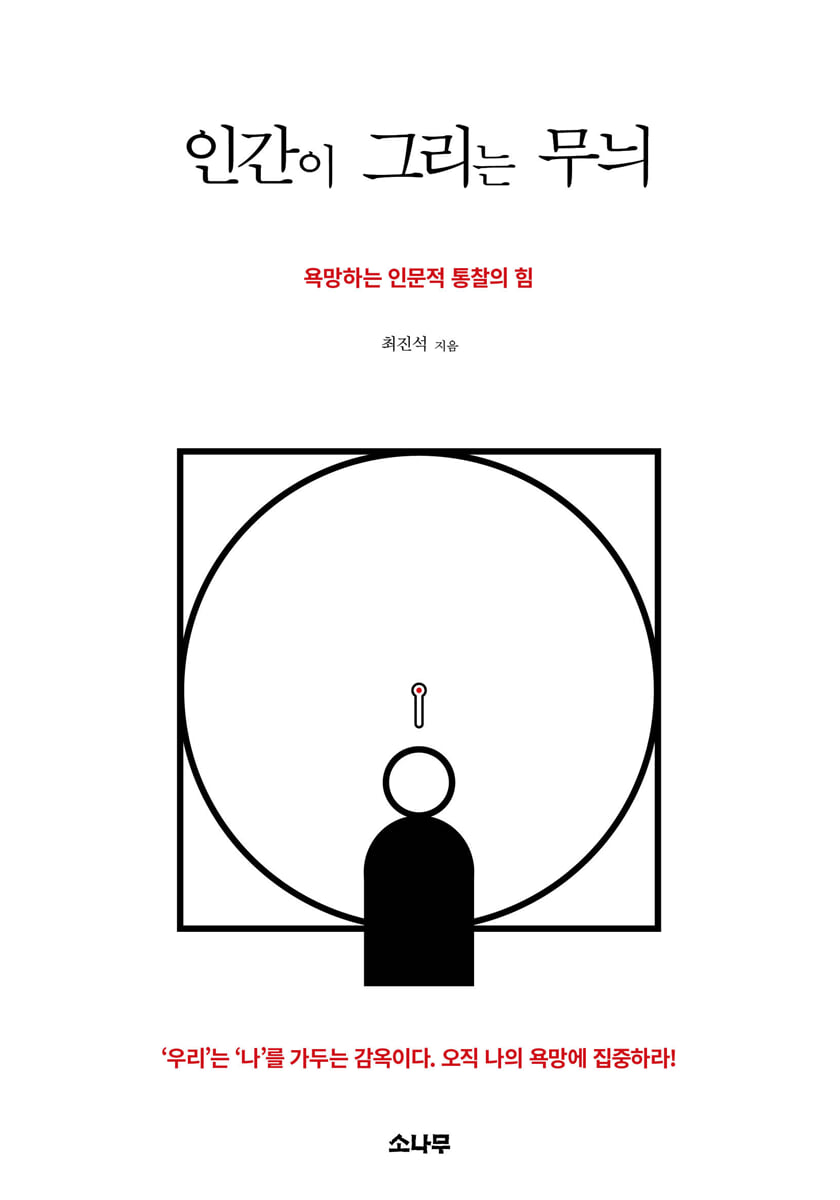 |
Description
Book Introduction
Does knowledge make us free and happy?
Human life is a process of increasing knowledge and broadening the scope of experience.
But as our knowledge and experience increase, do we become happier? Freer? More flexible? Have our eyes become more discerning? Have our imagination and creativity also grown? If we can't answer "yes" to these questions, what exactly are knowledge and experience? Is accumulating knowledge truly beneficial to us? Are we not free to wield knowledge, but rather controlled by it? These doubts touch on the fundamental question of how we should live.
We call the various elements that make up knowledge 'concepts'.
Let's look at the character '개(槪)' in concept(槪念).
When buying a bunch of rice at a rice shop, first, put a lot of rice in a basket.
And the tool used to cut off exactly one doe is called a pyeongmire, which is written in Chinese characters as 'gae (槪)'.
Soon, a concept is something that stores only the common or general things in the form of thoughts, excluding the extra, private or special things that do not fit into the common framework.
Therefore, the concept is bound to be limited from the start.
Knowledge does not reflect the world as it is, but only briefly shows a certain type of the world.
People who have surrendered themselves to 'concepts' strive to do 'desirable things' instead of 'desires', 'ought things' instead of 'want things', and 'good things' instead of 'like things'.
Because they don't face their own desires.
People who are driven by knowledge and ideology are easily captured by a sense of mission.
For example, something like studying and working for Korean society.
Who gave us this burdensome mission? The "we" created by ideology and beliefs is a prison that imprisons "me."
Have you lived your life doing what you want to do, or doing what you wish to do?
Have you lived your life doing what you had to do, or doing what you wanted to do?
Have you lived your life doing good things, or doing things you love?
Humanistic insight is the ability to see events or situations that appear before us by placing them on the human pattern.
It is the ability to see as you see, not as you want to see or as you have to see.
Where does this valuable ability come from? It doesn't come from cool reason, mastery of systems, reverence for essence, political calculation, or meticulous adherence to ideology.
Professor Jinseok Choi asks:
“Are you drawing your own pattern now?”
Human life is a process of increasing knowledge and broadening the scope of experience.
But as our knowledge and experience increase, do we become happier? Freer? More flexible? Have our eyes become more discerning? Have our imagination and creativity also grown? If we can't answer "yes" to these questions, what exactly are knowledge and experience? Is accumulating knowledge truly beneficial to us? Are we not free to wield knowledge, but rather controlled by it? These doubts touch on the fundamental question of how we should live.
We call the various elements that make up knowledge 'concepts'.
Let's look at the character '개(槪)' in concept(槪念).
When buying a bunch of rice at a rice shop, first, put a lot of rice in a basket.
And the tool used to cut off exactly one doe is called a pyeongmire, which is written in Chinese characters as 'gae (槪)'.
Soon, a concept is something that stores only the common or general things in the form of thoughts, excluding the extra, private or special things that do not fit into the common framework.
Therefore, the concept is bound to be limited from the start.
Knowledge does not reflect the world as it is, but only briefly shows a certain type of the world.
People who have surrendered themselves to 'concepts' strive to do 'desirable things' instead of 'desires', 'ought things' instead of 'want things', and 'good things' instead of 'like things'.
Because they don't face their own desires.
People who are driven by knowledge and ideology are easily captured by a sense of mission.
For example, something like studying and working for Korean society.
Who gave us this burdensome mission? The "we" created by ideology and beliefs is a prison that imprisons "me."
Have you lived your life doing what you want to do, or doing what you wish to do?
Have you lived your life doing what you had to do, or doing what you wanted to do?
Have you lived your life doing good things, or doing things you love?
Humanistic insight is the ability to see events or situations that appear before us by placing them on the human pattern.
It is the ability to see as you see, not as you want to see or as you have to see.
Where does this valuable ability come from? It doesn't come from cool reason, mastery of systems, reverence for essence, political calculation, or meticulous adherence to ideology.
Professor Jinseok Choi asks:
“Are you drawing your own pattern now?”
- You can preview some of the book's contents.
Preview
index
The order of a walk through the forest of humanities
Entering the forest of humanities - there, a person walks towards me
The First Forest of Humanities: Becoming an Independent Subject through Humanistic Insight
Humanities, who are you?
Steve Jobs and Socrates
A humanities antenna that provides insight into the present
Break away from political judgment
Why I Study Oriental Studies
The identity of the patterns drawn by humans
Ideology is not 'mine' but 'ours'
Who gave that heavy mission?
Live like today is your last day.
The Second Forest of Humanities - Facing the Patterns Drawn by Humans
Are we becoming happier and more flexible?
Kids these days are always spoiled
Humanities are spoiled
Why are we not happy?
Back to proper nouns
World and Concepts, Verbs and Nouns
What exists is not a concept, but an event.
You can do well only if you do it your way
Lao Tzu, the Path to Modernity
Knowledge is the shit left behind by events.
Face the human pattern
The Third Forest of Humanities - Become a Verb, Not a Noun
Does knowledge set us free?
What is 'virtue'?
A heart that suddenly pops out
The power to not say what you want to say
Kill the mentor
Step into the concrete everyday life
What is truth? Wash the dishes.
Breathe with the world in verbs
Funeral for me, the beginning of a wonderful life
Look not at 'death' but at 'dying'.
The Fourth Forest of Humanities - Desire, Open Your Mouth
The Beginning of Philosophy: Making It Strange
How to catch an ostrich
A single strand of my hair is more precious than all the profits in the world.
A person who is only good at answering questions is a fool.
How to meet yourself
Desire, the power that creates genres
Genre flows from my story
Desire desire
A noun can't break even one egg.
Return from reason to desire, from the universal to the individual.
Staying in the Forest of Humanities - Human Patterns Engraved by Desire
Entering the forest of humanities - there, a person walks towards me
The First Forest of Humanities: Becoming an Independent Subject through Humanistic Insight
Humanities, who are you?
Steve Jobs and Socrates
A humanities antenna that provides insight into the present
Break away from political judgment
Why I Study Oriental Studies
The identity of the patterns drawn by humans
Ideology is not 'mine' but 'ours'
Who gave that heavy mission?
Live like today is your last day.
The Second Forest of Humanities - Facing the Patterns Drawn by Humans
Are we becoming happier and more flexible?
Kids these days are always spoiled
Humanities are spoiled
Why are we not happy?
Back to proper nouns
World and Concepts, Verbs and Nouns
What exists is not a concept, but an event.
You can do well only if you do it your way
Lao Tzu, the Path to Modernity
Knowledge is the shit left behind by events.
Face the human pattern
The Third Forest of Humanities - Become a Verb, Not a Noun
Does knowledge set us free?
What is 'virtue'?
A heart that suddenly pops out
The power to not say what you want to say
Kill the mentor
Step into the concrete everyday life
What is truth? Wash the dishes.
Breathe with the world in verbs
Funeral for me, the beginning of a wonderful life
Look not at 'death' but at 'dying'.
The Fourth Forest of Humanities - Desire, Open Your Mouth
The Beginning of Philosophy: Making It Strange
How to catch an ostrich
A single strand of my hair is more precious than all the profits in the world.
A person who is only good at answering questions is a fool.
How to meet yourself
Desire, the power that creates genres
Genre flows from my story
Desire desire
A noun can't break even one egg.
Return from reason to desire, from the universal to the individual.
Staying in the Forest of Humanities - Human Patterns Engraved by Desire
Publisher's Review
If I could spend just half a day with Socrates…
Steve Jobs put the world in the hands of humans.
That's why people around the world were excited and nervous every time his new product came out.
That is, he became a myth because he made a difference in the century.
“I would give all the technology Apple has to spend a day with Socrates.” These are the words of Jobs before he died.
Although it may sound strange at first, Jobs' thinking was clear.
I was convinced that if I had a meal with a great philosopher like Socrates, I would make more money than if I spent all my current wealth on that meal.
What we should pay attention to is not the success that Jobs achieved.
As revealed in another of his words, “Apple’s technology has combined with the humanities to create amazing results that make our hearts sing,” Jobs was a man with the insight to connect the “humanities” with “survival.”
Humanities, patterns drawn by humans
The word ‘mun’ originally meant pattern.
Therefore, humanities refers to the patterns of human beings.
It could be called 'human knot' or 'human path'.
Humanities is a discipline that explores the 'patterns drawn by humans'.
This is also the purpose of studying humanities.
It is to understand the identity of the patterns drawn by humans and the human movement path.
The past is behind the 'human path' and the future is only forward.
So, is it possible to prepare for the future without assessing the "trajectories of human movement" and the "patterns of human nature"? According to philosopher Choi Jin-seok, professor at Sogang University, the humanities are not intended to cultivate lofty theories or sophisticated knowledge, but rather tools for survival.
This is further supported by the fact that those driving the recent humanities craze in Korean society are not researchers inside or outside of universities, but businesspeople.
Entrepreneurs intuitively know that only those with the ability to read the flow of human movement can succeed.
Since some time ago, imagination and creativity have been talked about in many places in Korean society.
What is imagination? According to Professor Choi Jin-seok's definition, imagination is the ability to dream about where a person's movements might lead.
Imagination is different from delusion.
Delusion is just a random thought that has nothing to do with the direction of the pattern drawn by humans.
Also, creativity is dreaming and dreaming about where the pattern drawn by humans will go, and then putting a dot right in front of that direction and standing tall!
Therefore, anyone who desires imagination and creativity should not avoid the fragrance of the humanities.
This is also why companies that consider imagination and creativity as their most important issues need the humanities.
Because without the humanities there is no imagination or creativity.
The power of humanistic insight is a weapon of survival.
Break away from political judgment
When we encounter a situation or event and judge it as 'good' or 'bad', we are merely making a political judgment.
This means that we are accustomed to political judgment rather than humanistic judgment.
The first condition for humanistic insight is to break away from political judgment.
Professor Jinseok Choi calls the small events and phenomena that secretly reveal the grand flow and direction of this world as it moves, 'signs.'
Through these signs, we can ride the great current that is powerfully operating from the bottom.
Therefore, signs serve as important clues to the direction of civilization or the progress of events.
However, simply making a political judgment of "good" or "bad" based on a phenomenon that could be interpreted as a sign cuts off the possibility of understanding the larger flow of civilization and stops perception right there.
A person who makes a humanistic judgment does not answer with 'good' or 'bad'.
The power of humanistic insight lies in the ability to break away from political judgment and read the 'signs'.
A person who focuses on his own desires
Don't say "Spring has come!"
We often say, “Spring is here!”
But does 'spring' really exist? 'Spring' does not exist.
It's just a concept.
It's just a vague label of "spring" somewhere around that time when the ground softens, buds sprout, leaves unfold, and events that make girls' hearts flutter occur.
Therefore, the phrase “Spring has come!” cannot be an expression of exclamation in the true sense of the word.
It's just repeating familiar concepts and speaking roughly, and then making the mistake of thinking that you've gotten some great feeling out of it.
The truth is self-deception.
A person who truly feels spring does not say vaguely, “Spring has come!”
Don't throw around the concept of 'spring' so irresponsibly.
Instead, we come into contact with specific events that allow us to feel the arrival of spring.
Run to the place where the ice is melting, touch it with your hands, and don't miss the moment when new shoots emerge, feeling the warmth of the ground directly with your skin or nose.
Welcome 'spring' with your own unique event in which you participate directly.
What exists is not a concept, but an event.
The difference in maturity and depth of character between someone who speaks of spring as a concept and someone who experiences the events of spring firsthand is immeasurable.
A person who remains sensitive does not say, “Spring has come!”
Let's see the sprouts directly.
A person who maintains sensitivity does not look at theories.
Look at the problem.
People who remain sensitive do not give rational answers.
Ask questions based on desire.
People who maintain this sensitivity—focusing on the problem, focusing on the routine, focusing on the specifics—are flexible.
Because desire is active.
Does knowledge make us free and happy?
Human life is a process of increasing knowledge and broadening the scope of experience.
But as our knowledge and experience increase, do we become happier? Freer? More flexible? Have our eyes become more discerning? Have our imagination and creativity also grown? If we can't answer "yes" to these questions, what exactly are knowledge and experience? Is accumulating knowledge truly beneficial to us? Are we not free to wield knowledge, but rather controlled by it? These doubts touch on the fundamental question of how we should live.
We call the various elements that make up knowledge 'concepts'.
Let's look at the character '개(槪)' in concept(槪念).
When buying a bunch of rice at a rice shop, first, put a lot of rice in a basket.
And the tool used to cut off exactly one doe is called a pyeongmire, which is written in Chinese characters as 'gae (槪)'.
Soon, a concept is something that stores only the common or general things in the form of thoughts, excluding the extra, private or special things that do not fit into the common framework.
Therefore, the concept is bound to be limited from the start.
Knowledge does not reflect the world as it is, but only briefly shows a certain type of the world.
People who have surrendered themselves to 'concepts' strive to do 'desirable things' instead of 'desires', 'ought things' instead of 'want things', and 'good things' instead of 'like things'.
Because they don't face their own desires.
People who are driven by knowledge and ideology are easily captured by a sense of mission.
For example, something like studying and working for Korean society.
Who gave us this burdensome mission? The "we" created by ideology and beliefs is a prison that imprisons "me."
Have you lived your life doing what you want to do, or doing what you wish to do?
Have you lived your life doing what you had to do, or doing what you wanted to do?
Have you lived your life doing good things, or doing things you love?
Humanistic insight is the ability to see events or situations that appear before us by placing them on the human pattern.
It is the ability to see as you see, not as you want to see or as you have to see.
Where does this valuable ability come from? It doesn't come from cool reason, mastery of systems, reverence for essence, political calculation, or meticulous adherence to ideology.
Professor Jinseok Choi asks:
“Are you drawing your own pattern now?”
Steve Jobs put the world in the hands of humans.
That's why people around the world were excited and nervous every time his new product came out.
That is, he became a myth because he made a difference in the century.
“I would give all the technology Apple has to spend a day with Socrates.” These are the words of Jobs before he died.
Although it may sound strange at first, Jobs' thinking was clear.
I was convinced that if I had a meal with a great philosopher like Socrates, I would make more money than if I spent all my current wealth on that meal.
What we should pay attention to is not the success that Jobs achieved.
As revealed in another of his words, “Apple’s technology has combined with the humanities to create amazing results that make our hearts sing,” Jobs was a man with the insight to connect the “humanities” with “survival.”
Humanities, patterns drawn by humans
The word ‘mun’ originally meant pattern.
Therefore, humanities refers to the patterns of human beings.
It could be called 'human knot' or 'human path'.
Humanities is a discipline that explores the 'patterns drawn by humans'.
This is also the purpose of studying humanities.
It is to understand the identity of the patterns drawn by humans and the human movement path.
The past is behind the 'human path' and the future is only forward.
So, is it possible to prepare for the future without assessing the "trajectories of human movement" and the "patterns of human nature"? According to philosopher Choi Jin-seok, professor at Sogang University, the humanities are not intended to cultivate lofty theories or sophisticated knowledge, but rather tools for survival.
This is further supported by the fact that those driving the recent humanities craze in Korean society are not researchers inside or outside of universities, but businesspeople.
Entrepreneurs intuitively know that only those with the ability to read the flow of human movement can succeed.
Since some time ago, imagination and creativity have been talked about in many places in Korean society.
What is imagination? According to Professor Choi Jin-seok's definition, imagination is the ability to dream about where a person's movements might lead.
Imagination is different from delusion.
Delusion is just a random thought that has nothing to do with the direction of the pattern drawn by humans.
Also, creativity is dreaming and dreaming about where the pattern drawn by humans will go, and then putting a dot right in front of that direction and standing tall!
Therefore, anyone who desires imagination and creativity should not avoid the fragrance of the humanities.
This is also why companies that consider imagination and creativity as their most important issues need the humanities.
Because without the humanities there is no imagination or creativity.
The power of humanistic insight is a weapon of survival.
Break away from political judgment
When we encounter a situation or event and judge it as 'good' or 'bad', we are merely making a political judgment.
This means that we are accustomed to political judgment rather than humanistic judgment.
The first condition for humanistic insight is to break away from political judgment.
Professor Jinseok Choi calls the small events and phenomena that secretly reveal the grand flow and direction of this world as it moves, 'signs.'
Through these signs, we can ride the great current that is powerfully operating from the bottom.
Therefore, signs serve as important clues to the direction of civilization or the progress of events.
However, simply making a political judgment of "good" or "bad" based on a phenomenon that could be interpreted as a sign cuts off the possibility of understanding the larger flow of civilization and stops perception right there.
A person who makes a humanistic judgment does not answer with 'good' or 'bad'.
The power of humanistic insight lies in the ability to break away from political judgment and read the 'signs'.
A person who focuses on his own desires
Don't say "Spring has come!"
We often say, “Spring is here!”
But does 'spring' really exist? 'Spring' does not exist.
It's just a concept.
It's just a vague label of "spring" somewhere around that time when the ground softens, buds sprout, leaves unfold, and events that make girls' hearts flutter occur.
Therefore, the phrase “Spring has come!” cannot be an expression of exclamation in the true sense of the word.
It's just repeating familiar concepts and speaking roughly, and then making the mistake of thinking that you've gotten some great feeling out of it.
The truth is self-deception.
A person who truly feels spring does not say vaguely, “Spring has come!”
Don't throw around the concept of 'spring' so irresponsibly.
Instead, we come into contact with specific events that allow us to feel the arrival of spring.
Run to the place where the ice is melting, touch it with your hands, and don't miss the moment when new shoots emerge, feeling the warmth of the ground directly with your skin or nose.
Welcome 'spring' with your own unique event in which you participate directly.
What exists is not a concept, but an event.
The difference in maturity and depth of character between someone who speaks of spring as a concept and someone who experiences the events of spring firsthand is immeasurable.
A person who remains sensitive does not say, “Spring has come!”
Let's see the sprouts directly.
A person who maintains sensitivity does not look at theories.
Look at the problem.
People who remain sensitive do not give rational answers.
Ask questions based on desire.
People who maintain this sensitivity—focusing on the problem, focusing on the routine, focusing on the specifics—are flexible.
Because desire is active.
Does knowledge make us free and happy?
Human life is a process of increasing knowledge and broadening the scope of experience.
But as our knowledge and experience increase, do we become happier? Freer? More flexible? Have our eyes become more discerning? Have our imagination and creativity also grown? If we can't answer "yes" to these questions, what exactly are knowledge and experience? Is accumulating knowledge truly beneficial to us? Are we not free to wield knowledge, but rather controlled by it? These doubts touch on the fundamental question of how we should live.
We call the various elements that make up knowledge 'concepts'.
Let's look at the character '개(槪)' in concept(槪念).
When buying a bunch of rice at a rice shop, first, put a lot of rice in a basket.
And the tool used to cut off exactly one doe is called a pyeongmire, which is written in Chinese characters as 'gae (槪)'.
Soon, a concept is something that stores only the common or general things in the form of thoughts, excluding the extra, private or special things that do not fit into the common framework.
Therefore, the concept is bound to be limited from the start.
Knowledge does not reflect the world as it is, but only briefly shows a certain type of the world.
People who have surrendered themselves to 'concepts' strive to do 'desirable things' instead of 'desires', 'ought things' instead of 'want things', and 'good things' instead of 'like things'.
Because they don't face their own desires.
People who are driven by knowledge and ideology are easily captured by a sense of mission.
For example, something like studying and working for Korean society.
Who gave us this burdensome mission? The "we" created by ideology and beliefs is a prison that imprisons "me."
Have you lived your life doing what you want to do, or doing what you wish to do?
Have you lived your life doing what you had to do, or doing what you wanted to do?
Have you lived your life doing good things, or doing things you love?
Humanistic insight is the ability to see events or situations that appear before us by placing them on the human pattern.
It is the ability to see as you see, not as you want to see or as you have to see.
Where does this valuable ability come from? It doesn't come from cool reason, mastery of systems, reverence for essence, political calculation, or meticulous adherence to ideology.
Professor Jinseok Choi asks:
“Are you drawing your own pattern now?”
GOODS SPECIFICS
- Date of issue: December 10, 2023
- Page count, weight, size: 296 pages | 140*200*20mm
- ISBN13: 9788971391105
- ISBN10: 8971391103
You may also like
카테고리
korean


korean

![ELLE 엘르 스페셜 에디션 A형 : 12월 [2025]](http://librairie.coreenne.fr/cdn/shop/files/b8e27a3de6c9538896439686c6b0e8fb.jpg?v=1766436872&width=3840)


