

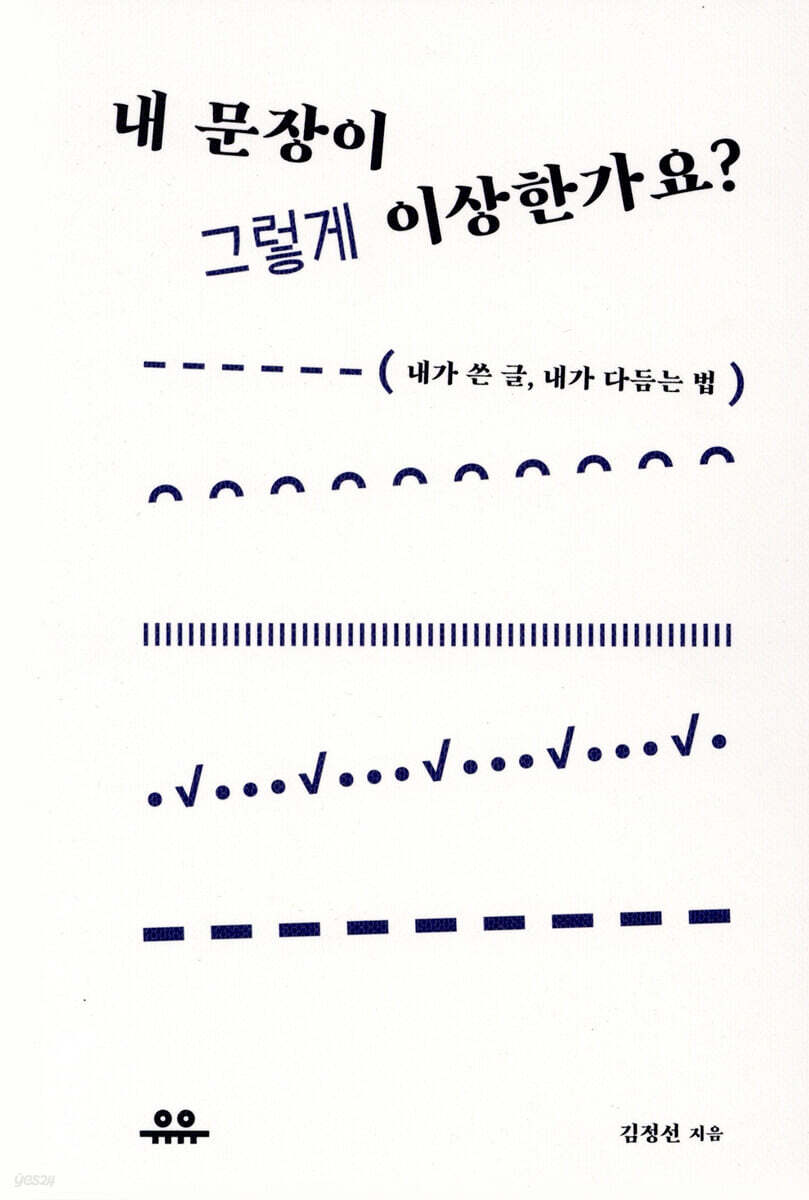
Is my sentence that weird?
 |
Description
Book Introduction
My Sentence Recipe Learned from the Master of Correction
In his previous work, “The Taste of Verbs,” the author presented a new form of writing that blended useful Korean language knowledge with stories, and in this book, he utilized that form in a slightly more advanced form.
This time, we've combined the Korean language knowledge section, which covers tips for polishing awkward sentences, with the story section, which features an outsourced proofreader and the author. Both sections address issues related to proofreading, further enhancing the consistency of the content.
The author says that the best way to create a good sentence is to remove as many unnecessary elements as possible, and points out that sentences become much better just by removing words like '-적', '-의', '것', and '들'.
We also organize sentence types that become awkward when 'itda' is included.
For example, when explaining an expression like '-ham-meo-eo', it is explained as follows. Reading this passage, you can also get a glimpse into the philosophy of a field worker who has been refining our language for a long time.
“Some argue that we should not use expressions that come from foreign languages, but if there are hundreds of millions of Korean speakers, it might be possible, but in reality, with less than 100 million at most, insisting on linguistic purism could lead to isolation.
In addition, we have carefully organized the things we should keep in mind when writing comfortable Korean sentences, such as causative and passive sentences that we should be careful about when writing sentences, and the use of demonstrative pronouns.
This book is helpful for writers who are unsure whether they have written well or whether their Korean expressions are awkward.
In his previous work, “The Taste of Verbs,” the author presented a new form of writing that blended useful Korean language knowledge with stories, and in this book, he utilized that form in a slightly more advanced form.
This time, we've combined the Korean language knowledge section, which covers tips for polishing awkward sentences, with the story section, which features an outsourced proofreader and the author. Both sections address issues related to proofreading, further enhancing the consistency of the content.
The author says that the best way to create a good sentence is to remove as many unnecessary elements as possible, and points out that sentences become much better just by removing words like '-적', '-의', '것', and '들'.
We also organize sentence types that become awkward when 'itda' is included.
For example, when explaining an expression like '-ham-meo-eo', it is explained as follows. Reading this passage, you can also get a glimpse into the philosophy of a field worker who has been refining our language for a long time.
“Some argue that we should not use expressions that come from foreign languages, but if there are hundreds of millions of Korean speakers, it might be possible, but in reality, with less than 100 million at most, insisting on linguistic purism could lead to isolation.
In addition, we have carefully organized the things we should keep in mind when writing comfortable Korean sentences, such as causative and passive sentences that we should be careful about when writing sentences, and the use of demonstrative pronouns.
This book is helpful for writers who are unsure whether they have written well or whether their Korean expressions are awkward.
- You can preview some of the book's contents.
Preview
index
Time to polish the introduction sentence
First email: Is my sentence that weird?
Things that show hostility ①
Ham In-ju
Things that show hostility ②
prejudice
Things that show hostility ③
Reply
Things that show hostility ④
cold
Things that show hostility ⑤
dream
Even if you don't write that it exists, it exists anyway ①
Second email: I think there was a misunderstanding.
Even if you don't write that it exists, it exists anyway ②
noodle
Even if you don't write that it exists, it exists anyway ③
proofreading paper
Expressions that make you look intellectually lazy ①
Towel spinning
Expressions that make you look intellectually lazy ②
memory
Expressions that make you look intellectually lazy ③
Ham In-ju's sentence ①
Expressions that make you look intellectually lazy ④
Ham In-ju's sentence ②
Where do my sentences come from and where do they go? ①
Ham In-ju's sentence ③
Where do my sentences come from and where do they go? ②
Your sentence is strange
Where do my sentences come from and where do they go? ③
Hand wave
Where do my sentences come from and where do they go? ④
library
Sentence ① covered in words of being hit and being ordered
Third email: Is it possible to write my own sentences?
Sentence ② covered in words of being hit and being ordered
Fourth Mail: A Sentence Engraved on the Body
Sentence ③ covered in words of being hit and being ordered
Reply: Sentences written from left to right
Sentence ④ covered in words of being hit and being ordered
Fifth Mail: Those Who Understand, Those Who Misunderstand
The difference between loving and being loved
Reply: The me that no longer exists and the me that still does not exist
Whether it can be done or not
talk
Sentences are not fingers ①
meeting
Sentences are not fingers ②
Ham In-ju again
Should I use the past tense or not?
Earthlings' ears
What you can and can't start
Last email: Please forgive me
Conjunctions that connect words are wrong.
Final reply: You write, I read
Sentence Refining ①
The end of autumn
Sentence Refining ②
First email: Is my sentence that weird?
Things that show hostility ①
Ham In-ju
Things that show hostility ②
prejudice
Things that show hostility ③
Reply
Things that show hostility ④
cold
Things that show hostility ⑤
dream
Even if you don't write that it exists, it exists anyway ①
Second email: I think there was a misunderstanding.
Even if you don't write that it exists, it exists anyway ②
noodle
Even if you don't write that it exists, it exists anyway ③
proofreading paper
Expressions that make you look intellectually lazy ①
Towel spinning
Expressions that make you look intellectually lazy ②
memory
Expressions that make you look intellectually lazy ③
Ham In-ju's sentence ①
Expressions that make you look intellectually lazy ④
Ham In-ju's sentence ②
Where do my sentences come from and where do they go? ①
Ham In-ju's sentence ③
Where do my sentences come from and where do they go? ②
Your sentence is strange
Where do my sentences come from and where do they go? ③
Hand wave
Where do my sentences come from and where do they go? ④
library
Sentence ① covered in words of being hit and being ordered
Third email: Is it possible to write my own sentences?
Sentence ② covered in words of being hit and being ordered
Fourth Mail: A Sentence Engraved on the Body
Sentence ③ covered in words of being hit and being ordered
Reply: Sentences written from left to right
Sentence ④ covered in words of being hit and being ordered
Fifth Mail: Those Who Understand, Those Who Misunderstand
The difference between loving and being loved
Reply: The me that no longer exists and the me that still does not exist
Whether it can be done or not
talk
Sentences are not fingers ①
meeting
Sentences are not fingers ②
Ham In-ju again
Should I use the past tense or not?
Earthlings' ears
What you can and can't start
Last email: Please forgive me
Conjunctions that connect words are wrong.
Final reply: You write, I read
Sentence Refining ①
The end of autumn
Sentence Refining ②
Publisher's Review
My sentence looks fine to me, what's the problem?
There is a writing craze going on right now.
Today, writing skills that accurately and efficiently express one's thoughts are essential for everyone, from students taking essay tests and writing reports to anyone working in any profession. Whether it's to craft shorter, more insightful posts for social media, to master work-related formats like proposals, plans, reports, and promotional materials, or to publish a book, the goals of writing vary widely.
The boundary between writers and readers has already collapsed.
Twitter, Facebook, and internet blogs are overflowing with unique and interesting posts from ordinary people.
As writing skills are considered a qualification, some people even seek out related books or academies.
People write using so many different means and methods.
What happens after I write? I've written down what I want to say, but everyone has a lot to say after reading what I've written.
It looks fine to me, but what on earth is the problem?
There is a secret to making your writing much more readable and more Korean-like by just slightly refining awkward sentences.
Author Kim Jeong-seon, who has been proofreading and editing books for over 20 years, reveals his secret.
The author has selected and extracted typical awkward sentence patterns commonly found in numerous manuscripts he has worked on over a long period of time, summarized the elements that make sentences strange, and cleverly organized how to refine sentences to create flowing sentences.
My Sentence Recipe Learned from the Master of Correction
In the preface, the author explains why he wrote this book:
“You can’t say that there are any rules or principles when it comes to polishing sentences.
I've edited sentences for countless authors, but the only rule I keep in mind when editing is this: Sentences should be written in order, from left to right and top to bottom, regardless of who writes them.
I don't know the rest.
I don't even want to know.
That doesn't mean we work in a ruthless manner.
Of course, I don't edit other people's sentences based on whether I like them or not.
Expressions that appear repeatedly in sentences and make them awkward can be made into a list of expressions to watch out for, if not a list of incorrect answers.
This book contains a list of expressions to be aware of.
In his previous work, “The Taste of Verbs,” the author presented a new form of writing that blended useful Korean language knowledge with stories, and in this book, he utilized that form in a slightly more advanced form.
This time, we've combined the Korean language knowledge section, which covers tips for polishing awkward sentences, with the story section, which features an outsourced proofreader and the author. Both sections address issues related to proofreading, further enhancing the consistency of the content.
The author says that the best way to create a good sentence is to remove as many unnecessary elements as possible, and points out that sentences become much better just by removing words like '-적', '-의', '것', and '들'.
We also organize sentence types that become awkward when 'itda' is included.
For example, when explaining an expression like '-ham-meo-eo', it is explained as follows. Reading this passage, you can also get a glimpse into the philosophy of a field worker who has been refining our language for a long time.
“Some argue that we should not use expressions that come from foreign languages, but if there are hundreds of millions of Korean speakers, it might be possible, but in reality, with less than 100 million at most, insisting on linguistic purism could lead to isolation.
Even if it is an expression from a foreign language, shouldn't it be used freely and even encouraged if necessary to create a more diverse Korean expression?
But if it makes Korean expressions awkward, is it really necessary to use it?
As I said before, if you use even one more letter, the effect should be reflected in the sentence.
And if you even use expressions borrowed from other languages, then there's no need to say more.
In addition, we have carefully organized the things we should keep in mind when writing comfortable Korean sentences, such as causative and passive sentences that we should be careful about when writing sentences, and the use of demonstrative pronouns.
This book is helpful for writers who are unsure whether they have written well or whether their Korean expressions are awkward.
There is a writing craze going on right now.
Today, writing skills that accurately and efficiently express one's thoughts are essential for everyone, from students taking essay tests and writing reports to anyone working in any profession. Whether it's to craft shorter, more insightful posts for social media, to master work-related formats like proposals, plans, reports, and promotional materials, or to publish a book, the goals of writing vary widely.
The boundary between writers and readers has already collapsed.
Twitter, Facebook, and internet blogs are overflowing with unique and interesting posts from ordinary people.
As writing skills are considered a qualification, some people even seek out related books or academies.
People write using so many different means and methods.
What happens after I write? I've written down what I want to say, but everyone has a lot to say after reading what I've written.
It looks fine to me, but what on earth is the problem?
There is a secret to making your writing much more readable and more Korean-like by just slightly refining awkward sentences.
Author Kim Jeong-seon, who has been proofreading and editing books for over 20 years, reveals his secret.
The author has selected and extracted typical awkward sentence patterns commonly found in numerous manuscripts he has worked on over a long period of time, summarized the elements that make sentences strange, and cleverly organized how to refine sentences to create flowing sentences.
My Sentence Recipe Learned from the Master of Correction
In the preface, the author explains why he wrote this book:
“You can’t say that there are any rules or principles when it comes to polishing sentences.
I've edited sentences for countless authors, but the only rule I keep in mind when editing is this: Sentences should be written in order, from left to right and top to bottom, regardless of who writes them.
I don't know the rest.
I don't even want to know.
That doesn't mean we work in a ruthless manner.
Of course, I don't edit other people's sentences based on whether I like them or not.
Expressions that appear repeatedly in sentences and make them awkward can be made into a list of expressions to watch out for, if not a list of incorrect answers.
This book contains a list of expressions to be aware of.
In his previous work, “The Taste of Verbs,” the author presented a new form of writing that blended useful Korean language knowledge with stories, and in this book, he utilized that form in a slightly more advanced form.
This time, we've combined the Korean language knowledge section, which covers tips for polishing awkward sentences, with the story section, which features an outsourced proofreader and the author. Both sections address issues related to proofreading, further enhancing the consistency of the content.
The author says that the best way to create a good sentence is to remove as many unnecessary elements as possible, and points out that sentences become much better just by removing words like '-적', '-의', '것', and '들'.
We also organize sentence types that become awkward when 'itda' is included.
For example, when explaining an expression like '-ham-meo-eo', it is explained as follows. Reading this passage, you can also get a glimpse into the philosophy of a field worker who has been refining our language for a long time.
“Some argue that we should not use expressions that come from foreign languages, but if there are hundreds of millions of Korean speakers, it might be possible, but in reality, with less than 100 million at most, insisting on linguistic purism could lead to isolation.
Even if it is an expression from a foreign language, shouldn't it be used freely and even encouraged if necessary to create a more diverse Korean expression?
But if it makes Korean expressions awkward, is it really necessary to use it?
As I said before, if you use even one more letter, the effect should be reflected in the sentence.
And if you even use expressions borrowed from other languages, then there's no need to say more.
In addition, we have carefully organized the things we should keep in mind when writing comfortable Korean sentences, such as causative and passive sentences that we should be careful about when writing sentences, and the use of demonstrative pronouns.
This book is helpful for writers who are unsure whether they have written well or whether their Korean expressions are awkward.
GOODS SPECIFICS
- Date of issue: January 24, 2016
- Page count, weight, size: 204 pages | 200g | 128*188*11mm
- ISBN13: 9791185152431
- ISBN10: 1185152431
You may also like
카테고리
korean


korean

![ELLE 엘르 스페셜 에디션 A형 : 12월 [2025]](http://librairie.coreenne.fr/cdn/shop/files/b8e27a3de6c9538896439686c6b0e8fb.jpg?v=1766436872&width=3840)


