

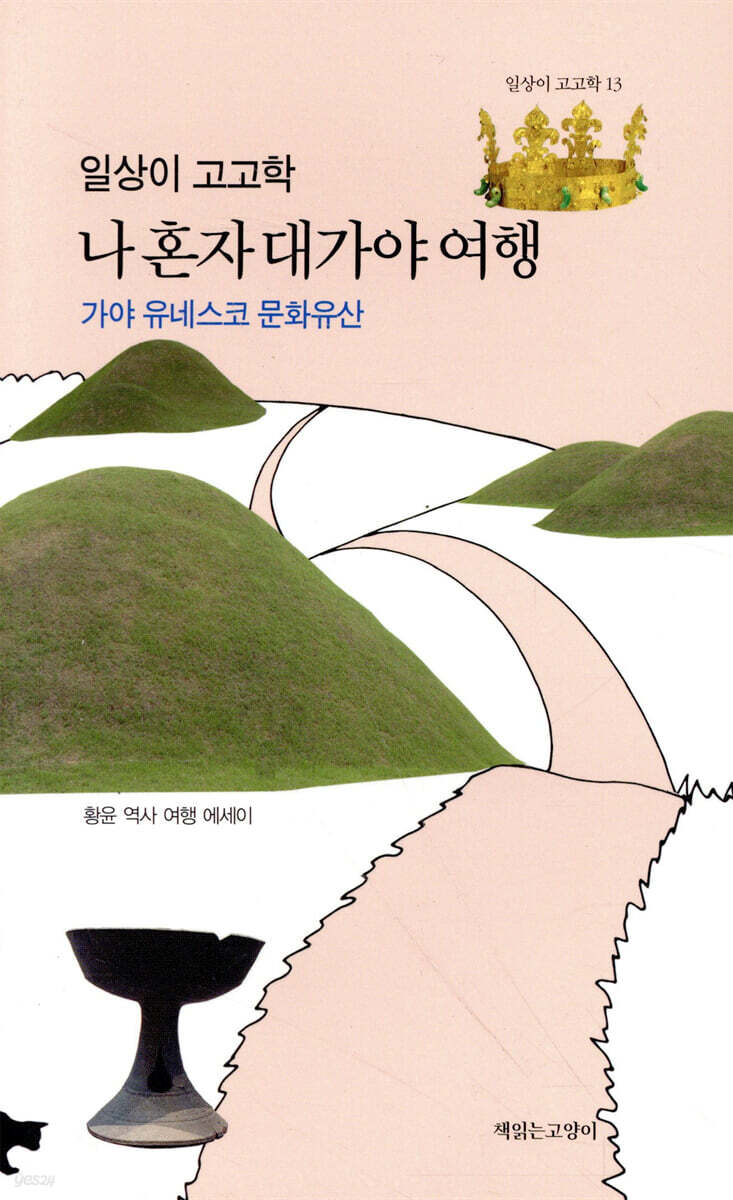
Archaeology in Everyday Life: My Solo Trip to Daegaya
 |
Description
Book Introduction
Gaya Tombs, UNESCO World Heritage Site
The incredible reality of Daegaya revealed through literature and relics
Gaya history is once again receiving attention as the Gaya Tombs, located in seven locations across the country, are scheduled to be registered as a UNESCO World Heritage Site in 2023.
However, since these Gaya tombs are spread across various regions, it is not easy to plan a trip. To help with this, “Daily Archaeology: My Solo Trip to Daegaya” has been published to provide effective and enjoyable ways to travel to various Gaya tombs.
In particular, through this travelogue of Gaya tombs, I hope to shed new light on the diversity and national status of Gaya, and Daegaya in particular, which has not been properly evaluated due to limited historical materials.
To this end, the reality of Daegaya, a collection of small states roughly referred to by their territories and names, was described realistically based on literature and archaeological data, and by introducing the enormous scale of artifacts excavated from Gaya tombs and the overwhelming appearance of the buried dead, it is shown that this period played an important role in the history of the Korean Peninsula, not only for Goguryeo, Baekje, and Silla, but also for Gaya.
In short, Gaya also actively pioneered its own history, to the point that it could be called the Four Kingdoms Period rather than the Three Kingdoms Period.
Meanwhile, the fact that this Daegaya journey begins at Haeinsa Temple in Hapcheon, famous for the Tripitaka Koreana, and ends with the Imna Japanese group and Ureuk's gayageum raises expectations for author Hwang Yoon's unique storytelling.
The incredible reality of Daegaya revealed through literature and relics
Gaya history is once again receiving attention as the Gaya Tombs, located in seven locations across the country, are scheduled to be registered as a UNESCO World Heritage Site in 2023.
However, since these Gaya tombs are spread across various regions, it is not easy to plan a trip. To help with this, “Daily Archaeology: My Solo Trip to Daegaya” has been published to provide effective and enjoyable ways to travel to various Gaya tombs.
In particular, through this travelogue of Gaya tombs, I hope to shed new light on the diversity and national status of Gaya, and Daegaya in particular, which has not been properly evaluated due to limited historical materials.
To this end, the reality of Daegaya, a collection of small states roughly referred to by their territories and names, was described realistically based on literature and archaeological data, and by introducing the enormous scale of artifacts excavated from Gaya tombs and the overwhelming appearance of the buried dead, it is shown that this period played an important role in the history of the Korean Peninsula, not only for Goguryeo, Baekje, and Silla, but also for Gaya.
In short, Gaya also actively pioneered its own history, to the point that it could be called the Four Kingdoms Period rather than the Three Kingdoms Period.
Meanwhile, the fact that this Daegaya journey begins at Haeinsa Temple in Hapcheon, famous for the Tripitaka Koreana, and ends with the Imna Japanese group and Ureuk's gayageum raises expectations for author Hwang Yoon's unique storytelling.
- You can preview some of the book's contents.
Preview
index
prolog
1.
Haeinsa Temple
Founding period
Biography of two people
How to describe a family tree
Prince Moonlight and Doseolji
Haeinsa Temple National Temple
Unified Silla and Gayasan Mountain
Seongcheol Seunim's sarira stupa
2.
Bus to Goryeong
Garden of the Moon
Insufficient records of Daegaya history
Take the bus to Goryeong
3.
Jisan-dong Tomb
Start climbing
robbed tombs
Gaya gold crown
4.
Daegaya Museum
Entering the museum
Tomb No. 73 of Jisan-dong and the first royal tomb
The beginning of the heyday of Jisan-dong 44th floor
Tomb No. 32 of Jisan-dong and the noble tombs
5th century Daegaya history
5.
Hapcheon Museum and Okjeon Tomb
Take a taxi
Hapcheon Museum
Hapcheon Okjeon Tomb M3
Okjeon Tombs and Baekje, Silla, and Gaya
Okjeon Tombs and Daegaya Myths
Take a taxi to Hapcheon-eup
6.
In Jinju
Take the bus
Gyeongsang National University Museum
Daraguk
Baekje becomes stronger again
Conflict over the Seomjin River basin
Take the train
7.
Haman Ara Gaya
Nihon Shoki
From Haman Station to Haman Museum
Ara Gaya and the huge building site
Anrahoe
Gilt-bronze crown and hieroglyphic pottery
Wooden-framed stone-lined tomb
8.
Malisan Tomb
Flame-patterned pottery
Ara Gaya and Japan as seen through relics
Go up to rooms 2 and 3
Anra Waesin Hall
Ara Gaya and Goguryeo
9.
Imna Japan Headquarters
Haman Bus Terminal
Japanese department
Imna Japan theory
Gaya Tomb Investigation Results
Ninigi myth
10.
Changnyeong Tomb and Jinheung King Cheokgyeongbi
Changnyeong was important to both Daegaya and Silla.
Changnyeong Museum and Ancient Tombs
In search of the Jinheung Wangcheokgyeongbi
Daegaya on the verge of collapse
The fall of Daegaya and the Gaya Confederacy
Gaya music
Epilogue
References
Search
1.
Haeinsa Temple
Founding period
Biography of two people
How to describe a family tree
Prince Moonlight and Doseolji
Haeinsa Temple National Temple
Unified Silla and Gayasan Mountain
Seongcheol Seunim's sarira stupa
2.
Bus to Goryeong
Garden of the Moon
Insufficient records of Daegaya history
Take the bus to Goryeong
3.
Jisan-dong Tomb
Start climbing
robbed tombs
Gaya gold crown
4.
Daegaya Museum
Entering the museum
Tomb No. 73 of Jisan-dong and the first royal tomb
The beginning of the heyday of Jisan-dong 44th floor
Tomb No. 32 of Jisan-dong and the noble tombs
5th century Daegaya history
5.
Hapcheon Museum and Okjeon Tomb
Take a taxi
Hapcheon Museum
Hapcheon Okjeon Tomb M3
Okjeon Tombs and Baekje, Silla, and Gaya
Okjeon Tombs and Daegaya Myths
Take a taxi to Hapcheon-eup
6.
In Jinju
Take the bus
Gyeongsang National University Museum
Daraguk
Baekje becomes stronger again
Conflict over the Seomjin River basin
Take the train
7.
Haman Ara Gaya
Nihon Shoki
From Haman Station to Haman Museum
Ara Gaya and the huge building site
Anrahoe
Gilt-bronze crown and hieroglyphic pottery
Wooden-framed stone-lined tomb
8.
Malisan Tomb
Flame-patterned pottery
Ara Gaya and Japan as seen through relics
Go up to rooms 2 and 3
Anra Waesin Hall
Ara Gaya and Goguryeo
9.
Imna Japan Headquarters
Haman Bus Terminal
Japanese department
Imna Japan theory
Gaya Tomb Investigation Results
Ninigi myth
10.
Changnyeong Tomb and Jinheung King Cheokgyeongbi
Changnyeong was important to both Daegaya and Silla.
Changnyeong Museum and Ancient Tombs
In search of the Jinheung Wangcheokgyeongbi
Daegaya on the verge of collapse
The fall of Daegaya and the Gaya Confederacy
Gaya music
Epilogue
References
Search
Detailed image

Publisher's Review
The thrill of archaeology: seeing literature, actual tombs, and museums all together
The flaws in the Imna Japan theory and the actual relationship between Gaya and Japan
Unfortunately, it was modern Japanese scholars who first investigated the Gaya tumuli using archaeological concepts.
Meanwhile, they blindly believed in the Nihon Shoki, their own historical record that recorded the theory of the Imna Japanese territories, and expected that a large number of Japanese relics would be excavated from the Gaya tombs, but their expectations were miserably shattered.
This is because only a large number of unique artifacts unique to Gaya were excavated from the Gaya tombs, and almost no Japanese artifacts were seen.
On the contrary, as a result of investigating the relics of the Gaya and Japanese regions during the modern and contemporary times, a large number of Gaya goldsmiths were excavated in the Japanese region.
Moreover, in the case of the Ninigi myth containing the genealogy of the Japanese emperors, it has a story that is so similar to the Dangun myth, King Suro of Kim Il-sung, and the Daegaya myth that the migratory forces that crossed over from the Korean Peninsula to Japan created a new clan myth based on the Dangun + Gaya myth that they were familiar with, and this has led to claims emerging not only in Korea but also in Japan.
In this way, this book identifies the flaws in the Imna Japan theory through the investigation of the Gaya tumuli group and examines in detail why such records appeared in the Nihon Shoki.
How to enjoy a trip to the Gaya Tombs
History as travel storytelling
If you approach history like studying a textbook, it might be very boring, but if you approach it as a fun way to follow historical sites while traveling, there is no travel storytelling as interesting as history.
In that sense, this book has a special meaning in that it not only introduces the history of Gaya, but also provides tips on how to enjoy your trip.
I hope that “Archaeology of Everyday Life: My Solo Trip to Daegaya” will serve as a useful guide for those who wish to travel to Gaya through travel storytelling.
The flaws in the Imna Japan theory and the actual relationship between Gaya and Japan
Unfortunately, it was modern Japanese scholars who first investigated the Gaya tumuli using archaeological concepts.
Meanwhile, they blindly believed in the Nihon Shoki, their own historical record that recorded the theory of the Imna Japanese territories, and expected that a large number of Japanese relics would be excavated from the Gaya tombs, but their expectations were miserably shattered.
This is because only a large number of unique artifacts unique to Gaya were excavated from the Gaya tombs, and almost no Japanese artifacts were seen.
On the contrary, as a result of investigating the relics of the Gaya and Japanese regions during the modern and contemporary times, a large number of Gaya goldsmiths were excavated in the Japanese region.
Moreover, in the case of the Ninigi myth containing the genealogy of the Japanese emperors, it has a story that is so similar to the Dangun myth, King Suro of Kim Il-sung, and the Daegaya myth that the migratory forces that crossed over from the Korean Peninsula to Japan created a new clan myth based on the Dangun + Gaya myth that they were familiar with, and this has led to claims emerging not only in Korea but also in Japan.
In this way, this book identifies the flaws in the Imna Japan theory through the investigation of the Gaya tumuli group and examines in detail why such records appeared in the Nihon Shoki.
How to enjoy a trip to the Gaya Tombs
History as travel storytelling
If you approach history like studying a textbook, it might be very boring, but if you approach it as a fun way to follow historical sites while traveling, there is no travel storytelling as interesting as history.
In that sense, this book has a special meaning in that it not only introduces the history of Gaya, but also provides tips on how to enjoy your trip.
I hope that “Archaeology of Everyday Life: My Solo Trip to Daegaya” will serve as a useful guide for those who wish to travel to Gaya through travel storytelling.
GOODS SPECIFICS
- Date of issue: June 24, 2024
- Page count, weight, size: 336 pages | 320g | 117*184*24mm
- ISBN13: 9791192753171
- ISBN10: 1192753178
You may also like
카테고리
korean


korean

![GQ KOREA Mark (Monthly): December [2025]](http://librairie.coreenne.fr/cdn/shop/files/8ef265dbbfbf186523ed75ba7319009d.jpg?v=1765340328&width=3840)


