

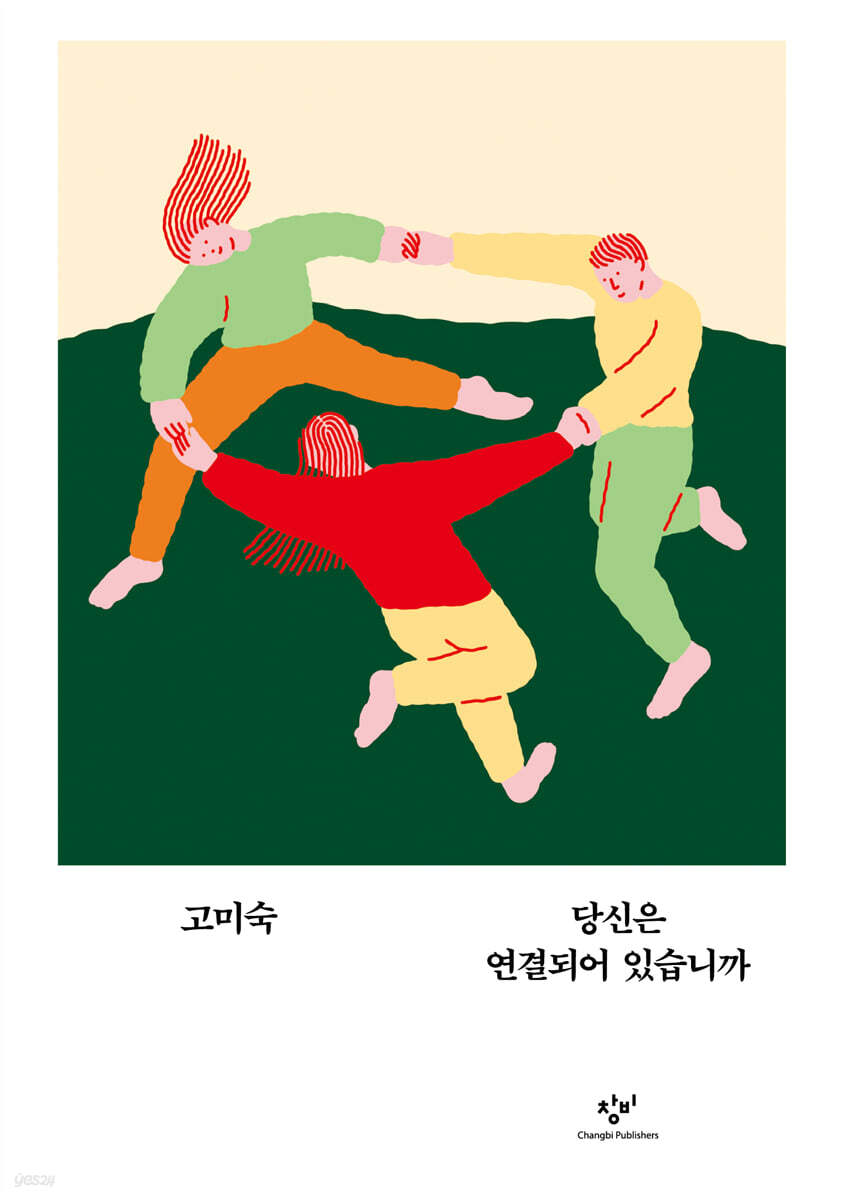
Are you connected
 |
Description
Book Introduction
An era where being alone is lonely and being together is painful
Connections also require study!
A special classics class with classical critic Go Mi-sook
The new book in the '100 Grams of Culture' series, which provides a light-hearted overview of the complex world, 'Are You Connected?' has been published.
The author is Koh Mi-sook, a leading classical critic of our time who has reflected on the fundamentals of life while transcending Eastern and Western classics. In 2025, Korea, where K-culture like BTS and "Squid Game" captivated the world and democracy was defended through the cries of the public squares,
But behind this glamorous spotlight, people are increasingly complaining of deep isolation and depression.
As the young man confessed, “I ate alone for a whole year after entering college,” isolation has become a familiar sight in this era.
At this very point, the author poses a sharp question to the most painful part of our society.
By delving into the pathology of 'isolation and disconnection' that has deeply encroached upon modern society, and in an age where 'eating alone' and 'drinking alone' have become fads, we diagnose what we have truly lost, and suggest 'reading the classics' as a concrete method for recovering a sense of true connection.
Those who are tired of 'holism' will discover their true 'self' through the author's powerful voice and regain the driving force to live with others.
Connections also require study!
A special classics class with classical critic Go Mi-sook
The new book in the '100 Grams of Culture' series, which provides a light-hearted overview of the complex world, 'Are You Connected?' has been published.
The author is Koh Mi-sook, a leading classical critic of our time who has reflected on the fundamentals of life while transcending Eastern and Western classics. In 2025, Korea, where K-culture like BTS and "Squid Game" captivated the world and democracy was defended through the cries of the public squares,
But behind this glamorous spotlight, people are increasingly complaining of deep isolation and depression.
As the young man confessed, “I ate alone for a whole year after entering college,” isolation has become a familiar sight in this era.
At this very point, the author poses a sharp question to the most painful part of our society.
By delving into the pathology of 'isolation and disconnection' that has deeply encroached upon modern society, and in an age where 'eating alone' and 'drinking alone' have become fads, we diagnose what we have truly lost, and suggest 'reading the classics' as a concrete method for recovering a sense of true connection.
Those who are tired of 'holism' will discover their true 'self' through the author's powerful voice and regain the driving force to live with others.
index
At the beginning of the book
Are you connected
The era when being alone is the most comfortable
Solitude and isolation are two completely different things.
What Makes Us Alone
The truth is, everyone has a desire to be connected.
Reading, writing, and speaking, the first steps to connection
From desire for oneself to reason for others
Connecting the square to our daily lives① ─ Cheerfully and profoundly
Connecting the Square to Our Daily Lives② ─ The Heart Doesn't Stay
Connection is freedom
Q&A
Sentences I want to remember
Are you connected
The era when being alone is the most comfortable
Solitude and isolation are two completely different things.
What Makes Us Alone
The truth is, everyone has a desire to be connected.
Reading, writing, and speaking, the first steps to connection
From desire for oneself to reason for others
Connecting the square to our daily lives① ─ Cheerfully and profoundly
Connecting the Square to Our Daily Lives② ─ The Heart Doesn't Stay
Connection is freedom
Q&A
Sentences I want to remember
Detailed image

Into the book
The vitality of K-culture and the solidarity and resistance demonstrated by the "Revolution of Light," contrasted with the isolation and disconnection of everyday life.
How can the gap between the two be bridged? I don't know.
But what is clear is that we all have to face this difficult question of our time.
In this breathtaking irony, countless young people are withering away helplessly.
--- From "Introduction"
There was a time when the saying, "Youth is painful," was all the rage, but now we live in an era where "Youth is lonely."
--- p.14
If solitude is an active act of seeking space for inner growth and change, isolation is a passive act of continually retreating into one's own space.
So isolation is never 'romantic'.
Because the space of inner fulfillment that gives birth to romance and art has evaporated.
Naturally, contemplation and reflection are also impossible.
What fills that narrow space is none other than the 'ego'.
A world where there is only me, a world where there is only me.
--- p.20
How can we restore the communal networks that have been destroyed by capitalism and civil war? This will be the mission of our time, and it is imperative that we awaken the instinct for connection that lives within us all.
--- p.41
In the 1980s, the university student union was filled with Eros, no less than the fervor of revolution.
Revolution and Eros, two seemingly polar opposites, were connected by none other than a book.
If you want to change the world, you have to read books.
Even when meeting, you had to talk about philosophy and poetry to look cool.
So to speak, conversation and discussion, that is, the feast of logos, was everywhere, and it was also the powerful driving force of Eros.
(…) Now is the era of eating, pleasure, and physicality.
Meanwhile, books and intellect have evaporated from youth culture.
--- p.43~44
It's safe to say that how you live each day, that is, the pattern and direction of today, determines your entire life.
So, no matter what your current situation is, you need to secure at least one hour, or even ten minutes, of mental activity every day.
Things like reading one page a day, writing one paragraph, or spending 10 minutes reflecting or meditating.
This is possible for anyone.
--- p.54
The key is to overcome old boundaries and eagerly encounter the unfamiliar.
It should be like this not only in the square but also in everyday life.
You should be able to enjoy freedom every day, every moment.
(…) Freedom at this time is not an ideological slogan or a legal or institutional device.
Above all, it is a bright and cheerful vitality that can fight against the power of money that dominates our daily lives.
--- p.79~81
It's quite simple to tell whether a solitary activity is dangerously isolating or not.
You just need to check if it has both fun and meaning.
Fun means I feel energized by the activity, not just by feeling good or experiencing sensory pleasure, but by feeling a deeper sense of vitality.
How can the gap between the two be bridged? I don't know.
But what is clear is that we all have to face this difficult question of our time.
In this breathtaking irony, countless young people are withering away helplessly.
--- From "Introduction"
There was a time when the saying, "Youth is painful," was all the rage, but now we live in an era where "Youth is lonely."
--- p.14
If solitude is an active act of seeking space for inner growth and change, isolation is a passive act of continually retreating into one's own space.
So isolation is never 'romantic'.
Because the space of inner fulfillment that gives birth to romance and art has evaporated.
Naturally, contemplation and reflection are also impossible.
What fills that narrow space is none other than the 'ego'.
A world where there is only me, a world where there is only me.
--- p.20
How can we restore the communal networks that have been destroyed by capitalism and civil war? This will be the mission of our time, and it is imperative that we awaken the instinct for connection that lives within us all.
--- p.41
In the 1980s, the university student union was filled with Eros, no less than the fervor of revolution.
Revolution and Eros, two seemingly polar opposites, were connected by none other than a book.
If you want to change the world, you have to read books.
Even when meeting, you had to talk about philosophy and poetry to look cool.
So to speak, conversation and discussion, that is, the feast of logos, was everywhere, and it was also the powerful driving force of Eros.
(…) Now is the era of eating, pleasure, and physicality.
Meanwhile, books and intellect have evaporated from youth culture.
--- p.43~44
It's safe to say that how you live each day, that is, the pattern and direction of today, determines your entire life.
So, no matter what your current situation is, you need to secure at least one hour, or even ten minutes, of mental activity every day.
Things like reading one page a day, writing one paragraph, or spending 10 minutes reflecting or meditating.
This is possible for anyone.
--- p.54
The key is to overcome old boundaries and eagerly encounter the unfamiliar.
It should be like this not only in the square but also in everyday life.
You should be able to enjoy freedom every day, every moment.
(…) Freedom at this time is not an ideological slogan or a legal or institutional device.
Above all, it is a bright and cheerful vitality that can fight against the power of money that dominates our daily lives.
--- p.79~81
It's quite simple to tell whether a solitary activity is dangerously isolating or not.
You just need to check if it has both fun and meaning.
Fun means I feel energized by the activity, not just by feeling good or experiencing sensory pleasure, but by feeling a deeper sense of vitality.
--- p.84
Publisher's Review
“Solitude and isolation
“It’s completely different”
Many people confuse isolation with romantic 'solitude,' but the author asserts that they are diametrically opposed.
If solitude is an active act of securing one's own inner space based on the premise of connection with others, isolation is a passive act of retreating into one's own world, cut off from the world.
According to the author, this isolation leads to a 'prison of the ego'.
The 'prison of the ego' is a state in which one becomes addicted to self-consciousness, focusing only on oneself and losing touch with others.
The author explains that life is essentially “networking,” and when connection is lost, vitality itself diminishes, which naturally leads to anxiety and fear.
The isolated self compares itself to the outside world and becomes frustrated, and this unresolved energy builds up inside and transforms into anger.
When this process reaches an extreme, isolation can manifest as a social pathology such as 'blind terrorism'.
What has made us so lonely? The author identifies "monetary supremacy," which reduces all value to money, and "debt addiction" as the core causes.
In a society where people have to work themselves to death and “stretch out their souls” to be recognized, people fall into the “swamp of desire for recognition” and live a double life, stressed out during the day and obsessed with sensual pleasure at night.
In particular, the 87 generation, which was the driving force behind democratization, painfully points out that while raising their children in an environment of extreme competition and 'family egoism,' the younger generation has lost the value of learning and friendship and has fallen into a state of inability to communicate.
It clearly shows that isolation is not an individual choice, but a structural problem that our society has created together.
From Diagnosis to Practice
Reading classics that change me
So how can we escape this prison of disconnection? The author proposes the solution not with grandiose slogans, but with the most fundamental acts of "reading, writing, and speaking."
Among these, 'reading the classics' is not simply a study of repeating past texts, but is the oldest way for humans to understand others and the world and reflect on themselves.
Classics are a timeless language of thought, restoring the linguistic poverty and disconnected thinking of today.
In the process of reading the thoughts of others and reflecting on them in our inner language, we reconnect with ourselves and enter into a dialogue with the world.
The text captures the essence of Eastern classics such as Buddhist scriptures, Zhuangzi, and the Book of Changes, and through these reveals that connection is the natural essence of human beings.
Surprisingly, the author says that 'the decline in reading rates' and 'the decline in birth rates' are deeply connected.
True love (Eros) blossoms in the feast of conversation (Logos) through sharing thoughts through books, but this foundation has collapsed.
Since Eros is not simply an emotion or instinct, but rather the ability to approach others through language and thought, love without logos easily disintegrates into isolation.
Reading the classics is the very passage that restores the union of Eros and Logos.
Only when we read the language of others, reflect on it in our own words, and connect with each other's thoughts can true connection be made.
At the end of the book, more practical tools are added to help readers experience the changes in their lives firsthand.
The "Questions and Answers" section, where the author personally answers readers' real-life concerns, such as "How to distinguish between healthy solitude and isolation" and "How to continue online connections offline," provides specific and realistic advice on building relationships.
Additionally, "Sentences to Remember," which include the core content of the text along with the author's handwriting, summarize the main content of the book and help readers savor it and engrave it in their minds for a long time.
Connecting the square to everyday life
“Connection is freedom.”
The author says that we all have a nagging "connection instinct" to connect with people.
Just as the young people who chanted "Hell Joseon" last winter poured into the squares and defended democracy, we have already experienced the power of connection.
What is important now is to bring the hot solidarity of the square into ‘everyday connection.’
This book teaches you how to respond to that instinct.
Only when we overcome old boundaries, encounter unfamiliar things, and live with a 'mind that does not stay', free from possessions and obsessions, can we attain true freedom.
The bright and cheerful vitality that stands against the power of money that dominates our daily lives is the power of 'connection' that the author speaks of.
For those who feel helpless and isolated, those who struggle to build relationships, and those seeking a deeper meaning in life, this book will be a warm and clear guide.
“It’s completely different”
Many people confuse isolation with romantic 'solitude,' but the author asserts that they are diametrically opposed.
If solitude is an active act of securing one's own inner space based on the premise of connection with others, isolation is a passive act of retreating into one's own world, cut off from the world.
According to the author, this isolation leads to a 'prison of the ego'.
The 'prison of the ego' is a state in which one becomes addicted to self-consciousness, focusing only on oneself and losing touch with others.
The author explains that life is essentially “networking,” and when connection is lost, vitality itself diminishes, which naturally leads to anxiety and fear.
The isolated self compares itself to the outside world and becomes frustrated, and this unresolved energy builds up inside and transforms into anger.
When this process reaches an extreme, isolation can manifest as a social pathology such as 'blind terrorism'.
What has made us so lonely? The author identifies "monetary supremacy," which reduces all value to money, and "debt addiction" as the core causes.
In a society where people have to work themselves to death and “stretch out their souls” to be recognized, people fall into the “swamp of desire for recognition” and live a double life, stressed out during the day and obsessed with sensual pleasure at night.
In particular, the 87 generation, which was the driving force behind democratization, painfully points out that while raising their children in an environment of extreme competition and 'family egoism,' the younger generation has lost the value of learning and friendship and has fallen into a state of inability to communicate.
It clearly shows that isolation is not an individual choice, but a structural problem that our society has created together.
From Diagnosis to Practice
Reading classics that change me
So how can we escape this prison of disconnection? The author proposes the solution not with grandiose slogans, but with the most fundamental acts of "reading, writing, and speaking."
Among these, 'reading the classics' is not simply a study of repeating past texts, but is the oldest way for humans to understand others and the world and reflect on themselves.
Classics are a timeless language of thought, restoring the linguistic poverty and disconnected thinking of today.
In the process of reading the thoughts of others and reflecting on them in our inner language, we reconnect with ourselves and enter into a dialogue with the world.
The text captures the essence of Eastern classics such as Buddhist scriptures, Zhuangzi, and the Book of Changes, and through these reveals that connection is the natural essence of human beings.
Surprisingly, the author says that 'the decline in reading rates' and 'the decline in birth rates' are deeply connected.
True love (Eros) blossoms in the feast of conversation (Logos) through sharing thoughts through books, but this foundation has collapsed.
Since Eros is not simply an emotion or instinct, but rather the ability to approach others through language and thought, love without logos easily disintegrates into isolation.
Reading the classics is the very passage that restores the union of Eros and Logos.
Only when we read the language of others, reflect on it in our own words, and connect with each other's thoughts can true connection be made.
At the end of the book, more practical tools are added to help readers experience the changes in their lives firsthand.
The "Questions and Answers" section, where the author personally answers readers' real-life concerns, such as "How to distinguish between healthy solitude and isolation" and "How to continue online connections offline," provides specific and realistic advice on building relationships.
Additionally, "Sentences to Remember," which include the core content of the text along with the author's handwriting, summarize the main content of the book and help readers savor it and engrave it in their minds for a long time.
Connecting the square to everyday life
“Connection is freedom.”
The author says that we all have a nagging "connection instinct" to connect with people.
Just as the young people who chanted "Hell Joseon" last winter poured into the squares and defended democracy, we have already experienced the power of connection.
What is important now is to bring the hot solidarity of the square into ‘everyday connection.’
This book teaches you how to respond to that instinct.
Only when we overcome old boundaries, encounter unfamiliar things, and live with a 'mind that does not stay', free from possessions and obsessions, can we attain true freedom.
The bright and cheerful vitality that stands against the power of money that dominates our daily lives is the power of 'connection' that the author speaks of.
For those who feel helpless and isolated, those who struggle to build relationships, and those seeking a deeper meaning in life, this book will be a warm and clear guide.
GOODS SPECIFICS
- Date of issue: October 24, 2025
- Page count, weight, size: 108 pages | 152g | 128*182*10mm
- ISBN13: 9788936480967
You may also like
카테고리
korean


korean

![ELLE 엘르 스페셜 에디션 A형 : 12월 [2025]](http://librairie.coreenne.fr/cdn/shop/files/b8e27a3de6c9538896439686c6b0e8fb.jpg?v=1766436872&width=3840)


