

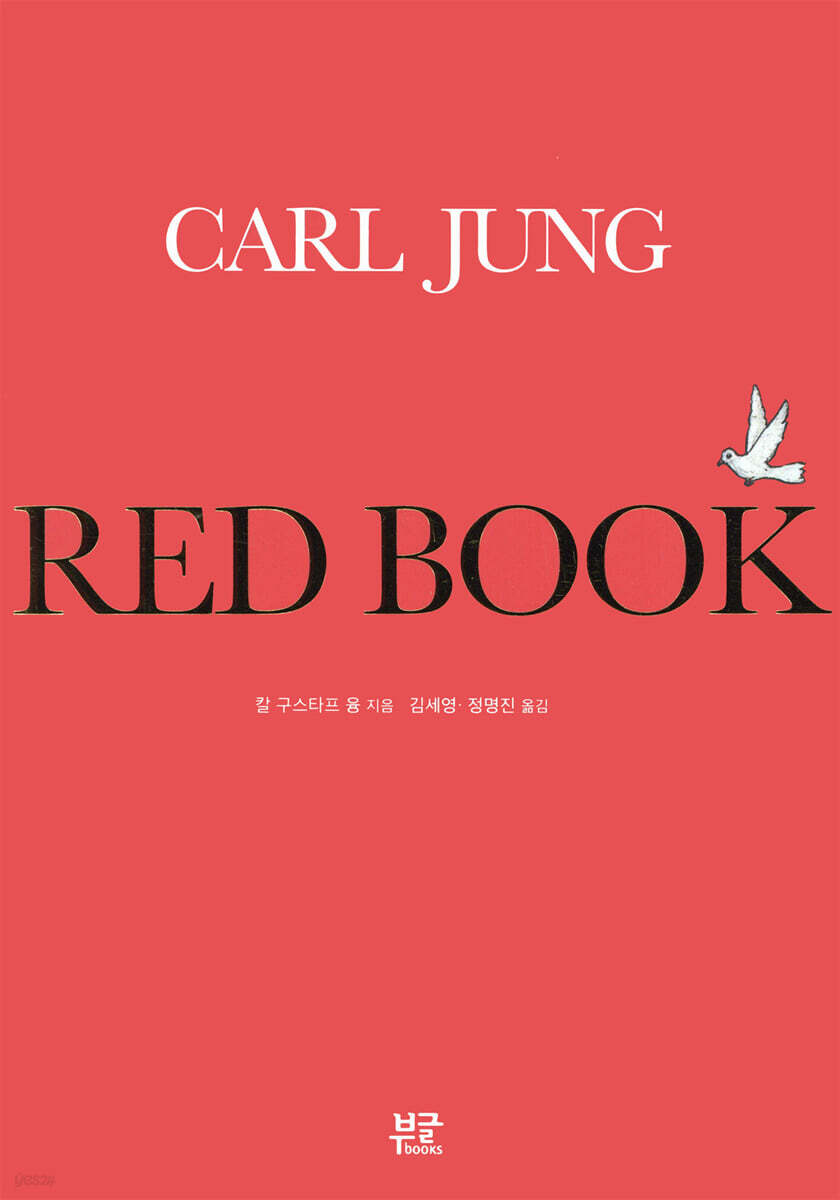
Carl Jung's Red Book
 |
Description
Book Introduction
『RED BOOK』is a record of the most important period in Jung's life, as Jung himself put it.
It is no exaggeration to say that all of his subsequent theories were conceived from this book.
During the sixteen years it took to write this book, Jung developed his theories of archetypes, the collective unconscious, and 'individuation.'
The archetypes that Jung speaks of are models of people, behavior, or personality.
Jung argued that the human psyche is made up of three elements: consciousness, the personal unconscious, and the collective unconscious.
The personal unconscious refers to the person's memories of events that have happened to him or her, including repressed memories, while the collective unconscious refers to the knowledge and experiences that humans share as a species.
According to Jung, it is from this collective unconscious that archetypes emerge.
The most important of the archetypes is the self.
The state in which consciousness and unconsciousness are integrated within a person is the self.
The mind of a person in such a state functions properly as a whole.
Individuation, which Jung often uses, refers to this realization of the self.
In other words, individuation refers to the process by which a person matures into his or her true self.
It refers to the process in which innate personality elements, various life experiences, and mental elements are integrated over time to form a complete whole.
Jung considers this process very important.
In analytical psychology, the self is symbolized by a circle.
What we commonly call a mandala is a symbol of self or individuation.
So, in analytical psychology, there are two centers of personality.
There is a center of consciousness and a center of the entire personality.
The former is called the ego, and the latter is called the self.
It is no exaggeration to say that all of his subsequent theories were conceived from this book.
During the sixteen years it took to write this book, Jung developed his theories of archetypes, the collective unconscious, and 'individuation.'
The archetypes that Jung speaks of are models of people, behavior, or personality.
Jung argued that the human psyche is made up of three elements: consciousness, the personal unconscious, and the collective unconscious.
The personal unconscious refers to the person's memories of events that have happened to him or her, including repressed memories, while the collective unconscious refers to the knowledge and experiences that humans share as a species.
According to Jung, it is from this collective unconscious that archetypes emerge.
The most important of the archetypes is the self.
The state in which consciousness and unconsciousness are integrated within a person is the self.
The mind of a person in such a state functions properly as a whole.
Individuation, which Jung often uses, refers to this realization of the self.
In other words, individuation refers to the process by which a person matures into his or her true self.
It refers to the process in which innate personality elements, various life experiences, and mental elements are integrated over time to form a complete whole.
Jung considers this process very important.
In analytical psychology, the self is symbolized by a circle.
What we commonly call a mandala is a symbol of self or individuation.
So, in analytical psychology, there are two centers of personality.
There is a center of consciousness and a center of the entire personality.
The former is called the ego, and the latter is called the self.
index
Translator's Note
Volume 1
"prolog"
The path to come
Chapter 1: Rediscovering the Soul
Chapter 2: Soul and God
Chapter 3: On the Usefulness of the Soul
Chapter 4 Desert
Chapter 5: Descent into the Hell of the Future
Chapter 6: Separation of the Mind
Chapter 7: Killing a Hero
Chapter 8: The Conception of God
Chapter 9: Mysterious Encounters
Chapter 10 Teachings
Chapter 11: Resolution
Volume 2
Images of sin
Chapter 1: The Red Being
Chapter 2: The Castle in the Forest
Chapter 3 My Humble Half
Chapter 4: The Hermit, Day 1
Chapter 5: The Hermit, Day 2
Chapter 6 Death
Chapter 7: Remains of the Ancient Temples
Chapter 8: The First Day
Chapter 9: The Second Day
Chapter 10 Orders
Chapter 11: Breaking the Egg
Chapter 12 Hell
Chapter 13: The Sacrifice of the Sacrificial Animal
Chapter 14: Divine Folly
Chapter 15: The Second Night
Chapter 16: The Third Night
Chapter 17 The Fourth Night
Chapter 18: Three Prophets
Chapter 19: The Magic Gift
Chapter 20: The Way of the Cross
Chapter 21 The Wizard
Precision verification
Epilogue
Volume 1
"prolog"
The path to come
Chapter 1: Rediscovering the Soul
Chapter 2: Soul and God
Chapter 3: On the Usefulness of the Soul
Chapter 4 Desert
Chapter 5: Descent into the Hell of the Future
Chapter 6: Separation of the Mind
Chapter 7: Killing a Hero
Chapter 8: The Conception of God
Chapter 9: Mysterious Encounters
Chapter 10 Teachings
Chapter 11: Resolution
Volume 2
Images of sin
Chapter 1: The Red Being
Chapter 2: The Castle in the Forest
Chapter 3 My Humble Half
Chapter 4: The Hermit, Day 1
Chapter 5: The Hermit, Day 2
Chapter 6 Death
Chapter 7: Remains of the Ancient Temples
Chapter 8: The First Day
Chapter 9: The Second Day
Chapter 10 Orders
Chapter 11: Breaking the Egg
Chapter 12 Hell
Chapter 13: The Sacrifice of the Sacrificial Animal
Chapter 14: Divine Folly
Chapter 15: The Second Night
Chapter 16: The Third Night
Chapter 17 The Fourth Night
Chapter 18: Three Prophets
Chapter 19: The Magic Gift
Chapter 20: The Way of the Cross
Chapter 21 The Wizard
Precision verification
Epilogue
Into the book
“The time when I told you stories, the time when I pursued my own inner images, was the most important time in my life.
Everything else comes from here.
It began at that time, and the details after that are never more important.
My whole life has been devoted to interpreting the things that burst forth from my unconscious, threatening to overwhelm me like a river of mystery, threatening to tear me apart.
It was important material for more than just one person's lifetime.
Everything after that was simply a matter of externally classifying those materials, scientifically refining them, and integrating them into life.
But that mysterious beginning that conceived everything was right then.”
--- From the text
“Animals do not resist their own species.
Look at how just the animals are, how well they behave, how deeply they respect time, how loyal they are to the land that gave them birth, and how strongly they cling to their familiar ways.
…see how the animals gather when the well appears.
“No animal hides a rich food source and then lets its brothers starve.”
--- From the text
“There is not much truth.
There are only a few.
Yet the meaning of truth is so profound that it cannot be grasped in any other way than through symbols.”
--- From the text
“Nature is cheerful and terrible.
Some people see the cheerful side of nature and play with it, making it shine.
Others, watching in horror, cover their heads and live more dead than alive.
The path of life does not lie between the two, but embraces them both.
“Nature is both a cheerful play and a cold horror.”
--- From the text
“It is a mistake to believe that religions differ at their deepest core.
Strictly speaking, the core is always the same.
“All subsequent forms of religion are the meaning of the religion that came before.”
--- From the text
“For a man to live for himself means that he himself becomes the task.
Living for yourself is a long, drawn-out pain that is never pleasant.
The reason is that you yourself must become your own creator.”
--- From the text
“Those who live by example have no vitality.
He who follows the example lives the life of that example.
If you don't live your life, who will? So live your own life."
--- From the text
“I worked on this book for 16 years.
In 1930, as I became more involved with alchemy, I moved away from this book.
The beginning of the end came in 1928.
It was when Richard Wilhelm sent me The Secret of the Golden Flower, a Taoist scripture with strong alchemical elements.
That book contained a lot of the contents of this book.
So I couldn't proceed with this book any further.
To a superficial observer, this book might seem like madness.
If I hadn't been able to absorb the overwhelming power of the original experience, this book might have become something like that.
With the help of alchemy, I was finally able to arrange them into a single whole.
I always knew that these experiences contained something precious.
So, for me, there was no other way than to record those experiences in a “precious” way, so to speak, in a valuable book, and to draw as beautifully as possible the images that came to mind in the process of recalling those experiences.
I knew full well that this task was absurdly inadequate.
But despite the many distractions and work involved, I tried to stay true to this book.”
Everything else comes from here.
It began at that time, and the details after that are never more important.
My whole life has been devoted to interpreting the things that burst forth from my unconscious, threatening to overwhelm me like a river of mystery, threatening to tear me apart.
It was important material for more than just one person's lifetime.
Everything after that was simply a matter of externally classifying those materials, scientifically refining them, and integrating them into life.
But that mysterious beginning that conceived everything was right then.”
--- From the text
“Animals do not resist their own species.
Look at how just the animals are, how well they behave, how deeply they respect time, how loyal they are to the land that gave them birth, and how strongly they cling to their familiar ways.
…see how the animals gather when the well appears.
“No animal hides a rich food source and then lets its brothers starve.”
--- From the text
“There is not much truth.
There are only a few.
Yet the meaning of truth is so profound that it cannot be grasped in any other way than through symbols.”
--- From the text
“Nature is cheerful and terrible.
Some people see the cheerful side of nature and play with it, making it shine.
Others, watching in horror, cover their heads and live more dead than alive.
The path of life does not lie between the two, but embraces them both.
“Nature is both a cheerful play and a cold horror.”
--- From the text
“It is a mistake to believe that religions differ at their deepest core.
Strictly speaking, the core is always the same.
“All subsequent forms of religion are the meaning of the religion that came before.”
--- From the text
“For a man to live for himself means that he himself becomes the task.
Living for yourself is a long, drawn-out pain that is never pleasant.
The reason is that you yourself must become your own creator.”
--- From the text
“Those who live by example have no vitality.
He who follows the example lives the life of that example.
If you don't live your life, who will? So live your own life."
--- From the text
“I worked on this book for 16 years.
In 1930, as I became more involved with alchemy, I moved away from this book.
The beginning of the end came in 1928.
It was when Richard Wilhelm sent me The Secret of the Golden Flower, a Taoist scripture with strong alchemical elements.
That book contained a lot of the contents of this book.
So I couldn't proceed with this book any further.
To a superficial observer, this book might seem like madness.
If I hadn't been able to absorb the overwhelming power of the original experience, this book might have become something like that.
With the help of alchemy, I was finally able to arrange them into a single whole.
I always knew that these experiences contained something precious.
So, for me, there was no other way than to record those experiences in a “precious” way, so to speak, in a valuable book, and to draw as beautifully as possible the images that came to mind in the process of recalling those experiences.
I knew full well that this task was absurdly inadequate.
But despite the many distractions and work involved, I tried to stay true to this book.”
--- From the text
Publisher's Review
『RED BOOK』, which Carl Gustav Jung himself bound into a book, can be said to be Jung's 'posthumous work'.
Jung titled this book, which he wrote and illustrated with a pen starting in 1913, 'Liber Novus', which means 'new book' in Latin.
Meanwhile, Jung also called this book, bound in red leather, the 'RED BOOK'.
It seems that Jung intended to publish this book, as he wrote an 'epilogue' at the end of the book in 1959, but for some reason he left the epilogue unfinished, and this manuscript was not published immediately after Jung's death in 1961.
It was not until 2001 that scholars were allowed to view the manuscript.
It wasn't until much later, in 2009, that it was first introduced in Germany and the United States.
The year 1913, when this book was written, was a time of great personal and world-historical significance for Jung.
Personally, it was the final break in my six-year relationship with Austrian psychologist Sigmund Freud.
The breakup between Freud and Jung, who was even called his favorite disciple, was due to differences of opinion surrounding libido and religion.
His break with Freud led Carl Jung to deeply contemplate his future, both personally and professionally.
During this period, Jung, although it was an inevitable choice, gave up many public activities and devoted himself to developing his own theories.
The result is analytical psychology.
It is said that during this period, Jung suffered from many hallucinations and illusions.
At that time, Europe may have seemed peaceful to ordinary people, but to intellectuals, war clouds were gathering behind the tranquility.
The situation must have been particularly unsettling for intellectuals like Jung, who were particularly sensitive.
Although this book contains many predictions of World War I, as the war actually broke out, Carl Jung came to realize that his fantasies, fantasies, and imaginations were not solely personal.
He was convinced that what was happening in his own mental world was not unrelated to the overall atmosphere of the European continent.
In this situation, Jung began to conduct psychological research on himself.
This book captures the world of the mind that Jung experienced firsthand in literary form and even includes illustrations to aid understanding.
Jung had a negative view of Christianity at the time.
The psychological shock felt by Europeans at the time can be imagined, as a war like World War II broke out in Europe, where Christianity, which teaches love for one's neighbor, had been practiced for nearly 2,000 years.
Carl Jung's position is that we should emphasize life rather than altruistic love that goes against nature.
Reading the book with this background will make it easier to understand Jung's perspectives on the nature of the soul, the relationship between thought and emotion, masculinity and femininity, and the meaning of Christianity.
Jung titled this book, which he wrote and illustrated with a pen starting in 1913, 'Liber Novus', which means 'new book' in Latin.
Meanwhile, Jung also called this book, bound in red leather, the 'RED BOOK'.
It seems that Jung intended to publish this book, as he wrote an 'epilogue' at the end of the book in 1959, but for some reason he left the epilogue unfinished, and this manuscript was not published immediately after Jung's death in 1961.
It was not until 2001 that scholars were allowed to view the manuscript.
It wasn't until much later, in 2009, that it was first introduced in Germany and the United States.
The year 1913, when this book was written, was a time of great personal and world-historical significance for Jung.
Personally, it was the final break in my six-year relationship with Austrian psychologist Sigmund Freud.
The breakup between Freud and Jung, who was even called his favorite disciple, was due to differences of opinion surrounding libido and religion.
His break with Freud led Carl Jung to deeply contemplate his future, both personally and professionally.
During this period, Jung, although it was an inevitable choice, gave up many public activities and devoted himself to developing his own theories.
The result is analytical psychology.
It is said that during this period, Jung suffered from many hallucinations and illusions.
At that time, Europe may have seemed peaceful to ordinary people, but to intellectuals, war clouds were gathering behind the tranquility.
The situation must have been particularly unsettling for intellectuals like Jung, who were particularly sensitive.
Although this book contains many predictions of World War I, as the war actually broke out, Carl Jung came to realize that his fantasies, fantasies, and imaginations were not solely personal.
He was convinced that what was happening in his own mental world was not unrelated to the overall atmosphere of the European continent.
In this situation, Jung began to conduct psychological research on himself.
This book captures the world of the mind that Jung experienced firsthand in literary form and even includes illustrations to aid understanding.
Jung had a negative view of Christianity at the time.
The psychological shock felt by Europeans at the time can be imagined, as a war like World War II broke out in Europe, where Christianity, which teaches love for one's neighbor, had been practiced for nearly 2,000 years.
Carl Jung's position is that we should emphasize life rather than altruistic love that goes against nature.
Reading the book with this background will make it easier to understand Jung's perspectives on the nature of the soul, the relationship between thought and emotion, masculinity and femininity, and the meaning of Christianity.
GOODS SPECIFICS
- Date of issue: January 15, 2020
- Page count, weight, size: 456 pages | 840g | 172*245*28mm
- ISBN13: 9791159201172
- ISBN10: 115920117X
You may also like
카테고리
korean


korean

![ELLE 엘르 스페셜 에디션 A형 : 12월 [2025]](http://librairie.coreenne.fr/cdn/shop/files/b8e27a3de6c9538896439686c6b0e8fb.jpg?v=1766436872&width=3840)


