

Interviewing Death
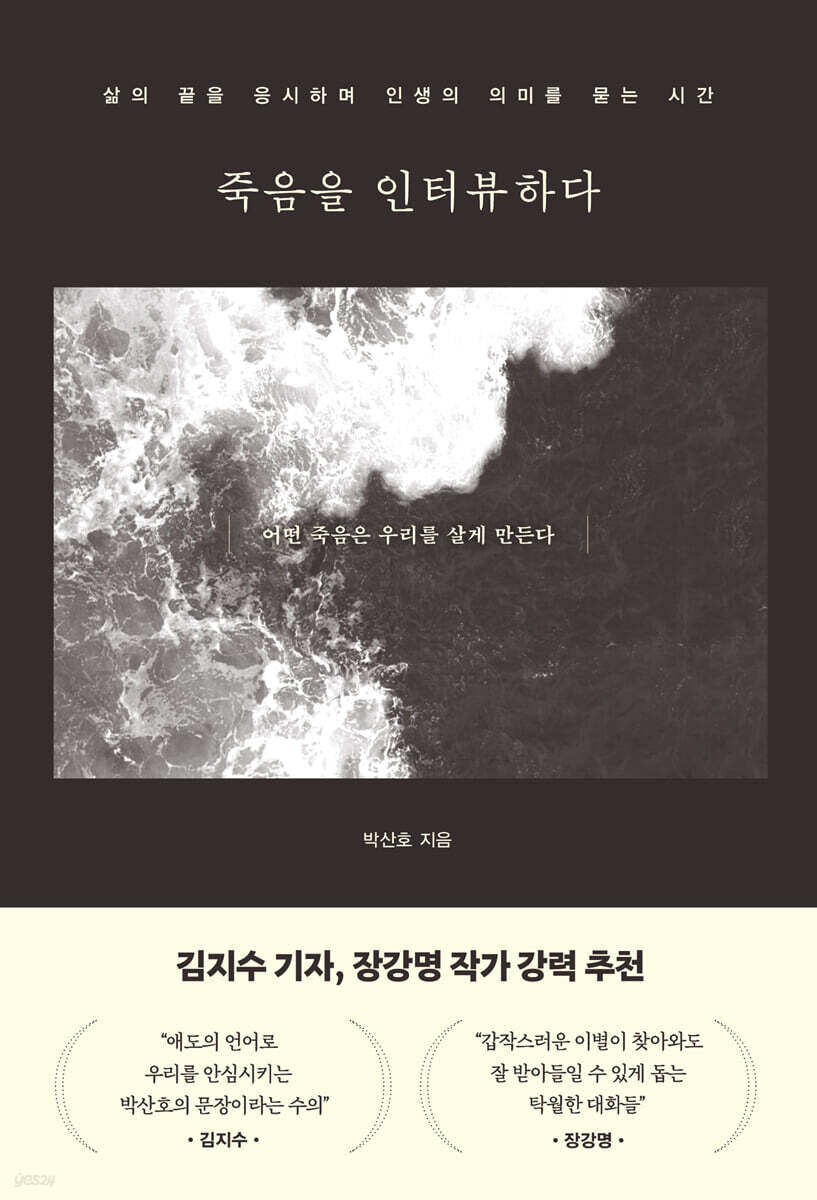 |
Description
Book Introduction
Reassure us with the language of condolences
The number of sentences by Park San-ho
_Kim Ji-su (author of "Lee Eo-ryeong's Last Lesson")
Even if a sudden separation comes
Excellent conversations to help you accept it well
_Jang Kang-myeong (author of "I Hate Korea")
From the president's undertaker to the hospice doctor who has accompanied thousands of people in their final moments.
Five conversations that awaken us to the inevitable connection between life and death and the fullness of being alive.
"Interviewing Death" is a collection of interviews that explore the meaning and hope of life while reflecting on the loss and separation we all face.
Park San-ho, a translator, novelist, and essayist who won the 18th Yuyoung Translation Award, talks with five 'death experts.'
Eun-ju Lee, a caregiver who proves the value of care by meticulously staying by the patient's side; Jae-cheol Yoo, a funeral director who has seen off a variety of people, from presidents to the unclaimed, on their final journeys; Ji-hoon Jo, Korea's first pet loss counselor who guides us on what we can do when we have to say goodbye to our pets; Seong-nam Hong, a priest who runs a psychological counseling center based on faith; and Yeo-hwan Kim, a hospice doctor who discovered the connection between life and death after making thousands of end-of-life declarations...
It tells the honest stories of those who have built their lives and work near death in vivid voices.
We live our busy lives forgetting or ignoring death.
But death is an inevitable experience that is always present in our lives.
"Interviewing Death" conveys the realization that life paradoxically becomes clearer the moment we acknowledge death, and that simply facing the end can give us the strength to live faithfully in the present.
This book will teach you why you can truly love life when you want to find direction and meaning in life.
The number of sentences by Park San-ho
_Kim Ji-su (author of "Lee Eo-ryeong's Last Lesson")
Even if a sudden separation comes
Excellent conversations to help you accept it well
_Jang Kang-myeong (author of "I Hate Korea")
From the president's undertaker to the hospice doctor who has accompanied thousands of people in their final moments.
Five conversations that awaken us to the inevitable connection between life and death and the fullness of being alive.
"Interviewing Death" is a collection of interviews that explore the meaning and hope of life while reflecting on the loss and separation we all face.
Park San-ho, a translator, novelist, and essayist who won the 18th Yuyoung Translation Award, talks with five 'death experts.'
Eun-ju Lee, a caregiver who proves the value of care by meticulously staying by the patient's side; Jae-cheol Yoo, a funeral director who has seen off a variety of people, from presidents to the unclaimed, on their final journeys; Ji-hoon Jo, Korea's first pet loss counselor who guides us on what we can do when we have to say goodbye to our pets; Seong-nam Hong, a priest who runs a psychological counseling center based on faith; and Yeo-hwan Kim, a hospice doctor who discovered the connection between life and death after making thousands of end-of-life declarations...
It tells the honest stories of those who have built their lives and work near death in vivid voices.
We live our busy lives forgetting or ignoring death.
But death is an inevitable experience that is always present in our lives.
"Interviewing Death" conveys the realization that life paradoxically becomes clearer the moment we acknowledge death, and that simply facing the end can give us the strength to live faithfully in the present.
This book will teach you why you can truly love life when you want to find direction and meaning in life.
- You can preview some of the book's contents.
Preview
index
Introduction
Part 1: Small Partings Gather to Become Death: Caregiver Eun-ju Lee
Part 2: People Who Live Well Die Well: Funeral Director Yoo Jae-cheol
Part 3: I'm Sure We'll Meet Again: Petros Counselor George Hoon
Part 4: It Doesn't Matter How Long You Live: Father Hong Seong-nam
Part 5: Life and Death Are Inevitably Connected: Hospice Doctor Kim Yeo-hwan
Part 1: Small Partings Gather to Become Death: Caregiver Eun-ju Lee
Part 2: People Who Live Well Die Well: Funeral Director Yoo Jae-cheol
Part 3: I'm Sure We'll Meet Again: Petros Counselor George Hoon
Part 4: It Doesn't Matter How Long You Live: Father Hong Seong-nam
Part 5: Life and Death Are Inevitably Connected: Hospice Doctor Kim Yeo-hwan
Detailed image

Into the book
I don't think there is death immediately after life.
So what lies between life and death? I believe it lies in humanity.
Loving, respecting, and coexisting with one another.
I learned it through interviews with death experts.
How should we live with humanity? How should we die with humanity? As you read this book, I hope you'll encounter the various faces of death and take the time to contemplate the meaning of life.
I hope the ending of that story is a happy ending.
--- p.10
I think I should live my life thinking about the things I have to do right in front of me, or the lines I have to keep as a human being.
Even when you have cancer or an incurable disease, I don't think you need to think only about a pessimistic death.
I wish I could live with an open ending in mind.
Reconcile with a friend you fought with, and mourn your lost youth.
In that way, we can become more generous than before.
--- p.40
I think there are three kinds of death.
There are three types: ‘death suffered,’ ‘death accepted,’ and ‘death welcomed.’
The best case scenario is death,
If you think about death often while you are alive, accept it, and prepare for it, you can die well and establish a correct attitude.
If you die suddenly, you can't do anything.
You need to prepare in advance.
Then, you will be able to feel welcome.
The bottom line is that people who live well die well.
People who live fiercely die well, and people who live carelessly die carelessly.
--- p.82
I'm sure we'll meet again.
Actually, I don't believe in the afterlife.
So, because I studied psychology and the brain, and I know how our bodies think, feel, and perceive, I know that when the body dies, all these activities end.
However, I think there may be a physical afterlife.
The world is made up entirely of energy.
Our body is also energy.
When we put on makeup, our body converts it into energy.
I believe that even after a child has passed away, he or she will remain with us in the form of wind or warmth.
--- p.117
What matters is how many people will come to my grave after I die, miss me, and cry.
Because that person is the happiest person.
It doesn't matter how long you live.
The question is how many people will miss me after I die.
So when I go to class, I always ask:
How many people will cry for you when you die?
--- p.168
I want to ask, “What is a good life?”
I am not qualified to define or judge death.
Because every form of death has its own reasons and circumstances.
So I don't think we should make any judgments about what is good or bad.
However, the good life I think of is one where you live without pain.
I don't think it's a misfortune that death comes early.
It is up to the person involved to accept that fate as misfortune or to make it into happiness.
I believe that helping others is a miracle and a wonderful way to live.
I want to live like that too.
You can perform miracles.
A miracle that anyone can perform.
So what lies between life and death? I believe it lies in humanity.
Loving, respecting, and coexisting with one another.
I learned it through interviews with death experts.
How should we live with humanity? How should we die with humanity? As you read this book, I hope you'll encounter the various faces of death and take the time to contemplate the meaning of life.
I hope the ending of that story is a happy ending.
--- p.10
I think I should live my life thinking about the things I have to do right in front of me, or the lines I have to keep as a human being.
Even when you have cancer or an incurable disease, I don't think you need to think only about a pessimistic death.
I wish I could live with an open ending in mind.
Reconcile with a friend you fought with, and mourn your lost youth.
In that way, we can become more generous than before.
--- p.40
I think there are three kinds of death.
There are three types: ‘death suffered,’ ‘death accepted,’ and ‘death welcomed.’
The best case scenario is death,
If you think about death often while you are alive, accept it, and prepare for it, you can die well and establish a correct attitude.
If you die suddenly, you can't do anything.
You need to prepare in advance.
Then, you will be able to feel welcome.
The bottom line is that people who live well die well.
People who live fiercely die well, and people who live carelessly die carelessly.
--- p.82
I'm sure we'll meet again.
Actually, I don't believe in the afterlife.
So, because I studied psychology and the brain, and I know how our bodies think, feel, and perceive, I know that when the body dies, all these activities end.
However, I think there may be a physical afterlife.
The world is made up entirely of energy.
Our body is also energy.
When we put on makeup, our body converts it into energy.
I believe that even after a child has passed away, he or she will remain with us in the form of wind or warmth.
--- p.117
What matters is how many people will come to my grave after I die, miss me, and cry.
Because that person is the happiest person.
It doesn't matter how long you live.
The question is how many people will miss me after I die.
So when I go to class, I always ask:
How many people will cry for you when you die?
--- p.168
I want to ask, “What is a good life?”
I am not qualified to define or judge death.
Because every form of death has its own reasons and circumstances.
So I don't think we should make any judgments about what is good or bad.
However, the good life I think of is one where you live without pain.
I don't think it's a misfortune that death comes early.
It is up to the person involved to accept that fate as misfortune or to make it into happiness.
I believe that helping others is a miracle and a wonderful way to live.
I want to live like that too.
You can perform miracles.
A miracle that anyone can perform.
--- p.243
Publisher's Review
“Hope dwells in death and extends toward life.”
About humanity that connects life and death
“Death is the best invention of life.” These are the words of Steve Jobs while he was battling cancer.
It is said that even he, who was called a genius, realized that in the face of death, only love, not wealth and fame, was important.
What if he had realized the meaning of life sooner? How can we find what's precious before our one and only life ends? Author Park San-ho's interview collection, "Interviewing Death," offers answers and reflections on these questions.
From caregivers, funeral directors, pet loss psychologists, Catholic priests, and hospice doctors, experts who face the diverse facets of death share their experiences and discoveries of meaning and hope in life.
As a translator, novelist, and essayist, Park San-ho has delicately captured the human spirit and built solid trust with readers through profound stories. He presents this interview with fluent language and skillful presentation.
“If you think about death often while you are alive, accept it, and prepare for it, you can die well and establish a proper attitude.
If you die suddenly, you can't do anything.
The bottom line is that people who live well die well.”
Funeral director Yoo Jae-cheol
Through a conversation with a monk who practices Tibetan Buddhism, author Park San-ho realized anew that death is intertwined with life.
He faced the fundamental question, "How should I live the rest of my life?" and finally met with five death experts.
The insight of those who do not lose hope even while facing death every day testifies to why we must live as human beings until the end.
Caregiver Eun-ju Lee practices humanity through her sincere care for others, and funeral director Jae-cheol Yoo practices humanity through his courtesy toward the deceased.
Petloss counselor George Hoon Jo considers pets as family and understands the feelings of his clients, while Father Seongnam Hong is considerate and helpful to others as he is to himself.
Hospice doctor Kim Yeo-hwan stays by the patient's side to help them end their lives with dignity and without pain.
In this way, each of us silently walks towards humanity in our own way.
“I think I should live my life thinking about the things that lie ahead of me, the lines I must keep as a human being, and things like that.
I wish I could live with an open ending in mind.
“We can make up with friends we fought with, mourn our lost youth, and become more generous than before.”
_Nursing caregiver Eun-ju Lee
The truth that we all die someday becomes the very reason for living.
About the hope that the rest of life gives us
Death comes to each person with a different face.
Yet, the interviewees in this book find unchanging facts within it.
Death is not something that can be avoided, but rather a mirror that reflects the essence of life.
The moment we accept death as an extension of life, the next stage of our story, light finally shines into the dark corners of life.
Everyday moments take on new colors, and each day becomes precious like a gift.
Facing death is confronting the truth that each human being is given only one life.
Faced with this clear realization, we begin to look at life with an optimistic eye.
It is the moment when finiteness turns from desperation to fullness.
What to love and how to live.
The most honest question we must live with, and this is where true hope begins to sprout.
“I don’t think it’s a misfortune that death came early.
It is up to the person involved to accept that fate as misfortune or to make it into happiness.
I think it's a miracle to make your own destiny happy.
“I think it’s a miracle that even though I lost my child first, I didn’t suffer from depression and lived diligently helping others.”
Hospice doctor Kim Yeo-hwan
On October 1, 2025, Dr. Jane Goodall, widely known for her research on chimpanzees, passed away.
The last words he spoke before leaving this world left a lasting impression.
“Don’t lose hope.
When we lose hope, we become apathetic and do nothing.” We all die.
As we face that truth, what we must live with until we die is humanity and hope.
Only when we have hope can we care for others, uphold their dignity, and live as human beings to the end.
The five death experts featured in this book prove this.
About humanity that connects life and death
“Death is the best invention of life.” These are the words of Steve Jobs while he was battling cancer.
It is said that even he, who was called a genius, realized that in the face of death, only love, not wealth and fame, was important.
What if he had realized the meaning of life sooner? How can we find what's precious before our one and only life ends? Author Park San-ho's interview collection, "Interviewing Death," offers answers and reflections on these questions.
From caregivers, funeral directors, pet loss psychologists, Catholic priests, and hospice doctors, experts who face the diverse facets of death share their experiences and discoveries of meaning and hope in life.
As a translator, novelist, and essayist, Park San-ho has delicately captured the human spirit and built solid trust with readers through profound stories. He presents this interview with fluent language and skillful presentation.
“If you think about death often while you are alive, accept it, and prepare for it, you can die well and establish a proper attitude.
If you die suddenly, you can't do anything.
The bottom line is that people who live well die well.”
Funeral director Yoo Jae-cheol
Through a conversation with a monk who practices Tibetan Buddhism, author Park San-ho realized anew that death is intertwined with life.
He faced the fundamental question, "How should I live the rest of my life?" and finally met with five death experts.
The insight of those who do not lose hope even while facing death every day testifies to why we must live as human beings until the end.
Caregiver Eun-ju Lee practices humanity through her sincere care for others, and funeral director Jae-cheol Yoo practices humanity through his courtesy toward the deceased.
Petloss counselor George Hoon Jo considers pets as family and understands the feelings of his clients, while Father Seongnam Hong is considerate and helpful to others as he is to himself.
Hospice doctor Kim Yeo-hwan stays by the patient's side to help them end their lives with dignity and without pain.
In this way, each of us silently walks towards humanity in our own way.
“I think I should live my life thinking about the things that lie ahead of me, the lines I must keep as a human being, and things like that.
I wish I could live with an open ending in mind.
“We can make up with friends we fought with, mourn our lost youth, and become more generous than before.”
_Nursing caregiver Eun-ju Lee
The truth that we all die someday becomes the very reason for living.
About the hope that the rest of life gives us
Death comes to each person with a different face.
Yet, the interviewees in this book find unchanging facts within it.
Death is not something that can be avoided, but rather a mirror that reflects the essence of life.
The moment we accept death as an extension of life, the next stage of our story, light finally shines into the dark corners of life.
Everyday moments take on new colors, and each day becomes precious like a gift.
Facing death is confronting the truth that each human being is given only one life.
Faced with this clear realization, we begin to look at life with an optimistic eye.
It is the moment when finiteness turns from desperation to fullness.
What to love and how to live.
The most honest question we must live with, and this is where true hope begins to sprout.
“I don’t think it’s a misfortune that death came early.
It is up to the person involved to accept that fate as misfortune or to make it into happiness.
I think it's a miracle to make your own destiny happy.
“I think it’s a miracle that even though I lost my child first, I didn’t suffer from depression and lived diligently helping others.”
Hospice doctor Kim Yeo-hwan
On October 1, 2025, Dr. Jane Goodall, widely known for her research on chimpanzees, passed away.
The last words he spoke before leaving this world left a lasting impression.
“Don’t lose hope.
When we lose hope, we become apathetic and do nothing.” We all die.
As we face that truth, what we must live with until we die is humanity and hope.
Only when we have hope can we care for others, uphold their dignity, and live as human beings to the end.
The five death experts featured in this book prove this.
GOODS SPECIFICS
- Date of issue: October 29, 2025
- Page count, weight, size: 248 pages | 320g | 128*188*15mm
- ISBN13: 9791194755999
- ISBN10: 1194755992
You may also like
카테고리
korean


korean

![GQ KOREA Mark (Monthly): December [2025]](http://librairie.coreenne.fr/cdn/shop/files/8ef265dbbfbf186523ed75ba7319009d.jpg?v=1765340328&width=3840)


