

Map of Thought
 |
Description
Book Introduction
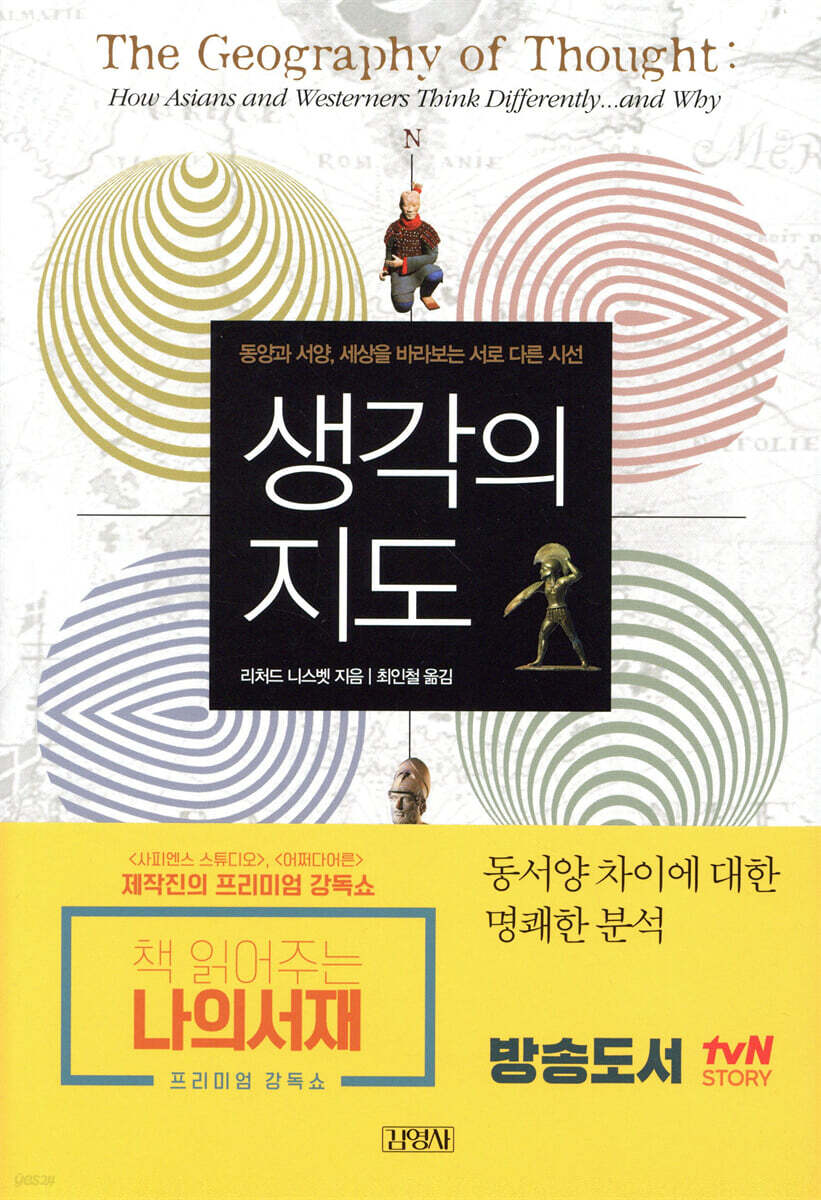
The East and the West, which inherited the traditions of ancient China and ancient Greece, have very different ways of thinking and perceiving due to their different natural environments, social structures, philosophies, and educational systems.
Because the East thinks more 'comprehensively', it pays more attention to the whole rather than the parts, and rather than understanding things independently, it understands them through the 'relationships' they have with other things.
Western 'analytical' thinking focuses on objects and people themselves, and uses formal logic or rules to reason.
There are significant differences between the descendants of Confucius and Aristotle, from feng shui to metaphysics, from language to commercial traditions.
In today's world, where understanding such differences is more important than ever, this book will serve as a map guiding us on the path to understanding them, while also serving as a bridge to bridge those differences.
Because the East thinks more 'comprehensively', it pays more attention to the whole rather than the parts, and rather than understanding things independently, it understands them through the 'relationships' they have with other things.
Western 'analytical' thinking focuses on objects and people themselves, and uses formal logic or rules to reason.
There are significant differences between the descendants of Confucius and Aristotle, from feng shui to metaphysics, from language to commercial traditions.
In today's world, where understanding such differences is more important than ever, this book will serve as a map guiding us on the path to understanding them, while also serving as a bridge to bridge those differences.
- You can preview some of the book's contents.
Preview
index
1.
Eastern Tao and Western syllogism
2.
The East's life of living together, the West's life of living alone
3.
The East sees the whole, the West sees the parts
4.
Eastern situationalism and Western nature theory
5.
The East sees the world through verbs, while the West sees the world through nouns.
6.
The West values logic, while the East values experience.
7.
What are the origins of the differences between Eastern and Western ways of thinking?
8.
East or West, who is right?
Epilogue: Will Eastern and Western Ways of Thinking Collide or Unify?
Eastern Tao and Western syllogism
2.
The East's life of living together, the West's life of living alone
3.
The East sees the whole, the West sees the parts
4.
Eastern situationalism and Western nature theory
5.
The East sees the world through verbs, while the West sees the world through nouns.
6.
The West values logic, while the East values experience.
7.
What are the origins of the differences between Eastern and Western ways of thinking?
8.
East or West, who is right?
Epilogue: Will Eastern and Western Ways of Thinking Collide or Unify?
GOODS SPECIFICS
- Date of issue: April 13, 2004
- Format: Hardcover book binding method guide
- Page count, weight, size: 248 pages | 517g | 148*210*20mm
- ISBN13: 9788934914488
- ISBN10: 8934914484
You may also like
카테고리
korean


korean

![GQ KOREA Mark (Monthly): December [2025]](http://librairie.coreenne.fr/cdn/shop/files/8ef265dbbfbf186523ed75ba7319009d.jpg?v=1765340328&width=3840)


