

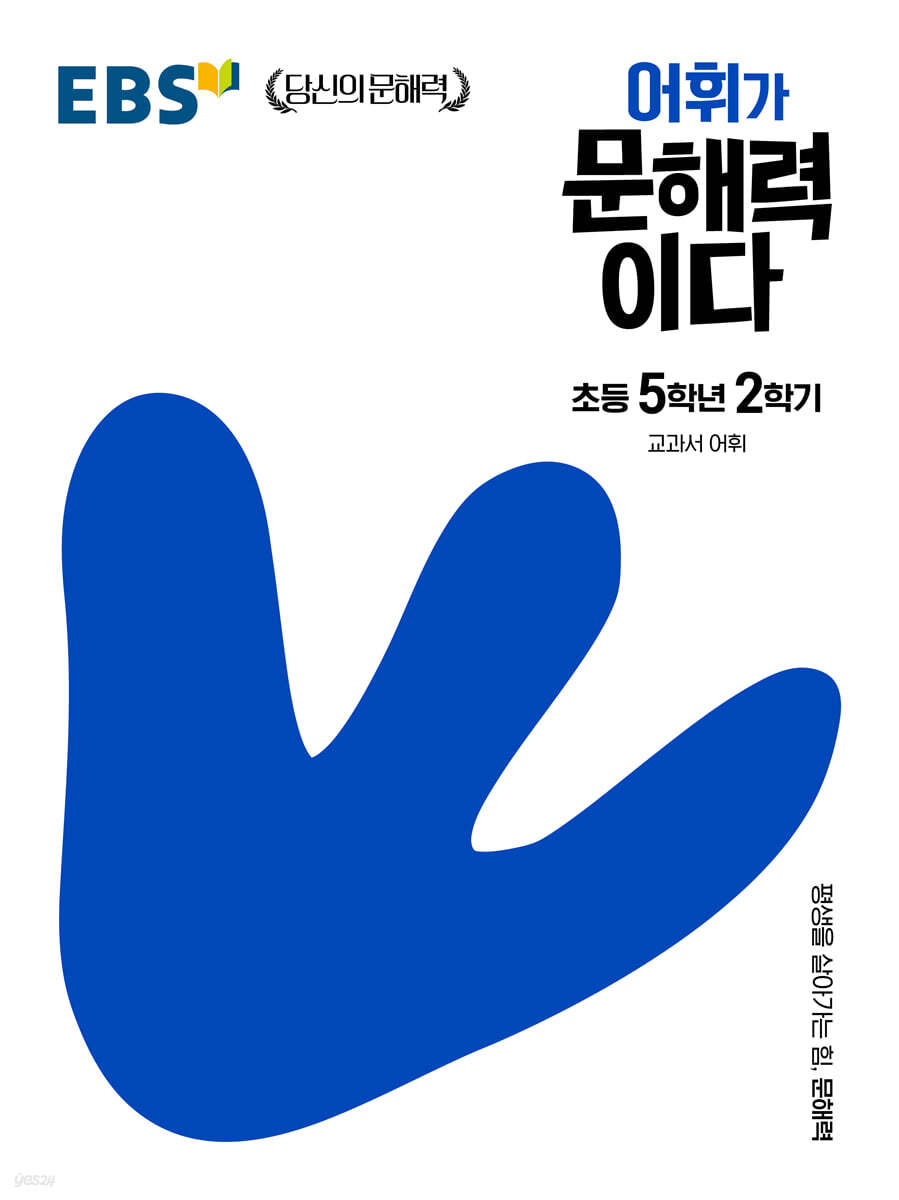
EBS Vocabulary is Literacy, 5th Grade, 2nd Semester
 |
Description
Book Introduction
Literacy textbook created by EBS, the company that knows literacy best. If you study according to the textbook's progress, the textbook becomes easier. Vocabulary is literacy Why is 'textbook vocabulary' important? According to the results of EBS's literacy test for third-year middle school students, only '1' out of 10 students were able to read and understand the textbook on their own. The most important criterion for determining whether one can read and understand a textbook is 'vocabulary'. If you don't understand the textbook content due to a lack of vocabulary, it's easy to lose interest in studying. If you study unfamiliar words before studying the textbook, the textbook will become easier and your 'concentration', 'enthusiasm', and 'immersion' in class will increase. Features of "Vocabulary is Literacy" "Vocabulary is Literacy" is organized by grade level P for pre-elementary school students and by semester from 1st grade to 3rd grade of middle school, allowing for systematic learning by selecting according to grade and semester. By presenting a 'Textbook Link List', you can see at a glance which textbook page you will be studying based on the unit name of the textbook for each subject. 1. Vocabulary can be learned by subject and semester according to the textbook learning progress. 2. You can learn vocabulary in a short period of time by studying 2 textbooks per grade and 4 weeks per semester. 3. You can learn idioms, proverbs, Chinese character idioms, and even Chinese character vocabulary. 4. You can check the vocabulary you have learned through confirmation questions and weekly vocabulary tests. 5. Self-study and home study are possible with efficient textbook composition. |
- You can preview some of the book's contents.
Preview
index
Week 1
1st Korean Language Textbook Vocabulary
2nd Social Studies Textbook Vocabulary
3rd Math Textbook Vocabulary
4th Science Textbook Vocabulary
5th Chinese character vocabulary
Vocabulary test
Week 2
1st Korean Language Textbook Vocabulary
2nd Social Studies Textbook Vocabulary
3rd Math Textbook Vocabulary
4th Science Textbook Vocabulary
5th Chinese character vocabulary
Vocabulary test
Week 3
1st Korean Language Textbook Vocabulary
2nd Social Studies Textbook Vocabulary
3rd Math Textbook Vocabulary
4th Science Textbook Vocabulary
5th Chinese character vocabulary
Vocabulary test
Week 4
1st Korean Language Textbook Vocabulary
2nd Social Studies Textbook Vocabulary
3rd Math Textbook Vocabulary
4th Science Textbook Vocabulary
5th Chinese character vocabulary
Vocabulary test
Answer and explanation
1st Korean Language Textbook Vocabulary
2nd Social Studies Textbook Vocabulary
3rd Math Textbook Vocabulary
4th Science Textbook Vocabulary
5th Chinese character vocabulary
Vocabulary test
Week 2
1st Korean Language Textbook Vocabulary
2nd Social Studies Textbook Vocabulary
3rd Math Textbook Vocabulary
4th Science Textbook Vocabulary
5th Chinese character vocabulary
Vocabulary test
Week 3
1st Korean Language Textbook Vocabulary
2nd Social Studies Textbook Vocabulary
3rd Math Textbook Vocabulary
4th Science Textbook Vocabulary
5th Chinese character vocabulary
Vocabulary test
Week 4
1st Korean Language Textbook Vocabulary
2nd Social Studies Textbook Vocabulary
3rd Math Textbook Vocabulary
4th Science Textbook Vocabulary
5th Chinese character vocabulary
Vocabulary test
Answer and explanation
Detailed image
.jpg)
Publisher's Review
"It's better to learn like this: 'Vocabulary is literacy.'"
1.
Don't miss out on learning textbook vocabulary.
Vocabulary is included in the order of textbooks by semester.
Before you proceed with the textbook, study in advance.
The depth of understanding of school lessons changes.
It is also good to use it for review after studying the textbook.
Build a solid foundation of vocabulary.
2.
Study consistently every day.
It's okay if you can't solve all the recommended daily amount or get a lot of problems wrong.
Instead, develop literacy skills through consistent habits.
3.
Learn multiple areas simultaneously.
Speaking, listening, reading, and writing skills must be developed in a balanced manner. Learning vocabulary, writing, reading comprehension, background knowledge, and digital reading comprehension materials prepared by EBS together will make comprehensive literacy learning easier.
The EBS Literacy Series can be studied more effectively when studied together.
Develop literacy, the power to live a lifetime, with EBS.
1.
Don't miss out on learning textbook vocabulary.
Vocabulary is included in the order of textbooks by semester.
Before you proceed with the textbook, study in advance.
The depth of understanding of school lessons changes.
It is also good to use it for review after studying the textbook.
Build a solid foundation of vocabulary.
2.
Study consistently every day.
It's okay if you can't solve all the recommended daily amount or get a lot of problems wrong.
Instead, develop literacy skills through consistent habits.
3.
Learn multiple areas simultaneously.
Speaking, listening, reading, and writing skills must be developed in a balanced manner. Learning vocabulary, writing, reading comprehension, background knowledge, and digital reading comprehension materials prepared by EBS together will make comprehensive literacy learning easier.
The EBS Literacy Series can be studied more effectively when studied together.
Develop literacy, the power to live a lifetime, with EBS.
GOODS SPECIFICS
- Publication date: December 30, 2021
- Page count, weight, size: 222 pages | 619g | 225*300*10mm
- ISBN13: 9788954762724
- ISBN10: 8954762727
- Reference book for use in grades: 5th grade
- Reference book usage period: 2nd semester
- KC Certification: Certification Type: Conformity Confirmation
You may also like
카테고리
korean


korean

![GQ KOREA Mark (Monthly): December [2025]](http://librairie.coreenne.fr/cdn/shop/files/8ef265dbbfbf186523ed75ba7319009d.jpg?v=1765340328&width=3840)


