

Philosophy for a Better Life
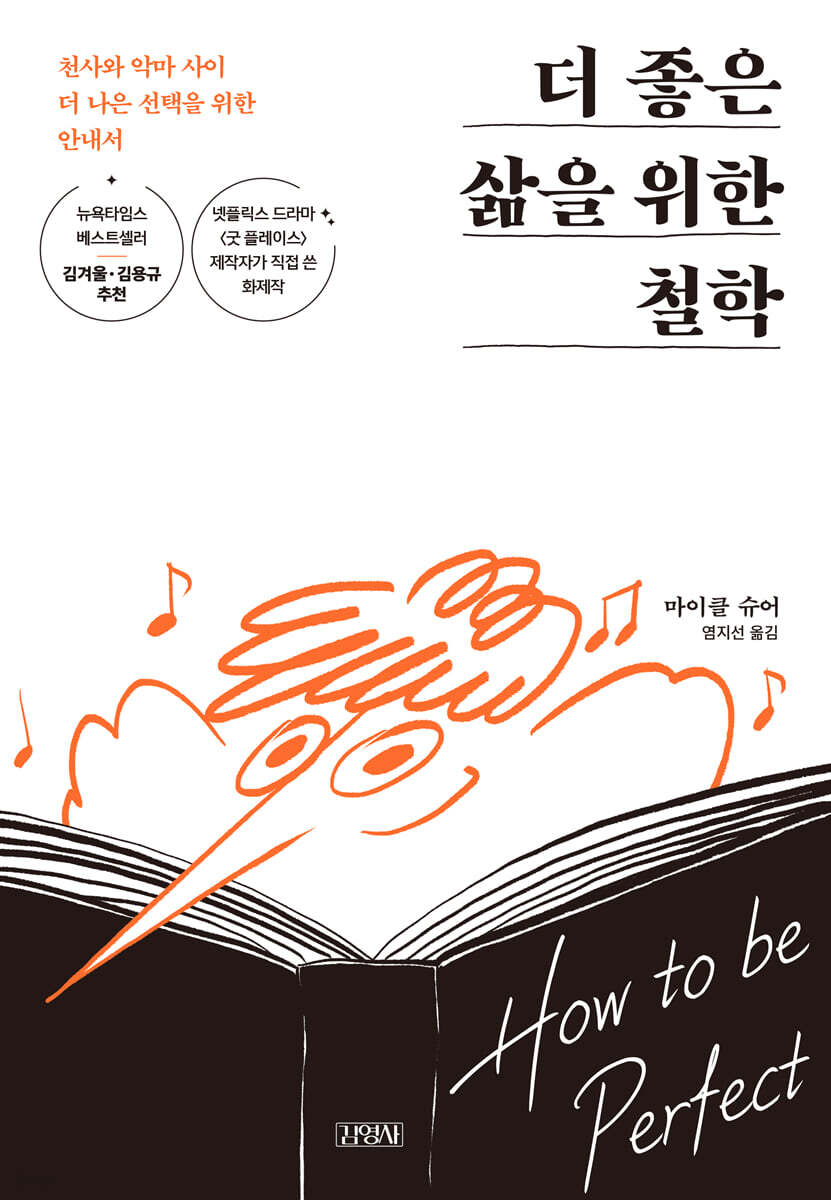 |
Description
Book Introduction
#2 New York Times Nonfiction Bestseller
A liberal arts philosophy book written by the creator of Netflix's hit series "The Good Place."
Philosopher Kim Yong-gyu recommends Kim Gyul-wool from YouTube's "Winter Bookstore."
Philosophical advice for those seeking to make better choices in a world filled with complex choices, traps, false mentors, and foolish advice.
Borrowing the wisdom of philosophers who have pondered "what is a good life" for thousands of years, it humorously illuminates moments when ethical dilemmas collide in everyday life.
Should I tell my friend that his shirt doesn't look right? Should I put my shopping cart back where it was? How much should a millionaire tip at a restaurant? Should I buy the latest cell phone while there are people suffering in poverty around the world? Witty storytelling from Michael Schur, star producer of "Saturday Night Live," "The Office," and "The Good Place."
A liberal arts philosophy book written by the creator of Netflix's hit series "The Good Place."
Philosopher Kim Yong-gyu recommends Kim Gyul-wool from YouTube's "Winter Bookstore."
Philosophical advice for those seeking to make better choices in a world filled with complex choices, traps, false mentors, and foolish advice.
Borrowing the wisdom of philosophers who have pondered "what is a good life" for thousands of years, it humorously illuminates moments when ethical dilemmas collide in everyday life.
Should I tell my friend that his shirt doesn't look right? Should I put my shopping cart back where it was? How much should a millionaire tip at a restaurant? Should I buy the latest cell phone while there are people suffering in poverty around the world? Witty storytelling from Michael Schur, star producer of "Saturday Night Live," "The Office," and "The Good Place."
- You can preview some of the book's contents.
Preview
index
Entering
Before we begin, here are some questions you might want to ask:
Part 1: The Worries of a Very Old Philosophy
Chapter 1: What Makes a Good Person: Is It Okay to Slap Your Friend in the Face for No Reason?
Chapter 2 Happiness Calculator: Should you leave the broken-down trolley alone and kill five people, or pull the handle and deliberately kill one person?
Chapter 3: As long as you follow the rules: Should I say my friend's weird shirt is pretty?
Chapter 4: The Contract of Consideration: Should I use the cart and put it back where it belongs? Or go all the way back?
Part 2: Being a Good Person Is Still Hard
Chapter 5: Moral Perfection: Should You Run into a Burning Building to Rescue Those Trapped Inside?
Chapter 6 The Meaning of Action: You just performed an altruistic act.
So what comes back to me?
Chapter 7 The Weight of Wrong: Yes, I hit your car.
But what about Hurricane Katrina?
Chapter 8: Living a Good Life is Tiresome: You have done good deeds, donated a lot, and are generally a good and morally upright person.
So, if the cheese tasting corner at the supermarket clearly says "one per person," is it okay to take three?
Part 3: Becoming a Superhuman
Chapter 9: More pressing matters?: You got a new iPhone? That's cool.
But did you know that millions of people are starving to death in India?
Chapter 10 Good Names, Bad Names: Ethically Questionable Sandwiches.
But it's delicious.
Can I keep eating it?
Chapter 11: The Existentialist Answer: Ethical Decisions Are Difficult.
Just… , can’t I just not do it?
Chapter 12: The God of Luck: I got cussed out on Twitter for tipping 27 cents at a cafe.
That's because I'm a billionaire! I'm traveling to the Netherlands Antilles and I can't even enjoy the soft-shell crab rolls my personal chef makes on my plane! Is that fair?
Chapter 13 The Art of Apologizing: It's My Fault.
Should I say sorry?
Conclusion
Acknowledgements
Before we begin, here are some questions you might want to ask:
Part 1: The Worries of a Very Old Philosophy
Chapter 1: What Makes a Good Person: Is It Okay to Slap Your Friend in the Face for No Reason?
Chapter 2 Happiness Calculator: Should you leave the broken-down trolley alone and kill five people, or pull the handle and deliberately kill one person?
Chapter 3: As long as you follow the rules: Should I say my friend's weird shirt is pretty?
Chapter 4: The Contract of Consideration: Should I use the cart and put it back where it belongs? Or go all the way back?
Part 2: Being a Good Person Is Still Hard
Chapter 5: Moral Perfection: Should You Run into a Burning Building to Rescue Those Trapped Inside?
Chapter 6 The Meaning of Action: You just performed an altruistic act.
So what comes back to me?
Chapter 7 The Weight of Wrong: Yes, I hit your car.
But what about Hurricane Katrina?
Chapter 8: Living a Good Life is Tiresome: You have done good deeds, donated a lot, and are generally a good and morally upright person.
So, if the cheese tasting corner at the supermarket clearly says "one per person," is it okay to take three?
Part 3: Becoming a Superhuman
Chapter 9: More pressing matters?: You got a new iPhone? That's cool.
But did you know that millions of people are starving to death in India?
Chapter 10 Good Names, Bad Names: Ethically Questionable Sandwiches.
But it's delicious.
Can I keep eating it?
Chapter 11: The Existentialist Answer: Ethical Decisions Are Difficult.
Just… , can’t I just not do it?
Chapter 12: The God of Luck: I got cussed out on Twitter for tipping 27 cents at a cafe.
That's because I'm a billionaire! I'm traveling to the Netherlands Antilles and I can't even enjoy the soft-shell crab rolls my personal chef makes on my plane! Is that fair?
Chapter 13 The Art of Apologizing: It's My Fault.
Should I say sorry?
Conclusion
Acknowledgements
Detailed image

Into the book
Tens of thousands of years ago, after early humans had completed the basic stages of evolution, invented fire, and defeated tigers and all that, there were people who started telling moral stories.
They devoted valuable time and energy to thinking about why people behave the way they do, and how to do it better, more justly, and equitably.
Before they died, someone else listened to their story and discussed it with others.
Other people did the same, and it has continued to this day.
So, people around the world have been having a long conversation about ethics for tens of thousands of years.
--- p.4
As I said before, there are normal people like me who are emotionally and mentally stable, but there are also people who like things like Hawaiian pizza.
What if I opened a pizza place and met a weirdo who loved Hawaiian pizza? What if that weirdo loved Hawaiian pizza so deeply and completely that he derived immeasurable pleasure from eating it? What if the "total pleasure" he felt from eating a slice of Hawaiian pizza was far greater than the total pleasure everyone else felt from eating a normal pizza? If I were a good utilitarian in this situation, should I stop making normal (good) pizza and dedicate my life to making Hawaiian pizza (a crime against nature) to give that weirdo even greater pleasure?
--- p.83
Ubuntu can be seen as a more strengthened version of Scanlon's contractualism.
Ubuntu goes beyond simply having obligations to others; it says that people exist through others.
Other people's health is my health, other people's happiness is my happiness, and other people's interests are my interests.
When someone gets hurt or injured, it's the same as when I get hurt or injured.
The virtues that political scientist Michael Onyebuchi Eze cites as characteristics of Ubuntu are reminiscent of Aristotle's "generosity, sharing, and kindness," but Ubuntu emphasizes the community rather than the individual.
--- p.137
Pragmatism asks us to be our own moral judges.
I advise you to observe the behavior yourself and determine whether the results make a difference, and then decide whether the argument is pointless or meaningful.
Of course, if we judge ourselves, new questions arise.
When should we blow the whistle? When we see someone doing something bad that has a clear negative impact on the world? When should we not only judge someone's immoral behavior, but also speak out loudly?
--- p.188
It was difficult, and all things like this are difficult.
It's exhausting just to think about these problems.
Especially when, armed with 2,400 years of philosophical theory, we still have no definitive answer.
When this moment comes, the voice of temptation tickles my ears.
“Don't worry! Life would be a lot easier if you didn't try so hard to be a good person.
Moreover, there are many times when it seems impossible.
We are just a speck of dust on a small rock in space.
“Do these things even matter?” So…, do these things matter?
They devoted valuable time and energy to thinking about why people behave the way they do, and how to do it better, more justly, and equitably.
Before they died, someone else listened to their story and discussed it with others.
Other people did the same, and it has continued to this day.
So, people around the world have been having a long conversation about ethics for tens of thousands of years.
--- p.4
As I said before, there are normal people like me who are emotionally and mentally stable, but there are also people who like things like Hawaiian pizza.
What if I opened a pizza place and met a weirdo who loved Hawaiian pizza? What if that weirdo loved Hawaiian pizza so deeply and completely that he derived immeasurable pleasure from eating it? What if the "total pleasure" he felt from eating a slice of Hawaiian pizza was far greater than the total pleasure everyone else felt from eating a normal pizza? If I were a good utilitarian in this situation, should I stop making normal (good) pizza and dedicate my life to making Hawaiian pizza (a crime against nature) to give that weirdo even greater pleasure?
--- p.83
Ubuntu can be seen as a more strengthened version of Scanlon's contractualism.
Ubuntu goes beyond simply having obligations to others; it says that people exist through others.
Other people's health is my health, other people's happiness is my happiness, and other people's interests are my interests.
When someone gets hurt or injured, it's the same as when I get hurt or injured.
The virtues that political scientist Michael Onyebuchi Eze cites as characteristics of Ubuntu are reminiscent of Aristotle's "generosity, sharing, and kindness," but Ubuntu emphasizes the community rather than the individual.
--- p.137
Pragmatism asks us to be our own moral judges.
I advise you to observe the behavior yourself and determine whether the results make a difference, and then decide whether the argument is pointless or meaningful.
Of course, if we judge ourselves, new questions arise.
When should we blow the whistle? When we see someone doing something bad that has a clear negative impact on the world? When should we not only judge someone's immoral behavior, but also speak out loudly?
--- p.188
It was difficult, and all things like this are difficult.
It's exhausting just to think about these problems.
Especially when, armed with 2,400 years of philosophical theory, we still have no definitive answer.
When this moment comes, the voice of temptation tickles my ears.
“Don't worry! Life would be a lot easier if you didn't try so hard to be a good person.
Moreover, there are many times when it seems impossible.
We are just a speck of dust on a small rock in space.
“Do these things even matter?” So…, do these things matter?
--- p.299
Publisher's Review
From Utilitarianism to Existentialism, from Aristotle to Peter Singer
In a world rife with deception and lies,
A delightful philosophical book for those seeking to make better choices.
If Socrates were to come back to life, where would he go first? He'd probably go into the market and chat with people wondering whether they should put their carts back where they belong or how many items to grab from the tasting corner.
If there were a book Emmy, wouldn't the author win a third?
Kim Yong-gyu, philosopher and author of "Socrates Style"
A New York Times nonfiction bestseller immediately after its release! In an age where everyone wants to be a good person, but perhaps no one is, this is the philosophy survival kit you need! "How to Be Perfect" (original title: "Philosophy for a Better Life"), which humorously unravels common ethical dilemmas and offers philosophical solutions, has been published.
Should I really put my shopping cart back where it belongs after shopping at the supermarket? How much should a millionaire tip at a restaurant? Should I buy an iPhone while there are people suffering from poverty? Should I watch a movie starring an actor who has stirred up social controversy? Is the ham in my sandwich ethically produced? Drawing on the wisdom of philosophers who have pondered "what constitutes a good life" for thousands of years, this book offers humorous yet profound answers to the various dilemmas we face in everyday life.
Author Michael Schur, a star producer who has produced successful shows like "Saturday Night Live" and "The Office," set a goal of writing an introductory book on ethical philosophy that anyone could enjoy while producing the drama "The Good Place."
With the help of philosopher Todd May, with whom I have had a relationship since the drama, I incorporated the concept of ‘life ethics for ordinary people’ into the book.
Modern society is full of ethical fatigue,
Yet, a philosophical prescription for making the right choice
We all have a 'flower and trash' side.
I recommend this book to anyone trying to make moral choices in a complex and confusing world.
_〈Oprah Daily〉
"What are you doing? Why are you doing it? Can't you do better? Why is it a better action?" "A Philosophy for a Better Life" is a book that seeks answers to four core questions in ethics.
The author argues that everything in the world has an ethical component, and we cannot avoid it.
Rather, we can become better people simply by paying attention to it and sincerely thinking about and making an effort to solve it.
Ethics plays a role in making life better in many ways.
Almost everything in the world has some ethical component, whether we realize it or not.
This means that everyone should learn what alternative ethics is and how to use it.
My actions affect other people I live with.
If you care about them even a little, you have to do everything in your power to figure out how to make the best decision.
(Page 14)
The most important term in this book, "ethical fatigue," is a concept coined by the passionate author, Michael Schur.
This refers to the fatigue that comes from worrying that my every action might trigger ethical judgments from others, thanks to the explosive propagation power of online networks.
Unlike 340 BC, a large number of people appear from somewhere and very kindly and thoroughly remind us of our sins.
How do we deal with situations where an attempt to resolve an ethical dilemma inadvertently creates another ethical dilemma? This is a truly tangled pretzel situation.
(Page 262)
Even in this tiring world, we must make the right choices and strive to be good people.
We all make mistakes.
That is why we must be tolerant and accept that we are not perfect beings.
The original title of this book, "How to Be Perfect," is an impossible goal and a paradoxical humor.
The author says we must acknowledge the simple yet beautiful reality: "No one is perfect."
There is no such thing as a morally perfect life, but consideration and tolerance for others make us and the world a better place.
“My friend’s shirt doesn’t look good, should I be honest with him?”
An exploration of the trivial and difficult dilemmas of everyday life.
This is the first time I've read a philosophy textbook with such a laugh.
Funny and serious.
You may start off with a light heart and a smile, but before you know it, you'll find yourself looking back on life with a heavy heart.
- Kim Gyul-wool, author and operator of the YouTube channel 'Gyulwool Bookstore'
If I still have to read Wittgenstein's manuscripts and argue loudly about Nietzsche's nihilism to become a better person, it's exhausting.
An easier way is to read this book.
In "Philosophy for a Better Life," various philosophers offer their own unique options for the most common ethical dilemmas we face in our daily lives.
Is it really "okay" to lie and say "it's okay" about the tacky shirt your friend bought for an interview? Instead of hurting your friend's feelings, you could actually make them happy, avoid making yourself look like a bad person, and take your friendship to the next level.
Conversely, if you tell the truth, you might hurt your friend's feelings, make yourself look bad, lead to arguments, and ruin your friendship.
If you have reached the stage of considering the pros and cons of two cases, you are in line with the consequentialist method of 'utilitarianism'.
But what if my friend fails the interview because of that shirt? Seriously, nothing is easy.
If it were Kant, he would have said this:
“That’s why I told you that you should never lie under any circumstances.”
If you are wondering, “Can I be a good person?”, look to Aristotle.
Innate traits of character and ability that we possess and refine throughout our lives.
Aristotle calls this the “virtue starter kit.”
It's reassuring to know that everyone has at least one starter kit in their heart.
Instead, you should make good behavior a habit and practice it consistently.
(Aristotle's virtue ethics)
Anyone who is concerned about “white lies” may want to consult Kant.
Kant says that it is enough to act according to the rules in any situation.
'Acting according to the correct rules = moral behavior' and 'not following the rules = moral failure'.
There is no compromise.
Excuses don't work either.
So, if your friend has a bad fashion sense, give them honest advice.
(Kant's categorical imperative)
A person who thinks, “As long as the result is good, that’s all that matters!” is a utilitarian.
For a utilitarian, the best action is the one that brings about the greatest good and the least evil.
It's a pleasant sound, but in some ways it's also stupid.
Everyone has different standards for happiness, but isn't someone who orders their own favorite Hawaiian pizza (with pineapple on top) a poor example of being a good person? (A flaw in consequentialism)
If you've ever thought, "Why don't we just not make ethical decisions?", look into existentialism.
Existentialism encourages us not to dwell on mistakes we have already made.
After all, life is suffering and absurd.
Yeah, already screwed.
Don't do that next time.
For an existentialist, life is a series of choices.
Keep choosing.
In this absurd and meaningless world, all we can do is choose.
(existential optimism)
If it's still too difficult, just remember two things:
“Know thyself” and “Don’t overthink things”
Let's read this book and laugh while learning how to become a better person.
And imagine what a wonderfully sarcastic gift this book would make! Give it to someone and say, "This reminded me of you."
When they say, “Oh, is this book interesting?” I smile and say, “I don’t have to read it.”
Amy Poehler, actress
We have long wondered how we should behave in order to become wise and good people.
Philosophy for a Better Life introduces many concepts and advice, but it boils down to two key points.
“Know thyself” and “Don’t overthink things”.
Know your intentions clearly and act accordingly, and do not act excessively without first considering how it will affect others.
It's very hard to survive as a good person in this world full of complicated choices, traps, false mentors, and foolish advice.
Yet, a book that suggests that we should continue to do our best to become good people, based on the ideas of philosophers that have been accumulated over thousands of years.
I recommend the philosophical textbook "Philosophy for a Better Life," which offers refreshing and insightful insights.
We all have a 'flower and trash' side.
I recommend this book to anyone trying to make moral choices in a complex and confusing world.
_〈Oprah Daily〉
The author has put into this book the essence of what he has learned about ethics.
A fun summary of "How to Be Perfect" for both those who watched the drama and those who want to learn about moral philosophy.
The author of this book is like a polite professor who also speaks passionately in a bar, as if he were having a manic episode.
This book will be the easiest entry point into ethics.
_〈Wall Street Journal〉
Heartfelt, funny content.
Like The Good Place, this book is a humorous and thought-provoking journey into life's most difficult questions.
_〈Kirkus Review〉
In a world rife with deception and lies,
A delightful philosophical book for those seeking to make better choices.
If Socrates were to come back to life, where would he go first? He'd probably go into the market and chat with people wondering whether they should put their carts back where they belong or how many items to grab from the tasting corner.
If there were a book Emmy, wouldn't the author win a third?
Kim Yong-gyu, philosopher and author of "Socrates Style"
A New York Times nonfiction bestseller immediately after its release! In an age where everyone wants to be a good person, but perhaps no one is, this is the philosophy survival kit you need! "How to Be Perfect" (original title: "Philosophy for a Better Life"), which humorously unravels common ethical dilemmas and offers philosophical solutions, has been published.
Should I really put my shopping cart back where it belongs after shopping at the supermarket? How much should a millionaire tip at a restaurant? Should I buy an iPhone while there are people suffering from poverty? Should I watch a movie starring an actor who has stirred up social controversy? Is the ham in my sandwich ethically produced? Drawing on the wisdom of philosophers who have pondered "what constitutes a good life" for thousands of years, this book offers humorous yet profound answers to the various dilemmas we face in everyday life.
Author Michael Schur, a star producer who has produced successful shows like "Saturday Night Live" and "The Office," set a goal of writing an introductory book on ethical philosophy that anyone could enjoy while producing the drama "The Good Place."
With the help of philosopher Todd May, with whom I have had a relationship since the drama, I incorporated the concept of ‘life ethics for ordinary people’ into the book.
Modern society is full of ethical fatigue,
Yet, a philosophical prescription for making the right choice
We all have a 'flower and trash' side.
I recommend this book to anyone trying to make moral choices in a complex and confusing world.
_〈Oprah Daily〉
"What are you doing? Why are you doing it? Can't you do better? Why is it a better action?" "A Philosophy for a Better Life" is a book that seeks answers to four core questions in ethics.
The author argues that everything in the world has an ethical component, and we cannot avoid it.
Rather, we can become better people simply by paying attention to it and sincerely thinking about and making an effort to solve it.
Ethics plays a role in making life better in many ways.
Almost everything in the world has some ethical component, whether we realize it or not.
This means that everyone should learn what alternative ethics is and how to use it.
My actions affect other people I live with.
If you care about them even a little, you have to do everything in your power to figure out how to make the best decision.
(Page 14)
The most important term in this book, "ethical fatigue," is a concept coined by the passionate author, Michael Schur.
This refers to the fatigue that comes from worrying that my every action might trigger ethical judgments from others, thanks to the explosive propagation power of online networks.
Unlike 340 BC, a large number of people appear from somewhere and very kindly and thoroughly remind us of our sins.
How do we deal with situations where an attempt to resolve an ethical dilemma inadvertently creates another ethical dilemma? This is a truly tangled pretzel situation.
(Page 262)
Even in this tiring world, we must make the right choices and strive to be good people.
We all make mistakes.
That is why we must be tolerant and accept that we are not perfect beings.
The original title of this book, "How to Be Perfect," is an impossible goal and a paradoxical humor.
The author says we must acknowledge the simple yet beautiful reality: "No one is perfect."
There is no such thing as a morally perfect life, but consideration and tolerance for others make us and the world a better place.
“My friend’s shirt doesn’t look good, should I be honest with him?”
An exploration of the trivial and difficult dilemmas of everyday life.
This is the first time I've read a philosophy textbook with such a laugh.
Funny and serious.
You may start off with a light heart and a smile, but before you know it, you'll find yourself looking back on life with a heavy heart.
- Kim Gyul-wool, author and operator of the YouTube channel 'Gyulwool Bookstore'
If I still have to read Wittgenstein's manuscripts and argue loudly about Nietzsche's nihilism to become a better person, it's exhausting.
An easier way is to read this book.
In "Philosophy for a Better Life," various philosophers offer their own unique options for the most common ethical dilemmas we face in our daily lives.
Is it really "okay" to lie and say "it's okay" about the tacky shirt your friend bought for an interview? Instead of hurting your friend's feelings, you could actually make them happy, avoid making yourself look like a bad person, and take your friendship to the next level.
Conversely, if you tell the truth, you might hurt your friend's feelings, make yourself look bad, lead to arguments, and ruin your friendship.
If you have reached the stage of considering the pros and cons of two cases, you are in line with the consequentialist method of 'utilitarianism'.
But what if my friend fails the interview because of that shirt? Seriously, nothing is easy.
If it were Kant, he would have said this:
“That’s why I told you that you should never lie under any circumstances.”
If you are wondering, “Can I be a good person?”, look to Aristotle.
Innate traits of character and ability that we possess and refine throughout our lives.
Aristotle calls this the “virtue starter kit.”
It's reassuring to know that everyone has at least one starter kit in their heart.
Instead, you should make good behavior a habit and practice it consistently.
(Aristotle's virtue ethics)
Anyone who is concerned about “white lies” may want to consult Kant.
Kant says that it is enough to act according to the rules in any situation.
'Acting according to the correct rules = moral behavior' and 'not following the rules = moral failure'.
There is no compromise.
Excuses don't work either.
So, if your friend has a bad fashion sense, give them honest advice.
(Kant's categorical imperative)
A person who thinks, “As long as the result is good, that’s all that matters!” is a utilitarian.
For a utilitarian, the best action is the one that brings about the greatest good and the least evil.
It's a pleasant sound, but in some ways it's also stupid.
Everyone has different standards for happiness, but isn't someone who orders their own favorite Hawaiian pizza (with pineapple on top) a poor example of being a good person? (A flaw in consequentialism)
If you've ever thought, "Why don't we just not make ethical decisions?", look into existentialism.
Existentialism encourages us not to dwell on mistakes we have already made.
After all, life is suffering and absurd.
Yeah, already screwed.
Don't do that next time.
For an existentialist, life is a series of choices.
Keep choosing.
In this absurd and meaningless world, all we can do is choose.
(existential optimism)
If it's still too difficult, just remember two things:
“Know thyself” and “Don’t overthink things”
Let's read this book and laugh while learning how to become a better person.
And imagine what a wonderfully sarcastic gift this book would make! Give it to someone and say, "This reminded me of you."
When they say, “Oh, is this book interesting?” I smile and say, “I don’t have to read it.”
Amy Poehler, actress
We have long wondered how we should behave in order to become wise and good people.
Philosophy for a Better Life introduces many concepts and advice, but it boils down to two key points.
“Know thyself” and “Don’t overthink things”.
Know your intentions clearly and act accordingly, and do not act excessively without first considering how it will affect others.
It's very hard to survive as a good person in this world full of complicated choices, traps, false mentors, and foolish advice.
Yet, a book that suggests that we should continue to do our best to become good people, based on the ideas of philosophers that have been accumulated over thousands of years.
I recommend the philosophical textbook "Philosophy for a Better Life," which offers refreshing and insightful insights.
We all have a 'flower and trash' side.
I recommend this book to anyone trying to make moral choices in a complex and confusing world.
_〈Oprah Daily〉
The author has put into this book the essence of what he has learned about ethics.
A fun summary of "How to Be Perfect" for both those who watched the drama and those who want to learn about moral philosophy.
The author of this book is like a polite professor who also speaks passionately in a bar, as if he were having a manic episode.
This book will be the easiest entry point into ethics.
_〈Wall Street Journal〉
Heartfelt, funny content.
Like The Good Place, this book is a humorous and thought-provoking journey into life's most difficult questions.
_〈Kirkus Review〉
GOODS SPECIFICS
- Date of issue: February 24, 2023
- Page count, weight, size: 408 pages | 492g | 145*210*25mm
- ISBN13: 9788934965909
- ISBN10: 8934965908
You may also like
카테고리
korean


korean

![ELLE 엘르 스페셜 에디션 A형 : 12월 [2025]](http://librairie.coreenne.fr/cdn/shop/files/b8e27a3de6c9538896439686c6b0e8fb.jpg?v=1766436872&width=3840)


