

Hesse's Italy
 |
Description
Book Introduction
Meet beautiful illustrations,
Hermann Hesse's Italian travelogue, as splendid as a glass bead
Italy was the beloved country and spiritual refuge of German writers.
Hermann Hesse, a great writer beloved by Koreans, also traveled to Italy whenever his life was difficult.
And there, he looked back on his life and soothed his wounded heart.
"Hesse's Italy" is a travelogue of Italy that reveals a new side of Hesse, who was a thinker and wanderer before becoming a writer.
Hesse traveled all over Italy, from the northern foothills of the Alps to the central Tuscany region, leaving behind numerous writings, almost like a diary. This book contains 19 of those writings, personally selected by Professor Park Gwang-ja, who taught German at a university for a long time and served as president of the Korean Hesse Society.
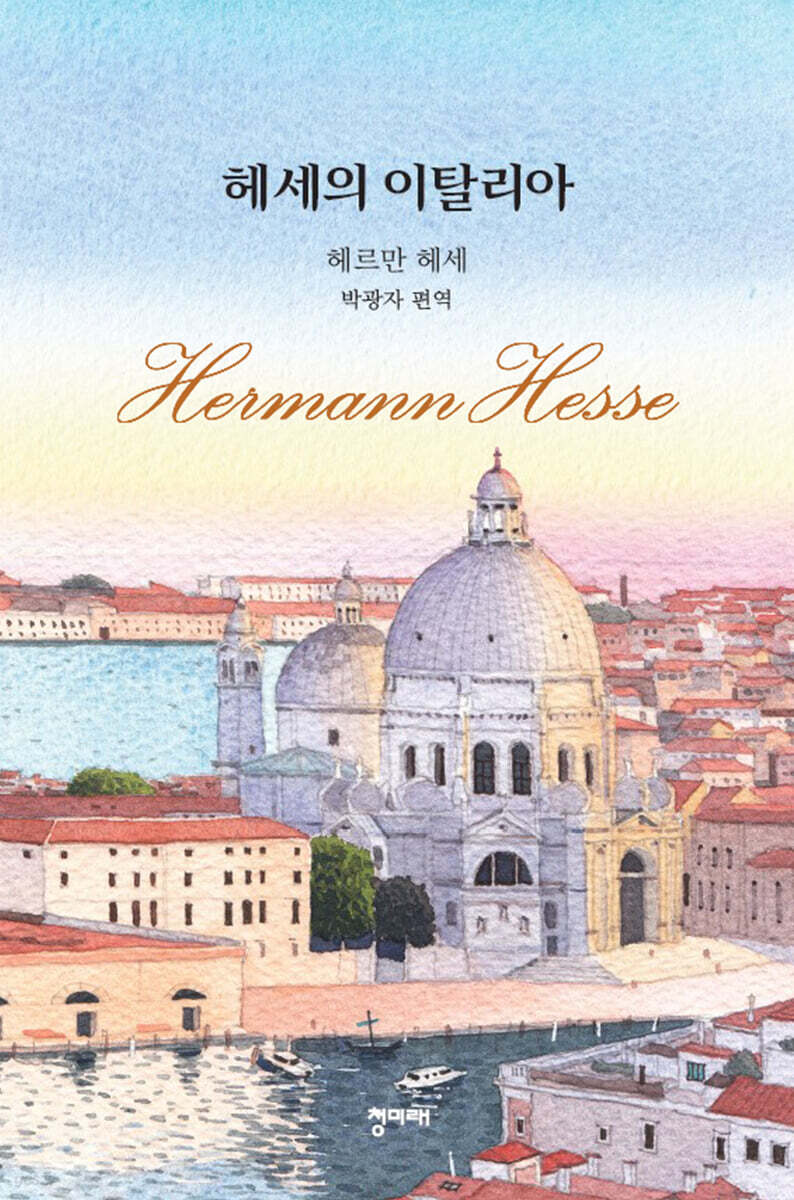
Readers will be able to feel the Italian spirit even more through Hesse's writing that captures the colors of Italy well and the illustrations depicting each Italian city.
In the "Brief Autobiography" at the back of the book, you can find Hesse's own account of his life, wanderings, and creative journey.
Hesse's lyrical yet masterful prose, beautiful illustrations, and insight into life in "Hesse's Italy" provide warm comfort and encouragement to readers weary of the monotony of everyday life.
Hermann Hesse's Italian travelogue, as splendid as a glass bead
Italy was the beloved country and spiritual refuge of German writers.
Hermann Hesse, a great writer beloved by Koreans, also traveled to Italy whenever his life was difficult.
And there, he looked back on his life and soothed his wounded heart.
"Hesse's Italy" is a travelogue of Italy that reveals a new side of Hesse, who was a thinker and wanderer before becoming a writer.
Hesse traveled all over Italy, from the northern foothills of the Alps to the central Tuscany region, leaving behind numerous writings, almost like a diary. This book contains 19 of those writings, personally selected by Professor Park Gwang-ja, who taught German at a university for a long time and served as president of the Korean Hesse Society.
Readers will be able to feel the Italian spirit even more through Hesse's writing that captures the colors of Italy well and the illustrations depicting each Italian city.
In the "Brief Autobiography" at the back of the book, you can find Hesse's own account of his life, wanderings, and creative journey.
Hesse's lyrical yet masterful prose, beautiful illustrations, and insight into life in "Hesse's Italy" provide warm comfort and encouragement to readers weary of the monotony of everyday life.
- You can preview some of the book's contents.
Preview
index
Travel fanatic
A walk along Lake Como
Bergamo
The Woman on the Balcony
Evening in Cremona
On the canals of Venice
dwarf
Casanova
Bologna
Raphael
The Triumph of Death
Anemone flower
raconteur
Boccaccio
Gubbio
The Life of St. Francis
Montefalco
Augustus
About travel
A brief autobiography
Hesse's life
Translator's Note
A walk along Lake Como
Bergamo
The Woman on the Balcony
Evening in Cremona
On the canals of Venice
dwarf
Casanova
Bologna
Raphael
The Triumph of Death
Anemone flower
raconteur
Boccaccio
Gubbio
The Life of St. Francis
Montefalco
Augustus
About travel
A brief autobiography
Hesse's life
Translator's Note
Detailed image
.jpg)
Into the book
The true wall of travel, the desire for knowledge and experience, is so intense and insatiable that no knowledge can appease it, no experience can satisfy it.
--- p.11
The emotion of travel allows us to do things we normally wouldn't: to spend time aimlessly, quietly appreciating a few magnificent paintings, to listen with open minds to the beautiful sounds of noble architecture, to truly follow and enjoy the beautiful lines of a landscape.
--- p.47
That is, no matter how much time I lose, no matter how old, tired, and weak I become, the experience will never lose its brilliance as the meaning of the impulse to travel.
--- p.50
As the moon, still hidden behind the island, slowly rose, the outline of the rooftops of Giudecca Island began to emerge clearly.
The beautiful black shadow of the Basilica of San Giorgio Maggiore rose above the water like a fantastic and mysterious decoration emerging from the water.
The sky lifted the entire island with a dreamlike, distant beauty.
Meanwhile, the mirror-smooth black surface of the water reflected the gray keel furrows and the red, angular lights here and there.
This world, faintly glowing in its indistinct and hazy beauty, seemed to be waiting for the moon to rise, as if waiting to awaken from a spell.
--- p.56
But today, something else that Casanova had, something that our fathers had, something that our own youth had, something that gave it so much magic, seems to have disappeared and become a thing of the past.
It is the wonder of love.
--- p.96
This small world, with a long history of 600 years even at its most recently built, is surrounded by greenery, isolated from the outside world and still retaining the perfect purity of the past.
Anyone who does not feel a sense of awe and sacred thrill here has come to Italy in vain, for nowhere else can one find such exquisite purity and nobility in the preservation of the relics of ancient Italy.
--- p.109
In this hot April day, when the walls of the hillside path begin to glow and the first respite on the sun-warmed battlements beckons! The earth stretches and sparkles, and the distant mountains grow greener and more affectionate, until the heart fills with the sweet fervor of travel.
--- p.113
The feeling of travel is not about escaping the monotony, work, and stress of everyday life and taking a break.
It's not about chance encounters with other people or making friends or seeing new scenery.
It's not just about satisfying curiosity either.
The sensibility of travel lies in the experience, in becoming more enriched, in organically integrating new harvests within ourselves, in deepening our understanding of harmony in diversity and of the vast fabric that is the earth and humanity, in rediscovering old truths and laws in entirely new situations.
In addition, there is something I would like to call the romance of travel in particular: the variety of impressions, the constant, joyful or even thrilling anticipation of surprises, and above all, the precious exchanges we share with people who are unfamiliar and unfamiliar to us.
--- p.11
The emotion of travel allows us to do things we normally wouldn't: to spend time aimlessly, quietly appreciating a few magnificent paintings, to listen with open minds to the beautiful sounds of noble architecture, to truly follow and enjoy the beautiful lines of a landscape.
--- p.47
That is, no matter how much time I lose, no matter how old, tired, and weak I become, the experience will never lose its brilliance as the meaning of the impulse to travel.
--- p.50
As the moon, still hidden behind the island, slowly rose, the outline of the rooftops of Giudecca Island began to emerge clearly.
The beautiful black shadow of the Basilica of San Giorgio Maggiore rose above the water like a fantastic and mysterious decoration emerging from the water.
The sky lifted the entire island with a dreamlike, distant beauty.
Meanwhile, the mirror-smooth black surface of the water reflected the gray keel furrows and the red, angular lights here and there.
This world, faintly glowing in its indistinct and hazy beauty, seemed to be waiting for the moon to rise, as if waiting to awaken from a spell.
--- p.56
But today, something else that Casanova had, something that our fathers had, something that our own youth had, something that gave it so much magic, seems to have disappeared and become a thing of the past.
It is the wonder of love.
--- p.96
This small world, with a long history of 600 years even at its most recently built, is surrounded by greenery, isolated from the outside world and still retaining the perfect purity of the past.
Anyone who does not feel a sense of awe and sacred thrill here has come to Italy in vain, for nowhere else can one find such exquisite purity and nobility in the preservation of the relics of ancient Italy.
--- p.109
In this hot April day, when the walls of the hillside path begin to glow and the first respite on the sun-warmed battlements beckons! The earth stretches and sparkles, and the distant mountains grow greener and more affectionate, until the heart fills with the sweet fervor of travel.
--- p.113
The feeling of travel is not about escaping the monotony, work, and stress of everyday life and taking a break.
It's not about chance encounters with other people or making friends or seeing new scenery.
It's not just about satisfying curiosity either.
The sensibility of travel lies in the experience, in becoming more enriched, in organically integrating new harvests within ourselves, in deepening our understanding of harmony in diversity and of the vast fabric that is the earth and humanity, in rediscovering old truths and laws in entirely new situations.
In addition, there is something I would like to call the romance of travel in particular: the variety of impressions, the constant, joyful or even thrilling anticipation of surprises, and above all, the precious exchanges we share with people who are unfamiliar and unfamiliar to us.
--- pp.271-272
Publisher's Review
In this book, Hesse travels from Lake Como in northern Italy to Bologna, Florence, Pisa, and Montefolco, encountering Italians of the past and present, their stories, and the diverse Italian landscapes.
Following the delicate descriptions of Lake Como, where “everything sways with a clear sound and shines with splendor and fullness,” the sculptures in Bergamo Cathedral with “a tenacious precision and careful elegance,” and the Tuscan paths where “anemones seem to be smiling,” you will want to stroll through Italy with Hesse.
Little anecdotes from his travels, such as the story of buying a fake Raphael painting by cheating an Italian merchant, or of getting a meal from the innkeeper in Montefalco and singing a few songs, add to the pleasure of reading.
Hesse also included in his travelogue the lives of Italian artists and saints, such as Boccaccio, Casanova, St. Francis, and Augustus, as well as novellas (short stories) and anecdotes that he saw and heard in Italy.
The story of Augustus, who realized the beauty of imperfect humanity, where joy and sorrow intersect, only after breaking free from the curse that everyone would love him unconditionally; Casanova, who devoted everything to the value of love; the story of the man who treated her cruelly after losing all his loved ones and the dwarf who led his mistress to ruin, all convey the value of love and hospitality and insight into life.
As Hesse said, savoring the beauty of the landscapes and buildings we encounter on our travels, and making friends and forming relationships with the people there, is “feeling goodness,” “realizing my senses and thoughts about the landscape, learning about, loving, and enjoying the culture there as it is,” and “what we fundamentally pursue and long for, wherever we go, is about humanity.”
Hesse does not recommend traveling to escape from life.
Rather, he says, a “true traveler” is someone who “finds meaning in everyday life without going on a trip, someone who knows how to follow their own star.”
This book, which reflects on humanity and life through travel stories and praises the value of ordinary daily life, will be a summer gift not only for readers who enjoy Hermann Hesse's literature, but also for those who need a breath of fresh air in their repetitive and stifling daily lives after the COVID-19 pandemic and those who wish to enjoy the joy and leisure of travel.
Following the delicate descriptions of Lake Como, where “everything sways with a clear sound and shines with splendor and fullness,” the sculptures in Bergamo Cathedral with “a tenacious precision and careful elegance,” and the Tuscan paths where “anemones seem to be smiling,” you will want to stroll through Italy with Hesse.
Little anecdotes from his travels, such as the story of buying a fake Raphael painting by cheating an Italian merchant, or of getting a meal from the innkeeper in Montefalco and singing a few songs, add to the pleasure of reading.
Hesse also included in his travelogue the lives of Italian artists and saints, such as Boccaccio, Casanova, St. Francis, and Augustus, as well as novellas (short stories) and anecdotes that he saw and heard in Italy.
The story of Augustus, who realized the beauty of imperfect humanity, where joy and sorrow intersect, only after breaking free from the curse that everyone would love him unconditionally; Casanova, who devoted everything to the value of love; the story of the man who treated her cruelly after losing all his loved ones and the dwarf who led his mistress to ruin, all convey the value of love and hospitality and insight into life.
As Hesse said, savoring the beauty of the landscapes and buildings we encounter on our travels, and making friends and forming relationships with the people there, is “feeling goodness,” “realizing my senses and thoughts about the landscape, learning about, loving, and enjoying the culture there as it is,” and “what we fundamentally pursue and long for, wherever we go, is about humanity.”
Hesse does not recommend traveling to escape from life.
Rather, he says, a “true traveler” is someone who “finds meaning in everyday life without going on a trip, someone who knows how to follow their own star.”
This book, which reflects on humanity and life through travel stories and praises the value of ordinary daily life, will be a summer gift not only for readers who enjoy Hermann Hesse's literature, but also for those who need a breath of fresh air in their repetitive and stifling daily lives after the COVID-19 pandemic and those who wish to enjoy the joy and leisure of travel.
GOODS SPECIFICS
- Date of issue: June 30, 2022
- Page count, weight, size: 320 pages | 472g | 136*206*30mm
- ISBN13: 9788986836806
- ISBN10: 8986836807
You may also like
카테고리
korean


korean

![GQ KOREA Mark (Monthly): December [2025]](http://librairie.coreenne.fr/cdn/shop/files/8ef265dbbfbf186523ed75ba7319009d.jpg?v=1765340328&width=3840)


