

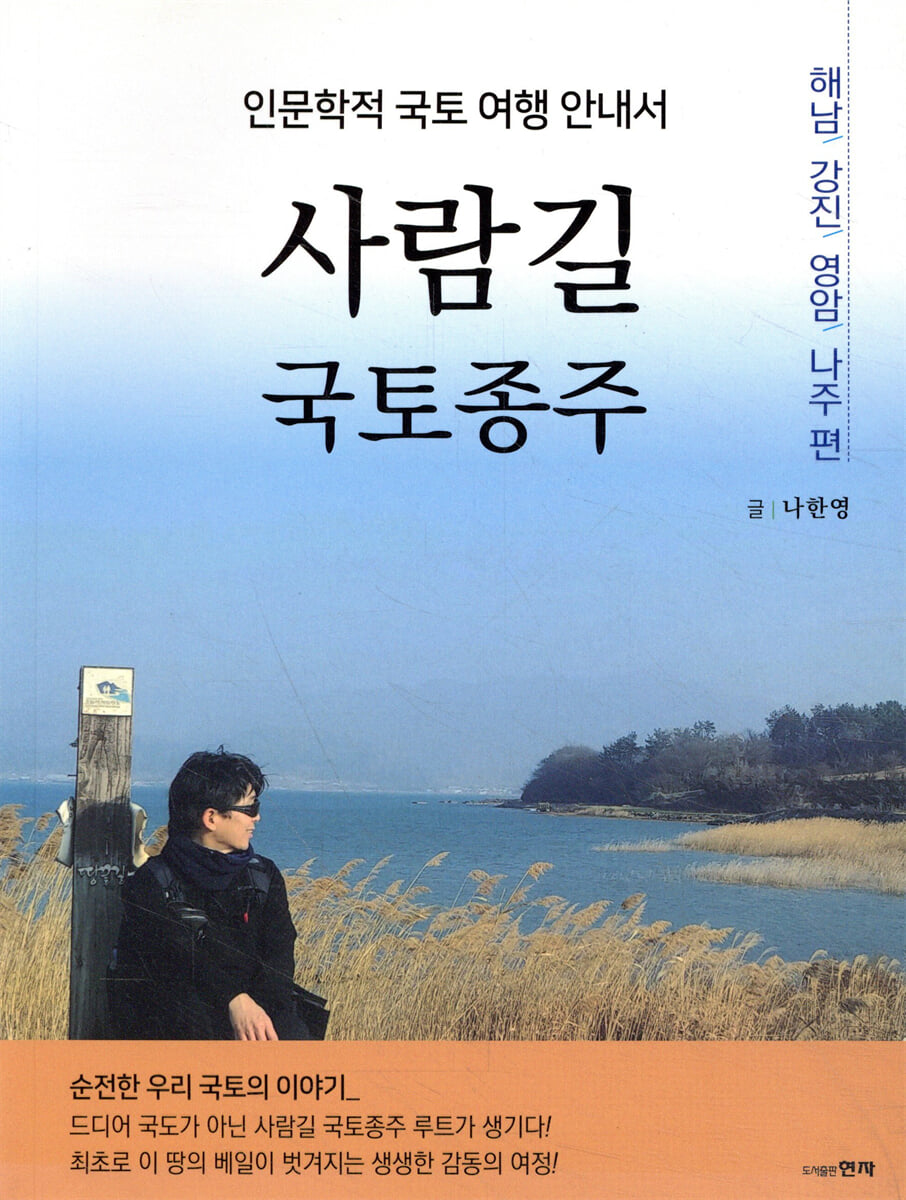
People's Road National Tour: Haenam, Gangjin, Yeongam, Naju
 |
Description
Book Introduction
The author of 『People's Path, National Journey』 is currently working as the CEO of an IT venture company that develops research/academic software in Pangyo Techno Valley.
He has been leading a walking club for the past seven years as a hobby, walking mountains and trails around the country.
During that time, through various walking experiences, I began to think that I should pioneer a new human trail route rather than a national trail that follows national roads.
The core idea was, 'I want to feel our country with my whole body,' and it was the motivation for starting the People's Road National Trek.
In order for him to truly feel the breath of our country, he had to pioneer a new human route, not a road.
The 'human path' that started like that was an exploratory path, and it was a path that involved 30% more walking than the existing national road route that mainly used national roads.
He took two weekend days every month to walk across five provinces and 20 cities and counties, from the southernmost point of the Korean Peninsula to the civilian control line in Goseong, the northernmost point where people can currently walk.
The period and distance were 34 days and 946 km over 1 year and 5 months.
Everywhere I walked with countless steps was a path of communication with the local life, a path of meeting old people, and a path of truly smelling the fragrance of our country.
He intends to capture the humanistic interpretation and inspiration of everything he encountered along the 946km journey in the 5 volumes of “People’s Road National Journey.”
Among them, Haenam, Gangjin, Yeongam, and Naju were published as the first volume.
He has been leading a walking club for the past seven years as a hobby, walking mountains and trails around the country.
During that time, through various walking experiences, I began to think that I should pioneer a new human trail route rather than a national trail that follows national roads.
The core idea was, 'I want to feel our country with my whole body,' and it was the motivation for starting the People's Road National Trek.
In order for him to truly feel the breath of our country, he had to pioneer a new human route, not a road.
The 'human path' that started like that was an exploratory path, and it was a path that involved 30% more walking than the existing national road route that mainly used national roads.
He took two weekend days every month to walk across five provinces and 20 cities and counties, from the southernmost point of the Korean Peninsula to the civilian control line in Goseong, the northernmost point where people can currently walk.
The period and distance were 34 days and 946 km over 1 year and 5 months.
Everywhere I walked with countless steps was a path of communication with the local life, a path of meeting old people, and a path of truly smelling the fragrance of our country.
He intends to capture the humanistic interpretation and inspiration of everything he encountered along the 946km journey in the 5 volumes of “People’s Road National Journey.”
Among them, Haenam, Gangjin, Yeongam, and Naju were published as the first volume.
index
*Prologue_ Dreaming of a People's Journey across the Country... 4
*National Territory Rules & Before Departure… 10
Haenampyeon/Hope at the end of the earth
1st round
01.
Where the end begins… 20
02.
At the end of the land… 25
03.
The journey begins… 31
04.
The first obstacle: the road is gone… 36
05.
Happy Lunch… 43
06.
The East Coast of Haenam Peninsula, a place steeped in the winter sea… 47
07.
The Future of the 'Empty Cradle'? … 50
08.
Ijin Village… 57
09.
A country where people live in only 5% of the country's land area… 63
10.
Villages on the mountain slopes… 67
11.
The first day of the national race ends… 69
12.
Connecting Past, Present, and Future… 74
13.
Through the bushes and valleys, to Heungchon-ri… 76
14.
Haenam Reclaimed Plains… 81
15.
Haenam's final lesson... 82
Gangjin-pyeon/Namdo tour site no. 1
01.
Love for the country, born from the mountain of Jujak… 86
02.
Resting on the back of the eagle… 92
03.
The final stop of Jujaksan Mountain, Dongguri Rock… 94
04.
Peaceful village… 98
05.
The land where Dasan's relatives lived... 100
06.
The sad reality of our countryside… 103
07.
The flagpole that couldn't smile... 106
08.
The first national race concluded with more excitement than ever before… 110
2nd round
09.
Mokpo the night before, and on the way to Gangjin… 114
10.
Seokmun Park and Gaudo Suspension Bridge… 116
11.
Towards Dasan Chodang… 122
12.
Dasan Chodang, where Dasan's heart dwells... 129
13.
The Mandeoksan Mountain Trail, Engraved with the Friendship of the Century… 135
14.
Korean sentiment, the aesthetics of Korean medicine, camellia flowers… 139
15.
Drawing the ideal landscape of Pian… 142
16.
The fierce winds of Gangjin Bay… 149
17.
The Legacy of a Strong People… 153
18.
Gangjin Bay Ecological Park… 157
19.
Saejae Market Street… 160
20.
The inn and sajae that saved Dasan… 164
21.
The birthplace of Yeongrang, a pioneer of contemporary poetry… 171
22.
Boeunsanbang, a place where the love of a rich man continues… 179
23.
Namdo residents who love beef… 182
24.
Walking the Path of Nature… 184
25.
A cold and hungry night… 192
26.
The moonlight is particularly beautiful… 195
27.
A measure that rejects artificiality… 199
28.
In search of the secret garden… 205
29.
World Cultural Heritage Value… 210
30.
Walking through Baekundong Villa Garden… 213
31.
Seollok Tea Garden, a paradise at the foot of Wolchulsan Mountain… 220
32.
The Roots of Our Country's Tea Culture… 222
33.
The Genealogy of Our Traditional Tea: "Independence Tea"… 227
34.
After lunch, split into two teams… 229
Yeongam-pyeon/ This land is so pure
01.
Wolchulsan & Nuritjae… 233
02.
Into the Nature of Wolchulsan Mountain… 239
03.
Historical sites scattered throughout the country… 246
04.
A bridge from the Unified Silla period that I crossed without knowing… 249
05.
The second round of the National Race concludes on a rural farm road… 253
3rd time
06.
A rural landscape filled with spring colors… 257
07.
Seonam Village, one of the 12 villages of Yeongbo… 259
08.
Memorable Scenes: Ungokje & Deokjin Tea Fields… 262
09.
A scent that cannot be hidden even if hidden… 265
10.
A village that welcomed the forsythia flowers… 268
Naju Chapter / The fragrance of the southern province's capital
01.
Grandmother Jihajanggun Village & Fork in the Road… 276
02.
A woman's sirutteok... 280
03.
People who inspire… 285
04.
Encountering the Yeongsan River, the lifeline of the southern provinces… 291
05.
An evening stroll through Naju City… 293
06.
Motifs of Success Stories… 298
07.
Naju Gomtang & Yeongsanpo Hong-eo… 301
08.
Exploring Naju's downtown area… 304
09.
Why did all those town walls disappear? … 312
10.
Naju Hyanggyo, a model for the reconstruction of Sungkyunkwan… 316
11.
Getting wet on a rainy lake… 318
12.
Geumseongsan Mountain Trail and Jeongryeolsa Temple… 320
13.
Naju City, changing every day… 324
14.
A small pavilion that looked like a school building… 326
15.
The cry of the reeds becomes a song… 329
supplement
〈Appendix 1〉 Untold historical stories intertwined with the road
1.
The Story of the Mandeoksan Trail: Dasan and Hyejang's Century-Long Friendship... 337
2.
The Story of the Inn That Saved Dasan_ Survivors of the Sinyu Persecution… 341
3.
Time has the power to heal_Dasan's story of overcoming exile... 344
4.
The Symbol of Our Mother and the Story of Han Seok-bong_The Completion of Seok-bong-che… 346
5.
A Willow Love Story_ Hongrang's Love Transcending Life and Death... 350
6.
The Power of Water, Willow, and Women: The Motif of Success Stories… 353
〈Appendix 2〉 People's Road National Trail Log and Walking Route
1.
Haenam, Gangjin, Yeongam, Naju route map… 355
2.
Status by episode and daily section… 356
Appendix 3: Preparations for the People's Road National Tour
1.
Things to know when going on a long-distance walking trip… 369
1) shoes, 2) sticks, 3) socks, 4) clothing
5) Backpack, 6) Water, 7) Other items to prepare for the long walk
2.
How to Pack a Backpack… 376
3.
How to Walk Longer… 378
〈Appendix 4〉 Search … 381
*National Territory Rules & Before Departure… 10
Haenampyeon/Hope at the end of the earth
1st round
01.
Where the end begins… 20
02.
At the end of the land… 25
03.
The journey begins… 31
04.
The first obstacle: the road is gone… 36
05.
Happy Lunch… 43
06.
The East Coast of Haenam Peninsula, a place steeped in the winter sea… 47
07.
The Future of the 'Empty Cradle'? … 50
08.
Ijin Village… 57
09.
A country where people live in only 5% of the country's land area… 63
10.
Villages on the mountain slopes… 67
11.
The first day of the national race ends… 69
12.
Connecting Past, Present, and Future… 74
13.
Through the bushes and valleys, to Heungchon-ri… 76
14.
Haenam Reclaimed Plains… 81
15.
Haenam's final lesson... 82
Gangjin-pyeon/Namdo tour site no. 1
01.
Love for the country, born from the mountain of Jujak… 86
02.
Resting on the back of the eagle… 92
03.
The final stop of Jujaksan Mountain, Dongguri Rock… 94
04.
Peaceful village… 98
05.
The land where Dasan's relatives lived... 100
06.
The sad reality of our countryside… 103
07.
The flagpole that couldn't smile... 106
08.
The first national race concluded with more excitement than ever before… 110
2nd round
09.
Mokpo the night before, and on the way to Gangjin… 114
10.
Seokmun Park and Gaudo Suspension Bridge… 116
11.
Towards Dasan Chodang… 122
12.
Dasan Chodang, where Dasan's heart dwells... 129
13.
The Mandeoksan Mountain Trail, Engraved with the Friendship of the Century… 135
14.
Korean sentiment, the aesthetics of Korean medicine, camellia flowers… 139
15.
Drawing the ideal landscape of Pian… 142
16.
The fierce winds of Gangjin Bay… 149
17.
The Legacy of a Strong People… 153
18.
Gangjin Bay Ecological Park… 157
19.
Saejae Market Street… 160
20.
The inn and sajae that saved Dasan… 164
21.
The birthplace of Yeongrang, a pioneer of contemporary poetry… 171
22.
Boeunsanbang, a place where the love of a rich man continues… 179
23.
Namdo residents who love beef… 182
24.
Walking the Path of Nature… 184
25.
A cold and hungry night… 192
26.
The moonlight is particularly beautiful… 195
27.
A measure that rejects artificiality… 199
28.
In search of the secret garden… 205
29.
World Cultural Heritage Value… 210
30.
Walking through Baekundong Villa Garden… 213
31.
Seollok Tea Garden, a paradise at the foot of Wolchulsan Mountain… 220
32.
The Roots of Our Country's Tea Culture… 222
33.
The Genealogy of Our Traditional Tea: "Independence Tea"… 227
34.
After lunch, split into two teams… 229
Yeongam-pyeon/ This land is so pure
01.
Wolchulsan & Nuritjae… 233
02.
Into the Nature of Wolchulsan Mountain… 239
03.
Historical sites scattered throughout the country… 246
04.
A bridge from the Unified Silla period that I crossed without knowing… 249
05.
The second round of the National Race concludes on a rural farm road… 253
3rd time
06.
A rural landscape filled with spring colors… 257
07.
Seonam Village, one of the 12 villages of Yeongbo… 259
08.
Memorable Scenes: Ungokje & Deokjin Tea Fields… 262
09.
A scent that cannot be hidden even if hidden… 265
10.
A village that welcomed the forsythia flowers… 268
Naju Chapter / The fragrance of the southern province's capital
01.
Grandmother Jihajanggun Village & Fork in the Road… 276
02.
A woman's sirutteok... 280
03.
People who inspire… 285
04.
Encountering the Yeongsan River, the lifeline of the southern provinces… 291
05.
An evening stroll through Naju City… 293
06.
Motifs of Success Stories… 298
07.
Naju Gomtang & Yeongsanpo Hong-eo… 301
08.
Exploring Naju's downtown area… 304
09.
Why did all those town walls disappear? … 312
10.
Naju Hyanggyo, a model for the reconstruction of Sungkyunkwan… 316
11.
Getting wet on a rainy lake… 318
12.
Geumseongsan Mountain Trail and Jeongryeolsa Temple… 320
13.
Naju City, changing every day… 324
14.
A small pavilion that looked like a school building… 326
15.
The cry of the reeds becomes a song… 329
supplement
〈Appendix 1〉 Untold historical stories intertwined with the road
1.
The Story of the Mandeoksan Trail: Dasan and Hyejang's Century-Long Friendship... 337
2.
The Story of the Inn That Saved Dasan_ Survivors of the Sinyu Persecution… 341
3.
Time has the power to heal_Dasan's story of overcoming exile... 344
4.
The Symbol of Our Mother and the Story of Han Seok-bong_The Completion of Seok-bong-che… 346
5.
A Willow Love Story_ Hongrang's Love Transcending Life and Death... 350
6.
The Power of Water, Willow, and Women: The Motif of Success Stories… 353
〈Appendix 2〉 People's Road National Trail Log and Walking Route
1.
Haenam, Gangjin, Yeongam, Naju route map… 355
2.
Status by episode and daily section… 356
Appendix 3: Preparations for the People's Road National Tour
1.
Things to know when going on a long-distance walking trip… 369
1) shoes, 2) sticks, 3) socks, 4) clothing
5) Backpack, 6) Water, 7) Other items to prepare for the long walk
2.
How to Pack a Backpack… 376
3.
How to Walk Longer… 378
〈Appendix 4〉 Search … 381
Into the book
Dreaming of a human-led national journey
Walking, the act of 'walking on my own two feet', was the simplest but the greatest joy.
It was only while walking that I realized how important it is to find the original human nature that has embodied walking upright since millions of years ago.
I was so into walking that I walked all over the country every weekend for five years.
As I began to call myself a "walker," I began to develop a desire to walk across the entire country.
There is a huge difference between walking to a designated trail site that has been developed over the past five years and walking the entire length of our country without missing a single step.
More than anything, I was curious about the reality of the land where our Korean people have lived for generations.
The land, as it was, is a natural land, containing the entirety of our lives as Koreans and the land that nurtures these diverse lives.
I wanted to feel firsthand the precious land that provided a home for humans who have been connected to this land since the time of Homo Eryxtus, our beautiful rivers and mountains where we have lived for half a millennium, establishing Dangun Joseon and building our national consciousness, and the present state that continues to breathe that spirit, and the lives of the people who are living on this land right now.
I was curious about the way of life and the scent of life in each region, the unique nature and scenery of each place, and even the slightest hint of wind, every single flower, every single leaf.
The problem was how and by what route to walk our country.
I wanted to avoid the traditional way of traveling across the country, walking on roads that are artificially painted and do not allow us to feel the true nature of our land.
It seemed like I couldn't find any feeling, emotion, or inspiration on the painted road.
Before I set out on my journey across the country, all the books I looked for in bookstores were about walking along the shortest national highways.
For me, who wanted to truly feel the essence of our country, I needed a different path.
Walking along the road will be the shortest and easiest way to travel the entire country.
However, if the only memories that remain in my mind after completing the race are the tired and exhausted ones, rather than the feelings or learnings gained from the same old road called the tea road, then it would be a waste of time to spend on the cross-country race.
It seemed like it couldn't be anything more than the self-satisfaction of "having conquered the country."
Let's go the human way
So I made a decision.
We decided to embark on a new 'people's road national tour' excluding national highways.
It is a national road trip where people are the masters, not a road where cars are the masters.
Until now, the National Trek has been walking along national roads, so despite all the time and effort put into it, the original meaning of the National Trek, which was 'discovery and inspiration of the country', has inevitably faded away, in addition to the meaning of 'completing the trek'.
The appeal of the national race is halved, and many people who dream of becoming a national racer are hesitant because they have to take risks along the way.
Even if we set out on a journey, the routes are all different.
This is because there is still no suitable walking route for embarking on a grand journey across the beautiful land of our country.
No, to be exact, there is no national route for people to walk.
It is a shame for all Koreans that while they go on expeditions to find walking routes overseas, they cannot go on the Great National Trek in Korea because there is no way to know which route to take.
Of course, realistically, it is impossible to continue the road without completely excluding national and local roads.
However, if you climb up the mountain and follow the ridge the entire way, you will not be able to see the various aspects of the country and the lives of the people there, and it will end up being a mountain hike rather than a national trek.
Finding a path that is neither a road nor a mountain path is undoubtedly a more difficult task than you might think.
We had to find a new route across the country that no one had ever been on before.
It was a pioneering journey, a life challenge, and in some ways, an exploration.
The results of our challenge to walk the human path to uncover the truth about our land were truly astonishing.
The jewel-like inner workings of our country slowly revealed themselves, and I witnessed the scene with all five senses.
Although I didn't intentionally go looking for famous places, the human path route was filled with countless must-see places in our country that we must visit while we are alive.
The unknown hidden place made my heart beat even faster.
It also allowed me to hear stories of my ancestors from whom I had been cut off, and to learn about life in regions I had never known before.
It made us realize that we are not alone, but exist in solidarity, above history.
The human path of the national journey was a path of communication.
Even now, every moment of the thrilling, overwhelming journey across the country is vividly recalled with excitement.
After completing the national trek, whenever I pass by the road along the route I walked at the time, it feels like my group is still walking along the path of people in the distance.
Even now, those days, when I was filled with joy and pleasure, enjoying our land with my whole body, come to mind with a thrill of emotion.
It's already been half a year since the national championship ended.
But the reason I still remember it vividly is because everything I encountered while walking was new: the fragrance created by the people who silently lived the life given to them and protected our land, the natural wonders that only that land could offer, the clear sound of water, the sound of wind, and even the air.
The 'People's Road National Trek' was a special life experience. Now, I calm my mind and reminisce about the thrilling journey.
Walking, the act of 'walking on my own two feet', was the simplest but the greatest joy.
It was only while walking that I realized how important it is to find the original human nature that has embodied walking upright since millions of years ago.
I was so into walking that I walked all over the country every weekend for five years.
As I began to call myself a "walker," I began to develop a desire to walk across the entire country.
There is a huge difference between walking to a designated trail site that has been developed over the past five years and walking the entire length of our country without missing a single step.
More than anything, I was curious about the reality of the land where our Korean people have lived for generations.
The land, as it was, is a natural land, containing the entirety of our lives as Koreans and the land that nurtures these diverse lives.
I wanted to feel firsthand the precious land that provided a home for humans who have been connected to this land since the time of Homo Eryxtus, our beautiful rivers and mountains where we have lived for half a millennium, establishing Dangun Joseon and building our national consciousness, and the present state that continues to breathe that spirit, and the lives of the people who are living on this land right now.
I was curious about the way of life and the scent of life in each region, the unique nature and scenery of each place, and even the slightest hint of wind, every single flower, every single leaf.
The problem was how and by what route to walk our country.
I wanted to avoid the traditional way of traveling across the country, walking on roads that are artificially painted and do not allow us to feel the true nature of our land.
It seemed like I couldn't find any feeling, emotion, or inspiration on the painted road.
Before I set out on my journey across the country, all the books I looked for in bookstores were about walking along the shortest national highways.
For me, who wanted to truly feel the essence of our country, I needed a different path.
Walking along the road will be the shortest and easiest way to travel the entire country.
However, if the only memories that remain in my mind after completing the race are the tired and exhausted ones, rather than the feelings or learnings gained from the same old road called the tea road, then it would be a waste of time to spend on the cross-country race.
It seemed like it couldn't be anything more than the self-satisfaction of "having conquered the country."
Let's go the human way
So I made a decision.
We decided to embark on a new 'people's road national tour' excluding national highways.
It is a national road trip where people are the masters, not a road where cars are the masters.
Until now, the National Trek has been walking along national roads, so despite all the time and effort put into it, the original meaning of the National Trek, which was 'discovery and inspiration of the country', has inevitably faded away, in addition to the meaning of 'completing the trek'.
The appeal of the national race is halved, and many people who dream of becoming a national racer are hesitant because they have to take risks along the way.
Even if we set out on a journey, the routes are all different.
This is because there is still no suitable walking route for embarking on a grand journey across the beautiful land of our country.
No, to be exact, there is no national route for people to walk.
It is a shame for all Koreans that while they go on expeditions to find walking routes overseas, they cannot go on the Great National Trek in Korea because there is no way to know which route to take.
Of course, realistically, it is impossible to continue the road without completely excluding national and local roads.
However, if you climb up the mountain and follow the ridge the entire way, you will not be able to see the various aspects of the country and the lives of the people there, and it will end up being a mountain hike rather than a national trek.
Finding a path that is neither a road nor a mountain path is undoubtedly a more difficult task than you might think.
We had to find a new route across the country that no one had ever been on before.
It was a pioneering journey, a life challenge, and in some ways, an exploration.
The results of our challenge to walk the human path to uncover the truth about our land were truly astonishing.
The jewel-like inner workings of our country slowly revealed themselves, and I witnessed the scene with all five senses.
Although I didn't intentionally go looking for famous places, the human path route was filled with countless must-see places in our country that we must visit while we are alive.
The unknown hidden place made my heart beat even faster.
It also allowed me to hear stories of my ancestors from whom I had been cut off, and to learn about life in regions I had never known before.
It made us realize that we are not alone, but exist in solidarity, above history.
The human path of the national journey was a path of communication.
Even now, every moment of the thrilling, overwhelming journey across the country is vividly recalled with excitement.
After completing the national trek, whenever I pass by the road along the route I walked at the time, it feels like my group is still walking along the path of people in the distance.
Even now, those days, when I was filled with joy and pleasure, enjoying our land with my whole body, come to mind with a thrill of emotion.
It's already been half a year since the national championship ended.
But the reason I still remember it vividly is because everything I encountered while walking was new: the fragrance created by the people who silently lived the life given to them and protected our land, the natural wonders that only that land could offer, the clear sound of water, the sound of wind, and even the air.
The 'People's Road National Trek' was a special life experience. Now, I calm my mind and reminisce about the thrilling journey.
---From the "Prologue"
Publisher's Review
Not just a simple walk, but a journey across the country, a story of life on this land and a walking path for those who walk it.
The COVID-19 pandemic continues, but in this global era, with the five-day workweek and the ease of travel, a cross-country trip is something worth considering.
But it's not that easy to do it alone.
Most likely, you were hesitant to do so due to concerns about time, physical strength, risk, information, etc.
As I read 『People's Journey Through the Country』, I realized that my previous concerns were unfounded.
And not only will you gain courage, you will also develop a desire to truly walk across our country.
Let's take the first step towards that budding feeling.
A path for people to see the historical site and clearly see how the will to live of the people continues.
Allow yourself the opportunity to become one with the future energy that is surging along the way.
The author of 『People's Path, National Journey』 is currently working as the CEO of an IT venture company that develops research/academic software in Pangyo Techno Valley.
He has been leading a walking club for the past seven years as a hobby, walking mountains and trails around the country.
During that time, through various walking experiences, I began to think that I should pioneer a new human trail route rather than a national trail that follows national roads.
The core idea was, 'I want to feel our country with my whole body,' and it was the motivation for starting the People's Road National Trek.
In order for him to truly feel the breath of our country, he had to pioneer a new human route, not a road.
The 'human path' that started like that was an exploratory path, and it was a path that involved 30% more walking than the existing national road route that mainly used national roads.
He took two weekend days every month to walk across five provinces and 20 cities and counties, from the southernmost point of the Korean Peninsula to the civilian control line in Goseong, the northernmost point where people can currently walk.
The period and distance were 34 days and 946 km over 1 year and 5 months.
Everywhere I walked with countless steps was a path of communication with the local life, a path of meeting old people, and a path of truly smelling the fragrance of our country.
He intends to capture the humanistic interpretation and inspiration of everything he encountered along the 946km journey in the 5 volumes of “People’s Road National Journey.”
Among them, Haenam, Gangjin, Yeongam, and Naju were published as the first volume.
Most of the books published so far about walking along national highways are about walking along national highways.
This book is the first attempt to trace the human path and record the entire Korean territory without missing a single step.
Although the author does not write as a profession, he has delicately and elegantly incorporated his experiences into his writing and has captured the essence of deep thought.
As you read his writings, which vividly capture the realities of this land, you will find yourself gradually drawn into the writing and walking alongside him.
It is also a wonderful experience to discover that the national walking tour has such profound meaning.
His writing is sure to provoke thought.
The life we discover on our walks, the various phenomena of life, the reality we stand on, the history, society, issues that breathe within it, everything on this land is the story of our lives that we must reflect on at least once.
The power of diverse thinking is the source that enables us to live well.
Through walking, he unfolds the story of his journey across the country, another precious life experience that will touch us and excite us, as he explores the gap between the visible world and the real world.
Let's take the first step, remembering the proverb, "Well begun is half done."
The COVID-19 pandemic continues, but in this global era, with the five-day workweek and the ease of travel, a cross-country trip is something worth considering.
But it's not that easy to do it alone.
Most likely, you were hesitant to do so due to concerns about time, physical strength, risk, information, etc.
As I read 『People's Journey Through the Country』, I realized that my previous concerns were unfounded.
And not only will you gain courage, you will also develop a desire to truly walk across our country.
Let's take the first step towards that budding feeling.
A path for people to see the historical site and clearly see how the will to live of the people continues.
Allow yourself the opportunity to become one with the future energy that is surging along the way.
The author of 『People's Path, National Journey』 is currently working as the CEO of an IT venture company that develops research/academic software in Pangyo Techno Valley.
He has been leading a walking club for the past seven years as a hobby, walking mountains and trails around the country.
During that time, through various walking experiences, I began to think that I should pioneer a new human trail route rather than a national trail that follows national roads.
The core idea was, 'I want to feel our country with my whole body,' and it was the motivation for starting the People's Road National Trek.
In order for him to truly feel the breath of our country, he had to pioneer a new human route, not a road.
The 'human path' that started like that was an exploratory path, and it was a path that involved 30% more walking than the existing national road route that mainly used national roads.
He took two weekend days every month to walk across five provinces and 20 cities and counties, from the southernmost point of the Korean Peninsula to the civilian control line in Goseong, the northernmost point where people can currently walk.
The period and distance were 34 days and 946 km over 1 year and 5 months.
Everywhere I walked with countless steps was a path of communication with the local life, a path of meeting old people, and a path of truly smelling the fragrance of our country.
He intends to capture the humanistic interpretation and inspiration of everything he encountered along the 946km journey in the 5 volumes of “People’s Road National Journey.”
Among them, Haenam, Gangjin, Yeongam, and Naju were published as the first volume.
Most of the books published so far about walking along national highways are about walking along national highways.
This book is the first attempt to trace the human path and record the entire Korean territory without missing a single step.
Although the author does not write as a profession, he has delicately and elegantly incorporated his experiences into his writing and has captured the essence of deep thought.
As you read his writings, which vividly capture the realities of this land, you will find yourself gradually drawn into the writing and walking alongside him.
It is also a wonderful experience to discover that the national walking tour has such profound meaning.
His writing is sure to provoke thought.
The life we discover on our walks, the various phenomena of life, the reality we stand on, the history, society, issues that breathe within it, everything on this land is the story of our lives that we must reflect on at least once.
The power of diverse thinking is the source that enables us to live well.
Through walking, he unfolds the story of his journey across the country, another precious life experience that will touch us and excite us, as he explores the gap between the visible world and the real world.
Let's take the first step, remembering the proverb, "Well begun is half done."
GOODS SPECIFICS
- Publication date: November 3, 2021
- Page count, weight, size: 384 pages | 152*202*30mm
- ISBN13: 9788994820675
- ISBN10: 8994820671
You may also like
카테고리
korean


korean

![GQ KOREA Mark (Monthly): December [2025]](http://librairie.coreenne.fr/cdn/shop/files/8ef265dbbfbf186523ed75ba7319009d.jpg?v=1765340328&width=3840)


