

An Architect's Space Diary
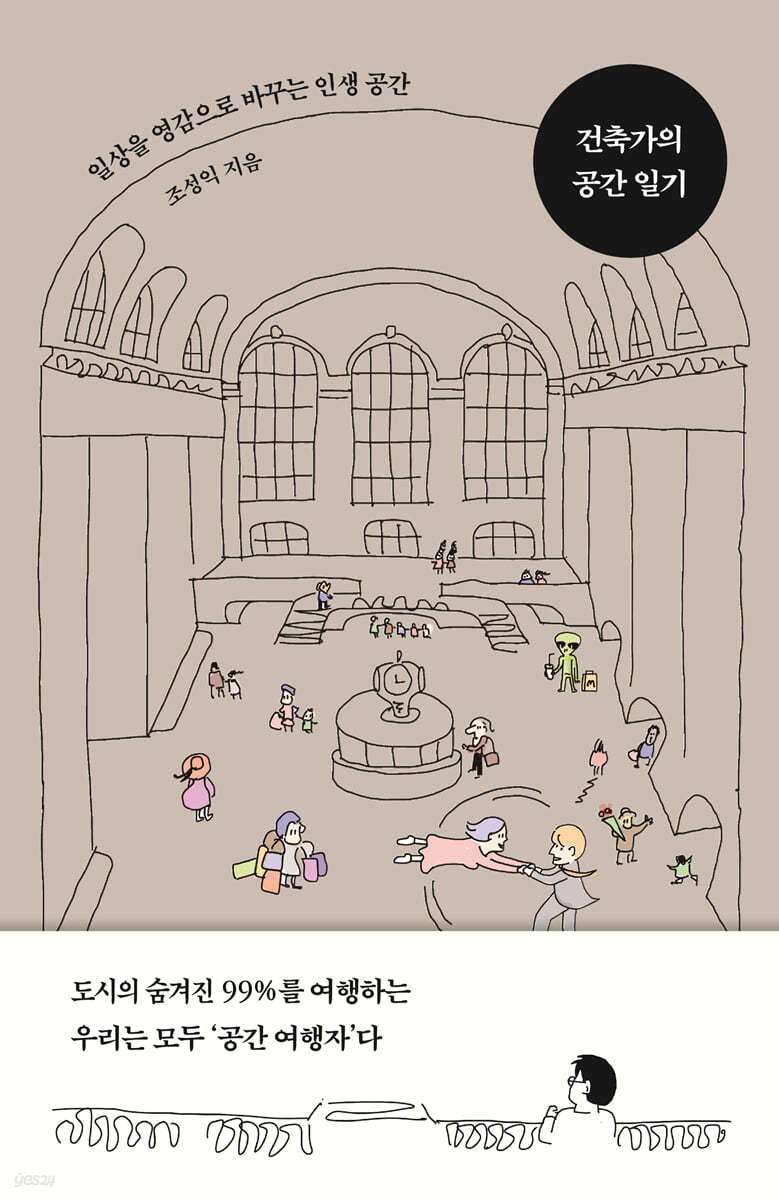 |
Description
Book Introduction
“Life space is everywhere, it just hasn’t been discovered yet.”
A book for 'space travelers' who travel through the city's everyday life.
“I went on a pilgrimage to hot spots with my friends every weekend, but I couldn’t remember any of them afterwards.”, “I want to go somewhere after work, but I can’t think of a good place to go.”, “I feel sad when I open my photo album after a trip and only see photos of famous tourist spots.”
"An Architect's Space Diary" is a book that began with this regret.
The author of this book, Seongik Cho, is a professor who teaches architecture at a university and an architect who runs an architectural firm.
The author says that in these days when so many cool spaces are popping up, it's important to experience a variety of spaces, but first, listen carefully to the voices they convey.
The author suggests that the beginning of 'appreciating space' is to place oneself in a good space, listen to the voice of the space, and feel the changes in emotions and thoughts in the space.
This book teaches anyone with even the slightest interest in space how to easily recognize the voice of space, that is, how to enjoy space from their own perspective.
According to the author, true appreciation of space does not stop at enjoying space in one's own way.
As we place ourselves in a good space and listen to the good voices that the space delivers, our lives begin to change little by little.
Sometimes you have life-changing experiences.
This is the moment when you discover your own 'life space', as this book speaks of.
If you want to have your own meaningful spatial record, if you want to find inspiration and comfort in the everyday spaces you visit, if you want to fully enjoy the neighborhood and city you live in, this book, "An Architect's Space Diary," will be the starting point.
A book for 'space travelers' who travel through the city's everyday life.
“I went on a pilgrimage to hot spots with my friends every weekend, but I couldn’t remember any of them afterwards.”, “I want to go somewhere after work, but I can’t think of a good place to go.”, “I feel sad when I open my photo album after a trip and only see photos of famous tourist spots.”
"An Architect's Space Diary" is a book that began with this regret.
The author of this book, Seongik Cho, is a professor who teaches architecture at a university and an architect who runs an architectural firm.
The author says that in these days when so many cool spaces are popping up, it's important to experience a variety of spaces, but first, listen carefully to the voices they convey.
The author suggests that the beginning of 'appreciating space' is to place oneself in a good space, listen to the voice of the space, and feel the changes in emotions and thoughts in the space.
This book teaches anyone with even the slightest interest in space how to easily recognize the voice of space, that is, how to enjoy space from their own perspective.
According to the author, true appreciation of space does not stop at enjoying space in one's own way.
As we place ourselves in a good space and listen to the good voices that the space delivers, our lives begin to change little by little.
Sometimes you have life-changing experiences.
This is the moment when you discover your own 'life space', as this book speaks of.
If you want to have your own meaningful spatial record, if you want to find inspiration and comfort in the everyday spaces you visit, if you want to fully enjoy the neighborhood and city you live in, this book, "An Architect's Space Diary," will be the starting point.
- You can preview some of the book's contents.
Preview
index
prolog.
Life space is everywhere
1.
Put me in a good space
The Need for Slow Space: Le Thoronet Abbey, France | Anthracite, Seogyo-dong
A church in the heart of the city?: Trinity Church in New York | Seogyo-dong Catholic Cathedral
Reasons to Walk Through a Cemetery: Turku National Cemetery, Finland | Yanghwajin Foreign Missionary Cemetery in Hapjeong-dong
Markets that Celebrate the Seasons: Santa Caterina Market in Spain | Mangwon Market in Mangwon-dong
Handles, Handshakes Between Buildings: St. Ignatius Church, Seattle | TRU Architects, Seogyo-dong
2.
From everyday space to life space
Minor League Baseball Stadiums and Epiphany Spaces: Staten Island Ferryhawks Home Stadium | Ganghwado SSG Futures Field
If you want to immerse yourself, go to the immersive space: Paju Music Appreciation Room, Conchino Concrete | Seoul National University Classical Music Appreciation Room
The space for thought provided by analog space: Yeonhui-dong Fossett
There are people at the train station: New York Grand Central Terminal
A Space for Real Small Talk: Finland's Kulturi Sauna
The Impact of Your Regular Bars on Your Life: Sapporo Bar Haruya | Mangwon-dong Book Bar
Window Seat for the Perfect Reading: Exeter Library | Yeonhui-dong Tours Begin
The Art of Editing Gardens, Plants, and Emotions: Kyoto Ryoanji Temple | Jeju Garden Beke | Seogyo-dong Mother's Garden
3.
Finding the voice of my space
Master Architect's Pink House: Richard Rogers' London Home
The Experience of Inviting Others into My Space: Piero Fornasetti's Red Room | Bathroom at TRU Architects in Seogyo-dong
There's Nothing in Tom Sawyer's Hideout: Bogildo Dongcheonseoksil | Yumyeongsan Natural Recreation Forest Cabin
One Night, Time Turned into Space: Alain de Botton's Living Architecture | Eungam-dong Journey
You can't choose a neighborhood by its bakery: Monocle's livable city | Hong Eun-dong's best bagels
How to Explore the Hidden 99% of the City: Patrizia's Apartment in Italy | Jang Bol's House in Gapyeong
Epilogue: We Are All Space Travelers
Places featured in the Index Space Diary
Life space is everywhere
1.
Put me in a good space
The Need for Slow Space: Le Thoronet Abbey, France | Anthracite, Seogyo-dong
A church in the heart of the city?: Trinity Church in New York | Seogyo-dong Catholic Cathedral
Reasons to Walk Through a Cemetery: Turku National Cemetery, Finland | Yanghwajin Foreign Missionary Cemetery in Hapjeong-dong
Markets that Celebrate the Seasons: Santa Caterina Market in Spain | Mangwon Market in Mangwon-dong
Handles, Handshakes Between Buildings: St. Ignatius Church, Seattle | TRU Architects, Seogyo-dong
2.
From everyday space to life space
Minor League Baseball Stadiums and Epiphany Spaces: Staten Island Ferryhawks Home Stadium | Ganghwado SSG Futures Field
If you want to immerse yourself, go to the immersive space: Paju Music Appreciation Room, Conchino Concrete | Seoul National University Classical Music Appreciation Room
The space for thought provided by analog space: Yeonhui-dong Fossett
There are people at the train station: New York Grand Central Terminal
A Space for Real Small Talk: Finland's Kulturi Sauna
The Impact of Your Regular Bars on Your Life: Sapporo Bar Haruya | Mangwon-dong Book Bar
Window Seat for the Perfect Reading: Exeter Library | Yeonhui-dong Tours Begin
The Art of Editing Gardens, Plants, and Emotions: Kyoto Ryoanji Temple | Jeju Garden Beke | Seogyo-dong Mother's Garden
3.
Finding the voice of my space
Master Architect's Pink House: Richard Rogers' London Home
The Experience of Inviting Others into My Space: Piero Fornasetti's Red Room | Bathroom at TRU Architects in Seogyo-dong
There's Nothing in Tom Sawyer's Hideout: Bogildo Dongcheonseoksil | Yumyeongsan Natural Recreation Forest Cabin
One Night, Time Turned into Space: Alain de Botton's Living Architecture | Eungam-dong Journey
You can't choose a neighborhood by its bakery: Monocle's livable city | Hong Eun-dong's best bagels
How to Explore the Hidden 99% of the City: Patrizia's Apartment in Italy | Jang Bol's House in Gapyeong
Epilogue: We Are All Space Travelers
Places featured in the Index Space Diary
Into the book
When we put ourselves in a good space and listen to the good voice that the space gives us, our lives begin to change little by little.
Sometimes you have life-changing experiences.
If a movie or a song can have that kind of power, why wouldn't the space surrounding my body have that kind of power?
At first, your eyes are drawn to the beauty of the space, but as time passes, the virtue of the space is absorbed into your body.
Once you learn to listen to the voice of space, moving through space becomes much more enjoyable.
When recommending a good space to a friend, you will be able to more easily convey the description and feelings of the space.
The ultimate goal of this book is to help each person find their own space in life based on the changes in emotions and thoughts that space brings about.
---From the "Prologue"
Understated decor, changing sunlight, and light amplifiers.
These three are the components of slow space that allows you to experience space emptiness.
Now that we know the components, wouldn't it be possible to explore space without having to go far if we could find spaces around us that possess these three elements? It sounds like a gimmick, but unfortunately, such spaces aren't common.
In fact, most of them are quite the opposite.
Take a look around the spaces you frequent, such as your office, home, or cafe.
There are objects that distract the view, and curtains are drawn on the windows to block out the changing sunlight and maintain a constant level of illumination.
Moreover, the walls are smoothly finished with paint and wallpaper.
Hamheung Naengmyeon is more colorful and stimulating than Pyongyang Naengmyeon.
---From "The Need for Slow Space"
Living in a city surrounded by gray buildings and beige wallpaper, it's hard to experience such dramatic seasonal changes.
Unlike nature, the virtue of man-made spaces is their durability, which means they maintain the same shape and color over time.
As a result, city dwellers walk along cherry blossom paths and pass through crowded highways to enjoy the autumn foliage, all in the name of the season.
To cultivate purity, vitality, awe, and patience, we must spend spring like spring and summer like summer.
The same goes for fall and winter.
One easy way to spend that time appropriately is to move to a space that evokes the feeling of the season, as mentioned earlier.
We all need to have at least one place on our list of favorite places where we can experience the changing seasons.
---From "The Market that Builds a Monument to the Seasons"
Watching the Staten Island Ferryhawks play against the Futures League, I experienced a new genre called "loose spectacle."
I used to think baseball was all about intense competition, flashy plays, and thrilling comebacks, but I've come to realize that there's a side to baseball that can be enjoyed like a passing scene.
And it was a pretty good experience, as loud and exciting as a baseball game can be.
Wasn't it this 'loose spectacle' that gave birth to today's novelist Haruki?
A double that happened while lying down drinking beer in the empty outfield.
It was by capturing that one moment that I made the most important decision of my life.
The key point here is that the match wasn't a thrilling, eye-popping affair.
If the final had been held in front of a full house, Haruki might still be working as his former job as the owner of a jazz bar.
---From "Minor League Baseball Stadium and the Space of Epiphany"
During my stay in Finland, I also went to the sauna every evening.
The most impressive sauna I've ever been to was Helsinki's 'Kulturi Sauna'.
Coolturi means culture, so it is called 'cultural sauna'.
Cultural sauna… .
I feel like I've seen this name at the bathhouse in my neighborhood.
Upon entering the entrance, there is a front desk where you can collect an entrance fee, just like in our country. A tall Finnish man, about 2 meters tall, and a short Japanese woman greet guests.
The two are a married couple who create and operate Coolturi Sauna.
His original occupation was an architect and designer.
Somehow, the space design was extraordinary.
The exterior of the bathhouse is lined with white columns, resembling a Greek temple, while the interior is a dark, understated space reminiscent of a traditional Japanese teahouse.
The atmosphere inside makes sitting in the sauna feel like entering a small religious temple.
In the damp, dark space, I warm my body by looking at a ray of light coming in through the window.
After enduring the pain of the hot steam, I throw myself into the cold sea in front of the sauna.
As you repeat this action, you will feel the accumulated fatigue disappear and your soul will be purified.
---From "A Space for True Small Talk"
The most important condition for a regular bar is a sense of belonging.
What makes the bookstore special is its concept.
As the name suggests, it is a beach where you can read books and drink alcohol.
When you enter the store, most of the customers are quietly reading books and sipping alcohol.
If you like reading, you will be attracted to other people who like reading.
The single link of being a book lover creates a sense of connection and belonging among the people here.
There's no need to even say anything.
Becoming one through sharing silence.
Creating a quiet bond between customers is the biggest challenge for the bar industry, and Book Bar has found the fantastical connection between alcohol and books.
---From "The Impact of Your Regular Bar on Your Life"
It is true that in order to decorate a space that resembles me, I must start from my taste.
But that taste is not necessarily a preference for 1950s Nordic chairs.
What really matters is 'what I want to do' through that Nordic chair.
Choosing the right chairs allows family members to have more conversations.
Picking the right bathroom paint to make your friends laugh when you invite them over for dinner.
Yes, that's right.
It's not a matter of unique interior design.
The question is, 'Are the things I value happening through the interior?'
---From "The Master Architect's Pink House"
When choosing a stay, one thing to consider is what kind of life the house offers.
My familiar home, where I have always been, is the origin of my spatial experience.
To step away from the familiar starting point for a moment and place myself in an unknown coordinate, an unknown house.
And then, surrendering to the routine that the house has prepared for you, observe the changes that occur within you.
As we explore homes like this, we often come across homes that resonate more deeply with the happiness we desire.
My understanding of life expands through the space of travel.
---From "If One Night Weaves Time into Space"
There is no rule that says only architects have to write space diaries.
If you are not comfortable drawing, you don't have to draw.
When you take photos and post them on Instagram, you can create your own space diary by simply writing down a brief description of the space and the changes in your actions and emotions.
If even that is difficult, it is enough to simply observe for a moment what is causing changes in my behavior and emotions here.
The important thing is to take a moment to savor the flavor before putting the soup in your mouth.
“There is nothing more sad than wanting to go somewhere after work but having nowhere to go.” This is what I heard from a working woman while I was writing this book.
Yes, that's right.
It's lonely just going back and forth between home and work.
A repetitive movement between work and life.
In the meantime, I think the secret to a happier life is to discover, one by one, the spaces of seasonal feeling mentioned in this book, the spaces experienced with the five senses, and the spaces of Tom Sawyer's adventures, and to enjoy the emotions that these spaces bring in my own way.
Sometimes you have life-changing experiences.
If a movie or a song can have that kind of power, why wouldn't the space surrounding my body have that kind of power?
At first, your eyes are drawn to the beauty of the space, but as time passes, the virtue of the space is absorbed into your body.
Once you learn to listen to the voice of space, moving through space becomes much more enjoyable.
When recommending a good space to a friend, you will be able to more easily convey the description and feelings of the space.
The ultimate goal of this book is to help each person find their own space in life based on the changes in emotions and thoughts that space brings about.
---From the "Prologue"
Understated decor, changing sunlight, and light amplifiers.
These three are the components of slow space that allows you to experience space emptiness.
Now that we know the components, wouldn't it be possible to explore space without having to go far if we could find spaces around us that possess these three elements? It sounds like a gimmick, but unfortunately, such spaces aren't common.
In fact, most of them are quite the opposite.
Take a look around the spaces you frequent, such as your office, home, or cafe.
There are objects that distract the view, and curtains are drawn on the windows to block out the changing sunlight and maintain a constant level of illumination.
Moreover, the walls are smoothly finished with paint and wallpaper.
Hamheung Naengmyeon is more colorful and stimulating than Pyongyang Naengmyeon.
---From "The Need for Slow Space"
Living in a city surrounded by gray buildings and beige wallpaper, it's hard to experience such dramatic seasonal changes.
Unlike nature, the virtue of man-made spaces is their durability, which means they maintain the same shape and color over time.
As a result, city dwellers walk along cherry blossom paths and pass through crowded highways to enjoy the autumn foliage, all in the name of the season.
To cultivate purity, vitality, awe, and patience, we must spend spring like spring and summer like summer.
The same goes for fall and winter.
One easy way to spend that time appropriately is to move to a space that evokes the feeling of the season, as mentioned earlier.
We all need to have at least one place on our list of favorite places where we can experience the changing seasons.
---From "The Market that Builds a Monument to the Seasons"
Watching the Staten Island Ferryhawks play against the Futures League, I experienced a new genre called "loose spectacle."
I used to think baseball was all about intense competition, flashy plays, and thrilling comebacks, but I've come to realize that there's a side to baseball that can be enjoyed like a passing scene.
And it was a pretty good experience, as loud and exciting as a baseball game can be.
Wasn't it this 'loose spectacle' that gave birth to today's novelist Haruki?
A double that happened while lying down drinking beer in the empty outfield.
It was by capturing that one moment that I made the most important decision of my life.
The key point here is that the match wasn't a thrilling, eye-popping affair.
If the final had been held in front of a full house, Haruki might still be working as his former job as the owner of a jazz bar.
---From "Minor League Baseball Stadium and the Space of Epiphany"
During my stay in Finland, I also went to the sauna every evening.
The most impressive sauna I've ever been to was Helsinki's 'Kulturi Sauna'.
Coolturi means culture, so it is called 'cultural sauna'.
Cultural sauna… .
I feel like I've seen this name at the bathhouse in my neighborhood.
Upon entering the entrance, there is a front desk where you can collect an entrance fee, just like in our country. A tall Finnish man, about 2 meters tall, and a short Japanese woman greet guests.
The two are a married couple who create and operate Coolturi Sauna.
His original occupation was an architect and designer.
Somehow, the space design was extraordinary.
The exterior of the bathhouse is lined with white columns, resembling a Greek temple, while the interior is a dark, understated space reminiscent of a traditional Japanese teahouse.
The atmosphere inside makes sitting in the sauna feel like entering a small religious temple.
In the damp, dark space, I warm my body by looking at a ray of light coming in through the window.
After enduring the pain of the hot steam, I throw myself into the cold sea in front of the sauna.
As you repeat this action, you will feel the accumulated fatigue disappear and your soul will be purified.
---From "A Space for True Small Talk"
The most important condition for a regular bar is a sense of belonging.
What makes the bookstore special is its concept.
As the name suggests, it is a beach where you can read books and drink alcohol.
When you enter the store, most of the customers are quietly reading books and sipping alcohol.
If you like reading, you will be attracted to other people who like reading.
The single link of being a book lover creates a sense of connection and belonging among the people here.
There's no need to even say anything.
Becoming one through sharing silence.
Creating a quiet bond between customers is the biggest challenge for the bar industry, and Book Bar has found the fantastical connection between alcohol and books.
---From "The Impact of Your Regular Bar on Your Life"
It is true that in order to decorate a space that resembles me, I must start from my taste.
But that taste is not necessarily a preference for 1950s Nordic chairs.
What really matters is 'what I want to do' through that Nordic chair.
Choosing the right chairs allows family members to have more conversations.
Picking the right bathroom paint to make your friends laugh when you invite them over for dinner.
Yes, that's right.
It's not a matter of unique interior design.
The question is, 'Are the things I value happening through the interior?'
---From "The Master Architect's Pink House"
When choosing a stay, one thing to consider is what kind of life the house offers.
My familiar home, where I have always been, is the origin of my spatial experience.
To step away from the familiar starting point for a moment and place myself in an unknown coordinate, an unknown house.
And then, surrendering to the routine that the house has prepared for you, observe the changes that occur within you.
As we explore homes like this, we often come across homes that resonate more deeply with the happiness we desire.
My understanding of life expands through the space of travel.
---From "If One Night Weaves Time into Space"
There is no rule that says only architects have to write space diaries.
If you are not comfortable drawing, you don't have to draw.
When you take photos and post them on Instagram, you can create your own space diary by simply writing down a brief description of the space and the changes in your actions and emotions.
If even that is difficult, it is enough to simply observe for a moment what is causing changes in my behavior and emotions here.
The important thing is to take a moment to savor the flavor before putting the soup in your mouth.
“There is nothing more sad than wanting to go somewhere after work but having nowhere to go.” This is what I heard from a working woman while I was writing this book.
Yes, that's right.
It's lonely just going back and forth between home and work.
A repetitive movement between work and life.
In the meantime, I think the secret to a happier life is to discover, one by one, the spaces of seasonal feeling mentioned in this book, the spaces experienced with the five senses, and the spaces of Tom Sawyer's adventures, and to enjoy the emotions that these spaces bring in my own way.
---From the "Epilogue"
Publisher's Review
“Life space is everywhere.
“It just hasn’t been discovered yet”
For those looking for a warm place rather than a hot place,
For those who want to enjoy space in their own way,
An architect's suggestion for a way to appreciate your own space!
An architect's personal record of space, written while exploring and savoring it.
A space appreciation method for those who want to enjoy space from their own perspective.
A space that will satisfy your taste buds for the weekend, a unique and quaint music bar, and an unusual exhibition space that changes according to the theme…
As people's interest in space grows, the number of cool and unique spaces is increasing every day.
But even though we live in an age where the list of places we want to visit is as long as the list of things we want to own, it's not easy to find a place that leaves a lasting impression.
Even if you find a space you like, explaining why isn't easy.
Most people come back with similar impressions, such as, “It was spacious and not crowded, so the atmosphere was pleasant.”
"An Architect's Space Diary" provides a "space appreciation method" for those who want to enjoy space from their own perspective.
The term “space appreciation” may sound unfamiliar, and a book written by an architect may seem a bit grandiose. However, as the title “An Architect’s Space Diary” suggests, this book is based on a friendly and personal record.
The author, an architect who designs buildings and teaches architecture at a university, has written and illustrated, whenever he encounters a good space, the design method of that space and the emotional changes he feels there. This record became the beginning of this book.
As I travel between masterpieces of foreign spaces seen through the eyes of an architect and everyday spaces in Korea experienced as a space traveler, I gradually become immersed in the charm of a space diary.
It is also fun to enjoy the pictures drawn by the author himself.
The author does not simply introduce places he has visited and enjoyed, but rather, based on his own experiences and thoughts, talks about how our lives change when we place ourselves in a good space, savor the space, and listen to the voices it gives us.
A space to reflect on your tired body and mind, an emotional refuge to relieve stress, a space for everyday life where you can foster quiet bonds, a place of immersion that helps you regain focus, an inspirational space that allows you to look at your ordinary daily life again…
This is all about discovering the 'space of life' that this book talks about, and the moment of enjoying the space in my own way.
An architect's journey: placing myself in a good space, listening to the voice of the space, and finding my own space.
The moment we enjoy the emotions that space gives us in our own way, we become a little happier!
This book, “An Architect’s Space Diary,” is a proposal for a new way to appreciate space and also an architect’s travel method.
As you follow the author's journey to discover life spaces in your own neighborhood—spaces for small talk, spaces for walking to discover everyday insights, spaces for immersion, spaces for erecting seasonal monuments, and analog spaces—you'll find yourself drawing your own map of life spaces.
This also helps me to understand what kind of space I can be most myself in.
“Just as there are people whose hobbies are music appreciation and art appreciation, the number of people whose hobbies are space appreciation is increasing through this book.
And sharing the life space you discovered from your own perspective with others.
“I wrote this book with a simple but ambitious imagination.” - From the author’s words.
This book begins with the virtues that good spaces impart to us, but ultimately ends with a story about the people we meet in those spaces.
The reason we love putting ourselves in good spaces and find comfort in them is because spaces embrace ‘people.’
Space is a stage where I face myself and encounter others.
Among the 99% of everyday spaces that fill the city, we are lucky enough to find one and make it our own favorite cafe, decorate it as our own home, and invite friends.
As we spend time in space like this, we grow, and as time accumulates in space, our everyday space becomes our life space.
Increasing even just one more space in life and enjoying the emotions that space brings in your own way is the 'happiness of space' that this book proposes.
It's entirely up to you whether you will become an active space traveler who listens to the joys of everyday life.
“Life space is everywhere.
“While waiting for our discovery.”
“It just hasn’t been discovered yet”
For those looking for a warm place rather than a hot place,
For those who want to enjoy space in their own way,
An architect's suggestion for a way to appreciate your own space!
An architect's personal record of space, written while exploring and savoring it.
A space appreciation method for those who want to enjoy space from their own perspective.
A space that will satisfy your taste buds for the weekend, a unique and quaint music bar, and an unusual exhibition space that changes according to the theme…
As people's interest in space grows, the number of cool and unique spaces is increasing every day.
But even though we live in an age where the list of places we want to visit is as long as the list of things we want to own, it's not easy to find a place that leaves a lasting impression.
Even if you find a space you like, explaining why isn't easy.
Most people come back with similar impressions, such as, “It was spacious and not crowded, so the atmosphere was pleasant.”
"An Architect's Space Diary" provides a "space appreciation method" for those who want to enjoy space from their own perspective.
The term “space appreciation” may sound unfamiliar, and a book written by an architect may seem a bit grandiose. However, as the title “An Architect’s Space Diary” suggests, this book is based on a friendly and personal record.
The author, an architect who designs buildings and teaches architecture at a university, has written and illustrated, whenever he encounters a good space, the design method of that space and the emotional changes he feels there. This record became the beginning of this book.
As I travel between masterpieces of foreign spaces seen through the eyes of an architect and everyday spaces in Korea experienced as a space traveler, I gradually become immersed in the charm of a space diary.
It is also fun to enjoy the pictures drawn by the author himself.
The author does not simply introduce places he has visited and enjoyed, but rather, based on his own experiences and thoughts, talks about how our lives change when we place ourselves in a good space, savor the space, and listen to the voices it gives us.
A space to reflect on your tired body and mind, an emotional refuge to relieve stress, a space for everyday life where you can foster quiet bonds, a place of immersion that helps you regain focus, an inspirational space that allows you to look at your ordinary daily life again…
This is all about discovering the 'space of life' that this book talks about, and the moment of enjoying the space in my own way.
An architect's journey: placing myself in a good space, listening to the voice of the space, and finding my own space.
The moment we enjoy the emotions that space gives us in our own way, we become a little happier!
This book, “An Architect’s Space Diary,” is a proposal for a new way to appreciate space and also an architect’s travel method.
As you follow the author's journey to discover life spaces in your own neighborhood—spaces for small talk, spaces for walking to discover everyday insights, spaces for immersion, spaces for erecting seasonal monuments, and analog spaces—you'll find yourself drawing your own map of life spaces.
This also helps me to understand what kind of space I can be most myself in.
“Just as there are people whose hobbies are music appreciation and art appreciation, the number of people whose hobbies are space appreciation is increasing through this book.
And sharing the life space you discovered from your own perspective with others.
“I wrote this book with a simple but ambitious imagination.” - From the author’s words.
This book begins with the virtues that good spaces impart to us, but ultimately ends with a story about the people we meet in those spaces.
The reason we love putting ourselves in good spaces and find comfort in them is because spaces embrace ‘people.’
Space is a stage where I face myself and encounter others.
Among the 99% of everyday spaces that fill the city, we are lucky enough to find one and make it our own favorite cafe, decorate it as our own home, and invite friends.
As we spend time in space like this, we grow, and as time accumulates in space, our everyday space becomes our life space.
Increasing even just one more space in life and enjoying the emotions that space brings in your own way is the 'happiness of space' that this book proposes.
It's entirely up to you whether you will become an active space traveler who listens to the joys of everyday life.
“Life space is everywhere.
“While waiting for our discovery.”
GOODS SPECIFICS
- Date of issue: May 27, 2024
- Page count, weight, size: 248 pages | 418g | 130*200*17mm
- ISBN13: 9791193063484
- ISBN10: 1193063485
You may also like
카테고리
korean


korean

![GQ KOREA Mark (Monthly): December [2025]](http://librairie.coreenne.fr/cdn/shop/files/8ef265dbbfbf186523ed75ba7319009d.jpg?v=1765340328&width=3840)


