

My Cultural Heritage Tour Japan Part 2: Asuka and Nara
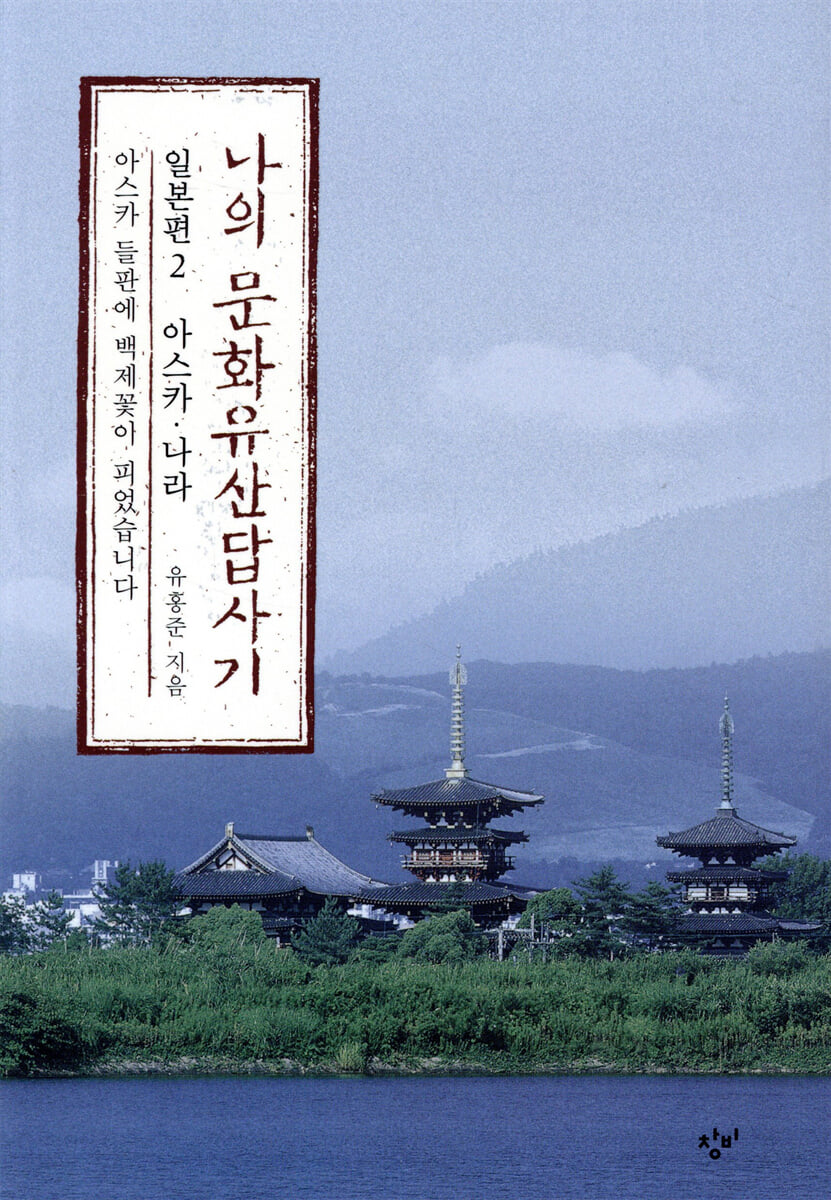 |
Description
Book Introduction
Yoo Hong-jun's fresh perspective reveals the roots and essence of Japanese culture.
The 2020 revised edition of "My Cultural Heritage Tour" Japan Edition has been published!
Starting with the first volume, "Namdo Exploration No. 1" in 1993, and continuing with the seventh volume, "Jeju" in 2012, "Where is Dolhareubang, the Sensei Gwang?" in Jeju, Yoo Hong-jun's "My Cultural Heritage Exploration," which has been loved by 3.3 million readers for 20 years and recorded as the first million-seller in Korean humanities, is now heading to Japan in search of "Korean culture in Japan" and "the essence of Japanese culture."
The Japan edition of 'Research Report' began with the intention of approaching the issue of past history, which has been a major topic in Korea-Japan relations, from a cultural-historical perspective. It searches for traces of Korea's cultural influence on Japan and explores the process by which Japanese culture blossomed on that basis.
The author, who is well-versed in art history and cultural heritage, argues that it is future-oriented to shed the one-sided historical perceptions and complexes of Korea and Japan and to understand history from a bilateral perspective, and even from an East Asian perspective.
If the domestic edition of 'Dapjagi' contributed to promoting the cultural heritage of our country and encouraging appreciation for it, the recently published Japanese edition confirms the cultural excellence of our ancestors through Japan's cultural heritage and awakens us to the true nature of cultures that develop through mutual exchange and intermingling.
The Japanese edition of 'Dapsagi' has been consistently loved by many readers since its first publication in 2013.
However, many people said that the book was too large and heavy to be used as a practical guide for overseas field trips.
Accordingly, the new format applied from the ‘Dapsagi’ mountain temple pilgrimage section was also used in this revised Japanese edition, and the length of each volume was adjusted to re-edit it into 5 volumes.
The newly reborn "Travelogue" Japan edition, with its smaller size and hand-held design, is a vivid storybook that alleviates the regret of Japan, a place that has become difficult to visit recently for various reasons. It will approach readers as a guide that faithfully captures the historical awareness that forms the foundation of Korea-Japan relations, especially the consideration of cultural influence and exchange.
The 2020 revised edition of "My Cultural Heritage Tour" Japan Edition has been published!
Starting with the first volume, "Namdo Exploration No. 1" in 1993, and continuing with the seventh volume, "Jeju" in 2012, "Where is Dolhareubang, the Sensei Gwang?" in Jeju, Yoo Hong-jun's "My Cultural Heritage Exploration," which has been loved by 3.3 million readers for 20 years and recorded as the first million-seller in Korean humanities, is now heading to Japan in search of "Korean culture in Japan" and "the essence of Japanese culture."
The Japan edition of 'Research Report' began with the intention of approaching the issue of past history, which has been a major topic in Korea-Japan relations, from a cultural-historical perspective. It searches for traces of Korea's cultural influence on Japan and explores the process by which Japanese culture blossomed on that basis.
The author, who is well-versed in art history and cultural heritage, argues that it is future-oriented to shed the one-sided historical perceptions and complexes of Korea and Japan and to understand history from a bilateral perspective, and even from an East Asian perspective.
If the domestic edition of 'Dapjagi' contributed to promoting the cultural heritage of our country and encouraging appreciation for it, the recently published Japanese edition confirms the cultural excellence of our ancestors through Japan's cultural heritage and awakens us to the true nature of cultures that develop through mutual exchange and intermingling.
The Japanese edition of 'Dapsagi' has been consistently loved by many readers since its first publication in 2013.
However, many people said that the book was too large and heavy to be used as a practical guide for overseas field trips.
Accordingly, the new format applied from the ‘Dapsagi’ mountain temple pilgrimage section was also used in this revised Japanese edition, and the length of each volume was adjusted to re-edit it into 5 volumes.
The newly reborn "Travelogue" Japan edition, with its smaller size and hand-held design, is a vivid storybook that alleviates the regret of Japan, a place that has become difficult to visit recently for various reasons. It will approach readers as a guide that faithfully captures the historical awareness that forms the foundation of Korea-Japan relations, especially the consideration of cultural influence and exchange.
- You can preview some of the book's contents.
Preview
index
Asuka and Nara Tour: Traces of an Immigrant Culture
Part 1 Asuka
Near Asuka: The Immigration and Pioneer History of Baekje and Gaya People
Takamatsu Tomb and Stone Stage: A Camellia Offered to the Doraein Shrine
Gyulsawa and Asukasa: Kudara flowers are in bloom in the Asuka fields.
Horyuji Temple in Ikaruga: I couldn't stay here long.
Part 2 Country
The country's famous sites and museums: Here you can see our past.
Heungboksa Temple: A Beauty Untouched Even by the Anti-Buddhist Movement
Dongdaesa: When you go to Dongdaesa, go up to Samwoldang.
Pharmacist and Tangchojesa: The bronze pagoda sings and the statue breathes
supplement
Tour schedule and guide map
Part 1 Asuka
Near Asuka: The Immigration and Pioneer History of Baekje and Gaya People
Takamatsu Tomb and Stone Stage: A Camellia Offered to the Doraein Shrine
Gyulsawa and Asukasa: Kudara flowers are in bloom in the Asuka fields.
Horyuji Temple in Ikaruga: I couldn't stay here long.
Part 2 Country
The country's famous sites and museums: Here you can see our past.
Heungboksa Temple: A Beauty Untouched Even by the Anti-Buddhist Movement
Dongdaesa: When you go to Dongdaesa, go up to Samwoldang.
Pharmacist and Tangchojesa: The bronze pagoda sings and the statue breathes
supplement
Tour schedule and guide map
Publisher's Review
The pinnacle of Japanese Buddhism and ancient culture
In Volume 2 of the Japan edition, "Baekje Flowers Blossomed in the Asuka Fields," we visit the ancient temples of the Asuka and Nara regions and trace the footsteps of the immigrants who introduced Buddhism to Japan and helped to create a brilliant Japanese Buddhist culture, including Buddhist statues and architecture.
In the Asuka region, there are clear traces of the pottery culture brought by the Gaya people in the 5th century, known as “Near Asuka,” and we will visit Seokmudae, Gyulsa Temple, Asukasa Temple, and Horyuji Temple, following the process of the Baekje people bringing Buddhism and Chinese character culture.
The cultural achievements left by the Korean immigrants in ancient Japanese society are condensed and displayed at Horyuji Temple in northern Asuka.
Horyuji Temple is the flower of ancient Japanese culture, and at the same time, it shows the architecture and sculptures of Baekje, which cannot be found on the Korean Peninsula.
All that aside, the architecture and Buddhist statues of Horyuji Temple are so beautiful that they deserve to be a UNESCO World Heritage Site.
―Japan Volume 2, "Asuka and Nara Field Trip: Traces of an Adventist Culture"
In the Nara region, we will visit Yakushi-ji Temple, Kofuku-ji Temple, Todai-ji Temple, and Tango-chodai-ji Temple, which are sites of the Nara period, the pinnacle of ancient Japanese culture, and trace the traces of the immigrant craftsmen and monks.
However, the author's perspective does not fall into nationalistic narrow-mindedness.
It is noteworthy that Japan not only emphasizes the influence it received from Korea, but also recognizes and evaluates the cultural excellence it has achieved on its own.
During the Nara period, Japan transcended the influence of the Korean Peninsula and developed its own unique culture, even developing an international cultural sensibility.
The author, who praises Japan's growth potential, says, "As a member of East Asia, we have no reason to be stingy in appreciating the cultural achievements of our neighboring country, Japan."
A friendly travel guide to Japan and a solid introduction to Japanese studies.
"Travelogue," which opened a new chapter in the comprehensive humanities and liberal arts by combining people, art, and history, continues to achieve this in this Japan edition, encompassing a wealth of content that truly helps us understand Japan, including its history, culture, people, and art.
Additionally, to help readers who wish to connect this understanding with actual experience, we have included a map for an actual field trip and an itinerary for a three-night, four-day trip to Asuka and Nara as an appendix.
As can be seen from the records created by the great journey of the domestic 'Travelogue' over the past 20 years, as Professor Emeritus Baek Nak-cheong of Seoul National University, who wrote the recommendation for the Japanese edition, put it, 'Travelogue' is by no means "a one-time bestseller that rises and falls with the trend," but a towering steady seller that has been loved by readers for a long time, and this Japanese edition in particular is an important achievement that contains "a sincere desire to illuminate the darkness of Korea-Japan relations with the power of culture."
In Volume 2 of the Japan edition, "Baekje Flowers Blossomed in the Asuka Fields," we visit the ancient temples of the Asuka and Nara regions and trace the footsteps of the immigrants who introduced Buddhism to Japan and helped to create a brilliant Japanese Buddhist culture, including Buddhist statues and architecture.
In the Asuka region, there are clear traces of the pottery culture brought by the Gaya people in the 5th century, known as “Near Asuka,” and we will visit Seokmudae, Gyulsa Temple, Asukasa Temple, and Horyuji Temple, following the process of the Baekje people bringing Buddhism and Chinese character culture.
The cultural achievements left by the Korean immigrants in ancient Japanese society are condensed and displayed at Horyuji Temple in northern Asuka.
Horyuji Temple is the flower of ancient Japanese culture, and at the same time, it shows the architecture and sculptures of Baekje, which cannot be found on the Korean Peninsula.
All that aside, the architecture and Buddhist statues of Horyuji Temple are so beautiful that they deserve to be a UNESCO World Heritage Site.
―Japan Volume 2, "Asuka and Nara Field Trip: Traces of an Adventist Culture"
In the Nara region, we will visit Yakushi-ji Temple, Kofuku-ji Temple, Todai-ji Temple, and Tango-chodai-ji Temple, which are sites of the Nara period, the pinnacle of ancient Japanese culture, and trace the traces of the immigrant craftsmen and monks.
However, the author's perspective does not fall into nationalistic narrow-mindedness.
It is noteworthy that Japan not only emphasizes the influence it received from Korea, but also recognizes and evaluates the cultural excellence it has achieved on its own.
During the Nara period, Japan transcended the influence of the Korean Peninsula and developed its own unique culture, even developing an international cultural sensibility.
The author, who praises Japan's growth potential, says, "As a member of East Asia, we have no reason to be stingy in appreciating the cultural achievements of our neighboring country, Japan."
A friendly travel guide to Japan and a solid introduction to Japanese studies.
"Travelogue," which opened a new chapter in the comprehensive humanities and liberal arts by combining people, art, and history, continues to achieve this in this Japan edition, encompassing a wealth of content that truly helps us understand Japan, including its history, culture, people, and art.
Additionally, to help readers who wish to connect this understanding with actual experience, we have included a map for an actual field trip and an itinerary for a three-night, four-day trip to Asuka and Nara as an appendix.
As can be seen from the records created by the great journey of the domestic 'Travelogue' over the past 20 years, as Professor Emeritus Baek Nak-cheong of Seoul National University, who wrote the recommendation for the Japanese edition, put it, 'Travelogue' is by no means "a one-time bestseller that rises and falls with the trend," but a towering steady seller that has been loved by readers for a long time, and this Japanese edition in particular is an important achievement that contains "a sincere desire to illuminate the darkness of Korea-Japan relations with the power of culture."
GOODS SPECIFICS
- Date of issue: September 20, 2020
- Page count, weight, size: 316 pages | 496g | 148*214*18mm
- ISBN13: 9788936477998
- ISBN10: 8936477994
You may also like
카테고리
korean


korean

![GQ KOREA Mark (Monthly): December [2025]](http://librairie.coreenne.fr/cdn/shop/files/8ef265dbbfbf186523ed75ba7319009d.jpg?v=1765340328&width=3840)


