

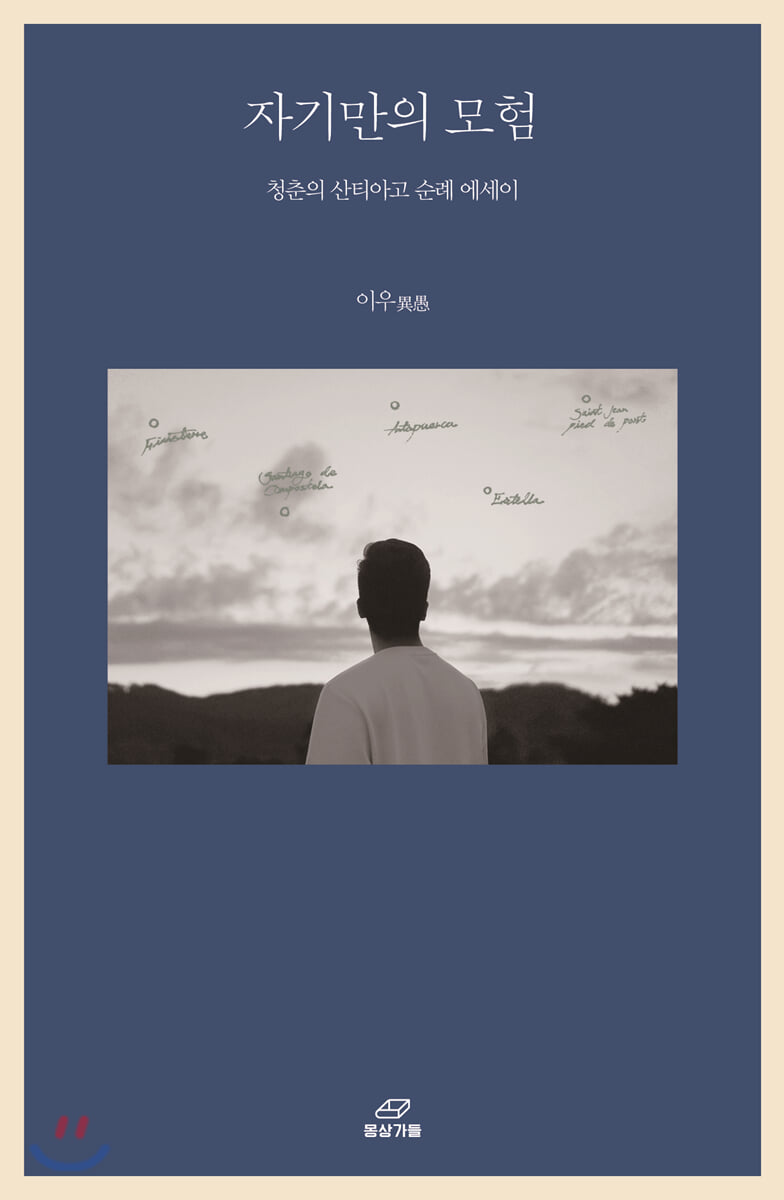
My own adventure
 |
Description
Book Introduction
『My Own Adventure』 is an essay collection that has already been selected for the ‘Weekly Magazine’ and ‘Brunch Recommended Works’ on Kakao Brunch.
Author Lee Woo's captivating story reached a whopping 150,000 readers during its serialization period.
His story is markedly different from the typical travel essay, which is written in a journal format.
Fifty stories, told through the eyes of an adventurer and novelist, contain profound reflections on the meaning of life, hopes and dreams, love and friendship through adventure.
Moreover, his vivid records are full of humanistic thoughts and romanticism.
Like a novel, the captivating sentences will guide readers into a world of adventure filled with unfamiliar sentiments.
Author Lee Woo's captivating story reached a whopping 150,000 readers during its serialization period.
His story is markedly different from the typical travel essay, which is written in a journal format.
Fifty stories, told through the eyes of an adventurer and novelist, contain profound reflections on the meaning of life, hopes and dreams, love and friendship through adventure.
Moreover, his vivid records are full of humanistic thoughts and romanticism.
Like a novel, the captivating sentences will guide readers into a world of adventure filled with unfamiliar sentiments.
- You can preview some of the book's contents.
Preview
index
Introduction: In Search of My Own Hero
Find the way
pilgrim
Pilgrimage to Santiago
Do you know the Tao?
unfamiliar entrance ceremony
A shell to fill
First Step
What I carried
Buen Camino
Albergue
A Pilgrim's Day
borderline
Teresa's smile
warm solitude
Amphoyas Familia
Why are you standing on the pilgrimage road?
straggler
One foolish thing
get lost
It was still heavy
The beginning of variation
Love on the Road
A Hot Night, and Beyond
oasis
The Golden Sea, Impatient Folly
Hwan Deuz Hwan
Cooking King
Lack of communication, silent conversation
Dear listener
A city, not a stage fit for pilgrims
Selection, Imitation, and Me
Cave paintings and milestones of friendship
Another name for ordeal, bedbugs
unspeakable pain
Walk backwards
A road I couldn't walk alone
About beautiful things
Jerome
I miss Eden today
Another foolishness
Finding Jacob on the Way of Jacob
fake pilgrims
true pilgrim
Why go west
My Santiago
I haven't finished my pilgrimage yet
Jewel of Santiago
Deciding to go on a pilgrimage to the end of the world
A week in Finisterre
Invisible milestones
After that
Acknowledgments: Concluding the Epic
Find the way
pilgrim
Pilgrimage to Santiago
Do you know the Tao?
unfamiliar entrance ceremony
A shell to fill
First Step
What I carried
Buen Camino
Albergue
A Pilgrim's Day
borderline
Teresa's smile
warm solitude
Amphoyas Familia
Why are you standing on the pilgrimage road?
straggler
One foolish thing
get lost
It was still heavy
The beginning of variation
Love on the Road
A Hot Night, and Beyond
oasis
The Golden Sea, Impatient Folly
Hwan Deuz Hwan
Cooking King
Lack of communication, silent conversation
Dear listener
A city, not a stage fit for pilgrims
Selection, Imitation, and Me
Cave paintings and milestones of friendship
Another name for ordeal, bedbugs
unspeakable pain
Walk backwards
A road I couldn't walk alone
About beautiful things
Jerome
I miss Eden today
Another foolishness
Finding Jacob on the Way of Jacob
fake pilgrims
true pilgrim
Why go west
My Santiago
I haven't finished my pilgrimage yet
Jewel of Santiago
Deciding to go on a pilgrimage to the end of the world
A week in Finisterre
Invisible milestones
After that
Acknowledgments: Concluding the Epic
Detailed image

Into the book
A wandering pilgrim in search of something romantic, something from some myth.
I wanted to be that kind of pilgrim.
--- p.19
Dreams I couldn't give up, unforgettable wounds, ever-growing shame, unpaid debts, and anxieties about an uncertain future were all wedged like moss between the old burdens.
So to speak, the luggage in the backpack was like a microcosm of life.
--- p.40
The loneliness of walking alone, cut off from the world and human relationships I had been living in, felt so romantic.
With that kind of romantic solitude, I felt like I could find what I wanted.
--- p.65
I wanted to meet people with completely different values than me, experience completely new things, and realize completely new things.
And I wanted to find a completely unfamiliar me in it.
--- p.107
I didn't want to reach Santiago, I didn't want to reach love.
In fact, I have always been at the crossroads of dreams and love.
What awaits me at the end of the path I have chosen?
Is that really more noble than love?
--- p.113
However, I wanted to be the freest member of the family, with the lightest sense of belonging.
--- p.126
Her presence and smile made it known to me.
It means that only when you stand in the world as you are, without any pretense, can you be loved.
--- p.139
If you break down a human personality, it will definitely be divided into pieces that belong to someone.
Humans are never born as inherent beings with deep personalities.
Individuality and identity are something that we form ourselves.
--- p.147
I wanted to be a balanced person.
I had no choice but to expand my options.
In the future, I will travel to unfamiliar places, meet more diverse people, and read more books.
There was definitely a beauty to be found on that journey.
--- p.147
When I arrived in Santiago, I felt like I would become something I had always dreamed of.
It felt like I was about to encounter something new and fantastic.
--- p.194
A strong desire to constantly seek, long for, and move forward toward something.
It was a variety of inertia characteristics that I had acquired with my whole body on the pilgrimage.
--- p.214
I stand shabby on the road, carrying the weight of life that I cannot throw away in my simple backpack.
Now it's time to move forward.
Silently and tirelessly, following the uncertain pull and invisible milestone called 'Santiago'.
I wanted to be that kind of pilgrim.
--- p.19
Dreams I couldn't give up, unforgettable wounds, ever-growing shame, unpaid debts, and anxieties about an uncertain future were all wedged like moss between the old burdens.
So to speak, the luggage in the backpack was like a microcosm of life.
--- p.40
The loneliness of walking alone, cut off from the world and human relationships I had been living in, felt so romantic.
With that kind of romantic solitude, I felt like I could find what I wanted.
--- p.65
I wanted to meet people with completely different values than me, experience completely new things, and realize completely new things.
And I wanted to find a completely unfamiliar me in it.
--- p.107
I didn't want to reach Santiago, I didn't want to reach love.
In fact, I have always been at the crossroads of dreams and love.
What awaits me at the end of the path I have chosen?
Is that really more noble than love?
--- p.113
However, I wanted to be the freest member of the family, with the lightest sense of belonging.
--- p.126
Her presence and smile made it known to me.
It means that only when you stand in the world as you are, without any pretense, can you be loved.
--- p.139
If you break down a human personality, it will definitely be divided into pieces that belong to someone.
Humans are never born as inherent beings with deep personalities.
Individuality and identity are something that we form ourselves.
--- p.147
I wanted to be a balanced person.
I had no choice but to expand my options.
In the future, I will travel to unfamiliar places, meet more diverse people, and read more books.
There was definitely a beauty to be found on that journey.
--- p.147
When I arrived in Santiago, I felt like I would become something I had always dreamed of.
It felt like I was about to encounter something new and fantastic.
--- p.194
A strong desire to constantly seek, long for, and move forward toward something.
It was a variety of inertia characteristics that I had acquired with my whole body on the pilgrimage.
--- p.214
I stand shabby on the road, carrying the weight of life that I cannot throw away in my simple backpack.
Now it's time to move forward.
Silently and tirelessly, following the uncertain pull and invisible milestone called 'Santiago'.
--- p.223
Publisher's Review
“A wandering pilgrim in search of something romantic, something from some myth.
“I wanted to be that kind of pilgrim.”
A captivating account of an adventurer who walked 900 kilometers on foot in search of dreams and romance.
“I wanted to become a pilgrim.
What is a pilgrim?
The dictionary defines it as 'a person who makes a pilgrimage to a holy place for religious purposes.'
But that wasn't the kind of pilgrim I wanted to be.
Rather, he was closer to a pioneer with grand goals, an explorer with a strong sense of adventure, and a dreamer who never lost sight of his dreams.
He was a romantic poet and a novelist with a sense of style.
Has there ever been such a pilgrim in the world?
No, I haven't heard or seen it.
So I decided to become that kind of person (…) and walked that path and arrived safely at the final destination.
You might be wondering.
So that's how you became a pilgrim.
I don't know either.
As we close the last chapter, I would like you to tell me:
“Was he really that kind of pilgrim?”
p.19 From “Do You Know the Way?”
『My Own Adventure』, a romantic prose piece that deeply reflects on life through adventure and seeks meaning in life, is a perfect reflection of Lee Woo's experiences on the Camino de Santiago pilgrimage he walked in 2015.
He did not want his journey to be colored as a 'pilgrimage'.
Because the word 'pilgrimage' is limited to a religious meaning.
The adventure he speaks of here refers to the act of leaving one's beloved hometown and risking one's life to venture into an unfamiliar world.
In his introduction, he revisits the meaning of adventure.
According to him, an individual's adventure is the process of writing the only epic poem in the world.
This epic features a protagonist, whom the author defines as a 'hero', borrowing the concept of 'Erich Fromm'.
This hero is not a third person, but the adventurer himself, a completely new person whom we have never encountered before.
In other words, for him, adventure is a journey to create his own hero.
So how did his adventure begin?
Before becoming a pilgrim, he defines a pilgrim as follows:
'He was closer to a pioneer with grand goals, an explorer with a strong sense of adventure, and a dreamer who never lost sight of his dreams.
A romantic poet and a novelist with a sense of style' (p.18) He sets out on a pilgrimage with only this simple ideal in his heart.
I didn't even know anything about the pilgrimage.
"Do You Know the Way" depicts the story of a man who sets out without a plan and ends up in a completely different city than the starting point of his journey, Saint-Jean-Pied-de-Port.
He drew a self-deprecating picture of himself asking for directions there, comparing himself to the pseudo-religious people who ask, "Do you know the way?"
Although his journey was delayed by mistaking his starting point, his adventure had already begun in an unexpected place.
The profound, reflective perspective that Lee Woo-man, an adventurer and novelist, can offer the world.
His story is very thought-provoking.
The depth of thought is revealed through various materials.
In "What I Carried," the concept of a "backpack" is seriously considered.
He describes why the backpack weighing down his shoulders must inevitably be heavy:
“Dreams I couldn’t give up, wounds I couldn’t forget, ever-growing shame, unpaid debts, and anxieties about an uncertain future were all stuck like moss among the old burdens.
“So to speak, the load in the backpack was nothing less than a microcosm of life.” (p.40) Also, in “One Foolishness,” ‘shoes’ become the subject of consideration.
He ends up buying shoes three times on the street, an act he likens to "a lesson in stupidity."
One of the reasons he went on a pilgrimage to Santiago was 'solitude'.
“The loneliness of walking alone, cut off from the world and human relationships I had been living in, felt so romantic.
“It seemed that with such romantic solitude, I could find what I wanted.” (p.65) In fact, what he dreamed of was ‘absolute solitude’, being left completely alone.
But I couldn't face 'absolute solitude' because of the pilgrims walking along the road with me.
Yet, he encounters a loneliness similar to the absolute loneliness he had expected.
He defines this state of being lonely but always having others walking towards the same destination as him as 'warm solitude'.
He is greatly influenced by warm solitude.
The presence of the pilgrims beside him was a great stimulus to him.
“I wanted to meet people with completely different values than me, experience completely new things, and realize completely new things.
And I wanted to find a completely unfamiliar me in it.” (p. 107) He considers a pilgrim to be a being that is free from pretense, unassuming, and, though shabby, purely essential.
And only when we stand before the world as pilgrims do we realize that we can be loved as our true beings.
“Her presence and smile made it known to me.
“It is only when you stand before the world as you are, without any pretense, that you can be loved.” (p.139)
He attaches deep meaning to new encounters.
“If you break down a person’s personality, it will definitely be divided into pieces that belong to someone.” (p. 147) The process of learning something new from someone and imitating them is seen as the process of forming one’s own identity.
That's why he tries to make many connections during his journey.
Yet, he longs to be completely alone in warm solitude.
I wanted to be alone, read books, think, and write novels.
To do this, you keep an 'appropriate distance' from people, but you end up with great regret.
He meets the woman he loves, but loses her forever as he weighs her against his own dreams.
“I didn’t want to reach Santiago, I didn’t want to reach love.
In fact, I have always been at the crossroads of dreams and love.
What awaits me at the end of the path I have chosen?
“Is that truly more noble than love?” (p.113)
His humanistic thinking stands out in “Finding Jacob on the Way of James.”
He actually says that his motivation for embarking on the pilgrimage was 'the result of ignorance and lack of understanding.'
Saint Jacob, the origin of the pilgrimage to Santiago, was confused with James, who appears in the Old Testament.
He considered James, the only person who fought with an angel to receive a blessing, a hero.
“Jacob’s ambition, tenacity, and patience to achieve what he wanted seemed noble to me.
So I began to think of Jacob as a hero.” (p.178) For him, the pilgrimage to Santiago was a way to meet Jacob.
However, he later realizes that this is not the way of James, but he decides to continue following James and make the pilgrimage his own.
Lee Woo's message to the world through his pilgrimage to Santiago de Compostela
What did Santiago, his final destination, mean to him?
He mentions Santiago several times.
“I felt like when I arrived in Santiago, I would become something I had always dreamed of.
“I felt like I was about to encounter something new and fantastic.” (p. 194) “I thought that when I reached my destination, I would be wiser, braver, more mature, and I would have let go of the past and become a new me.” (p. 198) However, upon arriving at his destination, he was faced with reality, not ideals.
“There was nothing I had expected from Santiago.” (p. 198) “Everything was as it had always been.
I never became the tough adventurer or romantic novelist I had long aspired to be.
He was just a foolish and shabby pilgrim, exhausted and intoxicated with dreams.
Only then did I realize.
“Santiago, the destination I had been desperately pursuing, was nothing more than a fantasy, a mixture of dreams, ideals, and hopes I had kept in my heart.” (p. 214)
He heads beyond Santiago to Finisterre, the final destination of the pilgrimage and the so-called end of the world.
And you realize that the dreams and hopes you thought were within reach at the end of the world are still far away.
“I wanted to be wise, but I was still foolish.
I wanted to become stronger, but I was so tired from the pilgrimage that I just longed for rest.
I arrived at my destination, but it wasn't the destination I had dreamed of.
“Where should I go now at the end of the world?” (p.214) Through the pilgrimage to Santiago, which he embarked on in pursuit of his dreams and ideals, he realizes the following facts.
Reaching a distant destination is the ultimate goal, but that goal is actually quite trivial.
More precious than that are the moments we walked towards our goals, the encounters we had along the way, and the results we achieved along the way.
He vows to love pilgrimage as all of this.
And although the pilgrimage is over, I resolve to use this adventure as a milestone and continue on with my life.
“I wanted to be that kind of pilgrim.”
A captivating account of an adventurer who walked 900 kilometers on foot in search of dreams and romance.
“I wanted to become a pilgrim.
What is a pilgrim?
The dictionary defines it as 'a person who makes a pilgrimage to a holy place for religious purposes.'
But that wasn't the kind of pilgrim I wanted to be.
Rather, he was closer to a pioneer with grand goals, an explorer with a strong sense of adventure, and a dreamer who never lost sight of his dreams.
He was a romantic poet and a novelist with a sense of style.
Has there ever been such a pilgrim in the world?
No, I haven't heard or seen it.
So I decided to become that kind of person (…) and walked that path and arrived safely at the final destination.
You might be wondering.
So that's how you became a pilgrim.
I don't know either.
As we close the last chapter, I would like you to tell me:
“Was he really that kind of pilgrim?”
p.19 From “Do You Know the Way?”
『My Own Adventure』, a romantic prose piece that deeply reflects on life through adventure and seeks meaning in life, is a perfect reflection of Lee Woo's experiences on the Camino de Santiago pilgrimage he walked in 2015.
He did not want his journey to be colored as a 'pilgrimage'.
Because the word 'pilgrimage' is limited to a religious meaning.
The adventure he speaks of here refers to the act of leaving one's beloved hometown and risking one's life to venture into an unfamiliar world.
In his introduction, he revisits the meaning of adventure.
According to him, an individual's adventure is the process of writing the only epic poem in the world.
This epic features a protagonist, whom the author defines as a 'hero', borrowing the concept of 'Erich Fromm'.
This hero is not a third person, but the adventurer himself, a completely new person whom we have never encountered before.
In other words, for him, adventure is a journey to create his own hero.
So how did his adventure begin?
Before becoming a pilgrim, he defines a pilgrim as follows:
'He was closer to a pioneer with grand goals, an explorer with a strong sense of adventure, and a dreamer who never lost sight of his dreams.
A romantic poet and a novelist with a sense of style' (p.18) He sets out on a pilgrimage with only this simple ideal in his heart.
I didn't even know anything about the pilgrimage.
"Do You Know the Way" depicts the story of a man who sets out without a plan and ends up in a completely different city than the starting point of his journey, Saint-Jean-Pied-de-Port.
He drew a self-deprecating picture of himself asking for directions there, comparing himself to the pseudo-religious people who ask, "Do you know the way?"
Although his journey was delayed by mistaking his starting point, his adventure had already begun in an unexpected place.
The profound, reflective perspective that Lee Woo-man, an adventurer and novelist, can offer the world.
His story is very thought-provoking.
The depth of thought is revealed through various materials.
In "What I Carried," the concept of a "backpack" is seriously considered.
He describes why the backpack weighing down his shoulders must inevitably be heavy:
“Dreams I couldn’t give up, wounds I couldn’t forget, ever-growing shame, unpaid debts, and anxieties about an uncertain future were all stuck like moss among the old burdens.
“So to speak, the load in the backpack was nothing less than a microcosm of life.” (p.40) Also, in “One Foolishness,” ‘shoes’ become the subject of consideration.
He ends up buying shoes three times on the street, an act he likens to "a lesson in stupidity."
One of the reasons he went on a pilgrimage to Santiago was 'solitude'.
“The loneliness of walking alone, cut off from the world and human relationships I had been living in, felt so romantic.
“It seemed that with such romantic solitude, I could find what I wanted.” (p.65) In fact, what he dreamed of was ‘absolute solitude’, being left completely alone.
But I couldn't face 'absolute solitude' because of the pilgrims walking along the road with me.
Yet, he encounters a loneliness similar to the absolute loneliness he had expected.
He defines this state of being lonely but always having others walking towards the same destination as him as 'warm solitude'.
He is greatly influenced by warm solitude.
The presence of the pilgrims beside him was a great stimulus to him.
“I wanted to meet people with completely different values than me, experience completely new things, and realize completely new things.
And I wanted to find a completely unfamiliar me in it.” (p. 107) He considers a pilgrim to be a being that is free from pretense, unassuming, and, though shabby, purely essential.
And only when we stand before the world as pilgrims do we realize that we can be loved as our true beings.
“Her presence and smile made it known to me.
“It is only when you stand before the world as you are, without any pretense, that you can be loved.” (p.139)
He attaches deep meaning to new encounters.
“If you break down a person’s personality, it will definitely be divided into pieces that belong to someone.” (p. 147) The process of learning something new from someone and imitating them is seen as the process of forming one’s own identity.
That's why he tries to make many connections during his journey.
Yet, he longs to be completely alone in warm solitude.
I wanted to be alone, read books, think, and write novels.
To do this, you keep an 'appropriate distance' from people, but you end up with great regret.
He meets the woman he loves, but loses her forever as he weighs her against his own dreams.
“I didn’t want to reach Santiago, I didn’t want to reach love.
In fact, I have always been at the crossroads of dreams and love.
What awaits me at the end of the path I have chosen?
“Is that truly more noble than love?” (p.113)
His humanistic thinking stands out in “Finding Jacob on the Way of James.”
He actually says that his motivation for embarking on the pilgrimage was 'the result of ignorance and lack of understanding.'
Saint Jacob, the origin of the pilgrimage to Santiago, was confused with James, who appears in the Old Testament.
He considered James, the only person who fought with an angel to receive a blessing, a hero.
“Jacob’s ambition, tenacity, and patience to achieve what he wanted seemed noble to me.
So I began to think of Jacob as a hero.” (p.178) For him, the pilgrimage to Santiago was a way to meet Jacob.
However, he later realizes that this is not the way of James, but he decides to continue following James and make the pilgrimage his own.
Lee Woo's message to the world through his pilgrimage to Santiago de Compostela
What did Santiago, his final destination, mean to him?
He mentions Santiago several times.
“I felt like when I arrived in Santiago, I would become something I had always dreamed of.
“I felt like I was about to encounter something new and fantastic.” (p. 194) “I thought that when I reached my destination, I would be wiser, braver, more mature, and I would have let go of the past and become a new me.” (p. 198) However, upon arriving at his destination, he was faced with reality, not ideals.
“There was nothing I had expected from Santiago.” (p. 198) “Everything was as it had always been.
I never became the tough adventurer or romantic novelist I had long aspired to be.
He was just a foolish and shabby pilgrim, exhausted and intoxicated with dreams.
Only then did I realize.
“Santiago, the destination I had been desperately pursuing, was nothing more than a fantasy, a mixture of dreams, ideals, and hopes I had kept in my heart.” (p. 214)
He heads beyond Santiago to Finisterre, the final destination of the pilgrimage and the so-called end of the world.
And you realize that the dreams and hopes you thought were within reach at the end of the world are still far away.
“I wanted to be wise, but I was still foolish.
I wanted to become stronger, but I was so tired from the pilgrimage that I just longed for rest.
I arrived at my destination, but it wasn't the destination I had dreamed of.
“Where should I go now at the end of the world?” (p.214) Through the pilgrimage to Santiago, which he embarked on in pursuit of his dreams and ideals, he realizes the following facts.
Reaching a distant destination is the ultimate goal, but that goal is actually quite trivial.
More precious than that are the moments we walked towards our goals, the encounters we had along the way, and the results we achieved along the way.
He vows to love pilgrimage as all of this.
And although the pilgrimage is over, I resolve to use this adventure as a milestone and continue on with my life.
GOODS SPECIFICS
- Date of issue: October 1, 2019
- Page count, weight, size: 233 pages | 350g | 121*185*16mm
- ISBN13: 9791196218126
- ISBN10: 1196218129
You may also like
카테고리
korean


korean

![GQ KOREA Mark (Monthly): December [2025]](http://librairie.coreenne.fr/cdn/shop/files/8ef265dbbfbf186523ed75ba7319009d.jpg?v=1765340328&width=3840)


