

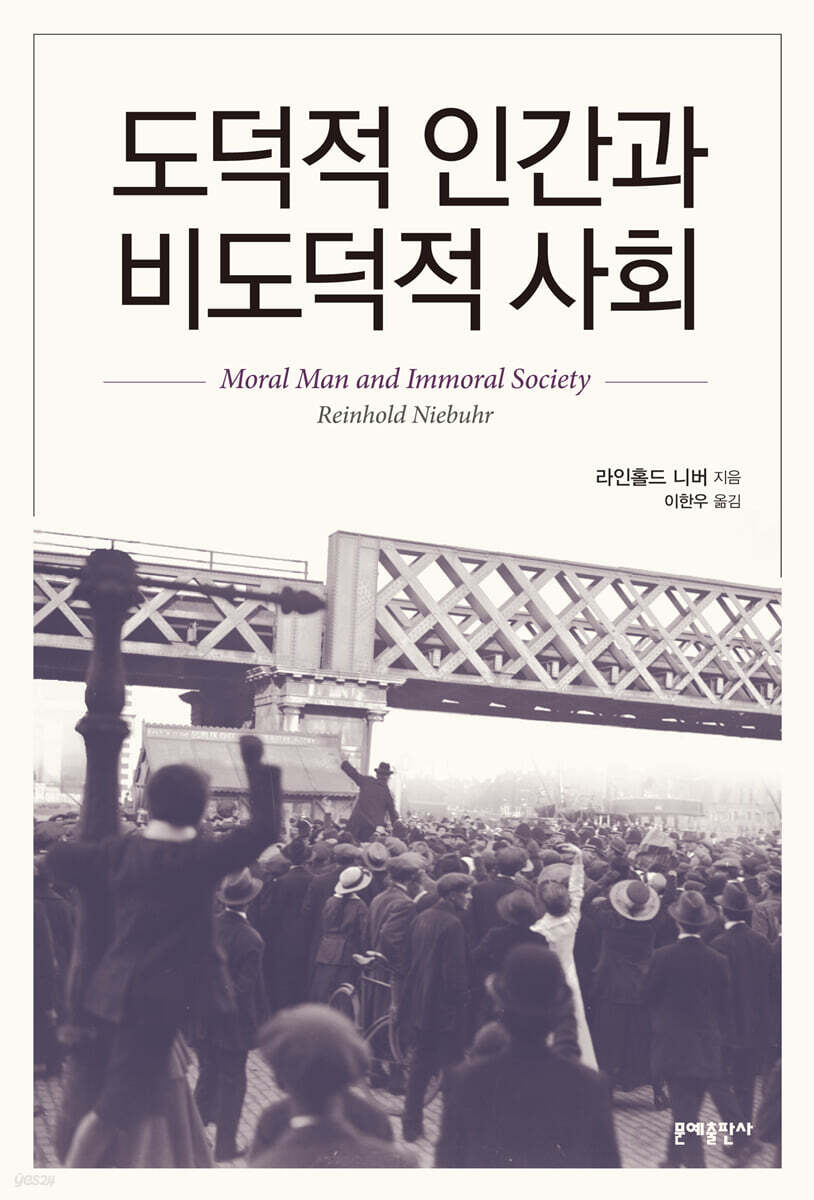
Moral Man and Immoral Society
 |
Description
Book Introduction
A modern classic that analyzes the relationship between the individual and society from a new perspective.
- World-renowned theologians Cornel West and Langdon B.
An expanded edition with a new preface by Gilkey is published.
“Reinhold Niebuhr’s writings are the Bible of political science.” _Jimmy Carter (former U.S. President)
“My Favorite Philosopher” _Barack Obama (Former U.S. President)
“America's greatest political philosopher” _Hans Morgenthau (Professor at the University of Chicago)
“Undoubtedly the most central thinker of modern realism” – Michael Joseph Smith (Professor, University of Virginia)
“This book is timeless in that it bravely confronts the undeniable dark side of humanity without optimism or pessimism.” —Cornell West, Professor, Union Theological Seminary
“A Classic of Christian Political Thought” _Langdon B.
Gilkey (Professor at the University of Chicago)
Reinhold Niebuhr, a leading figure in modern Christian political philosophy, has published a new, expanded edition of his masterpiece, Moral Man and Immoral Society.
This expanded edition includes contributions from Professor Cornel West (Union Theological Seminary), a renowned educator, philosopher, and authoritative progressive intellectual, and Langdon B.
A new translation of Professor Gilkey's (University of Chicago) preface has been included.
These two prefaces clearly explain the social, philosophical, political, and historical significance of "Moral Man and Immoral Society" to readers encountering it for the first time. Furthermore, they explain why the book has come to be regarded as a classic in political philosophy and Christian thought.
The newly added preface will serve as a faithful guide to understanding not only Moral Man and Immoral Society but also Reinhold Niebuhr's thought.
- World-renowned theologians Cornel West and Langdon B.
An expanded edition with a new preface by Gilkey is published.
“Reinhold Niebuhr’s writings are the Bible of political science.” _Jimmy Carter (former U.S. President)
“My Favorite Philosopher” _Barack Obama (Former U.S. President)
“America's greatest political philosopher” _Hans Morgenthau (Professor at the University of Chicago)
“Undoubtedly the most central thinker of modern realism” – Michael Joseph Smith (Professor, University of Virginia)
“This book is timeless in that it bravely confronts the undeniable dark side of humanity without optimism or pessimism.” —Cornell West, Professor, Union Theological Seminary
“A Classic of Christian Political Thought” _Langdon B.
Gilkey (Professor at the University of Chicago)
Reinhold Niebuhr, a leading figure in modern Christian political philosophy, has published a new, expanded edition of his masterpiece, Moral Man and Immoral Society.
This expanded edition includes contributions from Professor Cornel West (Union Theological Seminary), a renowned educator, philosopher, and authoritative progressive intellectual, and Langdon B.
A new translation of Professor Gilkey's (University of Chicago) preface has been included.
These two prefaces clearly explain the social, philosophical, political, and historical significance of "Moral Man and Immoral Society" to readers encountering it for the first time. Furthermore, they explain why the book has come to be regarded as a classic in political philosophy and Christian thought.
The newly added preface will serve as a faithful guide to understanding not only Moral Man and Immoral Society but also Reinhold Niebuhr's thought.
- You can preview some of the book's contents.
Preview
index
Foreword by Cornel West
Langdon B.
Gilkey (Langdon B.
Gillkey) Preface
Preface to the 1960 edition
introduction
1 Humans and Society: How to Live Together
2. Individual rational sources for social life
3. Individual Religious Sources for Social Life
4 Morality of various peoples
5 Ethical Attitudes of the Privileged Class
6. The ethical attitude of the proletariat
7 Justice through Revolution
8 Justice by political power
9 Preservation of moral values in politics
10 Conflict between individual morality and societal morality
Translator's Note
Translator's Note
Langdon B.
Gilkey (Langdon B.
Gillkey) Preface
Preface to the 1960 edition
introduction
1 Humans and Society: How to Live Together
2. Individual rational sources for social life
3. Individual Religious Sources for Social Life
4 Morality of various peoples
5 Ethical Attitudes of the Privileged Class
6. The ethical attitude of the proletariat
7 Justice through Revolution
8 Justice by political power
9 Preservation of moral values in politics
10 Conflict between individual morality and societal morality
Translator's Note
Translator's Note
Publisher's Review
The book that shaped the 20th century analyzes individual and collective behavior and proposes measures to establish social justice.
In 1932, American theologian Reinhold Niebuhr (1892-1971) published a book titled “Moral Man and Immoral Society.”
This book was a momentous event at the time.
Because it shook the very foundations of American intellectuals' belief that history could be led rationally.
"Even people who are personally moral become collective egoists when they belong to a certain group within society." The title of the book reveals the subject matter.
From a personal perspective, humans are moral in the sense that they can sacrifice their own interests to consider the interests of others, and sometimes consider the interests of others before their own.
Of course, this kind of morality can be promoted through education.
But society often vividly displays national-class-racial impulses or collective selfishness.
Even though the American economy was in a state of panic and Hitler was on the verge of seizing power in Europe, liberal social scientists and religious leaders at the time were optimistic about the future of American society.
Sociologists and educators believed that collective selfishness could be checked by enhancing human rationality, while religious idealists argued that social contradictions could be resolved by appealing to conscience and encouraging charity.
However, Niebuhr criticized them for failing to distinguish between the problems of charity that occur within the framework of social organization and the dynamics between economic groups.
The argument is that "relationships between groups are political relationships governed by power dynamics rather than ethical ones," and therefore "we must pay attention to the coercive nature of movements operating between social groups."
In particular, he emphasized that social injustice arising from the collective selfishness of the privileged class cannot be resolved through adjustment or compromise.
He states that if violence or coercion is used to check the evil of these social groups, a vicious cycle of other violence will continue, and concludes that although it is not an easy task, a solution must be sought in a direction that balances individual morality and socio-political justice.
Since the publication of this book in 1932, the global society of the 20th century has become more immoral than what Niebuhr called an "immoral society," through World War II, the Cold War, racial conflicts, and recent nationalism.
In that sense, Niebuhr is rather a political philosopher of hope.
Niebuhr was born in Missouri, USA, and majored in theology at Yale University.
After serving as a pastor in Detroit for 13 years, he became a professor at Union Theological Seminary in 1928 and wrote over 20 books.
Although he only had a master's degree, he received 18 honorary doctorates.
Niebuhr influenced many politicians.
President Clinton listed five books that helped shape his values.
What I took with me along with the Bible was Niebuhr's "Moral Man and Immoral Society."
The brains who led American policy in the 1950s and 1960s, including Arthur Schlesinger Jr., George Kennan, and McGeorge Bundy, called Niebuhr "the father of us all."
The late New York Times journalist James Reston also expressed his respect for Niebuhr, saying he "clearly demonstrated the irony of American society."
In 1932, American theologian Reinhold Niebuhr (1892-1971) published a book titled “Moral Man and Immoral Society.”
This book was a momentous event at the time.
Because it shook the very foundations of American intellectuals' belief that history could be led rationally.
"Even people who are personally moral become collective egoists when they belong to a certain group within society." The title of the book reveals the subject matter.
From a personal perspective, humans are moral in the sense that they can sacrifice their own interests to consider the interests of others, and sometimes consider the interests of others before their own.
Of course, this kind of morality can be promoted through education.
But society often vividly displays national-class-racial impulses or collective selfishness.
Even though the American economy was in a state of panic and Hitler was on the verge of seizing power in Europe, liberal social scientists and religious leaders at the time were optimistic about the future of American society.
Sociologists and educators believed that collective selfishness could be checked by enhancing human rationality, while religious idealists argued that social contradictions could be resolved by appealing to conscience and encouraging charity.
However, Niebuhr criticized them for failing to distinguish between the problems of charity that occur within the framework of social organization and the dynamics between economic groups.
The argument is that "relationships between groups are political relationships governed by power dynamics rather than ethical ones," and therefore "we must pay attention to the coercive nature of movements operating between social groups."
In particular, he emphasized that social injustice arising from the collective selfishness of the privileged class cannot be resolved through adjustment or compromise.
He states that if violence or coercion is used to check the evil of these social groups, a vicious cycle of other violence will continue, and concludes that although it is not an easy task, a solution must be sought in a direction that balances individual morality and socio-political justice.
Since the publication of this book in 1932, the global society of the 20th century has become more immoral than what Niebuhr called an "immoral society," through World War II, the Cold War, racial conflicts, and recent nationalism.
In that sense, Niebuhr is rather a political philosopher of hope.
Niebuhr was born in Missouri, USA, and majored in theology at Yale University.
After serving as a pastor in Detroit for 13 years, he became a professor at Union Theological Seminary in 1928 and wrote over 20 books.
Although he only had a master's degree, he received 18 honorary doctorates.
Niebuhr influenced many politicians.
President Clinton listed five books that helped shape his values.
What I took with me along with the Bible was Niebuhr's "Moral Man and Immoral Society."
The brains who led American policy in the 1950s and 1960s, including Arthur Schlesinger Jr., George Kennan, and McGeorge Bundy, called Niebuhr "the father of us all."
The late New York Times journalist James Reston also expressed his respect for Niebuhr, saying he "clearly demonstrated the irony of American society."
GOODS SPECIFICS
- Date of issue: July 1, 2017
- Page count, weight, size: 428 pages | 153*224*30mm
- ISBN13: 9788931023527
- ISBN10: 8931023529
You may also like
카테고리
korean


korean

![GQ KOREA Mark (Monthly): December [2025]](http://librairie.coreenne.fr/cdn/shop/files/8ef265dbbfbf186523ed75ba7319009d.jpg?v=1765340328&width=3840)


