

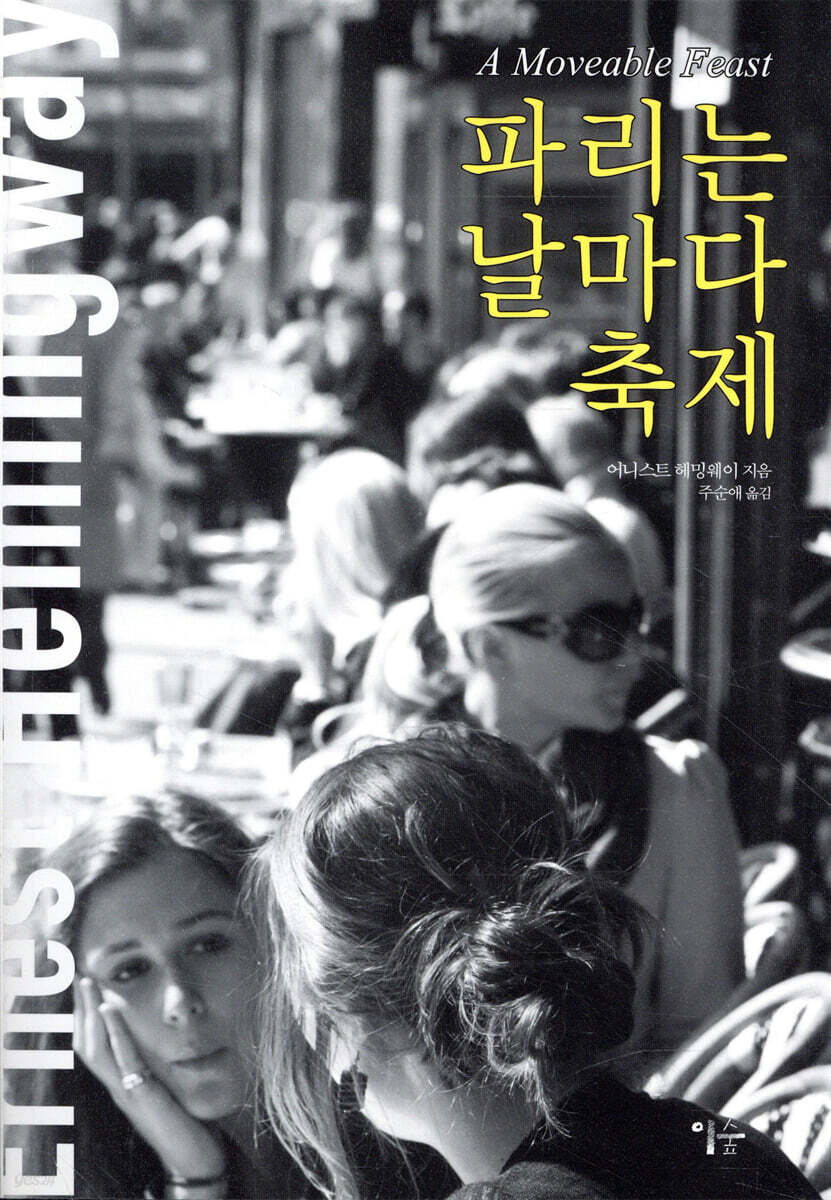
Paris is a festival every day
 |
Description
Book Introduction
Hemingway's youthful stay in Paris
A memoir of Ernest Hemingway's experiences while living in Paris, France during his youth (1921-1926).
His passionate passion for writing, his connections with artists living in Paris, his daily life with his first wife Hadley and son John, the beautiful Parisian scenery, and anecdotes from his favorite cafés are all movingly told.
As the author himself confesses, it is particularly enjoyable to follow the author's route through the impressive districts of Paris while hearing stories of the great writer's younger days, "a time of poverty but happiness."
The book is richly filled with fascinating photographs of Hemingway's Parisian home in the 1920s, the homes of his friends, the cafes he frequented, the areas he strolled through, the bookstores he frequented, and the streets he walked.
Readers planning a trip to France might find this book a useful guide as they follow in Hemingway's footsteps as he explores various parts of Paris.
Additionally, the book concludes with a chronological overview of Hemingway's life, along with over 50 pages of photographs. Through moving images and fascinating explanations, readers can gain a more vivid insight into the life of this great writer who captivated an era.
A memoir of Ernest Hemingway's experiences while living in Paris, France during his youth (1921-1926).
His passionate passion for writing, his connections with artists living in Paris, his daily life with his first wife Hadley and son John, the beautiful Parisian scenery, and anecdotes from his favorite cafés are all movingly told.
As the author himself confesses, it is particularly enjoyable to follow the author's route through the impressive districts of Paris while hearing stories of the great writer's younger days, "a time of poverty but happiness."
The book is richly filled with fascinating photographs of Hemingway's Parisian home in the 1920s, the homes of his friends, the cafes he frequented, the areas he strolled through, the bookstores he frequented, and the streets he walked.
Readers planning a trip to France might find this book a useful guide as they follow in Hemingway's footsteps as he explores various parts of Paris.
Additionally, the book concludes with a chronological overview of Hemingway's life, along with over 50 pages of photographs. Through moving images and fascinating explanations, readers can gain a more vivid insight into the life of this great writer who captivated an era.
- You can preview some of the book's contents.
Preview
index
Part 1_ Moving Festival
1.
A cozy cafe on Place Saint-Michel
2.
Mrs. Stein's Teachings
3.
Shakespeare & Company Bookstore
4.
People on the banks of the Seine
5.
fleeting spring
6.
The end of the obsession with horse racing
7.
“The Lost Generation”
8.
Hunger is a great lesson
9.
Ford Maddox Ford and the Devil's Disciple
10.
In the derivative and cafe dome
11.
Ezra Pound and the Insect
12.
A really strange breakup
13.
A man with traces of a confrontation with death
14.
Evan Shipman in Lila
15.
agent of evil
16.
Winter in Schruns
17.
Scott Fitzgerald
18.
The hawk does not share
19.
Zelda's Complaints
Translator's note
Part 2_ Paris Sketch
1.
The birth of a new school
2.
Ezra Pound and his 'Belle Esprit'
3.
On first-person writing
4.
Secret pleasure
5.
Weird Fight Club
6.
The pungent smell of lies
7.
Bambi's education
8.
Scott and his French chauffeur
9.
Pilot Fish and the Rich
10.
I am Nada I Pues Nada
Translator's note
The Ernest Hemingway Chronicles
Ernest Hemingway in Pictures
Translator's Note
1.
A cozy cafe on Place Saint-Michel
2.
Mrs. Stein's Teachings
3.
Shakespeare & Company Bookstore
4.
People on the banks of the Seine
5.
fleeting spring
6.
The end of the obsession with horse racing
7.
“The Lost Generation”
8.
Hunger is a great lesson
9.
Ford Maddox Ford and the Devil's Disciple
10.
In the derivative and cafe dome
11.
Ezra Pound and the Insect
12.
A really strange breakup
13.
A man with traces of a confrontation with death
14.
Evan Shipman in Lila
15.
agent of evil
16.
Winter in Schruns
17.
Scott Fitzgerald
18.
The hawk does not share
19.
Zelda's Complaints
Translator's note
Part 2_ Paris Sketch
1.
The birth of a new school
2.
Ezra Pound and his 'Belle Esprit'
3.
On first-person writing
4.
Secret pleasure
5.
Weird Fight Club
6.
The pungent smell of lies
7.
Bambi's education
8.
Scott and his French chauffeur
9.
Pilot Fish and the Rich
10.
I am Nada I Pues Nada
Translator's note
The Ernest Hemingway Chronicles
Ernest Hemingway in Pictures
Translator's Note
Into the book
“Paris will always be remembered by me as the eternal city.
No matter what form it takes, I have loved Paris my whole life.
Perhaps the reason Paris's winters can be so harsh yet beautiful is because of the city's romantic atmosphere, where even poverty becomes a memory.
If there's anyone who hasn't been to Paris yet, I'd like to give you this advice:
If you are lucky enough to spend some time in Paris when you are young, Paris will be like a 'moving festival' that will stay with you wherever you go for the rest of your life.
Just like it was for me.” ---Hemingway’s interview, translator’s note from “Ernest’s In the Mood for Love”
A woman came into the cafe and sat alone at a table by the window.
She was very beautiful.
Her skin was as clear as if washed in rain, her face as fresh as a freshly minted coin, and her neatly cut hair covered her cheeks obliquely like the wings of a black crow.
I looked at her.
Her presence distracted me and made my heart flutter.
I wanted to include her in the piece I was writing now, or perhaps in another piece, but judging by the way she was sitting with a clear view of the street and the cafe entrance, it was clear that she was waiting for someone.
I continued writing again.
The pencil was writing on the paper by itself, and I had a hard time keeping up with the flow.
I ordered another glass of rum, and every time I looked up, or sharpened my pencil on the saucer, I looked at her.
Beautiful woman, you have caught my eye.
Whoever you are waiting for, and even if I never see you again, you are mine right now, I thought.
You are mine, Paris is mine, and I belong to this notebook and this pencil… .
---1-1.
From “A Pleasant Café in Place Saint-Michel”
But sometimes, a new piece of writing I started didn't make any progress at all.
At times like that, I would sit in front of the fireplace, squeeze the tangerine peel with my fingers, drip the juice into the burning fire, and stare blankly at the crackling blue flames.
Otherwise, I would look out the window and look at the rooftops of Paris and say to myself:
'Don't worry, you've always written well before, so you'll be able to write well this time too.
All you have to do is write just one true sentence.
'Write the truest sentence you know.' Once I found that one true sentence, I could start from there and keep writing.
---1-2.
From "The Teachings of Mrs. Stein"
Still, at that time we never thought of ourselves as poor.
They didn't acknowledge that fact.
We prided ourselves on our superiority over others and despised and distrusted the rich.
It didn't seem strange to me at all to wear a sweater instead of underwear to keep warm.
I thought only rich people thought that kind of thing was strange.
We ate well with cheap food, drank well with cheap alcohol, slept warmly together, and loved each other. ---1-5.
From "Fleeting Spring"
We each woke up twice during the night, but now my wife was sleeping peacefully in the moonlight.
I tried to break free from this obsession, but it was no use.
Life seemed so simple when I woke up early in the morning to discover the fleeting spring had arrived, heard the goat herder's flute, and went out to buy the horse racing paper...
But Paris was a very old city, we were too young, and nothing in this world was simple.
Poverty, sudden money, moonlight, right and wrong, even the even breathing of the person sleeping next to me under the moonlight... .---1-5.
From "Fleeting Spring"
But I decided to wait patiently until the moment came when I couldn't help but write a novel.
You should never write novels as a means of making a living.
When that's all I can do, when I have absolutely no other choice, I'll write a novel.
So I have to wait until more pressure builds up.
While I'm waiting, I should first write a long article on a topic I know well. ---1-8.
From "Hunger is a Great Lesson"
As the train passed the log piles inside Schruns's station and I saw my wife standing by the tracks waiting for me, I wished I had died before I could love any other woman.
My wife was smiling, her beautiful face, sun-kissed and her auburn hair, grown over the winter, dazzling in the sunlight.
Next to her stood a blond boy, Bambi, whose chubby cheeks were flushed red by the winter weather, and who looked like a rascal from the village of Poalberg.
(…)
When I was with one person, I loved that person, and when I was with another person, I moved away from him.
When I was with someone else, I loved that person and another person moved away from me.
Whenever I was with them, I loved them both.
What was terrible was that I was still happy.
---2-9.
From "Pilot Fish and the Rich"
“Hey, you won’t forget to write, will you?”
“Of course,” I answered.
“How could I forget to write?”
I went outside to make a phone call.
Of course, I thought.
I will never forget to write.
I was born to write, I have been writing, and I will continue to write.
No matter what form it takes, I have loved Paris my whole life.
Perhaps the reason Paris's winters can be so harsh yet beautiful is because of the city's romantic atmosphere, where even poverty becomes a memory.
If there's anyone who hasn't been to Paris yet, I'd like to give you this advice:
If you are lucky enough to spend some time in Paris when you are young, Paris will be like a 'moving festival' that will stay with you wherever you go for the rest of your life.
Just like it was for me.” ---Hemingway’s interview, translator’s note from “Ernest’s In the Mood for Love”
A woman came into the cafe and sat alone at a table by the window.
She was very beautiful.
Her skin was as clear as if washed in rain, her face as fresh as a freshly minted coin, and her neatly cut hair covered her cheeks obliquely like the wings of a black crow.
I looked at her.
Her presence distracted me and made my heart flutter.
I wanted to include her in the piece I was writing now, or perhaps in another piece, but judging by the way she was sitting with a clear view of the street and the cafe entrance, it was clear that she was waiting for someone.
I continued writing again.
The pencil was writing on the paper by itself, and I had a hard time keeping up with the flow.
I ordered another glass of rum, and every time I looked up, or sharpened my pencil on the saucer, I looked at her.
Beautiful woman, you have caught my eye.
Whoever you are waiting for, and even if I never see you again, you are mine right now, I thought.
You are mine, Paris is mine, and I belong to this notebook and this pencil… .
---1-1.
From “A Pleasant Café in Place Saint-Michel”
But sometimes, a new piece of writing I started didn't make any progress at all.
At times like that, I would sit in front of the fireplace, squeeze the tangerine peel with my fingers, drip the juice into the burning fire, and stare blankly at the crackling blue flames.
Otherwise, I would look out the window and look at the rooftops of Paris and say to myself:
'Don't worry, you've always written well before, so you'll be able to write well this time too.
All you have to do is write just one true sentence.
'Write the truest sentence you know.' Once I found that one true sentence, I could start from there and keep writing.
---1-2.
From "The Teachings of Mrs. Stein"
Still, at that time we never thought of ourselves as poor.
They didn't acknowledge that fact.
We prided ourselves on our superiority over others and despised and distrusted the rich.
It didn't seem strange to me at all to wear a sweater instead of underwear to keep warm.
I thought only rich people thought that kind of thing was strange.
We ate well with cheap food, drank well with cheap alcohol, slept warmly together, and loved each other. ---1-5.
From "Fleeting Spring"
We each woke up twice during the night, but now my wife was sleeping peacefully in the moonlight.
I tried to break free from this obsession, but it was no use.
Life seemed so simple when I woke up early in the morning to discover the fleeting spring had arrived, heard the goat herder's flute, and went out to buy the horse racing paper...
But Paris was a very old city, we were too young, and nothing in this world was simple.
Poverty, sudden money, moonlight, right and wrong, even the even breathing of the person sleeping next to me under the moonlight... .---1-5.
From "Fleeting Spring"
But I decided to wait patiently until the moment came when I couldn't help but write a novel.
You should never write novels as a means of making a living.
When that's all I can do, when I have absolutely no other choice, I'll write a novel.
So I have to wait until more pressure builds up.
While I'm waiting, I should first write a long article on a topic I know well. ---1-8.
From "Hunger is a Great Lesson"
As the train passed the log piles inside Schruns's station and I saw my wife standing by the tracks waiting for me, I wished I had died before I could love any other woman.
My wife was smiling, her beautiful face, sun-kissed and her auburn hair, grown over the winter, dazzling in the sunlight.
Next to her stood a blond boy, Bambi, whose chubby cheeks were flushed red by the winter weather, and who looked like a rascal from the village of Poalberg.
(…)
When I was with one person, I loved that person, and when I was with another person, I moved away from him.
When I was with someone else, I loved that person and another person moved away from me.
Whenever I was with them, I loved them both.
What was terrible was that I was still happy.
---2-9.
From "Pilot Fish and the Rich"
“Hey, you won’t forget to write, will you?”
“Of course,” I answered.
“How could I forget to write?”
I went outside to make a phone call.
Of course, I thought.
I will never forget to write.
I was born to write, I have been writing, and I will continue to write.
---2-10.
From "I am Nada"
From "I am Nada"
Publisher's Review
Hemingway's youthful stay in Paris
A memoir of Ernest Hemingway's experiences while living in Paris, France during his youth (1921-1926).
His passionate passion for writing, his connections with artists living in Paris, his daily life with his first wife Hadley and son John, the beautiful Parisian scenery, and anecdotes from his favorite cafés are all movingly told.
As the author himself confesses, it is particularly enjoyable to follow the author's route through the impressive districts of Paris while hearing stories of the great writer's younger days, "a time of poverty but happiness."
An expanded edition with supplementary content after the author's death
This book records the period when Hemingway lived in Paris during his youth, from the fall of 1957 to the spring of 1960, shortly before his death.
This memoir was first published in 1964, three years after his death, under the title A Moveable Feast, and in 2010 a 'restored edition' was published under the same title, adding the author's unfinished manuscript to the 1964 edition.
In other words, Part 2 of this book, "Paris Sketches," contains various anecdotes that were not found in the 1964 edition.
Sean Hemingway, the grandson of Hemingway's second wife, Pauline Pfeiffer, published this book in 2010, supplementing the 1964 edition edited by Hemingway's fourth wife, Mary Welsh, with unpublished manuscripts.
Looking at the manuscripts he unearthed and newly added, we can see passages that the author had not yet finished, giving us a vivid glimpse into the author's thoughts at the time of writing.
While writing, there are parts where I wrote the ending this way or that way, and there are also parts where I wrote the first draft and then deleted it.
And especially in this additional manuscript, Hemingway, who was physically and mentally exhausted in his later years, vividly reflects on his happy youth and his regrets and reflections shortly before his suicide, which touches the hearts of readers.
A sensuous and faithful introduction to the human Hemingway.
The book is richly filled with fascinating photographs of Hemingway's Parisian home in the 1920s, the homes of his friends, the cafes he frequented, the areas he strolled through, the bookstores he frequented, and the streets he walked.
Readers planning a trip to France might find this book a useful guide as they follow in Hemingway's footsteps as he explores various parts of Paris.
Additionally, the book concludes with a chronological overview of Hemingway's life, along with over 50 pages of photographs. Through moving images and fascinating explanations, readers can gain a more vivid insight into the life of this great writer who captivated an era.
A memoir of Ernest Hemingway's experiences while living in Paris, France during his youth (1921-1926).
His passionate passion for writing, his connections with artists living in Paris, his daily life with his first wife Hadley and son John, the beautiful Parisian scenery, and anecdotes from his favorite cafés are all movingly told.
As the author himself confesses, it is particularly enjoyable to follow the author's route through the impressive districts of Paris while hearing stories of the great writer's younger days, "a time of poverty but happiness."
An expanded edition with supplementary content after the author's death
This book records the period when Hemingway lived in Paris during his youth, from the fall of 1957 to the spring of 1960, shortly before his death.
This memoir was first published in 1964, three years after his death, under the title A Moveable Feast, and in 2010 a 'restored edition' was published under the same title, adding the author's unfinished manuscript to the 1964 edition.
In other words, Part 2 of this book, "Paris Sketches," contains various anecdotes that were not found in the 1964 edition.
Sean Hemingway, the grandson of Hemingway's second wife, Pauline Pfeiffer, published this book in 2010, supplementing the 1964 edition edited by Hemingway's fourth wife, Mary Welsh, with unpublished manuscripts.
Looking at the manuscripts he unearthed and newly added, we can see passages that the author had not yet finished, giving us a vivid glimpse into the author's thoughts at the time of writing.
While writing, there are parts where I wrote the ending this way or that way, and there are also parts where I wrote the first draft and then deleted it.
And especially in this additional manuscript, Hemingway, who was physically and mentally exhausted in his later years, vividly reflects on his happy youth and his regrets and reflections shortly before his suicide, which touches the hearts of readers.
A sensuous and faithful introduction to the human Hemingway.
The book is richly filled with fascinating photographs of Hemingway's Parisian home in the 1920s, the homes of his friends, the cafes he frequented, the areas he strolled through, the bookstores he frequented, and the streets he walked.
Readers planning a trip to France might find this book a useful guide as they follow in Hemingway's footsteps as he explores various parts of Paris.
Additionally, the book concludes with a chronological overview of Hemingway's life, along with over 50 pages of photographs. Through moving images and fascinating explanations, readers can gain a more vivid insight into the life of this great writer who captivated an era.
GOODS SPECIFICS
- Date of issue: January 20, 2012
- Page count, weight, size: 368 pages | 676g | 153*224*30mm
- ISBN13: 9788994228341
- ISBN10: 8994228349
You may also like
카테고리
korean


korean

![GQ KOREA Mark (Monthly): December [2025]](http://librairie.coreenne.fr/cdn/shop/files/8ef265dbbfbf186523ed75ba7319009d.jpg?v=1765340328&width=3840)


