

Himalayas, the joy of becoming small
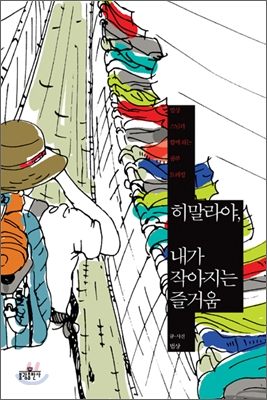 |
Description
Book Introduction
A dazzlingly beautiful meditation pilgrimage filled with the practitioner's intimate stories.
This is a Himalayan trekking travelogue by Venerable Beopsang, who has imparted valuable life wisdom to many people through his earnest writings on practice, meditation, nature, and travel.
This book, which is also the first introductory book to trekking in the Himalayas written by a monk in Korea, is written as if the monk were keeping a diary every day during the trekking process, or as if he were talking to a friend sitting right next to him.
As if possessed by the words of the Tibetan saint Milarepa, who said, “Abandon everything and go to the Himalayas,” the monk confesses that the pilgrimage to the Himalayas was not a simple journey, but a destiny, a process of seeking and a journey to find the Himalayas within.
The travelogue of a monk who felt the 'joy of becoming small' while trekking in the Khumbu Mountains of the Himalayas is a dazzlingly beautiful meditative pilgrimage filled with the practitioner's intimate stories.
If you follow the steps of the monk, you will be able to open your eyes to valuable wisdom about life without even realizing it.
This is a Himalayan trekking travelogue by Venerable Beopsang, who has imparted valuable life wisdom to many people through his earnest writings on practice, meditation, nature, and travel.
This book, which is also the first introductory book to trekking in the Himalayas written by a monk in Korea, is written as if the monk were keeping a diary every day during the trekking process, or as if he were talking to a friend sitting right next to him.
As if possessed by the words of the Tibetan saint Milarepa, who said, “Abandon everything and go to the Himalayas,” the monk confesses that the pilgrimage to the Himalayas was not a simple journey, but a destiny, a process of seeking and a journey to find the Himalayas within.
The travelogue of a monk who felt the 'joy of becoming small' while trekking in the Khumbu Mountains of the Himalayas is a dazzlingly beautiful meditative pilgrimage filled with the practitioner's intimate stories.
If you follow the steps of the monk, you will be able to open your eyes to valuable wisdom about life without even realizing it.
- You can preview some of the book's contents.
Preview
index
Day 1: Kathmandu → Lukla → Phakding
Finally, embrace the Himalayas
Plane Crash: Embrace the Cosmic Order
Don't trust your thoughts too much
The woman I met in Lukla
Jitenrai's Happiness
The scent of Tibetan Buddhist culture, from Lukla to Phakding
A leisurely cup of warm tea
The hopes of Himalayan youth
On a dark night, a lonely, lofty feeling lingers.
Day 2: Pakding → Namche Bazaar
Tamseku, intoxicated by the snowy peaks
I can't sleep because of the cold
The joy of doing your own work
Children of the Himalayas
People living in the Himalayas
A view of Namche Bazaar, the largest city in Khumbu
Day 3: Namche Bazaar → Shamboche → Himalaya Hotel → Namche Bazaar
Namche Bazaar and Shamboche, a vibrant day
A day off for altitude acclimatization
A leisurely stroll, Samboche and Everest View Hotel
A tranquil evening scene at a mountain lodge
Day 4: Namche Bazaar → Tengboche
Tengboche Gompa, the largest temple in Khumbu
Walking is a process of becoming one
Koreans I met in Punkitenga
Climbing 600 meters with pain
Tengboche Gompa, Pilgrim's Prayer
Day 5: Tengboche → Pangboche → Dingboche
The authentic scenery of Khumbu, Pangboche and Dingboche
Early morning, walking through a landscape I've never seen before
Pangboche and Dingboche, their desolate and overwhelming scenery
My thoughts stopped in a mountain village
Natural healing, pain disappears
Day 6: Dingboche → Nangkarchang Peak → Dingboche
Nangkarchang Peak, walking towards the next step
This is the Himalayas
Walk towards the next step
5086 Time Stops in Nangkarchang
Milarepa's Song: Let's Abandon Desire and Go to the Himalayas
Complete Rest, Moonlight Shock
Day 7: Dingboche → Tukla → Lobuche → Gorak Shop
Beyond Robuche to Gorak Shop, the Path of Entrustment
A dawn path in solitude and silence
The water of life flowing through 4,800 meters of altitude
Plans are subject to change at any time.
As altitude rises, prices also rise.
It's just one way, not a better way.
A glimpse into a sparkling life
Day 8: Gorak Shop → Kala Patthar → Lobuche
Kalapathar, just walking without a purpose
Encounter the worst weather at your final destination
Moments of complete mystery, perfect days
Morning view from Kalapathar Lodge
When you walk, your mind connects with the universe.
Day 9: Lobuche → Jongla
Jongra, the joy of becoming small
The Paradox of the Universe: When You Let Go, You Gain More
Enjoy my smallness
You deserve to lose everything
The dazzling dawn of Lobuche
The Himalayas are disappearing due to development and advancement.
The joy of living uncomfortably
A peaceful afternoon at Jongla Lodge
Day 10: Jongla → Chola Pass → Daknak
Chola Pass, crossing glaciers and crevasses
Walking towards the summit of Chola Pass
People crossing the precarious ice zone
Don't take life too seriously
A concert held before the worst uphill climb
Day 11: Daknak → Gokyo → Gokyo-ri → Gokyo
A magnificent panorama of the Khumbu snow-capped mountains, Gokyo Ri
Don't be fooled by the illusion of an inflated future.
Listening to the music of silence while climbing Gokyo-ri
A journey of knowing, a journey of not knowing
You're going to go once or twice and then publish a travelogue?
I saw it on the way down, the flower I didn't see on the way up
Day 12: Gokyo → Machermo → Porchetanga → Kumjung
Hassan, passing through Machermo, the dwelling place of God
Living a life of leisure in a lonely snowy mountain village
Passing through the village of the gods and through the seasons
Solidarity with Mother Nature
Spending my last night in the mountain town of Kumjung
Days 13-14: Kumjung → Namche Bazaar → Lukla → Kathmandu
Pilgrimage, another Himalaya called life
A cup of tea is what I crave for when I have a cold.
The joy of looking at a sick body
Back in Lukla
Author's Note
Himalayan Trekking Map
Trekking Q&A with Venerable Beopsang
Finally, embrace the Himalayas
Plane Crash: Embrace the Cosmic Order
Don't trust your thoughts too much
The woman I met in Lukla
Jitenrai's Happiness
The scent of Tibetan Buddhist culture, from Lukla to Phakding
A leisurely cup of warm tea
The hopes of Himalayan youth
On a dark night, a lonely, lofty feeling lingers.
Day 2: Pakding → Namche Bazaar
Tamseku, intoxicated by the snowy peaks
I can't sleep because of the cold
The joy of doing your own work
Children of the Himalayas
People living in the Himalayas
A view of Namche Bazaar, the largest city in Khumbu
Day 3: Namche Bazaar → Shamboche → Himalaya Hotel → Namche Bazaar
Namche Bazaar and Shamboche, a vibrant day
A day off for altitude acclimatization
A leisurely stroll, Samboche and Everest View Hotel
A tranquil evening scene at a mountain lodge
Day 4: Namche Bazaar → Tengboche
Tengboche Gompa, the largest temple in Khumbu
Walking is a process of becoming one
Koreans I met in Punkitenga
Climbing 600 meters with pain
Tengboche Gompa, Pilgrim's Prayer
Day 5: Tengboche → Pangboche → Dingboche
The authentic scenery of Khumbu, Pangboche and Dingboche
Early morning, walking through a landscape I've never seen before
Pangboche and Dingboche, their desolate and overwhelming scenery
My thoughts stopped in a mountain village
Natural healing, pain disappears
Day 6: Dingboche → Nangkarchang Peak → Dingboche
Nangkarchang Peak, walking towards the next step
This is the Himalayas
Walk towards the next step
5086 Time Stops in Nangkarchang
Milarepa's Song: Let's Abandon Desire and Go to the Himalayas
Complete Rest, Moonlight Shock
Day 7: Dingboche → Tukla → Lobuche → Gorak Shop
Beyond Robuche to Gorak Shop, the Path of Entrustment
A dawn path in solitude and silence
The water of life flowing through 4,800 meters of altitude
Plans are subject to change at any time.
As altitude rises, prices also rise.
It's just one way, not a better way.
A glimpse into a sparkling life
Day 8: Gorak Shop → Kala Patthar → Lobuche
Kalapathar, just walking without a purpose
Encounter the worst weather at your final destination
Moments of complete mystery, perfect days
Morning view from Kalapathar Lodge
When you walk, your mind connects with the universe.
Day 9: Lobuche → Jongla
Jongra, the joy of becoming small
The Paradox of the Universe: When You Let Go, You Gain More
Enjoy my smallness
You deserve to lose everything
The dazzling dawn of Lobuche
The Himalayas are disappearing due to development and advancement.
The joy of living uncomfortably
A peaceful afternoon at Jongla Lodge
Day 10: Jongla → Chola Pass → Daknak
Chola Pass, crossing glaciers and crevasses
Walking towards the summit of Chola Pass
People crossing the precarious ice zone
Don't take life too seriously
A concert held before the worst uphill climb
Day 11: Daknak → Gokyo → Gokyo-ri → Gokyo
A magnificent panorama of the Khumbu snow-capped mountains, Gokyo Ri
Don't be fooled by the illusion of an inflated future.
Listening to the music of silence while climbing Gokyo-ri
A journey of knowing, a journey of not knowing
You're going to go once or twice and then publish a travelogue?
I saw it on the way down, the flower I didn't see on the way up
Day 12: Gokyo → Machermo → Porchetanga → Kumjung
Hassan, passing through Machermo, the dwelling place of God
Living a life of leisure in a lonely snowy mountain village
Passing through the village of the gods and through the seasons
Solidarity with Mother Nature
Spending my last night in the mountain town of Kumjung
Days 13-14: Kumjung → Namche Bazaar → Lukla → Kathmandu
Pilgrimage, another Himalaya called life
A cup of tea is what I crave for when I have a cold.
The joy of looking at a sick body
Back in Lukla
Author's Note
Himalayan Trekking Map
Trekking Q&A with Venerable Beopsang
Into the book
Milarepa (1052-1135), the great Tibetan saint, left for the Himalayas, saying, "Just setting out on a journey is half the way to enlightenment."
To him, the Himalayas were the center of the universe and Mount Sumeru.
The pilgrimage to the Himalayas was for him a source of enlightenment, and also the end of a journey of reincarnation that continues to rotate throughout this universe.
He calls out to those who are suffering from greed, anger and foolishness, 'Abandon everything and go to the Himalayas.'
The moment this clear cry of Milarepa reached me, all time and the universe stopped, and my pulse stopped beating.
And after a while, as if possessed by Milarepa's words, I visited Nepal and the Himalayas, and as I looked at the snow-capped mountains from afar, my heart stopped once again.
There is no doubt that this pilgrimage to the Himalayas is part of a very grand and long-term plan for my life.
This Himalayan pilgrimage is not a simple travelogue, but a journey to the inner Himalayas.
In me, the Himalayas are not just snow-capped mountains, but a deep, vast, high, and majestic point of orientation within my inner garden.
Therefore, this journey can be said to be a process of seeking inner self, a practice, and even an act of devotion.
Therefore, this book is not a travel guide filled with information, but rather a life guide to finding the Himalayas within yourself through a transparent journey of walking alone.
When I went abroad, I immediately realized how many Korean college students there were, and how many people had quit their jobs to travel.
Especially these days, as interest in health begins to grow, more and more people are going trekking in the Himalayas, riding the wave of walking tours that are booming.
Compared to other trips, trekking in the Himalayas is a journey of self-exploration that allows one to examine oneself and discover the inner truth of life.
Trekking isn't about renting a car or other means of transportation and comfortably traveling to your destination and back, but rather about walking up on your own two feet, a arduous process.
You have to walk with all your senses, using your whole body, to the foothills or peaks of high snow-capped mountains, 3,000 to 5,500 meters above sea level, in a wild, natural mountain with almost no amenities.
In the process of walking and walking, our minds naturally find peace, and we escape from our long-standing and familiar daily lives and come face to face with our original selves that we had forgotten.
This is no different from the path of practice of seekers.
Just like sitting cross-legged, the act of walking itself is a very important practice that allows you to empty your thoughts and move forward with no mind.
When we walk for a long time, we experience that our thoughts naturally stop.
Your thoughts become simple and clear, and your greed, obsession, and inner anger disappear naturally.
This is followed by insight into oneself, wise thoughts and reflections on life.
Only then does a powerful awareness open up that allows me to see life and myself in its entirety.
So, many people open their eyes to new possibilities in life through travel, and finally realize their own unique way of living.
A traveler I met on my trip asked me if I had brought back a small pebble as a souvenir from my trip to the high altitude of Kalapathar, or if I had brought back a drop of water in a small bottle from the Ganges River in India.
But it is not a place to bring or obtain something, but a place to simply put something down.
So, travelers who travel to the Holy Land always return empty and small, not having grown and gained something.
We do not grow bigger through true travel, but we grow smaller.
We are forced to humbly empty and let go of our own ego and ideals, which have been trapped in the frame of 'me' and constantly trying to increase and expand money, fame, power, popularity, and possessions.
It is returning by making the mind that tried to grow and realize the size of stubbornness, obsession, desire, and possessions as my existence as small as possible.
In the world, we live in the 'joy of expanding ourselves', but when we go on a trip and observe life, we begin to realize and feel what the 'joy of becoming small' is.
But the joy of that smallness soon means an infinite expansion of the mental dimension.
Only when the ideals and ego of a country become smaller and smaller and become selfless can one finally encounter the true universal self that is one with the entire universe.
Ironically, when the ideal becomes smaller, the true, wise self is fully revealed.
At that very moment, through our journey, we may realize what the path to living as ourselves is, hear the universal answer that allows us to choose a wise life at the crossroads of life, and even hear the answer directly from the Buddha and God within us about how we should live our lives as Ṣal.
All the answers are within me.
However, in the daily life where we live to constantly expand our ideals, we cannot find the answer. Then, when we finally go on a trip and walk on our own two feet, we realize how to find the answer to life along with the 'joy of becoming smaller.'
It is the realization that life was originally complete, and that both the questions and the answers were contained within me.
In this way, travel is a process of seeking enlightenment for everyone, whether intentional or not.
We become travelers, pilgrims, and seekers at the same time.
Everyone gains valuable gifts through travel that they need to realize in life.
Especially, traveling alone brightens life with fresh wisdom.
I dedicate to the world in this book what I have gained, or rather, what I have let go of, while slowly walking through the clear and warm embrace of the goddess Khumbu. I hope that this book will awaken the fragrance of seeking hidden within all those who embark on this journey and make their pilgrimage meaningful.
It would also be great if we could provide an opportunity for those who are stuck in a routine where they want to leave but cannot, to put down their heavy burdens and take off for a while.
Even at this very moment, I feel a special sense of solidarity with all the travelers who are traveling around the world and simultaneously realizing the joy of becoming smaller and the joy of growing spiritually, and I hope that all of them will have a deep awakening.
Finally, I would like to express my deepest gratitude to the many Buddhist monks of Moktak Sori, my senior and junior monks, and the publishing company staff, including Editor-in-Chief Sagi-sun of Bulkwang Publishing, who helped me publish this book.
At Unhaksa Temple in early summer 2010
Fold your hands in prayer
To him, the Himalayas were the center of the universe and Mount Sumeru.
The pilgrimage to the Himalayas was for him a source of enlightenment, and also the end of a journey of reincarnation that continues to rotate throughout this universe.
He calls out to those who are suffering from greed, anger and foolishness, 'Abandon everything and go to the Himalayas.'
The moment this clear cry of Milarepa reached me, all time and the universe stopped, and my pulse stopped beating.
And after a while, as if possessed by Milarepa's words, I visited Nepal and the Himalayas, and as I looked at the snow-capped mountains from afar, my heart stopped once again.
There is no doubt that this pilgrimage to the Himalayas is part of a very grand and long-term plan for my life.
This Himalayan pilgrimage is not a simple travelogue, but a journey to the inner Himalayas.
In me, the Himalayas are not just snow-capped mountains, but a deep, vast, high, and majestic point of orientation within my inner garden.
Therefore, this journey can be said to be a process of seeking inner self, a practice, and even an act of devotion.
Therefore, this book is not a travel guide filled with information, but rather a life guide to finding the Himalayas within yourself through a transparent journey of walking alone.
When I went abroad, I immediately realized how many Korean college students there were, and how many people had quit their jobs to travel.
Especially these days, as interest in health begins to grow, more and more people are going trekking in the Himalayas, riding the wave of walking tours that are booming.
Compared to other trips, trekking in the Himalayas is a journey of self-exploration that allows one to examine oneself and discover the inner truth of life.
Trekking isn't about renting a car or other means of transportation and comfortably traveling to your destination and back, but rather about walking up on your own two feet, a arduous process.
You have to walk with all your senses, using your whole body, to the foothills or peaks of high snow-capped mountains, 3,000 to 5,500 meters above sea level, in a wild, natural mountain with almost no amenities.
In the process of walking and walking, our minds naturally find peace, and we escape from our long-standing and familiar daily lives and come face to face with our original selves that we had forgotten.
This is no different from the path of practice of seekers.
Just like sitting cross-legged, the act of walking itself is a very important practice that allows you to empty your thoughts and move forward with no mind.
When we walk for a long time, we experience that our thoughts naturally stop.
Your thoughts become simple and clear, and your greed, obsession, and inner anger disappear naturally.
This is followed by insight into oneself, wise thoughts and reflections on life.
Only then does a powerful awareness open up that allows me to see life and myself in its entirety.
So, many people open their eyes to new possibilities in life through travel, and finally realize their own unique way of living.
A traveler I met on my trip asked me if I had brought back a small pebble as a souvenir from my trip to the high altitude of Kalapathar, or if I had brought back a drop of water in a small bottle from the Ganges River in India.
But it is not a place to bring or obtain something, but a place to simply put something down.
So, travelers who travel to the Holy Land always return empty and small, not having grown and gained something.
We do not grow bigger through true travel, but we grow smaller.
We are forced to humbly empty and let go of our own ego and ideals, which have been trapped in the frame of 'me' and constantly trying to increase and expand money, fame, power, popularity, and possessions.
It is returning by making the mind that tried to grow and realize the size of stubbornness, obsession, desire, and possessions as my existence as small as possible.
In the world, we live in the 'joy of expanding ourselves', but when we go on a trip and observe life, we begin to realize and feel what the 'joy of becoming small' is.
But the joy of that smallness soon means an infinite expansion of the mental dimension.
Only when the ideals and ego of a country become smaller and smaller and become selfless can one finally encounter the true universal self that is one with the entire universe.
Ironically, when the ideal becomes smaller, the true, wise self is fully revealed.
At that very moment, through our journey, we may realize what the path to living as ourselves is, hear the universal answer that allows us to choose a wise life at the crossroads of life, and even hear the answer directly from the Buddha and God within us about how we should live our lives as Ṣal.
All the answers are within me.
However, in the daily life where we live to constantly expand our ideals, we cannot find the answer. Then, when we finally go on a trip and walk on our own two feet, we realize how to find the answer to life along with the 'joy of becoming smaller.'
It is the realization that life was originally complete, and that both the questions and the answers were contained within me.
In this way, travel is a process of seeking enlightenment for everyone, whether intentional or not.
We become travelers, pilgrims, and seekers at the same time.
Everyone gains valuable gifts through travel that they need to realize in life.
Especially, traveling alone brightens life with fresh wisdom.
I dedicate to the world in this book what I have gained, or rather, what I have let go of, while slowly walking through the clear and warm embrace of the goddess Khumbu. I hope that this book will awaken the fragrance of seeking hidden within all those who embark on this journey and make their pilgrimage meaningful.
It would also be great if we could provide an opportunity for those who are stuck in a routine where they want to leave but cannot, to put down their heavy burdens and take off for a while.
Even at this very moment, I feel a special sense of solidarity with all the travelers who are traveling around the world and simultaneously realizing the joy of becoming smaller and the joy of growing spiritually, and I hope that all of them will have a deep awakening.
Finally, I would like to express my deepest gratitude to the many Buddhist monks of Moktak Sori, my senior and junior monks, and the publishing company staff, including Editor-in-Chief Sagi-sun of Bulkwang Publishing, who helped me publish this book.
At Unhaksa Temple in early summer 2010
Fold your hands in prayer
--- From the author's note
Don't trust your thoughts too much.
Don't rely too much on your thoughts or judgments.
Don't judge today by past memories or evaluate this moment through the colored glasses of the past.
Try to increase the number of moments of mindlessness little by little.
The moment our thoughts are let go, our mind experiences a brief moment of peace.
And another important fact is that our consciousness begins to awaken only when thoughts lose their power and are replaced by the light of no-mind and contemplation.
Also, unexpected ideas, brilliant creativity that transcends existing conventions, and wisdom teachings that emerge from the deep abyss of being beyond memory and thought can emerge in the form of intuitive and creative inspiration.
All of this is contained in the present moment, the present moment, where all the remnants of the past, such as thoughts and memories, and all the remnants of the future, such as plans, hopes, and desires, have disappeared.
-Don't trust your thoughts too much
On this barren, dusty mountainside, mysteriously, the water of life trickles around the temple, and around it, green life and flowers catch my eye as if it were a lie.
'So this is why a long-standing Gompa could be established here.' The universe had already planned for this place, embraced by Mother Nature, to be the only place, among these desolate places, to embrace life like this: this mountainside, this very site.
It's just that the bright practitioner of this era who will carry on the lofty will of the cosmic law has yet to appear! If we sit in a place like this, regard the snow-capped mountain as Buddha, as a perfect wall, and continue to contemplate, asking, "Who am I?", what lazy practitioner could possibly break free from their own vain thoughts and seek the cooperation of this majestic Khumbu snow-capped mountain?
- From 'Milarepa's Song, Let's Give Up Desire and Go to the Himalayas'
No matter how far I walk, there are no people, so suddenly a feeling of loneliness crosses my mind, wondering if I am the only one living my life on this desolate, gloomy planet.
Literally, a quiet place in the mountains and fields.
For a moment, a hollow and empty loneliness settles low inside me and knocks on the wall of my chest.
Every step of this moment awakens me deeply and makes me feel alive.
Experience life deeply.
Rousseau said this about walking:
“I have never in my life felt so deeply, so alive, so true to myself.
I dare say that I could only experience it through the journey I took with my own two feet.” As Rousseau said, it is the journey I took with my own two feet that truly allows me to experience life and get closer to my true self.
- From 'A Glimpse into a Sparkling Life'
If you don't have time to meditate, walk as much as you can.
Don't walk carrying the burden of all your thoughts, just walk.
Don't walk with your thoughts, just walk alone.
Only when I take those empty steps will my true relationship with this universe be restored and the life I have lived in the past begin to become clear.
There is no need to try hard to practice or meditate while walking.
You should not do artificial 'walking meditation' with the intention of doing something often or achieving something.
'Walking meditation' is not true meditation, and only when you 'just walk' can you connect with true meditation.
--- From 'When you walk, your mind connects with the universe'
From now on, we must shake off our ignorance and wake up.
Everyone should leave nature as it is, even if it means enduring some inconvenience.
Who doesn't long for clear skies, clean air, lush greenery, and pristine water? Who doesn't revel in the breathtaking landscapes of the Himalayas and the innocence and boundlessness of nature found throughout the world? Who doesn't want to protect this beautiful planet? Yet, the irony lies in the fact that we are all complicit in this immense destruction.
We must break through all these contradictions and join in the effort to save this planet, starting with ourselves.
Even if it starts from a very small place, that small thing will begin to spread out around it with a deep and powerful resonance in its connection with the entire universe.
--- From 'The Joy of Living Uncomfortably'
There is a saying, 'A landscape that makes you forget words.'
In such a landscape, we forget words, we forget writing, we forget thoughts and knowledge.
Everything stops just in front of the magnificent scenery.
It's as if the world has stopped, everything is silent.
It is the same when standing before the stars, or when facing the sunset and sunrise falling and rising over the green meadow hills, or when standing before the spirits of these snow-capped mountains.
Our mind stops at that moment.
I can only remain silent in awe.
Its sublimity transcends language, and is deeper and broader than any expression of poetic genius.
It is in that very moment of silence, of awe and mystery, that we are joined to the inherent beauty and infinite depth of vitality of this universe.
It is a view from another dimension, one that knowledge, information, and all kinds of traces of the past cannot possibly intrude upon.
--- From 'A journey of knowing and a journey of not knowing'
Do you long for a trip? Do you yearn for the Himalayas? Some travelers, driven by the harshness of life, consider a getaway. Some seek to break through the entangled flow of life through travel. Still others simply repeat travel as their vocation, their life.
Sometimes, you really want to travel, but you just can't seem to find the time.
But the most beautiful journey of all is the journey of life.
For those who regard the journey of life as a sacred pilgrimage, every moment of life is a sacred pilgrimage, and such a person is both a seeker and a pilgrim.
Don't trust your thoughts too much.
Don't rely too much on your thoughts or judgments.
Don't judge today by past memories or evaluate this moment through the colored glasses of the past.
Try to increase the number of moments of mindlessness little by little.
The moment our thoughts are let go, our mind experiences a brief moment of peace.
And another important fact is that our consciousness begins to awaken only when thoughts lose their power and are replaced by the light of no-mind and contemplation.
Also, unexpected ideas, brilliant creativity that transcends existing conventions, and wisdom teachings that emerge from the deep abyss of being beyond memory and thought can emerge in the form of intuitive and creative inspiration.
All of this is contained in the present moment, the present moment, where all the remnants of the past, such as thoughts and memories, and all the remnants of the future, such as plans, hopes, and desires, have disappeared.
-Don't trust your thoughts too much
On this barren, dusty mountainside, mysteriously, the water of life trickles around the temple, and around it, green life and flowers catch my eye as if it were a lie.
'So this is why a long-standing Gompa could be established here.' The universe had already planned for this place, embraced by Mother Nature, to be the only place, among these desolate places, to embrace life like this: this mountainside, this very site.
It's just that the bright practitioner of this era who will carry on the lofty will of the cosmic law has yet to appear! If we sit in a place like this, regard the snow-capped mountain as Buddha, as a perfect wall, and continue to contemplate, asking, "Who am I?", what lazy practitioner could possibly break free from their own vain thoughts and seek the cooperation of this majestic Khumbu snow-capped mountain?
- From 'Milarepa's Song, Let's Give Up Desire and Go to the Himalayas'
No matter how far I walk, there are no people, so suddenly a feeling of loneliness crosses my mind, wondering if I am the only one living my life on this desolate, gloomy planet.
Literally, a quiet place in the mountains and fields.
For a moment, a hollow and empty loneliness settles low inside me and knocks on the wall of my chest.
Every step of this moment awakens me deeply and makes me feel alive.
Experience life deeply.
Rousseau said this about walking:
“I have never in my life felt so deeply, so alive, so true to myself.
I dare say that I could only experience it through the journey I took with my own two feet.” As Rousseau said, it is the journey I took with my own two feet that truly allows me to experience life and get closer to my true self.
- From 'A Glimpse into a Sparkling Life'
If you don't have time to meditate, walk as much as you can.
Don't walk carrying the burden of all your thoughts, just walk.
Don't walk with your thoughts, just walk alone.
Only when I take those empty steps will my true relationship with this universe be restored and the life I have lived in the past begin to become clear.
There is no need to try hard to practice or meditate while walking.
You should not do artificial 'walking meditation' with the intention of doing something often or achieving something.
'Walking meditation' is not true meditation, and only when you 'just walk' can you connect with true meditation.
--- From 'When you walk, your mind connects with the universe'
From now on, we must shake off our ignorance and wake up.
Everyone should leave nature as it is, even if it means enduring some inconvenience.
Who doesn't long for clear skies, clean air, lush greenery, and pristine water? Who doesn't revel in the breathtaking landscapes of the Himalayas and the innocence and boundlessness of nature found throughout the world? Who doesn't want to protect this beautiful planet? Yet, the irony lies in the fact that we are all complicit in this immense destruction.
We must break through all these contradictions and join in the effort to save this planet, starting with ourselves.
Even if it starts from a very small place, that small thing will begin to spread out around it with a deep and powerful resonance in its connection with the entire universe.
--- From 'The Joy of Living Uncomfortably'
There is a saying, 'A landscape that makes you forget words.'
In such a landscape, we forget words, we forget writing, we forget thoughts and knowledge.
Everything stops just in front of the magnificent scenery.
It's as if the world has stopped, everything is silent.
It is the same when standing before the stars, or when facing the sunset and sunrise falling and rising over the green meadow hills, or when standing before the spirits of these snow-capped mountains.
Our mind stops at that moment.
I can only remain silent in awe.
Its sublimity transcends language, and is deeper and broader than any expression of poetic genius.
It is in that very moment of silence, of awe and mystery, that we are joined to the inherent beauty and infinite depth of vitality of this universe.
It is a view from another dimension, one that knowledge, information, and all kinds of traces of the past cannot possibly intrude upon.
--- From 'A journey of knowing and a journey of not knowing'
Do you long for a trip? Do you yearn for the Himalayas? Some travelers, driven by the harshness of life, consider a getaway. Some seek to break through the entangled flow of life through travel. Still others simply repeat travel as their vocation, their life.
Sometimes, you really want to travel, but you just can't seem to find the time.
But the most beautiful journey of all is the journey of life.
For those who regard the journey of life as a sacred pilgrimage, every moment of life is a sacred pilgrimage, and such a person is both a seeker and a pilgrim.
Don't rely too much on your thoughts or judgments.
Don't judge today by past memories or evaluate this moment through the colored glasses of the past.
Try to increase the number of moments of mindlessness little by little.
The moment our thoughts are let go, our mind experiences a brief moment of peace.
And another important fact is that our consciousness begins to awaken only when thoughts lose their power and are replaced by the light of no-mind and contemplation.
Also, unexpected ideas, brilliant creativity that transcends existing conventions, and wisdom teachings that emerge from the deep abyss of being beyond memory and thought can emerge in the form of intuitive and creative inspiration.
All of this is contained in the present moment, the present moment, where all the remnants of the past, such as thoughts and memories, and all the remnants of the future, such as plans, hopes, and desires, have disappeared.
-Don't trust your thoughts too much
On this barren, dusty mountainside, mysteriously, the water of life trickles around the temple, and around it, green life and flowers catch my eye as if it were a lie.
'So this is why a long-standing Gompa could be established here.' The universe had already planned for this place, embraced by Mother Nature, to be the only place, among these desolate places, to embrace life like this: this mountainside, this very site.
It's just that the bright practitioner of this era who will carry on the lofty will of the cosmic law has yet to appear! If we sit in a place like this, regard the snow-capped mountain as Buddha, as a perfect wall, and continue to contemplate, asking, "Who am I?", what lazy practitioner could possibly break free from their own vain thoughts and seek the cooperation of this majestic Khumbu snow-capped mountain?
- From 'Milarepa's Song, Let's Give Up Desire and Go to the Himalayas'
No matter how far I walk, there are no people, so suddenly a feeling of loneliness crosses my mind, wondering if I am the only one living my life on this desolate, gloomy planet.
Literally, a quiet place in the mountains and fields.
For a moment, a hollow and empty loneliness settles low inside me and knocks on the wall of my chest.
Every step of this moment awakens me deeply and makes me feel alive.
Experience life deeply.
Rousseau said this about walking:
“I have never in my life felt so deeply, so alive, so true to myself.
I dare say that I could only experience it through the journey I took with my own two feet.” As Rousseau said, it is the journey I took with my own two feet that truly allows me to experience life and get closer to my true self.
- From 'A Glimpse into a Sparkling Life'
If you don't have time to meditate, walk as much as you can.
Don't walk carrying the burden of all your thoughts, just walk.
Don't walk with your thoughts, just walk alone.
Only when I take those empty steps will my true relationship with this universe be restored and the life I have lived in the past begin to become clear.
There is no need to try hard to practice or meditate while walking.
You should not do artificial 'walking meditation' with the intention of doing something often or achieving something.
'Walking meditation' is not true meditation, and only when you 'just walk' can you connect with true meditation.
--- From 'When you walk, your mind connects with the universe'
From now on, we must shake off our ignorance and wake up.
Everyone should leave nature as it is, even if it means enduring some inconvenience.
Who doesn't long for clear skies, clean air, lush greenery, and pristine water? Who doesn't revel in the breathtaking landscapes of the Himalayas and the innocence and boundlessness of nature found throughout the world? Who doesn't want to protect this beautiful planet? Yet, the irony lies in the fact that we are all complicit in this immense destruction.
We must break through all these contradictions and join in the effort to save this planet, starting with ourselves.
Even if it starts from a very small place, that small thing will begin to spread out around it with a deep and powerful resonance in its connection with the entire universe.
--- From 'The Joy of Living Uncomfortably'
There is a saying, 'A landscape that makes you forget words.'
In such a landscape, we forget words, we forget writing, we forget thoughts and knowledge.
Everything stops just in front of the magnificent scenery.
It's as if the world has stopped, everything is silent.
It is the same when standing before the stars, or when facing the sunset and sunrise falling and rising over the green meadow hills, or when standing before the spirits of these snow-capped mountains.
Our mind stops at that moment.
I can only remain silent in awe.
Its sublimity transcends language, and is deeper and broader than any expression of poetic genius.
It is in that very moment of silence, of awe and mystery, that we are joined to the inherent beauty and infinite depth of vitality of this universe.
It is a view from another dimension, one that knowledge, information, and all kinds of traces of the past cannot possibly intrude upon.
--- From 'A journey of knowing and a journey of not knowing'
Do you long for a trip? Do you yearn for the Himalayas? Some travelers, driven by the harshness of life, consider a getaway. Some seek to break through the entangled flow of life through travel. Still others simply repeat travel as their vocation, their life.
Sometimes, you really want to travel, but you just can't seem to find the time.
But the most beautiful journey of all is the journey of life.
For those who regard the journey of life as a sacred pilgrimage, every moment of life is a sacred pilgrimage, and such a person is both a seeker and a pilgrim.
Don't trust your thoughts too much.
Don't rely too much on your thoughts or judgments.
Don't judge today by past memories or evaluate this moment through the colored glasses of the past.
Try to increase the number of moments of mindlessness little by little.
The moment our thoughts are let go, our mind experiences a brief moment of peace.
And another important fact is that our consciousness begins to awaken only when thoughts lose their power and are replaced by the light of no-mind and contemplation.
Also, unexpected ideas, brilliant creativity that transcends existing conventions, and wisdom teachings that emerge from the deep abyss of being beyond memory and thought can emerge in the form of intuitive and creative inspiration.
All of this is contained in the present moment, the present moment, where all the remnants of the past, such as thoughts and memories, and all the remnants of the future, such as plans, hopes, and desires, have disappeared.
-Don't trust your thoughts too much
On this barren, dusty mountainside, mysteriously, the water of life trickles around the temple, and around it, green life and flowers catch my eye as if it were a lie.
'So this is why a long-standing Gompa could be established here.' The universe had already planned for this place, embraced by Mother Nature, to be the only place, among these desolate places, to embrace life like this: this mountainside, this very site.
It's just that the bright practitioner of this era who will carry on the lofty will of the cosmic law has yet to appear! If we sit in a place like this, regard the snow-capped mountain as Buddha, as a perfect wall, and continue to contemplate, asking, "Who am I?", what lazy practitioner could possibly break free from their own vain thoughts and seek the cooperation of this majestic Khumbu snow-capped mountain?
- From 'Milarepa's Song, Let's Give Up Desire and Go to the Himalayas'
No matter how far I walk, there are no people, so suddenly a feeling of loneliness crosses my mind, wondering if I am the only one living my life on this desolate, gloomy planet.
Literally, a quiet place in the mountains and fields.
For a moment, a hollow and empty loneliness settles low inside me and knocks on the wall of my chest.
Every step of this moment awakens me deeply and makes me feel alive.
Experience life deeply.
Rousseau said this about walking:
“I have never in my life felt so deeply, so alive, so true to myself.
I dare say that I could only experience it through the journey I took with my own two feet.” As Rousseau said, it is the journey I took with my own two feet that truly allows me to experience life and get closer to my true self.
- From 'A Glimpse into a Sparkling Life'
If you don't have time to meditate, walk as much as you can.
Don't walk carrying the burden of all your thoughts, just walk.
Don't walk with your thoughts, just walk alone.
Only when I take those empty steps will my true relationship with this universe be restored and the life I have lived in the past begin to become clear.
There is no need to try hard to practice or meditate while walking.
You should not do artificial 'walking meditation' with the intention of doing something often or achieving something.
'Walking meditation' is not true meditation, and only when you 'just walk' can you connect with true meditation.
--- From 'When you walk, your mind connects with the universe'
From now on, we must shake off our ignorance and wake up.
Everyone should leave nature as it is, even if it means enduring some inconvenience.
Who doesn't long for clear skies, clean air, lush greenery, and pristine water? Who doesn't revel in the breathtaking landscapes of the Himalayas and the innocence and boundlessness of nature found throughout the world? Who doesn't want to protect this beautiful planet? Yet, the irony lies in the fact that we are all complicit in this immense destruction.
We must break through all these contradictions and join in the effort to save this planet, starting with ourselves.
Even if it starts from a very small place, that small thing will begin to spread out around it with a deep and powerful resonance in its connection with the entire universe.
--- From 'The Joy of Living Uncomfortably'
There is a saying, 'A landscape that makes you forget words.'
In such a landscape, we forget words, we forget writing, we forget thoughts and knowledge.
Everything stops just in front of the magnificent scenery.
It's as if the world has stopped, everything is silent.
It is the same when standing before the stars, or when facing the sunset and sunrise falling and rising over the green meadow hills, or when standing before the spirits of these snow-capped mountains.
Our mind stops at that moment.
I can only remain silent in awe.
Its sublimity transcends language, and is deeper and broader than any expression of poetic genius.
It is in that very moment of silence, of awe and mystery, that we are joined to the inherent beauty and infinite depth of vitality of this universe.
It is a view from another dimension, one that knowledge, information, and all kinds of traces of the past cannot possibly intrude upon.
--- From 'A journey of knowing and a journey of not knowing'
Do you long for a trip? Do you yearn for the Himalayas? Some travelers, driven by the harshness of life, consider a getaway. Some seek to break through the entangled flow of life through travel. Still others simply repeat travel as their vocation, their life.
Sometimes, you really want to travel, but you just can't seem to find the time.
But the most beautiful journey of all is the journey of life.
For those who regard the journey of life as a sacred pilgrimage, every moment of life is a sacred pilgrimage, and such a person is both a seeker and a pilgrim.
--- From 'Pilgrimage, to another Himalaya called life'
Publisher's Review
The first introductory guide to trekking in the Himalayas, written by a monk in Korea.
The heat, which arrived earlier than usual, encourages an escape from everyday life.
The desire to leave dances.
My heart is already leaving.
Where should I go? Should I go for a vacation, a themed trip, or a trek? For those wondering, "The Himalayas: The Joy of Becoming Small" is a must-read book.
This book, which is also the first introductory book to trekking in the Himalayas written by a monk in Korea, is a travelogue by Venerable Beopsang, who has created a great stir with his serious and enlightening writings on practice, meditation, nature, and travel, and thus arouses curiosity.
"What was the author (monk) thinking as he set out? What did he think while trekking in the Himalayas? What did he feel?" All sorts of questions naturally arise, and this book provides refreshing answers to these questions.
As if writing a diary every day, or talking to a friend sitting right next to you, he delicately portrays 'the mindset when going on a trek', 'how to meditate while trekking alone', 'the magnificent nature encountered in the Himalayas', and 'the enlightenment gained from the people he met during the trek, as well as animals, wind, flowers, rivers, etc.' with a concise yet vivid writing style.
As you enjoy the pleasure of reading and follow the journey, you will feel as if you are embraced by the Himalayas, and the sacred home of the soul will touch you deeply in your heart.
The author's 150 photographs of the nature, people, flowers, and animals of the Himalayas add to the vivid emotion.
Another great advantage of this book is that it allows you to perfectly prepare for trekking through the appendix, ‘Trekking Q&A with Monk Beopsang.’
For those who dream of the Himalayas, this book provides step-by-step instructions on how to achieve that dream, and for those who want to leave but cannot, simply reading this book will allow them to feel the Himalayas right here and now and return to a happy daily life.
A dazzlingly beautiful meditation pilgrimage filled with the practitioner's intimate stories.
The ultimate life guidebook that unlocks life's wisdom.
“Just going on a journey is half the journey,” “Leave everything behind and go to the Himalayas.”
The author, who visited the Himalayas as if possessed by the words of the Tibetan saint Milarepa (1052-1135), confesses that the pilgrimage to the Himalayas was not a simple journey, but rather a destiny, a process of seeking and an act of devotion to find the Himalayas within.
“In the world, we live in the ‘joy of expanding ourselves,’ but when we go on a trip and observe life, we begin to realize and feel what the ‘joy of becoming small’ is like.
But the joy of that smallness soon means an infinite expansion of the mental dimension.
“Only when the ideals and ego of a country become smaller and smaller and become selfless can one finally encounter the true cosmic self that is one with the entire universe.”
The author felt the 'joy of becoming small' through trekking in the Khumbu Mountains of the Himalayas.
Here I am the ego.
In Buddhist terms, it is the self-image that is so often mentioned in the Diamond Sutra.
In fact, if you think about it, all the problems and fights in this world start from this 'me'.
“Through true travel, a country is forced to humbly empty and let go of its ego and ideals, which have kept it trapped in a mold, constantly striving to expand its wealth, fame, power, popularity, and possessions.”
As I read the author's writings, I find myself nodding along without realizing it, because a transparent journey taken alone is a process of seeking enlightenment for everyone, whether intentional or not.
This book is not a simple travelogue or an ordinary trekking guide that lists information.
This is a dazzlingly beautiful meditation pilgrimage filled with the practitioner's intimate stories, and it is the ultimate life guidebook that will awaken you to the wisdom of life without you even realizing it as you walk along its path.
The travelogue "Himalaya, the Joy of Becoming Small", a journey to the inner Himalayas, will offer the "joy of becoming small" to those who live carrying heavy burdens in the shackles of life, and open the door to a truly light and happy life.
The heat, which arrived earlier than usual, encourages an escape from everyday life.
The desire to leave dances.
My heart is already leaving.
Where should I go? Should I go for a vacation, a themed trip, or a trek? For those wondering, "The Himalayas: The Joy of Becoming Small" is a must-read book.
This book, which is also the first introductory book to trekking in the Himalayas written by a monk in Korea, is a travelogue by Venerable Beopsang, who has created a great stir with his serious and enlightening writings on practice, meditation, nature, and travel, and thus arouses curiosity.
"What was the author (monk) thinking as he set out? What did he think while trekking in the Himalayas? What did he feel?" All sorts of questions naturally arise, and this book provides refreshing answers to these questions.
As if writing a diary every day, or talking to a friend sitting right next to you, he delicately portrays 'the mindset when going on a trek', 'how to meditate while trekking alone', 'the magnificent nature encountered in the Himalayas', and 'the enlightenment gained from the people he met during the trek, as well as animals, wind, flowers, rivers, etc.' with a concise yet vivid writing style.
As you enjoy the pleasure of reading and follow the journey, you will feel as if you are embraced by the Himalayas, and the sacred home of the soul will touch you deeply in your heart.
The author's 150 photographs of the nature, people, flowers, and animals of the Himalayas add to the vivid emotion.
Another great advantage of this book is that it allows you to perfectly prepare for trekking through the appendix, ‘Trekking Q&A with Monk Beopsang.’
For those who dream of the Himalayas, this book provides step-by-step instructions on how to achieve that dream, and for those who want to leave but cannot, simply reading this book will allow them to feel the Himalayas right here and now and return to a happy daily life.
A dazzlingly beautiful meditation pilgrimage filled with the practitioner's intimate stories.
The ultimate life guidebook that unlocks life's wisdom.
“Just going on a journey is half the journey,” “Leave everything behind and go to the Himalayas.”
The author, who visited the Himalayas as if possessed by the words of the Tibetan saint Milarepa (1052-1135), confesses that the pilgrimage to the Himalayas was not a simple journey, but rather a destiny, a process of seeking and an act of devotion to find the Himalayas within.
“In the world, we live in the ‘joy of expanding ourselves,’ but when we go on a trip and observe life, we begin to realize and feel what the ‘joy of becoming small’ is like.
But the joy of that smallness soon means an infinite expansion of the mental dimension.
“Only when the ideals and ego of a country become smaller and smaller and become selfless can one finally encounter the true cosmic self that is one with the entire universe.”
The author felt the 'joy of becoming small' through trekking in the Khumbu Mountains of the Himalayas.
Here I am the ego.
In Buddhist terms, it is the self-image that is so often mentioned in the Diamond Sutra.
In fact, if you think about it, all the problems and fights in this world start from this 'me'.
“Through true travel, a country is forced to humbly empty and let go of its ego and ideals, which have kept it trapped in a mold, constantly striving to expand its wealth, fame, power, popularity, and possessions.”
As I read the author's writings, I find myself nodding along without realizing it, because a transparent journey taken alone is a process of seeking enlightenment for everyone, whether intentional or not.
This book is not a simple travelogue or an ordinary trekking guide that lists information.
This is a dazzlingly beautiful meditation pilgrimage filled with the practitioner's intimate stories, and it is the ultimate life guidebook that will awaken you to the wisdom of life without you even realizing it as you walk along its path.
The travelogue "Himalaya, the Joy of Becoming Small", a journey to the inner Himalayas, will offer the "joy of becoming small" to those who live carrying heavy burdens in the shackles of life, and open the door to a truly light and happy life.
GOODS SPECIFICS
- Date of issue: July 5, 2010
- Page count, weight, size: 328 pages | 486g | 153*224*30mm
- ISBN13: 9788974795825
- ISBN10: 8974795825
You may also like
카테고리
korean


korean

![GQ KOREA Mark (Monthly): December [2025]](http://librairie.coreenne.fr/cdn/shop/files/8ef265dbbfbf186523ed75ba7319009d.jpg?v=1765340328&width=3840)


