

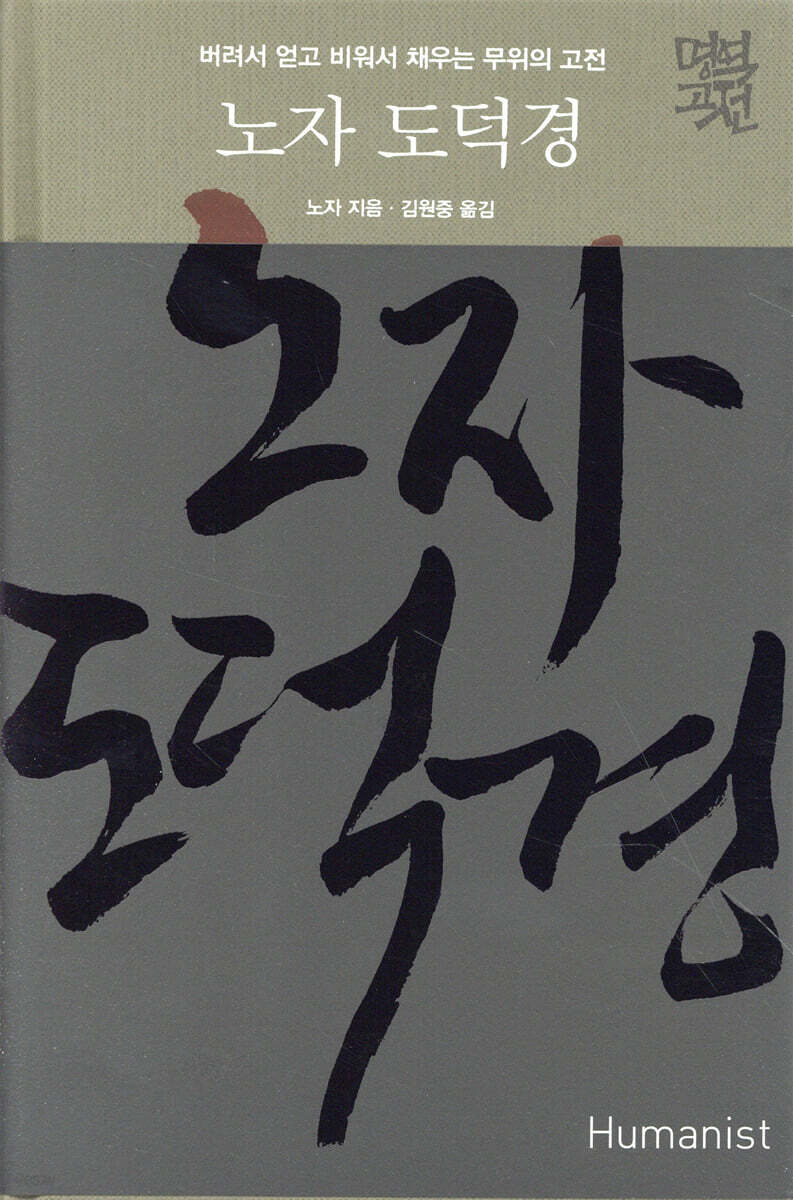
Lao Tzu's Tao Te Ching
 |
Description
Book Introduction
A source of profound wisdom and mystical inspiration,
Read Lao Tzu's thoughts in concise and beautiful Korean!
Professor Kim Won-joong of the Department of Chinese Language Education at Dankook University has revived Lao-tzu's "Tao Te Ching," considered the essence of Eastern philosophy, in concise and beautiful Korean.
The Tao Te Ching is a book that contains the sayings of Laozi, known as the founder of Taoism.
In a short text of about 5,000 characters, the essence of the profound thoughts pursued by Laozi is contained, and it has been a must-read for countless Chinese intellectuals since ancient times, starting with Wang Bi, and has also provided much inspiration to modern Western philosophy.
Professor Kim Won-joong's recently published 'Laozi's Tao Te Ching' is part of a series of excellent translations of key Chinese classics, beginning with a complete translation of Sima Qian's 'Records of the Grand Historian'. This work has been refined and supplemented with commentary, presenting readers with a more complete translation.
Among the numerous translations of Lao-tzu's "Tao Te Ching," Professor Kim Won-joong, an authority on translating Chinese classics, has fully revived Lao-tzu's original meaning while preserving the beautiful texture of Korean. I hope you will encounter the true face of Lao-tzu through this "Lao-tzu Tao Te Ching."
Read Lao Tzu's thoughts in concise and beautiful Korean!
Professor Kim Won-joong of the Department of Chinese Language Education at Dankook University has revived Lao-tzu's "Tao Te Ching," considered the essence of Eastern philosophy, in concise and beautiful Korean.
The Tao Te Ching is a book that contains the sayings of Laozi, known as the founder of Taoism.
In a short text of about 5,000 characters, the essence of the profound thoughts pursued by Laozi is contained, and it has been a must-read for countless Chinese intellectuals since ancient times, starting with Wang Bi, and has also provided much inspiration to modern Western philosophy.
Professor Kim Won-joong's recently published 'Laozi's Tao Te Ching' is part of a series of excellent translations of key Chinese classics, beginning with a complete translation of Sima Qian's 'Records of the Grand Historian'. This work has been refined and supplemented with commentary, presenting readers with a more complete translation.
Among the numerous translations of Lao-tzu's "Tao Te Ching," Professor Kim Won-joong, an authority on translating Chinese classics, has fully revived Lao-tzu's original meaning while preserving the beautiful texture of Korean. I hope you will encounter the true face of Lao-tzu through this "Lao-tzu Tao Te Ching."
- You can preview some of the book's contents.
Preview
index
Note
introduction
Release 12
Part 1 - Do-kyung
Chapter 1 If the Tao Could Be Spoken _ 31
Chapter 2 If only everyone in the world knew that beauty was beauty _ 37
Chapter 3: Do Not Worship Worldly Wisdom _ 43
Chapter 4: Like a bowl that is empty yet still functions _ 48
Chapter 5 Heaven and Earth Are Not Benevolent _ 51
Chapter 6: The Valley is Mysterious and Never Dies _ 55
Chapter 7: Heaven is long-lasting, the earth is enduring _ 58
Chapter 8 The Highest Good Is Like Water _ 61
If you have 9 chapters and try to fill them _ 66
Chapter 10: All Souls Embrace One _ 68
Chapter 11 Thirty spokes are gathered in one wheel hub _ 72
Chapter 12 Five Colors Blind the Eyes of Man _ 74
Chapter 13: When you are favored or insulted, pretend to be surprised _ 76
Chapter 14: Even if you try to see it, you cannot see it. It is called 'Yi' _ 80
Chapter 15: Those who practiced the Way well in ancient times _ 85
Chapter 16: When the mind reaches the pinnacle of emptiness _ 88
Chapter 17: If There Is a Most Excellent One _ 90
Chapter 18: The Great Tao Disappears _ 93
Chapter 19: If You Cut Off Holiness and Abandon Wisdom _ 96
Chapter 20: Quitting Learning Eliminates Worries _ 98
Chapter 21: The Form of Great Virtue _ 102
Chapter 22: When you bend it, it becomes whole again _ 105
Chapter 23: It is natural to speak less _ 108
Chapter 24: A person who stands on tiptoe cannot stand for long. _ 110
Chapter 25 Some things are made up of mixed elements _ 113
Chapter 26: The heavy is the foundation of the light _ 116
Chapter 27: Those who walk well leave no trace of their wheels _ 119
Chapter 28 Knowing the Male _ 122
Chapter 29: If Someone Wants to Take Over the World _ 125
Chapter 30: Those Who Assist the Monarch in the Way _ 127
Chapter 31: Only weapons are inauspicious objects _ 130
Chapter 32: The Tao is always nameless _ 133
Chapter 33: He who knows others is wise, but _ 136
Chapter 34: The Great Way Overflows Like Water _ 140
Chapter 35: If Someone Holds the Great Way _ 142
Chapter 36: How to Make It Shrink _ 145
Chapter 37: The Tao is eternally incapable of doing anything, but there is nothing it cannot do. _ 148
Part 2 - Deok-gyeong
Chapter 38: The Highest Virtue is Not Virtue _ 153
Chapter 39: There are things that have been achieved since ancient times _ 159
Chapter 40: Returning is the movement of the Tao _ 162
Chapter 41: The Highest Level of Scholars Hear the Way _ 165
Chapter 42: The Way Gives Birth to One _ 169
Chapter 43: The Softest Thing in the World _ 172
Chapter 44: Which is closer, fame or body? _ 174
Chapter 45: What is Great Seems to Be Flawed _ 176
Chapter 46: If There Is a Way in the World _ 178
Chapter 47 Without Leaving the Door _ 182
Chapter 48: If you practice learning, your knowledge will increase day by day _ 186
Chapter 49 Adults do not have a fixed mind _ 189
Chapter 50: Leaving Life and Entering Death _ 192
Chapter 51: The Tao Gives Birth to All Things _ 196
Chapter 52: Because the World Had a Beginning _ 198
Chapter 53: There's Someone Who Knows the Way Well for Me _ 203
Chapter 54: What is well-established will not be uprooted _ 206
Chapter 55: A Person Who Has a Lot of Virtue _ 209
Chapter 56: The Wise Man Does Not Speak _ 211
Chapter 57: Governing the Nation with Righteousness _ 213
Chapter 58: If the Politician Is Immature _ 216
Chapter 59: Governing People and Serving Heaven _ 221
Chapter 60: Governing a Great Nation _ 226
Chapter 61: Great Nations Flow to Low Places _ 229
Chapter 62: Doran is in the depths of all things _ 232
Chapter 63: Practicing Inaction _ 235
Chapter 64: Stability is easy to maintain _ 240
Chapter 65: Those who practiced the Way well in ancient times _ 245
Chapter 66: Why Rivers and Seas Can Rule in Every Valley _ 248
Chapter 67: The World Is All Great Because of My Way _ 250
Chapter 68: A good general does not show off his skills _ 254
Chapter 69: There's a saying in the art of warfare _ 256
Chapter 70 My Words Are Very Easy to Understand _ 258
Chapter 71: Not Knowing Yourself Well _ 260
Chapter 72: If the People Do Not Fear the Ruler's Oppression _ 262
Chapter 73: If you are brave enough to take risks, you will die. _ 264
Chapter 74: The People Do Not Fear Death _ 267
Chapter 75: The People Are Starving _ 269
Chapter 76: When people are alive, they are soft and fragile _ 271
Chapter 77: The Way of Heaven _ 273
Chapter 78: There is nothing in the world softer and weaker than water _ 275
Chapter 79: Even if I let go of a great grudge _ 277
Chapter 80: Making the Country Small and the People Fewer _ 281
Chapter 81: Trustworthy Words Are Not Beautiful _ 284
References _ 287
Search _ 291
introduction
Release 12
Part 1 - Do-kyung
Chapter 1 If the Tao Could Be Spoken _ 31
Chapter 2 If only everyone in the world knew that beauty was beauty _ 37
Chapter 3: Do Not Worship Worldly Wisdom _ 43
Chapter 4: Like a bowl that is empty yet still functions _ 48
Chapter 5 Heaven and Earth Are Not Benevolent _ 51
Chapter 6: The Valley is Mysterious and Never Dies _ 55
Chapter 7: Heaven is long-lasting, the earth is enduring _ 58
Chapter 8 The Highest Good Is Like Water _ 61
If you have 9 chapters and try to fill them _ 66
Chapter 10: All Souls Embrace One _ 68
Chapter 11 Thirty spokes are gathered in one wheel hub _ 72
Chapter 12 Five Colors Blind the Eyes of Man _ 74
Chapter 13: When you are favored or insulted, pretend to be surprised _ 76
Chapter 14: Even if you try to see it, you cannot see it. It is called 'Yi' _ 80
Chapter 15: Those who practiced the Way well in ancient times _ 85
Chapter 16: When the mind reaches the pinnacle of emptiness _ 88
Chapter 17: If There Is a Most Excellent One _ 90
Chapter 18: The Great Tao Disappears _ 93
Chapter 19: If You Cut Off Holiness and Abandon Wisdom _ 96
Chapter 20: Quitting Learning Eliminates Worries _ 98
Chapter 21: The Form of Great Virtue _ 102
Chapter 22: When you bend it, it becomes whole again _ 105
Chapter 23: It is natural to speak less _ 108
Chapter 24: A person who stands on tiptoe cannot stand for long. _ 110
Chapter 25 Some things are made up of mixed elements _ 113
Chapter 26: The heavy is the foundation of the light _ 116
Chapter 27: Those who walk well leave no trace of their wheels _ 119
Chapter 28 Knowing the Male _ 122
Chapter 29: If Someone Wants to Take Over the World _ 125
Chapter 30: Those Who Assist the Monarch in the Way _ 127
Chapter 31: Only weapons are inauspicious objects _ 130
Chapter 32: The Tao is always nameless _ 133
Chapter 33: He who knows others is wise, but _ 136
Chapter 34: The Great Way Overflows Like Water _ 140
Chapter 35: If Someone Holds the Great Way _ 142
Chapter 36: How to Make It Shrink _ 145
Chapter 37: The Tao is eternally incapable of doing anything, but there is nothing it cannot do. _ 148
Part 2 - Deok-gyeong
Chapter 38: The Highest Virtue is Not Virtue _ 153
Chapter 39: There are things that have been achieved since ancient times _ 159
Chapter 40: Returning is the movement of the Tao _ 162
Chapter 41: The Highest Level of Scholars Hear the Way _ 165
Chapter 42: The Way Gives Birth to One _ 169
Chapter 43: The Softest Thing in the World _ 172
Chapter 44: Which is closer, fame or body? _ 174
Chapter 45: What is Great Seems to Be Flawed _ 176
Chapter 46: If There Is a Way in the World _ 178
Chapter 47 Without Leaving the Door _ 182
Chapter 48: If you practice learning, your knowledge will increase day by day _ 186
Chapter 49 Adults do not have a fixed mind _ 189
Chapter 50: Leaving Life and Entering Death _ 192
Chapter 51: The Tao Gives Birth to All Things _ 196
Chapter 52: Because the World Had a Beginning _ 198
Chapter 53: There's Someone Who Knows the Way Well for Me _ 203
Chapter 54: What is well-established will not be uprooted _ 206
Chapter 55: A Person Who Has a Lot of Virtue _ 209
Chapter 56: The Wise Man Does Not Speak _ 211
Chapter 57: Governing the Nation with Righteousness _ 213
Chapter 58: If the Politician Is Immature _ 216
Chapter 59: Governing People and Serving Heaven _ 221
Chapter 60: Governing a Great Nation _ 226
Chapter 61: Great Nations Flow to Low Places _ 229
Chapter 62: Doran is in the depths of all things _ 232
Chapter 63: Practicing Inaction _ 235
Chapter 64: Stability is easy to maintain _ 240
Chapter 65: Those who practiced the Way well in ancient times _ 245
Chapter 66: Why Rivers and Seas Can Rule in Every Valley _ 248
Chapter 67: The World Is All Great Because of My Way _ 250
Chapter 68: A good general does not show off his skills _ 254
Chapter 69: There's a saying in the art of warfare _ 256
Chapter 70 My Words Are Very Easy to Understand _ 258
Chapter 71: Not Knowing Yourself Well _ 260
Chapter 72: If the People Do Not Fear the Ruler's Oppression _ 262
Chapter 73: If you are brave enough to take risks, you will die. _ 264
Chapter 74: The People Do Not Fear Death _ 267
Chapter 75: The People Are Starving _ 269
Chapter 76: When people are alive, they are soft and fragile _ 271
Chapter 77: The Way of Heaven _ 273
Chapter 78: There is nothing in the world softer and weaker than water _ 275
Chapter 79: Even if I let go of a great grudge _ 277
Chapter 80: Making the Country Small and the People Fewer _ 281
Chapter 81: Trustworthy Words Are Not Beautiful _ 284
References _ 287
Search _ 291
Publisher's Review
1.
The most balanced translation of Lao Tzu's Tao Te Ching!
- A balanced translation by Professor Kim Won-joong, an expert in Chinese classics, based on various translations from China and Korea!
The translation of the Tao Te Ching varies depending on the interpreter, and the commentary also varies.
Even today, there are 283 commentaries on this book, including Wang Bi's commentary, which cannot be omitted when explaining Laozi's 'Tao Te Ching', from the Han Dynasty to the modern era, and there are also about 300 commentaries whose originals have been lost and of which only a list remains.
There are also numerous translations in Korea, and renowned scholars such as Professor Kim Yong-ok and Professor Choi Jin-seok have translated and interpreted Laozi based on their own convictions and research. Therefore, readers who are encountering Laozi's 'Tao Te Ching' for the first time should refer to all of these translations and examine them harmoniously to approach Laozi's thoughts from a balanced perspective.
Professor Kim Won-joong attempted to translate the Tao Te Ching from this perspective.
When necessary, we compared and examined multiple versions, and for passages that showed subtle differences in interpretation, we provided footnotes to provide representative interpretations so that readers could compare them.
Above all, as a classical translator, I made it my most important principle to base my work on the original text and various Chinese classics, and I was wary of distorting the original author's true intentions by falling into the subjectivity of the interpreter.
I am confident that this book will serve as a great guide for readers as they take their first steps into the vast sea of the Tao Te Ching.
2.
Seeing humans in nature
- The problem of human affairs realized through inaction, the law of all things called Tao!
The Tao Te Ching of Lao-tzu talks about the 'Tao', 'virtue', 'nature', and 'life'.
Lao Tzu believes that the essence of the universe is 'Tao' and that all things in heaven and earth are born from 'Tao'.
'Tao' is a formless, ecstatic thing, the beginning of the world, the mother of all things, and has a mysterious power that does not run out when used up and does not dry up when taken.
'Deok' is the function and manifestation of 'Tao'.
Lao-tzu's philosophy is based on 'Tao', but its foundation is based on 'nature'.
Lao Tzu's philosophy of life is based on nature, and 'nature' is where the spirit of 'Tao' resides.
It can be said that the core of the Tao Te Ching is that nature, whether it be people, the earth, the sky, or the Tao, should all be considered first.
Although the Tao Te Ching is only about 5,000 characters long, the thoughts contained within it are very profound, and the more you ponder it, the richer its meaning becomes.
Lao-tzu's thought, which cannot be defined in a single word, has given countless topics of discussion to Eastern and Western philosophers due to its inexhaustible scope.
Sometimes it is read as a philosophical question about the fundamentals of the world, a theory of life, or even a theory of politics, governance, or military strategy.
Readers, too, will find that if they slowly ponder the questions and insights Lao Tzu poses, their perspectives on society and life will change.
When a person is alive, he is soft and fragile, but when he dies, he becomes hard and rigid.
All things and plants are soft and delicate when they are alive, but when they die, they dry up and wither.
Therefore, what is hard and rigid is the herd of death, and what is soft and fragile is the herd of life.
This is why if an army is too strong, it will be destroyed, and if a tree is too strong, it will break.
The strong and the great reside below, and the soft and the fragile reside above.
- Chapter 76 of the Tao Te Ching
The most balanced translation of Lao Tzu's Tao Te Ching!
- A balanced translation by Professor Kim Won-joong, an expert in Chinese classics, based on various translations from China and Korea!
The translation of the Tao Te Ching varies depending on the interpreter, and the commentary also varies.
Even today, there are 283 commentaries on this book, including Wang Bi's commentary, which cannot be omitted when explaining Laozi's 'Tao Te Ching', from the Han Dynasty to the modern era, and there are also about 300 commentaries whose originals have been lost and of which only a list remains.
There are also numerous translations in Korea, and renowned scholars such as Professor Kim Yong-ok and Professor Choi Jin-seok have translated and interpreted Laozi based on their own convictions and research. Therefore, readers who are encountering Laozi's 'Tao Te Ching' for the first time should refer to all of these translations and examine them harmoniously to approach Laozi's thoughts from a balanced perspective.
Professor Kim Won-joong attempted to translate the Tao Te Ching from this perspective.
When necessary, we compared and examined multiple versions, and for passages that showed subtle differences in interpretation, we provided footnotes to provide representative interpretations so that readers could compare them.
Above all, as a classical translator, I made it my most important principle to base my work on the original text and various Chinese classics, and I was wary of distorting the original author's true intentions by falling into the subjectivity of the interpreter.
I am confident that this book will serve as a great guide for readers as they take their first steps into the vast sea of the Tao Te Ching.
2.
Seeing humans in nature
- The problem of human affairs realized through inaction, the law of all things called Tao!
The Tao Te Ching of Lao-tzu talks about the 'Tao', 'virtue', 'nature', and 'life'.
Lao Tzu believes that the essence of the universe is 'Tao' and that all things in heaven and earth are born from 'Tao'.
'Tao' is a formless, ecstatic thing, the beginning of the world, the mother of all things, and has a mysterious power that does not run out when used up and does not dry up when taken.
'Deok' is the function and manifestation of 'Tao'.
Lao-tzu's philosophy is based on 'Tao', but its foundation is based on 'nature'.
Lao Tzu's philosophy of life is based on nature, and 'nature' is where the spirit of 'Tao' resides.
It can be said that the core of the Tao Te Ching is that nature, whether it be people, the earth, the sky, or the Tao, should all be considered first.
Although the Tao Te Ching is only about 5,000 characters long, the thoughts contained within it are very profound, and the more you ponder it, the richer its meaning becomes.
Lao-tzu's thought, which cannot be defined in a single word, has given countless topics of discussion to Eastern and Western philosophers due to its inexhaustible scope.
Sometimes it is read as a philosophical question about the fundamentals of the world, a theory of life, or even a theory of politics, governance, or military strategy.
Readers, too, will find that if they slowly ponder the questions and insights Lao Tzu poses, their perspectives on society and life will change.
When a person is alive, he is soft and fragile, but when he dies, he becomes hard and rigid.
All things and plants are soft and delicate when they are alive, but when they die, they dry up and wither.
Therefore, what is hard and rigid is the herd of death, and what is soft and fragile is the herd of life.
This is why if an army is too strong, it will be destroyed, and if a tree is too strong, it will break.
The strong and the great reside below, and the soft and the fragile reside above.
- Chapter 76 of the Tao Te Ching
GOODS SPECIFICS
- Date of issue: September 3, 2018
- Format: Hardcover book binding method guide
- Page count, weight, size: 303 pages | 484g | 150*220*30mm
- ISBN13: 9791160801576
- ISBN10: 1160801576
You may also like
카테고리
korean


korean

![GQ KOREA Mark (Monthly): December [2025]](http://librairie.coreenne.fr/cdn/shop/files/8ef265dbbfbf186523ed75ba7319009d.jpg?v=1765340328&width=3840)


