

History of Western Philosophy 1
 |
Description
Book Introduction
The ultimate guide to navigate the history of philosophy!
Originating from a Norwegian liberal arts philosophy textbook, it has been translated into 14 languages around the world.
The first Korean translation of Sirbecque and Guillier's History of Western Philosophy
This book is a history of Western philosophy written by Gunnar Sirbeck and Niels Gillier, two of Norway's leading philosophers. It was first published in Norway in 1972 and has been revised seven times. It is a famous work that has been translated into 14 languages around the world, including German, French, English, Russian, Chinese, and Arabic.
The fact that a history of philosophy book published in Norway, a country with a population of 5 million, has been translated into 14 languages and is widely distributed to other regions is a testament to the solid content of the book.
This book was originally written as a liberal arts philosophy textbook for general college students who did not major in philosophy.
Afterwards, in Norway, it became established as a representative textbook for the 'Examen Philosophicum', a philosophy exam that all university students had to take regardless of their major, and gradually came to be read throughout Scandinavia regardless of whether they were preparing for the exam.
It has now spread beyond Scandinavia and is read almost all over the world.
This book presents a new way to read the history of Western philosophy, with a perspective and fresh approach that are completely different from the numerous books on the history of philosophy that have been published so far, as well as clear narrative and innovative structure.
Beyond the ideas considered orthodox, the book actively describes the achievements of various disciplines that have influenced our perception, does not shy away from discussing sharp issues, and ultimately provides accurate guidance so that readers can develop their own philosophical perspectives.
Readers will witness a fascinating unfolding of 2,500 years of intellectual inquiry, from pre-Socratic philosophy to late 20th-century contemporary philosophy, across a spectrum of unprecedented breadth and depth.
Originating from a Norwegian liberal arts philosophy textbook, it has been translated into 14 languages around the world.
The first Korean translation of Sirbecque and Guillier's History of Western Philosophy
This book is a history of Western philosophy written by Gunnar Sirbeck and Niels Gillier, two of Norway's leading philosophers. It was first published in Norway in 1972 and has been revised seven times. It is a famous work that has been translated into 14 languages around the world, including German, French, English, Russian, Chinese, and Arabic.
The fact that a history of philosophy book published in Norway, a country with a population of 5 million, has been translated into 14 languages and is widely distributed to other regions is a testament to the solid content of the book.
This book was originally written as a liberal arts philosophy textbook for general college students who did not major in philosophy.
Afterwards, in Norway, it became established as a representative textbook for the 'Examen Philosophicum', a philosophy exam that all university students had to take regardless of their major, and gradually came to be read throughout Scandinavia regardless of whether they were preparing for the exam.
It has now spread beyond Scandinavia and is read almost all over the world.
This book presents a new way to read the history of Western philosophy, with a perspective and fresh approach that are completely different from the numerous books on the history of philosophy that have been published so far, as well as clear narrative and innovative structure.
Beyond the ideas considered orthodox, the book actively describes the achievements of various disciplines that have influenced our perception, does not shy away from discussing sharp issues, and ultimately provides accurate guidance so that readers can develop their own philosophical perspectives.
Readers will witness a fascinating unfolding of 2,500 years of intellectual inquiry, from pre-Socratic philosophy to late 20th-century contemporary philosophy, across a spectrum of unprecedented breadth and depth.
- You can preview some of the book's contents.
Preview
index
Acknowledgements
Introduction
Chapter 1: Pre-Socratic Philosophy
1.
Greek City-States: Humans in Community
2.
Thales
3.
Anaximander and Anaximenes
4.
Heraclitus, Parmenides, Zeno
- Heraclitus
- Parmenides
- Xenon
5.
Mediational Philosophers: Empedocles and Anaxagoras
- Empedocles
- Anaxagoras
6.
Democritus
7.
Pythagorean school
question
More books to read
Chapter 2: The Sophists and Socrates
1.
The Sophists
- Gorgias
- Trashma Course
- Protagoras
2.
Socrates
question
More books to read
Chapter 3: Plato: Theory of Forms and the Ideal Republic
1.
Knowledge and existence
- Ideas and knowledge
- Idea and good
- Eros and Education
- Some objections to the theory of ideas
- Idea and Totality
- Parables
- Theory of Ideas and the Role of Humans
2.
Plato's Republic and Good
- Education and social class differentiation
- Power and ability
- Men and women
3.
The ethical responsibility of art
question
More books to read
Chapter 4: Aristotle: The Natural Order and Man as a “Political Animal”
1.
Idea or substance?
- Plato and Aristotle
- Entity and properties
2.
Ontology and Epistemology
- Basic concepts
- Four causes
- Change and Cosmology
- Actuality-potentiality and hierarchical and organic worldview
3.
Aristotle and Ecology
4.
Knowledge and practice
- Forms of knowledge
- Anthropology and sociology
- Good life
- A just society
5.
Art - Imitation and Catharsis
question
More books to read
Chapter 5: Late Antiquity Philosophy
1.
Securing personal happiness
- From Greek city-states to Hellenistic empires
- A new structure: individual and universal law
2.
Epicureanism - Ensuring personal well-being
3.
Stoicism - securing individual happiness
- Main contents of Stoic philosophy
- Cynic school
- Stoicism of Greek-Hellenistic philosophy
- Roman Stoicism
4.
Neoplatonism
5.
skepticism
6.
Ancient science and learning
- Historical narrative
- Medicine
- Law
- math
- Physics and Chemistry
- Astronomy
- Literature
- Ancient female scientists
question
More books to read
Chapter 6: The Middle Ages
1.
Christianity and Philosophy
2.
The Pope and the King: Two Rulers in One Country
3.
Augustine - Faith and Reason
- Philosophy and Theology
- Refuting skepticism
- Christian Neoplatonist Augustine
- Knowledge and will
4.
The Problem of Universals and Scholasticism
- Platonic realism
- Aristotelian realism
5.
Thomas Aquinas - Harmony and Synthesis
- Law and Justice
- Ontology
- Epistemology
- Anthropology and moral philosophy
- God and the World
- The problem of evil
6.
Marsilius of Padua and William of Ockham - From Synthesis to Skepticism
7.
Martin Luther - Obligationism and Nominalism: Faith Alone
8.
University traditions
9.
Arab philosophy and science
question
More books to read
Chapter 7: The Rise of Natural Science
1.
Methodological debate
2.
Astronomy - Copernicus and Kepler
- Concepts of science and experience
- Copernicus and the heliocentric theory
- Kepler and planetary orbits
3.
Physics - Galileo and Newton
- New discoveries
- “The Galileo Incident”
- The disintegration of the universe and the mathematization of nature
- Newton: A Great Achievement in Physics
4.
biological sciences
5.
Humans as Sub-Yektum
- Paradigm shift in astronomy
- Paradigm shift in dynamics
- A paradigm shift in optics
question
More books to read
Chapter 8: Renaissance and Realpolitik: Machiavelli and Hobbes
1.
Machiavelli - Politics as Manipulation
2.
Politics by Contract and Politics by Natural Law - Althusius and Grotius
3.
Hobbes: The Individual and Self-Preservation
- A society like clockwork
- Natural law as a rule of reason
- Exercise theory
- Liberalism and liberalism
question
More books to read
Chapter 9: Doubt and Faith: The Human Being at the Center
1.
Descartes: Methodological Doubt and Trust in Reason
- I think, therefore I am.
- God and rationalism
- Mechanistic worldview and the relationship between soul and body
2.
Pascal - Reason of the Heart
3.
Biko - History as an Example
question
More books to read
Chapter 10 Rationalism as a System
1.
Spinoza - God is nature
- Entity and properties
- Necessity and freedom
2.
Leibniz - Terminals and Predetermined Harmony
- Purpose and Cause ─ New Synthesis
- The best of all possible worlds
question
More books to read
Chapter 11 Locke: Enlightenment and Equality
1.
Epistemology and Critique of Knowledge
- Clarification of concepts
- The origin of knowledge
2.
Political Theory - Individuals and Rights
question
More books to read
Chapter 12: Empiricism and the Critique of Epistemology
1.
Berkeley - A Critique of Empiricism from Within
- "Essay" is "Percipi" - Idealistic Empiricism
- The substance goes out, and God comes in!
2.
Hume - Empiricism as Critique
- Empirical epistemology ─ “ideas” and “impressions”
- Empirical Critique of Knowledge - The Concept of Causality
- Moral Philosophy ─ The Distinction Between “Existence” and “Ought”
- Practical trust and custom
Empiricism and Rationalism - Fronts of Conflict
question
More books to read
Introduction
Chapter 1: Pre-Socratic Philosophy
1.
Greek City-States: Humans in Community
2.
Thales
3.
Anaximander and Anaximenes
4.
Heraclitus, Parmenides, Zeno
- Heraclitus
- Parmenides
- Xenon
5.
Mediational Philosophers: Empedocles and Anaxagoras
- Empedocles
- Anaxagoras
6.
Democritus
7.
Pythagorean school
question
More books to read
Chapter 2: The Sophists and Socrates
1.
The Sophists
- Gorgias
- Trashma Course
- Protagoras
2.
Socrates
question
More books to read
Chapter 3: Plato: Theory of Forms and the Ideal Republic
1.
Knowledge and existence
- Ideas and knowledge
- Idea and good
- Eros and Education
- Some objections to the theory of ideas
- Idea and Totality
- Parables
- Theory of Ideas and the Role of Humans
2.
Plato's Republic and Good
- Education and social class differentiation
- Power and ability
- Men and women
3.
The ethical responsibility of art
question
More books to read
Chapter 4: Aristotle: The Natural Order and Man as a “Political Animal”
1.
Idea or substance?
- Plato and Aristotle
- Entity and properties
2.
Ontology and Epistemology
- Basic concepts
- Four causes
- Change and Cosmology
- Actuality-potentiality and hierarchical and organic worldview
3.
Aristotle and Ecology
4.
Knowledge and practice
- Forms of knowledge
- Anthropology and sociology
- Good life
- A just society
5.
Art - Imitation and Catharsis
question
More books to read
Chapter 5: Late Antiquity Philosophy
1.
Securing personal happiness
- From Greek city-states to Hellenistic empires
- A new structure: individual and universal law
2.
Epicureanism - Ensuring personal well-being
3.
Stoicism - securing individual happiness
- Main contents of Stoic philosophy
- Cynic school
- Stoicism of Greek-Hellenistic philosophy
- Roman Stoicism
4.
Neoplatonism
5.
skepticism
6.
Ancient science and learning
- Historical narrative
- Medicine
- Law
- math
- Physics and Chemistry
- Astronomy
- Literature
- Ancient female scientists
question
More books to read
Chapter 6: The Middle Ages
1.
Christianity and Philosophy
2.
The Pope and the King: Two Rulers in One Country
3.
Augustine - Faith and Reason
- Philosophy and Theology
- Refuting skepticism
- Christian Neoplatonist Augustine
- Knowledge and will
4.
The Problem of Universals and Scholasticism
- Platonic realism
- Aristotelian realism
5.
Thomas Aquinas - Harmony and Synthesis
- Law and Justice
- Ontology
- Epistemology
- Anthropology and moral philosophy
- God and the World
- The problem of evil
6.
Marsilius of Padua and William of Ockham - From Synthesis to Skepticism
7.
Martin Luther - Obligationism and Nominalism: Faith Alone
8.
University traditions
9.
Arab philosophy and science
question
More books to read
Chapter 7: The Rise of Natural Science
1.
Methodological debate
2.
Astronomy - Copernicus and Kepler
- Concepts of science and experience
- Copernicus and the heliocentric theory
- Kepler and planetary orbits
3.
Physics - Galileo and Newton
- New discoveries
- “The Galileo Incident”
- The disintegration of the universe and the mathematization of nature
- Newton: A Great Achievement in Physics
4.
biological sciences
5.
Humans as Sub-Yektum
- Paradigm shift in astronomy
- Paradigm shift in dynamics
- A paradigm shift in optics
question
More books to read
Chapter 8: Renaissance and Realpolitik: Machiavelli and Hobbes
1.
Machiavelli - Politics as Manipulation
2.
Politics by Contract and Politics by Natural Law - Althusius and Grotius
3.
Hobbes: The Individual and Self-Preservation
- A society like clockwork
- Natural law as a rule of reason
- Exercise theory
- Liberalism and liberalism
question
More books to read
Chapter 9: Doubt and Faith: The Human Being at the Center
1.
Descartes: Methodological Doubt and Trust in Reason
- I think, therefore I am.
- God and rationalism
- Mechanistic worldview and the relationship between soul and body
2.
Pascal - Reason of the Heart
3.
Biko - History as an Example
question
More books to read
Chapter 10 Rationalism as a System
1.
Spinoza - God is nature
- Entity and properties
- Necessity and freedom
2.
Leibniz - Terminals and Predetermined Harmony
- Purpose and Cause ─ New Synthesis
- The best of all possible worlds
question
More books to read
Chapter 11 Locke: Enlightenment and Equality
1.
Epistemology and Critique of Knowledge
- Clarification of concepts
- The origin of knowledge
2.
Political Theory - Individuals and Rights
question
More books to read
Chapter 12: Empiricism and the Critique of Epistemology
1.
Berkeley - A Critique of Empiricism from Within
- "Essay" is "Percipi" - Idealistic Empiricism
- The substance goes out, and God comes in!
2.
Hume - Empiricism as Critique
- Empirical epistemology ─ “ideas” and “impressions”
- Empirical Critique of Knowledge - The Concept of Causality
- Moral Philosophy ─ The Distinction Between “Existence” and “Ought”
- Practical trust and custom
Empiricism and Rationalism - Fronts of Conflict
question
More books to read
Detailed image
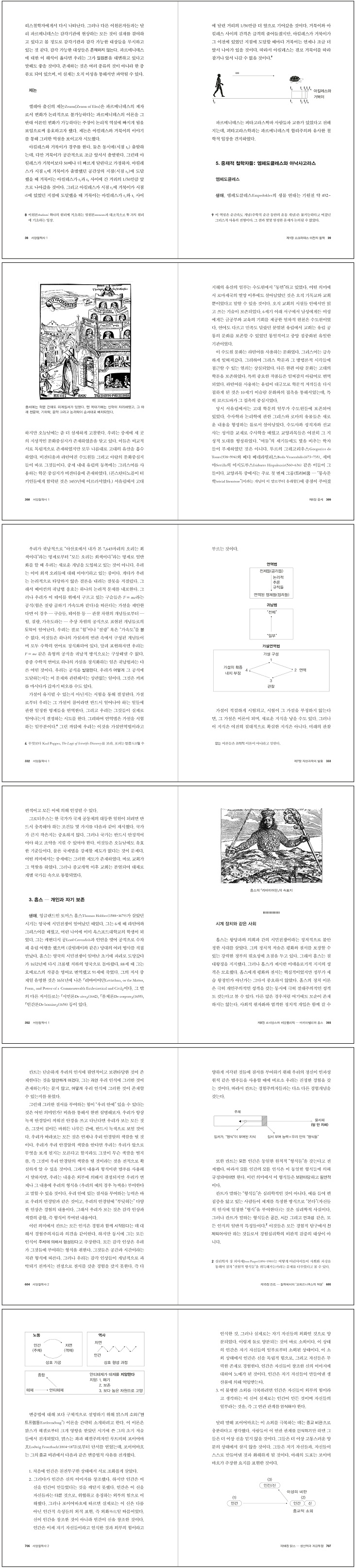
Into the book
“Compared to other accounts of the history of philosophy, we have tried to avoid some well-known pitfalls.
The history of philosophy always bears the marks of the author's academic perspective, background knowledge, research focus, and cultural orientation.
Consequently, every historical narrative represents one perspective on previous thought.
Therefore, it is inevitable that the author emphasizes what he believes is relevant and important within historical diversity.
It is impossible for anyone to view Machiavelli, Marx, and Heidegger through a neutral lens.
“It is an illusion if the author believes that he can write a history of philosophy or any other historical narrative from the perspective of eternity or of God.” --- p.8
“It is generally accepted that the scientific revolution of the early modern era challenged the contemporary worldview and created new epistemological and ethical problems.
That is why Copernicus, Kepler, and Newton are discussed in all studies of the history of philosophy.
We also agree with this opinion.
But we also believe that the rise of the humanities and the revolution within the social sciences raise similar questions.
So this book goes a step further than traditional textbooks, which usually limit themselves to discussing the influence of classical natural science on our worldview and humanity.
The disciplines associated with the names Darwin and Freud, Durkheim and Weber, represent important philosophical challenges.
“So this book covers quite a bit of the humanities, social sciences, and psychoanalysis.”
The history of philosophy always bears the marks of the author's academic perspective, background knowledge, research focus, and cultural orientation.
Consequently, every historical narrative represents one perspective on previous thought.
Therefore, it is inevitable that the author emphasizes what he believes is relevant and important within historical diversity.
It is impossible for anyone to view Machiavelli, Marx, and Heidegger through a neutral lens.
“It is an illusion if the author believes that he can write a history of philosophy or any other historical narrative from the perspective of eternity or of God.” --- p.8
“It is generally accepted that the scientific revolution of the early modern era challenged the contemporary worldview and created new epistemological and ethical problems.
That is why Copernicus, Kepler, and Newton are discussed in all studies of the history of philosophy.
We also agree with this opinion.
But we also believe that the rise of the humanities and the revolution within the social sciences raise similar questions.
So this book goes a step further than traditional textbooks, which usually limit themselves to discussing the influence of classical natural science on our worldview and humanity.
The disciplines associated with the names Darwin and Freud, Durkheim and Weber, represent important philosophical challenges.
“So this book covers quite a bit of the humanities, social sciences, and psychoanalysis.”
--- p.9
Publisher's Review
The ultimate guide to navigate the history of philosophy!
Originating from a Norwegian liberal arts philosophy textbook, it has been translated into 14 languages around the world.
The first Korean translation of Sirbecque and Guillier's History of Western Philosophy
This book is a history of Western philosophy written by Gunnar Sirbeck and Niels Gillier, two of Norway's leading philosophers. It was first published in Norway in 1972 and has been revised seven times. It is a famous work that has been translated into 14 languages around the world, including German, French, English, Russian, Chinese, and Arabic.
The fact that a history of philosophy book published in Norway, a country with a population of 5 million, has been translated into 14 languages and is widely distributed to other regions is a testament to the solid content of the book.
This book was originally written as a liberal arts philosophy textbook for general college students who did not major in philosophy.
Afterwards, in Norway, it became established as a representative textbook for the 'Examen Philosophicum', a philosophy exam that all university students had to take regardless of their major, and gradually came to be read throughout Scandinavia regardless of whether they were preparing for the exam.
It has now spread beyond Scandinavia and is read almost all over the world.
This book presents a new way to read the history of Western philosophy, with a perspective and fresh approach that are completely different from the numerous books on the history of philosophy that have been published so far, as well as clear narrative and innovative structure.
Beyond the ideas considered orthodox, the book actively describes the achievements of various disciplines that have influenced our perception, does not shy away from discussing sharp issues, and ultimately provides accurate guidance so that readers can develop their own philosophical perspectives.
Readers will witness a fascinating unfolding of 2,500 years of intellectual inquiry, from pre-Socratic philosophy to late 20th-century contemporary philosophy, across a spectrum of unprecedented breadth and depth.
“Clear and accurate”
The reason this book has received such global acclaim is, above all, its ability to explain difficult content in an easy-to-understand manner.
Explaining philosophical concepts and arguments in an accessible way without sacrificing content and depth is a very difficult task, and this book successfully accomplishes this task.
Moreover, the thematically oriented narrative and the rich connections between each philosophical discussion make one wonder what will happen next.
For this reason, books on the history of philosophy are so interesting to read that they make you abandon the prejudice that they are boring and difficult.
Just a glance at the table of contents of this book, which concisely summarizes the core of each philosophical discussion, will reveal how systematically the book is structured.
A broad and balanced perspective encompassing “natural science,” “social science,” and “political thought.”
Compared to other books on the history of philosophy, this book's most notable feature is its broad perspective encompassing natural science, social science, and political thought.
One of the book's greatest achievements is that it broadens the spectrum of the history of philosophy by describing many political, social, economic, and scientific thinkers who would never appear in a typical history of philosophy book.
While most books on the history of philosophy are academic histories that focus on the influence of philosophical thought, this book covers the historical background as well as the relationship between philosophy, political thought, and other academic disciplines in detail.
A particularly striking feature of this book is its detailed description of the mutual influence between natural science and philosophy.
It not only discusses the scientific transformation that influenced human self-understanding by focusing on the rise of natural science led by 'Copernicus', 'Kepler', 'Newton', and 'Galileo', but also devotes an entire chapter to 'Darwin' and examines the epistemological changes brought about by 'modern physics', including 'Einstein's' theories, from a philosophical perspective.
Furthermore, this book goes one step further and deals significantly with the humanities, social sciences, and psychoanalysis.
The authors believe that the rise of the humanities and the revolution in the social sciences, no less than the scientific revolution, challenged the contemporary worldview and created new epistemological and ethical problems.
The chapter on 'Socialism and Fascism' is placed between Nietzsche and Freud, and provides an overview of figures such as Comte, Tocqueville, Tönnies, Simmel, Durkheim, Weber, and Parsons, as well as the establishment of sociology.
In particular, we will focus on their analysis of modern society and their status in sociology.
Freud, the founder of psychoanalysis, is also evaluated as having overturned our concept of human beings.
This book offers readers a balanced perspective, keeping in view the achievements of many disciplines that represent important philosophical challenges.
A history of philosophy focusing on “the issue of natural rights and the extension of science and scientific rationality”
“It is impossible for anyone to view Machiavelli, Marx, and Heidegger through a neutral lens.” The authors acknowledge that any account of the history of philosophy always bears the marks of the author’s academic perspective, background, research focus, and cultural orientation.
In this respect, the attitude of this book is honest.
Consequently, every historical narrative represents one perspective on previous thought.
Therefore, it is inevitable that within historical diversity, the author emphasizes what he believes is appropriate and important.
What is important is how to construct the history of philosophy persuasively and from what perspective.
According to the authors, this book is an introduction to the history of Western philosophy, focusing on “the question of natural rights and the extension of science and scientific rationality.”
In other words, the perspective that guides this book is the belief in the universal rationality that underlies the broad human rights and democratic ideas achieved by modern society and scientific thinking.
This book attempts to understand philosophers of the past within their premises, while simultaneously creating a dialogue with them.
He says that the only way we can take seriously and respond to the ideas of many philosophers, including Plato and Aristotle, is to try to take a position on what they said.
This book seeks to hear the voices of numerous philosophers from ancient to modern times, but also to respond to their voices.
In particular, the book's rebuttals to existing evaluations of philosophers such as Plato, Hegel, and Marx ("There is something unsettlingly authoritarian in Plato's thought," "There is no place for the individual in Hegel's system," "Hegel's philosophy is totalitarian," "Marx's theory undermines its own foundations") are noteworthy.
This book shows how to address rather than avoid sharp philosophical issues.
Use of rich examples and visual images
Friendly structure to help you understand philosophical concepts
The "Introduction" of this book, which explains the perspectives on the history of philosophy and how to read philosophical texts in a concise manner, is the best guide to guiding readers in reading the history of philosophy.
Each chapter in the text separately discusses the lives of major philosophers before delving into the full-scale discussion, and uses abundant examples and diagrams to explain philosophical concepts.
For example, diagrams on 'Plato's Allegory of Cognitive Ability', 'Aristotle's Hierarchical Universe', 'Two Authorities in the Middle Ages', 'Descartes's Argument', 'Kant's Epistemology', 'Hegel's Dialectical Synthesis', and 'Marx's Historical Materialism' are appropriately placed in the places where they explain each concept.
Additionally, illustrations related to the characters and historical background are added to help with a more accurate understanding.
We also do not forget to provide reference points so that the history of philosophy can be read from all angles.
In explaining Plato's ideas on women's rights, one might refer to Locke and Mill, who deal with universal individual rights.
The numerous references in this book reveal how perspectives from ancient and modern philosophy communicate across time and space.
Also, at the end of each chapter, there are 'Questions' and 'Books for Further Reading'. The 'Questions' that help organize the core content of the chapter are sharp and rich enough to constitute 'A History of Western Philosophy through Questions' in and of themselves (therefore, reading the 'Questions' of each chapter first and then reading the chapter itself is another way to read this book), and the 'Books for Further Reading' consisting of primary and secondary literature will help you study the philosophy in question more deeply.
“The first task of philosophy is to ask questions.
This is something we have to do ourselves.
But others can help,” the authors emphasize.
This book will provide readers who have tried and failed many times to read the history of Western philosophy, or readers who are reading it for the first time, with the pleasure of reading the history of philosophy without getting bored. For readers who have read other books on the history of Western philosophy, this book will provide a fresh and active approach that will bring new joy to reading the history of philosophy.
This book will be the best guide to accompany us as we draw our own philosophical map by asking ourselves questions.
Originating from a Norwegian liberal arts philosophy textbook, it has been translated into 14 languages around the world.
The first Korean translation of Sirbecque and Guillier's History of Western Philosophy
This book is a history of Western philosophy written by Gunnar Sirbeck and Niels Gillier, two of Norway's leading philosophers. It was first published in Norway in 1972 and has been revised seven times. It is a famous work that has been translated into 14 languages around the world, including German, French, English, Russian, Chinese, and Arabic.
The fact that a history of philosophy book published in Norway, a country with a population of 5 million, has been translated into 14 languages and is widely distributed to other regions is a testament to the solid content of the book.
This book was originally written as a liberal arts philosophy textbook for general college students who did not major in philosophy.
Afterwards, in Norway, it became established as a representative textbook for the 'Examen Philosophicum', a philosophy exam that all university students had to take regardless of their major, and gradually came to be read throughout Scandinavia regardless of whether they were preparing for the exam.
It has now spread beyond Scandinavia and is read almost all over the world.
This book presents a new way to read the history of Western philosophy, with a perspective and fresh approach that are completely different from the numerous books on the history of philosophy that have been published so far, as well as clear narrative and innovative structure.
Beyond the ideas considered orthodox, the book actively describes the achievements of various disciplines that have influenced our perception, does not shy away from discussing sharp issues, and ultimately provides accurate guidance so that readers can develop their own philosophical perspectives.
Readers will witness a fascinating unfolding of 2,500 years of intellectual inquiry, from pre-Socratic philosophy to late 20th-century contemporary philosophy, across a spectrum of unprecedented breadth and depth.
“Clear and accurate”
The reason this book has received such global acclaim is, above all, its ability to explain difficult content in an easy-to-understand manner.
Explaining philosophical concepts and arguments in an accessible way without sacrificing content and depth is a very difficult task, and this book successfully accomplishes this task.
Moreover, the thematically oriented narrative and the rich connections between each philosophical discussion make one wonder what will happen next.
For this reason, books on the history of philosophy are so interesting to read that they make you abandon the prejudice that they are boring and difficult.
Just a glance at the table of contents of this book, which concisely summarizes the core of each philosophical discussion, will reveal how systematically the book is structured.
A broad and balanced perspective encompassing “natural science,” “social science,” and “political thought.”
Compared to other books on the history of philosophy, this book's most notable feature is its broad perspective encompassing natural science, social science, and political thought.
One of the book's greatest achievements is that it broadens the spectrum of the history of philosophy by describing many political, social, economic, and scientific thinkers who would never appear in a typical history of philosophy book.
While most books on the history of philosophy are academic histories that focus on the influence of philosophical thought, this book covers the historical background as well as the relationship between philosophy, political thought, and other academic disciplines in detail.
A particularly striking feature of this book is its detailed description of the mutual influence between natural science and philosophy.
It not only discusses the scientific transformation that influenced human self-understanding by focusing on the rise of natural science led by 'Copernicus', 'Kepler', 'Newton', and 'Galileo', but also devotes an entire chapter to 'Darwin' and examines the epistemological changes brought about by 'modern physics', including 'Einstein's' theories, from a philosophical perspective.
Furthermore, this book goes one step further and deals significantly with the humanities, social sciences, and psychoanalysis.
The authors believe that the rise of the humanities and the revolution in the social sciences, no less than the scientific revolution, challenged the contemporary worldview and created new epistemological and ethical problems.
The chapter on 'Socialism and Fascism' is placed between Nietzsche and Freud, and provides an overview of figures such as Comte, Tocqueville, Tönnies, Simmel, Durkheim, Weber, and Parsons, as well as the establishment of sociology.
In particular, we will focus on their analysis of modern society and their status in sociology.
Freud, the founder of psychoanalysis, is also evaluated as having overturned our concept of human beings.
This book offers readers a balanced perspective, keeping in view the achievements of many disciplines that represent important philosophical challenges.
A history of philosophy focusing on “the issue of natural rights and the extension of science and scientific rationality”
“It is impossible for anyone to view Machiavelli, Marx, and Heidegger through a neutral lens.” The authors acknowledge that any account of the history of philosophy always bears the marks of the author’s academic perspective, background, research focus, and cultural orientation.
In this respect, the attitude of this book is honest.
Consequently, every historical narrative represents one perspective on previous thought.
Therefore, it is inevitable that within historical diversity, the author emphasizes what he believes is appropriate and important.
What is important is how to construct the history of philosophy persuasively and from what perspective.
According to the authors, this book is an introduction to the history of Western philosophy, focusing on “the question of natural rights and the extension of science and scientific rationality.”
In other words, the perspective that guides this book is the belief in the universal rationality that underlies the broad human rights and democratic ideas achieved by modern society and scientific thinking.
This book attempts to understand philosophers of the past within their premises, while simultaneously creating a dialogue with them.
He says that the only way we can take seriously and respond to the ideas of many philosophers, including Plato and Aristotle, is to try to take a position on what they said.
This book seeks to hear the voices of numerous philosophers from ancient to modern times, but also to respond to their voices.
In particular, the book's rebuttals to existing evaluations of philosophers such as Plato, Hegel, and Marx ("There is something unsettlingly authoritarian in Plato's thought," "There is no place for the individual in Hegel's system," "Hegel's philosophy is totalitarian," "Marx's theory undermines its own foundations") are noteworthy.
This book shows how to address rather than avoid sharp philosophical issues.
Use of rich examples and visual images
Friendly structure to help you understand philosophical concepts
The "Introduction" of this book, which explains the perspectives on the history of philosophy and how to read philosophical texts in a concise manner, is the best guide to guiding readers in reading the history of philosophy.
Each chapter in the text separately discusses the lives of major philosophers before delving into the full-scale discussion, and uses abundant examples and diagrams to explain philosophical concepts.
For example, diagrams on 'Plato's Allegory of Cognitive Ability', 'Aristotle's Hierarchical Universe', 'Two Authorities in the Middle Ages', 'Descartes's Argument', 'Kant's Epistemology', 'Hegel's Dialectical Synthesis', and 'Marx's Historical Materialism' are appropriately placed in the places where they explain each concept.
Additionally, illustrations related to the characters and historical background are added to help with a more accurate understanding.
We also do not forget to provide reference points so that the history of philosophy can be read from all angles.
In explaining Plato's ideas on women's rights, one might refer to Locke and Mill, who deal with universal individual rights.
The numerous references in this book reveal how perspectives from ancient and modern philosophy communicate across time and space.
Also, at the end of each chapter, there are 'Questions' and 'Books for Further Reading'. The 'Questions' that help organize the core content of the chapter are sharp and rich enough to constitute 'A History of Western Philosophy through Questions' in and of themselves (therefore, reading the 'Questions' of each chapter first and then reading the chapter itself is another way to read this book), and the 'Books for Further Reading' consisting of primary and secondary literature will help you study the philosophy in question more deeply.
“The first task of philosophy is to ask questions.
This is something we have to do ourselves.
But others can help,” the authors emphasize.
This book will provide readers who have tried and failed many times to read the history of Western philosophy, or readers who are reading it for the first time, with the pleasure of reading the history of philosophy without getting bored. For readers who have read other books on the history of Western philosophy, this book will provide a fresh and active approach that will bring new joy to reading the history of philosophy.
This book will be the best guide to accompany us as we draw our own philosophical map by asking ourselves questions.
GOODS SPECIFICS
- Date of publication: February 27, 2016
- Page count, weight, size: 532 pages | 750g | 145*215*35mm
- ISBN13: 9788961472289
- ISBN10: 8961472283
You may also like
카테고리
korean


korean

![GQ KOREA Mark (Monthly): December [2025]](http://librairie.coreenne.fr/cdn/shop/files/8ef265dbbfbf186523ed75ba7319009d.jpg?v=1765340328&width=3840)


