

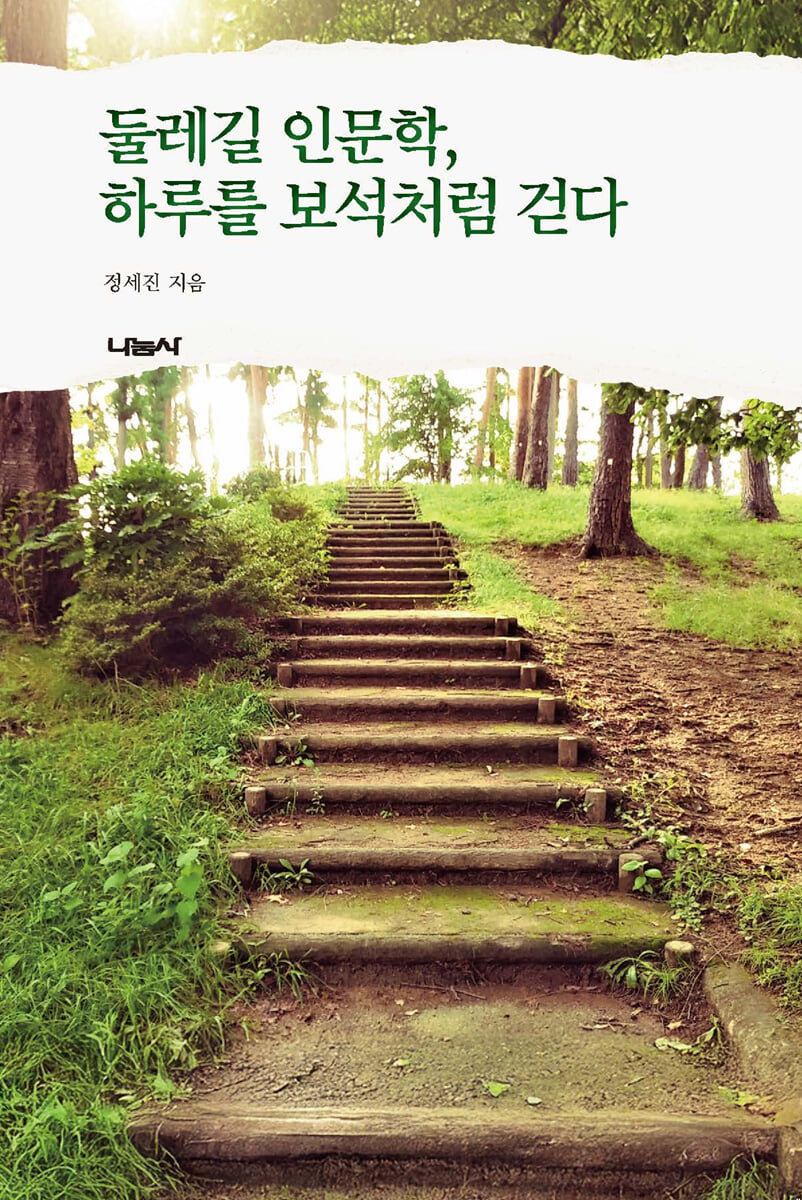
A Humanities Walk: A Day Like a Jewel
 |
Description
Book Introduction
The author has led a very busy academic life, lecturing and conducting research, including publishing over 90 humanities papers and eight independent academic books over the past 20 years.
Then one day, at the recommendation of a friend, he started walking around the suburbs of Seoul and the countryside.
For him, who was very tired, walking along the road was such a happy thing.
He lived without knowing that fact at all.
Then I started writing about the trail.
It seems like I've been cheating on someone by only writing academic books and papers.
He boldly titled his essay book, “Humanities on the Road: Walking the Day Like a Jewel.”
Although road humanities exist academically, I understand that there is no official term for road humanities yet.
This is a very challenging piece of humanities writing.
He has stepped forward as the founder of the humanities field without fear.
His definition of the humanities as a path is a humanistic awareness and practice that explores walking, thinking, and the relationship between nature and humans.
In other words, the perimeter road goes beyond the level of a simple journey and becomes a space for humanistic experiences that connect people and nature, objects and enlightenment, and history and myself.
He says so.
Humanities on the perimeter.
I've never heard that before.
Isn't it said that language is creation and freedom?
There was once a great boom in humanities.
Urban humanities, popular humanities, road humanities, healing humanities, island humanities, living humanities, village humanities… .
The author, who enjoys the simple life, may be very concerned about using the term "perimeter humanities," but he recognized it as a root of road humanities.
The road is infinite, but the circumference is a road that we think about and think about, then circle around and come back to us.
The author freely and fluently describes personal reflections and healing, literary reflections on things, a warm and affectionate perspective on his contemporaries, the coexistence of tradition and modernity, thought and perception, and Russian and Eurasian humanities.
In particular, a love for people and things and a vision of healing flow throughout the book.
The author humbly expresses this as a piece of writing that condenses the warm gaze of humans looking at things.
The book includes 237 photographs along with excellent personal impressions.
This is the most notable feature of this book.
He looked at the subject matter from a humanistic perspective, including literature, culture, history, and philosophy.
This book is not one of those life development books or lifestyle development books that have been wildly popular in the Korean reading world, nor is it a photo essay written concisely with excellent photographs by a famous photographer.
The author confessed that he, as an ordinary member of society who has lived a weary and tiring life, dedicates this book to all those who live fiercely in this era.
Although the author admits that there are many flaws due to a lack of poetic and verse-like narrative, the strength of this book lies in the fact that the writing style is consistently very concise.
He made little use of resources such as the Internet and AI.
I expressed my personal feelings as they were.
That is, I tried to project some special emotions and worldviews through ordinary materials such as objects, landmarks, things, water, mountains, lakes, nature, hometowns, tombs, streams, gardens, trees, flowers, architecture, cities, villages, trains, and streets.
Professor Jeong took this opportunity to leave academic books behind and challenge himself by publishing essays filled with his love for the humanities and reflections on life.
He says he is lacking and ashamed, but his sincerity in not letting go of his thoughts on looking deeply into people and life resonates deeply.
His life, which challenged himself to obtain a doctorate at a late age, is a symbol of a 'deep transformation' rather than a 'late start'.
His journey from practice to academia, from the field to the podium, leads to insights that transcend time and boundaries.
I applaud your hard work and journey.
Then one day, at the recommendation of a friend, he started walking around the suburbs of Seoul and the countryside.
For him, who was very tired, walking along the road was such a happy thing.
He lived without knowing that fact at all.
Then I started writing about the trail.
It seems like I've been cheating on someone by only writing academic books and papers.
He boldly titled his essay book, “Humanities on the Road: Walking the Day Like a Jewel.”
Although road humanities exist academically, I understand that there is no official term for road humanities yet.
This is a very challenging piece of humanities writing.
He has stepped forward as the founder of the humanities field without fear.
His definition of the humanities as a path is a humanistic awareness and practice that explores walking, thinking, and the relationship between nature and humans.
In other words, the perimeter road goes beyond the level of a simple journey and becomes a space for humanistic experiences that connect people and nature, objects and enlightenment, and history and myself.
He says so.
Humanities on the perimeter.
I've never heard that before.
Isn't it said that language is creation and freedom?
There was once a great boom in humanities.
Urban humanities, popular humanities, road humanities, healing humanities, island humanities, living humanities, village humanities… .
The author, who enjoys the simple life, may be very concerned about using the term "perimeter humanities," but he recognized it as a root of road humanities.
The road is infinite, but the circumference is a road that we think about and think about, then circle around and come back to us.
The author freely and fluently describes personal reflections and healing, literary reflections on things, a warm and affectionate perspective on his contemporaries, the coexistence of tradition and modernity, thought and perception, and Russian and Eurasian humanities.
In particular, a love for people and things and a vision of healing flow throughout the book.
The author humbly expresses this as a piece of writing that condenses the warm gaze of humans looking at things.
The book includes 237 photographs along with excellent personal impressions.
This is the most notable feature of this book.
He looked at the subject matter from a humanistic perspective, including literature, culture, history, and philosophy.
This book is not one of those life development books or lifestyle development books that have been wildly popular in the Korean reading world, nor is it a photo essay written concisely with excellent photographs by a famous photographer.
The author confessed that he, as an ordinary member of society who has lived a weary and tiring life, dedicates this book to all those who live fiercely in this era.
Although the author admits that there are many flaws due to a lack of poetic and verse-like narrative, the strength of this book lies in the fact that the writing style is consistently very concise.
He made little use of resources such as the Internet and AI.
I expressed my personal feelings as they were.
That is, I tried to project some special emotions and worldviews through ordinary materials such as objects, landmarks, things, water, mountains, lakes, nature, hometowns, tombs, streams, gardens, trees, flowers, architecture, cities, villages, trains, and streets.
Professor Jeong took this opportunity to leave academic books behind and challenge himself by publishing essays filled with his love for the humanities and reflections on life.
He says he is lacking and ashamed, but his sincerity in not letting go of his thoughts on looking deeply into people and life resonates deeply.
His life, which challenged himself to obtain a doctorate at a late age, is a symbol of a 'deep transformation' rather than a 'late start'.
His journey from practice to academia, from the field to the podium, leads to insights that transcend time and boundaries.
I applaud your hard work and journey.
index
┃Foreword┃
I. “Live Every Day Like a Jewel”: Walking along the Han River and Lakeside Park Trail
Ⅱ. “It’s okay.
“You’ve done well so far”: He consoled me as we walked through the landmarks.
III. "My Life is Still Noon": Talking about the Humanities on the Streets of Overseas Travel Destinations
I. “Live Every Day Like a Jewel”: Walking along the Han River and Lakeside Park Trail
Ⅱ. “It’s okay.
“You’ve done well so far”: He consoled me as we walked through the landmarks.
III. "My Life is Still Noon": Talking about the Humanities on the Streets of Overseas Travel Destinations
GOODS SPECIFICS
- Date of issue: November 20, 2025
- Page count, weight, size: 388 pages | 152*224*30mm
- ISBN13: 9788970278322
- ISBN10: 897027832X
You may also like
카테고리
korean


korean

![GQ KOREA Mark (Monthly): December [2025]](http://librairie.coreenne.fr/cdn/shop/files/8ef265dbbfbf186523ed75ba7319009d.jpg?v=1765340328&width=3840)


