

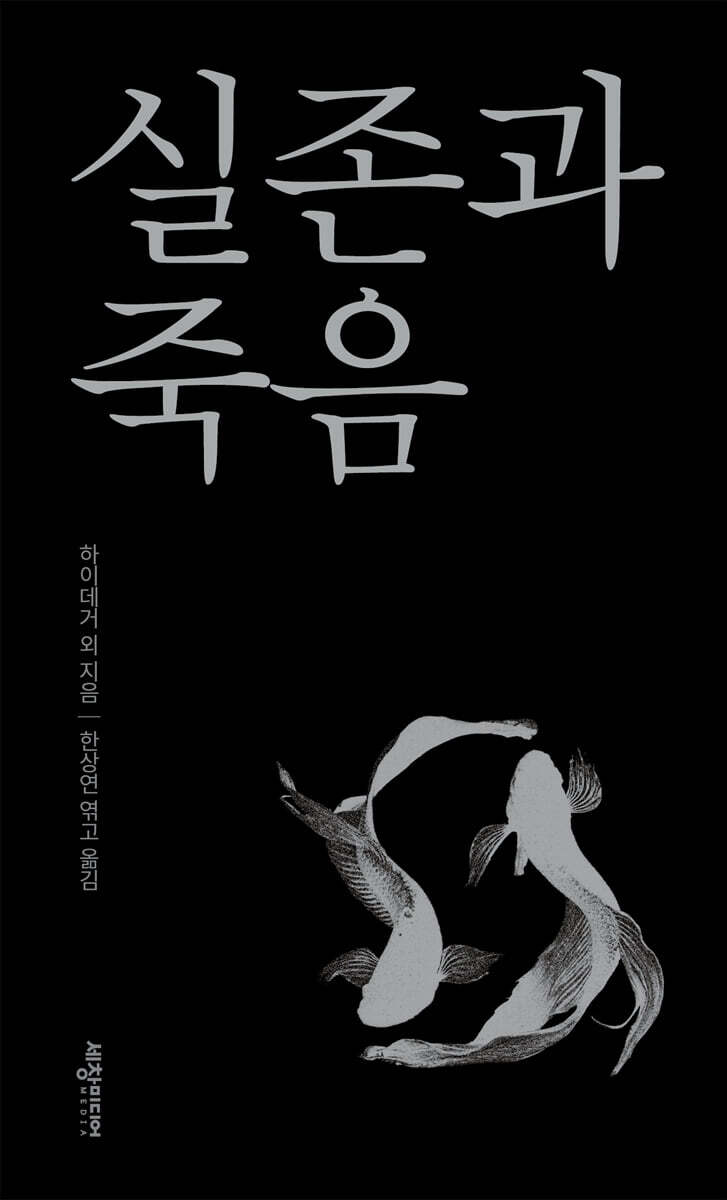
Existence and Death
 |
Description
Book Introduction
Asking about death is asking how to live.
Death comes to everyone, but its meaning has changed over time.
In ancient and medieval times, death was understood as a transition to the transcendent world, and life was a time of preparation for reaching it.
Then, in the 20th century, existentialism, which developed in earnest, viewed death not as something external to life, but as an intimate dimension.
This book is a collection of aphorisms from ten existentialist thinkers who deeply reflected on death.
It is intuitively structured so that even readers unfamiliar with philosophy can understand existentialism by following the thinker's thoughts.
In today's age of artificial intelligence, where even human thoughts and actions can be predicted by algorithms, existentialism still holds true.
When we recognize that humans are not simply a collection of information or functional beings, but rather beings moving toward their own death, our attitudes and direction in life can also be newly reflected upon.
Death comes to everyone, but its meaning has changed over time.
In ancient and medieval times, death was understood as a transition to the transcendent world, and life was a time of preparation for reaching it.
Then, in the 20th century, existentialism, which developed in earnest, viewed death not as something external to life, but as an intimate dimension.
This book is a collection of aphorisms from ten existentialist thinkers who deeply reflected on death.
It is intuitively structured so that even readers unfamiliar with philosophy can understand existentialism by following the thinker's thoughts.
In today's age of artificial intelligence, where even human thoughts and actions can be predicted by algorithms, existentialism still holds true.
When we recognize that humans are not simply a collection of information or functional beings, but rather beings moving toward their own death, our attitudes and direction in life can also be newly reflected upon.
- You can preview some of the book's contents.
Preview
index
Table of Contents
Blaise Pascal
Søren Kierkegaard
Fyodor Dostoevsky
Friedrich Nietzsche
Carl Jaspers
Martin Heidegger
Gabriel Marcel
Jean-Paul Sartre
Simone de Beauvoir
Albert Camus
Book Introduction
Editor's Note and Translator's Note
source
Blaise Pascal
Søren Kierkegaard
Fyodor Dostoevsky
Friedrich Nietzsche
Carl Jaspers
Martin Heidegger
Gabriel Marcel
Jean-Paul Sartre
Simone de Beauvoir
Albert Camus
Book Introduction
Editor's Note and Translator's Note
source
Detailed image
Into the book
Our nature is in movement.
That complete rest is death.
--- p.9
The shameful and the flawed have death within them, and will sooner or later bring punishment upon themselves.
--- p.45
There is no salvation for those who suffer themselves.
--- p.53
Death is something that cannot be represented, and is inherently unthinkable.
What we represent and think about death is merely a negation, an epiphenomenon, and by no means positive.
--- p.89
Existentially, death exists only in a being that is moving towards existential death.
--- p.97
Death does not simply 'belong' to a unique being indiscriminately, but demands that this being exist as an individual.
--- p.127
Death is the triumph of another's point of view over my own point of view of myself as it exists.
--- p.173
All movement of life is a slide towards death.
But if we are willing to face this truth, we will also discover that every movement toward death is life.
--- p.197
In reality, there is no experience of death.
Strictly speaking, nothing is experienced except what is experienced and conscious.
That complete rest is death.
--- p.9
The shameful and the flawed have death within them, and will sooner or later bring punishment upon themselves.
--- p.45
There is no salvation for those who suffer themselves.
--- p.53
Death is something that cannot be represented, and is inherently unthinkable.
What we represent and think about death is merely a negation, an epiphenomenon, and by no means positive.
--- p.89
Existentially, death exists only in a being that is moving towards existential death.
--- p.97
Death does not simply 'belong' to a unique being indiscriminately, but demands that this being exist as an individual.
--- p.127
Death is the triumph of another's point of view over my own point of view of myself as it exists.
--- p.173
All movement of life is a slide towards death.
But if we are willing to face this truth, we will also discover that every movement toward death is life.
--- p.197
In reality, there is no experience of death.
Strictly speaking, nothing is experienced except what is experienced and conscious.
--- p.209
Publisher's Review
“Everyone lives with their own destiny to die.
So everyone has their own life
We must live as beings with the impulse and desire to realize.
Only through these impulses and desires
“Life can be full of meaning.”
Everyone dies someday.
I just face death in a different form every now and then.
Although it is each person's own, it is an undeniable fact that it causes us anxiety and fear in itself, whether it comes unexpectedly and suddenly or arrives right at the time we plan it.
The fear of death is not just the vagueness of the unknown, but also the fear of the emptiness of the very existence that I have felt as myself disappearing.
But death doesn't always evoke only negative emotions.
Sometimes it seems as if death is making me aware of the present, of myself.
The more I try to feel death, that is, the more I recall the distant feeling of not being able to feel myself anymore, the more I can realize my existence right now.
Of course, the sense of death may vary from time to time, but death has been perceived differently in each era.
For Plato, death was the moment when the soul escapes the prison of the body and returns to the world of ideas, and life was the process of preparing for that.
In the medieval Christian world, death was the inevitable fate that humans had to face due to original sin, but at the same time, it was not the end but the beginning of eternal life.
By establishing the afterlife in this way, the concept of eternity was used to overcome the fear of death, but at this time, death did not simply refer to the end of life.
However, this perspective has led us to look at the world we actually live in negatively.
Asking about death and answering with existence
Existential reflections on death
Existentialist thinkers who developed in earnest in the 20th century accepted death in a different way.
Death was seen as a fact in itself that evokes anxiety and fear, and death was not viewed as something dependent on external providence or eternity, but rather as an opportunity to question the meaning of life itself.
Rather than confining death within the framework of meaning given from the outside, it was instead used as a ‘possible basis for existence.’
Of course, there may be slight differences in the stance on death among individual thinkers, but existentialists, including Heidegger, believed that by contemplating death, we can grasp our own original uniqueness and the possibility of existence.
In this way, existentialism showed an attitude closer to human existence by thinking about death from the inside of life, breaking away from the existing transcendental and religious framework.
This perspective emerged prominently in the 20th century as existentialism became a central trend in philosophy, but it was not limited to the 20th century.
Even today, when concerns about human existence and identity are more pressing than ever before, and especially when digital technologies, including artificial intelligence, are attempting to algorithmize even human thought and behavior, existentialism remains relevant.
In a society where humans are evaluated solely on the basis of efficiency and productivity, existentialism leads us to question the unique life of humans, distinct from that of tools.
The realization that humans are not simply a collection of information or functional beings, but rather beings moving toward their own death, forces us to re-examine our attitude and direction in life.
Ultimately, contemplating death leads to the question of restoring the original nature of life, a question that remains relevant to us today.
From Pascal to Camus,
Sentences from existentialists who pondered death
The meaning of death and life seen through them
According to Professor Sang-yeon Han, who edited and translated the book, existentialism in a narrow sense is limited to 20th-century philosophy and literature, but if we examine the thoughts of Nietzsche, Heidegger, and Sartre before and after, the history of existentialist thought began a long time ago.
To compose this book, Professor Han Sang-yeon selected the thinkers who presented the most specific and profound reflections on death in the history of existentialism, and among these thinkers, he selected the writings that contained the most specific and profound thoughts on death.
Next, I selected sentences that clearly revealed each thinker's unique perspective, especially sentences that would help me understand the philosophical connections between thinkers.
This is a consideration on the part of the editor to ensure that even readers who are not familiar with existentialist thought can easily understand the text of the thinker.
And this is why this book is also an excellent introductory text that allows readers to understand each existentialist thought by starting from the insights of each thinker.
The reflections of ten existentialist thinkers presented in this book will prompt us to consider how we should view and face death, and our answers will in turn prompt us to question how we should live.
So everyone has their own life
We must live as beings with the impulse and desire to realize.
Only through these impulses and desires
“Life can be full of meaning.”
Everyone dies someday.
I just face death in a different form every now and then.
Although it is each person's own, it is an undeniable fact that it causes us anxiety and fear in itself, whether it comes unexpectedly and suddenly or arrives right at the time we plan it.
The fear of death is not just the vagueness of the unknown, but also the fear of the emptiness of the very existence that I have felt as myself disappearing.
But death doesn't always evoke only negative emotions.
Sometimes it seems as if death is making me aware of the present, of myself.
The more I try to feel death, that is, the more I recall the distant feeling of not being able to feel myself anymore, the more I can realize my existence right now.
Of course, the sense of death may vary from time to time, but death has been perceived differently in each era.
For Plato, death was the moment when the soul escapes the prison of the body and returns to the world of ideas, and life was the process of preparing for that.
In the medieval Christian world, death was the inevitable fate that humans had to face due to original sin, but at the same time, it was not the end but the beginning of eternal life.
By establishing the afterlife in this way, the concept of eternity was used to overcome the fear of death, but at this time, death did not simply refer to the end of life.
However, this perspective has led us to look at the world we actually live in negatively.
Asking about death and answering with existence
Existential reflections on death
Existentialist thinkers who developed in earnest in the 20th century accepted death in a different way.
Death was seen as a fact in itself that evokes anxiety and fear, and death was not viewed as something dependent on external providence or eternity, but rather as an opportunity to question the meaning of life itself.
Rather than confining death within the framework of meaning given from the outside, it was instead used as a ‘possible basis for existence.’
Of course, there may be slight differences in the stance on death among individual thinkers, but existentialists, including Heidegger, believed that by contemplating death, we can grasp our own original uniqueness and the possibility of existence.
In this way, existentialism showed an attitude closer to human existence by thinking about death from the inside of life, breaking away from the existing transcendental and religious framework.
This perspective emerged prominently in the 20th century as existentialism became a central trend in philosophy, but it was not limited to the 20th century.
Even today, when concerns about human existence and identity are more pressing than ever before, and especially when digital technologies, including artificial intelligence, are attempting to algorithmize even human thought and behavior, existentialism remains relevant.
In a society where humans are evaluated solely on the basis of efficiency and productivity, existentialism leads us to question the unique life of humans, distinct from that of tools.
The realization that humans are not simply a collection of information or functional beings, but rather beings moving toward their own death, forces us to re-examine our attitude and direction in life.
Ultimately, contemplating death leads to the question of restoring the original nature of life, a question that remains relevant to us today.
From Pascal to Camus,
Sentences from existentialists who pondered death
The meaning of death and life seen through them
According to Professor Sang-yeon Han, who edited and translated the book, existentialism in a narrow sense is limited to 20th-century philosophy and literature, but if we examine the thoughts of Nietzsche, Heidegger, and Sartre before and after, the history of existentialist thought began a long time ago.
To compose this book, Professor Han Sang-yeon selected the thinkers who presented the most specific and profound reflections on death in the history of existentialism, and among these thinkers, he selected the writings that contained the most specific and profound thoughts on death.
Next, I selected sentences that clearly revealed each thinker's unique perspective, especially sentences that would help me understand the philosophical connections between thinkers.
This is a consideration on the part of the editor to ensure that even readers who are not familiar with existentialist thought can easily understand the text of the thinker.
And this is why this book is also an excellent introductory text that allows readers to understand each existentialist thought by starting from the insights of each thinker.
The reflections of ten existentialist thinkers presented in this book will prompt us to consider how we should view and face death, and our answers will in turn prompt us to question how we should live.
GOODS SPECIFICS
- Date of issue: April 18, 2025
- Page count, weight, size: 244 pages | 114*188*23mm
- ISBN13: 9788955868425
You may also like
카테고리
korean


korean

![GQ KOREA Mark (Monthly): December [2025]](http://librairie.coreenne.fr/cdn/shop/files/8ef265dbbfbf186523ed75ba7319009d.jpg?v=1765340328&width=3840)


